



Commercial Satellite Imaging Market Size 2024-2028
The commercial satellite imaging market size is forecast to increase by USD 2.33 billion at a CAGR of 7.66% between 2023 and 2028.
- The market is experiencing significant growth due to advancements in satellite technology and the increasing demand for high-resolution imagery. Additionally, the cost of launching satellites is decreasing, making it more accessible to businesses. However, challenges remain, including regulatory issues and data security and privacy concerns. The key players address these challenges through advanced image-processing techniques, AI-powered analytics, and partnerships with governments and private organizations. Artificial intelligence plays a pivotal role in enhancing image clarity, improving data interpretation, and automating the analysis process. This market analysis report delves into these trends and challenges, providing insights into the future growth prospects of the commercial satellite imaging industry.
What will be the Size of the Commercial Satellite Imaging Market During the Forecast Period?

- The market encompasses the use of imagery obtained from optically equipped satellites for various applications, including meteorology, oceanography, fisheries, agriculture, biodiversity protection, forestry, geology, cartography, regional planning, intelligence, warfare, aeronautical imaging, terrestrial imaging, and smart cities. These images play a crucial role in providing valuable insights and data for numerous industries and sectors. Meteorology and oceanography applications utilize satellite imagery to monitor weather patterns, ocean currents, and climate trends. This data is essential for forecasting severe weather events, predicting storms, and understanding climate change. In the field of fisheries, satellite imagery is used to monitor fish populations, track migration patterns, and ensure sustainable fishing practices.
- Agriculture is another significant sector that benefits from satellite imagery. Farmers and agricultural organizations use this data to optimize crop yields, monitor crop health, and manage irrigation systems. Biodiversity protection and forestry applications rely on satellite imagery for monitoring deforestation, identifying endangered species, and managing forest resources. Geology and cartography applications use satellite imagery for mapping and analyzing geological features, while regional planning and intelligence applications utilize this data for infrastructure development, urban planning, and security purposes. In the field of warfare, satellite imagery is used for reconnaissance, target identification, and battlefield analysis. Aeronautical and terrestrial imaging applications use satellite imagery for mapping and surveying terrain, monitoring infrastructure, and ensuring safety in aviation and transportation.
How is this Commercial Satellite Imaging Industry segmented and which is the largest segment?
The commercial satellite imaging industry research report provides comprehensive data (region-wise segment analysis), with forecasts and estimates in "USD million" for the period 2024-2028, as well as historical data from 2018-2022 for the following segments.
- End-user
- Government
- Military and defense
- Transportation
- Agriculture
- Others
- Technology
- Optical
- Radar
- Geography
- North America
- US
- APAC
- China
- Japan
- Europe
- France
- South America
- Middle East and Africa
- North America
By End-user Insights
- The government segment is estimated to witness significant growth during the forecast period.
Satellite imaging, specifically through platforms such as Google Earth, has become a crucial tool for various sectors, particularly the government. This technology aids in civil protection and humanitarian efforts by enabling the analysis and management of disaster causation factors. By assessing risks and planning prevention measures, satellite imagery facilitates more effective disaster response and relief efforts. Furthermore, high-resolution satellite imagery contributes to the restoration and enhancement of facilities, livelihoods, and living conditions in affected communities. In addition, it plays a vital role in protecting natural resources and the environment, including wildlife habitats. High-resolution satellite imagery is also indispensable for engineering and urban planning projects. Location-Based Services (LBS) integrated with satellite imagery can further enhance the utility of this technology in various sectors, including defense and energy.

Get a glance at the Commercial Satellite Imaging Industry report of share of various segments Request Free Sample
The government segment was valued at USD 1.37 billion in 2018 and showed a gradual increase during the forecast period.
Regional Analysis
- APAC is estimated to contribute 31% to the growth of the global market during the forecast period.
Technavio's analysts have elaborately explained the regional trends and drivers that shape the market during the forecast period.
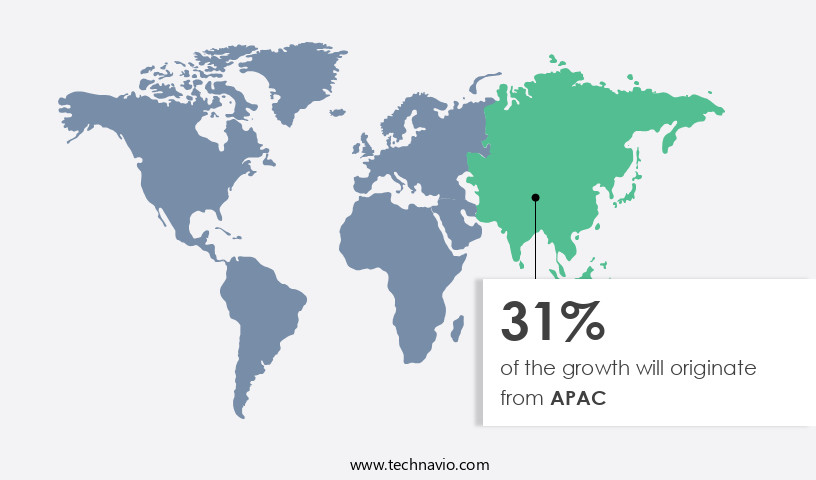
For more insights on the market share of various regions, Request Free Sample
Commercial satellite imaging is a significant sector in North America, with the United States, Canada, and Mexico being key markets. These countries possess advanced infrastructure and are actively engaged in space programs. In the US, organizations such as NASA and private enterprises are innovating new satellite systems to cater to the expanding commercial demand. This demand is primarily driven by applications like environmental management, energy resource security, border surveillance, and construction project mapping. The US civilian space program, managed by NASA, encompasses four primary activities: aeronautics research, exploration systems, science, and space operations. The market is predominantly utilized in meteorology for weather forecasting, oceanography for marine research, fisheries management, agriculture, biodiversity protection, forestry, and geology. These industries rely on Earth observation imagery for efficient resource management, risk assessment, and infrastructure development.
Market Dynamics
Our researchers analyzed the data with 2023 as the base year, along with the key drivers, trends, and challenges. A holistic analysis of drivers will help companies refine their marketing strategies to gain a competitive advantage.
What are the key market drivers leading to the rise In the adoption of Commercial Satellite Imaging Industry?
Advances in satellite imaging technologies is the key driver of the market.
- Satellite imaging plays a crucial role in gathering valuable data and information for various sectors, including defense, natural resources, and meteorology. Advanced imaging satellites equipped with high-resolution cameras and sophisticated remote-sensing technology provide clear and detailed images for cartography, regional planning, and intelligence gathering. These images are extensively used in defense applications, such as warfare and border security. In addition, they are essential for aeronautical and terrestrial imaging, providing insights for industries like oil and gas, mining, and agriculture. The demand for superior image quality continues to rise, with end-users seeking more clarity for applications like weather forecasting, precision farming, and forestry management.
- The evolution of satellite technology has enabled the capture of increasingly detailed and accurate images, enhancing their utility and value.
What are the market trends shaping the Commercial Satellite Imaging Industry?
Advanced satellite imaging applications is the upcoming market trend.
- In the realm of satellite imaging, new-age, economical interactive services are spearheading a groundbreaking transformation. Advanced satellite technologies, coupled with the rapid advancement of information technology, have facilitated Google Earth Engine to introduce a video service. This innovative offering, named Timelapse, merges satellite images with sophisticated software to trace geological alterations worldwide over the past three decades. Beyond this, there are numerous advanced applications, such as assessing soil moisture levels using active and passive sensors from orbit, devising agricultural plans by mapping soil types, and uncovering archaeological sites like the Mayans and ancient Egypt.
What challenges does the Commercial Satellite Imaging Industry face during its growth?
Costs associated with satellite launches is a key challenge affecting the industry growth.
- The market encompasses the production and deployment of satellites for various applications, including smart cities, military and defense, and meteorological monitoring. Companies such as Pixxel and Shakuntala are at the forefront of this industry, utilizing advanced technologies to capture high-resolution images from space. The launch of these satellites is a complex process, necessitating significant investment and expertise.
- The cost of satellite manufacturing and deployment ranges from USD 50 million to over USD 1 billion, depending on the satellite's functionality. For instance, a weather monitoring satellite may cost around USD290 million, while a military communication satellite can exceed USD 1 billion. The European Commission and SpaceX's Falcon-9 are among the key players In the satellite launch market. The Asia-Pacific region is expected to dominate the market due to its rapid industrialization and increasing demand for advanced technologies.
Exclusive Customer Landscape
The commercial satellite imaging market forecasting report includes the adoption lifecycle of the market, covering from the innovator's stage to the laggard's stage. It focuses on adoption rates in different regions based on penetration. Furthermore, the commercial satellite imaging market report also includes key purchase criteria and drivers of price sensitivity to help companies evaluate and develop their market growth analysis strategies.
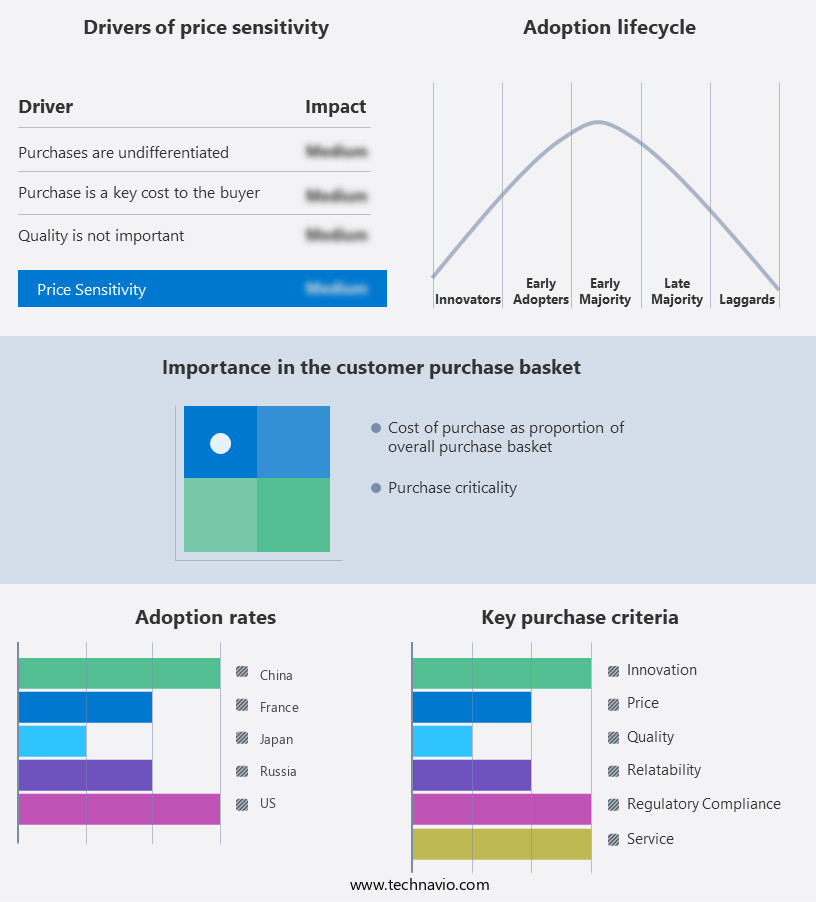
Customer Landscape
Key Companies & Market Insights
Companies are implementing various strategies, such as strategic alliances, commercial satellite imaging market forecast, partnerships, mergers and acquisitions, geographical expansion, and product/service launches, to enhance their presence In the industry.
The industry research and growth report includes detailed analyses of the competitive landscape of the market and information about key companies, including:
- Airbus SE
- BlackSky Global LLC
- European Space Imaging GmbH
- ICEYE Oy
- Imagesat International I.S.I Ltd.
- L3Harris Technologies Inc.
- MapTiler AG
- Maxar Technologies Inc.
- Planet Labs PBC
- Satellogic SA
- SkyWatch Space Applications Inc.
- SpaceKnow Inc.
- Thales Group
Qualitative and quantitative analysis of companies has been conducted to help clients understand the wider business environment as well as the strengths and weaknesses of key industry players. Data is qualitatively analyzed to categorize companies as pure play, category-focused, industry-focused, and diversified; it is quantitatively analyzed to categorize companies as dominant, leading, strong, tentative, and weak.
Research Analyst Overview
The market is witnessing significant growth due to the increasing demand for earth observation imagery in various sectors. The market finds applications in meteorology, oceanography, fisheries, agriculture, biodiversity protection, forestry, geology, cartography, regional planning, intelligence, warfare, and more. Imaging satellites equipped with optically equipped sensors capture high-resolution satellite imagery, which is utilized for various purposes such as meteorological forecasting, ocean current monitoring, crop yield analysis, and disaster management. Satellite imagery plays a crucial role in industries like mining, energy, infrastructure, and maritime. It aids in resource exploration, infrastructure planning, and asset monitoring. In addition, the integration of satellite imagery with digital maps and location-based services (LBS) enhances the efficiency of various industries.
In addition, the military and defense sector is a significant consumer of satellite imagery for intelligence gathering and reconnaissance. The European Commission and the Asia-Pacific market are major contributors to the market's growth. Remote sensing technology, electric propulsion technology, and LIDAR technology are the key technologies driving the growth of the market. Companies like DigitalGlobe Inc, Planet Labs Inc, Spaceknow Inc, Skylab Analytics, L3Harris Technologies, GeoEye, and others are pioneers In the commercial satellite imaging industry. Cloud-based technology is a growing trend In the commercial satellite imagery market, enabling easy access to satellite imagery and analysis tools for various industries.
|
Market Scope |
|
|
Report Coverage |
Details |
|
Page number |
172 |
|
Base year |
2023 |
|
Historic period |
2018-2022 |
|
Forecast period |
2024-2028 |
|
Growth momentum & CAGR |
Accelerate at a CAGR of 7.66% |
|
Market Growth 2024-2028 |
USD 2.33 billion |
|
Market structure |
Concentrated |
|
YoY growth 2023-2024(%) |
7.24 |
|
Key countries |
US, China, Russia, France, and Japan |
|
Competitive landscape |
Leading Companies, Market Positioning of Companies, Competitive Strategies, and Industry Risks |
What are the Key Data Covered in this Commercial Satellite Imaging Market Research and Growth Report?
- CAGR of the Commercial Satellite Imaging industry during the forecast period
- Detailed information on factors that will drive the market growth and forecasting between 2024 and 2028
- Precise estimation of the size of the market and its contribution of the industry in focus to the parent market
- Accurate predictions about upcoming growth and trends and changes in consumer behaviour
- Growth of the market across North America, APAC, Europe, South America, and Middle East and Africa
- Thorough analysis of the market's competitive landscape and detailed information about companies
- Comprehensive analysis of factors that will challenge the commercial satellite imaging market growth of industry companies
We can help! Our analysts can customize this commercial satellite imaging market research report to meet your requirements.