



Compounding Pharmacy Market Size 2026-2030
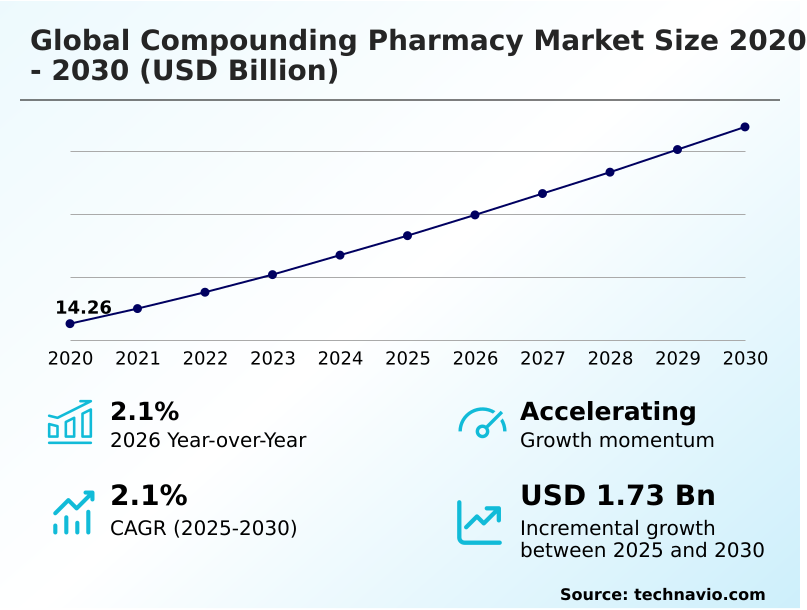
The Compounding Pharmacy Market size was valued at USD 15.66 billion in 2025, growing at a CAGR of 2.1% during the forecast period 2026-2030.
Major Market Trends & Insights
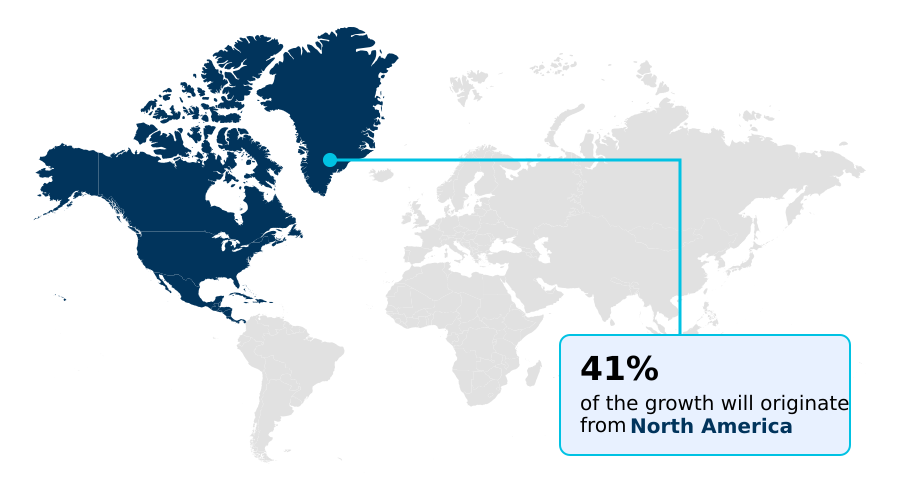
- North America dominated the market and accounted for a 41% growth during the forecast period.
- By Product - Topical medications segment was valued at USD 6.28 billion in 2024
- By Therapeutic Area - Pain management segment accounted for the largest market revenue share in 2024
Market Size & Forecast
- Historic Market Opportunities 2020-2024: USD 3.13 billion
- Market Future Opportunities 2025-2030: USD 1.73 billion
- CAGR from 2025 to 2030 : 2.1%
Market Summary
- The compounding pharmacy market is defined by its essential role in providing personalized medical solutions where mass-produced drugs fall short. A 15% year-over-year rise in diagnosed hormonal disorders has significantly increased the need for individualized treatments like bioidentical hormone replacement therapy.
- In a common operational scenario, a pharmacy invests in workflow management software to handle a 20% surge in demand for allergen-free formulations, triggered by a regional shortage of a commercial drug. This investment helps ensure supply chain traceability and compliance with regulatory standards during audits.
- However, the industry faces the challenge of stringent regulatory scrutiny, which drives up costs for specialized cleanroom technology. Despite this, the ability to address drug shortages and provide patient-specific prescriptions solidifies the market's critical position within the broader healthcare ecosystem, improving medication adherence and therapeutic outcomes.
What will be the Size of the Compounding Pharmacy Market during the forecast period?
Get Key Insights on Market Forecast (PDF) Request Free Sample
How is the Compounding Pharmacy Market Segmented?
The compounding pharmacy industry research report provides comprehensive data (region-wise segment analysis), with forecasts and analysis for the period 2026-2030, as well as historical data from 2020-2024 for the following segments.
- Product
- Topical medications
- Oral medications
- Parenteral medications
- Others
- Therapeutic area
- Pain management
- Hormone replacement
- Dermal disorders
- Others
- End-user
- Hospital pharmacies
- Retail pharmacies
- Long-term care facilities
- Others
- Geography
- North America
- US
- Canada
- Mexico
- Europe
- Germany
- UK
- France
- Asia
- Rest of World (ROW)
- North America
How is the Compounding Pharmacy Market Segmented by Product?
The topical medications segment is estimated to witness significant growth during the forecast period.
The topical medications segment, which captures over 40% of the market by product, is driven by demand for localized treatment with minimal systemic side effects.
Advanced transdermal delivery systems have enhanced the efficacy of topical analgesics, improving drug penetration by up to 15% over traditional ointments. This innovation is critical in pain management formulations and dermatological compounding, where precise, targeted application is necessary.
Custom preparations in this segment allow for the combination of multiple active pharmaceutical ingredients into a single cream or gel, offering a significant advantage for patients with complex conditions like neuropathy or severe acne.
This level of customization through non-sterile preparations is a key factor in the segment's sustained relevance.
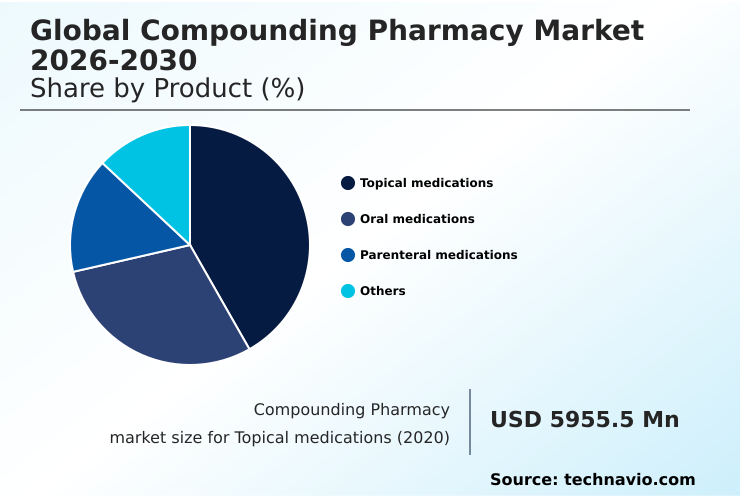
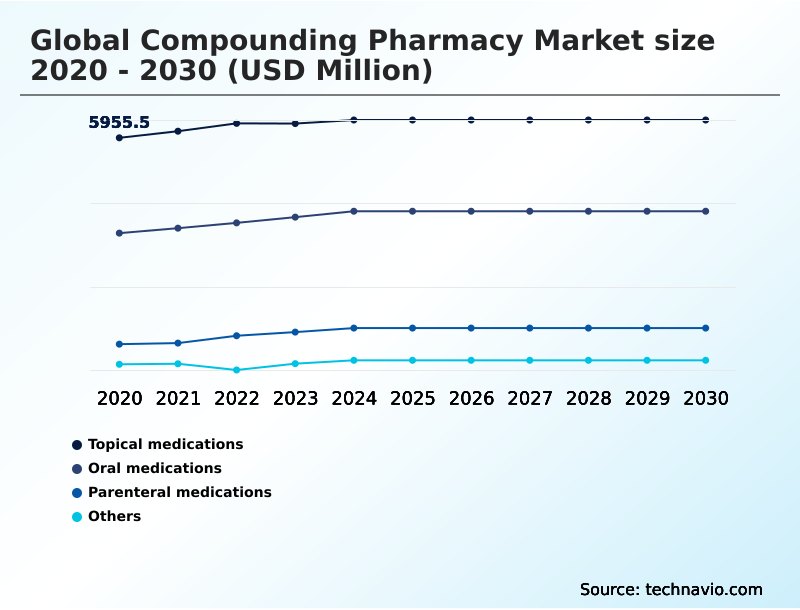
The Topical medications segment was valued at USD 6.28 billion in 2024 and showed a gradual increase during the forecast period.
How demand for the Compounding Pharmacy market is rising in the leading region?
North America is estimated to contribute 41% to the growth of the global market during the forecast period.Technavio’s analysts have elaborately explained the regional trends and drivers that shape the market during the forecast period.
See How Compounding Pharmacy Market demand is rising in North America Request Free Sample
North America dominates the compounding pharmacy market, contributing over 41% of the incremental growth, driven by high demand for personalized medicine and established regulatory frameworks.
The region's market maturity is characterized by a strong focus on good manufacturing practices (GMP) and advanced supply chain traceability for pharmaceutical-grade ingredients.
In contrast, Asia is the fastest-growing region, with a projected CAGR of 2.8%, fueled by expanding healthcare infrastructure and a rising middle class. This growth presents opportunities in veterinary compounding and drug shortages management, though challenges remain in standardization.
The adoption of automated compounding devices in Asia is approximately 15% lower than in North America, highlighting different stages of technological integration and investment priorities in cleanroom technology across the globe.
What are the key Drivers, Trends, and Challenges in the Compounding Pharmacy Market?
Our researchers analyzed the data with 2025 as the base year, along with the key drivers, trends, and challenges. A holistic analysis of drivers will help companies refine their marketing strategies to gain a competitive advantage.
- The demand for specialized compounded medications is increasingly nuanced, reflecting specific clinical needs and patient populations. For instance, sterile injectable compounding services operate under regulatory standards that are up to 25% more stringent than those for non-sterile preparations, requiring significant investment in aseptic processing and environmental monitoring.
- This contrasts with the requirements for a compounding pharmacy for dermatology, where the focus is on creating effective transdermal delivery systems and ensuring the stability of multiple active ingredients in a single topical formulation.
- Similarly, personalized pain management medication often involves complex formulations of controlled-release medication to improve patient quality of life, a different clinical challenge than that addressed by pediatric medication flavoring pharmacies, which prioritize palatability to ensure medication adherence improvement.
- The rise of bioidentical hormone therapy compounding has also carved out a major market segment, driven by patient demand for customized dosage forms that are not commercially available. Each of these areas requires unique expertise, equipment, and quality control testing, illustrating the diverse specialization within the broader compounding pharmacy landscape.
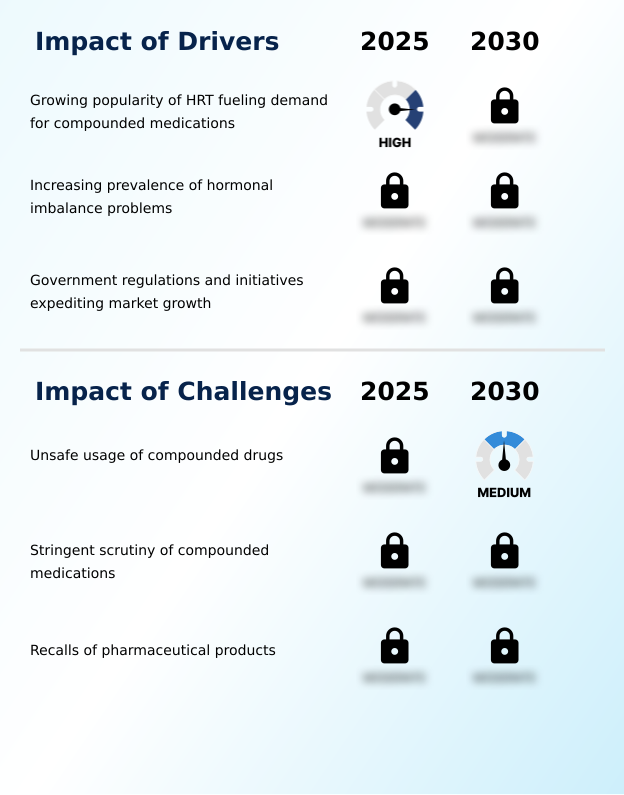
What are the key market drivers leading to the rise in the adoption of Compounding Pharmacy Industry?
- The growing popularity of hormone replacement therapy (HRT) is a significant driver, fueling demand for compounded medications as individuals seek personalized solutions.
- The increasing prevalence of hormonal imbalances, affecting an estimated 15% more young adults annually, is a significant market driver.
- This has led to a surge in demand for bioidentical hormone replacement therapy (BHRT), as patients seek alternatives to mass-produced synthetic hormones.
- Compounding pharmacies address this need with patient-specific prescriptions, offering formats like topical gels which can improve symptom management by over 40% compared to standard oral tablets.
- This driver is amplified by a growing focus on geriatric medication management and proactive hormone level monitoring.
- As a result, the use of parenteral nutrition and other custom nutritional support is becoming more integrated into holistic wellness and preventative care plans.
What are the market trends shaping the Compounding Pharmacy Industry?
- The rising popularity of personalized medicines is a transformative trend, redefining the relationship between patients and pharmacists by prioritizing tailored therapeutic solutions.
- The rising popularity of personalized medicine is a primary trend, with pharmacogenomic testing enabling a 30% improvement in therapeutic efficacy by tailoring drugs to individual genetic profiles. This shift moves beyond one-size-fits-all solutions, driving demand for customized dosage forms.
- For instance, the adoption of 3D printing in some advanced pharmacies allows for the creation of complex polypills, improving medication adherence by up to 25% for patients with multiple chronic conditions.
- This technological improvisation is expanding the role of pharmacists in preparing clinical trial materials and creating new avenues for precision dosing, especially for orphan drug formulation, making healthcare more patient-centric through controlled-release medication.
What challenges does the Compounding Pharmacy Industry face during its growth?
- The unsafe usage of compounded drugs represents a critical risk, stemming from the inherent variability in non-standardized medication preparation and posing a threat to patient safety.
- Stringent regulatory scrutiny presents a major challenge, with compliance costs for new cleanroom technology increasing operating expenses by up to 20% for many pharmacies. Adherence to standards like USP 797 for aseptic processing requires significant investment in quality control testing and specialized workflows for hazardous drug handling.
- This pressure is particularly acute for smaller 503A pharmacies compared to larger 503B outsourcing facilities, which can achieve economies of scale. The failure to meet these standards can lead to product recalls, which have seen a 10% increase in some segments, undermining prescriber confidence and threatening patient safety, especially with sterile injectable products.
Exclusive Technavio Analysis on Customer Landscape
The compounding pharmacy market forecasting report includes the adoption lifecycle of the market, covering from the innovator’s stage to the laggard’s stage. It focuses on adoption rates in different regions based on penetration. Furthermore, the compounding pharmacy market report also includes key purchase criteria and drivers of price sensitivity to help companies evaluate and develop their market growth analysis strategies.
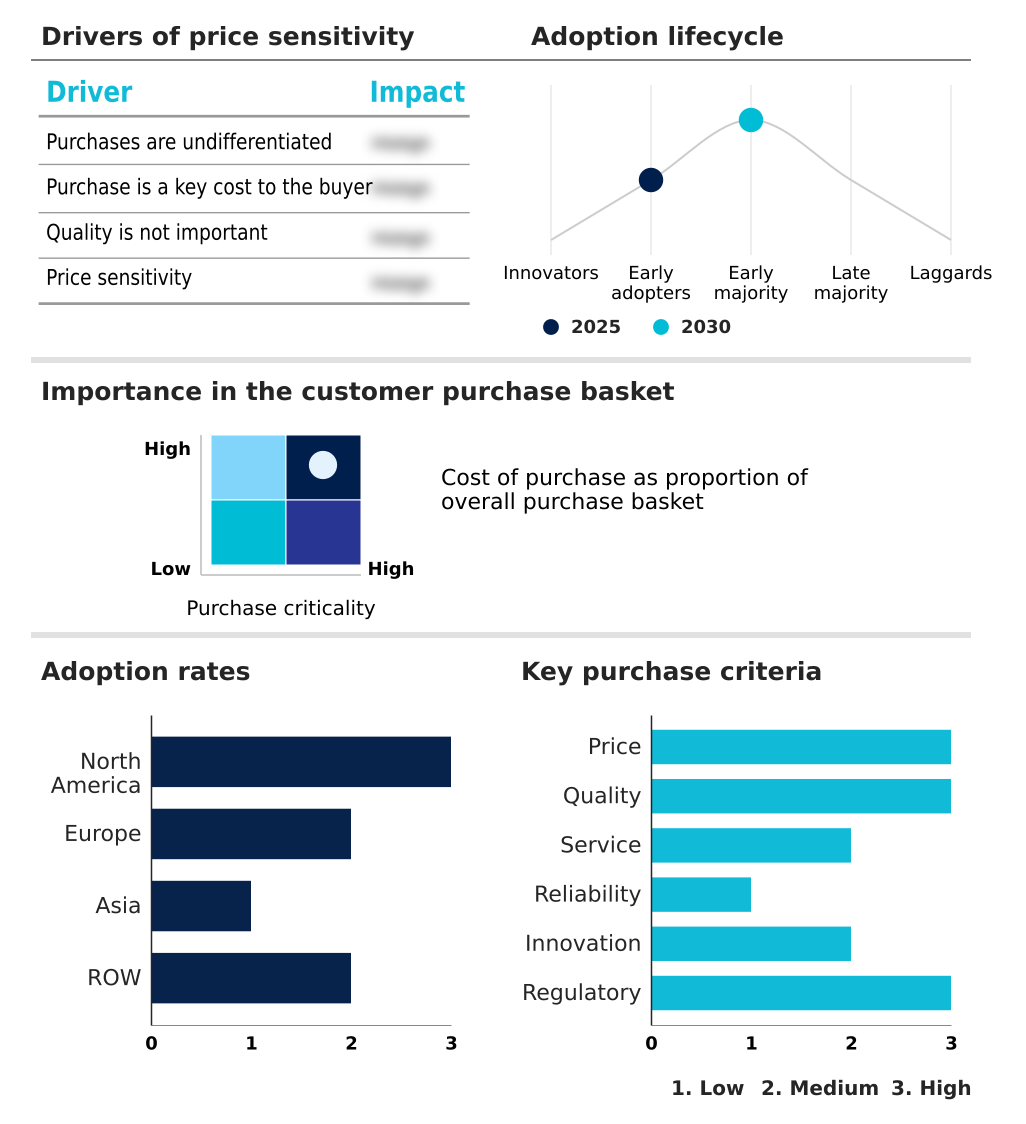
Customer Landscape of Compounding Pharmacy Industry
Competitive Landscape
Companies are implementing various strategies, such as strategic alliances, compounding pharmacy market forecast, partnerships, mergers and acquisitions, geographical expansion, and product/service launches, to enhance their presence in the industry.
AnazaoHealth - Specialized compounding pharmacy services provide customized medication solutions, focusing on hormone replacement therapy, pain management, and sterile preparations to meet individual patient needs.
The industry research and growth report includes detailed analyses of the competitive landscape of the market and information about key companies, including:
- AnazaoHealth
- Bayview Pharmacy
- Belmar Pharma
- CAPS Pharmacy
- Clinigen Group Plc
- Empower Pharmacy
- Fagron NV
- Fresenius Kabi AG
- McGuff
- Nephron Pharmaceuticals
- Olympia Pharmacy
- Pavilion Pharmacy
- QuVa Pharma
- SCA Pharma
- T and C Compounding
- Wedgewood Pharmacy
- Wells Pharmacy
Qualitative and quantitative analysis of companies has been conducted to help clients understand the wider business environment as well as the strengths and weaknesses of key industry players. Data is qualitatively analyzed to categorize companies as pure play, category-focused, industry-focused, and diversified; it is quantitatively analyzed to categorize companies as dominant, leading, strong, tentative, and weak.
Market Intelligence Radar: High-Impact Developments & Growth Signals
- In the Pharmaceuticals industry, persistent drug shortages for commercially manufactured products have increased reliance on compounding pharmacies to prepare essential medications, ensuring continuity of care for patients.
- The broader shift toward personalized medicine within the Pharmaceuticals industry, underscored by advances in pharmacogenomic testing, is fueling demand for compounded medications tailored to individual genetic profiles and metabolic pathways.
- In the Pharmaceuticals industry, heightened regulatory harmonization efforts, influenced by standards from bodies like the EMA and FDA, are pushing compounding pharmacies globally to adopt more stringent good manufacturing practices (GMP) and quality control testing, particularly for sterile injectable products.
- Supply chain vulnerabilities for critical active pharmaceutical ingredients (APIs) in the global Pharmaceuticals industry have prompted compounding pharmacies to diversify sourcing and invest in robust inventory management to mitigate risks and maintain production of patient-specific prescriptions.
Dive into Technavio’s robust research methodology, blending expert interviews, extensive data synthesis, and validated models for unparalleled Compounding Pharmacy Market insights. See full methodology.
| Market Scope | |
|---|---|
| Page number | 295 |
| Base year | 2025 |
| Historic period | 2020-2024 |
| Forecast period | 2026-2030 |
| Growth momentum & CAGR | Accelerate at a CAGR of 2.1% |
| Market growth 2026-2030 | USD 1725.6 million |
| Market structure | Fragmented |
| YoY growth 2025-2026(%) | 2.1% |
| Key countries | US, Canada, Mexico, Germany, UK, France, Italy, Spain, The Netherlands, China, India, Japan, South Korea, Indonesia, Thailand, Brazil, Saudi Arabia, UAE, Turkey, Argentina, Colombia, South Africa and Israel |
| Competitive landscape | Leading Companies, Market Positioning of Companies, Competitive Strategies, and Industry Risks |
Research Analyst Overview
- The compounding pharmacy market ecosystem is a complex network of stakeholders, where hospital pharmacies account for over 39% of end-user engagement. The value chain begins with suppliers of high-quality active pharmaceutical ingredients (APIs) and specialized drug excipients, who must meet rigorous standards.
- Compounding pharmacies, including both small 503A community pharmacies and large 503B outsourcing facilities, act as the central manufacturers, creating patient-specific prescriptions. Regulatory bodies like the FDA and EMA provide critical oversight, enforcing standards such as USP 797 to ensure safety and efficacy, with non-compliance leading to penalties that can reduce a facility's operational capacity by 100%.
- Distribution channels deliver these customized medications to end-users, including hospitals, retail pharmacies, and long-term care facilities, which rely on these services for personalized medicine and to manage commercial drug shortages.
What are the Key Data Covered in this Compounding Pharmacy Market Research and Growth Report?
-
What is the expected growth of the Compounding Pharmacy Market between 2026 and 2030?
-
The Compounding Pharmacy Market is expected to grow by USD 1.73 billion during 2026-2030, registering a CAGR of 2.1%. Year-over-year growth in 2026 is estimated at 2.1%%. This acceleration is shaped by growing popularity of hrt fueling demand for compounded medications, which is intensifying demand across multiple end-use verticals covered in the report.
-
-
What segmentation does the market report cover?
-
The report is segmented by Product (Topical medications, Oral medications, Parenteral medications, and Others), Therapeutic Area (Pain management, Hormone replacement, Dermal disorders, and Others), End-user (Hospital pharmacies, Retail pharmacies, Long-term care facilities, and Others) and Geography (North America, Europe, Asia, Rest of World (ROW)). Among these, the Topical medications segment is estimated to witness significant growth during the forecast period, driven by rising adoption across key application areas. Each segment includes detailed qualitative and quantitative analysis, along with historical data from 2020-2024 and forecasts through 2030 with year-over-year growth rates.
-
-
Which regions are analyzed in the report?
-
The report covers North America, Europe, Asia and Rest of World (ROW). North America is estimated to contribute 41% to market growth during the forecast period. Country-level analysis includes US, Canada, Mexico, Germany, UK, France, Italy, Spain, The Netherlands, China, India, Japan, South Korea, Indonesia, Thailand, Brazil, Saudi Arabia, UAE, Turkey, Argentina, Colombia, South Africa and Israel, with dedicated market size tables and year-over-year growth for each.
-
-
What are the key growth drivers and market challenges?
-
The primary driver is growing popularity of hrt fueling demand for compounded medications, which is accelerating investment and industry demand. The main challenge is unsafe usage of compounded drugs, creating operational barriers for key market participants. The report quantifies the impact of each driver and challenge across 2026 and 2030 with comparative analysis.
-
-
Who are the major players in the Compounding Pharmacy Market?
-
Key vendors include AnazaoHealth, Bayview Pharmacy, Belmar Pharma, CAPS Pharmacy, Clinigen Group Plc, Empower Pharmacy, Fagron NV, Fresenius Kabi AG, McGuff, Nephron Pharmaceuticals, Olympia Pharmacy, Pavilion Pharmacy, QuVa Pharma, SCA Pharma, T and C Compounding, Wedgewood Pharmacy and Wells Pharmacy. The report provides qualitative and quantitative analysis categorizing companies as dominant, leading, strong, tentative, and weak based on their market positioning. Company profiles include business segment analysis, SWOT assessment, key offerings, and recent strategic developments.
-
Market Research Insights
- The global compounding pharmacy market's competitive landscape is moderately fragmented, with the top 15 vendors, including specialists like Fagron NV and large-scale providers like Fresenius Kabi AG, accounting for a significant portion of market share. These companies are navigating a market that requires high capital expenditure, often exceeding 20% of revenue for new 503B outsourcing facility development.
- Recent developments center on expanding sterile compounding capabilities and investing in automated compounding devices to enhance safety and efficiency. For example, Empower Pharmacy has focused on scaling its 503A and 503B operations to meet national demand for wellness and hormone medications.
- This push for technological adoption and capacity expansion directly addresses the industry's core challenge: meeting stringent regulatory compliance while managing persistent drug shortages and increasing demand for personalized medicine.
We can help! Our analysts can customize this compounding pharmacy market research report to meet your requirements.
 RIA -
RIA - 
