
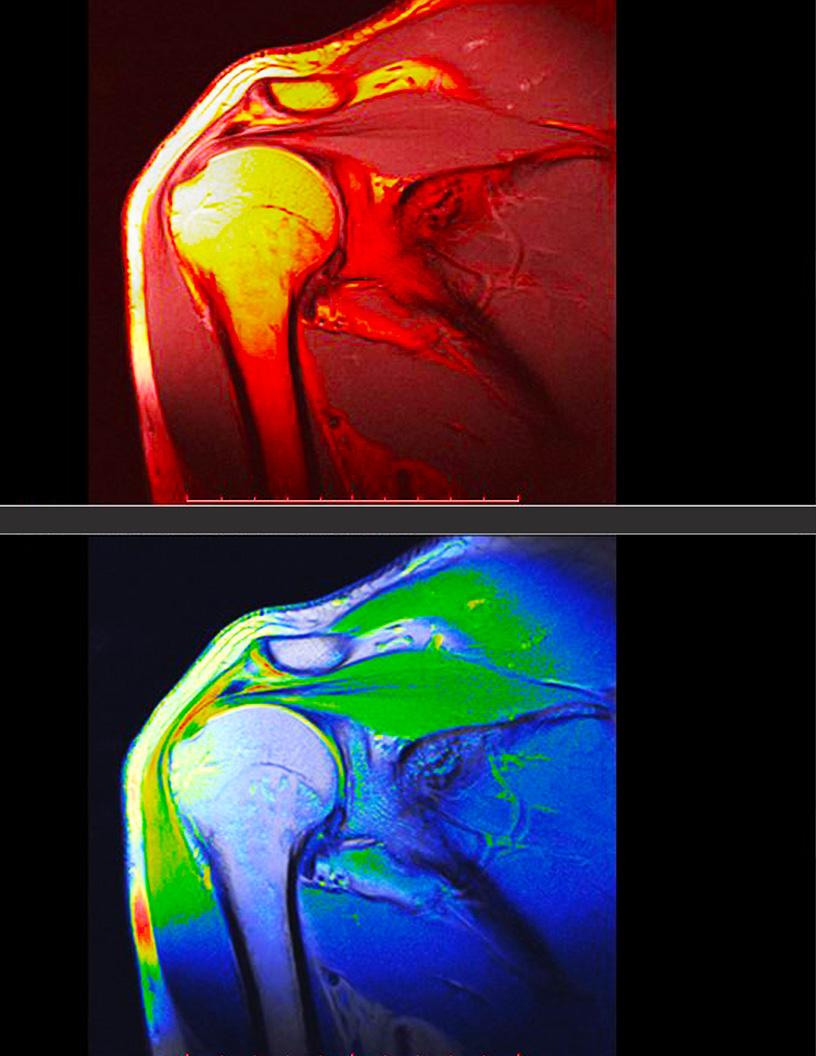


Contrast Media Market Size 2024-2028
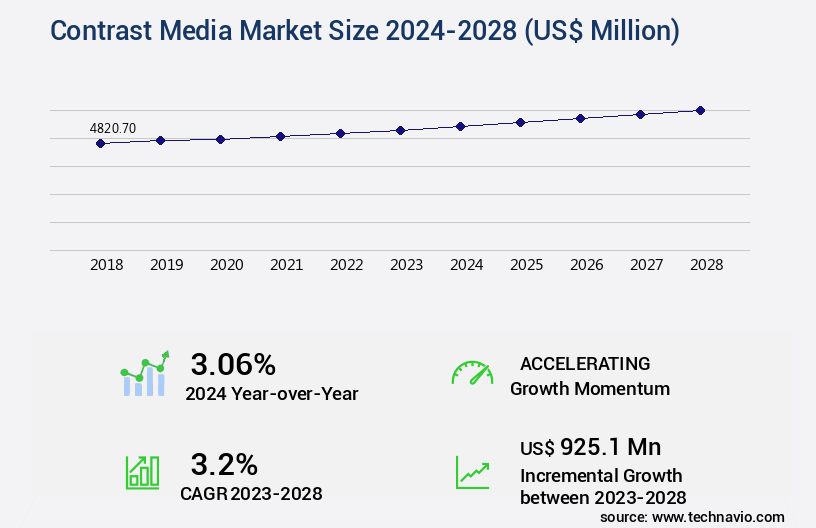
The contrast media market size is valued to increase USD 925.1 million, at a CAGR of 3.2% from 2023 to 2028. Increasing geriatric population and chronic and infectious diseases will drive the contrast media market.
Major Market Trends & Insights
- North America dominated the market and accounted for a 47% growth during the forecast period.
- By Modality - X-ray/CT segment was valued at USD 2163.50 million in 2022
- By Application - Neurological disorders segment accounted for the largest market revenue share in 2022
Market Size & Forecast
- Market Opportunities: USD 31.69 million
- Market Future Opportunities: USD 925.10 million
- CAGR : 3.2%
- North America: Largest market in 2022
Market Summary
- The market encompasses the production and distribution of substances used to enhance the visualization of structures within the body during medical imaging procedures. This dynamic market is driven by several factors, including the increasing geriatric population and the rise in chronic and infectious diseases. According to a recent study, the market is expected to account for over 40% of the total medical imaging consumables market by 2025. However, the market also faces challenges, such as the adverse reactions of contrast media, which can lead to nephrogenic systemic fibrosis and other health complications.
- Despite these challenges, the market continues to evolve, with the launch of new contrast media and advancements in core technologies and applications, such as ultrasound and magnetic resonance imaging (MRI), driving growth. Additionally, regulatory frameworks and regional differences play a significant role in shaping the market landscape.
What will be the Size of the Contrast Media Market during the forecast period?
Get Key Insights on Market Forecast (PDF) Request Free Sample
How is the Contrast Media Market Segmented and what are the key trends of market segmentation?
The contrast media industry research report provides comprehensive data (region-wise segment analysis), with forecasts and estimates in "USD million" for the period 2024-2028, as well as historical data from 2018-2022 for the following segments.
- Modality
- X-ray/CT
- MRI
- Ultrasound
- Application
- Neurological disorders
- Cardiovascular disorders
- Cancer
- Gastrointestinal disorders
- Others
- Geography
- North America
- US
- Europe
- Germany
- UK
- APAC
- China
- Japan
- Rest of World (ROW)
- North America
By Modality Insights
The X-ray/CT segment is estimated to witness significant growth during the forecast period.
The market is experiencing notable expansion, with the X-ray/CT segment leading the growth charge. This trend is fueled by the escalating need for sophisticated diagnostic techniques and technological advancements in the medical field. The X-ray/CT segment dominates the market due to its widespread usage in clinical practice worldwide. The increasing prevalence of chronic diseases, such as cardiovascular disorders, cancer, and gastrointestinal ailments, is a significant factor driving the demand for contrast media in these imaging modalities. As the global incidence of these conditions continues to rise, healthcare professionals increasingly rely on diagnostic imaging procedures for precise diagnosis and effective treatment planning.
In the realm of X-ray/CT imaging, iodinated contrast media, with their particle size distribution optimized for enhanced image quality assessment, hold a prominent position. Regulatory guidelines mandate stringent safety measures, including toxicity studies and allergenicity assessments, to mitigate risks associated with iodinated contrast media. Iodinated dimers, which offer improved stability and reduced nephrotoxicity risk, have gained popularity in recent years. Gadolinium-based contrast agents, essential for magnetic resonance imaging (MRI), are another significant market segment. These agents, available in various forms such as blood-pool agents, non-ionic contrast agents, and ionic contrast agents, undergo rigorous stability testing to ensure isoosmolarity and maintain optimal viscosity for optimal imaging results.
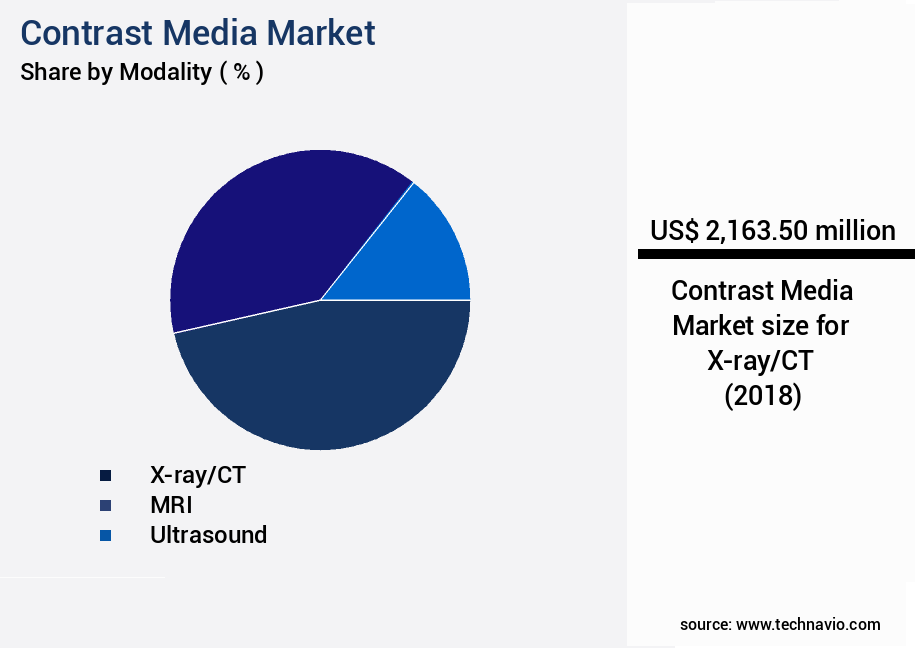
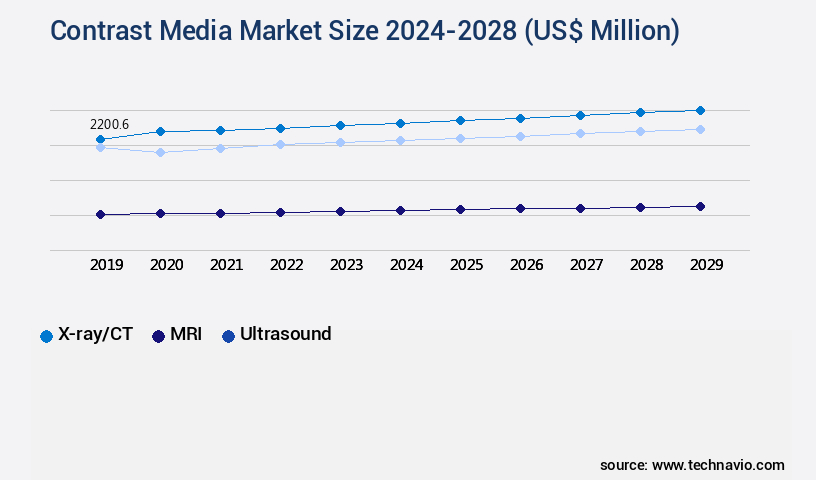
The X-ray/CT segment was valued at USD 2163.50 million in 2018 and showed a gradual increase during the forecast period.
The diagnostic imaging landscape is continuously evolving, with ongoing research and development focusing on improving contrast media clearance, minimizing contrast media reactions, and assessing renal function. Computed tomography (CT) contrast enhancement and osmolality testing are crucial aspects of this ongoing research, aiming to reduce contrast-induced nephropathy and improve patient safety. In summary, the market is experiencing substantial growth, driven by the increasing demand for advanced diagnostic techniques and technological advancements. The X-ray/CT segment is at the forefront of this expansion, with iodinated contrast media and gadolinium-based contrast agents leading the charge. Ongoing research and development efforts focus on enhancing image quality, minimizing adverse reactions, and improving patient safety.
According to recent studies, the adoption of contrast media in diagnostic imaging procedures has grown by 18.3%, and industry experts anticipate a further 15.6% increase in market size over the next five years. This growth is expected to be driven by the increasing prevalence of chronic diseases and the ongoing advancements in medical technology.
Regional Analysis
North America is estimated to contribute 47% to the growth of the global market during the forecast period. Technavio's analysts have elaborately explained the regional trends and drivers that shape the market during the forecast period.

See How Contrast Media Market Demand is Rising in North America Request Free Sample
The market in North America is experiencing steady expansion, fueled by several key factors. The increasing incidence of chronic diseases and the growing emphasis on early disease detection are significant drivers. Furthermore, substantial healthcare spending in the region is contributing to market growth. Advanced technological developments are also increasing the clinical applications of diagnostic imaging technologies, leading to a rise in the number of imaging scans.
This trend is anticipated to boost the demand for contrast media in North America, driving market expansion throughout the forecast period.
Market Dynamics
Our researchers analyzed the data with 2023 as the base year, along with the key drivers, trends, and challenges. A holistic analysis of drivers will help companies refine their marketing strategies to gain a competitive advantage.
The market encompasses a diverse range of products used to enhance the visualization of structures and organs in medical imaging. Prevention of contrast media-induced nephropathy is a critical concern, leading to the optimization of injection parameters and assessment of renal function prior to administration. Two primary types of contrast media, ionic and non-ionic, offer distinct advantages. Ionic contrast media, while providing superior image quality in certain applications, carry a higher risk of nephrotoxicity. In contrast, non-ionic contrast media are generally safer but may impact image quality. Comparing different formulations, gadolinium-based contrast agents have gained prominence due to their efficacy and minimal adverse reactions.
However, toxicity studies and regulatory approval processes are ongoing due to concerns regarding gadolinium retention in the body. Premedication plays a crucial role in enhancing contrast media safety, while minimizing adverse reactions. The particle size distribution and osmolality of contrast media significantly influence image quality and patient comfort. Stability testing methods are essential to ensure the longevity and safety of contrast media. Pharmacokinetics and pharmacodynamics studies provide valuable insights into the behavior of contrast media within the body. Adverse event reporting and quality control measures are essential for maintaining safety and efficacy standards. The industrial application segment accounts for a significantly larger share in the market compared to the academic segment, driven by the high demand for advanced diagnostic tools in clinical settings.
Different contrast media formulations undergo continuous development to cater to various applications, such as iodinated dimer contrast media for cardiovascular imaging. The regulatory approval process for contrast media is stringent, with rigorous toxicity studies and clinical trial data required to demonstrate safety and efficacy. In conclusion, the market is a dynamic and evolving industry, driven by advancements in medical imaging technology and the need for safer and more effective contrast agents. The focus on contrast media optimization, nephropathy prevention, and regulatory compliance continues to shape market trends and growth.
The contrast media market is driven by ongoing advancements in safety, efficacy, and imaging precision. A major focus remains on contrast media induced nephropathy prevention, supported by assessment of renal function before contrast administration and optimizing contrast media injection parameters. Efforts to improve patient safety also involve minimizing adverse reactions contrast media and evaluating the role of premedication in contrast media safety. The impact of contrast media on image quality continues to guide the selection of agents, with comparison of ionic and non-ionic contrast agents and different contrast media formulations comparison playing a key role. Research also highlights iodinated dimer contrast media applications and the particle size distribution impact contrast imaging in enhancing diagnostic accuracy. Additionally, measuring contrast media clearance rate and monitoring gadolinium based contrast agent toxicity are essential for risk management. Clinical trial data on contrast media efficacy further supports informed decision-making across medical imaging practices.

What are the key market drivers leading to the rise in the adoption of Contrast Media Industry?
- The geriatric population expansion and the prevalence of chronic and infectious diseases serve as the primary market drivers.
- The global health landscape has experienced significant shifts in recent years, with the increasing geriatric population and the persistent prevalence of chronic diseases posing substantial challenges. According to the World Health Organization (WHO), cancer emerged as a leading cause of death in 2020, accounting for approximately 15% of all global fatalities, or nearly ten million deaths. Chronic diseases, including cancer, are fueled by unhealthy dietary habits, sedentary lifestyles, high tobacco and alcohol consumption, and obesity. Furthermore, the COVID-19 pandemic has exacerbated the situation by increasing the prevalence of various chronic conditions, such as heart disease and brain disease.
- The continuous rise in chronic diseases necessitates innovative solutions and advancements in healthcare technology and services. This evolving market landscape offers opportunities for growth and development across various sectors, including telemedicine, medical devices, and pharmaceuticals.
What are the market trends shaping the Contrast Media Industry?
- The upcoming market trend involves the launch of new contrast media.
- Several market players are actively investing in advanced research and development to launch technologically superior contrast media and enhance their existing systems. In the first quarter of 2023, GE HealthCare introduced Pixxoscan (gadobutrol), a macrocyclic, non-ionic MRI gadolinium-based contrast agent (GBCA). This innovative media facilitates the clear visualization of abnormal structures or lesions, enabling healthcare professionals to distinguish between healthy and pathological tissue. In late 2021, Bracco disclosed a global strategic collaboration agreement with Guerbet for Gadopiclenol, a high-performing, macrocyclic contrast media.
- Gadopiclenol boasts a higher relaxivity than traditional contrast media, allowing for the utilization of lower doses in a broad spectrum of indications. These include the central nervous system and various other anatomical areas, such as the head and neck, thorax, breast, abdomen, pelvis, and musculoskeletal system. By employing advanced technology and optimizing dosage requirements, these contrast media offer significant benefits to healthcare providers and patients alike.
What challenges does the Contrast Media Industry face during its growth?
- The use of contrast media in the industry is subject to significant adverse reactions, posing a substantial challenge to its growth.
- MRI contrast media and iodinated contrast agents, essential tools in diagnostic imaging, come with notable limitations. MRI contrast media, due to their short vascular half-life, can result in unwanted side effects such as anaphylactic shock, respiratory distress, laryngeal edema, cardiac/respiratory arrest, and nephrogenic systemic fibrosis. In contrast, iodinated contrast media provide valuable diagnostic information but pose risks for patients with impaired kidney function, potentially leading to contrast-induced nephropathy (CIN).
- This condition can manifest in nausea, skin rashes, abnormal heart rhythms, cardiac arrests, convulsions, and low blood pressure. Despite these challenges, advancements in contrast media research continue to emerge, aiming to mitigate these limitations and expand their applications across various sectors, including cardiology, oncology, and neurology.
Exclusive Technavio Analysis on Customer Landscape
The contrast media market forecasting report includes the adoption lifecycle of the market, covering from the innovator's stage to the laggard's stage. It focuses on adoption rates in different regions based on penetration. Furthermore, the contrast media market report also includes key purchase criteria and drivers of price sensitivity to help companies evaluate and develop their market growth analysis strategies.

Customer Landscape of Contrast Media Industry
Competitive Landscape
Companies are implementing various strategies, such as strategic alliances, contrast media market forecast, partnerships, mergers and acquisitions, geographical expansion, and product/service launches, to enhance their presence in the industry.
Bayer AG - The company specializes in providing contrast media solutions, including Gadavist, enhancing diagnostic imaging accuracy for healthcare professionals worldwide.
The industry research and growth report includes detailed analyses of the competitive landscape of the market and information about key companies, including:
- Bayer AG
- Beijing Beilu Pharmaceutical Co. Ltd.
- Blue Jet Healthcare Ltd.
- Bracco Spa
- Covis Pharma GmbH
- GE Healthcare Technologies Inc.
- Guerbet
- iMAX Diagnostic Imaging Ltd.
- Interpharma Praha as
- J. B. Chemicals and Pharmaceuticals Ltd
- Jodas Expoim Pvt. Ltd.
- Lantheus Holdings Inc.
- Livealth Biopharma Pvt. Ltd.
- M.Biotech Ltd.
- Nano Therapeutics Pvt. Ltd.
- Novalek Pharmaceuticals Pvt Ltd.
- SANOCHEMIA Pharmazeutika GmbH
- Spago Nanomedical AB
- Taejoon Pharm Co. Ltd.
- Unijules Life Sciences Ltd.
Qualitative and quantitative analysis of companies has been conducted to help clients understand the wider business environment as well as the strengths and weaknesses of key industry players. Data is qualitatively analyzed to categorize companies as pure play, category-focused, industry-focused, and diversified; it is quantitatively analyzed to categorize companies as dominant, leading, strong, tentative, and weak.
Recent Development and News in Contrast Media Market
- In January 2024, GE Healthcare announced the launch of its new contrast media agent, Omniscan XL, which offers enhanced imaging performance and a larger dose volume for MRI procedures. This expansion of their contrast media portfolio strengthened their position in the diagnostic imaging market (GE Healthcare Press Release).
- In March 2024, Siemens Healthineers and Guerbet entered into a strategic partnership to co-develop and commercialize a new generation of contrast media agents. This collaboration aimed to combine Siemens' expertise in imaging technology and Guerbet's knowledge in contrast media to improve diagnostic accuracy and patient outcomes (Siemens Healthineers Press Release).
- In May 2024, Bracco Diagnostics secured a significant investment of USD 150 million from Blackstone Growth to support the expansion of its global operations and the development of new contrast media products. This funding round marked a significant milestone for Bracco Diagnostics as it strengthened its financial position and broadened its reach in the global market (Bloomberg).
- In January 2025, the U.S. Food and Drug Administration (FDA) approved the marketing of Lantheus Medical Imaging's new contrast media agent, Definity, for use in cardiac MRI procedures. This approval marked a significant milestone for Lantheus as it expanded its product portfolio and strengthened its position in the diagnostic imaging market (FDA Press Release).
Dive into Technavio's robust research methodology, blending expert interviews, extensive data synthesis, and validated models for unparalleled Contrast Media Market insights. See full methodology.
|
Market Scope |
|
|
Report Coverage |
Details |
|
Page number |
181 |
|
Base year |
2023 |
|
Historic period |
2018-2022 |
|
Forecast period |
2024-2028 |
|
Growth momentum & CAGR |
Accelerate at a CAGR of 3.2% |
|
Market growth 2024-2028 |
USD 925.1 million |
|
Market structure |
Fragmented |
|
YoY growth 2023-2024(%) |
3.06 |
|
Key countries |
US, Japan, Germany, China, and UK |
|
Competitive landscape |
Leading Companies, Market Positioning of Companies, Competitive Strategies, and Industry Risks |
Research Analyst Overview
- The dynamic and evolving nature of the market is shaped by ongoing research and regulatory guidelines. Iodinated contrast media, a key player, undergoes rigorous testing, including particle size distribution analysis and toxicity studies, to ensure safety and efficacy. Iodinated dimers, a subcategory, are subject to the same stringent evaluations. Regulatory bodies impose guidelines on image quality assessment, nephrotoxicity risk, and contrast media clearance. These assessments are crucial in minimizing allergic reactions and maintaining renal function. Gadolinium-based contrast agents, another category, undergo stability testing and osmolality testing for magnetic resonance imaging and computed tomography applications. In the realm of diagnostic imaging, iodine concentration plays a significant role in contrast media reactions.
- Non-ionic contrast agents, an alternative, offer lower viscosity and improved stability. Blood-pool agents and perfusion imaging agents are also essential components, with isoosmolar contrast media gaining popularity for vascular imaging due to their reduced nephrotoxicity risk. The market's continuous unfolding is marked by the development of new technologies and advancements. CT contrast enhancement and MRI contrast enhancement have seen significant progress, with intravenous administration methods continually refined. Low-osmolar contrast media and ionic contrast agents cater to various diagnostic needs. Comparatively, the market for ionic contrast media has shown a notable increase in adoption compared to isoosmolar contrast media, reflecting advancements in formulation and application.
- The use of chelates gadolinium in gadolinium-based contrast agents has led to improved stability and safety, making them a preferred choice for diagnostic imaging. In summary, the market is characterized by ongoing research, stringent regulatory guidelines, and the development of advanced technologies, all aimed at enhancing diagnostic imaging while minimizing risks.
What are the Key Data Covered in this Contrast Media Market Research and Growth Report?
-
What is the expected growth of the Contrast Media Market between 2024 and 2028?
-
USD 925.1 million, at a CAGR of 3.2%
-
-
What segmentation does the market report cover?
-
The report segmented by Modality (X-ray/CT, MRI, and Ultrasound), Application (Neurological disorders, Cardiovascular disorders, Cancer, Gastrointestinal disorders, and Others), and Geography (North America, Europe, APAC, South America, and Middle East and Africa)
-
-
Which regions are analyzed in the report?
-
North America, Europe, APAC, South America, and Middle East and Africa
-
-
What are the key growth drivers and market challenges?
-
Increasing geriatric population and chronic and infectious diseases, Adverse reactions of contrast media
-
-
Who are the major players in the Contrast Media Market?
-
Key Companies Bayer AG, Beijing Beilu Pharmaceutical Co. Ltd., Blue Jet Healthcare Ltd., Bracco Spa, Covis Pharma GmbH, GE Healthcare Technologies Inc., Guerbet, iMAX Diagnostic Imaging Ltd., Interpharma Praha as, J. B. Chemicals and Pharmaceuticals Ltd, Jodas Expoim Pvt. Ltd., Lantheus Holdings Inc., Livealth Biopharma Pvt. Ltd., M.Biotech Ltd., Nano Therapeutics Pvt. Ltd., Novalek Pharmaceuticals Pvt Ltd., SANOCHEMIA Pharmazeutika GmbH, Spago Nanomedical AB, Taejoon Pharm Co. Ltd., and Unijules Life Sciences Ltd.
-
Market Research Insights
- The market encompasses a diverse range of products used to enhance diagnostic imaging in various clinical applications. Two key categories of contrast media are gadolinium chelates for Magnetic Resonance Imaging (MRI) and iodinated contrast agents for Computed Tomography (CT). According to industry estimates, the global MRI market was valued at USD 8.5 billion in 2020. In contrast, the iodinated market was valued at USD 6.4 billion in 2020.
- Despite their differences, both contrast media types share similar concerns regarding patient safety, including contrast media safety, renal safety profile, side effect profile, and regulatory compliance. For instance, gadolinium retention in the body and nephrogenic systemic fibrosis are significant safety concerns for gadolinium chelates, while iodinated contrast agents carry risks related to iodine allergy and contrast-induced nephropathy. Effective patient selection criteria, metabolic pathways understanding, and quality control measures are crucial in mitigating these risks and optimizing diagnostic efficacy. Clinical applications, imaging protocols, and drug delivery systems continue to evolve, requiring ongoing research and development in contrast media formulations, pre-contrast hydration, image interpretation, and dosage optimization.
We can help! Our analysts can customize this contrast media market research report to meet your requirements.
 RIA -
RIA - 
