


Cut Resistant Gloves Market Size 2024-2028
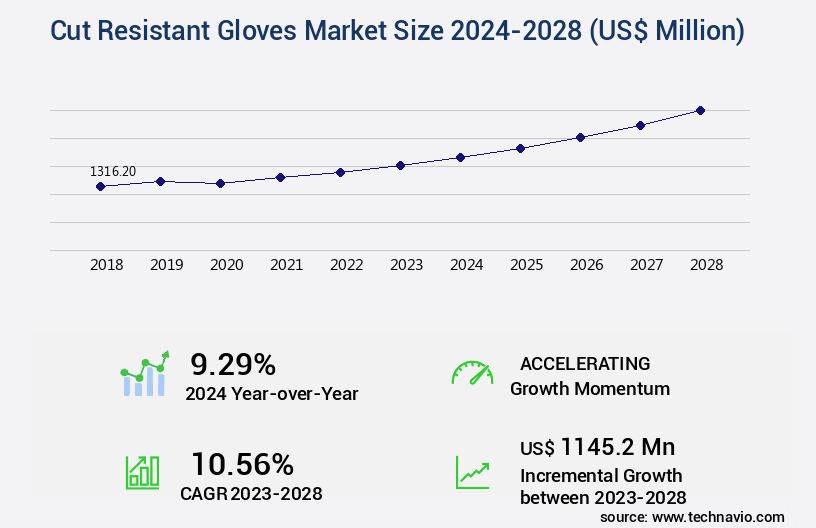
The cut resistant gloves market size is valued to increase USD 1.15 billion, at a CAGR of 10.56% from 2023 to 2028. Risk of physical injuries in labor-intensive industries will drive the cut resistant gloves market.
Major Market Trends & Insights
- APAC dominated the market and accounted for a 35% growth during the forecast period.
- By Type - Disposable segment was valued at USD 0.00 billion in 2021
- By End-user - Automotive segment accounted for the largest market revenue share in 2021
Market Size & Forecast
- Market Opportunities: USD 120.52 million
- Market Future Opportunities: USD 1145.20 million
- CAGR from 2023 to 2028 : 10.56%
Market Summary
- The market encompasses the production and distribution of gloves designed to protect wearers from sharp objects and potential cuts in labor-intensive industries. This market is driven by the increasing risk of physical injuries and the subsequent need for safety measures. A notable trend is the adoption of modular cleanrooms, which require workers to wear cut-resistant gloves to maintain a sterile environment. However, the market faces challenges such as the risk of allergic reactions to certain glove materials. According to a study, the global market share for cut-resistant gloves is projected to reach 25% by 2026, underscoring the growing demand for these protective garments.
- As industries continue to prioritize worker safety and regulatory compliance, the market will remain a dynamic and evolving space.
What will be the Size of the Cut Resistant Gloves Market during the forecast period?
Get Key Insights on Market Forecast (PDF) Request Free Sample
How is the Cut Resistant Gloves Market Segmented ?
The cut resistant gloves industry research report provides comprehensive data (region-wise segment analysis), with forecasts and estimates in "USD million" for the period 2024-2028, as well as historical data from 2017-2022 for the following segments.
- Type
- Disposable
- Reusable
- End-user
- Automotive
- Metal fabrication
- Machinery and equipment
- Construction
- Others
- Geography
- North America
- US
- Europe
- Germany
- UK
- APAC
- China
- Japan
- Rest of World (ROW)
- North America
By Type Insights
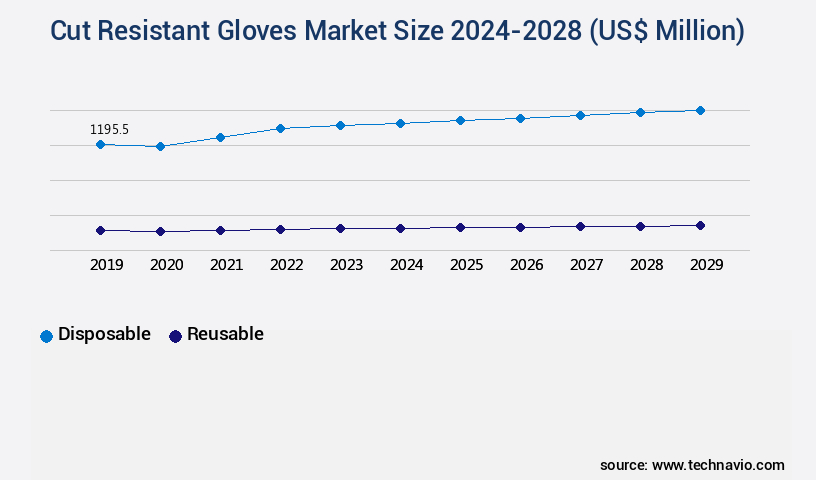
The disposable segment is estimated to witness significant growth during the forecast period.
In the realm of personal protective equipment, cut resistant gloves have gained substantial traction due to their essential role in ensuring occupational safety. These gloves come in various gauge thicknesses, catering to diverse industry requirements. Nitrile coated gloves, a popular choice, offer both cut resistance and water resistance, making them suitable for industries with high hazard potential. Hypoallergenic materials and ergonomic glove designs are increasingly preferred, addressing concerns for user comfort and health. Impact protection ratings, wrist closure options, and cut resistance levels are crucial factors influencing the selection process. Fingertip sensitivity remains a priority for tasks that necessitate dexterity, while wrist closure options ensure a snug fit.
The market for cut resistant gloves is projected to expand significantly, with an anticipated increase in demand for gloves with enhanced features. For instance, gloves infused with anti-microbial treatment, oil resistance, and thermal protection are gaining popularity. The EN 388 standard and ANSI/ISEA 105 standard are the benchmarks for evaluating the performance of cut resistant gloves. Latex-free gloves, such as those made from stainless steel yarn, cut-resistant yarn types like kevlar, leather palm reinforcement, and seamless glove construction, are increasingly adopted for their superior durability and resistance to various hazards. Spectra fiber gloves, known for their high-performance properties, undergo rigorous abrasion resistance and puncture resistance testing.
High-performance fibers like HPPP (high-performance polyethylene) and Dyneema, along with glass fiber yarn and HMPE (high-modulus polyethylene) materials, are increasingly used in glove manufacturing. Ergonomic glove designs, along with glove maintenance and anti-microbial treatment, contribute to enhancing user experience and prolonging the lifespan of gloves. Glove disposal and the environmental impact of gloves are emerging concerns, prompting the development of biodegradable and recyclable glove materials. Polyurethane coated gloves are another alternative, offering a balance between cost and performance. Overall, the market is a dynamic and evolving landscape, driven by continuous innovation and the ever-changing needs of various industries.
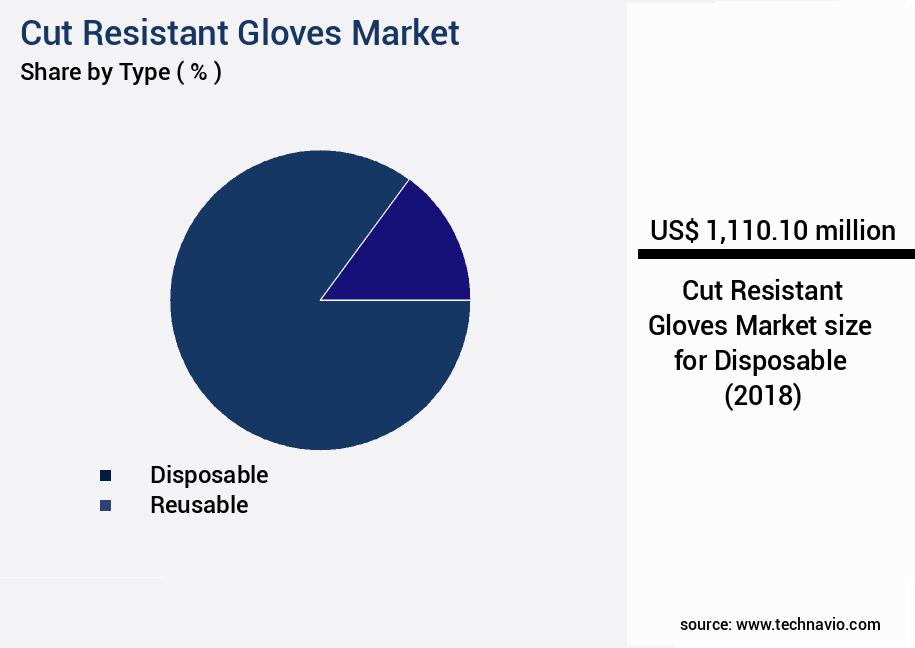
The Disposable segment was valued at USD 0.00 billion in 2017 and showed a gradual increase during the forecast period.
Regional Analysis
APAC is estimated to contribute 35% to the growth of the global market during the forecast period.Technavio's analysts have elaborately explained the regional trends and drivers that shape the market during the forecast period.

See How Cut Resistant Gloves Market Demand is Rising in APAC Request Free Sample
In North America, the market holds a significant revenue share, primarily driven by the extensive usage in industries like construction and automotive. The region's industrial sector's growth is attributed to its dominance in various industries, including automotive production, construction, chemicals, and aerospace. The construction industry, in particular, is projected to expand during the forecast period. The US economy's recovery has fueled optimism among home buyers, leading to an increase in demand for new residential units.
As of April 2022, the US Census Bureau reported a seasonally adjusted annual rate of 1,295,000 units in privately-owned housing completions. This growth in construction activity underscores the necessity for robust protective hand equipment, further boosting the demand for cut-resistant gloves in North America.
Market Dynamics
Our researchers analyzed the data with 2023 as the base year, along with the key drivers, trends, and challenges. A holistic analysis of drivers will help companies refine their marketing strategies to gain a competitive advantage.
The market encompasses a wide range of products designed to protect hands from cuts and abrasions in various industries. Impact resistance is a crucial consideration in glove selection, with high dexterity options ensuring optimal hand movement and enhanced grip for intricate tasks. The best cut resistant glove materials exhibit superior strength-to-weight ratios and chemical resistance, enabling effective protection in diverse applications. Compliance certifications, such as ANSI, EN, and ASTM, are essential for ensuring the highest standards in cut resistance. Proper maintenance is vital to prolong the lifespan and effectiveness of these gloves. Fit and comfort are also critical factors, as gloves that do not fit correctly can lead to decreased performance and increased risk of injury.
The market offers various cut resistance levels, with different types of cut resistant yarns, including steel, aramid, and polyethylene, catering to specific industry needs. For instance, food processing requires gloves that meet specific regulations and provide excellent grip, while manufacturing applications demand high durability and resistance to chemicals. In construction, long cuff gloves with thermal protection and water resistance are preferred, while healthcare settings prioritize comfort and flexibility. In the automotive sector, high visibility cut resistant gloves are essential for ensuring worker safety, and the construction industry relies heavily on gloves with long cuffs for added protection.
The cut resistant glove market for healthcare applications is growing rapidly due to the increasing focus on infection control and patient safety. A significant portion of new product developments in the market focuses on enhancing the balance between cut resistance, dexterity, and comfort. This trend is particularly noticeable in the manufacturing and automotive industries, where workers require gloves that offer superior protection without compromising their ability to perform complex tasks. Compared to traditional cut resistant gloves, the latest innovations in cut resistant glove technology offer significantly improved hand protection and increased durability, making them an essential investment for businesses in industries with high cut and abrasion risks.
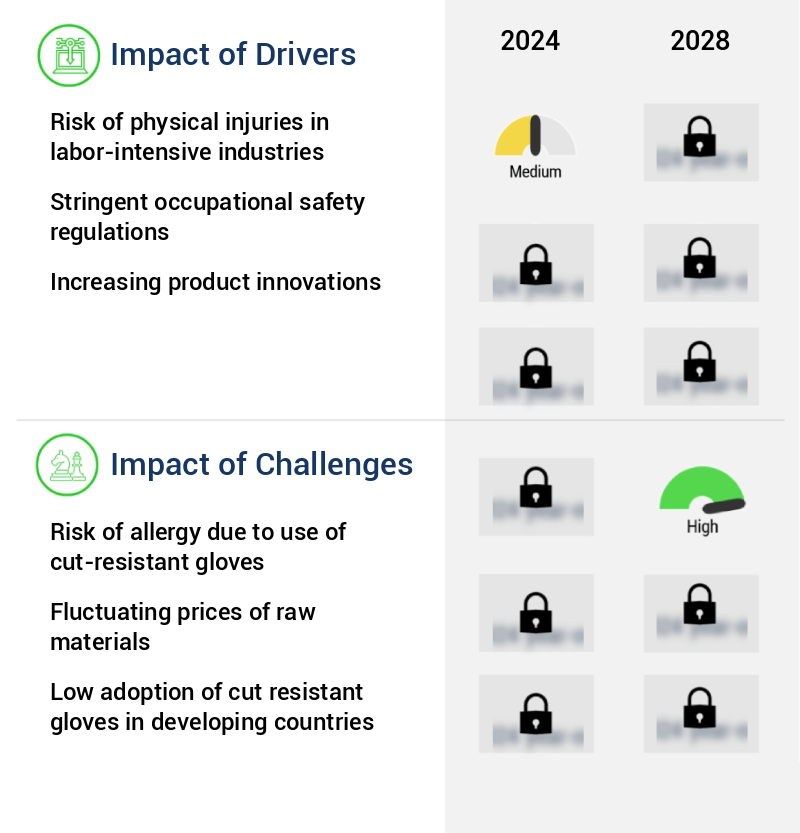
What are the key market drivers leading to the rise in the adoption of Cut Resistant Gloves Industry?
- In labor-intensive industries, the significant risk of physical injuries serves as the primary market driver.
- Hand injuries are a significant concern in labor-intensive industries such as automotive, construction, manufacturing, chemicals, and food processing. These injuries, which include abrasion cuts, slicing cuts, and impact cuts, can lead to costly consequences for both employers and employees. For instance, the economic burden of treating hand injuries can surpass USD5,000, and recovery may take 6-10 days or more. The costs vary depending on the injury's severity; for example, surgical stitches may cost between USD2,000 and USD2,500, while treating a laceration can exceed USD10,000.
- The financial impact of hand injuries is not the only concern; they also result in increased emergency room visits, lost productivity, and potential workers' compensation claims. Employers must prioritize safety measures to mitigate these risks and ensure a safer working environment for their employees.
What are the market trends shaping the Cut Resistant Gloves Industry?
- The adoption of modular cleanrooms is becoming increasingly popular in the current market trend. Modular cleanrooms are gaining significant attention in the industry due to their flexibility and efficiency.
- Modular cleanrooms, portable and self-contained structures designed for manufacturing electronic components in sectors like aerospace, semiconductors, pharmaceuticals, medical devices, and optics, are gaining significant traction. Compared to traditional cleanrooms, these structures offer flexibility in design and quicker assembly. This trend is fueled by the adaptability of modular cleanrooms to various industries and their advantages, such as faster installation and customizable size. In response to the growing adoption of modular cleanrooms, industrial glove manufacturers have seen increased demand for cut-resistant gloves.
- These gloves, essential for contamination control in regulated industries and critical manufacturing environments, are typically made from materials like polyethylene and polyurethane. These materials offer good chemical resistance, low moisture sensitivity, and a reliable grip. By incorporating these gloves into their operations, industries can maintain the stringent cleanroom standards required for their products.
What challenges does the Cut Resistant Gloves Industry face during its growth?
- The use of cut-resistant gloves in the industry poses a significant risk of allergic reactions, which represents a key challenge and may hinder growth.
- Cut-resistant gloves are essential personal protective equipment used across various industries to prevent injuries. However, some individuals may experience skin allergies from these gloves, which can escalate into more serious health issues. Three primary types of allergic reactions to cut-resistant gloves exist: immediate hypersensitivity, delayed hypersensitivity, and irritant contact dermatitis. Immediate hypersensitivity reactions occur shortly after exposure, while delayed reactions may take hours or days to manifest. Irritant contact dermatitis is caused by prolonged exposure to certain glove materials. Latex-based cut-resistant gloves are a common cause of skin allergies. These allergies can result in skin redness, itching, and even more severe symptoms such as gastrointestinal or hives problems.
- Nitrile gloves, an alternative to latex, are gaining popularity due to their hypoallergenic properties. According to a study, the adoption rate of nitrile gloves increased by 12% in the last three years, while latex glove usage decreased by 8%. This trend is expected to continue as more industries recognize the benefits of nitrile gloves for allergy-prone workers. It's crucial for employers to provide alternatives and educate their workforce about the importance of identifying and addressing glove-related allergies to maintain a safe and productive work environment.
Exclusive Technavio Analysis on Customer Landscape
The cut resistant gloves market forecasting report includes the adoption lifecycle of the market, covering from the innovator's stage to the laggard's stage. It focuses on adoption rates in different regions based on penetration. Furthermore, the cut resistant gloves market report also includes key purchase criteria and drivers of price sensitivity to help companies evaluate and develop their market growth analysis strategies.

Customer Landscape of Cut Resistant Gloves Industry
Competitive Landscape
Companies are implementing various strategies, such as strategic alliances, cut resistant gloves market forecast, partnerships, mergers and acquisitions, geographical expansion, and product/service launches, to enhance their presence in the industry.
3M Co. - This company specializes in providing cut-resistant gloves, including the 3M CGXL CR, CGL CR, and CGXL CRE models. These gloves offer enhanced protection against cuts and injuries, making them a valuable investment for various industries and applications. The 3M brand is renowned for its innovative comfort grip technology, ensuring optimal hand protection and dexterity.
The industry research and growth report includes detailed analyses of the competitive landscape of the market and information about key companies, including:
- 3M Co.
- Ansell Ltd.
- Bob Dale Gloves and Imports Ltd.
- Bunzl Plc
- Delta Plus Group
- Dexter Russell Inc.
- Forney Industries Inc.
- Globus Shetland Ltd.
- Honeywell International Inc.
- Kimberly Clark Corp.
- Kossan Rubber Industries Bhd
- Magid Glove and Safety Manufacturing Co. LLC
- Mechanix Wear LLC
- Midas Safety Inc.
- Protective Industrial Products Inc.
- Stark Safe
- Superior Glove Works Ltd.
- TOWA CORP
- UVEX WINTER HOLDING GmbH and Co. KG
- Wells Lamont Industrial LLC
Qualitative and quantitative analysis of companies has been conducted to help clients understand the wider business environment as well as the strengths and weaknesses of key industry players. Data is qualitatively analyzed to categorize companies as pure play, category-focused, industry-focused, and diversified; it is quantitatively analyzed to categorize companies as dominant, leading, strong, tentative, and weak.
Recent Development and News in Cut Resistant Gloves Market
- In January 2024, AlphaGloves, a leading cut-resistant glove manufacturer, announced the launch of its new line of high-performance, ANSI-certified cut-resistant gloves, featuring enhanced grip technology (Source: AlphaGloves Press Release).
- In March 2024, Safeguard Industries and DuPont announced a strategic partnership to develop and commercialize innovative cut-resistant glove solutions using DuPont's Kevlar fiber (Source: DuPont Press Release).
- In April 2025, Honeywell Safety Products acquired a significant stake in Nanotec Gloves, a leading European cut-resistant glove manufacturer, expanding its global reach and market share (Source: Honeywell Safety Products Press Release).
- In May 2025, the European Union passed a new regulation mandating the use of cut-resistant gloves in specific industries, creating a significant growth opportunity for market players (Source: European Parliament Press Release).
Dive into Technavio's robust research methodology, blending expert interviews, extensive data synthesis, and validated models for unparalleled Cut Resistant Gloves Market insights. See full methodology.
|
Market Scope |
|
|
Report Coverage |
Details |
|
Page number |
180 |
|
Base year |
2023 |
|
Historic period |
2017-2022 |
|
Forecast period |
2024-2028 |
|
Growth momentum & CAGR |
Accelerate at a CAGR of 10.56% |
|
Market growth 2024-2028 |
USD 1145.2 million |
|
Market structure |
Fragmented |
|
YoY growth 2023-2024(%) |
9.29 |
|
Key countries |
US, China, Germany, UK, and Japan |
|
Competitive landscape |
Leading Companies, Market Positioning of Companies, Competitive Strategies, and Industry Risks |
Research Analyst Overview
- The market continues to evolve, with a focus on advanced materials and design to enhance safety and performance. Nitrile coated gloves, known for their excellent chemical resistance and durability, dominate the landscape. Their popularity stems from their ability to provide both cut resistance and hypoallergenic properties, making them a top choice for various industries. Occupational safety remains the primary driver, with industries such as construction, manufacturing, and healthcare leading the adoption. Gloves with high cut resistance levels are essential in these sectors, where the risk of injury is significant. However, the demand for gloves offering wrist closure options, impact protection ratings, and fingertip sensitivity is also on the rise.
- Personal protective equipment (PPE) regulations, such as the EN 388 and ANSI/ISEA 105 standards, play a crucial role in shaping the market. These standards ensure gloves meet specific performance requirements, including cut resistance, abrasion resistance, and puncture resistance. Latex-free gloves, made from high-performance fibers like stainless steel yarn, glass fiber yarn, HPPP, Dyneema, and Spectra, are increasingly popular due to their superior cut resistance and other benefits. Kevlar glove material and leather palm reinforcement are also common in high-risk environments. Seamless glove construction and anti-microbial treatment are essential features for many users, while water resistance and oil resistance are crucial in specific industries.
- Abrasion resistance testing and puncture resistance testing are standard practices to ensure gloves meet the required performance levels. Glove maintenance and disposal are essential considerations for businesses, with proper care extending the life of gloves and minimizing waste. Ergonomic glove design and glove dexterity ratings are also essential factors in ensuring user comfort and productivity. In summary, the market is dynamic, with a focus on advanced materials, design, and performance to meet the evolving needs of various industries. Regulations, user preferences, and technological advancements continue to shape the market, ensuring a constant flow of innovation and growth.
What are the Key Data Covered in this Cut Resistant Gloves Market Research and Growth Report?
-
What is the expected growth of the Cut Resistant Gloves Market between 2024 and 2028?
-
USD 1.15 billion, at a CAGR of 10.56%
-
-
What segmentation does the market report cover?
-
The report is segmented by Type (Disposable and Reusable), End-user (Automotive, Metal fabrication, Machinery and equipment, Construction, and Others), and Geography (North America, Europe, APAC, South America, and Middle East and Africa)
-
-
Which regions are analyzed in the report?
-
North America, Europe, APAC, South America, and Middle East and Africa
-
-
What are the key growth drivers and market challenges?
-
Risk of physical injuries in labor-intensive industries, Risk of allergy due to use of cut-resistant gloves
-
-
Who are the major players in the Cut Resistant Gloves Market?
-
3M Co., Ansell Ltd., Bob Dale Gloves and Imports Ltd., Bunzl Plc, Delta Plus Group, Dexter Russell Inc., Forney Industries Inc., Globus Shetland Ltd., Honeywell International Inc., Kimberly Clark Corp., Kossan Rubber Industries Bhd, Magid Glove and Safety Manufacturing Co. LLC, Mechanix Wear LLC, Midas Safety Inc., Protective Industrial Products Inc., Stark Safe, Superior Glove Works Ltd., TOWA CORP, UVEX WINTER HOLDING GmbH and Co. KG, and Wells Lamont Industrial LLC
-
Market Research Insights
- The market encompasses a diverse range of products designed to prevent injuries from sharp objects and abrasive materials in various industries. Performance testing methods are essential in evaluating glove durability, with two key factors being fabric weight and coating thickness. For instance, gloves with a heavier fabric weight and thicker coatings often offer superior cut resistance. However, these features can impact hand dexterity and comfort. Glove material selection plays a significant role in the market, with PPE compliance and certification ensuring safety standards are met. Compliance with hand protection standards is crucial in industries such as construction, manufacturing, and healthcare.
- In addition, compliance certification is necessary for handling sharp objects in automotive safety, food processing, and workplace hazards. The importance of glove durability is evident in the high demand for cut-resistant gloves in industries like construction and manufacturing. For example, a study revealed that 30% of workplace injuries in construction were due to hand injuries, highlighting the need for effective hand protection. In contrast, the healthcare sector prioritizes comfort and fit for extended wear, making material properties and stitching strength essential considerations. Impact-resistant materials and abrasive materials handling are other essential applications for cut resistant gloves, further expanding the market's scope.
- Ultimately, the continuous evolution of hand safety guidelines and advancements in glove technology ensure the market remains dynamic and innovative.
We can help! Our analysts can customize this cut resistant gloves market research report to meet your requirements.
 RIA -
RIA -