



Cybersecurity Training Market Size 2025-2029
The cybersecurity training market size is forecast to increase by USD 5.9 billion, at a CAGR of 16.8% between 2024 and 2029.
- The market is driven by the escalating threat of cyberattacks and data breaches, which necessitates continuous education and skill development for IT professionals. This dynamic market is further fueled by the constant evolution of cyber threats, necessitating organizations to stay updated with the latest security trends and techniques. Strategic partnerships and collaborations between cybersecurity training providers and organizations play a pivotal role in addressing the skills gap and enhancing cybersecurity posture. However, the market faces challenges, including the rapidly changing landscape of cyberattacks, which necessitates flexible and adaptive training programs.
- Additionally, the shortage of cybersecurity talent and the high cost of training pose significant obstacles for organizations seeking to bolster their cybersecurity defenses. To capitalize on market opportunities and navigate challenges effectively, companies must prioritize agile training programs, collaborative partnerships, and cost-effective solutions.
What will be the Size of the Cybersecurity Training Market during the forecast period?
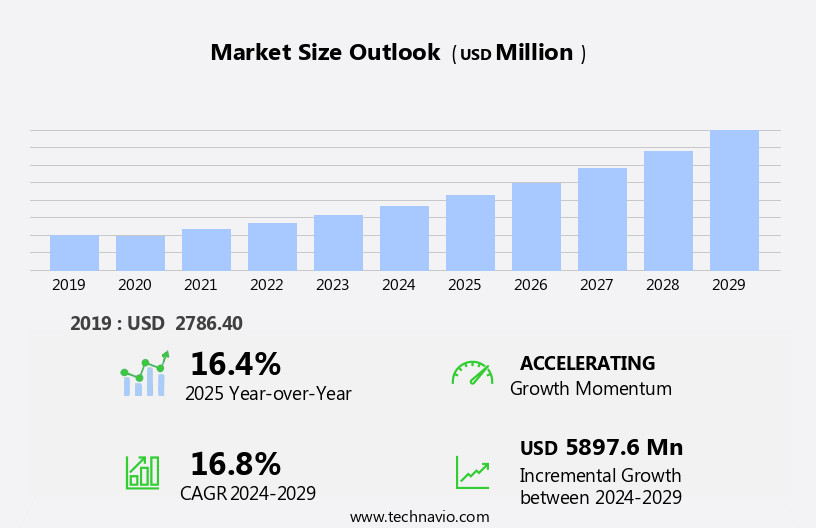
Explore in-depth regional segment analysis with market size data - historical 2019-2023 and forecasts 2025-2029 - in the full report.
Request Free Sample
The market continues to evolve, reflecting the dynamic nature of the cyber threat landscape. Businesses across various sectors invest in incident response planning, social engineering training, vulnerability assessments, and network security to mitigate risks. Password management, penetration testing, phishing awareness training, risk management, threat modeling, and purple teaming are integral components of comprehensive security strategies. Zero trust security, security auditing, employee training programs, firewall management, threat intelligence, blue teaming, and phishing simulations are essential for maintaining a robust cybersecurity posture. Regulatory compliance, cloud security, security metrics, and security architecture are also key areas of focus. Gamified security training, simulated attacks, access control, data breaches, data encryption, cybersecurity insurance, and security awareness campaigns are ongoing initiatives to enhance security and mitigate risks.
Red teaming, multi-factor authentication, PCI DSS, disaster recovery planning, and compliance frameworks are additional strategies to ensure business continuity and protect against evolving threats. The cybersecurity landscape is ever-changing, and organizations must remain vigilant and adaptable to stay ahead of emerging risks. Continuous learning and training are crucial to maintaining a strong cybersecurity posture and ensuring business resilience.
How is this Cybersecurity Training Industry segmented?
The cybersecurity training industry research report provides comprehensive data (region-wise segment analysis), with forecasts and estimates in "USD million" for the period 2025-2029, as well as historical data from 2019-2023 for the following segments.
- Delivery Mode
- Online training
- Classroom training
- Corporate training
- Type
- Cloud security
- Ethical hacking
- Cybersecurity fundamentals
- Network security
- Digital forensics
- Geography
- North America
- US
- Canada
- Europe
- France
- Germany
- Spain
- UK
- APAC
- China
- India
- Japan
- South Korea
- Rest of World (ROW)
- North America
By Delivery Mode Insights
The online training segment is estimated to witness significant growth during the forecast period.
The market is undergoing a transformative phase, with online training emerging as the preferred mode of delivery. This shift is driven by the convenience, cost-effectiveness, and scalability that online platforms offer. Learners can access training materials at their own pace, from any location, making it an ideal solution for businesses with geographically dispersed teams. The rise of remote work and digital learning has further accelerated this trend. Online training platforms provide a comprehensive range of resources, including video lectures, webinars, interactive modules, and hands-on simulations. These tools enable learners to grasp theoretical concepts while gaining practical experience in real-world cybersecurity scenarios.
They offer content on various topics such as incident response planning, social engineering training, vulnerability assessments, network security, password management, penetration testing, phishing awareness training, risk management, threat modeling, purple teaming, business continuity planning, compliance training, security assessments, zero trust security, security auditing, employee training programs, firewall management, threat intelligence, blue teaming, phishing simulations, regulatory compliance, cloud security, security metrics, security architecture, gamified security training, security audits, simulated attacks, access control, data breaches, data encryption, cybersecurity insurance, security awareness training, security awareness campaigns, red teaming, multi-factor authentication (MFA), PCI DSS, and disaster recovery planning. Moreover, compliance frameworks like NIST, ISO 27001, and COBIT are increasingly being integrated into cybersecurity training programs to help organizations meet regulatory requirements.
The market is also witnessing the adoption of advanced technologies like artificial intelligence, machine learning, and virtual reality to create more immersive and effective training experiences. Overall, the market is evolving to meet the changing needs of businesses and individuals in the digital age.
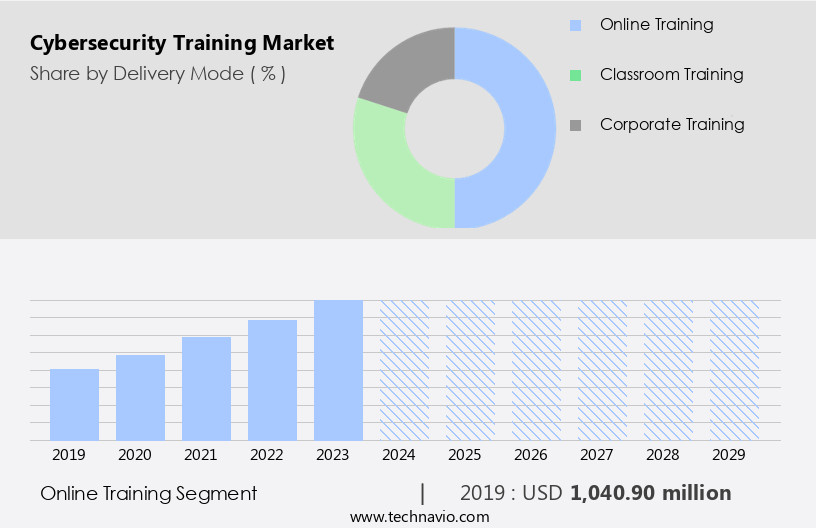
The Online training segment was valued at USD 1.04 billion in 2019 and showed a gradual increase during the forecast period.
Regional Analysis
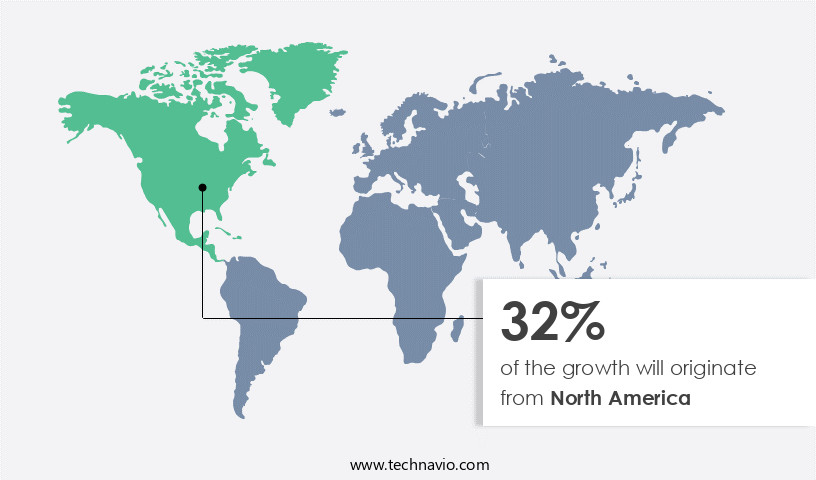
North America is estimated to contribute 32% to the growth of the global market during the forecast period.Technavio’s analysts have elaborately explained the regional trends and drivers that shape the market during the forecast period.
The market in North America is experiencing significant growth due to the region's stringent regulatory environment. In the United States, industries such as healthcare and finance are subject to various regulations, including the Health Insurance Portability and Accountability Act (HIPAA), the Gramm-Leach-Bliley Act (GLBA), and the National Institute of Standards and Technology (NIST) cybersecurity frameworks. These regulations mandate that businesses protect sensitive data and maintain robust cyber defenses. As a result, companies across sectors invest in comprehensive employee training programs to ensure compliance. Areas of focus include data protection, breach response, and secure system configuration. Failure to adhere to these regulations can result in severe penalties, making effective training initiatives a priority.
Moreover, cybersecurity threats continue to evolve, necessitating ongoing training and education. Incident response planning, social engineering training, vulnerability assessments, network security, password management, penetration testing, phishing awareness training, risk management, threat modeling, purple teaming, business continuity planning, compliance training, security assessments, zero trust security, security auditing, employee training programs, firewall management, threat intelligence, blue teaming, phishing simulations, regulatory compliance, cloud security, security metrics, security architecture, gamified security training, security audits, simulated attacks, access control, data breaches, data encryption, cybersecurity insurance, security awareness training, security awareness campaigns, red teaming, and multi-factor authentication (MFA) are essential components of a comprehensive cybersecurity training program.
By providing employees with the necessary skills and knowledge to identify and respond to threats, organizations can reduce their risk exposure and protect their digital assets.
Market Dynamics
Our researchers analyzed the data with 2024 as the base year, along with the key drivers, trends, and challenges. A holistic analysis of drivers will help companies refine their marketing strategies to gain a competitive advantage.
In the dynamic and ever-evolving digital landscape, the market plays a pivotal role in equipping individuals and organizations with the essential skills needed to fortify their defenses against cyber threats. This market encompasses a range of services, from foundational courses in cybersecurity fundamentals to advanced training in specialized areas like ethical hacking, incident response, and cloud security. With the increasing demand for cybersecurity professionals, the market offers numerous opportunities for learners to upskill and reskill, enhancing their employability and contributing to the overall cybersecurity posture of their organizations. Additionally, the market caters to various sectors, including healthcare, finance, education, and government, ensuring a diverse and inclusive learning environment. Furthermore, it prioritizes flexibility through various delivery methods, such as online courses, instructor-led training, and immersive simulations, enabling learners to choose the most suitable option for their needs and schedules. The market is a vital investment in the future, empowering learners to protect against cyber attacks and safeguard digital assets.
What are the key market drivers leading to the rise in the adoption of Cybersecurity Training Industry?
- The escalating issue of cyber threats and data breaches serves as the primary catalyst for market growth.
- The market is experiencing significant growth due to the increasing number and complexity of cyberattacks. In 2024, the global cost of a data breach reached an all-time high of USD4.88 million, marking a 10% increase from the previous year. This trend highlights the urgent need for comprehensive cybersecurity measures. One-third of breaches involved shadow data, emphasizing the importance of tracking and securing data proliferation. A report by the Data Security Council of India (DSCI) revealed an average of 761 cyberattack attempts per minute in 2024. The healthcare industry was the top target sector, followed closely by hospitality and banking.
- To mitigate these threats, businesses are investing in various cybersecurity training programs. These include incident response planning, social engineering training, vulnerability assessments, network security, password management, penetration testing, phishing awareness training, risk management, threat modeling, and purple teaming. These measures help organizations build a strong defense against cyber threats and minimize the potential damage from breaches. By prioritizing cybersecurity training, businesses can protect their valuable data and maintain customer trust.
What are the market trends shaping the Cybersecurity Training Industry?
- Strategic partnerships and collaborations have emerged as a significant market trend. By forming alliances with other businesses or organizations, companies can expand their reach, share resources, and leverage each other's expertise to drive growth and innovation.
- The market is witnessing significant growth due to the increasing importance of business continuity planning and compliance with various regulations. To address the evolving cyber threat landscape, organizations are investing in comprehensive training programs that focus on areas such as security assessments, zero trust security, security auditing, employee training programs, firewall management, threat intelligence, blue teaming, and phishing simulations. Strategic partnerships and collaborations are increasingly common in this market, enabling the development of specialized training solutions for various industries and regions. For instance, on December 18, 2024, KnowBe4 and Security Journey joined forces to promote secure coding practices in software development worldwide.
- This collaboration underscores the growing concern over application security, as data breaches linked to application vulnerabilities accounted for a significant portion of cyber attacks in 2023. The partnership aims to provide developers with role-based, hands-on training to identify and mitigate security risks throughout the software development lifecycle. By investing in such collaborative efforts, organizations can enhance their overall security posture and better protect against cyber threats.
What challenges does the Cybersecurity Training Industry face during its growth?
- The evolving nature of cyberattacks poses a significant challenge to the industry's growth, requiring continuous adaptation and innovation to mitigate emerging threats and ensure business continuity.
- The market faces the ongoing challenge of keeping up with the evolving cyber threat landscape. As cybercriminals innovate new attack methods and exploit emerging vulnerabilities, it's crucial for training programs to remain current and effective. Regulatory compliance, such as HIPAA and GDPR, necessitates continuous updates to security policies and procedures. Cloud security, a growing concern, requires training on best practices for securing data in the cloud. Security metrics and architectures are essential components of effective cybersecurity training. Gamified security training and simulated attacks help engage learners and test their skills in a safe environment.
- Security audits and access control are also critical areas of focus, as data breaches and data encryption continue to be major concerns. Simulated attacks and security audits provide valuable insights into potential vulnerabilities and help organizations prioritize their security efforts. Security architecture and access control are essential components of an effective cybersecurity strategy. Simulated attacks and security audits help identify vulnerabilities and prioritize security efforts. Data breaches and data encryption remain significant concerns, making it essential to train employees on best practices for securing sensitive information. Cloud security is another critical area, as more organizations move their operations to the cloud.
- Overall, the market is dynamic and demands a continuous investment in up-to-date, expert-led training to address emerging threats.
Exclusive Customer Landscape
The cybersecurity training market forecasting report includes the adoption lifecycle of the market, covering from the innovator’s stage to the laggard’s stage. It focuses on adoption rates in different regions based on penetration. Furthermore, the cybersecurity training market report also includes key purchase criteria and drivers of price sensitivity to help companies evaluate and develop their market growth analysis strategies.
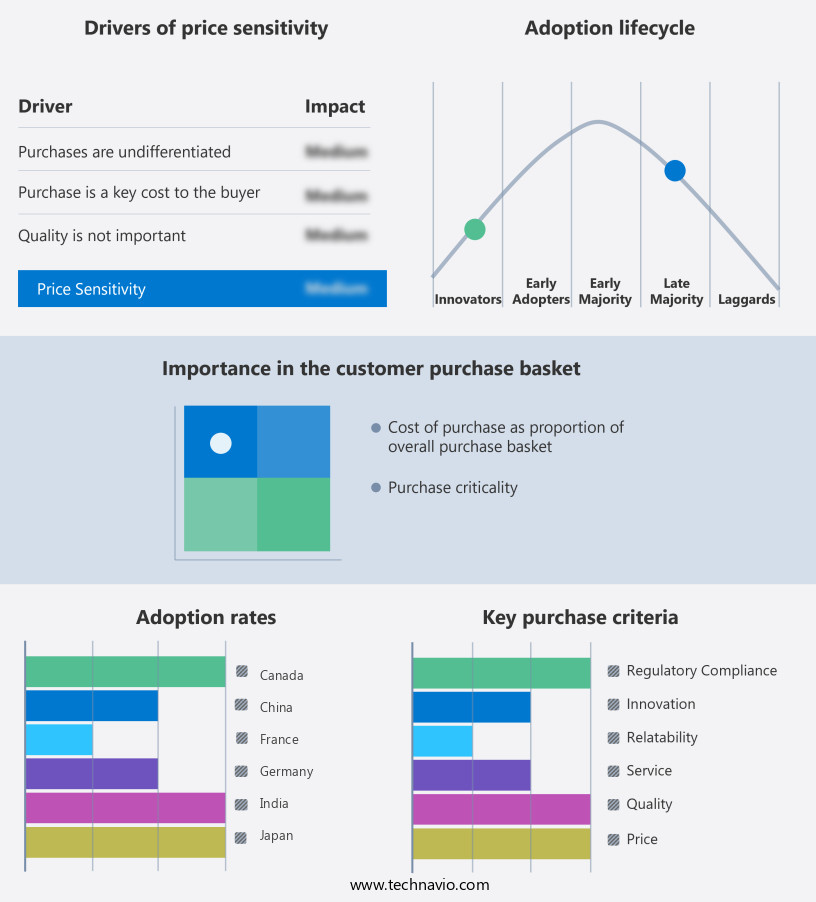
Customer Landscape
Key Companies & Market Insights
Companies are implementing various strategies, such as strategic alliances, cybersecurity training market forecast, partnerships, mergers and acquisitions, geographical expansion, and product/service launches, to enhance their presence in the industry.
Alphabet Inc. - Google LLC, a subsidiary of the company, delivers cybersecurity training courses. A prime offering is the 10-hour Cybersecurity Essentials program, enriching participants with essential terminology, principles, and concepts. This training empowers learners with a solid foundation in cybersecurity.
The industry research and growth report includes detailed analyses of the competitive landscape of the market and information about key companies, including:
- Alphabet Inc.
- AO Kaspersky Lab
- Can I Phish Pty Ltd.
- Cofense
- Coursera Inc.
- Cyber Aware
- Cybrary Inc.
- ESET North America
- Fortinet Inc.
- Fortra LLC
- Infosec Institute Inc.
- KnowBe4 Inc.
- NINJIO LLC
- PhishingBox LLC
- Proofpoint
- SANS Institute
- TitanHQ
- Udemy Inc.
- Webroot
Qualitative and quantitative analysis of companies has been conducted to help clients understand the wider business environment as well as the strengths and weaknesses of key industry players. Data is qualitatively analyzed to categorize companies as pure play, category-focused, industry-focused, and diversified; it is quantitatively analyzed to categorize companies as dominant, leading, strong, tentative, and weak.
Recent Development and News in Cybersecurity Training Market
- In January 2024, Microsoft announced the launch of its new cybersecurity training platform, "Microsoft Secure Academy," aimed at upskilling and reskilling employees and customers in various cybersecurity domains (Microsoft Press Release). In March 2024, IBM Security and Coursera joined forces to offer a comprehensive cybersecurity learning path, combining IBM's expertise and Coursera's online learning platform (IBM Security Press Release).
- In April 2024, Accenture acquired CyberVista, a leading cybersecurity workforce development company, to expand its cybersecurity training offerings and enhance its capabilities in upskilling and reskilling clients' workforces (Accenture Press Release). In May 2025, Google Cloud secured a significant contract with the U.S. Department of Defense to provide cloud services and cybersecurity training to over 150,000 military personnel, marking a significant geographic expansion and strategic partnership for the company (Department of Defense Press Release).
- These developments underscore the growing importance of cybersecurity training in the digital age, with major tech companies and industry leaders investing in new platforms, partnerships, acquisitions, and government contracts to address the evolving cybersecurity landscape and meet the increasing demand for skilled professionals.
Research Analyst Overview
- The market is experiencing significant growth, driven by the increasing demand for online security courses and the adoption of security monitoring solutions. Data classification plays a crucial role in training effectiveness, ensuring that employees understand the importance of various data types and their corresponding protection levels. Cybersecurity certifications continue to be a popular choice for individuals seeking to advance their careers, while security automation and analytics are becoming essential components of modern security strategies. Security training software, both virtual and on-site, offers flexibility for businesses to meet their unique needs. Compliance reporting is a critical aspect of cybersecurity, and security analytics platforms and awareness platforms provide valuable insights to help organizations stay compliant.
- Incident response procedures are a must-have for any organization, and cost-benefit analysis is a key consideration when implementing security policies. Security awareness metrics and policies are essential for measuring the success of training programs. Security automation tools, such as security simulation tools and penetration testing tools, help organizations identify vulnerabilities and improve their overall security posture. Vulnerability scanning tools and threat detection are essential components of a robust security architecture design. Instructor-led training and security architecture design continue to be important methods for delivering cybersecurity knowledge, while security automation and security analytics provide valuable insights and efficiencies.
- Penetration testing tools and vulnerability scanning tools are essential for identifying and addressing potential weaknesses in an organization's security infrastructure.
Dive into Technavio’s robust research methodology, blending expert interviews, extensive data synthesis, and validated models for unparalleled Cybersecurity Training Market insights. See full methodology.
|
Market Scope |
|
|
Report Coverage |
Details |
|
Page number |
217 |
|
Base year |
2024 |
|
Historic period |
2019-2023 |
|
Forecast period |
2025-2029 |
|
Growth momentum & CAGR |
Accelerate at a CAGR of 16.8% |
|
Market growth 2025-2029 |
USD 5897.6 million |
|
Market structure |
Fragmented |
|
YoY growth 2024-2025(%) |
16.4 |
|
Key countries |
US, Germany, China, UK, India, Canada, France, Japan, Spain, and South Korea |
|
Competitive landscape |
Leading Companies, Market Positioning of Companies, Competitive Strategies, and Industry Risks |
What are the Key Data Covered in this Cybersecurity Training Market Research and Growth Report?
- CAGR of the Cybersecurity Training industry during the forecast period
- Detailed information on factors that will drive the growth and forecasting between 2025 and 2029
- Precise estimation of the size of the market and its contribution of the industry in focus to the parent market
- Accurate predictions about upcoming growth and trends and changes in consumer behaviour
- Growth of the market across North America, Europe, APAC, South America, and Middle East and Africa
- Thorough analysis of the market’s competitive landscape and detailed information about companies
- Comprehensive analysis of factors that will challenge the cybersecurity training market growth of industry companies
We can help! Our analysts can customize this cybersecurity training market research report to meet your requirements.