

Dental Imaging Market Size 2026-2030
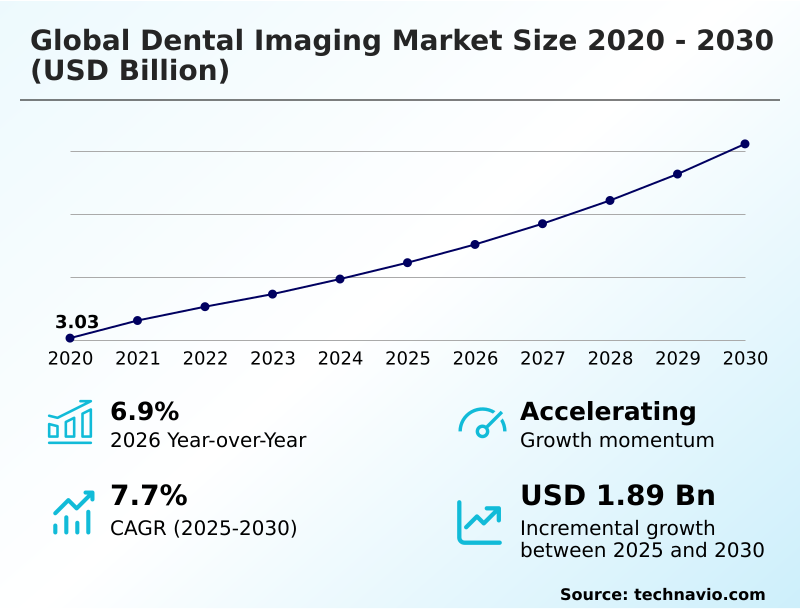
The dental imaging market size is valued to increase by USD 1.89 billion, at a CAGR of 7.7% from 2025 to 2030. Integration of AI and ML in diagnostic workflows will drive the dental imaging market.
Major Market Trends & Insights
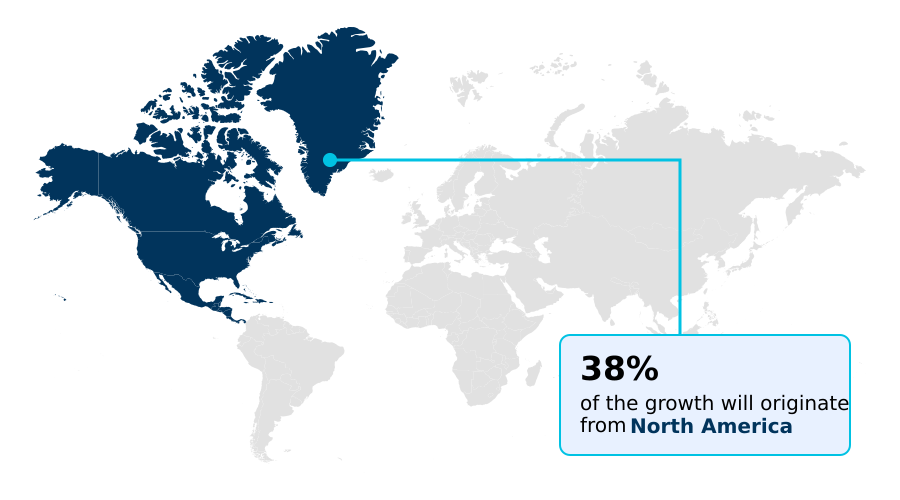
- North America dominated the market and accounted for a 37.9% growth during the forecast period.
- By End-user - Dental clinics segment was valued at USD 2.00 billion in 2024
- By Application - Diagnostic segment accounted for the largest market revenue share in 2024
Market Size & Forecast
- Market Opportunities: USD 3.09 billion
- Market Future Opportunities: USD 1.89 billion
- CAGR from 2025 to 2030 : 7.7%
Market Summary
- The dental imaging market is undergoing a significant transformation, moving from conventional film to integrated digital ecosystems. This evolution is driven by the clinical demand for superior diagnostic precision, especially for complex procedures like implantology and orthodontics.
- The rising prevalence of oral health issues and a growing interest in aesthetic dentistry fuel the adoption of advanced hardware, including intraoral scanners and cone beam computed tomography systems, which offer detailed three-dimensional views. A key dynamic is the integration of artificial intelligence into imaging software, which automates the detection of subtle pathologies and reduces diagnostic errors.
- For instance, a multi-location dental service organization can implement a cloud-based platform to standardize image analysis and quality of care, leading to improved diagnostic consistency and operational efficiency across its network.
- Although the high cost of this technology presents a challenge for smaller practices, the demonstrable improvements in patient safety, thanks to lower radiation doses and enhanced diagnostic accuracy, continue to propel market expansion.
What will be the Size of the Dental Imaging Market during the forecast period?
Get Key Insights on Market Forecast (PDF) Get Free Sample
How is the Dental Imaging Market Segmented?
The dental imaging industry research report provides comprehensive data (region-wise segment analysis), with forecasts and estimates in "USD million" for the period 2026-2030, as well as historical data from 2020-2024 for the following segments.
- End-user
- Dental clinics
- Hospitals and diagnostic centers
- Dental research institutes
- Others
- Application
- Diagnostic
- Cosmetic
- Forensic
- Type
- Intraoral imaging
- Extraoral imaging
- Cone beam computed tomography
- 3D dental imaging
- Others
- Geography
- North America
- US
- Canada
- Mexico
- Asia
- Europe
- Germany
- UK
- France
- Rest of World (ROW)
- North America
By End-user Insights
The dental clinics segment is estimated to witness significant growth during the forecast period.
Dental clinics represent the largest end-user segment, driven by a broad transition toward localized, patient-centric care models. These facilities are modernizing diagnostic capabilities to enhance clinical outcomes, making intraoral radiography and digital x-ray sensors baseline requirements.
This shift enables faster workflows with real-time digital radiography, replacing legacy analog methods. In developed markets, practitioners are investing in integrated ecosystems that combine 3d dental modeling with practice management systems for seamless data handling.
Over 70% of urban clinics have adopted fully digital workflows, accommodating demand for same-day restorative procedures.
This utilization of advanced imaging, including cephalometric analysis, allows solo practitioners to perform complex procedures like guided implant surgery and orthodontic planning in-house, retaining revenue and improving the quality of patient care.
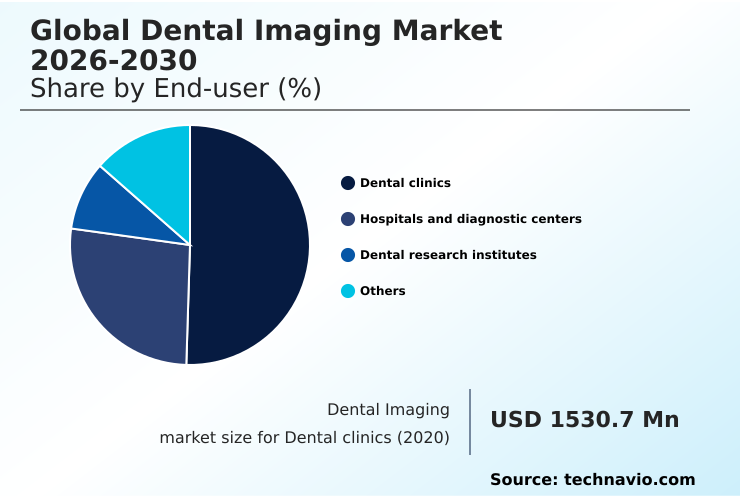
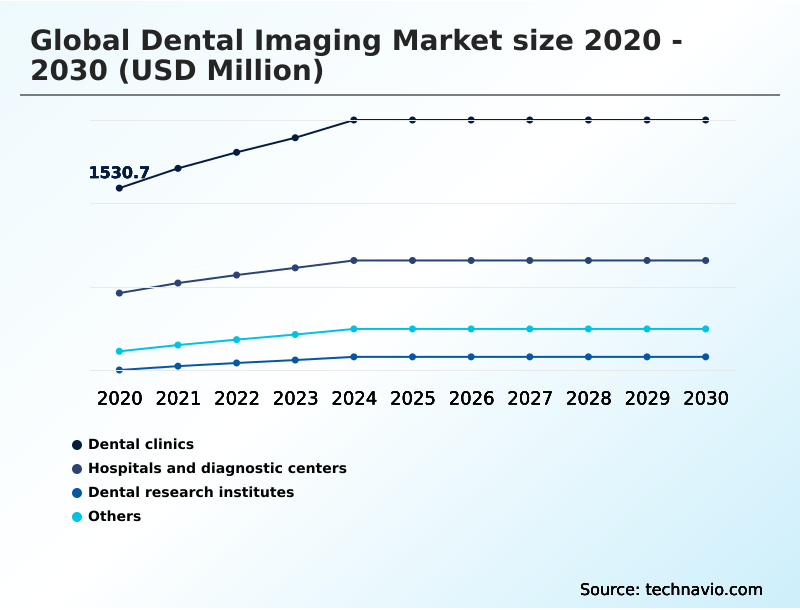
The Dental clinics segment was valued at USD 2.00 billion in 2024 and showed a gradual increase during the forecast period.
Regional Analysis
North America is estimated to contribute 37.9% to the growth of the global market during the forecast period.Technavio’s analysts have elaborately explained the regional trends and drivers that shape the market during the forecast period.
See How Dental Imaging Market Demand is Rising in North America Get Free Sample
The global dental imaging market exhibits distinct regional dynamics. North America remains a dominant region, with high adoption of advanced technologies like cone beam computed tomography, driven by large dental service organizations.
Its incremental growth contributes over 37% to the global market. In contrast, Asia is the fastest-growing region, with adoption rates expanding at nearly 8% annually, significantly outpacing Europe.
This growth is fueled by modernizing healthcare infrastructure and a rising focus on high-quality care, leading to increased demand for panoramic imaging systems and diagnostic software.
Europe shows steady growth, with a focus on integrating AI-powered caries detection and ensuring regulatory compliance for medical imaging informatics.
The shift toward digital radiography is a common thread, but the pace and investment priorities vary, shaping the competitive landscape in each geography.
Market Dynamics
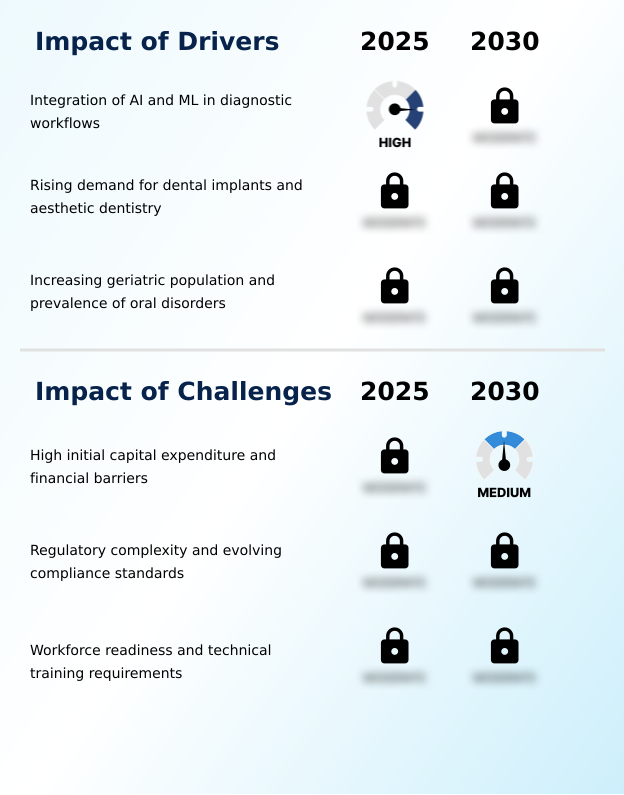
Our researchers analyzed the data with 2025 as the base year, along with the key drivers, trends, and challenges. A holistic analysis of drivers will help companies refine their marketing strategies to gain a competitive advantage.
- The strategic implementation of advanced imaging technologies is reshaping clinical protocols across various dental specialties. The use of CBCT for endodontic evaluation has become a standard for complex root canal anatomies, providing critical 3D views that traditional radiographs cannot offer. Similarly, the role of 3D imaging for maxillofacial surgery is indispensable for precise surgical planning and improved patient outcomes.
- In restorative dentistry, practices utilizing intraoral scanners for same-day crowns report patient visit times that are up to 40% shorter than those using conventional lab-based methods, directly boosting clinic productivity. The application of AI algorithms for periodontal bone loss assessment allows for earlier and more accurate diagnoses. Furthermore, digital workflows for full-arch implant reconstruction are becoming more common, enhancing predictability.
- The integration of CBCT in orthodontic diagnosis aids in complex case planning, while intraoral scanners are fundamental for creating clear aligner treatment plans. Advanced software now facilitates virtual articulators for occlusal analysis and digital smile design for aesthetic cases. The technology is also crucial for guided bone regeneration procedures, TMJ diagnostics, and evaluating pediatric dental development.
- Moreover, 3D printing from intraoral scans enables in-house production of surgical guides. The technology also supports advanced sleep apnea appliance fabrication, improves accuracy in cosmetic dentistry simulations, and is essential for detecting vertical root fractures, showcasing its broad utility.
What are the key market drivers leading to the rise in the adoption of Dental Imaging Industry?
- A key market driver is the increasing integration of artificial intelligence and machine learning technologies into diagnostic workflows, which improves accuracy and efficiency.
- Market growth is primarily driven by technological advancements that improve diagnostic precision and workflow efficiency.
- The integration of AI and ML into diagnostic software is a significant factor, automating tasks like cephalometric analysis and enhancing the capabilities of panoramic imaging systems.
- The rising demand for aesthetic and restorative procedures, such as those requiring dental implant planning, fuels the adoption of cone beam computed tomography.
- This technology is critical for procedures where 3D visualization is necessary, leading to a 15% increase in system sales in key demographics.
- Additionally, an aging population with a higher prevalence of complex oral health issues necessitates advanced imaging modalities like digital x-ray sensors and intraoral radiography to ensure accurate diagnoses and effective treatment planning, solidifying the need for digital radiography.
What are the market trends shaping the Dental Imaging Industry?
- The market is observing a significant trend toward the proliferation of AI-driven diagnostic automation, which is enhancing clinical decision support systems within dental practices.
- Key market trends are centered on automation and enhanced visualization, driven by the integration of sophisticated diagnostic software. The proliferation of AI-powered caries detection is reshaping preventive care, with some algorithms demonstrating over 90% accuracy in identifying incipient lesions, a notable improvement over unassisted visual checks.
- This trend is complemented by the move toward comprehensive 3D dental modeling, which provides clinicians with a holistic view for treatment planning. The adoption of portable digital radiography solutions has increased accessibility in non-traditional settings by 25%. Furthermore, the evolution of medical imaging informatics enables seamless data sharing, supporting collaborative diagnostics.
- These advancements in digital radiography and cephalometric analysis are making workflows more efficient and improving the precision of clinical outcomes across the board.
What challenges does the Dental Imaging Industry face during its growth?
- The substantial initial capital expenditure required for advanced imaging systems presents a significant financial barrier and a key challenge to market growth.
- Significant challenges constrain market adoption, primarily related to cost and complexity. The high capital expenditure for systems like cone beam computed tomography is a major hurdle for smaller practices. The total cost of ownership for such a system can be 40% higher than the initial hardware price when factoring in software licenses and maintenance.
- This financial barrier slows the replacement of older panoramic imaging equipment. Additionally, the complexity of integrating new diagnostic software with existing practice management systems creates technical challenges.
- The need for specialized training on advanced features like 3D dental modeling and AI-powered caries detection adds to the operational burden, while navigating the evolving standards for medical imaging informatics presents a continuous compliance challenge for practitioners.
Exclusive Technavio Analysis on Customer Landscape
The dental imaging market forecasting report includes the adoption lifecycle of the market, covering from the innovator’s stage to the laggard’s stage. It focuses on adoption rates in different regions based on penetration. Furthermore, the dental imaging market report also includes key purchase criteria and drivers of price sensitivity to help companies evaluate and develop their market growth analysis strategies.
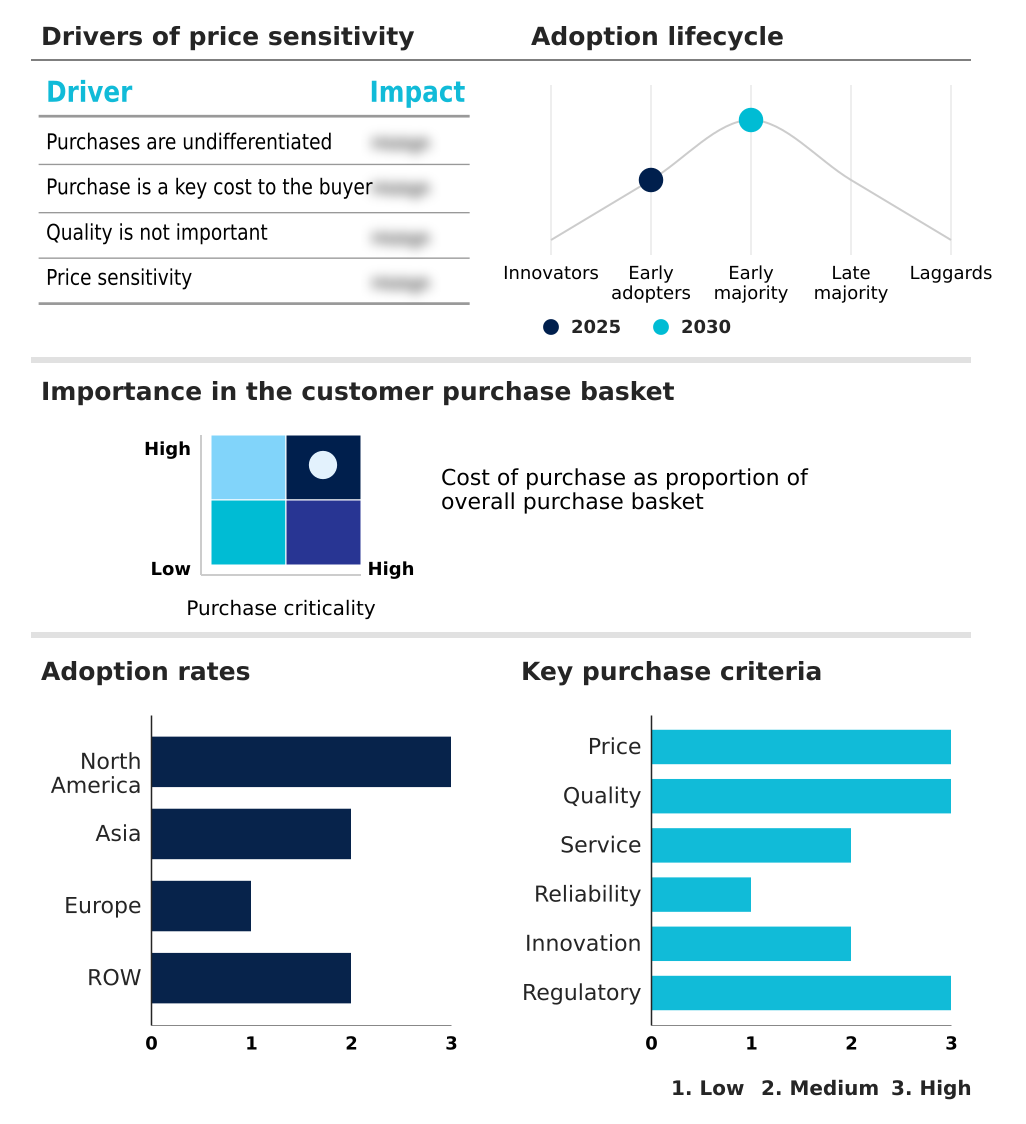
Customer Landscape of Dental Imaging Industry
Competitive Landscape
Companies are implementing various strategies, such as strategic alliances, dental imaging market forecast, partnerships, mergers and acquisitions, geographical expansion, and product/service launches, to enhance their presence in the industry.
3Shape AS - The vendor portfolio includes advanced intraoral scanners and integrated software platforms, enabling comprehensive digital impression and diagnostic workflows for dental professionals.
The industry research and growth report includes detailed analyses of the competitive landscape of the market and information about key companies, including:
- 3Shape AS
- ACTEON Group
- Air Techniques Inc.
- Align Technology Inc.
- Asahi Roentgen Industry Co Ltd
- Carestream Dental LLC
- Dentsply Sirona Inc.
- Durr Dental SE
- Envista Holdings Corp.
- GENORAY Co. Ltd.
- J. Morita Corp.
- Medit Corp.
- Midmark Corp.
- Owandy Radiology
- Planmeca Oy
- PreXion Inc.
- Ray Co Ltd
- Shining 3D Tech Co Ltd.
- Xline SRL
- Yoshida Dental Mfg Co Ltd
Qualitative and quantitative analysis of companies has been conducted to help clients understand the wider business environment as well as the strengths and weaknesses of key industry players. Data is qualitatively analyzed to categorize companies as pure play, category-focused, industry-focused, and diversified; it is quantitatively analyzed to categorize companies as dominant, leading, strong, tentative, and weak.
Recent Development and News in Dental imaging market
- In September 2024, Dentsply Sirona Inc. launched its next-generation Axeos 2D/3D imaging system, featuring a 15% reduction in radiation dose and an expanded field of view for enhanced orthodontic and implantology planning.
- In November 2024, Planmeca Oy and Align Technology Inc. announced a strategic partnership to ensure seamless interoperability between Planmeca's Romexis software and the iTero intraoral scanner, streamlining clear aligner workflows.
- In January 2025, Carestream Dental LLC received FDA 510(k) clearance for its AI-powered CS Imaging version 8 software, which automates the detection of periapical lesions on 2D radiographs with over 90% accuracy.
- In April 2025, Envista Holdings Corp. announced the acquisition of a leading dental AI software startup for approximately $300 million to integrate predictive analytics for periodontal disease into its DTX Studio Clinic platform.
Dive into Technavio’s robust research methodology, blending expert interviews, extensive data synthesis, and validated models for unparalleled Dental Imaging Market insights. See full methodology.
| Market Scope | |
|---|---|
| Page number | 296 |
| Base year | 2025 |
| Historic period | 2020-2024 |
| Forecast period | 2026-2030 |
| Growth momentum & CAGR | Accelerate at a CAGR of 7.7% |
| Market growth 2026-2030 | USD 1891.3 million |
| Market structure | Fragmented |
| YoY growth 2025-2026(%) | 6.9% |
| Key countries | US, Canada, Mexico, China, Japan, India, South Korea, Thailand, Indonesia, Germany, UK, France, Italy, Spain, The Netherlands, Brazil, Saudi Arabia, South Africa, Turkey, UAE, Argentina, Chile and Australia |
| Competitive landscape | Leading Companies, Market Positioning of Companies, Competitive Strategies, and Industry Risks |
Research Analyst Overview
- The dental imaging market is evolving beyond hardware-centric solutions toward integrated, software-driven ecosystems. Key technologies such as cone beam computed tomography (CBCT) and digital x-ray sensors are now foundational, with differentiation shifting to software capabilities. The adoption of AI-powered caries detection and cephalometric analysis is becoming a critical value driver, automating routine tasks and enhancing diagnostic accuracy.
- For instance, integrated platforms leveraging these tools have demonstrated a 30% reduction in image analysis time for complex cases. This shift forces leadership to make strategic decisions regarding capital investment in new 3D dental modeling systems versus allocating budgets for extensive staff training on sophisticated diagnostic software.
- The market’s trajectory is defined by the seamless fusion of intraoral radiography and medical imaging informatics, creating a connected environment where data from panoramic imaging and digital radiography informs every stage of treatment, from diagnosis to final restoration.
What are the Key Data Covered in this Dental Imaging Market Research and Growth Report?
-
What is the expected growth of the Dental Imaging Market between 2026 and 2030?
-
USD 1.89 billion, at a CAGR of 7.7%
-
-
What segmentation does the market report cover?
-
The report is segmented by End-user (Dental clinics, Hospitals and diagnostic centers, Dental research institutes, and Others), Application (Diagnostic, Cosmetic, and Forensic), Type (Intraoral imaging, Extraoral imaging, Cone beam computed tomography, 3D dental imaging, and Others) and Geography (North America, Asia, Europe, Rest of World (ROW))
-
-
Which regions are analyzed in the report?
-
North America, Asia, Europe and Rest of World (ROW)
-
-
What are the key growth drivers and market challenges?
-
Integration of AI and ML in diagnostic workflows , High initial capital expenditure and financial barriers
-
-
Who are the major players in the Dental Imaging Market?
-
3Shape AS, ACTEON Group, Air Techniques Inc., Align Technology Inc., Asahi Roentgen Industry Co Ltd, Carestream Dental LLC, Dentsply Sirona Inc., Durr Dental SE, Envista Holdings Corp., GENORAY Co. Ltd., J. Morita Corp., Medit Corp., Midmark Corp., Owandy Radiology, Planmeca Oy, PreXion Inc., Ray Co Ltd, Shining 3D Tech Co Ltd., Xline SRL and Yoshida Dental Mfg Co Ltd
-
Market Research Insights
- The dental imaging market is defined by a rapid technological evolution where digital workflows and intelligent software are becoming standard. The integration of digital impression systems enhances diagnostic precision for complex procedures, with adoption rates in specialty practices increasing by over 30% in recent years.
- This shift is reinforced by orthodontic treatment planning software that leverages 3D models to improve case acceptance. Furthermore, advanced radiographic interpretation aids powered by AI can reduce diagnostic oversights by more than 25% compared to manual review. These systems not only support dental implant planning but also streamline forensic odontology.
- The focus on minimally invasive dentistry and patient-centric care models drives the demand for solutions that offer both superior clinical outcomes and operational efficiencies.
We can help! Our analysts can customize this dental imaging market research report to meet your requirements.
 RIA -
RIA -