


UK E-learning Market Size 2026-2030
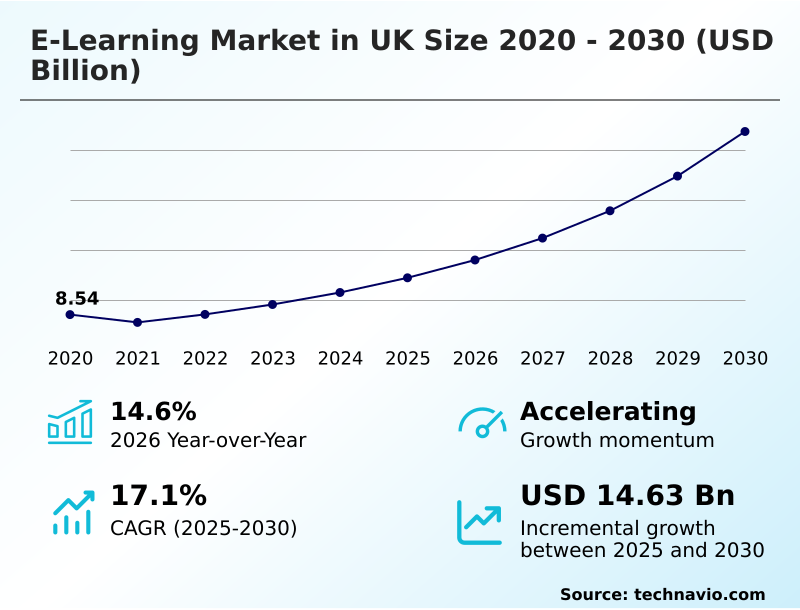
The uk e-learning market size is valued to increase by USD 14.63 billion, at a CAGR of 17.1% from 2025 to 2030. Integration of AI and adaptive learning will drive the uk e-learning market.
Major Market Trends & Insights
- By End-user - K-12 segment was valued at USD 4.66 billion in 2024
- By Product - Packaged content segment accounted for the largest market revenue share in 2024
Market Size & Forecast
- Market Opportunities: USD 18.31 billion
- Market Future Opportunities: USD 14.63 billion
- CAGR from 2025 to 2030 : 17.1%
Market Summary
- The e-learning market in UK is undergoing a profound transformation, moving beyond supplementary digital tools to become an integral component of the nation's educational and corporate strategy. This evolution is driven by the convergence of advanced technologies, such as generative AI and adaptive learning, with the growing demand for flexible, scalable, and personalized educational experiences.
- Key offerings include sophisticated learning management systems, comprehensive digital courseware, and immersive virtual classrooms that facilitate both synchronous and asynchronous instruction. A significant trend is the rise of micro-credentials and stackable learning pathways, which allow individuals to acquire targeted skills and verifiable digital credentials for immediate professional application.
- For instance, a financial services firm can deploy a compliance training module across its entire workforce, ensuring standardized knowledge and tracking completion through learning analytics, thereby enhancing regulatory adherence. However, the industry faces challenges related to the digital divide and the need to maintain learner engagement while mitigating digital fatigue.
- The market is defined by a continuous push for innovation, focusing on creating more effective, accessible, and engaging learning ecosystems powered by robust cloud-based infrastructure and intelligent data-driven assessment tools. This positions e-learning as a critical engine for human capital development.
What will be the Size of the UK E-learning Market during the forecast period?
Get Key Insights on Market Forecast (PDF) Request Free Sample
How is the UK E-learning Market Segmented?
The uk e-learning industry research report provides comprehensive data (region-wise segment analysis), with forecasts and estimates in "USD million" for the period 2026-2030, as well as historical data from 2020-2024 for the following segments.
- End-user
- K-12
- Higher education
- Corporate
- Product
- Packaged content
- Solutions
- Deployment
- On-premises
- Cloud
- Geography
- Europe
- UK
- Europe
By End-user Insights
The k-12 segment is estimated to witness significant growth during the forecast period.
The K-12 sub-segment represents a foundational pillar of the educational ecosystem, marked by the deep integration of digital tools in primary and secondary schooling.
This sector emphasizes enhanced pedagogical outcomes through interactive learning modules and virtual classrooms that support personalized learning pathways. Institutions are increasingly adopting blended learning models where digital platforms complement traditional instruction, creating a more resilient educational framework.
Demand is driven by the need for data-driven assessment tools providing real-time insights into student performance. For instance, platforms have demonstrated the ability to improve diagnostic accuracy in identifying learning gaps by over 15%.
This shift toward digital curriculum resources and accessible educational resources, powered by cloud-based infrastructure, fosters a culture of early digital literacy and continuous learning.
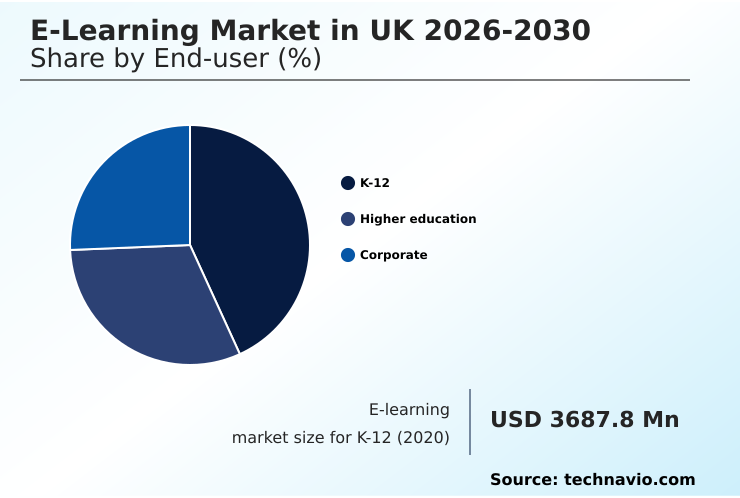
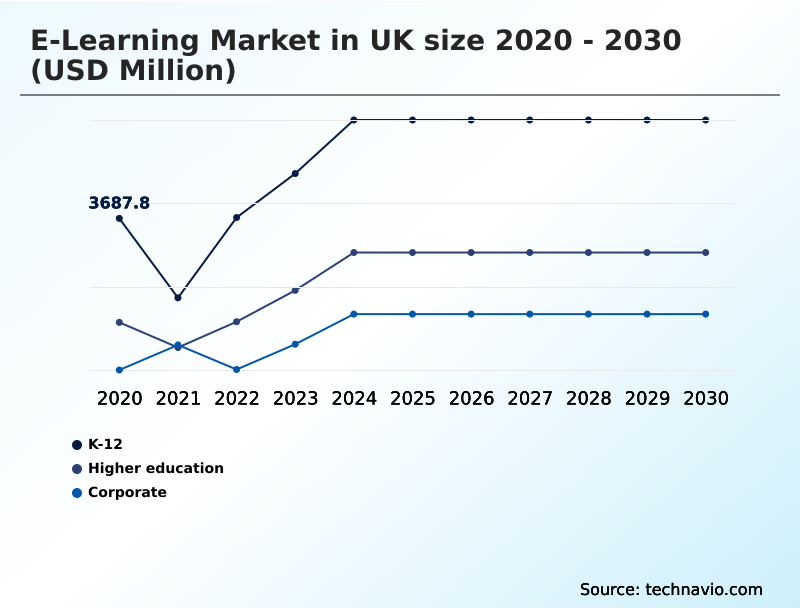
The K-12 segment was valued at USD 4.66 billion in 2024 and showed a gradual increase during the forecast period.
Market Dynamics
Our researchers analyzed the data with 2025 as the base year, along with the key drivers, trends, and challenges. A holistic analysis of drivers will help companies refine their marketing strategies to gain a competitive advantage.
- The strategic implementation of e-learning is reshaping workforce capabilities and educational outcomes. The use of AI for personalized learning paths allows organizations to move beyond generic training, tailoring content to address specific skill gaps identified through robust learning analytics.
- In corporate environments, the application of gamification in corporate e-learning has proven to increase user engagement and completion rates, transforming mandatory compliance training into an interactive experience. The pursuit of micro-credentials for professional development is accelerating, as employees seek flexible, just-in-time training opportunities.
- For specialized fields, virtual reality for technical skills offers a safe, immersive environment to practice complex procedures, reducing real-world errors. Modern learning management systems for hybrid work models are essential for delivering consistent training to a dispersed workforce. This technology enables adaptive learning for skill gaps and provides crucial data for workforce upskilling with e-learning.
- The increasing adoption of digital badges for skills verification and stackable credentials for career growth is creating more transparent and portable career trajectories. Ultimately, these advanced e-learning strategies to reduce fatigue and enhance accessibility in digital courseware design are crucial for building a resilient and competitive workforce.
- Deploying these systems has shown to improve training efficiency by more than double compared to traditional in-person methods.
What are the key market drivers leading to the rise in the adoption of UK E-learning Industry?
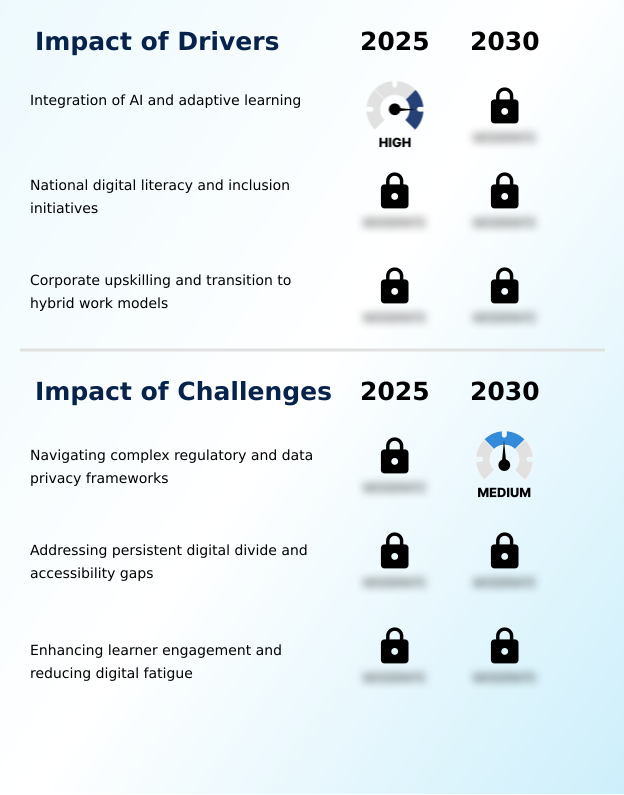
- The integration of artificial intelligence and adaptive learning technologies is a primary driver, fostering personalized educational experiences that enhance engagement and outcomes.
- Robust national initiatives promoting digital literacy and inclusion are a primary driver, expanding the user base for e-learning providers.
- Widespread improvements in connectivity, with some underserved regions seeing a 40% increase in high-speed internet access, create a larger market for digital content creation.
- The broad adoption of hybrid work models necessitates continuous corporate upskilling, increasing demand for talent development platforms and corporate training solutions. Organizations leveraging e-learning for remote employee onboarding have reduced integration time by 20%.
- This strategic emphasis on talent retention through digital education, featuring social learning features and peer-to-peer knowledge sharing, is fundamental to organizational resilience. These factors create a sustainable ecosystem where digital education is a lifelong necessity.
What are the market trends shaping the UK E-learning Industry?
- The evolution of generative AI is enabling a new era of hyper-personalization in digital education. This shift creates adaptive systems that tailor content and pacing to individual learner needs.
- A defining trend is the move toward hyper-personalization powered by generative AI and adaptive learning. This shift from one-size-fits-all digital courseware to bespoke learning experiences is transforming both academic and corporate sectors. Advanced gamification strategies and immersive technologies like virtual reality are no longer novelties but core instructional tools that improve knowledge retention by up to 25%.
- The proliferation of micro-credentials and stackable learning pathways, supported by digital badging systems, addresses the need for continuous upskilling. Companies adopting these modular, skills-focused approaches report a 30% faster time-to-competency for new technical skills. This evolution towards mobile learning applications and performance learning tools ensures the ecosystem remains agile and effective.
What challenges does the UK E-learning Industry face during its growth?
- Navigating complex regulatory landscapes and stringent data privacy frameworks poses a significant challenge to providers innovating within the digital learning sector.
- Navigating intricate data privacy frameworks and ensuring ethical AI deployment are primary challenges. Adherence to strict data protection regulations requires rigorous data protection impact assessments, increasing compliance overhead by up to 15% for some providers of learning management systems. Another significant hurdle is addressing the persistent digital divide and ensuring platform accessibility.
- While connectivity improves, a gap in high-performance hardware access persists. Maintaining learner engagement and mitigating digital fatigue, which can contribute to course attrition rates as high as 40% in some non-mandatory programs, also presents an operational challenge. Overcoming these barriers requires significant investment in inclusive user-experience design and interactive, high-quality digital learning design.
Exclusive Technavio Analysis on Customer Landscape
The uk e-learning market forecasting report includes the adoption lifecycle of the market, covering from the innovator’s stage to the laggard’s stage. It focuses on adoption rates in different regions based on penetration. Furthermore, the uk e-learning market report also includes key purchase criteria and drivers of price sensitivity to help companies evaluate and develop their market growth analysis strategies.
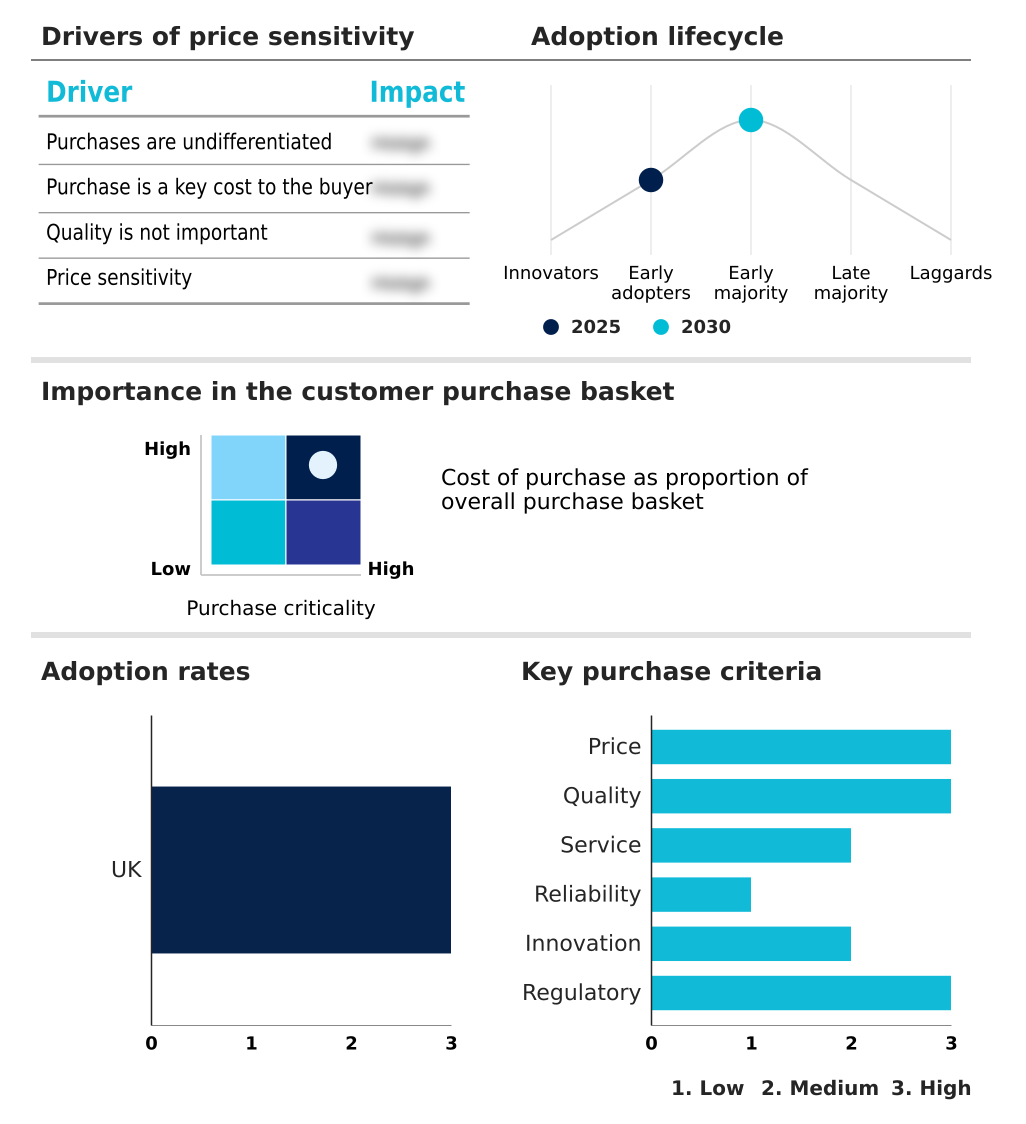
Customer Landscape of UK E-learning Industry
Competitive Landscape
Companies are implementing various strategies, such as strategic alliances, uk e-learning market forecast, partnerships, mergers and acquisitions, geographical expansion, and product/service launches, to enhance their presence in the industry.
Adobe Inc. - Key offerings center on integrated platforms for digital content creation and management, enabling scalable and interactive digital learning experiences for enterprise and academic use.
The industry research and growth report includes detailed analyses of the competitive landscape of the market and information about key companies, including:
- Adobe Inc.
- City and Guilds Group
- Cornerstone OnDemand Inc.
- D2L Corp.
- Day One Technologies Ltd.
- First Media Solutions Ltd.
- John Wiley and Sons Inc.
- JPMorgan Chase and Co.
- Learning Pool
- Learning Technologies Group
- Looop Online Ltd.
- McGraw Hill LLC
- Netex Knowledge Factory SA
- Pearson Plc
- SAP SE
- Skillsoft Corp.
- Sponge Group Holdings Ltd.
- Totara Learning Solutions Ltd.
- Willow Learning Ltd.
Qualitative and quantitative analysis of companies has been conducted to help clients understand the wider business environment as well as the strengths and weaknesses of key industry players. Data is qualitatively analyzed to categorize companies as pure play, category-focused, industry-focused, and diversified; it is quantitatively analyzed to categorize companies as dominant, leading, strong, tentative, and weak.
Recent Development and News in Uk e-learning market
- In June 2025, Pearson Plc and Google Cloud announced a multi-year strategic partnership to accelerate the development of next-generation AI-powered products and services for students and educators.
- In March 2025, Learning Pool published its annual ranking of the best learning platforms for skill development, highlighting that 78% of UK organisations are increasing investment in online learning platforms.
- In January 2025, City and Guilds Group celebrated reaching one million digital credentials issued through its digital learning and assessment platforms, reflecting strong growth in online qualifications and micro-credentials.
- In December 2025, Cornerstone OnDemand announced its recognition as a Leader in The Forrester Wave for Learning Management Systems and Experience Platforms, highlighting its market-leading skills solution and comprehensive feature set.
Dive into Technavio’s robust research methodology, blending expert interviews, extensive data synthesis, and validated models for unparalleled UK E-learning Market insights. See full methodology.
| Market Scope | |
|---|---|
| Page number | 182 |
| Base year | 2025 |
| Historic period | 2020-2024 |
| Forecast period | 2026-2030 |
| Growth momentum & CAGR | Accelerate at a CAGR of 17.1% |
| Market growth 2026-2030 | USD 14632.7 million |
| Market structure | Fragmented |
| YoY growth 2025-2026(%) | 14.6% |
| Key countries | UK |
| Competitive landscape | Leading Companies, Market Positioning of Companies, Competitive Strategies, and Industry Risks |
Research Analyst Overview
- The market is defined by a pivot toward intelligent, data-centric educational frameworks where generative AI and adaptive learning are becoming standard. This transition facilitates hyper-personalization at scale, allowing learning experience platforms to dynamically curate personalized learning pathways.
- The integration of immersive technologies, including virtual reality and augmented reality, is moving from niche applications to mainstream use in complex vocational training, significantly enhancing practical skill acquisition. For boardroom consideration, the adoption of advanced learning analytics is critical for measuring the ROI of corporate upskilling initiatives, with some enterprises achieving a 20% reduction in skill-gap-related project delays.
- The rise of micro-credentials and stackable learning, delivered via mobile learning applications and supported by digital badging systems, reflects a fundamental shift in how professional development and compliance training are consumed. This ecosystem, built on robust cloud-based infrastructure and sophisticated learning management systems, enables peer-to-peer knowledge sharing and data-driven assessment, which are essential for modern talent management and skills-gap analysis.
What are the Key Data Covered in this UK E-learning Market Research and Growth Report?
-
What is the expected growth of the UK E-learning Market between 2026 and 2030?
-
USD 14.63 billion, at a CAGR of 17.1%
-
-
What segmentation does the market report cover?
-
The report is segmented by End-user (K-12, Higher education, and Corporate), Product (Packaged content, and Solutions), Deployment (On-premises, and Cloud) and Geography (Europe)
-
-
Which regions are analyzed in the report?
-
Europe
-
-
What are the key growth drivers and market challenges?
-
Integration of AI and adaptive learning, Navigating complex regulatory and data privacy frameworks
-
-
Who are the major players in the UK E-learning Market?
-
Adobe Inc., City and Guilds Group, Cornerstone OnDemand Inc., D2L Corp., Day One Technologies Ltd., First Media Solutions Ltd., John Wiley and Sons Inc., JPMorgan Chase and Co., Learning Pool, Learning Technologies Group, Looop Online Ltd., McGraw Hill LLC, Netex Knowledge Factory SA, Pearson Plc, SAP SE, Skillsoft Corp., Sponge Group Holdings Ltd., Totara Learning Solutions Ltd. and Willow Learning Ltd.
-
Market Research Insights
- The market is characterized by a rapid shift toward sophisticated digital learning solutions that deliver measurable business outcomes. Organizations are increasingly adopting verifiable digital records and continuous upskilling frameworks to adapt to evolving hybrid work models, with early adopters reporting a 15% improvement in talent retention.
- The demand for workforce skills training and talent development platforms is surging as companies prioritize agility. Platforms that integrate experiential learning techniques have been shown to boost knowledge retention rates by over 25% compared to traditional methods.
- This emphasis on performance-driven education fuels the demand for online qualifications and custom e-learning solutions that are directly aligned with strategic business objectives, creating a highly competitive and innovative landscape for corporate training solutions.
We can help! Our analysts can customize this uk e-learning market research report to meet your requirements.
 RIA -
RIA -