

Electricity Trading Market Analysis, Size, and Forecast 2026-2030: Europe (Germany, UK, and France), APAC (China, Japan, and India), North America (US, Canada, and Mexico), South America (Brazil and Argentina), Middle East and Africa (Saudi Arabia, UAE, and South Africa), and Rest of World (ROW)

Electricity Trading Market Analysis, Size, and Forecast 2026-2030:
Europe (Germany, UK, and France), APAC (China, Japan, and India), North America (US, Canada, and Mexico), South America (Brazil and Argentina), Middle East and Africa (Saudi Arabia, UAE, and South Africa), and Rest of World (ROW)

Published: Apr 2026 296 Pages SKU: IRTNTR70421

Market Overview at a Glance

$141.2 B
Market Opportunity
6.9%
CAGR 2025 - 2030
40.5%
Europe Growth
$257.2 B
Day-ahead trading segment 2024

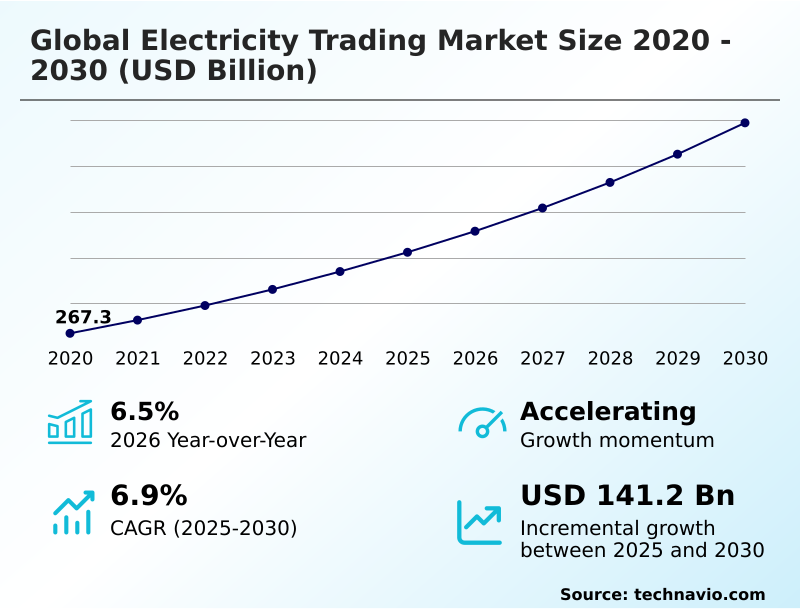
Electricity Trading Market Size 2026-2030

The electricity trading market size is valued to increase by USD 141.2 billion, at a CAGR of 6.9% from 2025 to 2030. Rise in company collaborations is amplifying market growth will drive the electricity trading market.

Major Market Trends & Insights

  • Europe dominated the market and accounted for a 40.5% growth during the forecast period.
  • By Type - Day-ahead trading segment was valued at USD 257.2 billion in 2024
  • By Application - Industrial segment accounted for the largest market revenue share in 2024

Market Size & Forecast

  • Market Opportunities: USD 229.6 billion
  • Market Future Opportunities: USD 141.2 billion
  • CAGR from 2025 to 2030 : 6.9%

Market Summary

  • The electricity trading market is a highly dynamic ecosystem essential for balancing real-time supply and demand across integrated power grids. Its evolution is shaped by the imperative to incorporate intermittent generation sources, such as wind and solar, which increases spot market price volatility and necessitates sophisticated risk management models.
  • Key drivers include the expansion of cross-border interconnectors that facilitate regional electricity market coupling and the adoption of energy storage systems for grid balancing mechanisms. A significant trend is the digitalization of trading floors, with algorithmic trading strategies and automated trading platforms becoming standard.
  • For instance, a large industrial consumer with high energy costs might leverage real-time market data and intraday trading automation to adjust its load profile, shifting energy-intensive processes to periods of low prices, thereby optimizing operational expenditure without disrupting production.
  • However, the market also contends with challenges like transmission congestion management and the impact of decentralized energy resources, which alter traditional power flow optimization and require new regulatory compliance frameworks.

What will be the Size of the Electricity Trading Market during the forecast period?
Get Key Insights on Market Forecast (PDF) Request Free Sample

How is the Electricity Trading Market Segmented?

The electricity trading industry research report provides comprehensive data (region-wise segment analysis), with forecasts and estimates in "USD billion" for the period 2026-2030, as well as historical data from 2020-2024 for the following segments.

  • Type
    • Day-ahead trading
    • Intraday trading
  • Application
    • Industrial
    • Commercial
    • Residential
  • Source
    • Non-renewable energy
    • Renewable energy
  • Geography
    • Europe
      • Germany
      • UK
      • France
    • APAC
      • China
      • Japan
      • India
    • North America
      • US
      • Canada
      • Mexico
    • South America
      • Brazil
      • Argentina
    • Middle East and Africa
      • Saudi Arabia
      • UAE
      • South Africa
    • Rest of World (ROW)

By Type Insights

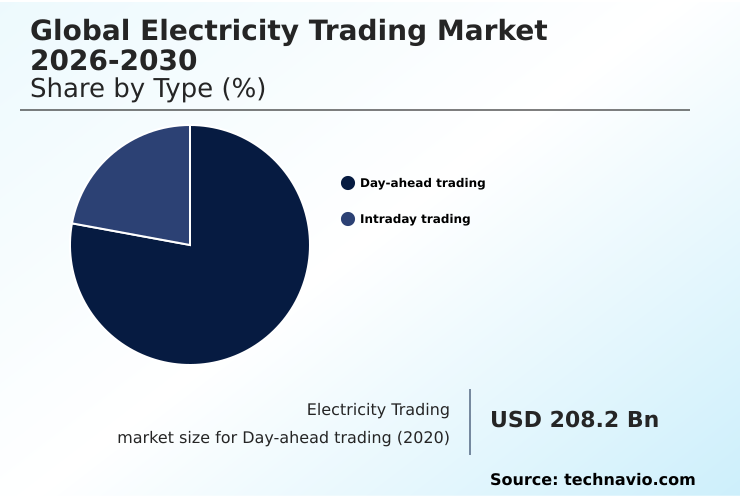
The day-ahead trading segment is estimated to witness significant growth during the forecast period.

The day-ahead trading segment is foundational to coordinating supply and demand, enabling participants to schedule transactions one day before delivery. It provides a structured framework for transparent price discovery, where the market clearing price is set.

Participants heavily rely on advanced power trading analytics and supply stack modeling for day-ahead price forecasting, with success hinging on demand forecasting accuracy.

The increasing integration of intermittent generation sources makes this segment more complex, requiring sophisticated weather-driven demand modeling and generation portfolio optimization to manage risk.

For example, improved short-term load forecasting has enhanced bid accuracy by 15%, reducing exposure to imbalance costs.

This segment is crucial for executing energy arbitrage strategies and utilizing hedging instruments before settlement and clearing processes begin, addressing key renewable integration challenges.
Request Free Sample

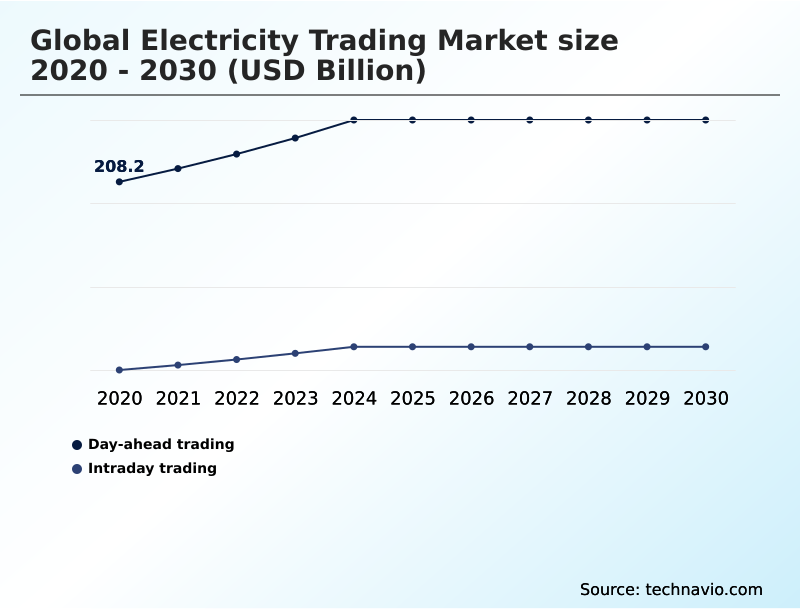
The Day-ahead trading segment was valued at USD 257.2 billion in 2024 and showed a gradual increase during the forecast period.
Request Free Sample

Regional Analysis

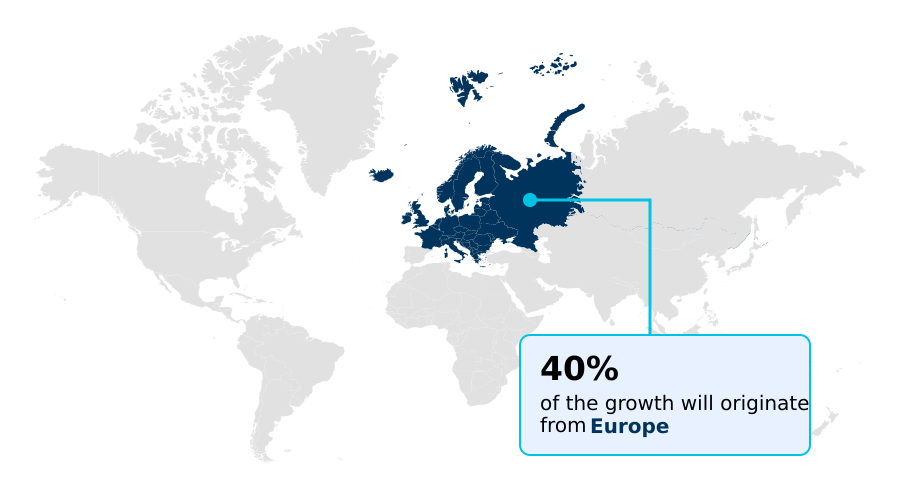
Europe is estimated to contribute 40.5% to the growth of the global market during the forecast period.Technavio’s analysts have elaborately explained the regional trends and drivers that shape the market during the forecast period.
See How Electricity Trading Market Demand is Rising in Europe Request Free Sample

The geographic landscape is defined by varying levels of market maturity, with Europe leading in cross-border integration, accounting for over 40% of incremental growth.

In contrast, North America utilizes sophisticated nodal pricing systems and locational marginal pricing to manage grid constraints. The APAC region is experiencing rapid expansion, driven by massive investments in renewables.

Across these regions, the core challenge is managing intermittent generation sources, which can cause renewable energy curtailment rates to exceed 15% in some areas without adequate infrastructure.

Advanced smart grid technologies and real-time market data are crucial for generation asset optimization and grid frequency regulation.

Capacity market auctions are being adapted to procure resources that can mitigate the merit order effect and reduce system imbalance penalties, addressing critical renewable integration challenges.

Market Dynamics

Our researchers analyzed the data with 2025 as the base year, along with the key drivers, trends, and challenges. A holistic analysis of drivers will help companies refine their marketing strategies to gain a competitive advantage.

  • The strategic landscape of electricity trading is becoming increasingly complex, demanding sophisticated approaches to managing price volatility with battery storage, which provides a crucial buffer against supply and demand mismatches. The impact of ev charging on intraday markets is a growing concern, creating new peaks and troughs that require agile trading responses.
  • Consequently, the use of ai in power trading for risk mitigation is no longer optional but essential for survival. Firms are continuously evaluating day-ahead vs real-time trading profitability, with data showing that active real-time participation can reduce imbalance costs by more than half compared to a passive day-ahead strategy.
  • The security of transactions is being addressed by blockchain for p2p energy transaction security, while optimizing cross-border electricity exchange remains a priority for regional stability. The challenges of integrating solar into grid are being met with new ancillary services market revenue streams.
  • Understanding the demand response impact on peak pricing is key for utilities, just as using algorithmic trading for power markets is for financial players. The role of hydrogen in long-term energy storage is being explored to solve seasonal variability.
  • Forward market hedging against price spikes is a constant battle, influenced by the impact of carbon pricing on dispatch stack and nodal pricing effects on asset location. Finally, virtual power plant aggregation strategies and real-time balancing with flexible loads are becoming mainstream, mitigating the risk of negative pricing with high renewables and navigating grid congestion impact on trading margins.
  • These shifts occur amid evolving regulatory changes affecting market coupling, requiring advanced data analytics for load forecasting models.
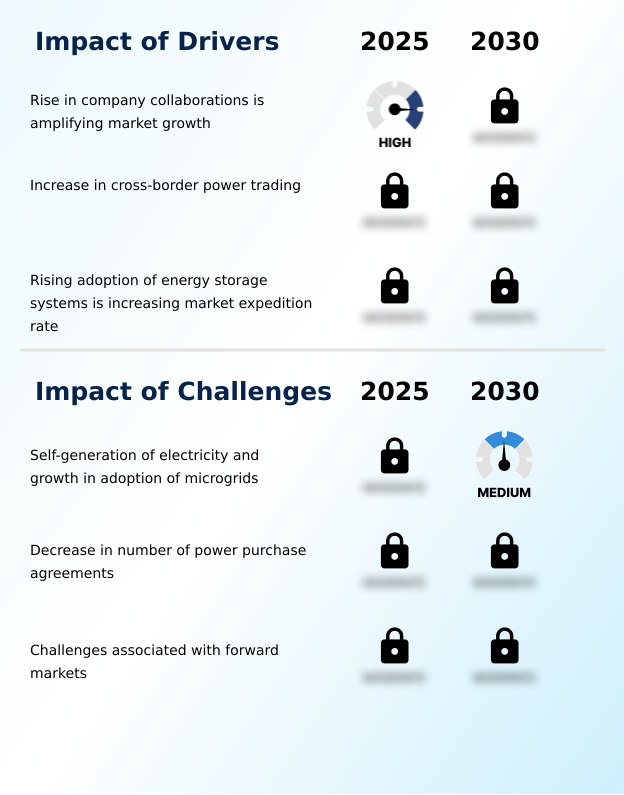
What are the key market drivers leading to the rise in the adoption of Electricity Trading Industry?

  • The rise in company collaborations is a significant factor amplifying the growth of the global electricity trading market.

  • Market growth is significantly propelled by increased cross-border electricity flow, facilitated by expanded cross-border interconnectors and advancing electricity market coupling.
  • These integrations enable superior power flow optimization and enhance grid balancing mechanisms, with some interconnected regions seeing a 10% reduction in the wholesale power price index during peak periods.
  • The rising adoption of energy storage provides flexible generation assets, vital for energy portfolio management and offering essential grid stability services. Collaborations between technology firms and utilities have improved system operator dispatch efficiency by up to 20%.
  • Furthermore, sophisticated load profile analysis and a deeper understanding of carbon pricing impact are creating more opportunities in energy derivatives trading, supporting overall market modernization.

What are the market trends shaping the Electricity Trading Industry?

  • The anticipated rise in the entry of new market players is expected to accelerate market growth. This influx is poised to foster greater innovation and competition within the industry.

  • Emerging trends are reshaping market dynamics, driven by new entrants leveraging automated trading platforms and advanced algorithmic trading strategies. Innovations like peer-to-peer energy trading, facilitated by the blockchain in energy sector, are enabling transactive energy systems and decentralized energy resources. Pilot projects utilizing smart contract settlement have demonstrated a 30% reduction in administrative costs.
  • Furthermore, the aggregation of distributed generation assets into virtual power plants improves real-time energy balancing. The rise of energy-as-a-service (EaaS) models is also challenging traditional power purchase agreements. Advancements in energy storage arbitrage, where battery systems are optimized, have increased round-trip efficiency by over 12%, enhancing grid flexibility and creating new revenue opportunities for asset owners.

What challenges does the Electricity Trading Industry face during its growth?

  • The self-generation of electricity, coupled with the growing adoption of microgrids, presents a key challenge affecting industry growth.

  • The electricity trading market faces structural challenges from the growth of behind-the-meter storage and self-generation, which can reduce liquidity in wholesale electricity markets by over 5% in high-adoption areas. This decentralization complicates ancillary services procurement and transmission congestion management.
  • Increased spot market price volatility creates difficulties for forward markets, where imperfect risk management models and a lack of effective weather derivatives for hedging elevate financial exposure. Market participants also navigate complex regulatory compliance frameworks and face significant system imbalance penalties.
  • Liquidity constraints are evident in market surveillance data, affecting the efficiency of congestion revenue rights and transmission rights auction mechanisms, thereby impacting overall market stability and price discovery.

Exclusive Technavio Analysis on Customer Landscape

The electricity trading market forecasting report includes the adoption lifecycle of the market, covering from the innovator’s stage to the laggard’s stage. It focuses on adoption rates in different regions based on penetration. Furthermore, the electricity trading market report also includes key purchase criteria and drivers of price sensitivity to help companies evaluate and develop their market growth analysis strategies.
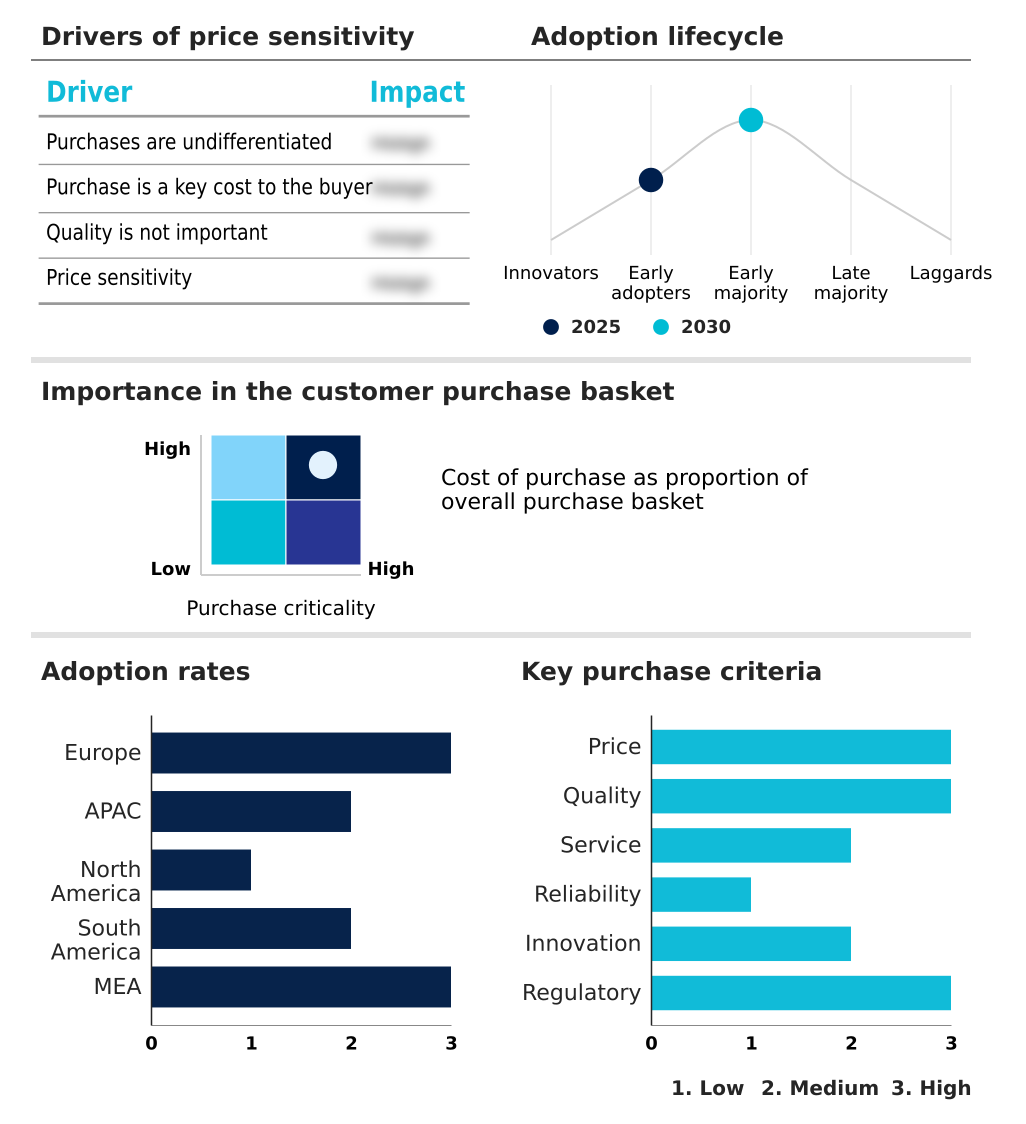
Customer Landscape of Electricity Trading Industry

Competitive Landscape

Companies are implementing various strategies, such as strategic alliances, electricity trading market forecast, partnerships, mergers and acquisitions, geographical expansion, and product/service launches, to enhance their presence in the industry.

Alpiq Holding AG - Offers electricity trading through a global supply, trading, and shipping division, enabling power trading, risk management, and optimization services across regional electricity markets.

The industry research and growth report includes detailed analyses of the competitive landscape of the market and information about key companies, including:

  • Alpiq Holding AG
  • BP Plc
  • CCI
  • Danske Commodities AS
  • E.ON SE
  • Enel Spa
  • ENGIE SA
  • Equinor ASA
  • Iberdrola SA
  • JERA Co. Inc.
  • Macquarie Group Ltd.
  • Nextera Energy Inc.
  • RWE AG
  • Shell plc
  • Statkraft AS
  • TotalEnergies SE
  • Uniper SE
  • Vitol Netherlands Cooperatief

Qualitative and quantitative analysis of companies has been conducted to help clients understand the wider business environment as well as the strengths and weaknesses of key industry players. Data is qualitatively analyzed to categorize companies as pure play, category-focused, industry-focused, and diversified; it is quantitatively analyzed to categorize companies as dominant, leading, strong, tentative, and weak.

Recent Development and News in Electricity trading market

  • In August, 2025, Octopus Energy expanded its trading operations and digital energy platform offerings across multiple European markets, using advanced analytics to optimize renewable integration and short-term electricity trading strategies.
  • In September, 2025, Power Ledger expanded its blockchain-based peer-to-peer energy trading platform in select European communities, allowing households with solar installations to trade surplus electricity locally through automated smart contracts.
  • In October, 2025, Fluence Energy deployed multiple utility-scale battery storage systems integrated with wholesale market operations in Australia, enabling improved intraday trading adjustments and grid balancing during peak demand periods.
  • In November, 2025, Tesla Energy supported multiple large-scale battery storage deployments in the United States that were integrated with wholesale electricity markets, enabling improved intraday trading flexibility and grid balancing during peak demand periods.

Dive into Technavio’s robust research methodology, blending expert interviews, extensive data synthesis, and validated models for unparalleled Electricity Trading Market insights. See full methodology.

Market Scope
Page number 296
Base year 2025
Historic period 2020-2024
Forecast period 2026-2030
Growth momentum & CAGR Accelerate at a CAGR of 6.9%
Market growth 2026-2030 USD 141.2 billion
Market structure Fragmented
YoY growth 2025-2026(%) 6.5%
Key countries Germany, UK, France, Italy, Spain, The Netherlands, China, Japan, India, South Korea, Australia, Indonesia, US, Canada, Mexico, Brazil, Argentina, Chile, Saudi Arabia, UAE, South Africa, Israel and Turkey
Competitive landscape Leading Companies, Market Positioning of Companies, Competitive Strategies, and Industry Risks

Request Free Sample

Research Analyst Overview

  • From a research perspective, the electricity trading market is defined by its transition toward managing high levels of spot market price volatility driven by intermittent generation sources. Core operations now depend on sophisticated day-ahead price forecasting and real-time energy balancing, managed through complex wholesale electricity markets.
  • Boardroom-level decisions increasingly focus on investing in grid balancing mechanisms and energy storage arbitrage to capitalize on price swings. The integration of AI-driven algorithmic trading strategies has enabled a 25% improvement in bid accuracy. This necessitates robust risk management models and a deep understanding of the merit order effect.
  • Successful participants leverage demand-side response and virtual power plants for ancillary services procurement and grid frequency regulation, while navigating challenges like transmission congestion management and renewable energy curtailment. Strategies involve optimizing the generation portfolio, understanding carbon pricing impact, and using hedging instruments like energy derivatives.
  • The market's evolution is also shaped by power purchase agreements, nodal pricing systems, capacity market auctions, and the growing importance of smart contract settlement for decentralized energy resources.

What are the Key Data Covered in this Electricity Trading Market Research and Growth Report?

  • What is the expected growth of the Electricity Trading Market between 2026 and 2030?

    • USD 141.2 billion, at a CAGR of 6.9%

  • What segmentation does the market report cover?

    • The report is segmented by Type (Day-ahead trading, and Intraday trading), Application (Industrial, Commercial, and Residential), Source (Non-renewable energy, and Renewable energy) and Geography (Europe, APAC, North America, South America, Middle East and Africa)

  • Which regions are analyzed in the report?

    • Europe, APAC, North America, South America and Middle East and Africa

  • What are the key growth drivers and market challenges?

    • Rise in company collaborations is amplifying market growth, Self-generation of electricity and growth in adoption of microgrids

  • Who are the major players in the Electricity Trading Market?

    • Alpiq Holding AG, BP Plc, CCI, Danske Commodities AS, E.ON SE, Enel Spa, ENGIE SA, Equinor ASA, Iberdrola SA, JERA Co. Inc., Macquarie Group Ltd., Nextera Energy Inc., RWE AG, Shell plc, Statkraft AS, TotalEnergies SE, Uniper SE and Vitol Netherlands Cooperatief

Market Research Insights

  • Market dynamics are increasingly shaped by the adoption of automated trading platforms, which have improved trade execution speeds by over 50% in liquid markets. The rise of peer-to-peer energy trading, supported by blockchain in the energy sector, is creating new transactional models.
  • Weather-driven demand modeling and short-term load forecasting are critical, with advanced power trading analytics enhancing demand forecasting accuracy by up to 18%. This allows for better generation asset optimization and more effective energy portfolio management. As renewable integration challenges persist, solutions like battery storage optimization are key.
  • The use of real-time market data enables participants to mitigate system imbalance penalties, which can account for up to 5% of trading costs in volatile periods.

We can help! Our analysts can customize this electricity trading market research report to meet your requirements.

Get in touch

1. Executive Summary

1.1 Market overview

Executive Summary - Chart on Market Overview
Executive Summary - Data Table on Market Overview
Executive Summary - Chart on Global Market Characteristics
Executive Summary - Chart on Market by Geography
Executive Summary - Chart on Market Segmentation by Type
Executive Summary - Chart on Market Segmentation by Application
Executive Summary - Chart on Market Segmentation by Source
Executive Summary - Chart on Incremental Growth
Executive Summary - Data Table on Incremental Growth
Executive Summary - Chart on Company Market Positioning

2. Technavio Analysis

2.1 Analysis of price sensitivity, lifecycle, customer purchase basket, adoption rates, and purchase criteria

2.2 Criticality of inputs and Factors of differentiation

Chart on Overview on criticality of inputs and factors of differentiation

2.3 Factors of disruption

Chart on Overview on factors of disruption

2.4 Impact of drivers and challenges

Chart on Impact of drivers and challenges in 2025 and 2030

3. Market Landscape

3.1 Market ecosystem

Chart on Parent Market
Data Table on - Parent Market

3.2 Market characteristics

Chart on Market characteristics analysis

3.3 Value chain analysis

Chart on Value chain analysis

4. Market Sizing

4.1 Market definition

Data Table on Offerings of companies included in the market definition

4.2 Market segment analysis

Market segments

4.3 Market size 2025

4.4 Market outlook: Forecast for 2025-2030

Chart on Global - Market size and forecast 2025-2030 ($ billion)
Data Table on Global - Market size and forecast 2025-2030 ($ billion)
Chart on Global Market: Year-over-year growth 2025-2030 (%)
Data Table on Global Market: Year-over-year growth 2025-2030 (%)

5. Historic Market Size

5.1 Global Electricity Trading Market 2020 - 2024

Historic Market Size - Data Table on Global Electricity Trading Market 2020 - 2024 ($ billion)

5.2 Type segment analysis 2020 - 2024

Historic Market Size - Type Segment 2020 - 2024 ($ billion)

5.3 Application segment analysis 2020 - 2024

Historic Market Size - Application Segment 2020 - 2024 ($ billion)

5.4 Source segment analysis 2020 - 2024

Historic Market Size - Source Segment 2020 - 2024 ($ billion)

5.5 Geography segment analysis 2020 - 2024

Historic Market Size - Geography Segment 2020 - 2024 ($ billion)

5.6 Country segment analysis 2020 - 2024

Historic Market Size - Country Segment 2020 - 2024 ($ billion)

6. Qualitative Analysis

6.1 Impact of AI on Global Electricity Trading Market

6.2 Impact of Geopolitical Conflicts on Global Electricity Trading Market

7. Five Forces Analysis

7.1 Five forces summary

Five forces analysis - Comparison between 2025 and 2030

7.2 Bargaining power of buyers

Bargaining power of buyers - Impact of key factors 2025 and 2030

7.3 Bargaining power of suppliers

Bargaining power of suppliers - Impact of key factors in 2025 and 2030

7.4 Threat of new entrants

Threat of new entrants - Impact of key factors in 2025 and 2030

7.5 Threat of substitutes

Threat of substitutes - Impact of key factors in 2025 and 2030

7.6 Threat of rivalry

Threat of rivalry - Impact of key factors in 2025 and 2030

7.7 Market condition

Chart on Market condition - Five forces 2025 and 2030

8. Market Segmentation by Type

8.1 Market segments

Chart on Type - Market share 2025-2030 (%)
Data Table on Type - Market share 2025-2030 (%)

8.2 Comparison by Type

Chart on Comparison by Type
Data Table on Comparison by Type

8.3 Day-ahead trading - Market size and forecast 2025-2030

Chart on Day-ahead trading - Market size and forecast 2025-2030 ($ billion)
Data Table on Day-ahead trading - Market size and forecast 2025-2030 ($ billion)
Chart on Day-ahead trading - Year-over-year growth 2025-2030 (%)
Data Table on Day-ahead trading - Year-over-year growth 2025-2030 (%)

8.4 Intraday trading - Market size and forecast 2025-2030

Chart on Intraday trading - Market size and forecast 2025-2030 ($ billion)
Data Table on Intraday trading - Market size and forecast 2025-2030 ($ billion)
Chart on Intraday trading - Year-over-year growth 2025-2030 (%)
Data Table on Intraday trading - Year-over-year growth 2025-2030 (%)

8.5 Market opportunity by Type

Market opportunity by Type ($ billion)
Data Table on Market opportunity by Type ($ billion)

9. Market Segmentation by Application

9.1 Market segments

Chart on Application - Market share 2025-2030 (%)
Data Table on Application - Market share 2025-2030 (%)

9.2 Comparison by Application

Chart on Comparison by Application
Data Table on Comparison by Application

9.3 Industrial - Market size and forecast 2025-2030

Chart on Industrial - Market size and forecast 2025-2030 ($ billion)
Data Table on Industrial - Market size and forecast 2025-2030 ($ billion)
Chart on Industrial - Year-over-year growth 2025-2030 (%)
Data Table on Industrial - Year-over-year growth 2025-2030 (%)

9.4 Commercial - Market size and forecast 2025-2030

Chart on Commercial - Market size and forecast 2025-2030 ($ billion)
Data Table on Commercial - Market size and forecast 2025-2030 ($ billion)
Chart on Commercial - Year-over-year growth 2025-2030 (%)
Data Table on Commercial - Year-over-year growth 2025-2030 (%)

9.5 Residential - Market size and forecast 2025-2030

Chart on Residential - Market size and forecast 2025-2030 ($ billion)
Data Table on Residential - Market size and forecast 2025-2030 ($ billion)
Chart on Residential - Year-over-year growth 2025-2030 (%)
Data Table on Residential - Year-over-year growth 2025-2030 (%)

9.6 Market opportunity by Application

Market opportunity by Application ($ billion)
Data Table on Market opportunity by Application ($ billion)

10. Market Segmentation by Source

10.1 Market segments

Chart on Source - Market share 2025-2030 (%)
Data Table on Source - Market share 2025-2030 (%)

10.2 Comparison by Source

Chart on Comparison by Source
Data Table on Comparison by Source

10.3 Non-renewable energy - Market size and forecast 2025-2030

Chart on Non-renewable energy - Market size and forecast 2025-2030 ($ billion)
Data Table on Non-renewable energy - Market size and forecast 2025-2030 ($ billion)
Chart on Non-renewable energy - Year-over-year growth 2025-2030 (%)
Data Table on Non-renewable energy - Year-over-year growth 2025-2030 (%)

10.4 Renewable energy - Market size and forecast 2025-2030

Chart on Renewable energy - Market size and forecast 2025-2030 ($ billion)
Data Table on Renewable energy - Market size and forecast 2025-2030 ($ billion)
Chart on Renewable energy - Year-over-year growth 2025-2030 (%)
Data Table on Renewable energy - Year-over-year growth 2025-2030 (%)

10.5 Market opportunity by Source

Market opportunity by Source ($ billion)
Data Table on Market opportunity by Source ($ billion)

11. Customer Landscape

11.1 Customer landscape overview

Analysis of price sensitivity, lifecycle, customer purchase basket, adoption rates, and purchase criteria

12. Geographic Landscape

12.1 Geographic segmentation

Chart on Market share by geography 2025-2030 (%)
Data Table on Market share by geography 2025-2030 (%)

12.2 Geographic comparison

Chart on Geographic comparison
Data Table on Geographic comparison

12.3 Europe - Market size and forecast 2025-2030

Chart on Europe - Market size and forecast 2025-2030 ($ billion)
Data Table on Europe - Market size and forecast 2025-2030 ($ billion)
Chart on Europe - Year-over-year growth 2025-2030 (%)
Data Table on Europe - Year-over-year growth 2025-2030 (%)
Chart on Regional Comparison - Europe
Data Table on Regional Comparison - Europe

12.3.1 Germany - Market size and forecast 2025-2030

Chart on Germany - Market size and forecast 2025-2030 ($ billion)
Data Table on Germany - Market size and forecast 2025-2030 ($ billion)
Chart on Germany - Year-over-year growth 2025-2030 (%)
Data Table on Germany - Year-over-year growth 2025-2030 (%)

12.3.2 UK - Market size and forecast 2025-2030

Chart on UK - Market size and forecast 2025-2030 ($ billion)
Data Table on UK - Market size and forecast 2025-2030 ($ billion)
Chart on UK - Year-over-year growth 2025-2030 (%)
Data Table on UK - Year-over-year growth 2025-2030 (%)

12.3.3 France - Market size and forecast 2025-2030

Chart on France - Market size and forecast 2025-2030 ($ billion)
Data Table on France - Market size and forecast 2025-2030 ($ billion)
Chart on France - Year-over-year growth 2025-2030 (%)
Data Table on France - Year-over-year growth 2025-2030 (%)

12.3.4 Italy - Market size and forecast 2025-2030

Chart on Italy - Market size and forecast 2025-2030 ($ billion)
Data Table on Italy - Market size and forecast 2025-2030 ($ billion)
Chart on Italy - Year-over-year growth 2025-2030 (%)
Data Table on Italy - Year-over-year growth 2025-2030 (%)

12.3.5 Spain - Market size and forecast 2025-2030

Chart on Spain - Market size and forecast 2025-2030 ($ billion)
Data Table on Spain - Market size and forecast 2025-2030 ($ billion)
Chart on Spain - Year-over-year growth 2025-2030 (%)
Data Table on Spain - Year-over-year growth 2025-2030 (%)

12.3.6 The Netherlands - Market size and forecast 2025-2030

Chart on The Netherlands - Market size and forecast 2025-2030 ($ billion)
Data Table on The Netherlands - Market size and forecast 2025-2030 ($ billion)
Chart on The Netherlands - Year-over-year growth 2025-2030 (%)
Data Table on The Netherlands - Year-over-year growth 2025-2030 (%)

12.4 APAC - Market size and forecast 2025-2030

Chart on APAC - Market size and forecast 2025-2030 ($ billion)
Data Table on APAC - Market size and forecast 2025-2030 ($ billion)
Chart on APAC - Year-over-year growth 2025-2030 (%)
Data Table on APAC - Year-over-year growth 2025-2030 (%)
Chart on Regional Comparison - APAC
Data Table on Regional Comparison - APAC

12.4.1 China - Market size and forecast 2025-2030

Chart on China - Market size and forecast 2025-2030 ($ billion)
Data Table on China - Market size and forecast 2025-2030 ($ billion)
Chart on China - Year-over-year growth 2025-2030 (%)
Data Table on China - Year-over-year growth 2025-2030 (%)

12.4.2 Japan - Market size and forecast 2025-2030

Chart on Japan - Market size and forecast 2025-2030 ($ billion)
Data Table on Japan - Market size and forecast 2025-2030 ($ billion)
Chart on Japan - Year-over-year growth 2025-2030 (%)
Data Table on Japan - Year-over-year growth 2025-2030 (%)

12.4.3 India - Market size and forecast 2025-2030

Chart on India - Market size and forecast 2025-2030 ($ billion)
Data Table on India - Market size and forecast 2025-2030 ($ billion)
Chart on India - Year-over-year growth 2025-2030 (%)
Data Table on India - Year-over-year growth 2025-2030 (%)

12.4.4 South Korea - Market size and forecast 2025-2030

Chart on South Korea - Market size and forecast 2025-2030 ($ billion)
Data Table on South Korea - Market size and forecast 2025-2030 ($ billion)
Chart on South Korea - Year-over-year growth 2025-2030 (%)
Data Table on South Korea - Year-over-year growth 2025-2030 (%)

12.4.5 Australia - Market size and forecast 2025-2030

Chart on Australia - Market size and forecast 2025-2030 ($ billion)
Data Table on Australia - Market size and forecast 2025-2030 ($ billion)
Chart on Australia - Year-over-year growth 2025-2030 (%)
Data Table on Australia - Year-over-year growth 2025-2030 (%)

12.4.6 Indonesia - Market size and forecast 2025-2030

Chart on Indonesia - Market size and forecast 2025-2030 ($ billion)
Data Table on Indonesia - Market size and forecast 2025-2030 ($ billion)
Chart on Indonesia - Year-over-year growth 2025-2030 (%)
Data Table on Indonesia - Year-over-year growth 2025-2030 (%)

12.5 North America - Market size and forecast 2025-2030

Chart on North America - Market size and forecast 2025-2030 ($ billion)
Data Table on North America - Market size and forecast 2025-2030 ($ billion)
Chart on North America - Year-over-year growth 2025-2030 (%)
Data Table on North America - Year-over-year growth 2025-2030 (%)
Chart on Regional Comparison - North America
Data Table on Regional Comparison - North America

12.5.1 US - Market size and forecast 2025-2030

Chart on US - Market size and forecast 2025-2030 ($ billion)
Data Table on US - Market size and forecast 2025-2030 ($ billion)
Chart on US - Year-over-year growth 2025-2030 (%)
Data Table on US - Year-over-year growth 2025-2030 (%)

12.5.2 Canada - Market size and forecast 2025-2030

Chart on Canada - Market size and forecast 2025-2030 ($ billion)
Data Table on Canada - Market size and forecast 2025-2030 ($ billion)
Chart on Canada - Year-over-year growth 2025-2030 (%)
Data Table on Canada - Year-over-year growth 2025-2030 (%)

12.5.3 Mexico - Market size and forecast 2025-2030

Chart on Mexico - Market size and forecast 2025-2030 ($ billion)
Data Table on Mexico - Market size and forecast 2025-2030 ($ billion)
Chart on Mexico - Year-over-year growth 2025-2030 (%)
Data Table on Mexico - Year-over-year growth 2025-2030 (%)

12.6 South America - Market size and forecast 2025-2030

Chart on South America - Market size and forecast 2025-2030 ($ billion)
Data Table on South America - Market size and forecast 2025-2030 ($ billion)
Chart on South America - Year-over-year growth 2025-2030 (%)
Data Table on South America - Year-over-year growth 2025-2030 (%)
Chart on Regional Comparison - South America
Data Table on Regional Comparison - South America

12.6.1 Brazil - Market size and forecast 2025-2030

Chart on Brazil - Market size and forecast 2025-2030 ($ billion)
Data Table on Brazil - Market size and forecast 2025-2030 ($ billion)
Chart on Brazil - Year-over-year growth 2025-2030 (%)
Data Table on Brazil - Year-over-year growth 2025-2030 (%)

12.6.2 Argentina - Market size and forecast 2025-2030

Chart on Argentina - Market size and forecast 2025-2030 ($ billion)
Data Table on Argentina - Market size and forecast 2025-2030 ($ billion)
Chart on Argentina - Year-over-year growth 2025-2030 (%)
Data Table on Argentina - Year-over-year growth 2025-2030 (%)

12.6.3 Chile - Market size and forecast 2025-2030

Chart on Chile - Market size and forecast 2025-2030 ($ billion)
Data Table on Chile - Market size and forecast 2025-2030 ($ billion)
Chart on Chile - Year-over-year growth 2025-2030 (%)
Data Table on Chile - Year-over-year growth 2025-2030 (%)

12.7 Middle East and Africa - Market size and forecast 2025-2030

Chart on Middle East and Africa - Market size and forecast 2025-2030 ($ billion)
Data Table on Middle East and Africa - Market size and forecast 2025-2030 ($ billion)
Chart on Middle East and Africa - Year-over-year growth 2025-2030 (%)
Data Table on Middle East and Africa - Year-over-year growth 2025-2030 (%)
Chart on Regional Comparison - Middle East and Africa
Data Table on Regional Comparison - Middle East and Africa

12.7.1 Saudi Arabia - Market size and forecast 2025-2030

Chart on Saudi Arabia - Market size and forecast 2025-2030 ($ billion)
Data Table on Saudi Arabia - Market size and forecast 2025-2030 ($ billion)
Chart on Saudi Arabia - Year-over-year growth 2025-2030 (%)
Data Table on Saudi Arabia - Year-over-year growth 2025-2030 (%)

12.7.2 UAE - Market size and forecast 2025-2030

Chart on UAE - Market size and forecast 2025-2030 ($ billion)
Data Table on UAE - Market size and forecast 2025-2030 ($ billion)
Chart on UAE - Year-over-year growth 2025-2030 (%)
Data Table on UAE - Year-over-year growth 2025-2030 (%)

12.7.3 South Africa - Market size and forecast 2025-2030

Chart on South Africa - Market size and forecast 2025-2030 ($ billion)
Data Table on South Africa - Market size and forecast 2025-2030 ($ billion)
Chart on South Africa - Year-over-year growth 2025-2030 (%)
Data Table on South Africa - Year-over-year growth 2025-2030 (%)

12.7.4 Israel - Market size and forecast 2025-2030

Chart on Israel - Market size and forecast 2025-2030 ($ billion)
Data Table on Israel - Market size and forecast 2025-2030 ($ billion)
Chart on Israel - Year-over-year growth 2025-2030 (%)
Data Table on Israel - Year-over-year growth 2025-2030 (%)

12.7.5 Turkey - Market size and forecast 2025-2030

Chart on Turkey - Market size and forecast 2025-2030 ($ billion)
Data Table on Turkey - Market size and forecast 2025-2030 ($ billion)
Chart on Turkey - Year-over-year growth 2025-2030 (%)
Data Table on Turkey - Year-over-year growth 2025-2030 (%)

12.8 Market opportunity by geography

Market opportunity by geography ($ billion)
Data Tables on Market opportunity by geography ($ billion)

13. Drivers, Challenges, and Opportunity

13.1 Market drivers

Rise in company collaborations is amplifying market growth
Increase in cross-border power trading
Rising adoption of energy storage systems is increasing market expedition rate

13.2 Market challenges

Self-generation of electricity and growth in adoption of microgrids
Decrease in number of power purchase agreements
Challenges associated with forward markets

13.3 Impact of drivers and challenges

Impact of drivers and challenges in 2025 and 2030

13.4 Market opportunities

Rise in entry of new players is expected to accelerate market growth
Using blockchain for peer-to-peer energy trading
Advancements in energy storage is expediting market growth

14. Competitive Landscape

14.1 Overview

14.2

Overview on criticality of inputs and factors of differentiation

14.3 Landscape disruption

Overview on factors of disruption

14.4 Industry risks

Impact of key risks on business

15. Competitive Analysis

15.1 Companies profiled

Companies covered

15.2 Company ranking index

15.3 Market positioning of companies

Matrix on companies position and classification

15.4 BP Plc

BP Plc - Overview
BP Plc - Business segments
BP Plc - Key offerings
BP Plc - Segment focus
SWOT

15.5 E.ON SE

E.ON SE - Overview
E.ON SE - Business segments
E.ON SE - Key offerings
E.ON SE - Segment focus
SWOT

15.6 Enel Spa

Enel Spa - Overview
Enel Spa - Business segments
Enel Spa - Key offerings
Enel Spa - Segment focus
SWOT

15.7 ENGIE SA

ENGIE SA - Overview
ENGIE SA - Business segments
ENGIE SA - Key offerings
ENGIE SA - Segment focus
SWOT

15.8 Equinor ASA

Equinor ASA - Overview
Equinor ASA - Business segments
Equinor ASA - Key offerings
Equinor ASA - Segment focus
SWOT

15.9 Iberdrola SA

Iberdrola SA - Overview
Iberdrola SA - Business segments
Iberdrola SA - Key offerings
Iberdrola SA - Segment focus
SWOT

15.10 JERA Co. Inc.

JERA Co. Inc. - Overview
JERA Co. Inc. - Product / Service
JERA Co. Inc. - Key offerings
SWOT

15.11 Macquarie Group Ltd.

Macquarie Group Ltd. - Overview
Macquarie Group Ltd. - Business segments
Macquarie Group Ltd. - Key offerings
Macquarie Group Ltd. - Segment focus
SWOT

15.12 Nextera Energy Inc.

Nextera Energy Inc. - Overview
Nextera Energy Inc. - Business segments
Nextera Energy Inc. - Key offerings
Nextera Energy Inc. - Segment focus
SWOT

15.13 RWE AG

RWE AG - Overview
RWE AG - Business segments
RWE AG - Key offerings
RWE AG - Segment focus
SWOT

15.14 Shell plc

Shell plc - Overview
Shell plc - Business segments
Shell plc - Key news
Shell plc - Key offerings
Shell plc - Segment focus
SWOT

15.15 Statkraft AS

Statkraft AS - Overview
Statkraft AS - Product / Service
Statkraft AS - Key offerings
SWOT

15.16 TotalEnergies SE

TotalEnergies SE - Overview
TotalEnergies SE - Business segments
TotalEnergies SE - Key news
TotalEnergies SE - Key offerings
TotalEnergies SE - Segment focus
SWOT

15.17 Uniper SE

Uniper SE - Overview
Uniper SE - Business segments
Uniper SE - Key offerings
Uniper SE - Segment focus
SWOT

15.18 Vitol Netherlands Cooperatief

Vitol Netherlands Cooperatief - Overview
Vitol Netherlands Cooperatief - Product / Service
Vitol Netherlands Cooperatief - Key offerings
SWOT

16. Appendix

16.1 Scope of the report

Market definition
Objectives
Notes and caveats

16.2 Inclusions and exclusions checklist

Inclusions checklist
Exclusions checklist

16.3 Currency conversion rates for US$

16.4 Research methodology

16.5 Data procurement

Information sources

16.6 Data validation

16.7 Validation techniques employed for market sizing

16.8 Data synthesis

16.9 360 degree market analysis

16.10 List of abbreviations

Research Methodology

Technavio presents a detailed picture of the market by way of study, synthesis, and summation of data from multiple sources. The analysts have presented the various facets of the market with a particular focus on identifying the key industry influencers. The data thus presented is comprehensive, reliable, and the result of extensive research, both primary and secondary.

INFORMATION SOURCES

Primary sources

  • Manufacturers and suppliers
  • Channel partners
  • Industry experts
  • Strategic decision makers

Secondary sources

  • Industry journals and periodicals
  • Government data
  • Financial reports of key industry players
  • Historical data
  • Press releases

DATA ANALYSIS

Data Synthesis

  • Collation of data
  • Estimation of key figures
  • Analysis of derived insights

Data Validation

  • Triangulation with data models
  • Reference against proprietary databases
  • Corroboration with industry experts

REPORT WRITING

Qualitative

  • Market drivers
  • Market challenges
  • Market trends
  • Five forces analysis

Quantitative

  • Market size and forecast
  • Market segmentation
  • Geographical insights
  • Competitive landscape

Interested in this report?

Get your sample now to see our research methodology and insights!

Download Now

Frequently Asked Questions

Electricity Trading market growth will increase by USD 141.2 billion during 2026-2030.

The Electricity Trading market is expected to grow at a CAGR of 6.9% during 2026-2030.

Electricity Trading market is segmented by Type (Day-ahead trading, Intraday trading) Application (Industrial, Commercial, Residential) Source (Non-renewable energy, Renewable energy)

Alpiq Holding AG, BP Plc, CCI, Danske Commodities AS, E.ON SE, Enel Spa, ENGIE SA, Equinor ASA, Iberdrola SA, JERA Co. Inc., Macquarie Group Ltd., Nextera Energy Inc., RWE AG, Shell plc, Statkraft AS, TotalEnergies SE, Uniper SE, Vitol Netherlands Cooperatief are a few of the key vendors in the Electricity Trading market.

Europe will register the highest growth rate of 40.5% among the other regions. Therefore, the Electricity Trading market in Europe is expected to garner significant business opportunities for the vendors during the forecast period.

Germany, UK, France, Italy, Spain, The Netherlands, China, Japan, India, South Korea, Australia, Indonesia, US, Canada, Mexico, Brazil, Argentina, Chile, Saudi Arabia, UAE, South Africa, Israel, Turkey

  • Rise in company collaborations is amplifying market growth is the driving factor this market.

The Electricity Trading market vendors should focus on grabbing business opportunities from the Type segment as it accounted for the largest market share in the base year.
RIA - Research AI Assistant
Ask RIA