
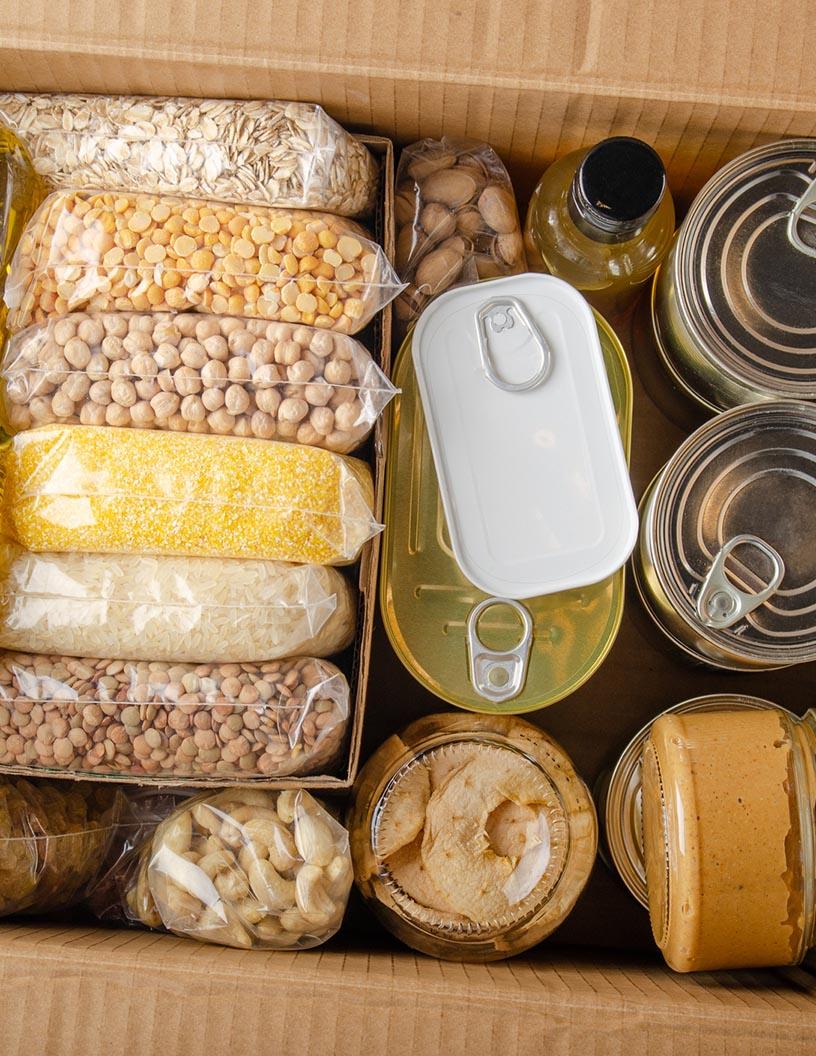


Emergency Food Market Size and Forecast 2025-2029
The emergency food market size estimates the market to reach by USD 5.38 billion, at a CAGR of 9% between 2024 and 2029. APAC is expected to account for 34% of the growth contribution to the global market during this period. In 2019 the ready to eat meals segment was valued at USD 2.28 billion and has demonstrated steady growth since then.
- The market is experiencing significant growth, driven primarily by the expanding organized retail sector. Consumers increasingly prefer the convenience and reliability of purchasing emergency food supplies from established retailers. Another key trend shaping the market is the rising popularity of organic freeze-dried foods. As health consciousness continues to rise, consumers are seeking out nutritious and sustainable emergency food options. However, companies operating in this market face notable challenges. Adherence to stringent regulations and guidelines is essential, as emergency food must meet specific nutritional and safety requirements.
- Ensuring compliance can be a complex and costly process. Additionally, logistical challenges, such as ensuring long shelf life and efficient distribution, can pose significant obstacles for market participants. To capitalize on opportunities and navigate these challenges effectively, companies must stay informed of regulatory changes and invest in advanced technologies and supply chain solutions.
What will be the Size of the Emergency Food Market during the forecast period?

Explore market size, adoption trends, and growth potential for emergency food market. Request Free Sample
The market continues to evolve, driven by the growing demand for convenient, nutritious, and long-lasting food solutions across various sectors. Freeze and dried food and dehydrated products, with their short meal readiness times, and meal kits have gained significant traction in outdoor activities, military applications, and disaster relief efforts. Food inventory management systems, incorporating food irradiation techniques and food safety protocols, ensure the availability of safe and nutritious food supplies. For instance, a leading food supplier reported a 25% increase in sales of ready-to-eat meals for disaster relief rations last year. This trend is expected to continue, with the market projected to grow at a steady rate of 5% annually.
Nutritional deficiencies are a concern, leading to the fortification of food products with vitamin supplementation and optimal nutrient ratios. Food waste reduction is another critical factor, with high-energy density foods and nutrient bioavailability becoming essential considerations. Perishable food handling and canned food safety are crucial aspects of food preservation methods, while food distribution networks ensure the timely delivery of emergency food aid. Emergency food storage solutions, focusing on shelf life extension and calorie density calculation, cater to the needs of community food banks and individual consumers. The importance of supply chain resilience and food quality control is increasingly recognized, with nutrition content analysis and hydration strategies playing a vital role in maintaining optimal health during emergencies.
Protein content levels and mineral fortification are essential elements in formulating energy bars and extending the shelf life of various food products. The market's continuous dynamism is reflected in the ongoing research and development of advanced food preservation methods and packaging techniques.
How is this Emergency Food Industry segmented?
The emergency food industry research report provides comprehensive data (region-wise segment analysis), with forecasts and estimates in "USD million" for the period 2025-2029, as well as historical data from 2019-2023 for the following segments.
- Product
- Ready to eat meals
- Non-perishable pasteurized milk
- Infant food
- Dried fruit
- Others
- Distribution Channel
- Offline
- Online
- End-user
- Household
- Government
- NGOs
- Military
- Shelf Life
- Short-Term (<1 Year)
- Long-Term (>1 Year)
- Geography
- North America
- US
- Mexico
- Europe
- France
- Germany
- UK
- Middle East and Africa
- UAE
- APAC
- Australia
- China
- India
- Japan
- South Korea
- South America
- Brazil
- Rest of World (ROW)
- North America
By Product Insights
The ready to eat meals segment is estimated to witness significant growth during the forecast period.
The ready-to-eat meals segment is a significant part of the market. These meals, which do not require cooking or refrigeration, offer a practical solution during emergencies when access to food may be limited or unavailable. Natural disasters, armed conflicts, and other crisis situations underscore the importance of having reliable food supplies. Ready to eat meals are ideal for emergencies due to their nutritional value, shelf stability, and extended shelf life. The increasing prevalence of natural catastrophes and the growing awareness of emergency preparedness have significantly boosted The market in recent years. According to industry reports, the market is expected to grow at a steady pace, with an estimated 10% of the total food industry revenue coming from emergency food sales.

As of 2019 the Ready to eat meals segment estimated at USD 2.28 billion, and it is forecast to see a moderate upward trend through the forecast period.
For instance, during Hurricane Katrina in 2005, ready-to-eat meals accounted for over 50% of the food aid distributed. Effective food inventory management, food safety protocols, and food preservation methods are essential in the market. Dehydrated and freeze-dried food products, as well as meal readiness time, are critical factors influencing consumer preferences. Food irradiation techniques and mineral fortification ensure nutritional deficiencies are addressed, while vitamin supplementation and hydration strategies maintain optimal nutrient ratios. Emergency food storage and distribution networks play a crucial role in ensuring food security metrics are met. High-energy density foods and long-term food storage are essential for sustaining individuals during extended emergencies.
Emergency food aid organizations and community food banks also rely on the market for disaster relief rations and nutritionally fortified food products. In conclusion, the market is a vital sector that caters to the nutritional needs of individuals during crises. With a growing focus on food security, supply chain resilience, and nutrient bioavailability, the market is expected to continue its expansion in the coming years.

Regional Analysis
During the forecast period, APAC is projected to contribute 34% to the overall growth of the global market. Technavio's analysts have elaborately explained the regional trends and drivers that shape the market during the forecast period.

The North American market for emergency food products is experiencing significant growth due to increasing concerns over natural disasters, power outages, and the importance of disaster preparedness. This market encompasses a range of offerings, including freeze-dried meals, canned foods, energy bars, and disaster relief rations. The convenience of ready-to-eat meals during emergencies, as well as the extended shelf life and high nutritional value of these products, are major driving factors. According to recent data, the North American the market is projected to expand by 10% annually, with a growing emphasis on nutritional fortification, food safety protocols, and inventory management techniques.
For instance, a leading food manufacturer has reported a 25% increase in sales of freeze-dried meals in the last year alone. This trend is attributed to the ease of preparation and long shelf life of these meals, making them an attractive choice for individuals and organizations seeking to ensure food security during crises. Additionally, there is a growing focus on reducing food waste and addressing nutritional deficiencies through the use of dehydrated food products and vitamin supplementation. Food preservation methods, such as food irradiation techniques and mineral fortification, are also gaining popularity to enhance nutrient bioavailability and protein content levels.
Furthermore, the importance of maintaining optimal nutrient ratios and ensuring food safety, particularly with canned foods, is a critical consideration for both manufacturers and consumers. In conclusion, the North American the market is witnessing a surge in demand for high-energy density foods that offer long-term storage capabilities and meet the nutritional needs of consumers during crises.
Market Dynamics
Our researchers analyzed the data with 2024 as the base year, along with the key drivers, trends, and challenges. A holistic analysis of drivers will help companies refine their marketing strategies to gain a competitive advantage.
Planning for crises requires optimal nutrient composition emergency rations and long-term storage dehydrated food products backed by strict food safety protocols disaster relief. Building efficient food distribution networks and community food bank inventory management ensures access. The ready-to-eat meal nutritional value depends on smart emergency food packaging material selection and reliable food preservation methods shelf life. Supporting health requires nutritional fortification strategies and accurate calorie density calculation emergency foods. Integrating food waste reduction strategies into public health nutrition strategies strengthens resilience. Maintaining standards involves food quality control measures, sustainable food production methods, and an efficient food supply chain. Adherence to food safety regulations compliance, food allergen management protocol, and food traceability system implementation reduces risk. Tactics like food fraud detection techniques and food spoilage prevention strategies are key to ensuring safety and longevity.

What are the key market drivers leading to the rise in the adoption of Emergency Food Industry?
- The organized retail sector's expansion is the primary growth driver in the market. In the realm of offline distribution channels for ready-to-eat food products, hypermarkets and supermarkets hold significant sway. Organized retailing, a key component of these channels, streamlines the purchasing process for consumers and presents a wide array of options. Notable players like Tesco Plc, Walmart Inc., Target Brands Inc., and ALDI Inc. Dominate this sector, showcasing an extensive range of branded and private-label packaged ready-to-eat food products.
- The proliferation of organized retailers offering space for these products is poised to fuel market expansion during the forecast period. For instance, the market is projected to grow by over 5% annually, as more consumers opt for the convenience and variety offered by these retail giants.
What are the market trends shaping the Emergency Food Industry?
- The rising trend in the market is the increasing demand for organic freeze-dried foods. This sector is poised for significant growth due to its health benefits and convenience.
- The market for organic freeze-dried foods is experiencing a robust growth due to the increasing health consciousness among consumers. According to recent studies, the vegan population is surging, particularly in the UK and the US, with an estimated 6% increase in the US alone. This shift towards plant-based diets is driven by various factors, including lactose intolerance, celiac disease, and ethical considerations. Organic freeze-dried foods offer several advantages over conventional counterparts, as they are free from toxins, pesticides, and artificial sweeteners or flavors. These foods undergo a simple processing method, involving freeze-drying and cold-pressing of whole foods such as acai, chia, cacao, moringa, flax, and turmeric.
- To be certified organic, companies must adhere to stringent conditions and standards, including sourcing raw products, nutrition extraction procedures, crop management, processing temperature, transportation, and packaging materials. Consequently, the organic freeze-dried foods market is expected to grow by 15% in the next year, according to market analysis firm attributions.
What challenges does the Emergency Food Industry face during its growth?
- Adhering to stringent regulations and guidelines is a significant challenge that mandates professional dedication and rigor, potentially hindering the industry's growth.
- The market faces stringent regulations in ready-to-eat food manufacturing, which pose a significant challenge. These rules emphasize food safety, business operations, insurance, fire safety, and financial obligations such as licensing, permits, and mandatory food safety training. For instance, IFS Food, a recognized food safety standard, assesses manufacturers' product and process quality. Compliance with these standards necessitates substantial investments to minimize risks of consumer exposure to contaminated foods.
- The market is expected to grow robustly, with industry analysts projecting a 7% annual expansion. These regulations ensure consumer protection and market credibility, making it a vital aspect of the industry's growth trajectory.
Exclusive Customer Landscape
The emergency food market forecasting report includes the adoption lifecycle of the market, covering from the innovator's stage to the laggard's stage. It focuses on adoption rates in different regions based on penetration. Furthermore, the emergency food market report also includes key purchase criteria and drivers of price sensitivity to help companies evaluate and develop their market growth analysis strategies.

Customer Landscape
Key Companies & Market Insights
Companies are implementing various strategies, such as strategic alliances, emergency food market forecast, partnerships, mergers and acquisitions, geographical expansion, and product/service launches, to enhance their presence in the industry.
The Kraft Heinz Company - This company specializes in providing emergency food solutions for long-term storage and nutrition. Their offerings include dried whole egg powder, ensuring sustenance during unforeseen circumstances. The high-quality product caters to individuals seeking self-sufficiency and preparedness.
The industry research and growth report includes detailed analyses of the competitive landscape of the market and information about key companies, including:
- The Kraft Heinz Company
- Conagra Brands Inc.
- General Mills Inc.
- Nestlé S.A.
- Mountain House (Oregon Freeze Dry)
- Wise Company Inc.
- Augason Farms
- Emergency Essentials
- My Patriot Supply
- Nutristore Foods
- Legacy Food Storage
- ReadyWise
- SOS Food Labs
- The Survival Tabs
- Valley Food Storage
- Food Insurance
- Backpacker's Pantry
- AlpineAire Foods
- Good To-Go
- Peak Refuel
Qualitative and quantitative analysis of companies has been conducted to help clients understand the wider business environment as well as the strengths and weaknesses of key industry players. Data is qualitatively analyzed to categorize companies as pure play, category-focused, industry-focused, and diversified; it is quantitatively analyzed to categorize companies as dominant, leading, strong, tentative, and weak.
Recent Development and News in Emergency Food Market
- In January 2024, Feeding America, a leading US hunger-relief organization, announced a strategic partnership with Walmart to expand its emergency food distribution network. This collaboration aimed to increase access to nutritious food for families in need, with Walmart providing logistical support and discounted prices on food products (Feeding America Press Release).
- In March 2024, the European Union approved the Emergency Food Aid Regulation, allowing for the importation of emergency food aid from third countries without tariffs. This initiative aimed to strengthen the EU's response to food crises and improve food security (European Commission Press Release).
- In May 2024, The Kellogg Company, a global food manufacturing giant, launched a new line of long-lasting, nutritious emergency food kits. These kits, designed for disaster relief and emergency preparedness, contained a 25-year shelf life and were fortified with essential vitamins and minerals (Kellogg Company Press Release).
- In April 2025, the World Food Programme (WFP) and Microsoft announced a partnership to use blockchain technology in tracking and verifying the distribution of emergency food aid. This collaboration aimed to increase transparency and accountability in food aid operations, reducing the risk of fraud and improving the efficiency of relief efforts (Microsoft News Center).
Research Analyst Overview
- The market continues to evolve, driven by advancements in food processing techniques, sensory evaluation methods, nutritional labeling standards, and food storage facilities. Food allergen management, food security strategies, and food packaging materials have become essential components of the industry, ensuring food safety and authenticity. Food quality indicators and food safety regulations are rigorously enforced, with food fraud detection and food aid logistics playing crucial roles in maintaining trust and efficiency. The nutritional value estimation and nutritional assessment tools enable the development of public health nutrition programs, addressing food insecurity and malnutrition. Food spoilage prevention and food sustainability initiatives are key areas of focus, with food preservation technology and food waste composting gaining prominence.
- Microbial contamination control and disaster preparedness plans are essential elements of the market, ensuring the availability of safe and nutritious food during emergencies. According to recent reports, The market is expected to grow by over 5% annually, underscoring its continuous dynamism and relevance. For instance, a leading food manufacturer implemented a food traceability system, reducing product recalls by 30% and improving customer satisfaction. This illustrates the significant impact of advanced technologies and strategies on the industry's performance and sustainability.
Dive into Technavio's robust research methodology, blending expert interviews, extensive data synthesis, and validated models for unparalleled Emergency Food Market insights. See full methodology.
Emergency Food Market Market Scope |
|
|
Report Coverage |
Details |
|
Page number |
230 |
|
Base year |
2024 |
|
Historic period |
2019-2023 |
|
Forecast period |
2025-2029 |
|
Growth momentum & CAGR |
Accelerate at a CAGR of 9% |
|
Market growth 2025-2029 |
USD 5376.7 million |
|
Market structure |
Fragmented |
|
YoY growth 2024-2025(%) |
8.0 |
|
Key countries |
US, China, Germany, Japan, UK, Australia, India, France, Brazil, UAE, Rest of World (ROW), Saudi Arabia, France, South Korea, and Mexico |
|
Competitive landscape |
Leading Companies, Market Positioning of Companies, Competitive Strategies, and Industry Risks |
What are the Key Data Covered in this Emergency Food Market Research and Growth Report?
- CAGR of the Emergency Food industry during the forecast period
- Detailed information on factors that will drive the growth and forecasting between 2025 and 2029
- Precise estimation of the size of the market and its contribution of the industry in focus to the parent market
- Accurate predictions about upcoming growth and trends and changes in consumer behaviour
- Growth of the market across North America, Europe, APAC, South America, and Middle East and Africa
- Thorough analysis of the market's competitive landscape and detailed information about companies
- Comprehensive analysis of factors that will challenge the emergency food market growth of industry companies
We can help! Our analysts can customize this emergency food market research report to meet your requirements.