



Africa Endoscopy Devices Market Size 2024-2028
The Africa endoscopy devices market size is forecast to increase by USD 279.5 million at a CAGR of 6% between 2023 and 2028.
- The market is experiencing significant growth, driven by several key trends and factors. Technological advancements, including robotics, artificial intelligence, and remote-controlled technologies, are revolutionizing endoscopic procedures. Technological advancements in endoscopy technology are leading to the introduction of more minimally invasive procedures, enhancing patient outcomes and reducing recovery time. Rigid endoscopes are traditionally used for examining the gastrointestinal tract and bronchial tree. The increasing prevalence of chronic diseases such as gastrointestinal disorders and liver diseases necessitates the need for early detection and diagnosis, further fueling market growth. However, the lack of skilled surgeons and limited healthcare infrastructure in some regions pose challenges to market expansion. Despite these challenges, the market is expected to witness steady growth In the coming years, driven by increasing awareness and government initiatives to improve healthcare infrastructure.
What will be the size of the Africa Endoscopy Devices Market during the forecast period?
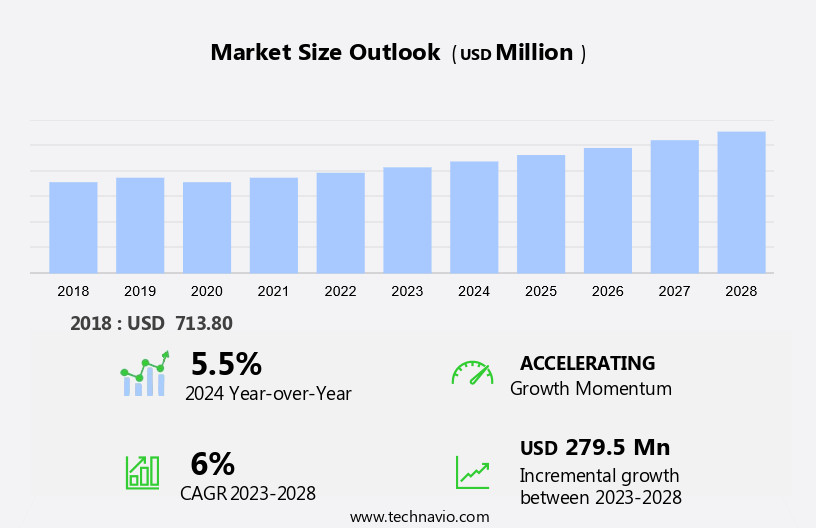
- The African endoscopy devices market is experiencing significant growth due to the rising prevalence of chronic diseases, particularly gastrointestinal disorders and cancer. Minimally invasive procedures, such as capsule endoscopy and flexible endoscopes, are increasingly popular for their invasive properties and ability to examine visceral organs with high-definition camera systems. Disposable components and wireless capsule endoscopy enable easier use and reduced infection risks. Advancements in technology include AI integration for improved diagnosis and remote-controlled technologies for enhanced precision in procedures like bronchoscopy and endoscopic retrograde cholangiopancreatography.
- Furthermore, robotics and surgical interventions are also gaining traction, offering more precise and efficient solutions. Clinical trials are ongoing for new endoscopic ultrasound and gi endoscopy technologies, which may further revolutionize the market. Chronic illnesses, such as cancer and gastrointestinal disorders, are driving demand for these advanced endoscopic solutions. As the African population grows and ages, the need for effective diagnostic and treatment tools is increasingly important. The market is expected to continue expanding, offering opportunities for innovation and growth In the field of endoscopy devices.
How is this market segmented and which is the largest segment?
The market research report provides comprehensive data (region-wise segment analysis), with forecasts and estimates in "USD million" for the period 2024-2028, as well as historical data from 2018-2022 for the following segments.
- Product
- Endoscope
- Visualization and documentation systems
- Accessories
- Others
- Geography
- Africa
- South Africa
- Nigeria
- Egypt
- Kenya
- Africa
By Product Insights
- The endoscope segment is estimated to witness significant growth during the forecast period.
Endoscopic devices are essential medical instruments used for minimally invasive diagnostic and therapeutic procedures on various visceral organs. These devices consist of a tubular structure with a high-definition camera system that transmits real-time images while conveying illumination. Endoscopes are utilized for examining internal structures of the gastrointestinal tract, respiratory system, urinary system, and reproductive organs. Specialized endoscopes, such as bronchoscopes, cystoscopes, colonoscopes, and laparoscopes, are designed for specific organs.
Furthermore, disposable components and single-use endoscopes ensure infection control and patient safety. Advanced technologies like wireless capsule endoscopy, artificial intelligence, and robotics enhance diagnostic accuracy and surgical interventions. Chronic diseases, including cancer, and age-related disorders necessitate frequent endoscopic procedures. Economic viability and the increasing elderly population make outpatient procedures and ambulatory surgery centers popular. Endoscopic devices facilitate diagnostic and therapeutic operations for medical disorders, including gastrointestinal, liver, and gallbladder diseases.

Get a glance at the market share of various segments Request Free Sample
The endoscope segment was valued at USD 303.40 million in 2018 and showed a gradual increase during the forecast period.
Market Dynamics
Our researchers analyzed the data with 2023 as the base year, along with the key drivers, trends, and challenges. A holistic analysis of drivers will help companies refine their marketing strategies to gain a competitive advantage.
What are the key market drivers leading to the rise in adoption of Africa Endoscopy Devices Market?
Technological advancements are the key driver of the market.
- The market is witnessing significant advancements, driven by the adoption of minimally invasive procedures and the rising prevalence of chronic diseases among the elderly population. These innovations include high-definition camera systems, wireless capsule endoscopy, and artificial intelligence (AI) integration. Disposable components and single-use endoscopes are gaining popularity due to infection control concerns and economic viability. Wireless capsule endoscopy enables the visualization of visceral organs, particularly the gastrointestinal tract, without invasive properties. High-definition camera systems offer enhanced image quality for precise diagnosis and biopsies, crucial for cancer detection. AI and remote-controlled technologies are revolutionizing endoscopic procedures, enabling real-time analysis and improving clinical trials. Flexible endoscopes, such as bronchoscopes, laparoscopies, and urology endoscopes, are increasingly used for therapeutic and diagnostic operations.
- However, robotics and rigid endoscopes are also gaining traction in surgical interventions. Chronic diseases, including age-related disorders, cancer, and chronic ailments, are driving the demand for endoscopic devices. Endoscopic ultrasound, GI endoscopy, and endoscopic retrograde cholangiopancreatography are essential diagnostic procedures for various medical disorders. Single-use endoscopes and reprocessing are essential for infection control and cost containment. Outpatient procedures and ambulatory surgery centers are increasingly adopting endoscopic devices due to their affordability and convenience. Despite these advancements, challenges persist, including the high cost of some devices and the need for sterilization and reprocessing. Economic viability and the availability of product substitutes remain crucial factors In the market's growth. The African endoscopy devices market is expected to grow, driven by the increasing burden of chronic diseases and the aging population.
What are the market trends shaping the Africa Endoscopy Devices Market?
The increasing prevalence of chronic diseases is the upcoming trend In the market.
- The market is witnessing notable expansion due to the escalating number of patients suffering from chronic diseases, predominantly gastrointestinal (GI) disorders. The region is witnessing a surge in cases of colorectal, esophageal, and pancreatic cancers, biliary diseases, inflammatory bowel disease (IBD), and gastroesophageal reflux disease (GERD). These conditions are fueling the demand for advanced endoscopic devices, including high-definition camera systems, wireless capsule endoscopy, and minimally invasive procedures. The elderly population in Africa, which is growing rapidly, is particularly vulnerable to age-related disorders and chronic illnesses. Endoscopic devices play a crucial role in diagnosing and treating various medical disorders, including cancer and chronic ailments. Technological advancements, such as artificial intelligence (AI) integration, clinical trials, and remote-controlled technologies, are enhancing the capabilities of endoscopic devices, making them more effective in detecting and treating conditions In their early stages. Endoscopic devices are used for various diagnostic and therapeutic operations, including endoscopic ultrasound (EUS), gastrointestinal (GI) endoscopy, gastroscopes, and endoscopic retrograde cholangiopancreatography (ERCP).
- Moreover, these procedures enable the visualization of visceral organs, allowing for accurate diagnosis and precise surgical interventions. Flexible endoscopes, rigid endoscopes, and capsule endoscopes are some of the commonly used endoscopic devices. The market for endoscopic devices in Africa is driven by the increasing need for minimally invasive procedures, infection control, and outpatient procedures. Ambulatory surgery centers and clinics are increasingly adopting endoscopic devices for their cost-effectiveness and economic viability. However, challenges such as product substitutes, reprocessing, and sterilization remain significant barriers to market growth. Despite these challenges, the market for endoscopic devices in Africa is expected to continue expanding due to the rising burden of chronic diseases and the growing demand for minimally invasive diagnostic and therapeutic procedures.
What challenges does Africa Endoscopy Devices Market face during the growth?
The lack of skilled surgeons is a key challenge affecting the market growth.
- Endoscopy devices have become indispensable In the African healthcare sector due to their minimally invasive properties, making them ideal for diagnosing and treating various medical disorders, particularly chronic diseases affecting the visceral organs, such as gastrointestinal disorders, liver abscesses, and pancreatic conditions. These devices include endoscopes, visualization systems, and operative devices, such as rigid, flexible, and capsule endoscopes, which enable the examination of bronchial tubes (bronchoscopy), abdominal and pelvic cavities (laparoscopy), urinary tract (urology endoscopy), and the nervous system (neuroendoscopy). The increasing elderly population in Africa, with age-related disorders and chronic illnesses, necessitates the adoption of advanced endoscopic devices for diagnostic procedures, including high-definition camera systems and artificial intelligence (AI) for cancer diagnosis and biopsies. Single-use endoscopes and disposable components have gained popularity due to infection control and economic viability, while remote-controlled technologies and robotics offer improved precision and reduced reliance on highly skilled professionals.
- However, the scarcity of trained healthcare personnel and the high cost of these advanced devices pose challenges to the widespread adoption of endoscopic devices in Africa. Clinical trials and ongoing research aim to address these challenges, focusing on the development of cost-effective, reusable endoscopes and training programs for healthcare professionals. Endoscopic procedures require meticulous handling and precise execution to minimize complications, such as intestinal perforation, gall stones, and endometriosis. Proper training and adherence to reprocessing, sterilization, and infection control protocols are crucial to ensuring the safety and efficacy of endoscopic devices. The African market for endoscopic devices is expected to grow significantly due to the increasing burden of chronic diseases, the rising demand for outpatient procedures, and the expansion of ambulatory surgery centers.
Exclusive Africa Endoscopy Devices Market Customer Landscape
The market forecasting report includes the adoption lifecycle of the market, covering from the innovator's stage to the laggard's stage. It focuses on adoption rates in different regions based on penetration. Furthermore, the report also includes key purchase criteria and drivers of price sensitivity to help companies evaluate and develop their market growth analysis strategies.

Customer Landscape
Key Companies & Market Insights
Companies are implementing various strategies, such as strategic alliances, market forecast partnerships, mergers and acquisitions, geographical expansion, and product/service launches, to enhance their presence In the market. The market research and growth report includes detailed analyses of the competitive landscape of the market and information about key companies, including:
- Boston Scientific Corp.
- Cook Group Inc.
- FUJIFILM Holdings Corp.
- HOYA Corp.
- Johnson and Johnson Inc.
- KARL STORZ SE and Co. KG
- Medtronic Plc
- Olympus Corp.
- Richard Wolf GmbH
- Smith and Nephew plc
- Stryker Corp.
Qualitative and quantitative analysis of companies has been conducted to help clients understand the wider business environment as well as the strengths and weaknesses of key market players. Data is qualitatively analyzed to categorize companies as pure play, category-focused, industry-focused, and diversified; it is quantitatively analyzed to categorize companies as dominant, leading, strong, tentative, and weak.
Research Analyst Overview
The market is witnessing significant growth due to the increasing prevalence of chronic diseases, an aging population, and a rising focus on infection control in healthcare facilities. Endoscopic procedures have become essential tools In the diagnosis and treatment of various medical disorders, particularly those affecting the visceral organs. Endoscopy devices are minimally invasive diagnostic and operative tools used to examine the internal structures of the body. These devices consist of endoscopes, visualization systems, and operative devices. Endoscopes come in various forms, including rigid and flexible endoscopes, and are used for procedures such as bronchoscopy, laparoscopy, urology endoscopy, neuroendoscopy, gynecology endoscopy, and gastrointestinal (GI) endoscopy. The market for endoscopic devices in Africa is driven by the rising prevalence of chronic diseases, such as cancer and age-related disorders. According to the World Health Organization (WHO), non-communicable diseases (NCDs), including cancer, account for over 60% of all deaths in Africa. Additionally, the elderly population in Africa is growing, increasing the demand for endoscopic procedures to diagnose and treat age-related disorders.
Moreover, the increasing focus on infection control in healthcare facilities is driving the adoption of single-use endoscopes and endoscopic devices that are easy to reprocess and sterilize. Outpatient procedures and ambulatory surgery centers are also gaining popularity in Africa, increasing the demand for endoscopic devices that are cost-effective and economically viable. Advancements in technology, such as wireless capsule endoscopy, high-definition camera systems, and artificial intelligence (AI), are also contributing to the growth of the market. These technologies enable more accurate diagnoses and minimally invasive procedures, reducing the need for surgical interventions and improving patient outcomes. However, the market for endoscopic devices in Africa faces challenges, including the high cost of these devices and the lack of infrastructure and expertise in some regions. Product substitutes and reprocessing of used endoscopes are common practices in some parts of Africa to reduce costs.
Thus, the market is growing due to the increasing prevalence of chronic diseases, an aging population, and a rising focus on infection control in healthcare facilities. Advancements in technology and the growing popularity of outpatient procedures and ambulatory surgery centers are also contributing to the market's growth. However, the high cost of these devices and the lack of infrastructure and expertise in some regions present challenges to the market's growth.
|
Market Scope |
|
|
Report Coverage |
Details |
|
Page number |
143 |
|
Base year |
2023 |
|
Historic period |
2018-2022 |
|
Forecast period |
2024-2028 |
|
Growth momentum & CAGR |
Accelerate at a CAGR of 6% |
|
Market growth 2024-2028 |
USD 279.5 million |
|
Market structure |
Concentrated |
|
YoY growth 2023-2024(%) |
5.5 |
|
Competitive landscape |
Leading Companies, Market Positioning of Companies, Competitive Strategies, and Industry Risks |
What are the Key Data Covered in this Market Report?
- CAGR of the market during the forecast period
- Detailed information on factors that will drive the market growth and forecasting between 2024 and 2028
- Precise estimation of the size of the market and its contribution of the market in focus to the parent market
- Accurate predictions about upcoming market growth and trends and changes in consumer behaviour
- Growth of the market across Africa
- Thorough analysis of the market's competitive landscape and detailed information about companies
- Comprehensive analysis of factors that will challenge the growth of market companies
We can help! Our analysts can customize this market research report to meet your requirements Get in touch