



Enterprise Information Management (EIM) Market Size 2026-2030
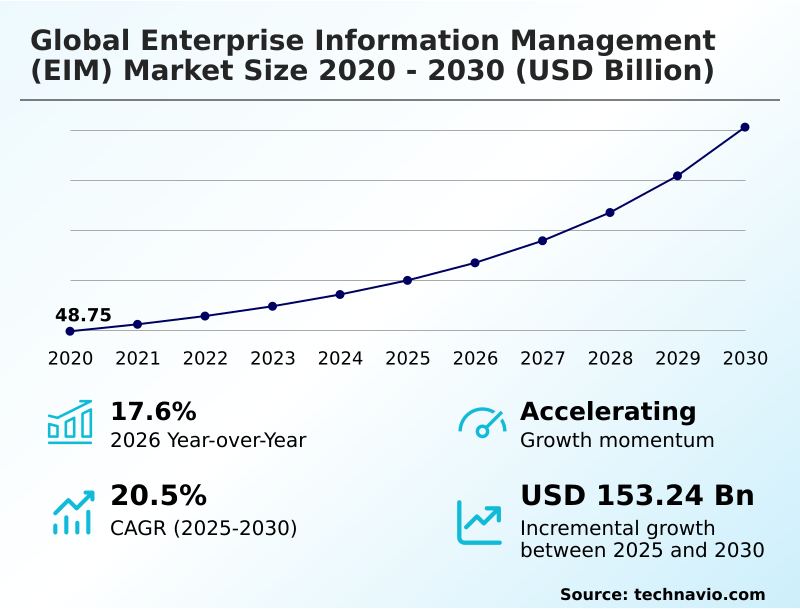
The enterprise information management (eim) market size is valued to increase by USD 153.24 billion, at a CAGR of 20.5% from 2025 to 2030. Institutionalization of agentic AI and autonomous metadata orchestration will drive the enterprise information management (eim) market.
Major Market Trends & Insights
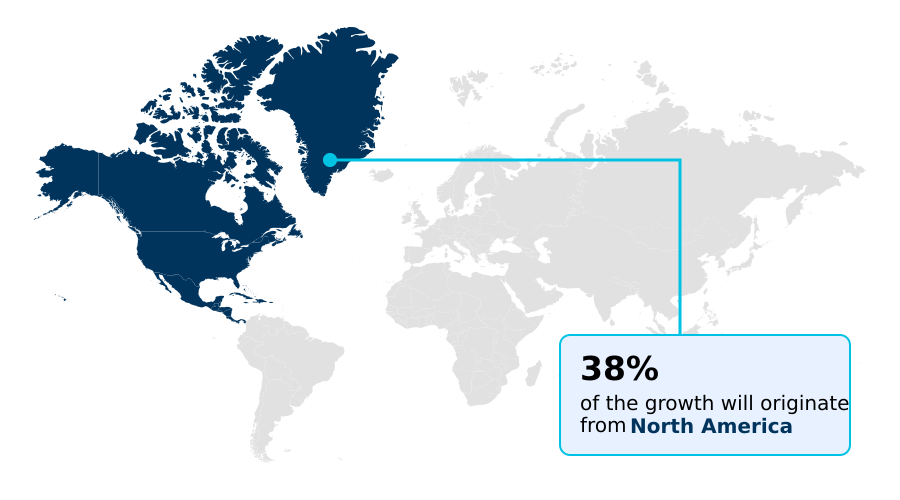
- North America dominated the market and accounted for a 37.6% growth during the forecast period.
- By Deployment - On-premises segment was valued at USD 61.90 billion in 2024
- By End-user - BFSI segment accounted for the largest market revenue share in 2024
Market Size & Forecast
- Market Opportunities: USD 204.11 billion
- Market Future Opportunities: USD 153.24 billion
- CAGR from 2025 to 2030 : 20.5%
Market Summary
- The enterprise information management market is navigating a profound structural shift, moving from passive data storage to intelligent, agent-oriented content ecosystems. This evolution is driven by the urgent need to consolidate fragmented information silos to fuel generative AI initiatives and comply with complex global data privacy regulations.
- Organizations are increasingly deploying cloud-native platforms that offer high-fidelity metadata management, autonomous metadata orchestration, and robust audit trails for corporate accountability. The rise of sovereign cloud architectures and data residency compliance mandates has spurred demand for hybrid solutions that synchronize information across diverse jurisdictions.
- For example, a financial services firm can leverage a unified EIM framework to manage unstructured data proliferation for real-time fraud detection, ensuring a single source of truth across all operations.
- The core challenge lies in bridging the AI readiness gap by implementing automated data classification and policy-driven information management, turning vast data reserves from a liability into a strategic asset for autonomous business processes and long-term operational resilience in the enterprise information management market.
What will be the Size of the Enterprise Information Management (EIM) Market during the forecast period?
Get Key Insights on Market Forecast (PDF) Get Free Sample
How is the Enterprise Information Management (EIM) Market Segmented?
The enterprise information management (eim) industry research report provides comprehensive data (region-wise segment analysis), with forecasts and estimates in "USD million" for the period 2026-2030, as well as historical data from 2020-2024 for the following segments.
- Deployment
- On-premises
- Cloud-based
- End-user
- BFSI
- Healthcare
- Manufacturing
- Retail
- Others
- Type
- Cloud computing
- Big data
- Others
- Geography
- North America
- US
- Canada
- Mexico
- Europe
- Germany
- UK
- France
- APAC
- China
- Japan
- India
- South America
- Brazil
- Argentina
- Middle East and Africa
- Saudi Arabia
- UAE
- South Africa
- Rest of World (ROW)
- North America
By Deployment Insights
The on-premises segment is estimated to witness significant growth during the forecast period.
On-premises deployment remains critical for organizations in regulated sectors prioritizing absolute data sovereignty, mitigating the AI readiness gap by maintaining localized control. This model facilitates deep customization, allowing firms to integrate legacy systems through mainframe modernization and data modernization software.
A focus on enterprise data management helps bridge the gap between IT and OT data, crucial for implementing the digital thread connectivity needed for smart factory principles.
By using on-premises AI-powered content services, manufacturers can enable predictive maintenance, improving asset uptime by over 20%.
This approach supports intelligent workflow automation and dark data reduction, ensuring a single source of truth for high-stakes data assets without dependency on third-party platforms for core operations like location intelligence.
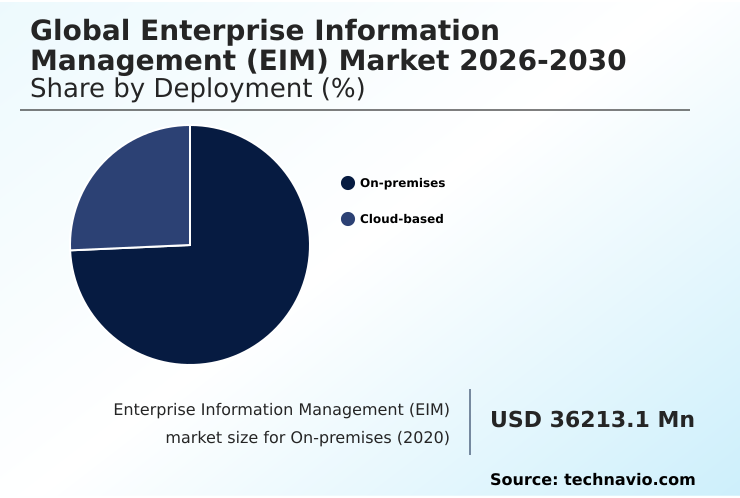
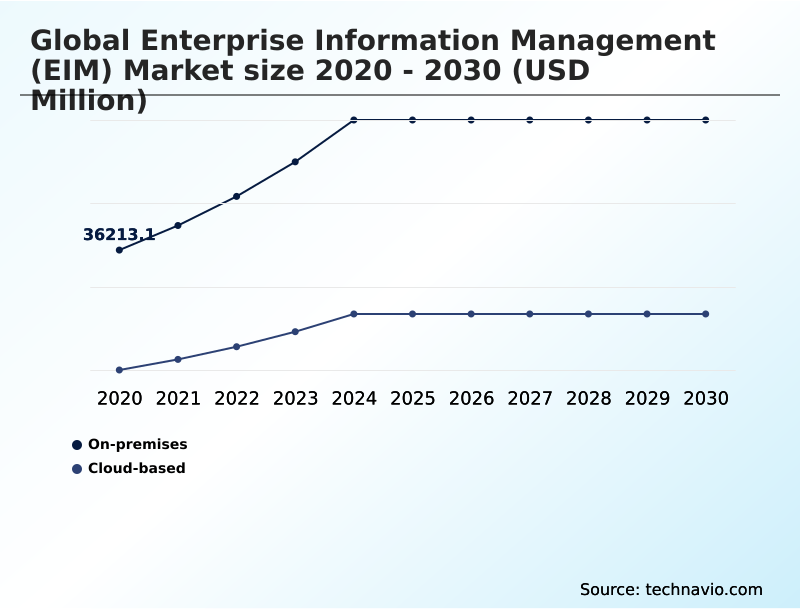
The On-premises segment was valued at USD 61.90 billion in 2024 and showed a gradual increase during the forecast period.
Regional Analysis
North America is estimated to contribute 37.6% to the growth of the global market during the forecast period.Technavio’s analysts have elaborately explained the regional trends and drivers that shape the market during the forecast period.
See How Enterprise Information Management (EIM) Market Demand is Rising in North America Get Free Sample
The geographic landscape is heavily influenced by data localization mandates, particularly in Europe and APAC, compelling multinationals to adopt a federated data model.
North America leads in deploying cloud content management and master data management platforms, while APAC's growth is fueled by mobile-first applications. Organizations globally are investing in information governance platforms and records management software for compliance.
For instance, European retailers using semantic data fabrics for omnichannel inventory management have seen a 15% improvement in stock accuracy. South America is adopting digital archiving services to modernize public sectors, and the Middle East focuses on digital identity programs.
This regional diversity necessitates flexible knowledge management platforms to support everything from hyper-personalized consumer experiences to hybrid learning models.
Market Dynamics
Our researchers analyzed the data with 2025 as the base year, along with the key drivers, trends, and challenges. A holistic analysis of drivers will help companies refine their marketing strategies to gain a competitive advantage.
- The strategic focus within the Global Enterprise Information Management (EIM) Market 2026-2030 is shifting toward specialized, outcome-driven initiatives. A key area is automating metadata tagging with generative AI, which streamlines content discovery and enhances data quality for AI model accuracy. Organizations are actively working on achieving AI readiness with unstructured data by implementing advanced classification and governance protocols.
- Concurrently, managing data residency with sovereign clouds has become a top priority for multinational corporations navigating complex regulatory landscapes. This is closely linked to integrating ESG reporting into EIM frameworks, where data lineage and transparency are paramount. The architectural evolution is evident in efforts toward implementing decentralized data mesh architectures, which empower business units with data ownership.
- However, this creates new challenges in overcoming interoperability in composable architectures. In industrial settings, leveraging EIM for predictive maintenance in manufacturing is proving highly effective, with some firms reducing equipment downtime by over 30% compared to those with siloed data systems. This focus on unifying IT and OT data in manufacturing is critical.
- Similarly, the retail sector is using EIM for hyper-personalization in retail, while financial institutions concentrate on ensuring data lineage for financial compliance. These use cases, from deploying EIM for public sector modernization to enabling cloud-native EIM for remote workforce collaboration, highlight a market moving toward specialized, high-value applications.
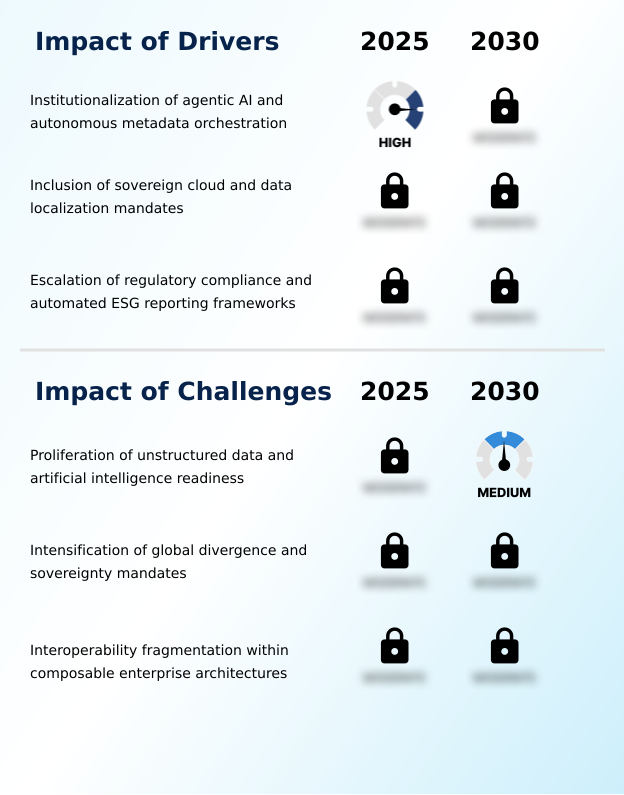
What are the key market drivers leading to the rise in the adoption of Enterprise Information Management (EIM) Industry?
- The institutionalization of agentic AI and the concurrent move toward autonomous metadata orchestration are key drivers propelling market expansion.
- A primary driver is the institutionalization of agentic AI, which enables autonomous metadata orchestration and establishes an AI-ready data foundation.
- This move is supported by the adoption of sovereign cloud architectures to ensure digital sovereignty and strict data residency compliance, which is critical for multi-jurisdictional compliance.
- The demand for automated ESG reporting is pushing firms to build curated data lakes that support real-time data processing.
- Organizations are leveraging data observability tools and high-performance compute environments to manage these complex systems, with firms reporting a 30% reduction in compliance reporting times.
- The implementation of zero-trust security architectures further secures these distributed environments, ensuring data is protected across all endpoints.
What are the market trends shaping the Enterprise Information Management (EIM) Industry?
- Advancements in decentralized data mesh architectures represent a significant upcoming trend. This shift prioritizes a domain-oriented model where data is treated as a product.
- The market is witnessing a pronounced shift toward decentralized data mesh architectures, where the principle of data as a product is driving a new federated data model. This approach facilitates domain-based information management, empowering business units with greater control. A key trend is the use of generative AI metadata enrichment to deliver intelligent automation, which transforms traditional enterprise content management.
- Simultaneously, the rise of sustainable data management and green data storage practices is compelling organizations to rethink their data lifecycle. Firms are leveraging advanced data integration software and robust data governance platforms to ensure data integrity solutions are maintained across hybrid-headless architectures, supported by augmented analytics to unlock new value. This evolution has improved data discovery speeds by over 40%.
What challenges does the Enterprise Information Management (EIM) Industry face during its growth?
- The exponential proliferation of unstructured data, coupled with a persistent gap in artificial intelligence readiness, presents a primary challenge to industry growth.
- A significant challenge stems from interoperability fragmentation within the composable enterprise architecture, hindering the seamless integration of best-of-breed software components. The lack of semantic interoperability complicates the creation of a single source of truth, which is essential for data swamp prevention. Unstructured data proliferation exacerbates this issue, making composable infrastructure integration difficult without robust policy-driven information management.
- To mitigate this, firms are deploying intelligent document management and digital workflow systems that feature automated data classification. Integrating robotic process automation helps streamline processes, but the core issue persists, with some organizations spending up to 25% more on custom integration work than initially budgeted.
Exclusive Technavio Analysis on Customer Landscape
The enterprise information management (eim) market forecasting report includes the adoption lifecycle of the market, covering from the innovator’s stage to the laggard’s stage. It focuses on adoption rates in different regions based on penetration. Furthermore, the enterprise information management (eim) market report also includes key purchase criteria and drivers of price sensitivity to help companies evaluate and develop their market growth analysis strategies.
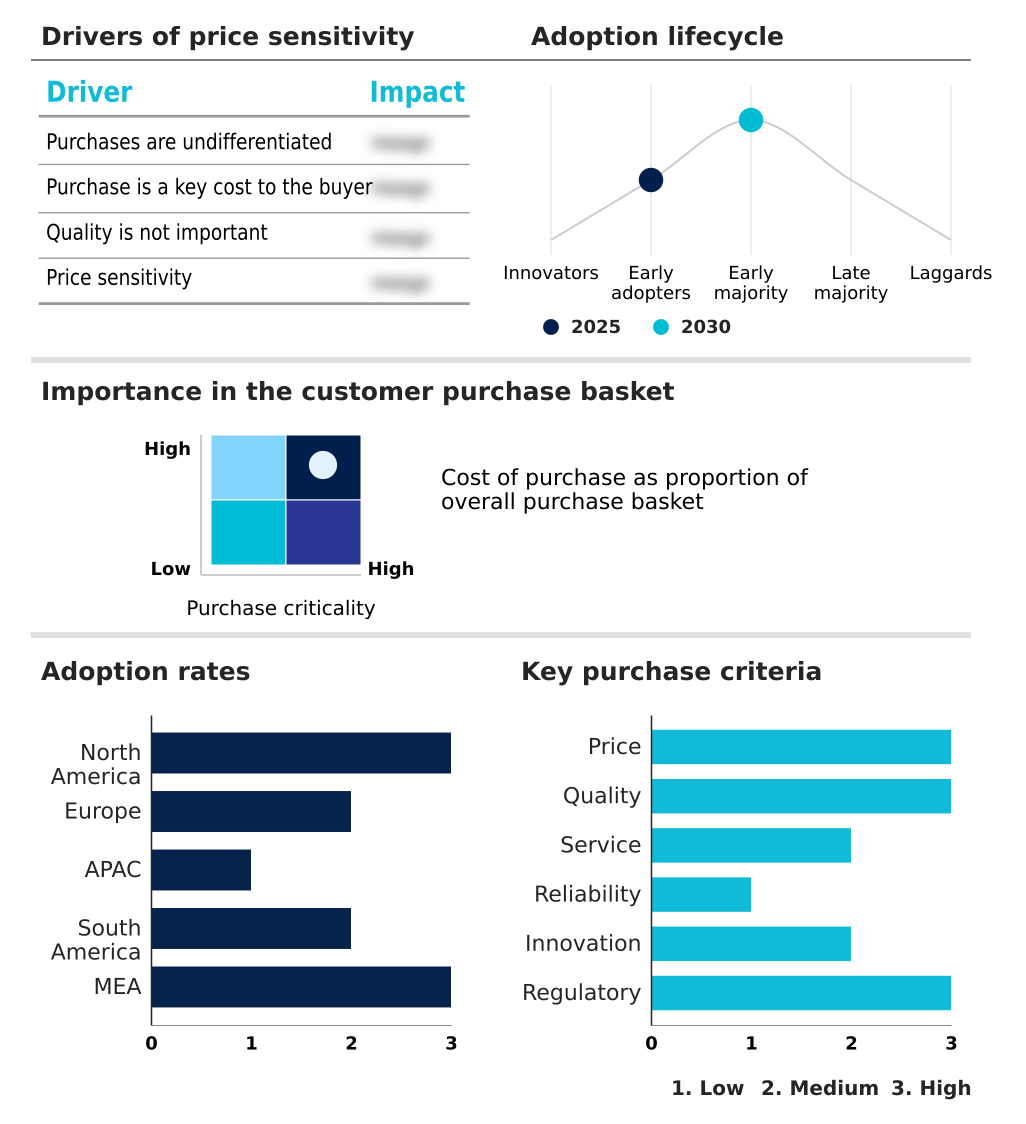
Customer Landscape of Enterprise Information Management (EIM) Industry
Competitive Landscape
Companies are implementing various strategies, such as strategic alliances, enterprise information management (eim) market forecast, partnerships, mergers and acquisitions, geographical expansion, and product/service launches, to enhance their presence in the industry.
Adobe Inc. - Provides enterprise information management solutions, including advanced experience manager and document cloud services, to manage digital assets and customer-facing content.
The industry research and growth report includes detailed analyses of the competitive landscape of the market and information about key companies, including:
- Adobe Inc.
- AvePoint Inc.
- Box Inc.
- Compulink Management Center Inc
- Hyland Software Inc.
- IBM Corp.
- iManage LLC
- Informatica Inc.
- Iron Mountain Inc.
- M Files Oy
- Microsoft Corp.
- Newgen Software Technologies
- Open Text Corp.
- Oracle Corp.
- Precisely
- Rocket Software Inc.
- SAP SE
- SER Solutions Ltd.
- Veritas Technologies LLC
Qualitative and quantitative analysis of companies has been conducted to help clients understand the wider business environment as well as the strengths and weaknesses of key industry players. Data is qualitatively analyzed to categorize companies as pure play, category-focused, industry-focused, and diversified; it is quantitatively analyzed to categorize companies as dominant, leading, strong, tentative, and weak.
Recent Development and News in Enterprise information management (eim) market
- In March 2025, Google entered into a definitive agreement to acquire Wiz, a leading cloud security platform, for $32 billion to enhance its cloud infrastructure and security capabilities.
- In March 2025, IBM Corp. introduced agentic artificial intelligence capabilities across its software portfolio, launching autonomous agents within IBM Cognos Analytics to transform business reporting from manual workflows to intelligent execution.
- In March 2025, Box Inc. announced the successful deployment of its Enterprise Advanced tier, a platform anchoring advanced AI and intelligent workflow automation within a secure content management framework.
- In February 2025, SAP SE announced the general availability of its next-generation Ariba solutions, which utilize the SAP Business Technology Platform to integrate contract analysis and supplier risk management into professional workflows.
Dive into Technavio’s robust research methodology, blending expert interviews, extensive data synthesis, and validated models for unparalleled Enterprise Information Management (EIM) Market insights. See full methodology.
| Market Scope | |
|---|---|
| Page number | 303 |
| Base year | 2025 |
| Historic period | 2020-2024 |
| Forecast period | 2026-2030 |
| Growth momentum & CAGR | Accelerate at a CAGR of 20.5% |
| Market growth 2026-2030 | USD 153241.7 million |
| Market structure | Fragmented |
| YoY growth 2025-2026(%) | 17.6% |
| Key countries | US, Canada, Mexico, Germany, UK, France, Italy, Spain, The Netherlands, China, Japan, India, South Korea, Australia, Indonesia, Brazil, Argentina, Chile, Saudi Arabia, UAE, South Africa, Israel and Turkey |
| Competitive landscape | Leading Companies, Market Positioning of Companies, Competitive Strategies, and Industry Risks |
Research Analyst Overview
- The market is defined by a systematic transition toward autonomous, agent-based governance and the unification of fragmented data architectures. The institutionalization of agentic AI is enabling autonomous metadata orchestration, moving beyond basic indexing to sophisticated systems that understand context and intent. This shift is critical for managing the unstructured data proliferation that hinders AI readiness.
- Enterprises are now prioritizing data governance platforms and data modernization software to ensure semantic interoperability within composable enterprise architecture. This trend directly impacts boardroom decisions on compliance, as regulations now demand auditable data lineage, which is achievable through policy-driven information management and robust enterprise content management.
- By implementing intelligent document management and master data management platforms, organizations have achieved a 45% improvement in overall data quality. This move toward an intelligent core, underpinned by data residency compliance and enterprise data management, anchors long-term stability in algorithmic precision and automated information integrity, which is essential for competing in a data-driven global economy.
What are the Key Data Covered in this Enterprise Information Management (EIM) Market Research and Growth Report?
-
What is the expected growth of the Enterprise Information Management (EIM) Market between 2026 and 2030?
-
USD 153.24 billion, at a CAGR of 20.5%
-
-
What segmentation does the market report cover?
-
The report is segmented by Deployment (On-premises, and Cloud-based), End-user (BFSI, Healthcare, Manufacturing, Retail, and Others), Type (Cloud computing, Big data, and Others) and Geography (North America, Europe, APAC, South America, Middle East and Africa)
-
-
Which regions are analyzed in the report?
-
North America, Europe, APAC, South America and Middle East and Africa
-
-
What are the key growth drivers and market challenges?
-
Institutionalization of agentic AI and autonomous metadata orchestration, Proliferation of unstructured data and artificial intelligence readiness
-
-
Who are the major players in the Enterprise Information Management (EIM) Market?
-
Adobe Inc., AvePoint Inc., Box Inc., Compulink Management Center Inc, Hyland Software Inc., IBM Corp., iManage LLC, Informatica Inc., Iron Mountain Inc., M Files Oy, Microsoft Corp., Newgen Software Technologies, Open Text Corp., Oracle Corp., Precisely, Rocket Software Inc., SAP SE, SER Solutions Ltd. and Veritas Technologies LLC
-
Market Research Insights
- Market dynamics are increasingly shaped by the move toward treating data as a product, which promotes domain-based information management and accelerates intelligent automation. Adopting a federated data model helps with dark data reduction and is essential for data swamp prevention, with firms achieving a 25% increase in data usability.
- The push for an AI-ready data foundation is compelling organizations to invest in technologies that support hyper-personalized consumer experiences and smart factory principles. This strategic shift facilitates digital thread connectivity and predictive maintenance, where organizations report a 15% reduction in operational downtime.
- As composable infrastructure integration becomes standard, establishing a single source of truth is paramount for achieving multi-jurisdictional compliance and enabling efficient omnichannel inventory management.
We can help! Our analysts can customize this enterprise information management (eim) market research report to meet your requirements.
 RIA -
RIA - 
