

Ethnic Wear Market Size 2026-2030
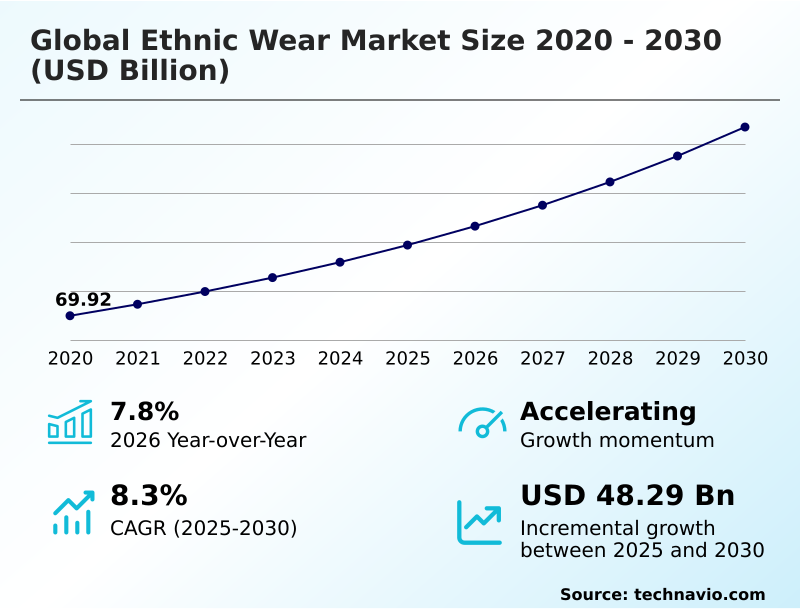
The ethnic wear market size is valued to increase by USD 48.29 billion, at a CAGR of 8.3% from 2025 to 2030. International market penetration and rise of global luxury flagships will drive the ethnic wear market.
Major Market Trends & Insights
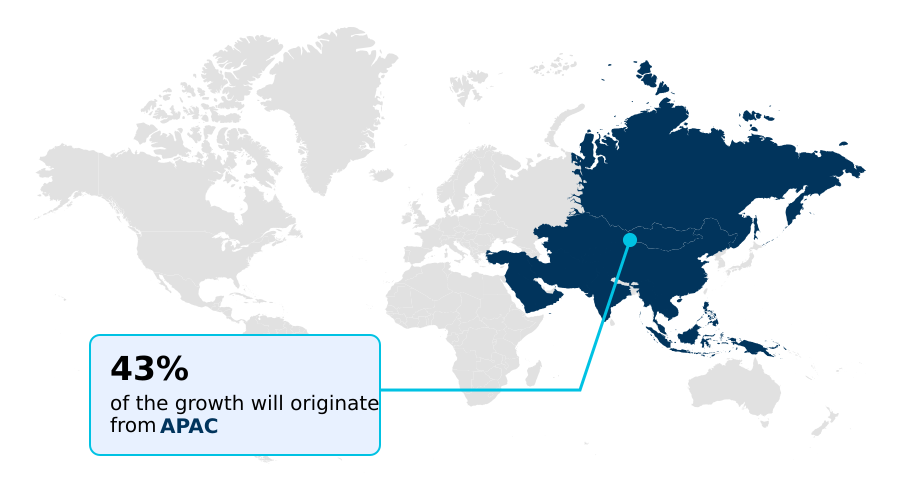
- APAC dominated the market and accounted for a 43.4% growth during the forecast period.
- By End-user - Women segment was valued at USD 42.56 billion in 2024
- By Distribution Channel - Offline segment accounted for the largest market revenue share in 2024
Market Size & Forecast
- Market Opportunities: USD 77.20 billion
- Market Future Opportunities: USD 48.29 billion
- CAGR from 2025 to 2030 : 8.3%
Market Summary
- The ethnic wear market is undergoing a significant transformation, driven by the convergence of heritage craftsmanship and modern commerce. This evolution is marked by a structural shift from fragmented, unorganized tailoring to branded, organized retail that offers consistency and contemporary designs.
- A key dynamic is the industry's digital acceleration, where e-commerce and social commerce platforms are making traditional attire more accessible to a global audience, including the significant diaspora consumer base. Brands are increasingly adopting a phygital model, using physical stores as experience centers that complement online sales channels.
- For instance, a company might leverage data analytics to forecast demand for specific festive collections in different regions, ensuring optimal inventory of occasion-wear ahead of cultural events. This strategy not only improves supply chain digitization and operational efficiency but also enhances the customer experience by aligning product availability with regional style preferences.
- The emphasis on sustainability and ethical sourcing is also becoming a crucial differentiator, as consumers grow more conscious of the origins and impact of their purchases, favoring hand-crafted apparel and sustainable couture.
What will be the Size of the Ethnic Wear Market during the forecast period?
Get Key Insights on Market Forecast (PDF) Get Free Sample
How is the Ethnic Wear Market Segmented?
The ethnic wear industry research report provides comprehensive data (region-wise segment analysis), with forecasts and estimates in "USD million" for the period 2026-2030, as well as historical data from 2020-2024 for the following segments.
- End-user
- Women
- Men
- Kids
- Distribution channel
- Offline
- Online
- Price range
- Economic
- Medium
- Premium
- Geography
- APAC
- India
- China
- Japan
- North America
- US
- Canada
- Mexico
- Europe
- Germany
- UK
- France
- South America
- Brazil
- Argentina
- Middle East and Africa
- Saudi Arabia
- UAE
- South Africa
- Rest of World (ROW)
- APAC
By End-user Insights
The women segment is estimated to witness significant growth during the forecast period.
The women's segment is the primary driver of the ethnic wear market, characterized by evolving consumer preferences that balance tradition with modern convenience. Demand is shifting toward comfortable yet aesthetically rich celebration wear, moving beyond traditional, heavy bridal couture.
Leading brands are now focusing on lightweight designer lehengas and versatile ready-to-wear ethnic outfits to cater to this trend. This evolution is supported by a transition toward heritage driven retail experiences that emphasize craftsmanship.
The adoption of AI to create personalized digital journeys and predict regional style preferences has enhanced customer engagement, with some brands reporting a 30% uplift in conversion rates for customized apparel.
This focus on sustainable couture and a seamless experience, including services like white glove delivery, defines the segment's trajectory.
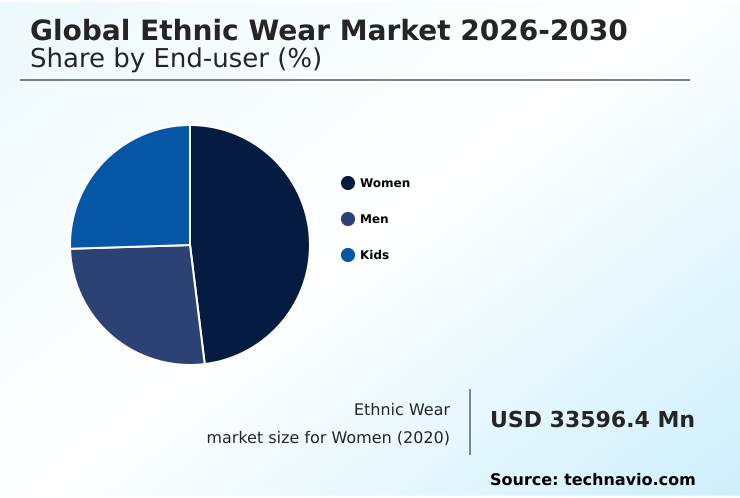
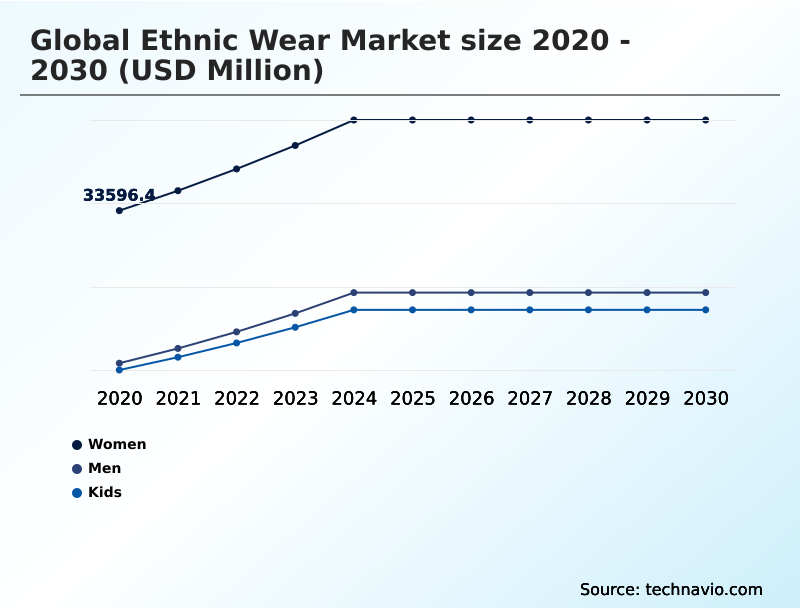
The Women segment was valued at USD 42.56 billion in 2024 and showed a gradual increase during the forecast period.
Regional Analysis
APAC is estimated to contribute 43.4% to the growth of the global market during the forecast period.Technavio’s analysts have elaborately explained the regional trends and drivers that shape the market during the forecast period.
See How Ethnic Wear Market Demand is Rising in APAC Get Free Sample
The geographic landscape is marked by strong regional dynamics, with APAC contributing over 43% of the market's incremental growth, driven by deep cultural traditions.
In India, growth is accelerating in Tier-2 and Tier-3 cities, where consumer demand is shifting from local tailors to organized retail offering branded designer pret labels and high-quality occasion-wear.
North America remains a crucial market, with a focus on bespoke bridal wear and hand-crafted apparel for the diaspora community.
Brands are creating phygital environment stores in these regions, using strong visual merchandising to showcase everything from hand-woven fabrics to designer lehengas.
This expansion improves distribution efficiency by over 20% compared to fragmented local supply chains, with trends like influencer-led live shopping helping to market printed kurtis and other styles globally.
Market Dynamics
Our researchers analyzed the data with 2025 as the base year, along with the key drivers, trends, and challenges. A holistic analysis of drivers will help companies refine their marketing strategies to gain a competitive advantage.
- The future of the ethnic wear market hinges on a nuanced understanding of its evolving dynamics, particularly the globalization of traditional indian fashion. Successfully marketing ethnic wear to younger generations requires a balance, integrating fusion wear trends in ethnic apparel while respecting the role of craftsmanship in luxury ethnic wear.
- Addressing the challenges in ethnic wear e-commerce is paramount; this includes mastering supply chain management for ethnic wear and implementing online personalization in ethnic fashion. A key focus is on creating a superior customer experience in ethnic wear retail. This involves a deep dive into luxury ethnic wear market dynamics and understanding the bridal couture market segmentation.
- The industry is increasingly focused on ethnic wear for diaspora consumers, leveraging digital transformation in ethnic retail to reach them. The implementation of a phygital retail for luxury ethnic wear is becoming standard, supported by an effective omnichannel strategy for ethnic apparel.
- Key considerations include the impact of social commerce on ethnic wear and using data analytics for ethnic wear forecasting to manage inventory for celebration wear for festive seasons. Firms that excel in sourcing hand-woven fabrics for fashion and championing sustainable practices in ethnic fashion are gaining a competitive edge.
- These integrated strategies focused on artisanal heritage in modern ethnic wear are critical; businesses adopting them report inventory turnover rates nearly 50% higher than those reliant on traditional models.
What are the key market drivers leading to the rise in the adoption of Ethnic Wear Industry?
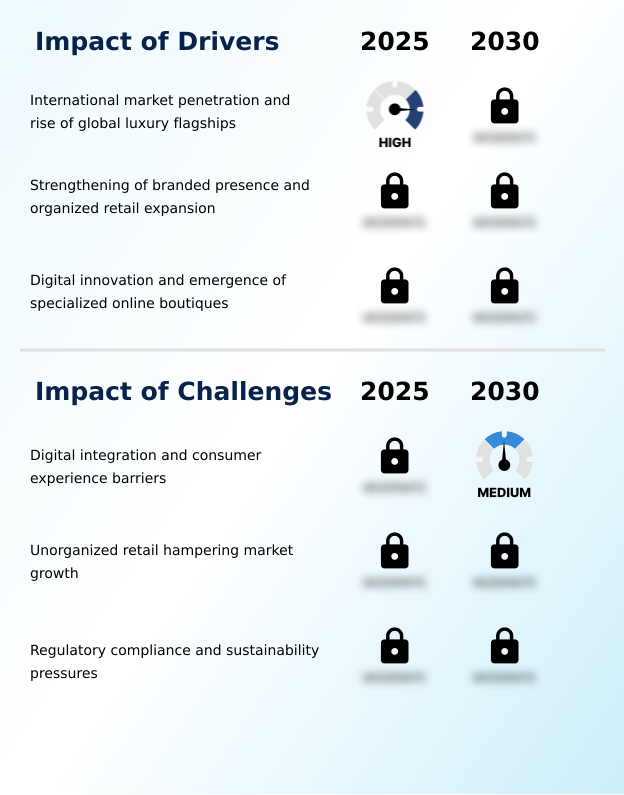
- International market penetration, coupled with the establishment of global luxury flagships, is a key driver for market expansion.
- The market is propelled by organized retail expansion, with chains reporting a 20% increase in footfall at new locations. This organized retail shift captures new demand.
- Simultaneously, cross-border e-commerce platforms are unlocking growth by reaching diaspora consumers, increasing export revenues by over 35%.
- This global push is built on a narrative of artisanal heritage, mindful luxury, and sustainable practices, which resonates with audiences seeking authentic artisanal Indian design.
- By showcasing high-quality textile craftsmanship and traditional indian craftsmanship in global fashion capitals, brands are elevating ethnic wear from niche attire to a recognized form of international couture, reinforcing its commercial scalability and cultural significance.
What are the market trends shaping the Ethnic Wear Industry?
- The integration of advanced digital solutions is reshaping the market. High-end omnichannel platforms are becoming crucial for delivering seamless consumer experiences.
- A key trend is the market’s pivot to sophisticated omnichannel strategies, creating a seamless phygital retail environment. The adoption of technologies like augmented reality try-on has reduced online return rates by up to 30%, while virtual styling consultations increase average order value. This digital shift is exemplified by the launch of a digital fine jewellery boutique, making collections globally accessible.
- Data-led inventory planning has improved forecast accuracy by over 25%, supporting the overall omnichannel model. This integrated phygital experience is complemented by social commerce platforms and curated online trunk shows, which are fundamentally altering how heritage garments are marketed and sold to a new generation of shoppers.
What challenges does the Ethnic Wear Industry face during its growth?
- Barriers to effective digital integration and the delivery of seamless consumer experiences present a key challenge to industry growth.
- A primary challenge is bridging the gap between experiences rooted in heritage craftsmanship and modern digital expectations, particularly for high-value luxury ethnic garments. The absence of real-time inventory synchronization between online and offline channels results in stock discrepancies affecting up to 15% of orders.
- Moreover, outdated customer relationship management systems hinder personalization, rendering marketing efforts 40% less effective than those of digitally native competitors. The complex logistics of managing custom-tailored indian ethnic wear and diverse stock like festive ethnic sets across borders amplifies the need for advanced supply chain digitization.
- Successfully modernizing these systems is critical for maintaining brand consistency and meeting consumer demand for both indo-western couture ensembles and traditional apparel.
Exclusive Technavio Analysis on Customer Landscape
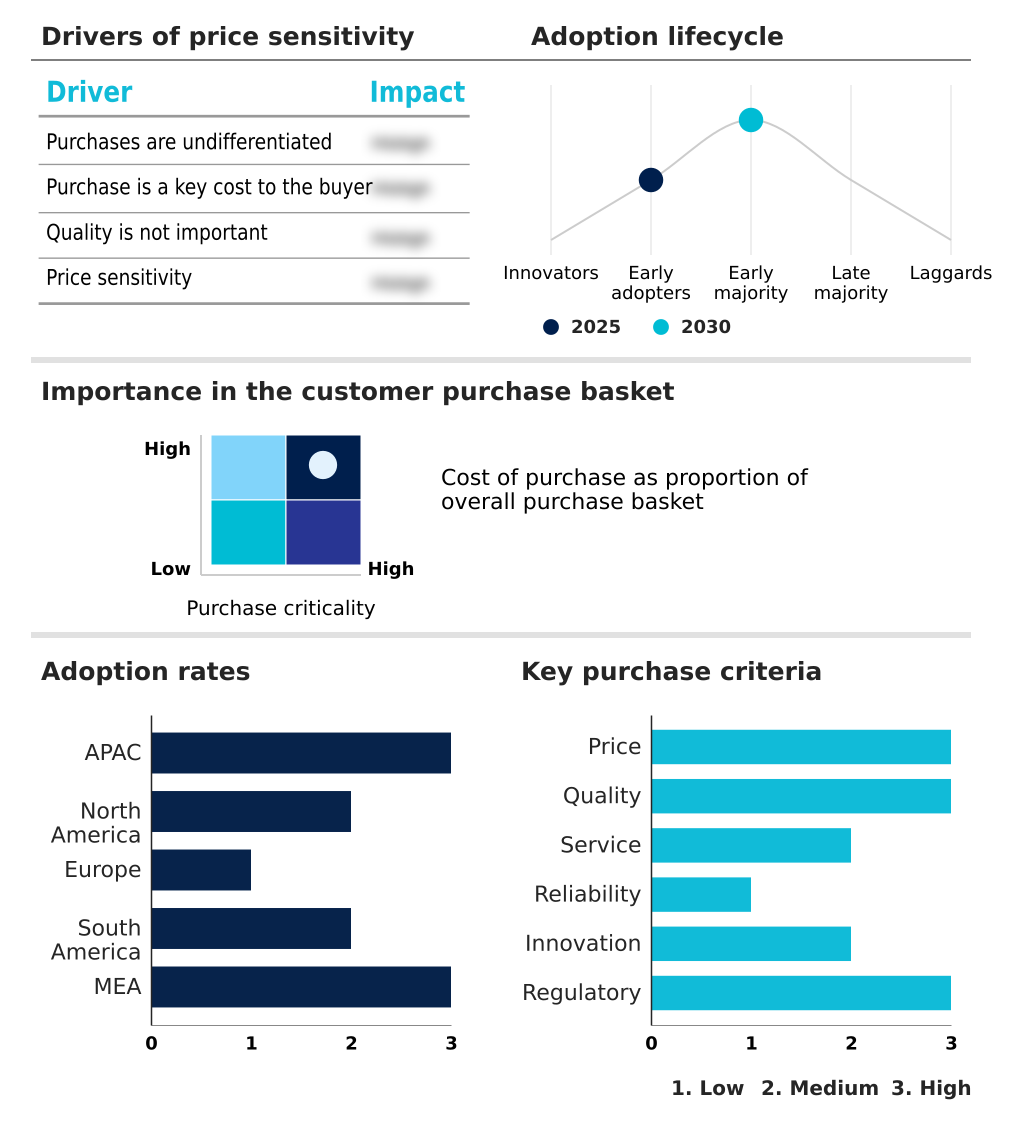
The ethnic wear market forecasting report includes the adoption lifecycle of the market, covering from the innovator’s stage to the laggard’s stage. It focuses on adoption rates in different regions based on penetration. Furthermore, the ethnic wear market report also includes key purchase criteria and drivers of price sensitivity to help companies evaluate and develop their market growth analysis strategies.
Customer Landscape of Ethnic Wear Industry
Competitive Landscape
Companies are implementing various strategies, such as strategic alliances, ethnic wear market forecast, partnerships, mergers and acquisitions, geographical expansion, and product/service launches, to enhance their presence in the industry.
Biba Fashion Ltd. - A portfolio defined by high-end, hand-crafted bridal ensembles and accessories, reflecting traditional Indian craftsmanship and luxury aesthetics.
The industry research and growth report includes detailed analyses of the competitive landscape of the market and information about key companies, including:
- Biba Fashion Ltd.
- Cbazaar
- Fabindia Ltd.
- Frontier Raas Pvt. Ltd.
- High Street Essentials Pvt. Ltd.
- House of Anita Dongre Ltd.
- Kalki Fashion
- Khaadi Corp. Ltd.
- Koskii Tower Pvt. Ltd.
- Nalli Silk Sarees Pvt. Ltd.
- Neerus Ensembles Pvt. Ltd.
- Peachmode
- Purple Style Labs Ltd.
- Ritika Pvt. Ltd.
- Sabyasachi Calcutta LLP
- Samyakk
- Soch Apparels Pvt. Ltd.
- Tahiliani Design Pvt. Ltd.
- Utsav Fashion Pvt. Ltd.
Qualitative and quantitative analysis of companies has been conducted to help clients understand the wider business environment as well as the strengths and weaknesses of key industry players. Data is qualitatively analyzed to categorize companies as pure play, category-focused, industry-focused, and diversified; it is quantitatively analyzed to categorize companies as dominant, leading, strong, tentative, and weak.
Recent Development and News in Ethnic wear market
- In September 2024, Biba expanded its international footprint with a new store launch in New Jersey, aiming to capture the growing diaspora market.
- In October 2024, Vedant Fashions launched an integrated dual-brand flagship store in Pune, establishing a phygital environment that merges physical inventory with digital discovery tools.
- In January 2025, Fabindia Limited announced its preparations for a maiden public offering, intending to fund expansion and leverage the increasing demand for ethically sourced and organic products.
- In February 2025, Sabyasachi Calcutta LLP inaugurated a lavish flagship boutique in Hyderabad to showcase its exclusive fine jewelry and global couture collections.
Dive into Technavio’s robust research methodology, blending expert interviews, extensive data synthesis, and validated models for unparalleled Ethnic Wear Market insights. See full methodology.
| Market Scope | |
|---|---|
| Page number | 276 |
| Base year | 2025 |
| Historic period | 2020-2024 |
| Forecast period | 2026-2030 |
| Growth momentum & CAGR | Accelerate at a CAGR of 8.3% |
| Market growth 2026-2030 | USD 48291.8 million |
| Market structure | Fragmented |
| YoY growth 2025-2026(%) | 7.8% |
| Key countries | India, China, Japan, South Korea, Australia, Indonesia, US, Canada, Mexico, Germany, UK, France, Italy, Spain, The Netherlands, Brazil, Argentina, Chile, Saudi Arabia, UAE, South Africa, Israel and Turkey |
| Competitive landscape | Leading Companies, Market Positioning of Companies, Competitive Strategies, and Industry Risks |
Research Analyst Overview
- The ethnic wear market is defined by a strategic shift toward organized retail and a sophisticated omnichannel model. This transition integrates heritage craftsmanship with modern commerce, elevating artisanal heritage to a global stage. The product landscape is diverse, spanning from accessible ready-to-wear ethnic outfits to exclusive luxury ethnic garments.
- Core offerings include hand-crafted apparel made from traditional hand-woven fabrics, alongside high-value bridal couture and bespoke bridal wear. The rise of designer pret labels offering fusion wear and indo-western couture ensembles caters to modern tastes. A focus on mindful luxury is driving demand for sustainable couture.
- Technologically, the industry is creating a phygital retail environment with tools like augmented reality try-on and virtual styling consultations, which have increased average order values by over 15%. This showcases the importance of textile craftsmanship and traditional indian craftsmanship, whether in custom-tailored indian ethnic wear, occasion-wear, celebration wear, or a digital fine jewellery boutique.
What are the Key Data Covered in this Ethnic Wear Market Research and Growth Report?
-
What is the expected growth of the Ethnic Wear Market between 2026 and 2030?
-
USD 48.29 billion, at a CAGR of 8.3%
-
-
What segmentation does the market report cover?
-
The report is segmented by End-user (Women, Men, and Kids), Distribution Channel (Offline, and Online), Price Range (Economic, Medium, and Premium) and Geography (APAC, North America, Europe, South America, Middle East and Africa)
-
-
Which regions are analyzed in the report?
-
APAC, North America, Europe, South America and Middle East and Africa
-
-
What are the key growth drivers and market challenges?
-
International market penetration and rise of global luxury flagships, Digital integration and consumer experience barriers
-
-
Who are the major players in the Ethnic Wear Market?
-
Biba Fashion Ltd., Cbazaar, Fabindia Ltd., Frontier Raas Pvt. Ltd., High Street Essentials Pvt. Ltd., House of Anita Dongre Ltd., Kalki Fashion, Khaadi Corp. Ltd., Koskii Tower Pvt. Ltd., Nalli Silk Sarees Pvt. Ltd., Neerus Ensembles Pvt. Ltd., Peachmode, Purple Style Labs Ltd., Ritika Pvt. Ltd., Sabyasachi Calcutta LLP, Samyakk, Soch Apparels Pvt. Ltd., Tahiliani Design Pvt. Ltd. and Utsav Fashion Pvt. Ltd.
-
Market Research Insights
- The market’s dynamism is fueled by the rapid adoption of omnichannel strategies, which are proving highly effective in engaging a diverse customer base. Brands that have successfully implemented an integrated phygital experience report customer engagement rates that are up to 30% higher than those of their brick-and-mortar-only counterparts.
- The strategic use of social commerce platforms for influencer-led live shopping events has also yielded significant results, with some campaigns boosting sales for specific collections by over 50% in a single day. Furthermore, the expansion of cross-border e-commerce is critical, allowing brands to cater to diaspora consumers and new international markets.
- This digital-first approach, balanced with heritage driven retail concepts, is essential for navigating the competitive landscape and capitalizing on emerging growth opportunities.
We can help! Our analysts can customize this ethnic wear market research report to meet your requirements.
 RIA -
RIA -