


Events Industry Market Size 2026-2030
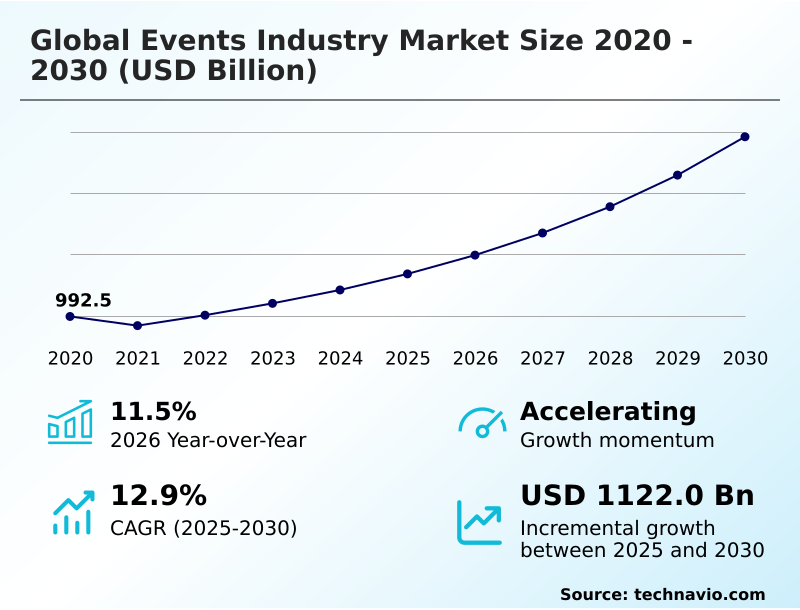
The events industry market size is valued to increase by USD 1122 billion, at a CAGR of 12.9% from 2025 to 2030. Technological integration and AI as operational co-pilot will drive the events industry market.
Major Market Trends & Insights
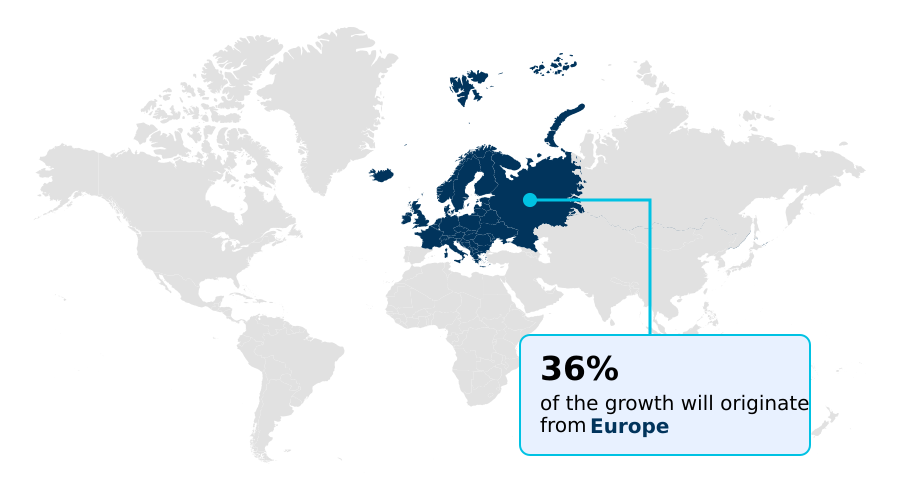
- Europe dominated the market and accounted for a 36.2% growth during the forecast period.
- By Type - Corporate events and seminar segment was valued at USD 335.2 billion in 2024
- By Source - Sponsorship segment accounted for the largest market revenue share in 2024
Market Size & Forecast
- Market Opportunities: USD 1470.3 billion
- Market Future Opportunities: USD 1122 billion
- CAGR from 2025 to 2030 : 12.9%
Market Summary
- The events industry market is undergoing a significant transformation, driven by the convergence of technology and a renewed focus on delivering measurable value. The sector is moving from a logistics-centric model to one centered on creating immersive experiences and fostering meaningful connections.
- A key aspect of this shift is the widespread adoption of data-driven strategies to enhance attendee engagement and prove return on investment.
- For instance, a multinational corporation can now use a unified event platform for its global sales kickoff to not only stream content but also to deploy AI-powered matchmaking, track engagement with interactive sessions, and receive real-time analytics on which topics resonate most.
- This allows for dynamic adjustments and provides concrete data for post-event analysis, connecting event spending directly to business outcomes like lead generation and team performance. This evolution is also shaped by increasing sustainability mandates and the challenge of navigating a complex global regulatory environment, pushing organizers to innovate in areas like circular economy practices and data privacy.
What will be the Size of the Events Industry Market during the forecast period?
Get Key Insights on Market Forecast (PDF) Get Free Sample
How is the Events Industry Market Segmented?
The events industry industry research report provides comprehensive data (region-wise segment analysis), with forecasts and estimates in "USD billion" for the period 2026-2030, as well as historical data from 2020-2024 for the following segments.
- Type
- Corporate events and seminar
- Music concert
- Festival
- Sports
- Others
- Source
- Sponsorship
- Ticket sale
- Others
- Age group
- 21 to 40 years
- Above 40 years
- Below 20 years
- Geography
- Europe
- Germany
- UK
- France
- North America
- US
- Canada
- Mexico
- APAC
- China
- Japan
- India
- Middle East and Africa
- UAE
- Saudi Arabia
- South Africa
- South America
- Brazil
- Argentina
- Rest of World (ROW)
- Europe
By Type Insights
The corporate events and seminar segment is estimated to witness significant growth during the forecast period.
The corporate events and seminar segment is a cornerstone of the professional world, focusing on knowledge exchange, networking, and strategic alignment. These gatherings, from executive retreats to global summits, are now data-rich environments.
The integration of AI-powered matchmaking and QR-based content capture provides measurable return on investment, with advanced behavioral analytics platforms showing a 30% uplift in qualified lead generation for sponsors.
This focus on analytical outcomes, supported by end-to-end event management systems and AI-driven event orchestration, distinguishes corporate events.
A seamless attendee journey is paramount, as hybrid models using high-fidelity metaverse platforms and professional social networks expand reach while maintaining the intimacy of in-person sessions, all managed through a unified event technology.
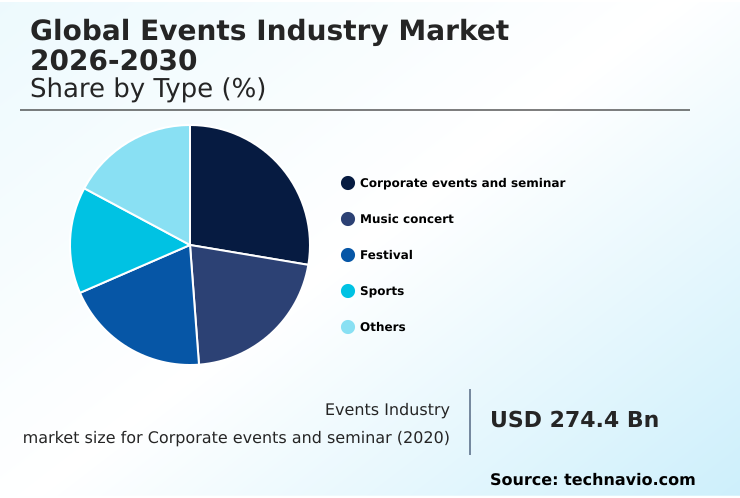
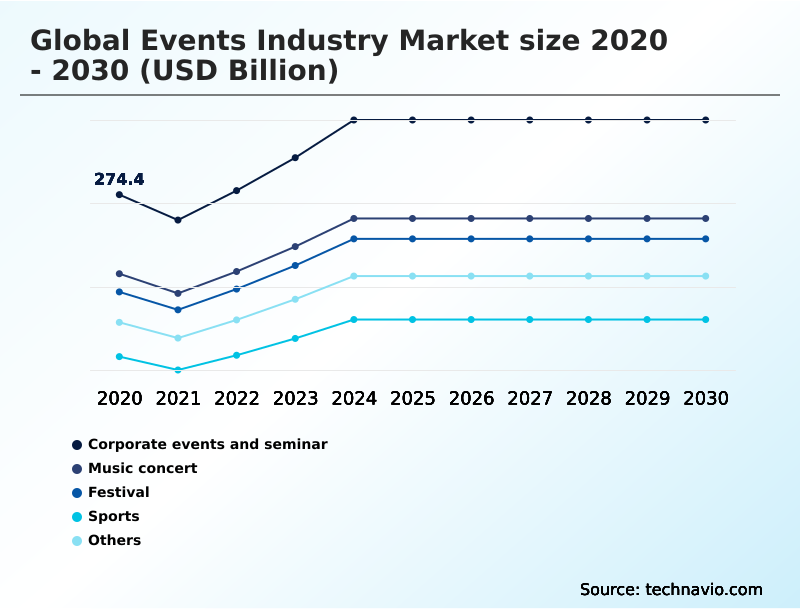
The Corporate events and seminar segment was valued at USD 335.2 billion in 2024 and showed a gradual increase during the forecast period.
Regional Analysis
Europe is estimated to contribute 36.2% to the growth of the global market during the forecast period.Technavio’s analysts have elaborately explained the regional trends and drivers that shape the market during the forecast period.
See How Events Industry Market Demand is Rising in Europe Get Free Sample
The geographic landscape is defined by distinct regional specializations and growth trajectories. In North America, the market is characterized by advanced adoption of agentic AI workflows and event technology sectors, focusing on ROI through sophisticated lead scoring.
Europe leads in regulatory-driven innovation, where ESG compliance automation and mandates for double materiality reporting have spurred a 30% increase in demand for green-certified venues and circular event design.
Meanwhile, the APAC region is the fastest-growing market, with governments investing heavily in smart technology infrastructure and 5G connectivity to host large-scale international events, with a reported 35% increase in attendance at major regional trade shows.
South America is professionalizing its sector, with a focus on localized supply chain strategies for its vibrant festival and corporate segments. These dynamics are pushing the industry towards global standards in both technology and sustainability.
Market Dynamics
Our researchers analyzed the data with 2025 as the base year, along with the key drivers, trends, and challenges. A holistic analysis of drivers will help companies refine their marketing strategies to gain a competitive advantage.
- Successfully navigating the contemporary events landscape requires a holistic approach, starting with measuring ROI with event technology platforms to justify every investment. The implementation of AI for attendee matchmaking and networking has become a critical differentiator, with some platforms seeing a 2x lift in meeting acceptance rates.
- Concurrently, implementing circular economy principles in events is moving from a talking point to a core operational mandate, particularly when navigating ESG compliance in event management. The impact of phygital models on engagement is profound, creating continuous touchpoints that extend far beyond the physical event.
- However, this also introduces new challenges, requiring strategies for reducing digital fatigue at events to maintain audience attention. The role of AI in event lead generation is being redefined, moving from simple capture to predictive qualification. To support these large gatherings, developing a sustainable supply chain for large-scale events is essential for both environmental and brand integrity.
- Ultimately, leveraging data analytics for personalized events is the key to creating unique experiences. Technology's role in event security management, especially with advanced biometrics, has also become non-negotiable. As organizers face the challenge of managing inflation in event budgeting, they must overcome event technology stack integration challenges to achieve efficiency.
- This allows them to focus on creating immersive brand activation experiences and perfecting best practices for hybrid event design, all while analyzing attendee behavior with AI tools. The goal is balancing technology and human interaction in events to shape the future of virtual and hybrid meetings.
- Digital twin technology for event planning helps model outcomes, while improving attendee journey with mobile apps ensures a seamless experience. Throughout this process, maintaining data privacy compliance for global events remains a paramount concern.
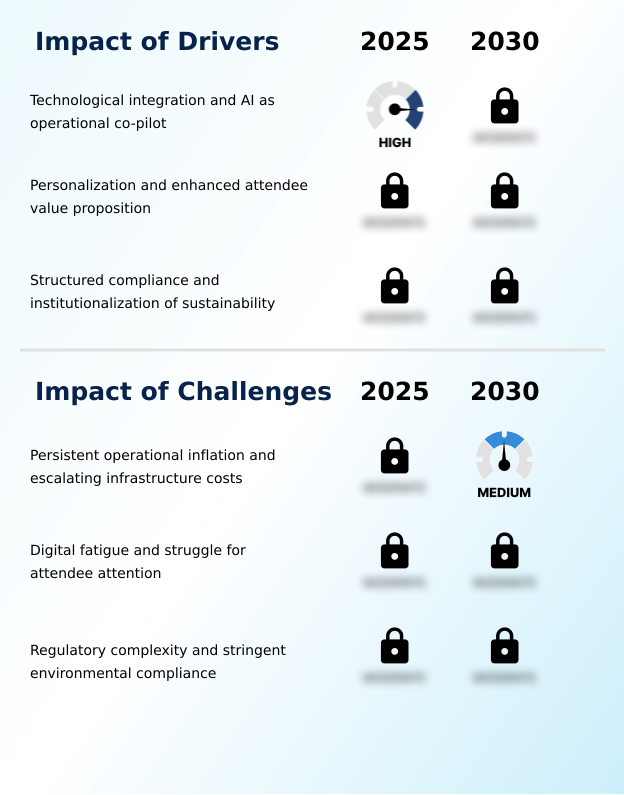
What are the key market drivers leading to the rise in the adoption of Events Industry Industry?
- Technological integration, particularly the use of AI as an operational co-pilot, is a key driver accelerating market growth.
- Market growth is fundamentally driven by technology's role in proving value and enhancing experience. The transition to AI as an operational co-pilot, using agentic AI workflows and predictive venue analytics, has improved operational efficiency by over 35% in some cases.
- Hyper-personalization, delivered through algorithmic networking and choose-your-own-adventure app experiences, is another major driver, increasing attendee satisfaction scores by an average of 25%.
- Furthermore, the formalization of ESG standards into regulatory requirements is compelling the industry to adopt sustainable practices, such as waste reduction and carbon footprint tracking.
- This has stimulated innovation, with organizations using data integrity tools and predictive analytics not only for compliance but also to strengthen brand reputation and attract a more conscious audience.
What are the market trends shaping the Events Industry Industry?
- A key market trend is the integration of agentic AI within unified event technology stacks. This evolution moves beyond basic automation to create intelligent, autonomous ecosystems.
- Key market trends are defined by a move toward intelligent automation and deep personalization. The adoption of phygital journey mapping is creating continuous engagement, with hybrid events showing a 30% higher content retention rate among attendees compared to purely virtual formats.
- Sustainability has also become a central trend, with the use of modular stage sets and circular economy principles reducing event-related waste by up to 50% in pioneering projects. Furthermore, real-time sentiment tracking and AI-powered matchmaking are transforming networking, creating more valuable interactions.
- This is supported by advanced tools for bid analysis, post-event impact reports, and the deployment of generative AI agents for complex logistics, ensuring a more efficient and impactful event lifecycle.
What challenges does the Events Industry Industry face during its growth?
- Persistent operational inflation and escalating infrastructure costs present a key challenge affecting the industry's growth trajectory.
- The industry faces significant headwinds, primarily from persistent operational inflation, which has increased infrastructure costs by an average of 15% in major markets. This financial pressure is compounded by the challenge of digital fatigue, as attendee engagement on virtual platform gamification features has declined by up to 40% from peak levels, forcing a re-evaluation of hybrid models.
- Organizers are increasingly requested to deliver 'phone-down experiences' to combat screen saturation. Moreover, navigating the complex and fragmented regulatory landscape, especially around Scope 3 emissions reporting and data privacy, presents a substantial challenge. This requires specialized expertise to ensure carbon-neutral operations and compliance, adding administrative layers and creating a difficult environment for smaller players in the event technology sector.
Exclusive Technavio Analysis on Customer Landscape
The events industry market forecasting report includes the adoption lifecycle of the market, covering from the innovator’s stage to the laggard’s stage. It focuses on adoption rates in different regions based on penetration. Furthermore, the events industry market report also includes key purchase criteria and drivers of price sensitivity to help companies evaluate and develop their market growth analysis strategies.
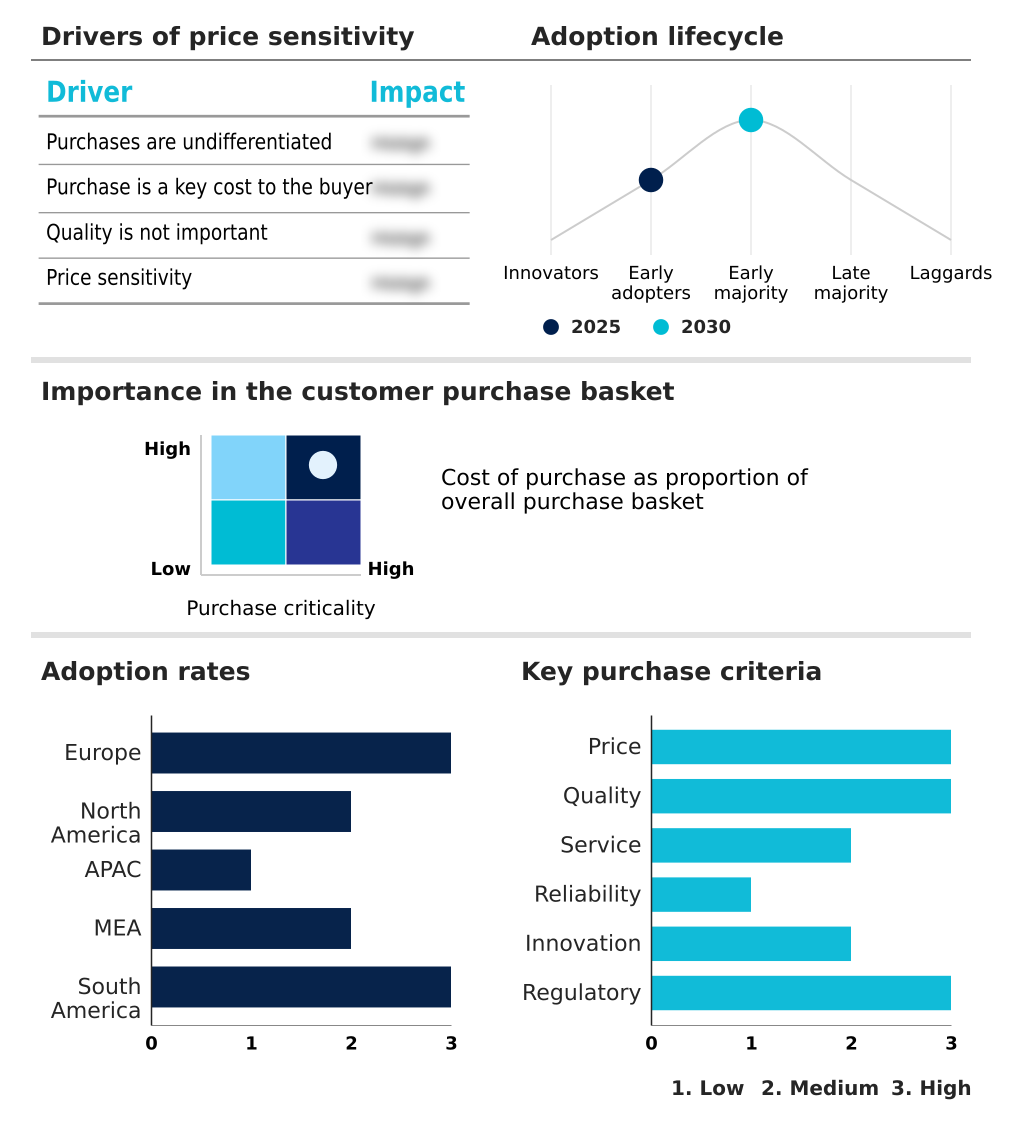
Customer Landscape of Events Industry Industry
Competitive Landscape
Companies are implementing various strategies, such as strategic alliances, events industry market forecast, partnerships, mergers and acquisitions, geographical expansion, and product/service launches, to enhance their presence in the industry.
BCD Meetings and Events - Provides cloud-based software solutions for event management, venue sourcing, and attendee engagement.
The industry research and growth report includes detailed analyses of the competitive landscape of the market and information about key companies, including:
- BCD Meetings and Events
- Clarion Events Ltd.
- Comexposium
- Cvent Inc
- Deutsche Messe AG
- Easyfairs
- Emerald X LLC
- Fira de Barcelona
- George P. Johnson
- GL events Group
- Hyve Group Ltd.
- Informa PLC
- Koelnmesse GmbH
- MCH Group AG
- Messe Dusseldorf GmbH
- Messe Frankfurt GmbH
- Messe Munchen GmbH
- Reed Exhibitions Ltd.
- The Freeman Co.
Qualitative and quantitative analysis of companies has been conducted to help clients understand the wider business environment as well as the strengths and weaknesses of key industry players. Data is qualitatively analyzed to categorize companies as pure play, category-focused, industry-focused, and diversified; it is quantitatively analyzed to categorize companies as dominant, leading, strong, tentative, and weak.
Recent Development and News in Events industry market
- In April 2025, Cvent Inc. finalized its acquisition of ON24, a strategic move to merge webinar and virtual event data into its comprehensive event management platform, enhancing its event-led growth capabilities.
- In January 2025, Bizzabo launched its new AI-powered 'Pipeline Impact' module, designed to provide marketers with direct attribution tools that connect event engagement metrics to tangible sales pipeline.
- In September 2024, Informa PLC announced a partnership with a leading circular economy solutions provider to implement a fully reusable and trackable exhibition stand program across its major European trade shows, reinforcing its commitment to sustainability.
- In November 2024, GL events Group secured a multi-year contract to manage and operate three new state-of-the-art exhibition centers in Riyadh, supporting Saudi Arabia's Vision 2030 by expanding the region's MICE infrastructure.
Dive into Technavio’s robust research methodology, blending expert interviews, extensive data synthesis, and validated models for unparalleled Events Industry Market insights. See full methodology.
| Market Scope | |
|---|---|
| Page number | 299 |
| Base year | 2025 |
| Historic period | 2020-2024 |
| Forecast period | 2026-2030 |
| Growth momentum & CAGR | Accelerate at a CAGR of 12.9% |
| Market growth 2026-2030 | USD 1122.0 billion |
| Market structure | Fragmented |
| YoY growth 2025-2026(%) | 11.5% |
| Key countries | Germany, UK, France, Spain, Italy, The Netherlands, US, Canada, Mexico, China, Japan, India, South Korea, Australia, Indonesia, UAE, Saudi Arabia, South Africa, Turkey, Israel, Brazil, Argentina and Chile |
| Competitive landscape | Leading Companies, Market Positioning of Companies, Competitive Strategies, and Industry Risks |
Research Analyst Overview
- The events industry is undergoing a structural shift, prioritizing the integration of predictive crowd management and automated lead scoring as standard practice. This is driven by the necessity to deliver and demonstrate value, compelling a move towards real-time data analytics and away from legacy metrics.
- The institutionalization of ESG standards has made digital twin sustainability modeling a critical component of pre-event planning, influencing boardroom decisions on capital allocation for venue and supplier selection. Organizations leveraging a seamless attendee journey through unified technology see a marked improvement in participant satisfaction.
- A key development is the use of generative AI agents for tasks like bid analysis and attendee behavior prediction, with early adopters reporting a 20% reduction in planning cycle times. This reliance on a smart technology infrastructure, augmented reality applications, and sophisticated behavioral analytics platforms is reshaping the competitive landscape.
- The market now demands not just execution but a cohesive strategy that incorporates everything from first-party data strategies and contactless entry systems to dynamic pricing models and mobile delivery systems, making the event-led growth platform an essential corporate asset.
What are the Key Data Covered in this Events Industry Market Research and Growth Report?
-
What is the expected growth of the Events Industry Market between 2026 and 2030?
-
USD 1122 billion, at a CAGR of 12.9%
-
-
What segmentation does the market report cover?
-
The report is segmented by Type (Corporate events and seminar, Music concert, Festival, Sports, and Others), Source (Sponsorship, Ticket sale, and Others), Age Group (21 to 40 years, Above 40 years, and Below 20 years) and Geography (Europe, North America, APAC, Middle East and Africa, South America)
-
-
Which regions are analyzed in the report?
-
Europe, North America, APAC, Middle East and Africa and South America
-
-
What are the key growth drivers and market challenges?
-
Technological integration and AI as operational co-pilot, Persistent operational inflation and escalating infrastructure costs
-
-
Who are the major players in the Events Industry Market?
-
BCD Meetings and Events, Clarion Events Ltd., Comexposium, Cvent Inc, Deutsche Messe AG, Easyfairs, Emerald X LLC, Fira de Barcelona, George P. Johnson, GL events Group, Hyve Group Ltd., Informa PLC, Koelnmesse GmbH, MCH Group AG, Messe Dusseldorf GmbH, Messe Frankfurt GmbH, Messe Munchen GmbH, Reed Exhibitions Ltd. and The Freeman Co.
-
Market Research Insights
- The market is shaped by a dynamic interplay between technological advancement and evolving attendee expectations. The adoption of tiered access strategies and on-demand event content is now standard, with platforms reporting a 25% increase in post-event engagement through curated digital communities for events.
- Experiential marketing activations are becoming more sophisticated, leveraging a hybrid event architecture to blend physical and digital touchpoints. This focus on data-driven attendee engagement is critical, as organizers use event data intelligence to justify budgets and refine future programming.
- The shift is evident, with events utilizing immersive phygital experiences seeing a 40% higher attendee satisfaction rating compared to traditional formats, underscoring the demand for more interactive and personalized gatherings.
We can help! Our analysts can customize this events industry market research report to meet your requirements.
 RIA -
RIA -