


Fall Protection Market Size 2026-2030
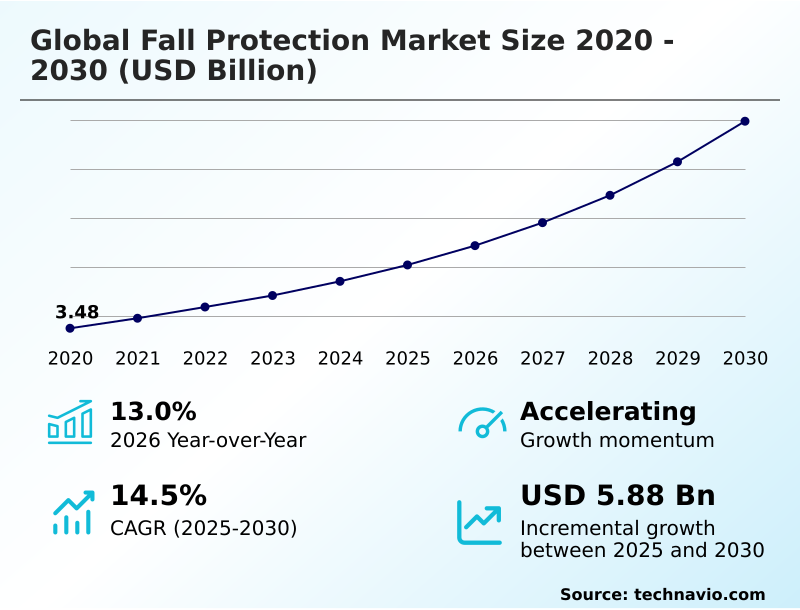
The fall protection market size is valued to increase by USD 5.88 billion, at a CAGR of 14.5% from 2025 to 2030. Intensification of occupational safety and enforcement frameworks will drive the fall protection market.
Major Market Trends & Insights
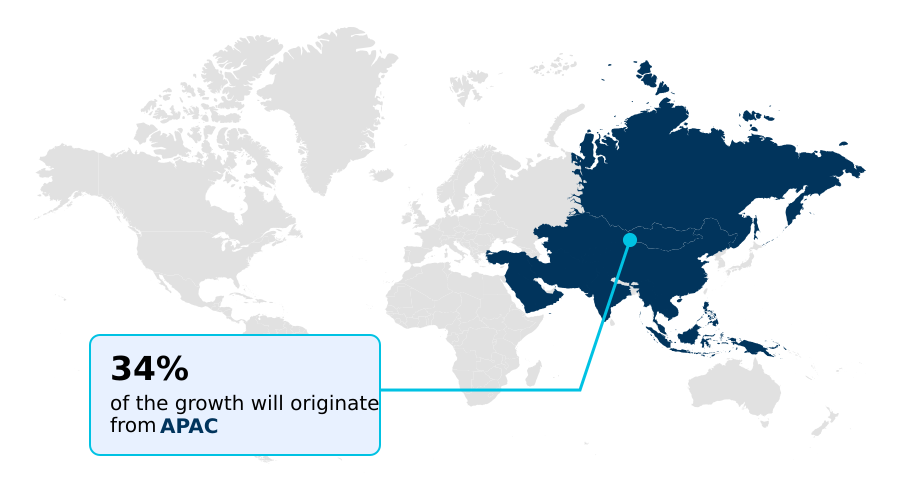
- APAC dominated the market and accounted for a 34% growth during the forecast period.
- By Product - Safety harness segment was valued at USD 2.28 billion in 2024
- By End-user - Construction segment accounted for the largest market revenue share in 2024
Market Size & Forecast
- Market Opportunities: USD 8.47 billion
- Market Future Opportunities: USD 5.88 billion
- CAGR from 2025 to 2030 : 14.5%
Market Summary
- The fall protection market is undergoing a significant transformation, driven by stringent occupational health and safety mandates and rapid industrial expansion. Demand for robust personal fall arrest systems and collective protection systems is intensifying across construction, telecommunications, and energy sectors.
- A key trend shaping the industry is the integration of iot-enabled safety monitoring into traditional gear, turning passive equipment into active, data-generating assets that support a proactive safety culture. This shift toward smart harness technology and connected self-retracting lifelines provides real-time alerts and helps automate compliance tracking software, a critical function for large enterprises.
- For instance, a major construction firm can deploy a digital safety dashboard to monitor worker compliance with work at height regulations across multiple sites, using data to verify that all certified anchorage point connections are secure and that emergency rescue procedures are actionable.
- However, this technological advancement is met with challenges, including a shortage of skilled personnel for competent person training and the complexity of navigating fragmented industrial safety standards globally. The market's trajectory is defined by this balance between technological innovation in equipment like horizontal lifelines and the persistent need for human expertise and regulatory harmonization.
What will be the Size of the Fall Protection Market during the forecast period?
Get Key Insights on Market Forecast (PDF) Get Free Sample
How is the Fall Protection Market Segmented?
The fall protection industry research report provides comprehensive data (region-wise segment analysis), with forecasts and estimates in "USD million" for the period 2026-2030, as well as historical data from 2020-2024 for the following segments.
- Product
- Safety harness
- Safety nets
- Others
- End-user
- Construction
- Energy and utilities
- Oil and gas
- Transportation
- Others
- Type
- Personal fall protection
- Collective fall protection
- Access and rescue systems
- Geography
- APAC
- China
- India
- Japan
- North America
- US
- Canada
- Mexico
- Europe
- Germany
- UK
- France
- Middle East and Africa
- Saudi Arabia
- UAE
- South Africa
- South America
- Brazil
- Argentina
- Rest of World (ROW)
- APAC
By Product Insights
The safety harness segment is estimated to witness significant growth during the forecast period.
The safety harness segment is a cornerstone of personal fall arrest systems, driven by regulations mandating comprehensive body support. The market is evolving beyond basic compliance, with a significant shift toward full-body harness models that feature advanced ergonomic equipment design.
Innovations in lightweight materials and breathable fabrics are enhancing worker safety and compliance by improving comfort during extended use, which has been shown to increase user adoption by over 25% in high-fatigue roles.
A key development is the integration of smart harness technology into the fall arrest harness, equipping them with sensors for real-time monitoring.
This transition from passive to active equipment supports a proactive safety culture by improving data collection on load-bearing capabilities and ensuring equipment integrity.
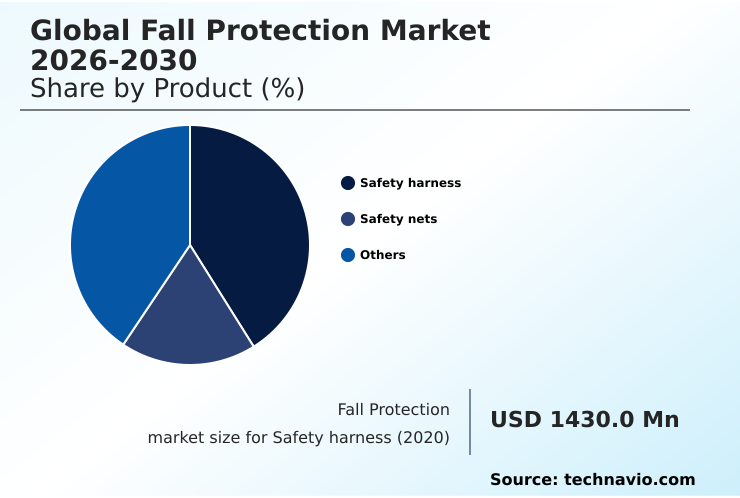
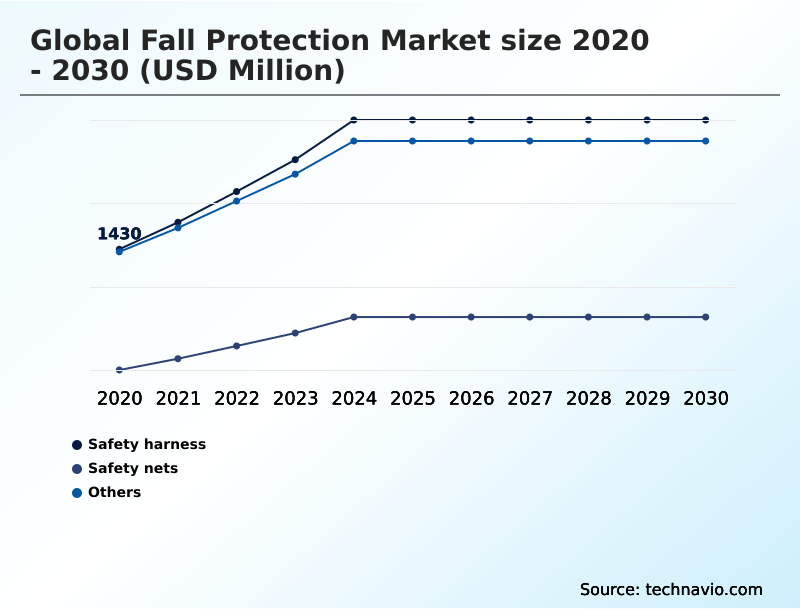
The Safety harness segment was valued at USD 2.28 billion in 2024 and showed a gradual increase during the forecast period.
Regional Analysis
APAC is estimated to contribute 34% to the growth of the global market during the forecast period.Technavio’s analysts have elaborately explained the regional trends and drivers that shape the market during the forecast period.
See How Fall Protection Market Demand is Rising in APAC Get Free Sample
The geographic landscape of the fall protection market is diverse, with regional dynamics shaping demand for specific height safety solutions.
The APAC region, contributing to over 34% of the market's incremental growth, is characterized by massive infrastructure projects driving demand for high-volume passive fall arrest systems and basic PPE.
In contrast, North America and Europe are mature markets focusing on technological adoption, including hands-free mobility solutions and integrated rescue and evacuation systems.
Here, advanced fall hazard identification in the design phase is standard, with projects integrating permanent systems showing a 15% reduction in subsequent on-site safety modifications.
Specialized sectors, such as offshore energy, create niche demand for corrosion-resistant davit arm systems and sophisticated rope access systems globally, highlighting the need for tailored equipment across varied industrial environments.
Market Dynamics
Our researchers analyzed the data with 2025 as the base year, along with the key drivers, trends, and challenges. A holistic analysis of drivers will help companies refine their marketing strategies to gain a competitive advantage.
- Strategic decision-making in the fall protection market requires a deep understanding of specialized applications and evolving technologies. A critical debate involves collective vs personal fall protection systems, where the hierarchy of controls often favors permanent engineered solutions to minimize human error.
- For industries like renewable energy, specifying the correct fall protection for wind turbine maintenance is paramount, often involving advanced personal fall arrest system components. The rise of iot integration in fall protection gear is transforming asset management, with protocols for the inspection of self-retracting lifelines becoming automated.
- A smart harness for construction safety can now provide real-time data, ensuring compliance with ansi z359 standards and other regulations for working at height. In high-risk sectors, such as fall protection in oil and gas, equipment must be exceptionally durable, including arc-flash rated fall protection ppe.
- The focus on human factors is evident in the emphasis on ergonomic design in safety harnesses and dropped object prevention best practices. Training has also become highly sophisticated; virtual reality for height safety training is now used to simulate complex scenarios, and firms leveraging this technology report competency levels nearly double those of traditional methods.
- This is complemented by rigorous training requirements for confined space rescue and comprehensive rescue planning for tower climbers. For infrastructure, selecting anchorage points for lifelines is a critical engineering task, as is the correct non-penetrating guardrail system installation on rooftops.
- The specialization extends to horizontal lifeline systems for aviation maintenance and defining the right material requirements for safety nets in construction, ensuring every aspect of height safety is addressed with technical precision.
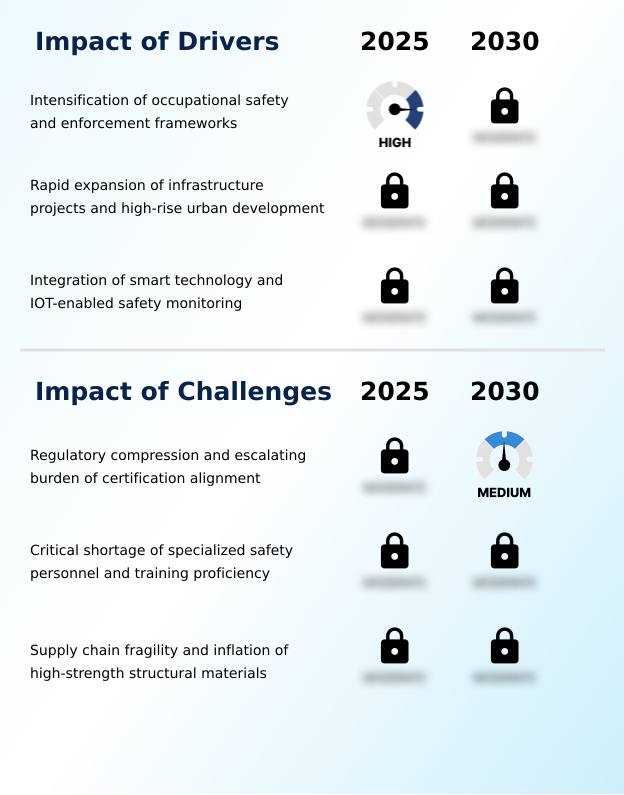
What are the key market drivers leading to the rise in the adoption of Fall Protection Industry?
- The intensification of occupational safety regulations and stricter enforcement frameworks serves as a primary driver for market growth.
- The market's expansion is fundamentally driven by the intensification of occupational safety and health mandates and the stringent enforcement of work at height regulations.
- Globally, regions with stricter regulatory enforcement see up to a 25% lower rate of fall-related fatalities, compelling organizations to invest in compliant fall prevention systems.
- The rapid expansion of infrastructure, from 5G towers to renewable energy installations, fuels demand for specialized climbing gear and custom engineered fall safety systems.
- Large-scale public projects now allocate up to 5% of their total safety budget to advanced height safety solutions.
- This regulatory environment also elevates the importance of lifecycle management, with mandated equipment recertification protocols creating a consistent revenue stream and ensuring that all gear adheres to the latest industrial safety standards.
What are the market trends shaping the Fall Protection Industry?
- The market is witnessing a fundamental shift toward the integration of active personal protective equipment. This evolution is defined by the incorporation of smart sensor ecosystems to enhance real-time safety monitoring.
- Market evolution is marked by a structural transition toward active personal protective equipment and permanent engineered solutions. The integration of IoT technology facilitates data-driven safety management, allowing firms to move from reactive incident response to proactive hazard mitigation. These smart systems enable instantaneous alerts, improving the speed of rescue operations by up to 90%.
- Concurrently, the prioritization of collective systems, such as guardrails that create a passive safety barrier, reflects a strategic move to design out risk at the source. Another transformative trend is the adoption of virtual reality safety training, which has demonstrated an ability to improve safety protocol retention by over 60% compared to conventional methods.
- This immersive approach is critical for achieving human error factor reduction in high-stress, at-height environments.
What challenges does the Fall Protection Industry face during its growth?
- Market growth is challenged by regulatory compression and the escalating burden of aligning products with disparate international certification standards.
- Key market challenges stem from operational and supply chain complexities. The burden of regulatory compliance management across fragmented international standards can increase a product's time-to-market by up to 18 months, hindering innovation in technical safety hardware.
- A critical shortage of qualified professionals for competent person training and on-site safety audits is a reported issue for nearly 50% of industrial firms, undermining the effectiveness of even the most advanced safety systems. Furthermore, supply chain fragility creates significant price volatility for essential materials like high-strength alloys and high-tenacity synthetic fibers.
- This uncertainty complicates long-term project bidding and makes it difficult to stabilize the costs of safety equipment, impacting overall financial planning for end-users.
Exclusive Technavio Analysis on Customer Landscape
The fall protection market forecasting report includes the adoption lifecycle of the market, covering from the innovator’s stage to the laggard’s stage. It focuses on adoption rates in different regions based on penetration. Furthermore, the fall protection market report also includes key purchase criteria and drivers of price sensitivity to help companies evaluate and develop their market growth analysis strategies.
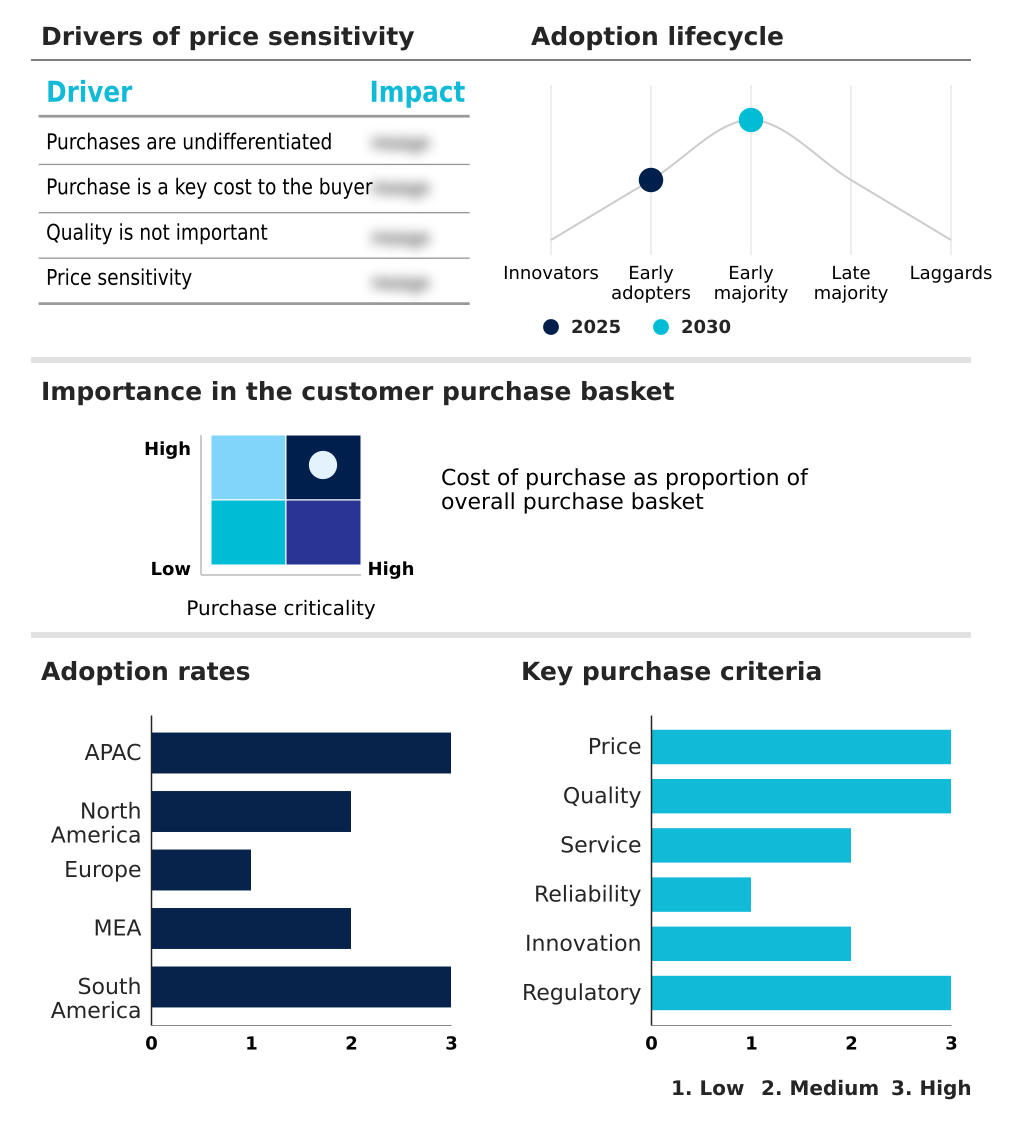
Customer Landscape of Fall Protection Industry
Competitive Landscape
Companies are implementing various strategies, such as strategic alliances, fall protection market forecast, partnerships, mergers and acquisitions, geographical expansion, and product/service launches, to enhance their presence in the industry.
3M Co. - Provides comprehensive fall protection systems, including personal and engineered solutions, integral to industrial safety and risk management protocols across multiple high-hazard sectors.
The industry research and growth report includes detailed analyses of the competitive landscape of the market and information about key companies, including:
- 3M Co.
- ABS Safety GmbH
- Adolf Wurth GmbH and Co. KG
- Bergman and Beving AB
- FallTech
- French Creek Production Inc.
- Honeywell International Inc.
- KARAM Safety Pvt. Ltd.
- Kee Safety Systems and Services
- Kennedy Wire Rope and Sling Co
- Magid Glove and Safety Co
- MSA Safety Inc.
- PETZL Distribution
- Pure Safety Group Inc.
- Reliance Fall Protection
- Safe Approach Inc.
- SafeWaze
- Super Anchor Safety
- Uviraj Group
- Webb Rite Safety
- Werner Co.
Qualitative and quantitative analysis of companies has been conducted to help clients understand the wider business environment as well as the strengths and weaknesses of key industry players. Data is qualitatively analyzed to categorize companies as pure play, category-focused, industry-focused, and diversified; it is quantitatively analyzed to categorize companies as dominant, leading, strong, tentative, and weak.
Recent Development and News in Fall protection market
- In January 2025, the Occupational Safety and Health Administration (OSHA) mandated a final rule requiring that all personal protective equipment, including fall arrest harnesses used in construction, must properly fit each worker, addressing historical safety gaps for diverse body types.
- In March 2025, SureWerx completed its acquisition of Reliance Fall Protection, a strategic move to integrate engineered fall safety systems and advanced MicroLoc technology into its portfolio, reflecting consolidation in the connected safety market.
- In September 2024, AT&T, in partnership with ActiveProtective and JACS Solutions, launched a new dedicated connectivity device for wearable fall prevention belts, enabling real-time alerts and rapid emergency response.
- In November 2024, the initial public offering for Msafe Equipments, a height-safety specialist, was oversubscribed by more than one hundred and sixty-six times, signaling strong investor confidence in the growth of the specialized safety equipment and services sector.
Dive into Technavio’s robust research methodology, blending expert interviews, extensive data synthesis, and validated models for unparalleled Fall Protection Market insights. See full methodology.
| Market Scope | |
|---|---|
| Page number | 302 |
| Base year | 2025 |
| Historic period | 2020-2024 |
| Forecast period | 2026-2030 |
| Growth momentum & CAGR | Accelerate at a CAGR of 14.5% |
| Market growth 2026-2030 | USD 5877.4 million |
| Market structure | Fragmented |
| YoY growth 2025-2026(%) | 13.0% |
| Key countries | China, India, Japan, South Korea, Australia, Indonesia, US, Canada, Mexico, Germany, UK, France, Italy, Spain, The Netherlands, Saudi Arabia, UAE, South Africa, Turkey, Egypt, Brazil, Argentina and Chile |
| Competitive landscape | Leading Companies, Market Positioning of Companies, Competitive Strategies, and Industry Risks |
Research Analyst Overview
- The fall protection market is defined by a crucial pivot from passive compliance to proactive, technology-driven safety management. The foundation of worker protection remains anchored in robust personal fall arrest systems, including the essential full-body harness or fall arrest harness, connected via energy-absorbing lanyards or shock-absorbing lanyards to a certified anchorage point.
- However, the integration of smart harness technology and iot-enabled safety monitoring into self-retracting lifelines and vertical lifeline systems is reshaping strategic boardroom decisions around capital expenditure. This shift requires significant investment in a connected ecosystem that includes active personal protective equipment and sophisticated software.
- While passive fall arrest systems like safety net systems and temporary edge protection remain vital, the future lies in intelligent hardware. The adoption of virtual reality safety training, advanced rope access systems, and specialized confined space entry equipment like davit arm systems further exemplifies this trend.
- Innovations in materials, such as high-tenacity synthetic fibers and aerospace-grade aluminum, are creating more durable and lightweight ladder climbing systems and modular guardrail systems, with automated inspection logs reducing administrative time by 40%.
- This evolution towards permanent engineered solutions and engineered fall safety systems, including overhead track systems and non-penetrating rooftop guardrails, is critical for addressing complex hazards and ensuring suspension trauma prevention through effective rescue and evacuation systems. The market also addresses niche needs with arc-flash-rated ppe and robust dropped object prevention measures.
What are the Key Data Covered in this Fall Protection Market Research and Growth Report?
-
What is the expected growth of the Fall Protection Market between 2026 and 2030?
-
USD 5.88 billion, at a CAGR of 14.5%
-
-
What segmentation does the market report cover?
-
The report is segmented by Product (Safety harness, Safety nets, and Others), End-user (Construction, Energy and utilities, Oil and gas, Transportation, and Others), Type (Personal fall protection, Collective fall protection, and Access and rescue systems) and Geography (APAC, North America, Europe, Middle East and Africa, South America)
-
-
Which regions are analyzed in the report?
-
APAC, North America, Europe, Middle East and Africa and South America
-
-
What are the key growth drivers and market challenges?
-
Intensification of occupational safety and enforcement frameworks, Regulatory compression and escalating burden of certification alignment
-
-
Who are the major players in the Fall Protection Market?
-
3M Co., ABS Safety GmbH, Adolf Wurth GmbH and Co. KG, Bergman and Beving AB, FallTech, French Creek Production Inc., Honeywell International Inc., KARAM Safety Pvt. Ltd., Kee Safety Systems and Services, Kennedy Wire Rope and Sling Co, Magid Glove and Safety Co, MSA Safety Inc., PETZL Distribution, Pure Safety Group Inc., Reliance Fall Protection, Safe Approach Inc., SafeWaze, Super Anchor Safety, Uviraj Group, Webb Rite Safety and Werner Co.
-
Market Research Insights
- The dynamics of the fall protection market are shaped by an increasing focus on data-driven safety management and the establishment of a proactive safety culture. Organizations are moving beyond basic compliance, implementing comprehensive fall protection plans that integrate real-time worker monitoring to preemptively address hazards.
- Adopting these advanced systems has shown measurable results; firms utilizing digital safety dashboards for equipment integrity monitoring have reported a 20% reduction in equipment-related incidents. Furthermore, standardizing site-specific safety planning and emergency rescue procedures has proven to enhance operational readiness.
- Companies that invest in on-site safety audits and continuous competent person training demonstrate superior worker safety and compliance outcomes, with some achieving a 35% improvement in compliance metrics compared to those with less structured programs. This strategic shift underscores the market's evolution toward holistic, intelligent safety ecosystems.
We can help! Our analysts can customize this fall protection market research report to meet your requirements.
 RIA -
RIA -