


Fiberglass Mat Market Analysis, Size, and Forecast 2026-2030: North America (US, Canada, and Mexico), Europe (Germany, UK, and France), APAC (China, Japan, and India), Middle East and Africa (Saudi Arabia, UAE, and South Africa), South America (Brazil and Argentina), and Rest of World (ROW)

Fiberglass Mat Market Analysis, Size, and Forecast 2026-2030:
North America (US, Canada, and Mexico), Europe (Germany, UK, and France), APAC (China, Japan, and India), Middle East and Africa (Saudi Arabia, UAE, and South Africa), South America (Brazil and Argentina), and Rest of World (ROW)

Published: Dec 2025 291 Pages SKU: IRTNTR80170

Market Overview at a Glance

$2.66 B
Market Opportunity
6%
CAGR 2025 - 2030
38.5%
North America Growth
$4.27 B
Commercial segment 2024

Fiberglass Mat Market Size 2026-2030

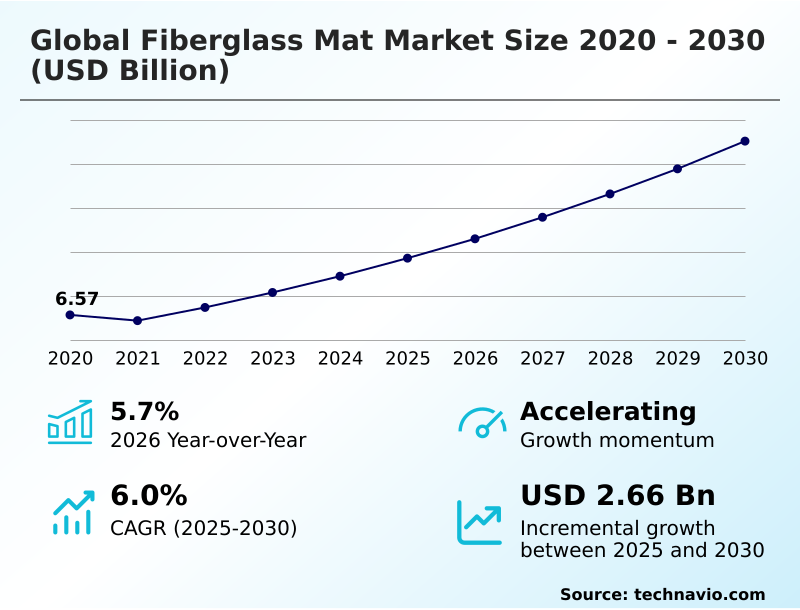
The fiberglass mat market size is valued to increase by USD 2.66 billion, at a CAGR of 6% from 2025 to 2030. Global infrastructure revitalization projects will drive the fiberglass mat market.

Major Market Trends & Insights

  • North America dominated the market and accounted for a 38.5% growth during the forecast period.
  • By End-user - Commercial segment was valued at USD 4.27 billion in 2024
  • By Type - Chopped strand mats segment accounted for the largest market revenue share in 2024

Market Size & Forecast

  • Market Opportunities: USD 3.95 billion
  • Market Future Opportunities: USD 2.66 billion
  • CAGR from 2025 to 2030 : 6%

Market Summary

  • The fiberglass mat market is a critical enabler for various industrial sectors, providing essential reinforcement materials for composite manufacturing. These mats, available as chopped strand mat or continuous filament variants, offer enhanced durability, corrosion resistance, and strength-to-weight ratios for finished products.
  • Key demand stems from the construction sector for applications like roofing, flooring, and insulation, as well as the automotive industry's push for lightweighting to improve fuel efficiency and EV range. A significant business scenario involves supply chain optimization for large-scale infrastructure projects.
  • Here, fabricators must balance the procurement of mats with varying resin compatibility and tensile strength to meet diverse engineering specifications for bridges and pipelines, all while navigating fluctuating raw material costs.
  • The industry is also evolving with a growing emphasis on sustainability, leading to innovations in recyclable thermoplastic composites and bio-based binders to meet stricter environmental standards and corporate ESG goals. This push for green materials is reshaping product development and market positioning.

What will be the Size of the Fiberglass Mat Market during the forecast period?
Get Key Insights on Market Forecast (PDF) Request Free Sample

How is the Fiberglass Mat Market Segmented?

The fiberglass mat industry research report provides comprehensive data (region-wise segment analysis), with forecasts and estimates in "USD million" for the period 2026-2030, as well as historical data from 2020-2024 for the following segments.

  • End-user
    • Commercial
    • Residential
  • Type
    • Chopped strand mats
    • Woven roving mats
    • Continuous filament mats
    • Glass veils
  • Product type
    • Organic
    • Inorganic
  • Geography
    • North America
      • US
      • Canada
      • Mexico
    • Europe
      • Germany
      • UK
      • France
    • APAC
      • China
      • Japan
      • India
    • Middle East and Africa
      • Saudi Arabia
      • UAE
      • South Africa
    • South America
      • Brazil
      • Argentina
    • Rest of World (ROW)

By End-user Insights

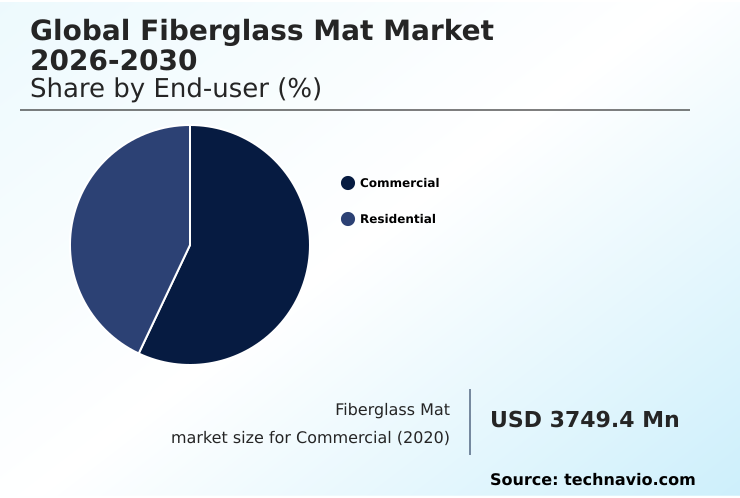
The commercial segment is estimated to witness significant growth during the forecast period.

The commercial segment is defined by high-performance applications where structural integrity and material consistency are paramount.

In the automotive sector, thermoplastic composites reinforced with chopped strand mat are crucial for manufacturing lightweight components, leading to an over 15% improvement in component durability.

Industries leverage e-glass fiber for its superior mechanical strength and tensile strength in demanding environments. Specialized wet-laid mat products serve as industrial filtration media and are essential for absorbent glass mat (AGM) battery separators.

This composite reinforcement is also vital for structural repair applications, prefabricated housing panels, and the protective shells of EV battery enclosure systems, demonstrating the material's versatility across advanced industrial uses.
Request Free Sample

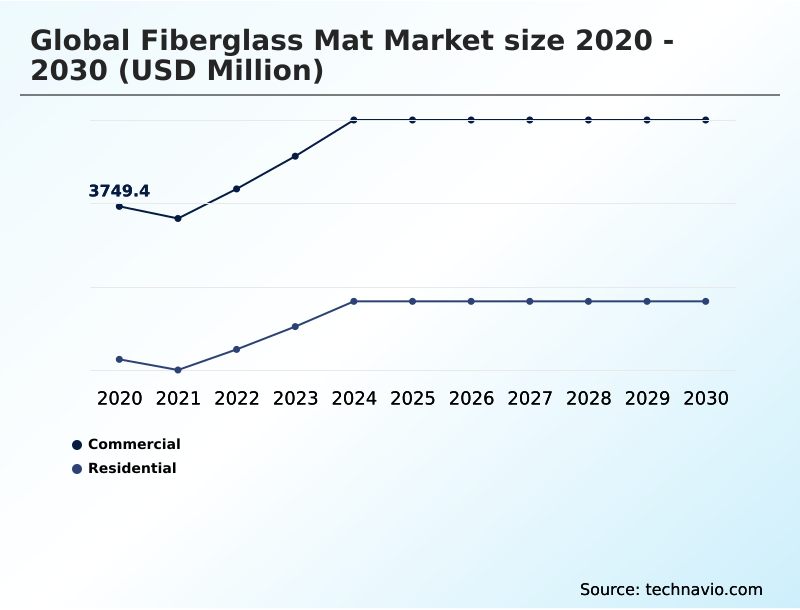
The Commercial segment was valued at USD 4.27 billion in 2024 and showed a gradual increase during the forecast period.
Request Free Sample

Regional Analysis

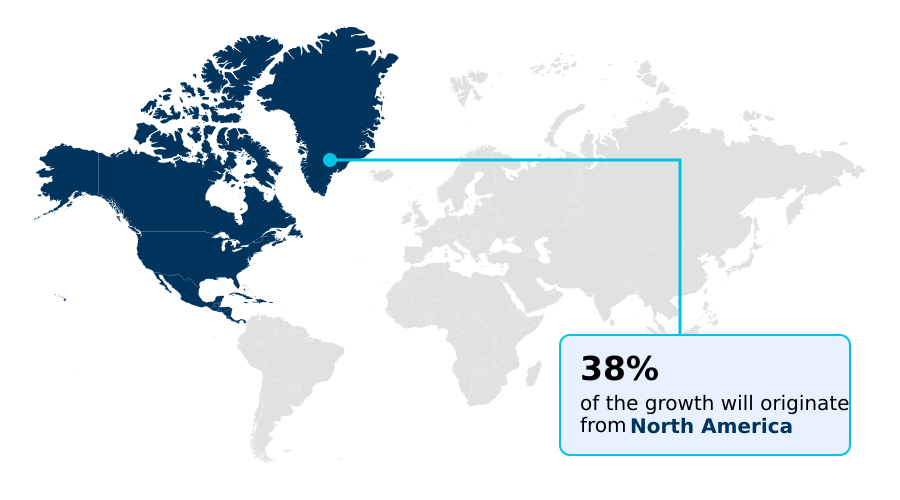
North America is estimated to contribute 38.5% to the growth of the global market during the forecast period.Technavio’s analysts have elaborately explained the regional trends and drivers that shape the market during the forecast period.
See How Fiberglass Mat Market Demand is Rising in North America Request Free Sample

North America is projected to account for 38.5% of market growth, driven by demand for advanced building materials like bituminous roofing membrane and asphalt shingle reinforcement.

Innovations in dry-laid mat technology using an insoluble binder enhance performance in roofing underlayment and vinyl flooring backing. The region's automotive sector specifies materials with high dielectric strength for EV components and superior isotropic properties for automotive headliner substrate.

In APAC, the manufacturing hub, processes like resin transfer molding (RTM) and vacuum infusion process dominate, leveraging the controlled mat permeability of specialized reinforcements.

The electronics industry in this region drives demand for high-purity glass tissue for advanced applications, with supply chain efficiencies improving lead times by 15%.

Market Dynamics

Our researchers analyzed the data with 2025 as the base year, along with the key drivers, trends, and challenges. A holistic analysis of drivers will help companies refine their marketing strategies to gain a competitive advantage.

  • Strategic material selection is becoming increasingly crucial across industrial applications, driving detailed evaluations of different reinforcement options. A key consideration is the difference between chopped strand mat vs woven roving strength; the former offers isotropic properties suitable for complex molds, while the latter provides superior bidirectional stability for large structural parts.
  • In construction, fiberglass mat for roofing underlayment applications and its use in gypsum wallboard manufacturing have become standard for enhancing durability and moisture resistance. For industrial settings, specifying high-temperature insulation with fiberglass mat is critical for energy efficiency and safety.
  • The automotive sector's pursuit of lightweight composites for automotive parts relies on materials like e-glass mat for printed circuit boards and mats for battery protection. Firms that optimize fiberglass mat selection for resin transfer molding have reported a reduction in cycle times compared to those using less suitable materials.
  • The choice between thermoplastic vs thermoset fiberglass composites also presents a trade-off between recyclability and high-temperature performance. Other critical applications include fire resistant fiberglass mat for construction, bio-based binders in fiberglass mat production, and using fiberglass mat for concrete reinforcement. Innovations like absorbent glass mat separators in batteries and geotextile mats for soil stabilization are opening new verticals.
  • From the hand lay-up process with chopped strand mat for repairs to using glass veil for improving composite surface finish, the material's versatility is clear. The demand for corrosion resistant pipe wrapping material for infrastructure and woven roving for large composite structures highlights its importance in extending asset life.
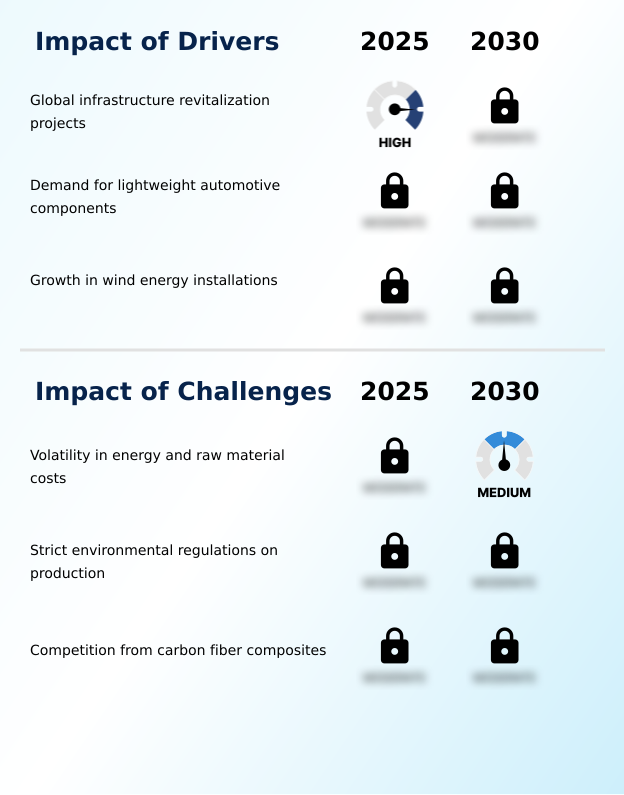
What are the key market drivers leading to the rise in the adoption of Fiberglass Mat Industry?

  • The extensive revitalization of global infrastructure, backed by significant government spending on public works and transportation networks, serves as a primary driver for market growth.

  • Market momentum is sustained by large-scale infrastructure projects demanding materials with exceptional corrosion resistance.
  • Glass fiber reinforced polymer (GFRP) composites, including composite rebar and alkali-resistant glass fiber systems, are integral to concrete reinforcement and road paving overlay tasks, extending infrastructure lifespans by up to 25%.
  • Non-woven reinforcement materials are specified for geotextile applications and as pipe wrapping material.
  • In the energy sector, the demand for woven roving mat is directly tied to wind turbine blade manufacturing, where its bidirectional reinforcement and strong interlaminar adhesion are essential.
  • These drivers have collectively accelerated material adoption rates in civil engineering by more than 15% in recent years.

What are the market trends shaping the Fiberglass Mat Industry?

  • A prominent market trend is the accelerating shift toward bio-based and formaldehyde-free binders, driven by tightening environmental regulations and increasing consumer preference for sustainable materials.

  • A primary trend is the industry's pivot from traditional urea-formaldehyde binder systems to bio-based binders, a shift that improves indoor air quality and has been shown to increase material specification in green building projects by over 20%. This enhances the resin compatibility and dimensional stability of products used in marine composite construction and interiors.
  • Concurrently, the use of continuous filament mat and advanced s-glass fiber is expanding for thermal runaway protection in lightweight automotive components. The high fire resistance of these materials is critical, with new applications reducing component failure rates by 30%. This innovation extends from the hand lay-up process to automated methods like the pultrusion process.

What challenges does the Fiberglass Mat Industry face during its growth?

  • The market faces a significant operational challenge from the volatility in energy and raw material costs, which directly impacts production margins and complicates financial planning.

  • Key challenges stem from raw material price volatility, which can increase production costs by over 10% in a single quarter, impacting margins for products ranging from glass veils to structural mats. Environmental regulations surrounding thermoset resins and binder solubility add another layer of complexity, requiring significant investment in compliance technologies.
  • Manufacturers must improve the surface finish and thermal resistance of products to compete with alternative materials. In applications like gypsum board facing, wall reinforcement, and printed circuit board substrate, cost-performance is critical. The need for specialized fire safety materials and reinforcements for liquid-applied coating reinforcement adds further pressure, making efficient composite mold making a competitive necessity.

Exclusive Technavio Analysis on Customer Landscape

The fiberglass mat market forecasting report includes the adoption lifecycle of the market, covering from the innovator’s stage to the laggard’s stage. It focuses on adoption rates in different regions based on penetration. Furthermore, the fiberglass mat market report also includes key purchase criteria and drivers of price sensitivity to help companies evaluate and develop their market growth analysis strategies.
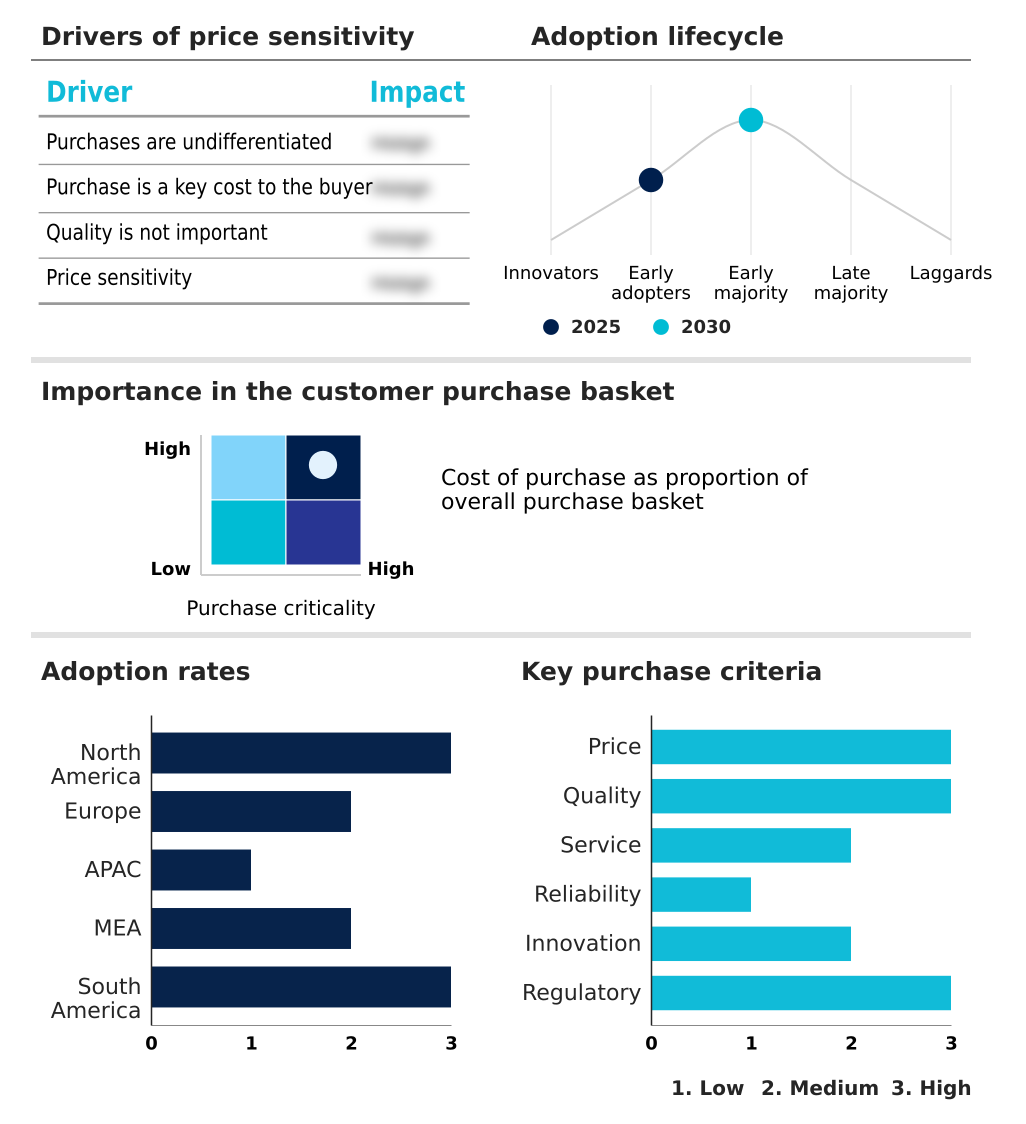
Customer Landscape of Fiberglass Mat Industry

Competitive Landscape

Companies are implementing various strategies, such as strategic alliances, fiberglass mat market forecast, partnerships, mergers and acquisitions, geographical expansion, and product/service launches, to enhance their presence in the industry.

3B the fiberglass Co. - Specialized matting solutions are offered for structural reinforcement and high-performance repair applications, targeting demanding industrial and transportation use cases.

The industry research and growth report includes detailed analyses of the competitive landscape of the market and information about key companies, including:

  • 3B the fiberglass Co.
  • 3M Co.
  • BASF SE
  • Beihai Fiberglass Co. Ltd.
  • Berkshire Hathaway Inc.
  • Canadian Mat Systems Inc.
  • China Jushi Co. Ltd.
  • Compagnie de Saint Gobain SA
  • CPIC BRASIL Fibras de Vidro
  • Jiangsu Changhai Co. Ltd.
  • Nippon Electric Glass Co. Ltd.
  • Nitto Boseki Co. Ltd.
  • Owens Corning
  • Taishan Fiberglass Inc.
  • Valmieras Stikla Skiedra AS
  • Yuyao Feitian Fiberglass Co.
  • Zhejiang Weitong Co. Ltd.

Qualitative and quantitative analysis of companies has been conducted to help clients understand the wider business environment as well as the strengths and weaknesses of key industry players. Data is qualitatively analyzed to categorize companies as pure play, category-focused, industry-focused, and diversified; it is quantitatively analyzed to categorize companies as dominant, leading, strong, tentative, and weak.

Recent Development and News in Fiberglass mat market

  • In May, 2024, Owens Corning completed its acquisition of Masonite International Corporation, a strategic move valued at approximately $3.9 billion to integrate door systems manufacturing with composite material production.
  • In July, 2024, China Jushi Co. Ltd. commissioned the second production line at its Huaian intelligent manufacturing base, significantly increasing its capacity for high-performance glass fiber reinforcements for the wind energy and construction sectors.
  • In April, 2024, Alkegen announced a strategic partnership with Jaguar Land Rover to supply its advanced anti-thermal propagation products, utilizing inorganic fiber technologies to enhance the safety of next-generation electric vehicle battery packs.
  • In March, 2024, Johns Manville showcased significant advancements in its non-woven portfolio at the JEC World exhibition, highlighting the commercial launch of sustainable, formaldehyde-free binder technologies for building and construction materials.

Dive into Technavio’s robust research methodology, blending expert interviews, extensive data synthesis, and validated models for unparalleled Fiberglass Mat Market insights. See full methodology.

Market Scope
Page number 291
Base year 2025
Historic period 2020-2024
Forecast period 2026-2030
Growth momentum & CAGR Accelerate at a CAGR of 6%
Market growth 2026-2030 USD 2663.8 million
Market structure Fragmented
YoY growth 2025-2026(%) 5.7%
Key countries US, Canada, Mexico, Germany, UK, France, Italy, Spain, The Netherlands, China, Japan, India, South Korea, Australia, Indonesia, Saudi Arabia, UAE, South Africa, Israel, Turkey, Brazil, Argentina and Chile
Competitive landscape Leading Companies, Market Positioning of Companies, Competitive Strategies, and Industry Risks

Request Free Sample

Research Analyst Overview

  • The fiberglass mat market is characterized by intense innovation driven by demands from the construction, transportation, and energy sectors. A core focus is enhancing material properties like tensile strength, thermal resistance, and corrosion resistance to meet stringent performance criteria. Products range from chopped strand mat and woven roving mat with bidirectional reinforcement to specialized glass veils for superior surface finish.
  • The transition to bio-based binders from traditional urea-formaldehyde binder systems reflects a key boardroom-level decision, aligning product strategy with global sustainability mandates and tightening regulations on emissions. This shift has led to a documented 10% increase in specification rates within green building projects.
  • The performance of e-glass fiber in thermoplastic composites and thermoset resins is critical, with resin compatibility and dimensional stability being key metrics. Materials with specific isotropic properties and high mechanical strength are essential for high-stress applications, while advancements in non-woven reinforcement technologies continue to expand the material's utility across various end-user segments.

What are the Key Data Covered in this Fiberglass Mat Market Research and Growth Report?

  • What is the expected growth of the Fiberglass Mat Market between 2026 and 2030?

    • USD 2.66 billion, at a CAGR of 6%

  • What segmentation does the market report cover?

    • The report is segmented by End-user (Commercial, and Residential), Type (Chopped strand mats, Woven roving mats, Continuous filament mats, and Glass veils), Product Type (Organic, and Inorganic) and Geography (North America, Europe, APAC, Middle East and Africa, South America)

  • Which regions are analyzed in the report?

    • North America, Europe, APAC, Middle East and Africa and South America

  • What are the key growth drivers and market challenges?

    • Global infrastructure revitalization projects, Volatility in energy and raw material costs

  • Who are the major players in the Fiberglass Mat Market?

    • 3B the fiberglass Co., 3M Co., BASF SE, Beihai Fiberglass Co. Ltd., Berkshire Hathaway Inc., Canadian Mat Systems Inc., China Jushi Co. Ltd., Compagnie de Saint Gobain SA, CPIC BRASIL Fibras de Vidro, Jiangsu Changhai Co. Ltd., Nippon Electric Glass Co. Ltd., Nitto Boseki Co. Ltd., Owens Corning, Taishan Fiberglass Inc., Valmieras Stikla Skiedra AS, Yuyao Feitian Fiberglass Co. and Zhejiang Weitong Co. Ltd.

Market Research Insights

  • Market dynamics are increasingly shaped by the need for high-performance materials in demanding applications. The adoption of advanced composites in the automotive sector has led to a 15% reduction in the weight of certain structural components, directly improving vehicle efficiency.
  • In construction, the use of specialized mats for reinforcement has been shown to increase the service life of infrastructure assets by over 20% compared to traditional materials. This shift is driven by a focus on lifecycle cost rather than initial price.
  • Furthermore, the transition to renewable energy relies on these materials, with innovations enabling the production of larger, more efficient wind turbine blades. The market is defined by a balance between volume-driven construction applications and high-value industrial uses, with material science advancements continually opening new verticals.

We can help! Our analysts can customize this fiberglass mat market research report to meet your requirements.

Get in touch

1. Executive Summary

1.1 Market overview

Executive Summary - Chart on Market Overview
Executive Summary - Data Table on Market Overview
Executive Summary - Chart on Global Market Characteristics
Executive Summary - Chart on Market by Geography
Executive Summary - Chart on Market Segmentation by End-user
Executive Summary - Chart on Market Segmentation by Type
Executive Summary - Chart on Market Segmentation by Product Type
Executive Summary - Chart on Incremental Growth
Executive Summary - Data Table on Incremental Growth
Executive Summary - Chart on Company Market Positioning

2. Technavio Analysis

2.1 Analysis of price sensitivity, lifecycle, customer purchase basket, adoption rates, and purchase criteria

2.2 Criticality of inputs and Factors of differentiation

Chart on Overview on criticality of inputs and factors of differentiation

2.3 Factors of disruption

Chart on Overview on factors of disruption

2.4 Impact of drivers and challenges

Chart on Impact of drivers and challenges in 2025 and 2030

3. Market Landscape

3.1 Market ecosystem

Chart on Parent Market
Data Table on - Parent Market

3.2 Market characteristics

Chart on Market characteristics analysis

3.3 Value chain analysis

Chart on Value chain analysis

4. Market Sizing

4.1 Market definition

Data Table on Offerings of companies included in the market definition

4.2 Market segment analysis

Market segments

4.3 Market size 2025

4.4 Market outlook: Forecast for 2025-2030

Chart on Global - Market size and forecast 2025-2030 ($ million)
Data Table on Global - Market size and forecast 2025-2030 ($ million)
Chart on Global Market: Year-over-year growth 2025-2030 (%)
Data Table on Global Market: Year-over-year growth 2025-2030 (%)

5. Historic Market Size

5.1 Global Fiberglass Mat Market 2020 - 2024

Historic Market Size - Data Table on Global Fiberglass Mat Market 2020 - 2024 ($ million)

5.2 End-user segment analysis 2020 - 2024

Historic Market Size - End-user Segment 2020 - 2024 ($ million)

5.3 Type segment analysis 2020 - 2024

Historic Market Size - Type Segment 2020 - 2024 ($ million)

5.4 Product Type segment analysis 2020 - 2024

Historic Market Size - Product Type Segment 2020 - 2024 ($ million)

5.5 Geography segment analysis 2020 - 2024

Historic Market Size - Geography Segment 2020 - 2024 ($ million)

5.6 Country segment analysis 2020 - 2024

Historic Market Size - Country Segment 2020 - 2024 ($ million)

6. Qualitative Analysis

6.1 The AI impact on Global Fiberglass Mat Market

7. Five Forces Analysis

7.1 Five forces summary

Five forces analysis - Comparison between 2025 and 2030

7.2 Bargaining power of buyers

Bargaining power of buyers - Impact of key factors 2025 and 2030

7.3 Bargaining power of suppliers

Bargaining power of suppliers - Impact of key factors in 2025 and 2030

7.4 Threat of new entrants

Threat of new entrants - Impact of key factors in 2025 and 2030

7.5 Threat of substitutes

Threat of substitutes - Impact of key factors in 2025 and 2030

7.6 Threat of rivalry

Threat of rivalry - Impact of key factors in 2025 and 2030

7.7 Market condition

Chart on Market condition - Five forces 2025 and 2030

8. Market Segmentation by End-user

8.1 Market segments

Chart on End-user - Market share 2025-2030 (%)
Data Table on End-user - Market share 2025-2030 (%)

8.2 Comparison by End-user

Chart on Comparison by End-user
Data Table on Comparison by End-user

8.3 Commercial - Market size and forecast 2025-2030

Chart on Commercial - Market size and forecast 2025-2030 ($ million)
Data Table on Commercial - Market size and forecast 2025-2030 ($ million)
Chart on Commercial - Year-over-year growth 2025-2030 (%)
Data Table on Commercial - Year-over-year growth 2025-2030 (%)

8.4 Residential - Market size and forecast 2025-2030

Chart on Residential - Market size and forecast 2025-2030 ($ million)
Data Table on Residential - Market size and forecast 2025-2030 ($ million)
Chart on Residential - Year-over-year growth 2025-2030 (%)
Data Table on Residential - Year-over-year growth 2025-2030 (%)

8.5 Market opportunity by End-user

Market opportunity by End-user ($ million)
Data Table on Market opportunity by End-user ($ million)

9. Market Segmentation by Type

9.1 Market segments

Chart on Type - Market share 2025-2030 (%)
Data Table on Type - Market share 2025-2030 (%)

9.2 Comparison by Type

Chart on Comparison by Type
Data Table on Comparison by Type

9.3 Chopped strand mats - Market size and forecast 2025-2030

Chart on Chopped strand mats - Market size and forecast 2025-2030 ($ million)
Data Table on Chopped strand mats - Market size and forecast 2025-2030 ($ million)
Chart on Chopped strand mats - Year-over-year growth 2025-2030 (%)
Data Table on Chopped strand mats - Year-over-year growth 2025-2030 (%)

9.4 Woven roving mats - Market size and forecast 2025-2030

Chart on Woven roving mats - Market size and forecast 2025-2030 ($ million)
Data Table on Woven roving mats - Market size and forecast 2025-2030 ($ million)
Chart on Woven roving mats - Year-over-year growth 2025-2030 (%)
Data Table on Woven roving mats - Year-over-year growth 2025-2030 (%)

9.5 Continuous filament mats - Market size and forecast 2025-2030

Chart on Continuous filament mats - Market size and forecast 2025-2030 ($ million)
Data Table on Continuous filament mats - Market size and forecast 2025-2030 ($ million)
Chart on Continuous filament mats - Year-over-year growth 2025-2030 (%)
Data Table on Continuous filament mats - Year-over-year growth 2025-2030 (%)

9.6 Glass veils - Market size and forecast 2025-2030

Chart on Glass veils - Market size and forecast 2025-2030 ($ million)
Data Table on Glass veils - Market size and forecast 2025-2030 ($ million)
Chart on Glass veils - Year-over-year growth 2025-2030 (%)
Data Table on Glass veils - Year-over-year growth 2025-2030 (%)

9.7 Market opportunity by Type

Market opportunity by Type ($ million)
Data Table on Market opportunity by Type ($ million)

10. Market Segmentation by Product Type

10.1 Market segments

Chart on Product Type - Market share 2025-2030 (%)
Data Table on Product Type - Market share 2025-2030 (%)

10.2 Comparison by Product Type

Chart on Comparison by Product Type
Data Table on Comparison by Product Type

10.3 Organic - Market size and forecast 2025-2030

Chart on Organic - Market size and forecast 2025-2030 ($ million)
Data Table on Organic - Market size and forecast 2025-2030 ($ million)
Chart on Organic - Year-over-year growth 2025-2030 (%)
Data Table on Organic - Year-over-year growth 2025-2030 (%)

10.4 Inorganic - Market size and forecast 2025-2030

Chart on Inorganic - Market size and forecast 2025-2030 ($ million)
Data Table on Inorganic - Market size and forecast 2025-2030 ($ million)
Chart on Inorganic - Year-over-year growth 2025-2030 (%)
Data Table on Inorganic - Year-over-year growth 2025-2030 (%)

10.5 Market opportunity by Product Type

Market opportunity by Product Type ($ million)
Data Table on Market opportunity by Product Type ($ million)

11. Customer Landscape

11.1 Customer landscape overview

Analysis of price sensitivity, lifecycle, customer purchase basket, adoption rates, and purchase criteria

12. Geographic Landscape

12.1 Geographic segmentation

Chart on Market share by geography 2025-2030 (%)
Data Table on Market share by geography 2025-2030 (%)

12.2 Geographic comparison

Chart on Geographic comparison
Data Table on Geographic comparison

12.3 North America - Market size and forecast 2025-2030

Chart on North America - Market size and forecast 2025-2030 ($ million)
Data Table on North America - Market size and forecast 2025-2030 ($ million)
Chart on North America - Year-over-year growth 2025-2030 (%)
Data Table on North America - Year-over-year growth 2025-2030 (%)
Chart on Regional Comparison - North America
Data Table on Regional Comparison - North America

12.3.1 US - Market size and forecast 2025-2030

Chart on US - Market size and forecast 2025-2030 ($ million)
Data Table on US - Market size and forecast 2025-2030 ($ million)
Chart on US - Year-over-year growth 2025-2030 (%)
Data Table on US - Year-over-year growth 2025-2030 (%)

12.3.2 Canada - Market size and forecast 2025-2030

Chart on Canada - Market size and forecast 2025-2030 ($ million)
Data Table on Canada - Market size and forecast 2025-2030 ($ million)
Chart on Canada - Year-over-year growth 2025-2030 (%)
Data Table on Canada - Year-over-year growth 2025-2030 (%)

12.3.3 Mexico - Market size and forecast 2025-2030

Chart on Mexico - Market size and forecast 2025-2030 ($ million)
Data Table on Mexico - Market size and forecast 2025-2030 ($ million)
Chart on Mexico - Year-over-year growth 2025-2030 (%)
Data Table on Mexico - Year-over-year growth 2025-2030 (%)

12.4 Europe - Market size and forecast 2025-2030

Chart on Europe - Market size and forecast 2025-2030 ($ million)
Data Table on Europe - Market size and forecast 2025-2030 ($ million)
Chart on Europe - Year-over-year growth 2025-2030 (%)
Data Table on Europe - Year-over-year growth 2025-2030 (%)
Chart on Regional Comparison - Europe
Data Table on Regional Comparison - Europe

12.4.1 Germany - Market size and forecast 2025-2030

Chart on Germany - Market size and forecast 2025-2030 ($ million)
Data Table on Germany - Market size and forecast 2025-2030 ($ million)
Chart on Germany - Year-over-year growth 2025-2030 (%)
Data Table on Germany - Year-over-year growth 2025-2030 (%)

12.4.2 UK - Market size and forecast 2025-2030

Chart on UK - Market size and forecast 2025-2030 ($ million)
Data Table on UK - Market size and forecast 2025-2030 ($ million)
Chart on UK - Year-over-year growth 2025-2030 (%)
Data Table on UK - Year-over-year growth 2025-2030 (%)

12.4.3 France - Market size and forecast 2025-2030

Chart on France - Market size and forecast 2025-2030 ($ million)
Data Table on France - Market size and forecast 2025-2030 ($ million)
Chart on France - Year-over-year growth 2025-2030 (%)
Data Table on France - Year-over-year growth 2025-2030 (%)

12.4.4 Italy - Market size and forecast 2025-2030

Chart on Italy - Market size and forecast 2025-2030 ($ million)
Data Table on Italy - Market size and forecast 2025-2030 ($ million)
Chart on Italy - Year-over-year growth 2025-2030 (%)
Data Table on Italy - Year-over-year growth 2025-2030 (%)

12.4.5 Spain - Market size and forecast 2025-2030

Chart on Spain - Market size and forecast 2025-2030 ($ million)
Data Table on Spain - Market size and forecast 2025-2030 ($ million)
Chart on Spain - Year-over-year growth 2025-2030 (%)
Data Table on Spain - Year-over-year growth 2025-2030 (%)

12.4.6 The Netherlands - Market size and forecast 2025-2030

Chart on The Netherlands - Market size and forecast 2025-2030 ($ million)
Data Table on The Netherlands - Market size and forecast 2025-2030 ($ million)
Chart on The Netherlands - Year-over-year growth 2025-2030 (%)
Data Table on The Netherlands - Year-over-year growth 2025-2030 (%)

12.5 APAC - Market size and forecast 2025-2030

Chart on APAC - Market size and forecast 2025-2030 ($ million)
Data Table on APAC - Market size and forecast 2025-2030 ($ million)
Chart on APAC - Year-over-year growth 2025-2030 (%)
Data Table on APAC - Year-over-year growth 2025-2030 (%)
Chart on Regional Comparison - APAC
Data Table on Regional Comparison - APAC

12.5.1 China - Market size and forecast 2025-2030

Chart on China - Market size and forecast 2025-2030 ($ million)
Data Table on China - Market size and forecast 2025-2030 ($ million)
Chart on China - Year-over-year growth 2025-2030 (%)
Data Table on China - Year-over-year growth 2025-2030 (%)

12.5.2 Japan - Market size and forecast 2025-2030

Chart on Japan - Market size and forecast 2025-2030 ($ million)
Data Table on Japan - Market size and forecast 2025-2030 ($ million)
Chart on Japan - Year-over-year growth 2025-2030 (%)
Data Table on Japan - Year-over-year growth 2025-2030 (%)

12.5.3 India - Market size and forecast 2025-2030

Chart on India - Market size and forecast 2025-2030 ($ million)
Data Table on India - Market size and forecast 2025-2030 ($ million)
Chart on India - Year-over-year growth 2025-2030 (%)
Data Table on India - Year-over-year growth 2025-2030 (%)

12.5.4 South Korea - Market size and forecast 2025-2030

Chart on South Korea - Market size and forecast 2025-2030 ($ million)
Data Table on South Korea - Market size and forecast 2025-2030 ($ million)
Chart on South Korea - Year-over-year growth 2025-2030 (%)
Data Table on South Korea - Year-over-year growth 2025-2030 (%)

12.5.5 Australia - Market size and forecast 2025-2030

Chart on Australia - Market size and forecast 2025-2030 ($ million)
Data Table on Australia - Market size and forecast 2025-2030 ($ million)
Chart on Australia - Year-over-year growth 2025-2030 (%)
Data Table on Australia - Year-over-year growth 2025-2030 (%)

12.5.6 Indonesia - Market size and forecast 2025-2030

Chart on Indonesia - Market size and forecast 2025-2030 ($ million)
Data Table on Indonesia - Market size and forecast 2025-2030 ($ million)
Chart on Indonesia - Year-over-year growth 2025-2030 (%)
Data Table on Indonesia - Year-over-year growth 2025-2030 (%)

12.6 Middle East and Africa - Market size and forecast 2025-2030

Chart on Middle East and Africa - Market size and forecast 2025-2030 ($ million)
Data Table on Middle East and Africa - Market size and forecast 2025-2030 ($ million)
Chart on Middle East and Africa - Year-over-year growth 2025-2030 (%)
Data Table on Middle East and Africa - Year-over-year growth 2025-2030 (%)
Chart on Regional Comparison - Middle East and Africa
Data Table on Regional Comparison - Middle East and Africa

12.6.1 Saudi Arabia - Market size and forecast 2025-2030

Chart on Saudi Arabia - Market size and forecast 2025-2030 ($ million)
Data Table on Saudi Arabia - Market size and forecast 2025-2030 ($ million)
Chart on Saudi Arabia - Year-over-year growth 2025-2030 (%)
Data Table on Saudi Arabia - Year-over-year growth 2025-2030 (%)

12.6.2 UAE - Market size and forecast 2025-2030

Chart on UAE - Market size and forecast 2025-2030 ($ million)
Data Table on UAE - Market size and forecast 2025-2030 ($ million)
Chart on UAE - Year-over-year growth 2025-2030 (%)
Data Table on UAE - Year-over-year growth 2025-2030 (%)

12.6.3 South Africa - Market size and forecast 2025-2030

Chart on South Africa - Market size and forecast 2025-2030 ($ million)
Data Table on South Africa - Market size and forecast 2025-2030 ($ million)
Chart on South Africa - Year-over-year growth 2025-2030 (%)
Data Table on South Africa - Year-over-year growth 2025-2030 (%)

12.6.4 Israel - Market size and forecast 2025-2030

Chart on Israel - Market size and forecast 2025-2030 ($ million)
Data Table on Israel - Market size and forecast 2025-2030 ($ million)
Chart on Israel - Year-over-year growth 2025-2030 (%)
Data Table on Israel - Year-over-year growth 2025-2030 (%)

12.6.5 Turkey - Market size and forecast 2025-2030

Chart on Turkey - Market size and forecast 2025-2030 ($ million)
Data Table on Turkey - Market size and forecast 2025-2030 ($ million)
Chart on Turkey - Year-over-year growth 2025-2030 (%)
Data Table on Turkey - Year-over-year growth 2025-2030 (%)

12.7 South America - Market size and forecast 2025-2030

Chart on South America - Market size and forecast 2025-2030 ($ million)
Data Table on South America - Market size and forecast 2025-2030 ($ million)
Chart on South America - Year-over-year growth 2025-2030 (%)
Data Table on South America - Year-over-year growth 2025-2030 (%)
Chart on Regional Comparison - South America
Data Table on Regional Comparison - South America

12.7.1 Brazil - Market size and forecast 2025-2030

Chart on Brazil - Market size and forecast 2025-2030 ($ million)
Data Table on Brazil - Market size and forecast 2025-2030 ($ million)
Chart on Brazil - Year-over-year growth 2025-2030 (%)
Data Table on Brazil - Year-over-year growth 2025-2030 (%)

12.7.2 Argentina - Market size and forecast 2025-2030

Chart on Argentina - Market size and forecast 2025-2030 ($ million)
Data Table on Argentina - Market size and forecast 2025-2030 ($ million)
Chart on Argentina - Year-over-year growth 2025-2030 (%)
Data Table on Argentina - Year-over-year growth 2025-2030 (%)

12.7.3 Chile - Market size and forecast 2025-2030

Chart on Chile - Market size and forecast 2025-2030 ($ million)
Data Table on Chile - Market size and forecast 2025-2030 ($ million)
Chart on Chile - Year-over-year growth 2025-2030 (%)
Data Table on Chile - Year-over-year growth 2025-2030 (%)

12.8 Market opportunity by geography

Market opportunity by geography ($ million)
Data Tables on Market opportunity by geography ($ million)

13. Drivers, Challenges, and Opportunity

13.1 Market drivers

Global infrastructure revitalization projects
Demand for lightweight automotive components
Growth in wind energy installations

13.2 Market challenges

Volatility in energy and raw material costs
Strict environmental regulations on production
Competition from carbon fiber composites

13.3 Impact of drivers and challenges

Impact of drivers and challenges in 2025 and 2030

13.4 Market opportunities

Shift toward bio-based binders
Integration in electric vehicle battery enclosures
Expansion of production in emerging markets

14. Competitive Landscape

14.1 Overview

14.2

Overview on criticality of inputs and factors of differentiation

14.3 Landscape disruption

Overview on factors of disruption

14.4 Industry risks

Impact of key risks on business

15. Competitive Analysis

15.1 Companies profiled

Companies covered

15.2 Company ranking index

15.3 Market positioning of companies

Matrix on companies position and classification

15.4 3B the fiberglass Co.

3B the fiberglass Co. - Overview
3B the fiberglass Co. - Product / Service
3B the fiberglass Co. - Key offerings
SWOT

15.5 3M Co.

3M Co. - Overview
3M Co. - Business segments
3M Co. - Key news
3M Co. - Key offerings
3M Co. - Segment focus
SWOT

15.6 BASF SE

BASF SE - Overview
BASF SE - Business segments
BASF SE - Key news
BASF SE - Key offerings
BASF SE - Segment focus
SWOT

15.7 Beihai Fiberglass Co. Ltd.

Beihai Fiberglass Co. Ltd. - Overview
Beihai Fiberglass Co. Ltd. - Product / Service
Beihai Fiberglass Co. Ltd. - Key offerings
SWOT

15.8 Canadian Mat Systems Inc.

Canadian Mat Systems Inc. - Overview
Canadian Mat Systems Inc. - Product / Service
Canadian Mat Systems Inc. - Key offerings
SWOT

15.9 China Jushi Co. Ltd.

China Jushi Co. Ltd. - Overview
China Jushi Co. Ltd. - Product / Service
China Jushi Co. Ltd. - Key offerings
SWOT

15.10 Compagnie de Saint Gobain SA

Compagnie de Saint Gobain SA - Overview
Compagnie de Saint Gobain SA - Business segments
Compagnie de Saint Gobain SA - Key news
Compagnie de Saint Gobain SA - Key offerings
Compagnie de Saint Gobain SA - Segment focus
SWOT

15.11 CPIC BRASIL Fibras de Vidro

CPIC BRASIL Fibras de Vidro - Overview
CPIC BRASIL Fibras de Vidro - Product / Service
CPIC BRASIL Fibras de Vidro - Key offerings
SWOT

15.12 Jiangsu Changhai Co. Ltd.

Jiangsu Changhai Co. Ltd. - Overview
Jiangsu Changhai Co. Ltd. - Product / Service
Jiangsu Changhai Co. Ltd. - Key offerings
SWOT

15.13 Nippon Electric Glass Co. Ltd.

Nippon Electric Glass Co. Ltd. - Overview
Nippon Electric Glass Co. Ltd. - Product / Service
Nippon Electric Glass Co. Ltd. - Key offerings
SWOT

15.14 Owens Corning

Owens Corning - Overview
Owens Corning - Business segments
Owens Corning - Key news
Owens Corning - Key offerings
Owens Corning - Segment focus
SWOT

15.15 Taishan Fiberglass Inc.

Taishan Fiberglass Inc. - Overview
Taishan Fiberglass Inc. - Product / Service
Taishan Fiberglass Inc. - Key offerings
SWOT

15.16 Valmieras Stikla Skiedra AS

Valmieras Stikla Skiedra AS - Overview
Valmieras Stikla Skiedra AS - Product / Service
Valmieras Stikla Skiedra AS - Key offerings
SWOT

15.17 Yuyao Feitian Fiberglass Co.

Yuyao Feitian Fiberglass Co. - Overview
Yuyao Feitian Fiberglass Co. - Product / Service
Yuyao Feitian Fiberglass Co. - Key offerings
SWOT

15.18 Zhejiang Weitong Co. Ltd.

Zhejiang Weitong Co. Ltd. - Overview
Zhejiang Weitong Co. Ltd. - Product / Service
Zhejiang Weitong Co. Ltd. - Key offerings
SWOT

16. Appendix

16.1 Scope of the report

Market definition
Objectives
Notes and caveats

16.2 Inclusions and exclusions checklist

Inclusions checklist
Exclusions checklist

16.3 Currency conversion rates for US$

16.4 Research methodology

16.5 Data procurement

Information sources

16.6 Data validation

16.7 Validation techniques employed for market sizing

16.8 Data synthesis

16.9 360 degree market analysis

16.10 List of abbreviations

Research Methodology

Technavio presents a detailed picture of the market by way of study, synthesis, and summation of data from multiple sources. The analysts have presented the various facets of the market with a particular focus on identifying the key industry influencers. The data thus presented is comprehensive, reliable, and the result of extensive research, both primary and secondary.

INFORMATION SOURCES

Primary sources

  • Manufacturers and suppliers
  • Channel partners
  • Industry experts
  • Strategic decision makers

Secondary sources

  • Industry journals and periodicals
  • Government data
  • Financial reports of key industry players
  • Historical data
  • Press releases

DATA ANALYSIS

Data Synthesis

  • Collation of data
  • Estimation of key figures
  • Analysis of derived insights

Data Validation

  • Triangulation with data models
  • Reference against proprietary databases
  • Corroboration with industry experts

REPORT WRITING

Qualitative

  • Market drivers
  • Market challenges
  • Market trends
  • Five forces analysis

Quantitative

  • Market size and forecast
  • Market segmentation
  • Geographical insights
  • Competitive landscape

Interested in this report?

Get your sample now to see our research methodology and insights!

Download Now

Frequently Asked Questions

Fiberglass Mat market growth will increase by USD 2663.8 million during 2026-2030.

The Fiberglass Mat market is expected to grow at a CAGR of 6% during 2026-2030.

Fiberglass Mat market is segmented by End-user (Commercial, Residential) Type (Chopped strand mats, Woven roving mats, Continuous filament mats, Glass veils) Product type (Organic, Inorganic)

3B the fiberglass Co., 3M Co., BASF SE, Beihai Fiberglass Co. Ltd., Berkshire Hathaway Inc., Canadian Mat Systems Inc., China Jushi Co. Ltd., Compagnie de Saint Gobain SA, CPIC BRASIL Fibras de Vidro, Jiangsu Changhai Co. Ltd., Nippon Electric Glass Co. Ltd., Nitto Boseki Co. Ltd., Owens Corning, Taishan Fiberglass Inc., Valmieras Stikla Skiedra AS, Yuyao Feitian Fiberglass Co., Zhejiang Weitong Co. Ltd. are a few of the key vendors in the Fiberglass Mat market.

North America will register the highest growth rate of 38.5% among the other regions. Therefore, the Fiberglass Mat market in North America is expected to garner significant business opportunities for the vendors during the forecast period.

US, Canada, Mexico, Germany, UK, France, Italy, Spain, The Netherlands, China, Japan, India, South Korea, Australia, Indonesia, Saudi Arabia, UAE, South Africa, Israel, Turkey, Brazil, Argentina, Chile

  • Global infrastructure revitalization projects is the driving factor this market.

The Fiberglass Mat market vendors should focus on grabbing business opportunities from the End-user segment as it accounted for the largest market share in the base year.