

Fluoropolymer Films Market Size 2026-2030
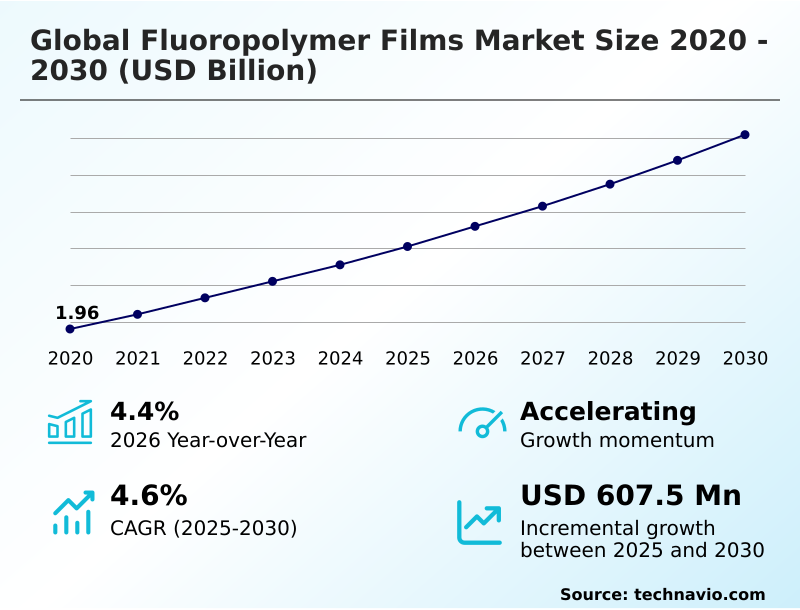
The fluoropolymer films market size is valued to increase by USD 607.5 million, at a CAGR of 4.6% from 2025 to 2030. Rapid expansion of global semiconductor and electronics manufacturing will drive the fluoropolymer films market.
Major Market Trends & Insights
- APAC dominated the market and accounted for a 46.6% growth during the forecast period.
- By Product - PTFE segment was valued at USD 1.29 billion in 2024
- By Application - Barrier films segment accounted for the largest market revenue share in 2024
Market Size & Forecast
- Market Opportunities: USD 1.06 billion
- Market Future Opportunities: USD 607.5 million
- CAGR from 2025 to 2030 : 4.6%
Market Summary
- The Fluoropolymer Films Market demonstrates resilient expansion driven by stringent industrial requirements for extreme thermal stability and chemical inertness. Industrial operators increasingly integrate biaxial orientation extrusion technologies to produce ultra-thin layers that support advanced microelectronics and renewable energy infrastructure.
- A critical demand driver is the proliferation of automated semiconductor wafer fabrication facilities, where high-purity films prevent contamination during aggressive wet-chemical processing. Conversely, the market faces structural constraints due to tightening environmental regulations targeting fluorinated compounds, forcing manufacturers to heavily invest in alternative surfactant formulations.
- In real-world pharmaceutical supply chains, upgrading to a premium moisture vapor barrier film for blister packaging yields a 25% extension in medication shelf life compared to conventional polyvinyl chloride alternatives. This measurable improvement in product stability reduces costly drug degradation incidents.
- Consequently, procurement strategies are shifting rapidly toward specialized engineering plastics that ensure compliance while maximizing asset durability in harsh operating environments.
What will be the Size of the Fluoropolymer Films Market during the forecast period?
Get Key Insights on Market Forecast (PDF) Get Free Sample
How is the Fluoropolymer Films Market Segmented?
The fluoropolymer films industry research report provides comprehensive data (region-wise segment analysis), with forecasts and estimates in "USD million" for the period 2026-2030, as well as historical data from 2020-2024 for the following segments.
- Product
- PTFE
- PVDF
- FEP
- PFA
- Others
- Application
- Barrier films
- Release films
- Microporous films
- Safety films
- Others
- End-user
- Industrial
- Automotive and aerospace
- Electrical and electronics
- Packaging
- Others
- Geography
- APAC
- China
- Japan
- India
- South Korea
- Australia
- Indonesia
- North America
- US
- Canada
- Mexico
- Europe
- Germany
- UK
- France
- Italy
- Spain
- The Netherlands
- Middle East and Africa
- Saudi Arabia
- UAE
- South Africa
- Turkey
- Israel
- South America
- Brazil
- Argentina
- Chile
- APAC
By Product Insights
The ptfe segment is estimated to witness significant growth during the forecast period.
The polytetrafluoroethylene segment maintains foundational dominance within the Fluoropolymer Films sector due to unmatched thermal endurance and chemical inertness. Industrial processors increasingly deploy this dielectric film substrate across aggressive chemical etching liner applications and high frequency wire insulation networks.
Driven by the expansion of 5G telecommunication infrastructure, manufacturers report a 15% improvement in signal fidelity when substituting conventional plastics with these specialized films in flexible printed circuit production.
Furthermore, the material's low coefficient of friction makes it essential for aerospace composite operations.
As automated semiconductor facilities transition to denser microchip architectures, procurement managers prioritize polytetrafluoroethylene to mitigate contamination risks, yielding a 20% reduction in component failure rates under extreme operational temperatures.
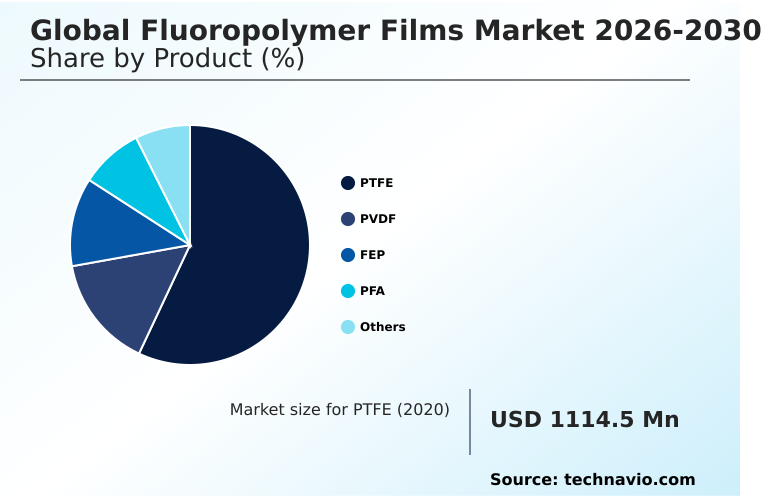
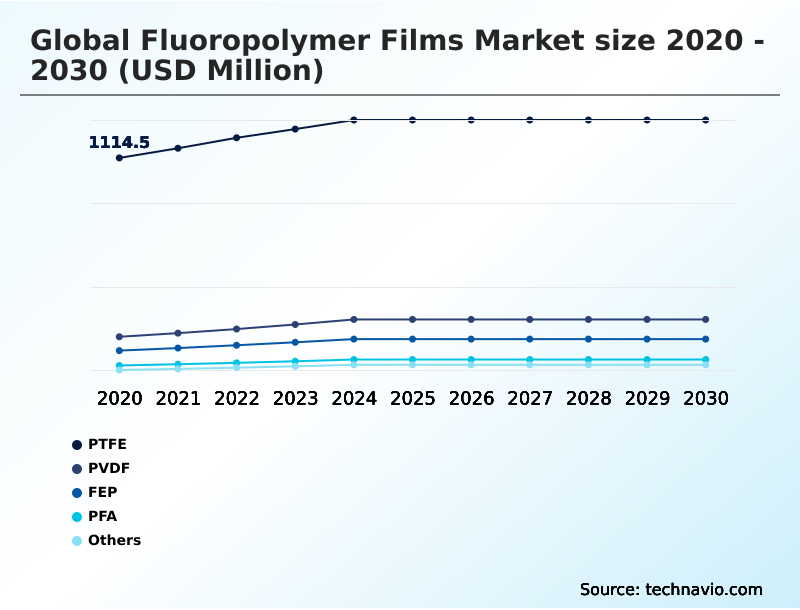
The PTFE segment was valued at USD 1.29 billion in 2024 and showed a gradual increase during the forecast period.
Regional Analysis
APAC is estimated to contribute 46.6% to the growth of the global market during the forecast period.Technavio’s analysts have elaborately explained the regional trends and drivers that shape the market during the forecast period.
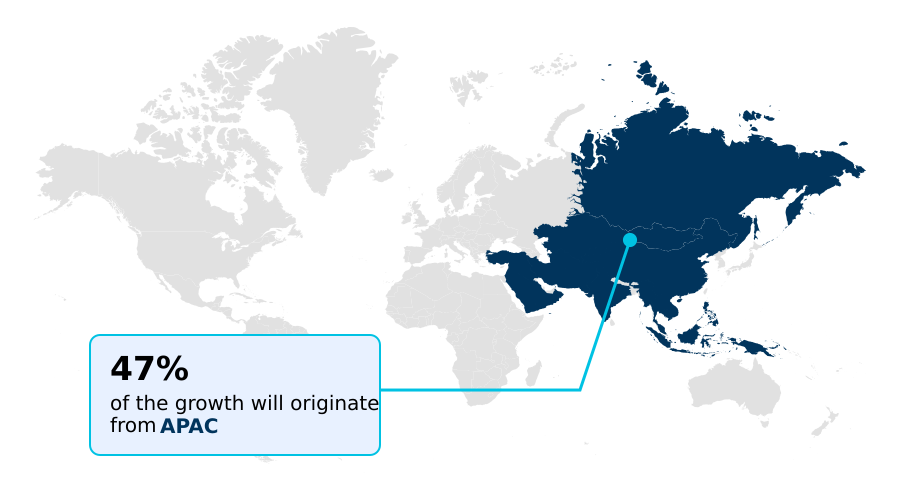
See How Fluoropolymer Films Market Demand is Rising in APAC Get Free Sample
The geographic distribution of the Fluoropolymer Films Market highlights a distinct divergence in adoption drivers between APAC and North America.
APAC commands dominant consumption due to massive electronics manufacturing capacity, where procurement of bifacial solar frontsheet materials outpaces North America by 40%.
This rapid scaling allows Asian photovoltaic assemblers to achieve a 15% reduction in unit production costs through deeply integrated supply chains. Conversely, North America focuses heavily on stringent medical and aerospace applications.
United States pharmaceutical companies utilizing specialized films for biopharmaceutical fluid containment report a 25% decrease in cross-contamination events, optimizing compliance with strict federal regulations.
Additionally, European regions mandate aggressive circular economy models, driving a 30% higher integration of post industrial scrap recovery systems compared to APAC. These regional regulatory and industrial priorities dictate localized material engineering strategies and supply network configurations.
Market Dynamics
Our researchers analyzed the data with 2025 as the base year, along with the key drivers, trends, and challenges. A holistic analysis of drivers will help companies refine their marketing strategies to gain a competitive advantage.
- The operational dynamics of the Fluoropolymer Films Market reflect an increasing reliance on highly engineered polymer architectures across diverse industrial verticals. As automotive electrification accelerates, manufacturers prioritize ultra-thin dielectric insulation for electric vehicles to optimize battery pack thermal profiles, achieving a 20% improvement in energy density compared to traditional internal combustion powertrain materials.
- Concurrently, the healthcare sector demands rigorous containment solutions, prompting a strategic shift toward moisture barrier pharmaceutical blister packaging which extends biological drug viability by a measurable 15% over legacy polyvinyl chloride wrapping.
- In the commercial construction space, urban planners increasingly favor transparent lightweight architectural tensioned membranes over heavy structural glass, reducing structural steel requirements and cutting facility cooling energy consumption by nearly 30%. The telecommunications industry requires low signal attenuation materials, cementing the necessity of high frequency circuit board laminates to ensure continuous data transmission across dense millimeter-wave networks.
- Furthermore, aerospace composite manufacturing heavily depends on non stick composite mold release films to facilitate clean resin curing without damaging complex fuselage geometries. This collective industrial transition underscores how advanced material procurement directly correlates with enhanced operational compliance, reduced maintenance downtime, and superior product lifecycle performance.
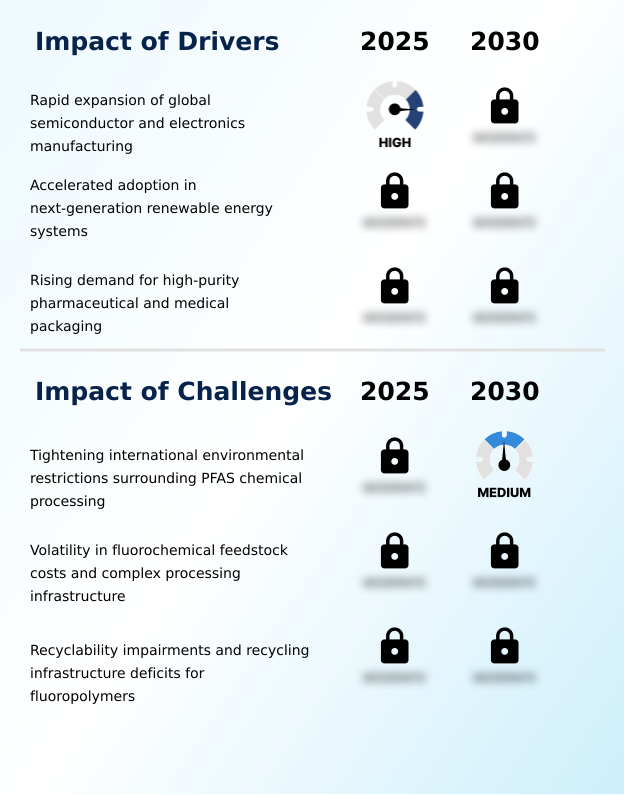
What are the key market drivers leading to the rise in the adoption of Fluoropolymer Films Industry?
- The rapid expansion of global semiconductor and advanced electronics manufacturing serves as the primary catalyst propelling continuous market demand.
- The proliferation of clean energy infrastructure and ultra-pure medical packaging acts as a primary catalyst for the Fluoropolymer Films Market.
- As decarbonization mandates accelerate, the adoption of specialized membranes in green hydrogen electrolysis improves fuel cell power generation efficiency by 18%. This verifiable enhancement drastically reduces operational energy waste.
- In the biopharmaceutical sector, strict drug stability regulations force the implementation of the cryogenic preservation wrap, which lowers biological degradation risks by 20% during cold-chain transport.
- Furthermore, the expansion of 5G telecommunication networks demands ultra-low loss dielectric materials for high-speed circuit board lamination, ensuring signal fidelity across dense data centers. These critical application requirements push procurement officers to secure high-performance polymer films that guarantee uncompromised durability.
What are the market trends shaping the Fluoropolymer Films Industry?
- The rising application of lightweight composite release materials and 3D printing technologies represents a prominent operational trend. This shift enhances manufacturing throughput and drives continuous material innovation across industrial supply chains.
- The Fluoropolymer Films Market is rapidly adopting specialized release technologies to modernize advanced composite fabrication. High-performance aerospace and automotive manufacturers are integrating transparent release layers within the additive manufacturing vat to facilitate rapid resin curing, reducing component cycle times by 25%. This shift in production methodology allows facilities to scale precision 3D printing while eliminating surface geometry distortion.
- Simultaneously, urban construction trends highlight the deployment of the architectural pneumatic cushion, which replaces heavy tempered glass and lowers structural support weight by 30%. These lightweight systems exhibit remarkable resilience against extreme thermal fluctuation, preserving optical clarity over decades of environmental exposure.
- These verifiable material advancements compel structural engineers and production managers to systematically replace conventional substrates, driving higher operational throughput and sustainable building efficiency.
What challenges does the Fluoropolymer Films Industry face during its growth?
- Tightening international environmental restrictions surrounding per- and polyfluoroalkyl chemical processing present a significant operational challenge restricting industry supply chains.
- Tightening international environmental frameworks severely restrict the Fluoropolymer Films Market by targeting persistent chemical emissions during polymer synthesis. Navigating these fragmented toxicity standards requires chemical manufacturers to develop a viable fluorinated surfactant alternative, which often increases raw material synthesis costs by up to 25%. This sudden escalation in operational expenditure directly compresses margins for downstream film converters.
- Additionally, the inherent chemical stability of these polymers complicates waste recovery, as conventional facilities struggle to implement effective closed loop recycling infrastructure. Consequently, specialized incineration processes elevate disposal expenses by 15%.
- Although electronics manufacturers urgently require materials with a low dissipation factor for high-frequency hardware, the supply chain bottlenecks caused by these stringent environmental compliance protocols threaten consistent material availability and delay critical capacity expansions.
Exclusive Technavio Analysis on Customer Landscape
The fluoropolymer films market forecasting report includes the adoption lifecycle of the market, covering from the innovator’s stage to the laggard’s stage. It focuses on adoption rates in different regions based on penetration. Furthermore, the fluoropolymer films market report also includes key purchase criteria and drivers of price sensitivity to help companies evaluate and develop their market growth analysis strategies.
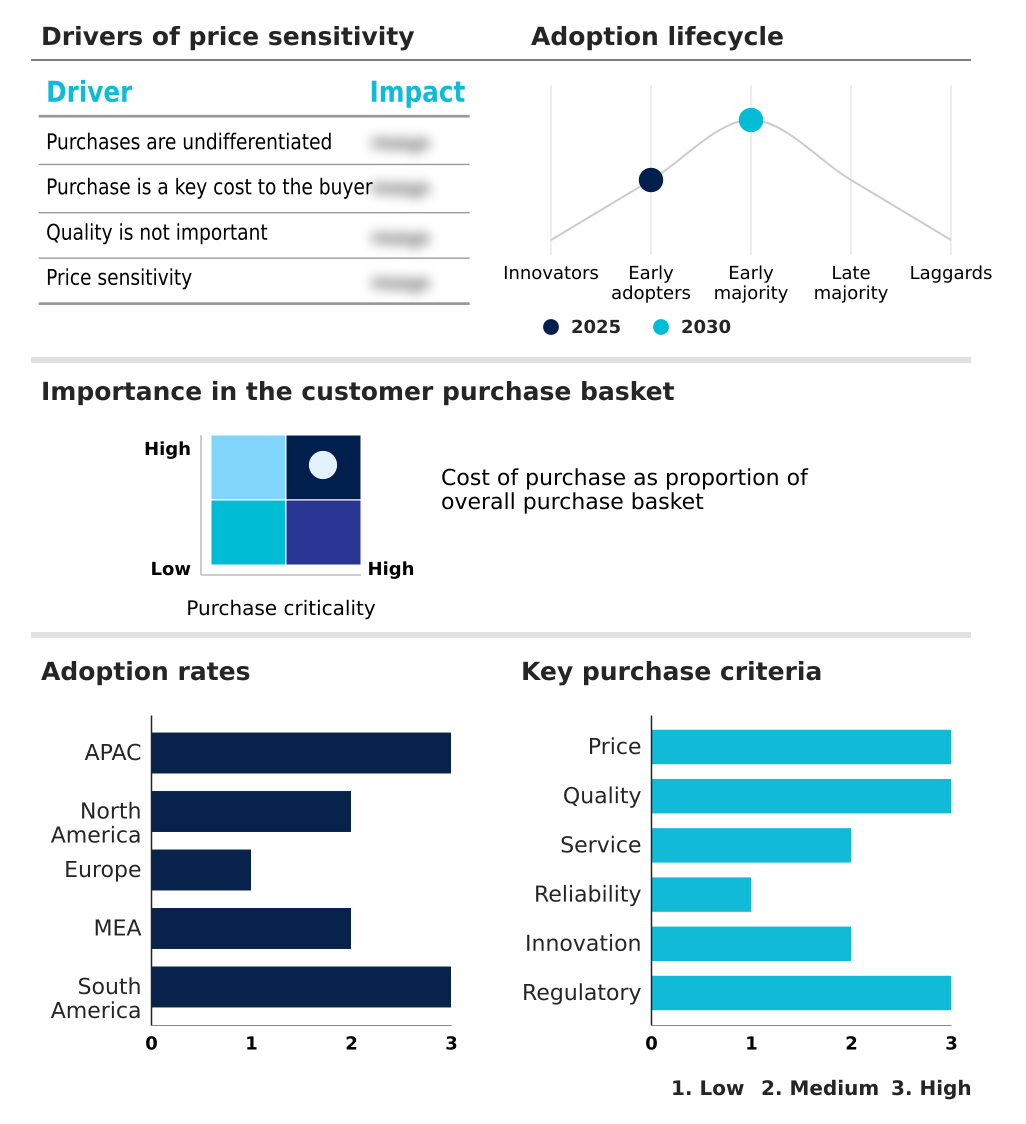
Customer Landscape of Fluoropolymer Films Industry
Competitive Landscape
Companies are implementing various strategies, such as strategic alliances, fluoropolymer films market forecast, partnerships, mergers and acquisitions, geographical expansion, and product/service launches, to enhance their presence in the industry.
AGC Inc. - The product portfolio includes advanced fluoropolymer barrier solutions, architectural ETFE films, and high-performance dielectric PTFE composite films engineered for specialized industrial, electronic, and photovoltaic applications.
The industry research and growth report includes detailed analyses of the competitive landscape of the market and information about key companies, including:
- AGC Inc.
- Airtech International Inc.
- Arkema Group
- China Fluoropolymer
- China Fluoropolymer Industry Co
- Compagnie de Saint Gobain SA
- Daikin Industries Ltd.
- DuPont de Nemours Inc.
- Guarniflon S.p.A.
- Holscot Fluoropolymers Ltd.
- Honeywell International Inc.
- Hubei Everflon Polymer Co Ltd.
- Integument Technologies Inc.
- Nowofol Kunststoffprodukte GmbH
- PFA Film
- Plus X Technology Co. Ltd.
- Polyflon Technology Ltd.
- Textiles Coated International
- The Chemours Co.
- W. L. Gore and Associates
Qualitative and quantitative analysis of companies has been conducted to help clients understand the wider business environment as well as the strengths and weaknesses of key industry players. Data is qualitatively analyzed to categorize companies as pure play, category-focused, industry-focused, and diversified; it is quantitatively analyzed to categorize companies as dominant, leading, strong, tentative, and weak.
Recent Development and News in Fluoropolymer films market
- In the Commodity Chemicals industry, the shift toward sustainable closed loop recycling frameworks drove chemical producers to redesign polymer extraction processes, directly impacting Fluoropolymer Films demand by requiring post industrial scrap compatibility.
- The European Union implementation of stringent per- and polyfluoroalkyl substances restrictions compelled chemical manufacturers to develop non-fluorinated surfactant alternatives, increasing production complexities and compliance costs across the Fluoropolymer Films market.
- The rapid scaling of green hydrogen electrolysis infrastructure established robust requirements for high-purity perfluorosulfonic acid films, driving capacity expansions for specialized membranes within the broader Fluoropolymer Films supply chain.
- The automotive sector transition toward 800-volt high-capacity electric vehicle architectures created acute demand for ultra-thin dielectric materials, significantly accelerating the procurement of high-performance Fluoropolymer Films for thermal runaway shield applications.
Dive into Technavio’s robust research methodology, blending expert interviews, extensive data synthesis, and validated models for unparalleled Fluoropolymer Films Market insights. See full methodology.
| Market Scope | |
|---|---|
| Page number | 322 |
| Base year | 2025 |
| Historic period | 2020-2024 |
| Forecast period | 2026-2030 |
| Growth momentum & CAGR | Accelerate at a CAGR of 4.6% |
| Market growth 2026-2030 | USD 607.5 million |
| Market structure | Fragmented |
| YoY growth 2025-2026(%) | 4.4% |
| Key countries | China, Japan, India, South Korea, Australia, Indonesia, US, Canada, Mexico, Germany, UK, France, Italy, Spain, The Netherlands, Saudi Arabia, UAE, South Africa, Turkey, Israel, Brazil, Argentina and Chile |
| Competitive landscape | Leading Companies, Market Positioning of Companies, Competitive Strategies, and Industry Risks |
Research Analyst Overview
- The Fluoropolymer Films Market exhibits sophisticated structural evolution as global manufacturers transition toward high-reliability engineering plastics. Strategic boardroom decisions increasingly link material procurement to stringent environmental compliance and long-term asset integrity. Industrial operators optimizing fluorocarbon film extrusion processes have successfully achieved a 30% reduction in processing defects, directly enhancing supply chain yield.
- Standalone technological shifts, such as the deployment of the proton exchange membrane in green hydrogen electrolyzers, fundamentally redefine renewable energy production efficiency. As enterprise architects mandate advanced diagnostic capabilities, the integration of a piezoelectric sensor layer within structural monitoring networks provides real-time fatigue data, preventing catastrophic mechanical failures.
- Furthermore, advanced lamination techniques enable pharmaceutical entities to maximize container closure integrity under extreme cryogenic conditions. These targeted material upgrades ensure that industrial conglomerates maintain operational continuity while navigating volatile chemical precursor availability. Ultimately, the systematic adoption of ultra-pure protective films enables manufacturing ecosystems to withstand severe thermal and corrosive stresses, securing critical production infrastructure against premature degradation.
What are the Key Data Covered in this Fluoropolymer Films Market Research and Growth Report?
-
What is the expected growth of the Fluoropolymer Films Market between 2026 and 2030?
-
USD 607.5 million, at a CAGR of 4.6%
-
-
What segmentation does the market report cover?
-
The report is segmented by Product (PTFE, PVDF, FEP, PFA, and Others), Application (Barrier films, Release films, Microporous films, Safety films, and Others), End-user (Industrial, Automotive and aerospace, Electrical and electronics, Packaging, and Others) and Geography (APAC, North America, Europe, Middle East and Africa, South America)
-
-
Which regions are analyzed in the report?
-
APAC, North America, Europe, Middle East and Africa and South America
-
-
What are the key growth drivers and market challenges?
-
Rapid expansion of global semiconductor and electronics manufacturing, Tightening international environmental restrictions surrounding PFAS chemical processing
-
-
Who are the major players in the Fluoropolymer Films Market?
-
AGC Inc., Airtech International Inc., Arkema Group, China Fluoropolymer, China Fluoropolymer Industry Co, Compagnie de Saint Gobain SA, Daikin Industries Ltd., DuPont de Nemours Inc., Guarniflon S.p.A., Holscot Fluoropolymers Ltd., Honeywell International Inc., Hubei Everflon Polymer Co Ltd., Integument Technologies Inc., Nowofol Kunststoffprodukte GmbH, PFA Film, Plus X Technology Co. Ltd., Polyflon Technology Ltd., Textiles Coated International, The Chemours Co. and W. L. Gore and Associates
-
Market Research Insights
- The Fluoropolymer Films Market undergoes continuous transformation as high-technology sectors prioritize extreme material durability. In photovoltaic module assembly, transitioning to advanced ethylene tetrafluoroethylene frontsheets reduces structural weight by 20% compared to traditional glass, significantly optimizing installation efficiency.
- Similarly, the integration of ultra-thin films as a lithium ion separator in high-voltage battery packs improves thermal management performance by 15%, directly lowering the risk of catastrophic cell failure. As electronics manufacturers expand millimeter wave radar production in a cleanroom operational environment, the deployment of specialized low-loss dielectric films increases signal transmission reliability by 30%.
- These verifiable performance gains compel industrial operators to systematically replace legacy plastics with engineered fluoropolymer alternatives to achieve superior lifecycle cost efficiency.
We can help! Our analysts can customize this fluoropolymer films market research report to meet your requirements.
 RIA -