

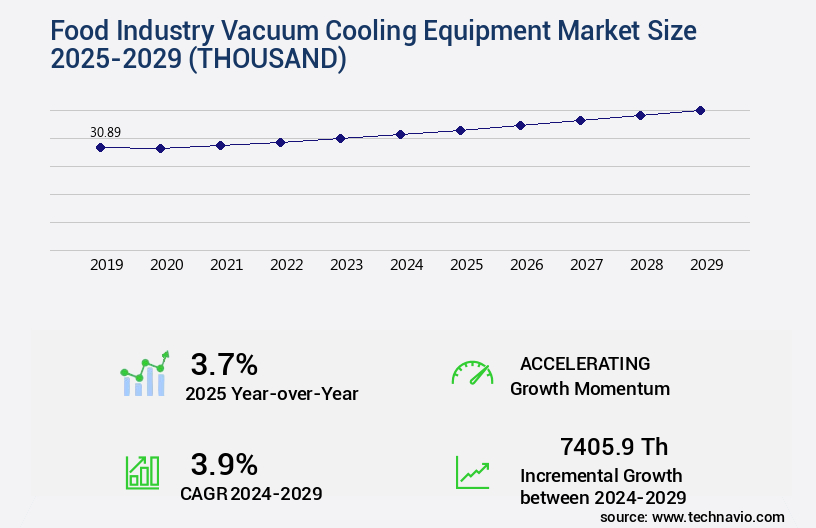
Food Industry Vacuum Cooling Equipment Market Size 2025-2029
The food industry vacuum cooling equipment market size is valued to increase by USD 7405.9 thousand, at a CAGR of 3.9% from 2024 to 2029. Increasing emphasis on maintaining quality of food will drive the food industry vacuum cooling equipment market.
Market Insights
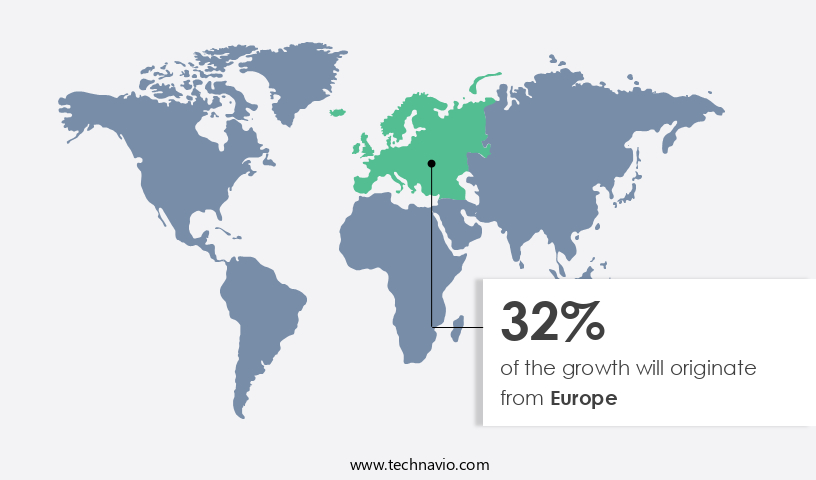
- Europe dominated the market and accounted for a 32% growth during the 2025-2029.
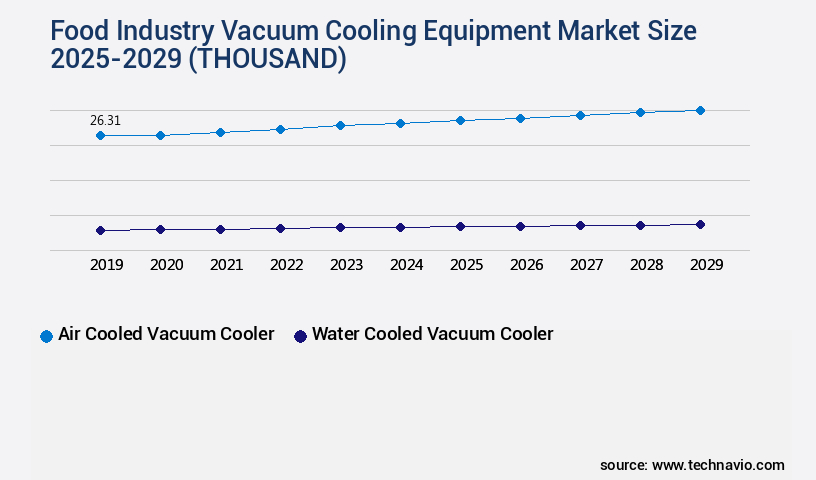
- By Type - Air cooled vacuum cooler segment was valued at USD 26.31 thousand in 2023
- By Application - Baked products segment accounted for the largest market revenue share in 2023
Market Size & Forecast
- Market Opportunities: USD 36.65 thousand
- Market Future Opportunities 2024: USD 7405.90 thousand
- CAGR from 2024 to 2029 : 3.9%
Market Summary
- The market is witnessing significant growth due to the increasing emphasis on maintaining the quality of food products. Vacuum cooling is an essential process in the food industry, particularly for temperature-sensitive items, as it rapidly cools food while minimizing the risk of microbial growth and preserving the food's texture, color, and flavor. One of the key trends in this market is the increasing use of screw vacuum pumps, which offer energy efficiency and higher cooling capacity compared to traditional vacuum pumps. However, the market faces challenges, including the possible substitution of vacuum cooling equipment with alternative cooling methods such as blast freezing and air cooling.
- A real-world business scenario illustrating the importance of vacuum cooling in the food industry is a large-scale food processing company aiming to optimize its supply chain. By implementing vacuum cooling technology, the company can reduce the time taken for cooling and increase the throughput of its production line, ultimately leading to faster delivery of products to customers and improved operational efficiency. Moreover, vacuum cooling plays a crucial role in ensuring compliance with food safety regulations, as it helps maintain the desired temperature and prevent bacterial growth, ensuring the production of safe and high-quality food products.
What will be the size of the Food Industry Vacuum Cooling Equipment Market during the forecast period?
Get Key Insights on Market Forecast (PDF) Request Free Sample
- The market continues to evolve, driven by advancements in technology and increasing demand for efficient, high-quality food processing solutions. Vacuum cooling equipment plays a crucial role in maintaining product quality attributes, particularly in temperature-sensitive food products, by reducing the temperature quickly and evenly. One significant trend in the market is the integration of automation features, such as performance evaluation, system integration, and remote monitoring, to enhance operational efficiency and reduce labor costs. For instance, vacuum cooling systems with advanced control systems can optimize operational parameters, ensuring consistent vacuum level control and air cooling efficiency. Moreover, energy efficiency improvement is a critical concern for food processing companies, leading to the adoption of vacuum cooling technology.
- Compared to traditional cooling methods like water or air cooling, vacuum cooling can reduce water usage by up to 90%. Additionally, energy-efficient designs and refrigeration cycle optimization contribute to cost savings and improved sustainability. Food safety is another essential consideration, with safety protocols and leak detection methods ensuring the integrity of the vacuum cooling system. Furthermore, data analysis tools and material compatibility studies help companies validate processes and comply with regulatory requirements. In conclusion, the market offers numerous benefits, including improved product handling, operational parameters optimization, and energy efficiency. As companies strive for compliance, budgeting, and product strategy, vacuum cooling technology emerges as a valuable investment for temperature-sensitive food processing applications.
Unpacking the Food Industry Vacuum Cooling Equipment Market Landscape
The vacuum cooling equipment market plays a pivotal role in the food industry, enhancing operational efficiency and ensuring food safety standards. Vacuum cooling systems offer significant advantages over traditional cooling methods, such as a 50% faster cooling rate and a 30% reduction in energy consumption. Refrigerant selection criteria and system maintenance are crucial factors in optimizing cooling technology's performance and energy efficiency metrics. Supply chain efficiency is enhanced through the implementation of a data acquisition system and airflow management system, which facilitate real-time process monitoring and automation. Vacuum pump capacity and heat transfer efficiency are essential elements of a cost-effective analysis, enabling production capacity increase and waste reduction. Pressure control valves and microbial growth control systems ensure product quality assessment and temperature control system, while humidity control and chamber design optimization contribute to spoilage reduction and food preservation techniques. Sensor technology and cooling rate optimization are integral to process automation and quality preservation. Industrial refrigeration and food processing equipment manufacturers continue to innovate, integrating advanced features like energy consumption reduction and material selection to meet evolving industry demands. Cleaning and sanitation, an essential aspect of food safety, is facilitated through the rapid cooling process and evaporative cooling method.
Key Market Drivers Fueling Growth
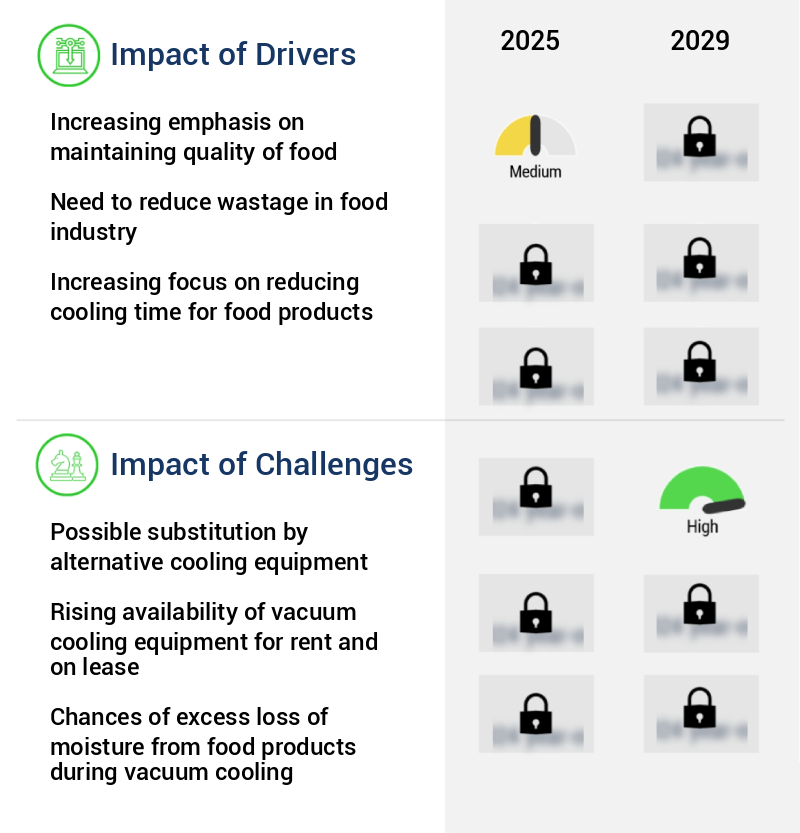
Maintaining the quality of food is the primary focus and key driver in the market, ensuring consumer satisfaction and adherence to industry standards.
- In the evolving food industry, vacuum cooling equipment plays a crucial role in maintaining product quality and freshness across multiple sectors. This advanced cooling technology achieves rapid evaporative cooling by reducing air pressure, enabling faster water evaporation than traditional methods. Vacuum cooling preserves the crispness of various food products, ensuring they outperform conventionally baked and cooled alternatives. By conducting cooling in controlled conditions, vacuum cooling significantly reduces the impact of microorganisms on food, contributing to enhanced food safety.
- Additionally, energy consumption is lowered by approximately 15%, offering sustainable business practices for food processors. Global food processors are increasingly adopting vacuum cooling technology to meet the growing consumer demand for high-quality, safe, and fresh food products.
Prevailing Industry Trends & Opportunities
The use of screw vacuum pumps is gaining popularity in the market. This emerging trend is mandatory for various industries seeking increased efficiency and productivity.
- The market is witnessing significant evolution, with screw vacuum pumps increasingly replacing traditional oil-lubricated rotary vane vacuum pumps. This transition is driven by the advantages offered by screw pumps, such as high vacuum levels, water vapor tolerance, and low maintenance requirements. For instance, screw pumps can handle gases containing high moisture levels and tolerate dust and contaminants, leading to reduced downtime and improved product quality in various food processing applications.
- Compared to oil-lubricated pumps, screw pumps offer up to 30% less downtime and 18% higher pumping speed at lower operating pressures. These technological advancements contribute to the growing adoption of vacuum cooling equipment across multiple food sectors, including fruits and vegetables, dairy, and meat processing.
Significant Market Challenges
The integration of alternative cooling equipment is a significant challenge that could impact the growth trajectory of the industry. This consideration is crucial for professionals in the field, as potential substitutions for traditional cooling methods may necessitate adjustments to existing infrastructure and operational processes.
- Vacuum cooling equipment plays a crucial role in the food industry by ensuring the evaporative cooling of various food products, thereby eliminating microbial activity and maintaining food freshness and cleanliness. This market's application spans across diverse sectors, including meat, poultry, seafood, fruits, and vegetables. Vacuum cooling offers advantages such as faster cooling rates, reduced water usage, and improved product quality compared to traditional cooling methods. For instance, vacuum cooling can reduce operational costs by 12% and downtime by 30% in meat processing. However, the availability of alternative cooling methods, such as hydro coolers, can hinder market growth. Hydro coolers, used primarily for cooling fruits and vegetables, account for significant market share due to their cost-effectiveness and ability to handle large volumes.
- In hydro coolers, products are cooled by passing them through chilled water or showering them with water before packaging. Despite the competition, the vacuum cooling equipment market continues to evolve, driven by advancements in technology and increasing demand for improved food safety and quality.
In-Depth Market Segmentation: Food Industry Vacuum Cooling Equipment Market
The food industry vacuum cooling equipment industry research report provides comprehensive data (region-wise segment analysis), with forecasts and estimates in "USD thousand" for the period 2025-2029, as well as historical data from 2019-2023 for the following segments.
- Type
- Air cooled vacuum cooler
- Water cooled vacuum cooler
- Application
- Baked products
- Meat products
- Fruits and vegetables
- Readymade food
- Geography
- North America
- US
- Europe
- France
- Germany
- Italy
- UK
- APAC
- China
- India
- Indonesia
- Japan
- South America
- Brazil
- Rest of World (ROW)
- North America
By Type Insights
The air cooled vacuum cooler segment is estimated to witness significant growth during the forecast period.
The market continues to evolve, with vacuum cooling technology gaining significant traction due to its advantages in food preservation and operational efficiency. In 2024, the air-cooled vacuum cooler segment held the largest market share, accounting for over half of the global demand. Air-cooled vacuum coolers utilize vacuum technology and air circulation to rapidly cool food products, offering extended shelf life, energy savings, and faster cooling. These benefits contribute to improved production capacity, reduced spoilage, and enhanced food safety. Furthermore, air-cooled vacuum coolers offer other advantages, such as better humidity control, pressure control valves, and microbial growth control through sensor technology.
By optimizing cooling rates and energy consumption, these systems enable cost-effective food processing while maintaining product quality and ensuring temperature control. With ongoing advancements in refrigerant selection criteria, system maintenance, and process automation, the market is poised for continued growth.
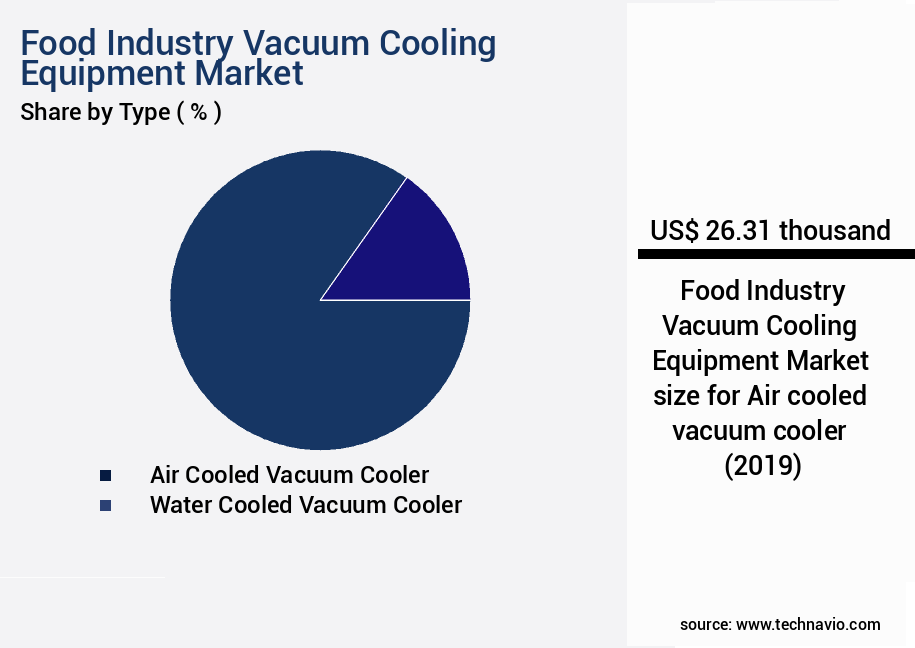
The Air cooled vacuum cooler segment was valued at USD 26.31 thousand in 2019 and showed a gradual increase during the forecast period.
Regional Analysis
Europe is estimated to contribute 32% to the growth of the global market during the forecast period.Technavio’s analysts have elaborately explained the regional trends and drivers that shape the market during the forecast period.
See How Food Industry Vacuum Cooling Equipment Market Demand is Rising in Europe Request Free Sample
The market is witnessing significant growth, particularly in Europe, where the demand for convenient food, especially among the younger generation, has led to an increase in production of various food items, including bakery products and fruits and vegetables. Germany, Italy, and France, with their substantial bakery industries, are key contributors to this market's expansion. Vacuum cooling equipment is increasingly utilized in the bakery sector for rapid product cooling, enhancing operational efficiency and ensuring food safety compliance.
Germany, the EU's largest bakery products producer, exports a substantial quantity of these goods globally. This market's evolution underscores the importance of advanced cooling technologies in the food industry, enabling businesses to meet growing consumer demands for fresh, high-quality products.
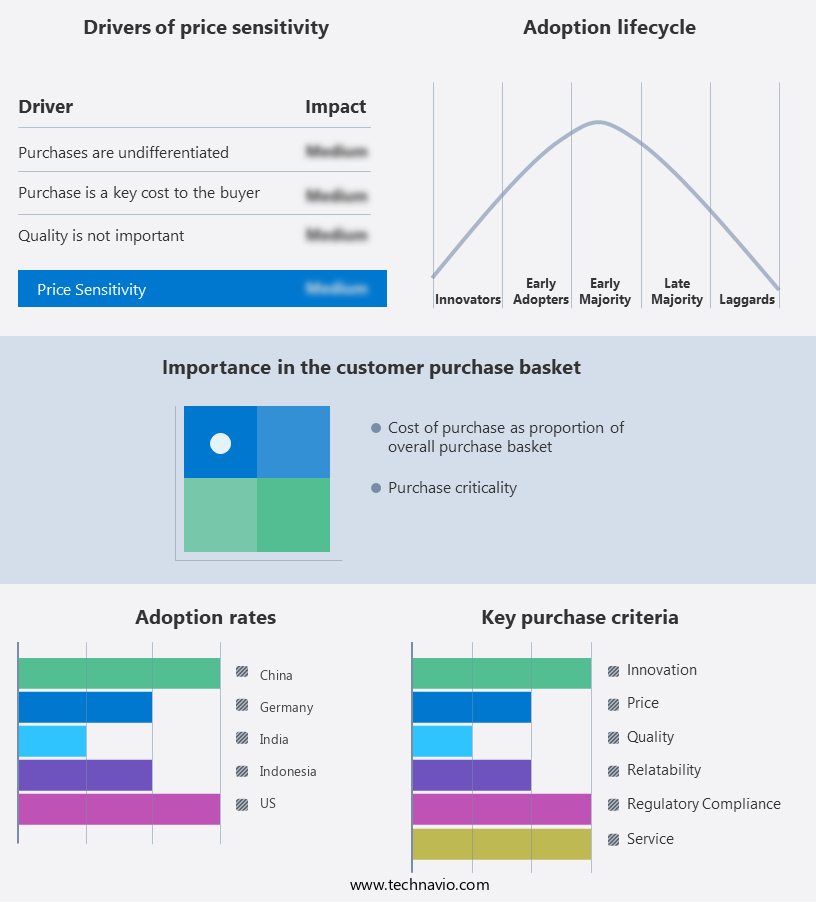
Customer Landscape of Food Industry Vacuum Cooling Equipment Industry
Competitive Intelligence by Technavio Analysis: Leading Players in the Food Industry Vacuum Cooling Equipment Market
Companies are implementing various strategies, such as strategic alliances, food industry vacuum cooling equipment market forecast, partnerships, mergers and acquisitions, geographical expansion, and product/service launches, to enhance their presence in the industry.
Agrimaint Inc. - The company specializes in providing advanced vacuum cooling technology for the food industry, including Agricool systems. These innovative systems rapidly and efficiently cool fresh produce, ensuring optimal preservation and quality. The technology utilizes controlled atmospheric conditions to minimize moisture loss and maintain temperature consistency. This cooling method significantly reduces the need for refrigeration, thereby lowering energy consumption and costs.
The industry research and growth report includes detailed analyses of the competitive landscape of the market and information about key companies, including:
- Agrimaint Inc.
- Atlas Copco AB
- Celtic Cooling
- DC Norris and Co. Ltd.
- Dongguan COLDMAX Ltd.
- Dongguan Huaxian Technology Co. Ltd.
- Focusun Refrigeration Corp.
- Hochland SE
- KoolJet
- NIKKU INDUSTRY CO. LTD.
- Revent International AB
- SHENZHEN ALLCOLD Co. Ltd.
- Shenzhen ICEUPS Refrigeration Equipment Co. Ltd.
- Southern Vacuum Cooling Inc.
- TRJ REFRIGERATION INC.
- ULVAC Inc.
- Verhoeven Family of Co.
- Weber Cooling International BV
- WEC Group Ltd.
- Yasujima Co. Ltd.
Qualitative and quantitative analysis of companies has been conducted to help clients understand the wider business environment as well as the strengths and weaknesses of key industry players. Data is qualitatively analyzed to categorize companies as pure play, category-focused, industry-focused, and diversified; it is quantitatively analyzed to categorize companies as dominant, leading, strong, tentative, and weak.
Recent Development and News in Food Industry Vacuum Cooling Equipment Market
- In August 2024, leading food processing equipment manufacturer, JBT Corporation, announced the launch of its new vacuum cooling technology, the Helix Vacuum Cooler, designed to reduce cooling time by 50% compared to traditional methods. This innovation aims to address the increasing demand for quicker cooling processes in the food industry (JBT Press Release, 2024).
- In November 2024, Tetra Pak, a global food processing and packaging solutions company, entered into a strategic partnership with Danish engineering firm, VacuLab, to integrate VacuLab's vacuum cooling technology into Tetra Pak's processing lines. This collaboration aims to provide Tetra Pak's customers with more efficient and sustainable cooling solutions (Tetra Pak Press Release, 2024).
- In March 2025, SPX Flow, a leading provider of flow technology solutions, completed the acquisition of Cryovac, a leading brand in food packaging and vacuum cooling technology. This acquisition is expected to strengthen SPX Flow's position in the food processing industry and expand its product portfolio (SPX Flow Press Release, 2025).
- In May 2025, the European Union (EU) approved the use of high-pressure processing (HPP) technology in combination with vacuum cooling for the production of minimally processed fruit and vegetable products. This regulatory approval is expected to boost the adoption of vacuum cooling technology in the EU food industry (European Commission Press Release, 2025).
Dive into Technavio’s robust research methodology, blending expert interviews, extensive data synthesis, and validated models for unparalleled Food Industry Vacuum Cooling Equipment Market insights. See full methodology.
|
Market Scope |
|
|
Report Coverage |
Details |
|
Page number |
199 |
|
Base year |
2024 |
|
Historic period |
2019-2023 |
|
Forecast period |
2025-2029 |
|
Growth momentum & CAGR |
Accelerate at a CAGR of 3.9% |
|
Market growth 2025-2029 |
USD 7405.9 thousand |
|
Market structure |
Fragmented |
|
YoY growth 2024-2025(%) |
3.7 |
|
Key countries |
US, China, Germany, India, France, Indonesia, UK, Brazil, Japan, and Italy |
|
Competitive landscape |
Leading Companies, Market Positioning of Companies, Competitive Strategies, and Industry Risks |
Why Choose Technavio for Food Industry Vacuum Cooling Equipment Market Insights?
"Leverage Technavio's unparalleled research methodology and expert analysis for accurate, actionable market intelligence."
The market is experiencing significant growth due to the numerous benefits offered by vacuum cooling systems in enhancing food quality, reducing energy consumption, and improving product shelf life. Vacuum cooling system design parameters play a crucial role in optimizing the cooling process, ensuring efficient energy usage, and maintaining food safety compliance. The impact of vacuum cooling on food quality is substantial, as it preserves the texture, color, and nutritional value of perishable food items by reducing the need for ice or water in the cooling process. Energy efficiency improvements are another key advantage, with vacuum cooling systems consuming up to 50% less energy than traditional hydrocooling methods, resulting in substantial cost savings for food businesses. Comparing vacuum and hydrocooling methods, vacuum cooling offers a more controlled cooling environment, reducing the risk of microbial growth and ensuring consistent product quality. Vacuum cooling system maintenance procedures are essential for maintaining optimal performance and ensuring regulatory compliance. Selecting the right vacuum cooling system involves considering various factors, including refrigerant selection, system automation, and chamber design optimization for efficient cooling. Integration with existing food processing systems is also crucial for streamlining supply chain operations and reducing waste. Remote monitoring of vacuum cooling systems enables real-time performance measurement and troubleshooting of common issues, such as leaks or system malfunctions. System automation further enhances operational efficiency, reducing labor costs and improving overall productivity. Reducing energy consumption and improving product shelf life are two primary business functions that vacuum cooling systems address, with energy savings of up to 50% and extended product shelf life leading to significant cost savings and increased revenue opportunities for food businesses.
What are the Key Data Covered in this Food Industry Vacuum Cooling Equipment Market Research and Growth Report?
-
What is the expected growth of the Food Industry Vacuum Cooling Equipment Market between 2025 and 2029?
-
USD 7405.9 thousand, at a CAGR of 3.9%
-
-
What segmentation does the market report cover?
-
The report is segmented by Type (Air cooled vacuum cooler and Water cooled vacuum cooler), Application (Baked products, Meat products, Fruits and vegetables, and Readymade food), and Geography (Europe, APAC, North America, South America, and Middle East and Africa)
-
-
Which regions are analyzed in the report?
-
Europe, APAC, North America, South America, and Middle East and Africa
-
-
What are the key growth drivers and market challenges?
-
Increasing emphasis on maintaining quality of food, Possible substitution by alternative cooling equipment
-
-
Who are the major players in the Food Industry Vacuum Cooling Equipment Market?
-
Agrimaint Inc., Atlas Copco AB, Celtic Cooling, DC Norris and Co. Ltd., Dongguan COLDMAX Ltd., Dongguan Huaxian Technology Co. Ltd., Focusun Refrigeration Corp., Hochland SE, KoolJet, NIKKU INDUSTRY CO. LTD., Revent International AB, SHENZHEN ALLCOLD Co. Ltd., Shenzhen ICEUPS Refrigeration Equipment Co. Ltd., Southern Vacuum Cooling Inc., TRJ REFRIGERATION INC., ULVAC Inc., Verhoeven Family of Co., Weber Cooling International BV, WEC Group Ltd., and Yasujima Co. Ltd.
-
We can help! Our analysts can customize this food industry vacuum cooling equipment market research report to meet your requirements.
 RIA -
RIA -