
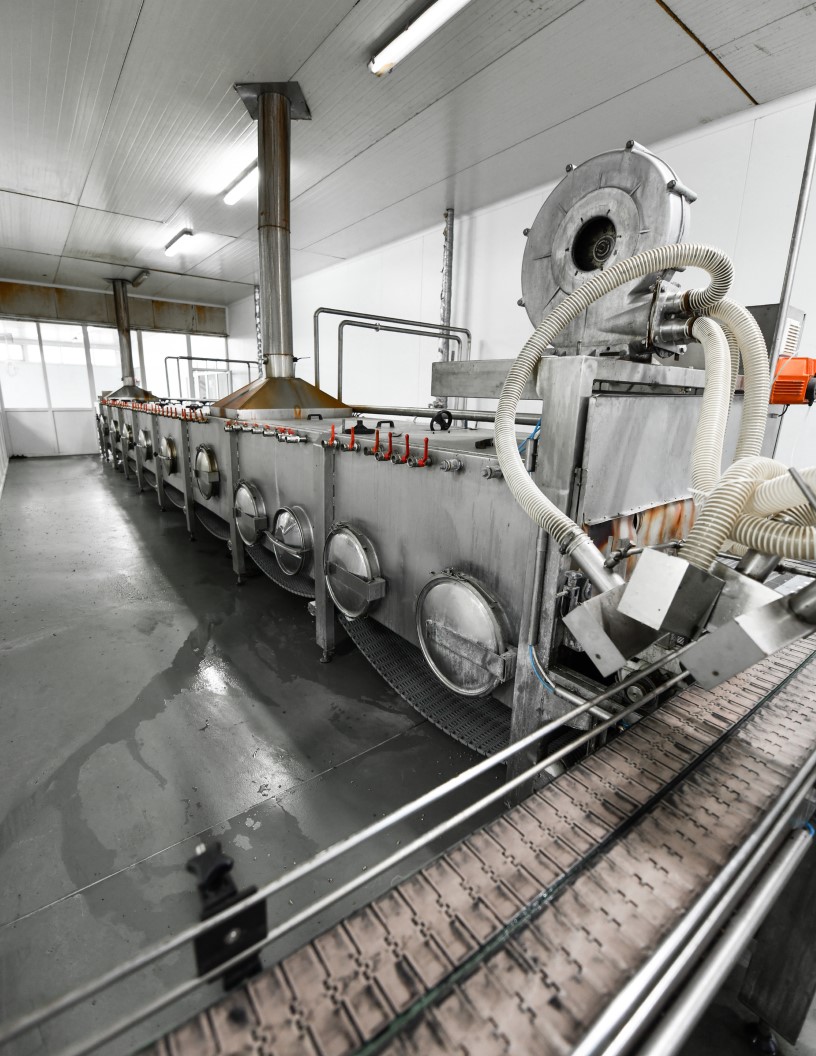


Food Ultrasound Market Size 2024-2028
The food ultrasound market size is forecast to increase by USD 99.7 million at a CAGR of 6.79% between 2023 and 2028.
- The market is experiencing significant growth, driven by the increasing demand for food safety and quality. Ultrasound technology is increasingly being adopted in the food industry, particularly in the dairy sector, to ensure product integrity and enhance production efficiency. However, the high cost of ultrasound technology remains a challenge for small and medium-sized enterprises, limiting its widespread adoption. Despite this, the market is expected to continue its growth trajectory, fueled by advancements in technology and increasing regulatory requirements for food safety. The use of ultrasound technology in food processing offers numerous benefits, including real-time monitoring, non-destructive testing, and improved product consistency. As consumer awareness of food safety and quality continues to rise, the demand for advanced food inspection technologies like ultrasound is expected to increase. Ultrasound technologies are increasingly being used for various food processing applications such as freezing, harvesting, drying, tamper detection, bleaching, sterilizing, and germ elimination in meat and food products, bakery and confectionery, cereals, grains, pulses, nuts, seeds, spices, and packaged foods.
What will be the Size of the Food Ultrasound Market During the Forecast Period?
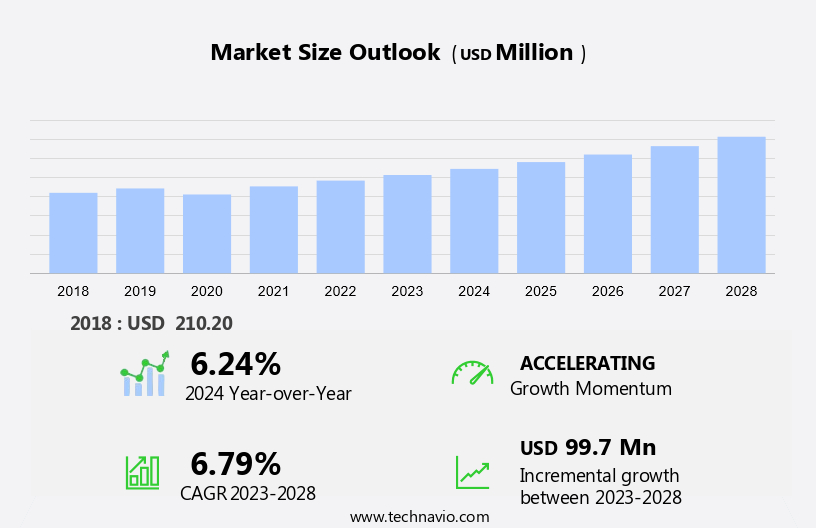
- The market is witnessing significant growth due to the increasing demand for eco-friendly and energy-efficient technologies in the food industry. Ultrasound technologies offer several advantages over traditional methods, including non-destructive testing, faster processing times, and improved product quality. However, the implementation of these technologies comes with strict rules and technical challenges. Sterilizing agents and their interaction with food during the ultrasound process are critical attributes that need to be considered to maintain food quality.
- The food ultrasound equipment market is expected to grow at a steady pace due to the increasing awareness of food quality and safety. The market is expected to be driven by the growing demand for processed food, increasing consumer preference for natural and organic food, and the need for efficient and cost-effective food processing solutions. Despite the challenges, the market is expected to remain positive, with continued innovation and technological advancements in ultrasound technologies.
How is this Food Ultrasound Industry segmented and which is the largest segment?
The food ultrasound industry research report provides comprehensive data (region-wise segment analysis), with forecasts and estimates in "USD million" for the period 2024-2028, as well as historical data from 2018-2022 for the following segments.
- Frequency Range
- Medium frequency
- Low frequency
- High frequency
- Application
- Meat and seafood
- Fruit and vegetables
- Beverage
- Dairy products
- Others
- Geography
- North America
- US
- Europe
- Germany
- France
- APAC
- China
- Japan
- South America
- Middle East and Africa
- North America
By Frequency Range Insights
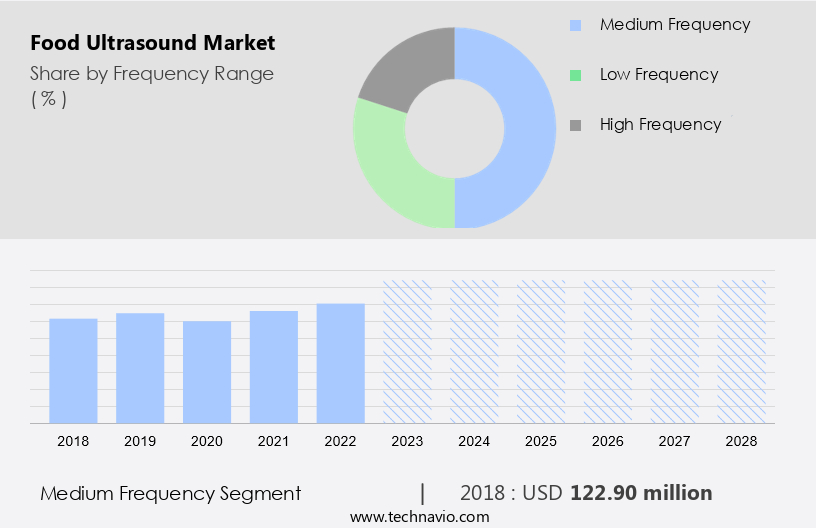
- The medium frequency segment is estimated to witness significant growth during the forecast period. Medium frequency (100 kHz to 1 MHz) ultrasound is a technology that uses sound waves to determine the properties. Sound waves in the medium frequency range are generated and propagate through the sample. By analyzing the interaction between sound waves and food, information can be obtained about various properties, such as chemical composition, texture, and quality.
The market is a critical segment within the food industry, leveraging ultrasound technology for various applications such as freezing, harvesting, drying, and sterilizing food products. This technology plays a pivotal role in ensuring food safety and quality by detecting potential tampering, germs, and other contaminants. Food ultrasound is extensively used in the meat and food, bakery and confectionery, cereals, grains, pulses, nuts, seeds, and spices sectors, contributing to the production of packaged foods. The global market is driven by increasing demand for eco-friendly and energy-efficient technologies, stringent rules and regulations regarding food safety, and the technical challenges faced in food processing. Consumers' heightened awareness of food quality and the need for safe storage further fuel the adoption of food ultrasound equipment. As the industry evolves, innovations in ultrasound technologies continue to meet the attributes desired by both consumers and regulatory bodies, making food ultrasound a cornerstone of modern food processing operations.
Get a glance at the market report of share of various segments Request Free Sample
The Medium frequency segment was valued at USD 122.90 million in 2018 and showed a gradual increase during the forecast period.
Regional Analysis
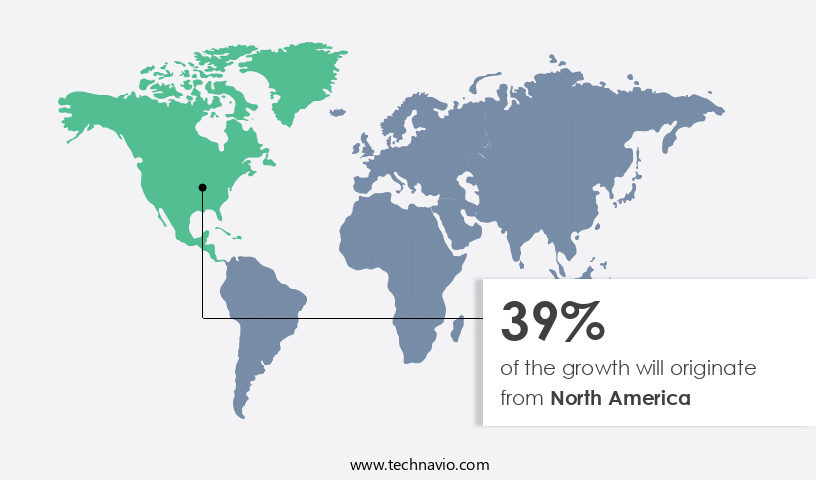
- North America is estimated to contribute 39% to the growth of the global market during the forecast period.
Technavio's analysts have elaborately explained the regional trends and drivers that shape the market during the forecast period.
For more insights on the market size of various regions, Request Free Sample
Medium frequency ultrasound technology, utilized at Abertay University and other research institutions, offers non-destructive assessment of food properties through the application of sound waves within the frequency range of 100 kHz to 1MHz. This technology interacts with food's nutritional value, bioactive chemicals, and structural components, providing valuable insights into food quality. In the realm of food quality control, medium frequency ultrasound plays a significant role in various industries, including seafood and meat, vegetables and fruits, dairy, confectionery and bakery, cereals, grains, pulses, nuts, seeds, spices, and packaged foods. Its functions extend to microbial inactivation, tenderness assessment for meat products, fruit ripening control, and fault detection in bakery and confectionery products.
Fujifilm, Power Doppler, and other advanced ultrasound systems facilitate anatomical details examination, homogenization, emulsification, cleaning, thawing, and shelf-life extension. The technology's effectiveness in food quality control continues to gain momentum in the food industry.
Market Dynamics
Our researchers analyzed the data with 2023 as the base year, along with the key drivers, trends, and challenges. A holistic analysis of drivers will help companies refine their marketing strategies to gain a competitive advantage.
What are the key market drivers leading to the rise in the adoption of the Food Ultrasound Industry?
- Increasing demand for food safety and quality is the key driver of the market. The market is witnessing significant growth due to the increasing emphasis on food safety and quality. Ultrasound technology, employed at Abertay University and other research institutions, plays a pivotal role in ensuring the nutritional value and maintaining the quality of various food types, including seafood and meat, vegetables and fruits, dairy, confectionery and bakery, cereals, grains, pulses, nuts, seeds, and spices. Ultrasound waves, with their effective function in microbial inactivation and fault detection, can identify pathogenic cells and anatomical details, thereby preventing food waste and enhancing the shelf-life of packaged foods. The frequency range of ultrasound, from low to high, is utilized for diverse applications such as homogenization, emulsification, cleaning, and thawing.
- Brands like Fujifilm leverage ultrasound technology with advanced features like Power Doppler for more precise and detailed analysis. Ultrasound technology is also instrumental in tenderization of meat products and fruit ripening control.
What are the market trends shaping the Food Ultrasound Industry?
- Growing use of ultrasound technology in the dairy industry is the upcoming market trend. Ultrasound technology has gained significant traction In the food industry, particularly in sectors such as seafood and meat, vegetables and fruits, dairy, confectionery and bakery, cereals, grains, pulses, nuts, seeds, and spices. Abertay University has conducted extensive research on the application of ultrasound technology in food analysis, revealing its potential in assessing nutritional value, detecting bioactive chemicals, and ensuring food quality control. Ultrasound technology operates within a frequency range of 20 kHz to 10 MHz, making it effective in microbial inactivation, tenderness assessment for meat products, and fruit ripening control. Companies like Fujifilm have developed advanced ultrasound systems, such as Power Doppler, to provide anatomical details and facilitate fault detection in various food types.
- Ultrasound technology is also instrumental in homogenization, emulsification, cleaning, and thawing processes, extending the shelf-life of packaged foods. Overall, the integration of ultrasound technology in food production and quality assurance is a major trend, offering numerous advantages over traditional methods.
What challenges does the Food Ultrasound Industry face during its growth?
- High cost of ultrasound technology is a key challenge affecting the industry growth. Ultrasound technology plays a pivotal role in ensuring food quality control in various sectors, including seafood and meat, vegetables and fruits, dairy, confectionery and bakery, cereals, grains, pulses, nuts, seeds, and spices. Abertay University has conducted extensive research on the application of ultrasound technology in food industry, focusing on nutritional value assessment, bioactive chemicals detection, food waste reduction, and microbial inactivation. Ultrasound technology functions by employing high-frequency sound waves to examine anatomical details and detect faults in food products. Frequency ranges used in food ultrasound applications include those for meat tenderization, emulsions homogenization, and fruit ripening control. Fujifilm, Power Doppler, and other leading companies offer advanced ultrasound solutions for food quality assurance.
- Despite the numerous benefits, the high cost of ultrasound equipment remains a significant challenge for small and medium-sized food manufacturers. To expand market penetration, companies must focus on cost-effective ultrasound solutions, enabling wider adoption In the food industry. Ultrasound technology can enhance food quality control processes, ensuring effective pathogenic cells inactivation, meat product tenderization, and shelf-life extension for packaged foods. Applications include cleaning, thawing, and homogenization/emulsification processes.
Exclusive Customer Landscape
The food ultrasound market forecasting report includes the adoption lifecycle of the market, covering from the innovator's stage to the laggard's stage. It focuses on adoption rates in different regions based on penetration. Furthermore, the food ultrasound market report also includes key purchase criteria and drivers of price sensitivity to help companies evaluate and develop their market growth analysis strategies.
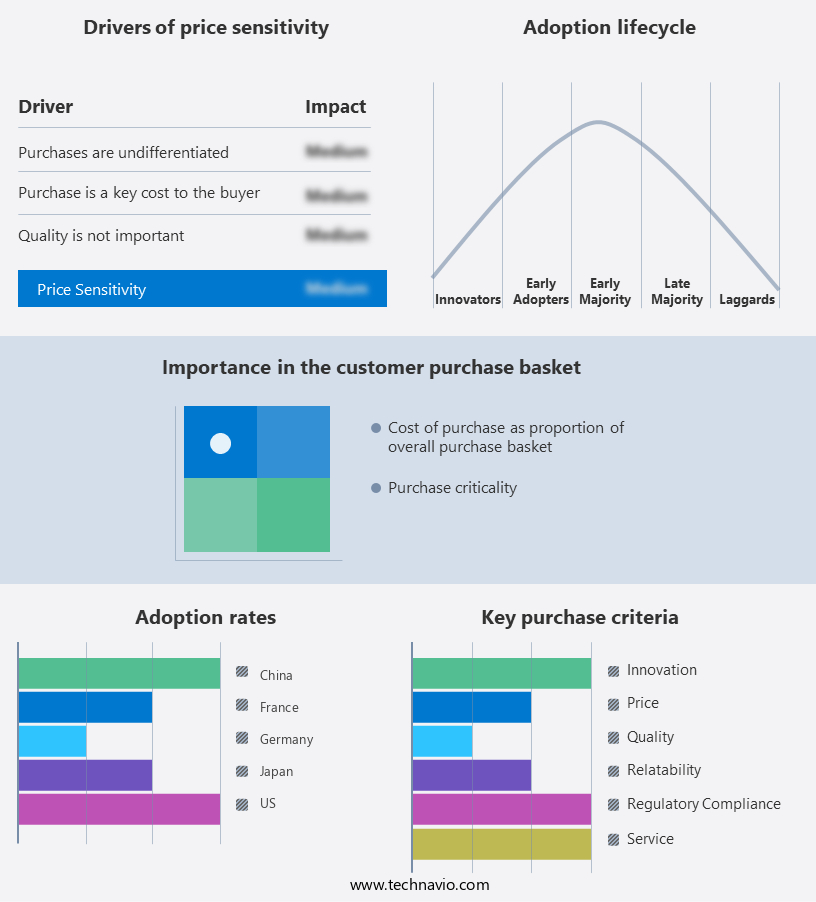
Customer Landscape
Key Companies & Market Insights
Companies are implementing various strategies, such as strategic alliances, food ultrasound market forecast, partnerships, mergers and acquisitions, geographical expansion, and product/service launches, to enhance their presence in the industry.
The industry research and growth report includes detailed analyses of the competitive landscape of the market and information about key companies, including:
- Analogic Corp.
- Buhler AG
- CHEERSONIC Ultrasonic Equipment Co. Ltd.
- Dukane IAS LLC
- Elliptical Design Ltd.
- Emerson Electric Co.
- Esaote Spa
- FUJIFILM Corp.
- Hielscher Ultrasonics GmbH
- Hitachi Ltd.
- Industrial Sonomechanics LLC
- Koninklijke Philips N.V.
- Marchant Schmidt Inc.
- Nikkei Inc.
- Perkin Elmer Inc.
- Rinco Ultrasonics AG
- Robert Bosch GmbH
- Shenzhen Mindray BioMedical Electronics Co. Ltd
- Siemens AG
- Sonics and Materials Inc.
Qualitative and quantitative analysis of companies has been conducted to help clients understand the wider business environment as well as the strengths and weaknesses of key industry players. Data is qualitatively analyzed to categorize companies as pure play, category-focused, industry-focused, and diversified; it is quantitatively analyzed to categorize companies as dominant, leading, strong, tentative, and weak.
Research Analyst Overview
Ultrasound technology plays a significant role In the food industry, particularly in various stages of food processing. Ultrasound is used for freezing, harvesting, drying, tampering detection, bleaching, and sterilizing food products. Ultrasonic radiation is essential for ensuring food safety by eliminating germs and sterilizing agents. The consumer desire for high-quality, nutritious food with extended shelf life drives the adoption of ultrasound technology in food processing. Fruits and vegetables, meat, dairy products, baked goods, beverages, confections, and other food items undergo ultrasonic processing to enhance their forms and textures, improve flavor, and ensure sound nutrition. The reliability and development of ultrasound technology have been crucial in reducing production costs and ensuring food quality.
Technology advancements have led to the use of high-frequency, low-amplitude sound waves for precise processing, minimizing the impact on nutrients. Standards and regulations, food safety, and quality are paramount in the food industry. Ultrasound technology's ability to meet stringent laws and provide competent labor savings makes it an attractive option for food processing companies. Capital expenditure on ultrasound technology for food processing is expected to grow as the demand for clean-label sweet snacks and ultrasonic shaping methods increases. Overall, ultrasound technology is a vital tool In the food industry, ensuring the production of safe, high-quality food while maintaining optimal nutritional content.
|
Market Scope |
|
|
Report Coverage |
Details |
|
Page number |
163 |
|
Base year |
2023 |
|
Historic period |
2018-2022 |
|
Forecast period |
2024-2028 |
|
Growth momentum & CAGR |
Accelerate at a CAGR of 6.79% |
|
Market growth 2024-2028 |
USD 99.7 million |
|
Market structure |
Fragmented |
|
YoY growth 2023-2024(%) |
6.24 |
|
Key countries |
US, China, Germany, France, and Japan |
|
Competitive landscape |
Leading Companies, Market Positioning of Companies, Competitive Strategies, and Industry Risks |
What are the Key Data Covered in this Food Ultrasound Market Research and Growth Report?
- CAGR of the Food Ultrasound industry during the forecast period
- Detailed information on factors that will drive the growth and forecasting between 2024 and 2028
- Precise estimation of the size of the market and its contribution of the industry in focus to the parent market
- Accurate predictions about upcoming growth and trends and changes in consumer behaviour
- Growth of the market across North America, Europe, APAC, South America, and Middle East and Africa
- Thorough analysis of the market's competitive landscape and detailed information about companies
- Comprehensive analysis of factors that will challenge the food ultrasound market growth of industry companies
We can help! Our analysts can customize this food ultrasound market research report to meet your requirements.
 RIA -
RIA - 
