
Europe Frozen Food Market Analysis, Size, and Forecast 2026-2030: Europe (Italy, Germany, and France)

Europe Frozen Food Market Analysis, Size, and Forecast 2026-2030:
Europe (Italy, Germany, and France)

Published: May 2026 218 Pages SKU: IRTNTR70504

Market Overview at a Glance

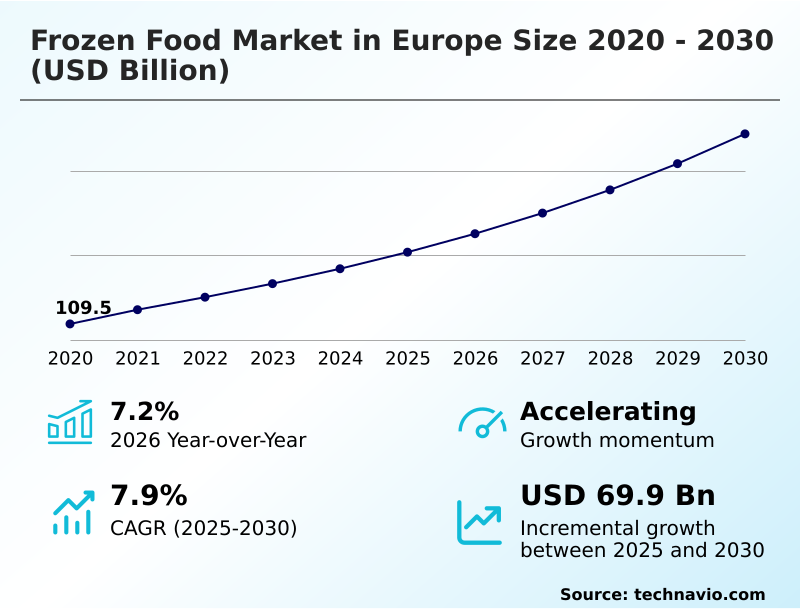
$69.9 B
Market Opportunity
7.9%
CAGR 2025 - 2030
7.2%
YoY growth 2025-2026(%)
$106.8 B
Offline segment 2024

Europe Frozen Food Market Size 2026-2030

The europe frozen food market size is valued to increase by USD 69.9 billion, at a CAGR of 7.9% from 2025 to 2030. Institutionalization of anti-food waste mandates and sustainability goals will drive the europe frozen food market.

Major Market Trends & Insights

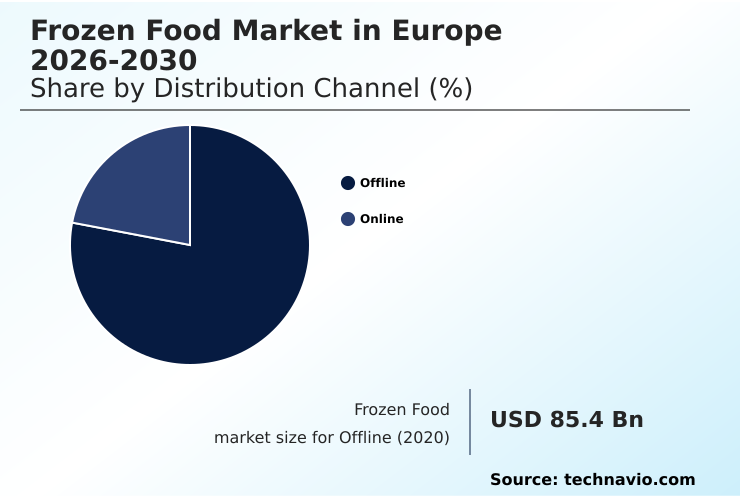
  • By Distribution Channel - Offline segment was valued at USD 106.8 billion in 2024
  • By Product - Frozen ready meals segment accounted for the largest market revenue share in 2024

Market Size & Forecast

  • Market Opportunities: USD 112.3 billion
  • Market Future Opportunities: USD 69.9 billion
  • CAGR from 2025 to 2030 : 7.9%

Market Summary

  • The frozen food market in Europe is undergoing a significant transformation, moving beyond convenience to embrace health, sustainability, and technological innovation. This evolution is driven by the institutionalization of food waste reduction strategies and the strategic proliferation of health-oriented, plant-forward ready meals.
  • Advanced preservation techniques like individual quick freezing are central to this shift, as they lock in the nutritional value and texture of ingredients without synthetic preservatives, meeting consumer demand for clean-label products. A key business scenario involves optimizing cold chain logistics, where companies leverage AI-driven analytics to predict demand, manage inventory in zero-warehousing facilities, and ensure temperature-controlled distribution.
  • This not only minimizes waste but also enhances operational efficiency in the face of volatile energy costs. Concurrently, the rise of ultrafast grocery delivery services is reshaping retail dynamics, creating new avenues for high-margin frozen products. However, the market faces challenges from stringent regulatory mandates on sustainable packaging and persistent consumer skepticism about ultra-processed formulations.
  • Success in this landscape requires a balance of culinary innovation, technological adoption, and a demonstrable commitment to environmental stewardship and nutritional transparency, ensuring frozen food remains a vital part of the modern European diet.

What will be the Size of the Europe Frozen Food Market during the forecast period?
Get Key Insights on Market Forecast (PDF) Request Free Sample

How is the Europe Frozen Food Market Segmented?

The europe frozen food industry research report provides comprehensive data (region-wise segment analysis), with forecasts and estimates in "USD billion" for the period 2026-2030, as well as historical data from 2020-2024 for the following segments.

  • Distribution channel
    • Offline
    • Online
  • Product
    • Frozen ready meals
    • Frozen fish and seafood
    • Frozen meat and poultry
    • Frozen fruits and vegetables
    • Others
  • End-user
    • Retail consumers
    • Foodservice
    • Institutional buyers
  • Geography
    • Europe
      • Italy
      • Germany
      • France

By Distribution Channel Insights

The offline segment is estimated to witness significant growth during the forecast period.

The offline segment remains the structural backbone of the frozen food market in Europe, where physical retail environments are critical for maintaining cold chain logistics.

Supermarkets and hypermarkets are heavily investing in energy-efficient refrigeration to enhance the visibility of private-label offerings and innovative plant-based proteins. These retailers leverage the tactile shopping experience, allowing consumers to scrutinize clean-label ingredients and sustainable packaging.

This channel is the primary forum for introducing new nutrient-dense entrees and is crucial for foodservice procurement. Advanced inventory management systems are now used to ensure optimal product quality, reducing energy consumption in refrigeration units by up to 15%.

The strategic placement of products and in-store promotions are vital for driving sales and encouraging the discovery of new frozen food categories.
Request Free Sample

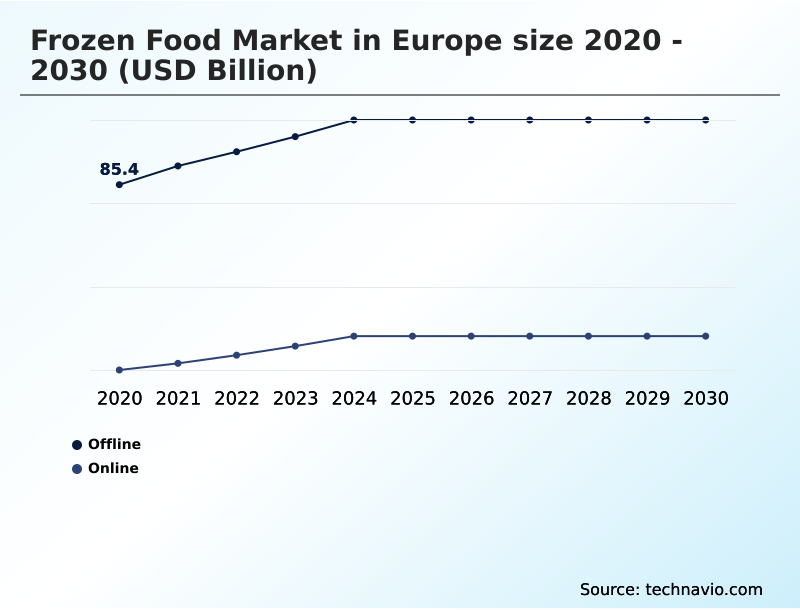
The Offline segment was valued at USD 106.8 billion in 2024 and showed a gradual increase during the forecast period.
Request Free Sample

Market Dynamics

Our researchers analyzed the data with 2025 as the base year, along with the key drivers, trends, and challenges. A holistic analysis of drivers will help companies refine their marketing strategies to gain a competitive advantage.

  • The intricate dynamics of the frozen food market in Europe are increasingly defined by the interplay between operational costs and technological innovation. The impact of energy prices on frozen food logistics is a primary concern, as maintaining the integrity of refrigerated transport and zero warehousing is non-negotiable.
  • This challenge is driving investment in advanced technologies, where the role of AI in optimizing frozen food quality has become paramount. For instance, AI-driven individual quick freezing systems not only enhance nutritional density but also reduce energy consumption by up to 15% compared to legacy batch-freezing methods, directly impacting the bottom line.
  • Concurrently, consumer trends in plant-based frozen meals continue to surge, forcing manufacturers to innovate with high-moisture meat analogues and sophisticated plant-based proteins. However, this innovation is met with significant challenges in sustainable packaging for frozen products, as new mono-material films must provide adequate moisture barriers at sub-zero temperatures while complying with the EU's circular economy model.
  • The evolution of the market is further accelerated by how quick-commerce is changing frozen food retail, turning frozen goods into a high-margin, impulse-buy category in major urban centers. This requires a complete rethinking of supply chain challenges in cold chain logistics, from automated fulfillment centers to last-mile temperature management.
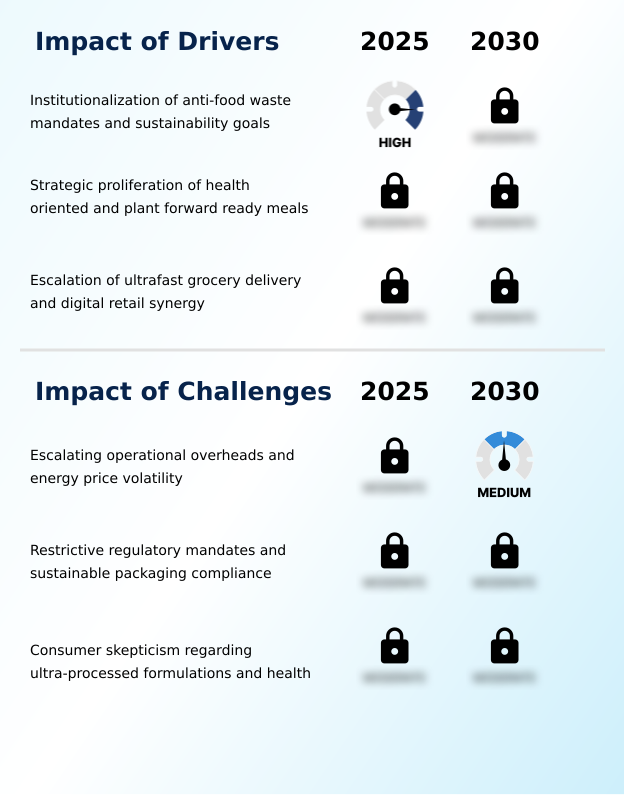
What are the key market drivers leading to the rise in the adoption of Europe Frozen Food Industry?

  • The institutionalization of anti-food waste mandates and sustainability goals is a primary driver for the market.

  • The growth of the frozen food market in Europe is propelled by powerful, interconnected drivers.
  • A primary driver is the institutionalization of anti-food waste mandates, as frozen products with superior portion control can reduce household food waste by up to 45%.
  • This aligns with the strategic proliferation of health-oriented and plant-forward ready meals, which use flash-freezing technology to preserve the nutritional value of clean-label ingredients without additives. This trend caters to rising consumer demand for nutrient-dense entrees.
  • A third major driver is the escalation of ultrafast grocery delivery and digital retail synergy.
  • Quick-commerce platforms in urban centers have seen a 40% year-over-year increase in frozen food sales, turning frozen goods into a high-margin, convenience-driven category and necessitating innovations in last-mile transport and automated fulfillment centers.

What are the market trends shaping the Europe Frozen Food Industry?

  • The industrialization of plant-based ready meal engineering represents a key market trend, driven by consumer demand for sophisticated and sustainable frozen entrees.

  • Key trends shaping the frozen food market in Europe center on technological and product evolution. The industrialization of plant-based ready meal engineering is advancing rapidly, with high-moisture meat analogues and sophisticated plant-based proteins becoming standard.
  • In parallel, advancements in circular and regulatory-compliant packaging are critical, with new mono-material films offering a 20% weight reduction over traditional multi-layer plastics while ensuring product integrity. The most transformative trend is the evolution of AI-driven individual quick freezing, where optical sorters now achieve 99.5% accuracy in defect removal.
  • This technology not only enhances the nutritional density of organic vegetables but also optimizes energy use, a crucial factor given the high costs of refrigerated transport and cold chain logistics. These innovations collectively push the market toward premium, sustainable, and technologically advanced solutions.

What challenges does the Europe Frozen Food Industry face during its growth?

  • Escalating operational overheads and energy price volatility present a significant challenge to industry growth.

  • The frozen food market in Europe confronts significant operational and regulatory headwinds. A primary challenge is the escalating operational overhead from energy price volatility, with electricity for zero warehousing and refrigerated transport accounting for up to 30% of logistics costs. This financial pressure is compounded by restrictive regulatory mandates for sustainable packaging.
  • Complying with new EU rules to eliminate non-recyclable plastics can increase packaging expenses by 10–15% for manufacturers transitioning to mono-material films. Furthermore, persistent consumer skepticism regarding ultra-processed formulations and health impacts remains a hurdle. Overcoming this requires substantial investment in reformulating products with clean-label ingredients, which adds to R&D costs and puts pressure on profit margins across the industry.

Exclusive Technavio Analysis on Customer Landscape

The europe frozen food market forecasting report includes the adoption lifecycle of the market, covering from the innovator’s stage to the laggard’s stage. It focuses on adoption rates in different regions based on penetration. Furthermore, the europe frozen food market report also includes key purchase criteria and drivers of price sensitivity to help companies evaluate and develop their market growth analysis strategies.
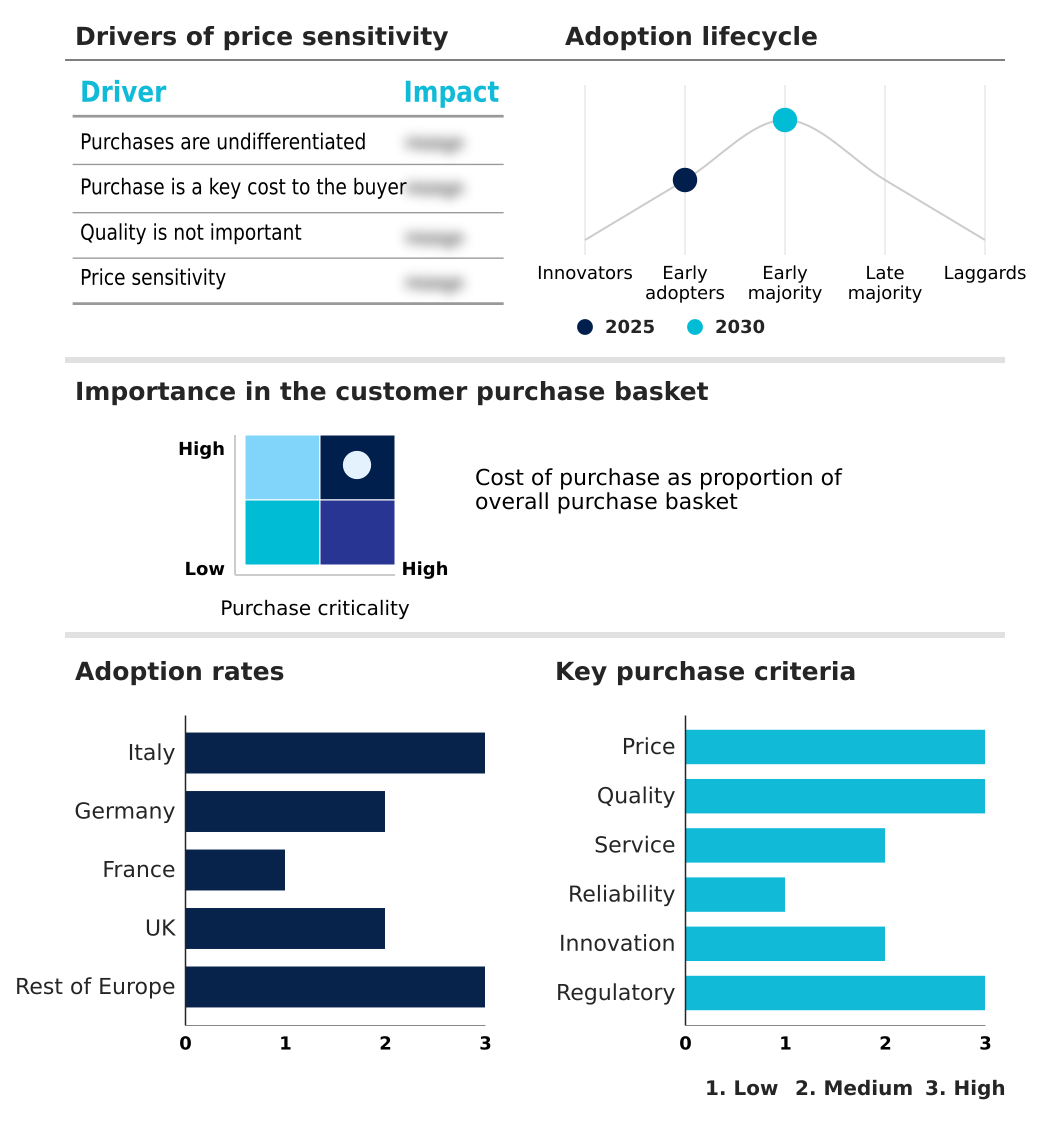
Customer Landscape of Europe Frozen Food Industry

Competitive Landscape

Companies are implementing various strategies, such as strategic alliances, europe frozen food market forecast, partnerships, mergers and acquisitions, geographical expansion, and product/service launches, to enhance their presence in the industry.

Ajinomoto Co. Inc. - The company provides a wide range of frozen foods, including frozen dumplings, gyoza, and ready-to-eat meal products.

The industry research and growth report includes detailed analyses of the competitive landscape of the market and information about key companies, including:

  • Ajinomoto Co. Inc.
  • ARYZTA AG
  • BRF SA
  • Cargill Inc.
  • Dr. August Oetker KG
  • Farmersland GmbH
  • Freiberger Lebensmittel GmbH
  • Frostkrone Food Group
  • General Mills Inc.
  • Iceland Foods Ltd.
  • JBS SA
  • Lantmannen Unibake
  • McCain Foods Ltd.
  • Nestle SA
  • Nomad Foods Ltd.
  • Orkla ASA
  • The Kraft Heinz Co.
  • Tyson Foods Inc.
  • ULTRACONGELADOS VIRTO SAU
  • Zumdieck GmbH

Qualitative and quantitative analysis of companies has been conducted to help clients understand the wider business environment as well as the strengths and weaknesses of key industry players. Data is qualitatively analyzed to categorize companies as pure play, category-focused, industry-focused, and diversified; it is quantitatively analyzed to categorize companies as dominant, leading, strong, tentative, and weak.

Recent Development and News in Europe frozen food market

  • In April 2025, Nomad Foods Ltd. finalized a major regional leadership restructuring, appointing dedicated presidents for southern and central Europe to enhance commercial execution and operational efficiency across key markets.
  • In February 2025, the Packaging and Packaging Waste Regulation (EU) 2025/40 officially entered into force, introducing legally binding sustainability and recyclability mandates for all packaging materials in the market by August 2026.
  • In January 2025, Iceland Foods Ltd. reached a resolution in its long-standing trademark dispute with the nation of Iceland, following a ruling by the European Union General Court that clarified the limitations on geographic brand exclusivity.
  • In October 2024, McCain Foods Ltd. launched its third 'Farm of the Future' in North Yorkshire, UK, a facility designed to pilot regenerative agriculture practices and develop circular nutrient systems at a commercial scale.

Dive into Technavio’s robust research methodology, blending expert interviews, extensive data synthesis, and validated models for unparalleled Europe Frozen Food Market insights. See full methodology.

Market Scope
Page number 218
Base year 2025
Historic period 2020-2024
Forecast period 2026-2030
Growth momentum & CAGR Accelerate at a CAGR of 7.9%
Market growth 2026-2030 USD 69.9 billion
Market structure Fragmented
YoY growth 2025-2026(%) 7.2%
Key countries Italy, Germany, France, UK and Rest of Europe
Competitive landscape Leading Companies, Market Positioning of Companies, Competitive Strategies, and Industry Risks

Request Free Sample

Research Analyst Overview

  • The frozen food market in Europe is navigating a structural recalibration driven by the convergence of consumer demands for nutritional density and stringent sustainability mandates. Key industry participants are leveraging advanced flash-freezing technology and cryogenic freezing to deliver premium frozen desserts and nutrient-dense entrees, moving away from ultra-processed formulations.
  • The adoption of energy-efficient cold chain technologies, which can reduce the total carbon footprint by up to 20%, is now a critical boardroom-level decision tied to both compliance and brand reputation. Innovations in sustainable packaging, such as mono-material films and resealable pouches, are essential for meeting the EU's circular economy model.
  • Concurrently, the proliferation of plant-based proteins and high-moisture meat analogues reflects a fundamental shift in dietary preferences. This transition is supported by automated fulfillment centers and quick-commerce services, which are revolutionizing temperature-controlled distribution and last-mile transport.
  • For manufacturers, balancing clean-label ingredients with the operational realities of zero warehousing, food safety regulations, and supply chain sustainability is the defining challenge of the current landscape.

What are the Key Data Covered in this Europe Frozen Food Market Research and Growth Report?

  • What is the expected growth of the Europe Frozen Food Market between 2026 and 2030?

    • USD 69.9 billion, at a CAGR of 7.9%

  • What segmentation does the market report cover?

    • The report is segmented by Distribution Channel (Offline, and Online), Product (Frozen ready meals, Frozen fish and seafood, Frozen meat and poultry, Frozen fruits and vegetables, and Others), End-user (Retail consumers, Foodservice, and Institutional buyers) and Geography (Europe)

  • Which regions are analyzed in the report?

    • Europe

  • What are the key growth drivers and market challenges?

    • Institutionalization of anti-food waste mandates and sustainability goals, Escalating operational overheads and energy price volatility

  • Who are the major players in the Europe Frozen Food Market?

    • Ajinomoto Co. Inc., ARYZTA AG, BRF SA, Cargill Inc., Dr. August Oetker KG, Farmersland GmbH, Freiberger Lebensmittel GmbH, Frostkrone Food Group, General Mills Inc., Iceland Foods Ltd., JBS SA, Lantmannen Unibake, McCain Foods Ltd., Nestle SA, Nomad Foods Ltd., Orkla ASA, The Kraft Heinz Co., Tyson Foods Inc., ULTRACONGELADOS VIRTO SAU and Zumdieck GmbH

Market Research Insights

  • The frozen food market in Europe is shaped by a confluence of technological advancements and evolving consumer behaviors. The adoption of AI-driven individual quick freezing techniques has led to significant quality improvements, with automated optical sorters increasing defect detection accuracy by over 20% compared to conventional methods.
  • This focus on premiumization aligns with the growth of health-oriented frozen food, where clean-label and high-protein frozen meals are increasingly sought after. Simultaneously, the integration of quick-commerce services has revolutionized retail, with sales of frozen food via digital channels experiencing a 40% year-over-year increase in key urban centers.
  • This growth is supported by investments in robotic fulfillment centers and specialized last-mile transport solutions. However, this digital synergy is tempered by the high operational costs of maintaining the cold chain, where energy expenses and temperature maintenance during transit remain critical concerns for profitability.

We can help! Our analysts can customize this europe frozen food market research report to meet your requirements.

Get in touch

1. Executive Summary

1.1 Market overview

Executive Summary - Chart on Market Overview
Executive Summary - Data Table on Market Overview
Executive Summary - Chart on Country Market Characteristics
Executive Summary - Chart on Market by Geography
Executive Summary - Chart on Market Segmentation by Distribution Channel
Executive Summary - Chart on Market Segmentation by Product
Executive Summary - Chart on Market Segmentation by End-user
Executive Summary - Chart on Incremental Growth
Executive Summary - Data Table on Incremental Growth
Executive Summary - Chart on Company Market Positioning

2. Technavio Analysis

2.1 Analysis of price sensitivity, lifecycle, customer purchase basket, adoption rates, and purchase criteria

2.2 Criticality of inputs and Factors of differentiation

Overview on criticality of inputs and factors of differentiation

2.3 Factors of disruption

Overview on factors of disruption

2.4 Impact of drivers and challenges

Impact of drivers and challenges in 2025 and 2030

3. Market Landscape

3.1 Market ecosystem

Chart on Parent Market
Data Table on - Parent Market

3.2 Market characteristics

Chart on Market characteristics analysis

3.3 Value chain analysis

Chart on Value chain analysis

4. Market Sizing

4.1 Market definition

Data Table on Offerings of companies included in the market definition

4.2 Market segment analysis

Market segments

4.3 Market size 2025

4.4 Market outlook: Forecast for 2025-2030

Chart on Europe - Market size and forecast 2025-2030 ($ billion)
Data Table on Regional - Market size and forecast 2025-2030 ($ billion)
Chart on Europe: Year-over-year growth 2025-2030 (%)
Data Table on Regional - Market size and forecast 2025-2030 ($ billion)

5. Historic Market Size

5.1 Frozen Food Market in Europe 2020 - 2024

Historic Market Size - Data Table on Frozen Food Market in Europe 2020 - 2024 ($ billion)

5.2 Distribution Channel segment analysis 2020 - 2024

Historic Market Size - Distribution Channel Segment 2020 - 2024 ($ billion)

5.3 Product segment analysis 2020 - 2024

Historic Market Size - Product Segment 2020 - 2024 ($ billion)

5.4 End-user segment analysis 2020 - 2024

Historic Market Size - End-user Segment 2020 - 2024 ($ billion)

5.5 Geography segment analysis 2020 - 2024

Historic Market Size - Geography Segment 2020 - 2024 ($ billion)

6. Qualitative Analysis

6.1 Impact of AI in frozen food market in Europe

6.2 Impact of geopolitical conflict on frozen food market in Europe

7. Five Forces Analysis

7.1 Five forces summary

Five forces analysis - Comparison between 2025 and 2030

7.2 Bargaining power of buyers

Bargaining power of buyers - Impact of key factors 2025 and 2030

7.3 Bargaining power of suppliers

Bargaining power of suppliers - Impact of key factors in 2025 and 2030

7.4 Threat of new entrants

Threat of new entrants - Impact of key factors in 2025 and 2030

7.5 Threat of substitutes

Threat of substitutes - Impact of key factors in 2025 and 2030

7.6 Threat of rivalry

Threat of rivalry - Impact of key factors in 2025 and 2030

7.7 Market condition

Chart on Market condition - Five forces 2025 and 2030

8. Market Segmentation by Distribution Channel

8.1 Market segments

Chart on Distribution Channel - Market share 2025-2030 (%)
Data Table on Distribution Channel - Market share 2025-2030 (%)

8.2 Comparison by Distribution Channel

Chart on Comparison by Distribution Channel
Data Table on Comparison by Distribution Channel

8.3 Offline - Market size and forecast 2025-2030

Chart on Offline - Market size and forecast 2025-2030 ($ billion)
Data Table on Offline - Market size and forecast 2025-2030 ($ billion)
Chart on Offline - Year-over-year growth 2025-2030 (%)
Data Table on Offline - Year-over-year growth 2025-2030 (%)

8.4 Online - Market size and forecast 2025-2030

Chart on Online - Market size and forecast 2025-2030 ($ billion)
Data Table on Online - Market size and forecast 2025-2030 ($ billion)
Chart on Online - Year-over-year growth 2025-2030 (%)
Data Table on Online - Year-over-year growth 2025-2030 (%)

8.5 Market opportunity by Distribution Channel

Market opportunity by Distribution Channel ($ billion)
Data Table on Market opportunity by Distribution Channel ($ billion)

9. Market Segmentation by Product

9.1 Market segments

Chart on Product - Market share 2025-2030 (%)
Data Table on Product - Market share 2025-2030 (%)

9.2 Comparison by Product

Chart on Comparison by Product
Data Table on Comparison by Product

9.3 Frozen ready meals - Market size and forecast 2025-2030

Chart on Frozen ready meals - Market size and forecast 2025-2030 ($ billion)
Data Table on Frozen ready meals - Market size and forecast 2025-2030 ($ billion)
Chart on Frozen ready meals - Year-over-year growth 2025-2030 (%)
Data Table on Frozen ready meals - Year-over-year growth 2025-2030 (%)

9.4 Frozen fish and seafood - Market size and forecast 2025-2030

Chart on Frozen fish and seafood - Market size and forecast 2025-2030 ($ billion)
Data Table on Frozen fish and seafood - Market size and forecast 2025-2030 ($ billion)
Chart on Frozen fish and seafood - Year-over-year growth 2025-2030 (%)
Data Table on Frozen fish and seafood - Year-over-year growth 2025-2030 (%)

9.5 Frozen meat and poultry - Market size and forecast 2025-2030

Chart on Frozen meat and poultry - Market size and forecast 2025-2030 ($ billion)
Data Table on Frozen meat and poultry - Market size and forecast 2025-2030 ($ billion)
Chart on Frozen meat and poultry - Year-over-year growth 2025-2030 (%)
Data Table on Frozen meat and poultry - Year-over-year growth 2025-2030 (%)

9.6 Frozen fruits and vegetables - Market size and forecast 2025-2030

Chart on Frozen fruits and vegetables - Market size and forecast 2025-2030 ($ billion)
Data Table on Frozen fruits and vegetables - Market size and forecast 2025-2030 ($ billion)
Chart on Frozen fruits and vegetables - Year-over-year growth 2025-2030 (%)
Data Table on Frozen fruits and vegetables - Year-over-year growth 2025-2030 (%)

9.7 Others - Market size and forecast 2025-2030

Chart on Others - Market size and forecast 2025-2030 ($ billion)
Data Table on Others - Market size and forecast 2025-2030 ($ billion)
Chart on Others - Year-over-year growth 2025-2030 (%)
Data Table on Others - Year-over-year growth 2025-2030 (%)

9.8 Market opportunity by Product

Market opportunity by Product ($ billion)
Data Table on Market opportunity by Product ($ billion)

10. Market Segmentation by End-user

10.1 Market segments

Chart on End-user - Market share 2025-2030 (%)
Data Table on End-user - Market share 2025-2030 (%)

10.2 Comparison by End-user

Chart on Comparison by End-user
Data Table on Comparison by End-user

10.3 Retail consumers - Market size and forecast 2025-2030

Chart on Retail consumers - Market size and forecast 2025-2030 ($ billion)
Data Table on Retail consumers - Market size and forecast 2025-2030 ($ billion)
Chart on Retail consumers - Year-over-year growth 2025-2030 (%)
Data Table on Retail consumers - Year-over-year growth 2025-2030 (%)

10.4 Foodservice - Market size and forecast 2025-2030

Chart on Foodservice - Market size and forecast 2025-2030 ($ billion)
Data Table on Foodservice - Market size and forecast 2025-2030 ($ billion)
Chart on Foodservice - Year-over-year growth 2025-2030 (%)
Data Table on Foodservice - Year-over-year growth 2025-2030 (%)

10.5 Institutional buyers - Market size and forecast 2025-2030

Chart on Institutional buyers - Market size and forecast 2025-2030 ($ billion)
Data Table on Institutional buyers - Market size and forecast 2025-2030 ($ billion)
Chart on Institutional buyers - Year-over-year growth 2025-2030 (%)
Data Table on Institutional buyers - Year-over-year growth 2025-2030 (%)

10.6 Market opportunity by End-user

Market opportunity by End-user ($ billion)
Data Table on Market opportunity by End-user ($ billion)

11. Customer Landscape

11.1 Customer landscape overview

Analysis of price sensitivity, lifecycle, customer purchase basket, adoption rates, and purchase criteria

12. Geographic Landscape

12.1 Geographic segmentation

Chart on Market share by geography - 2025-2030 (%)
Data Table on Market share by geography - 2025-2030 (%)

12.2 Geographic comparison

Chart on Geographic comparison
Data Table on Geographic comparison

12.3 Italy - Market size and forecast 2025-2030

Chart on Italy - Market size and forecast 2025-2030 ($ billion)
Data Table on Italy - Market size and forecast 2025-2030 ($ billion)
Chart on Italy - Year-over-year growth 2025-2030 (%)
Data Table on Italy - Year-over-year growth 2025-2030 (%)

12.4 Germany - Market size and forecast 2025-2030

Chart on Germany - Market size and forecast 2025-2030 ($ billion)
Data Table on Germany - Market size and forecast 2025-2030 ($ billion)
Chart on Germany - Year-over-year growth 2025-2030 (%)
Data Table on Germany - Year-over-year growth 2025-2030 (%)

12.5 France - Market size and forecast 2025-2030

Chart on France - Market size and forecast 2025-2030 ($ billion)
Data Table on France - Market size and forecast 2025-2030 ($ billion)
Chart on France - Year-over-year growth 2025-2030 (%)
Data Table on France - Year-over-year growth 2025-2030 (%)

12.6 UK - Market size and forecast 2025-2030

Chart on UK - Market size and forecast 2025-2030 ($ billion)
Data Table on UK - Market size and forecast 2025-2030 ($ billion)
Chart on UK - Year-over-year growth 2025-2030 (%)
Data Table on UK - Year-over-year growth 2025-2030 (%)

12.7 Rest of Europe - Market size and forecast 2025-2030

Chart on Rest of Europe - Market size and forecast 2025-2030 ($ billion)
Data Table on Rest of Europe - Market size and forecast 2025-2030 ($ billion)
Chart on Rest of Europe - Year-over-year growth 2025-2030 (%)
Data Table on Rest of Europe - Year-over-year growth 2025-2030 (%)

12.8 Market opportunity by geography

Market opportunity by geography ($ billion)
Data Table on Market opportunity by geography ($ billion)

13. Drivers, Challenges, and Opportunity

13.1 Market drivers

Institutionalization of anti-food waste mandates and sustainability goals
Strategic proliferation of health oriented and plant forward ready meals
Escalation of ultrafast grocery delivery and digital retail synergy

13.2 Market challenges

Escalating operational overheads and energy price volatility
Restrictive regulatory mandates and sustainable packaging compliance
Consumer skepticism regarding ultra-processed formulations and health

13.3 Impact of drivers and challenges

Impact of drivers and challenges in 2025 and 2030

13.4 Market opportunities

Industrialization of plant-based ready meal engineering
Advancements in circular and regulatory compliant packaging
Evolution of AI-driven individual quick freezing

14. Competitive Landscape

14.1 Overview

14.2

Overview on criticality of inputs and factors of differentiation

14.3 Landscape disruption

Overview on factors of disruption

14.4 Industry risks

Impact of key risks on business

15. Competitive Analysis

15.1 Companies profiled

Companies covered

15.2 Company ranking index

15.3 Market positioning of companies

Matrix on companies position and classification

15.4 Ajinomoto Co. Inc.

Ajinomoto Co. Inc. - Overview
Ajinomoto Co. Inc. - Business segments
Ajinomoto Co. Inc. - Key offerings
Ajinomoto Co. Inc. - Segment focus
SWOT

15.5 ARYZTA AG

ARYZTA AG - Overview
ARYZTA AG - Business segments
ARYZTA AG - Key offerings
ARYZTA AG - Segment focus
SWOT

15.6 BRF SA

BRF SA - Overview
BRF SA - Business segments
BRF SA - Key offerings
BRF SA - Segment focus
SWOT

15.7 Cargill Inc.

Cargill Inc. - Overview
Cargill Inc. - Product / Service
Cargill Inc. - Key news
Cargill Inc. - Key offerings
SWOT

15.8 Dr. August Oetker KG

Dr. August Oetker KG - Overview
Dr. August Oetker KG - Product / Service
Dr. August Oetker KG - Key offerings
SWOT

15.9 General Mills Inc.

General Mills Inc. - Overview
General Mills Inc. - Business segments
General Mills Inc. - Key offerings
General Mills Inc. - Segment focus
SWOT

15.10 Iceland Foods Ltd.

Iceland Foods Ltd. - Overview
Iceland Foods Ltd. - Product / Service
Iceland Foods Ltd. - Key offerings
SWOT

15.11 JBS SA

JBS SA - Overview
JBS SA - Business segments
JBS SA - Key offerings
JBS SA - Segment focus
SWOT

15.12 Lantmannen Unibake

Lantmannen Unibake - Overview
Lantmannen Unibake - Product / Service
Lantmannen Unibake - Key offerings
SWOT

15.13 McCain Foods Ltd.

McCain Foods Ltd. - Overview
McCain Foods Ltd. - Product / Service
McCain Foods Ltd. - Key offerings
SWOT

15.14 Nestle SA

Nestle SA - Overview
Nestle SA - Business segments
Nestle SA - Key news
Nestle SA - Key offerings
Nestle SA - Segment focus
SWOT

15.15 Nomad Foods Ltd.

Nomad Foods Ltd. - Overview
Nomad Foods Ltd. - Product / Service
Nomad Foods Ltd. - Key offerings
SWOT

15.16 Orkla ASA

Orkla ASA - Overview
Orkla ASA - Business segments
Orkla ASA - Key offerings
Orkla ASA - Segment focus
SWOT

15.17 The Kraft Heinz Co.

The Kraft Heinz Co. - Overview
The Kraft Heinz Co. - Business segments
The Kraft Heinz Co. - Key news
The Kraft Heinz Co. - Key offerings
The Kraft Heinz Co. - Segment focus
SWOT

15.18 Tyson Foods Inc.

Tyson Foods Inc. - Overview
Tyson Foods Inc. - Business segments
Tyson Foods Inc. - Key news
Tyson Foods Inc. - Key offerings
Tyson Foods Inc. - Segment focus
SWOT

16. Appendix

16.1 Scope of the report

Market definition
Objectives
Notes and caveats

16.2 Inclusions and exclusions checklist

Inclusions checklist
Exclusions checklist

16.3 Currency conversion rates for US$

16.4 Research methodology

16.5 Data procurement

Information sources

16.6 Data validation

16.7 Validation techniques employed for market sizing

16.8 Data synthesis

16.9 360 degree market analysis

16.10 List of abbreviations

Research Methodology

Technavio presents a detailed picture of the market by way of study, synthesis, and summation of data from multiple sources. The analysts have presented the various facets of the market with a particular focus on identifying the key industry influencers. The data thus presented is comprehensive, reliable, and the result of extensive research, both primary and secondary.

INFORMATION SOURCES

Primary sources

  • Manufacturers and suppliers
  • Channel partners
  • Industry experts
  • Strategic decision makers

Secondary sources

  • Industry journals and periodicals
  • Government data
  • Financial reports of key industry players
  • Historical data
  • Press releases

DATA ANALYSIS

Data Synthesis

  • Collation of data
  • Estimation of key figures
  • Analysis of derived insights

Data Validation

  • Triangulation with data models
  • Reference against proprietary databases
  • Corroboration with industry experts

REPORT WRITING

Qualitative

  • Market drivers
  • Market challenges
  • Market trends
  • Five forces analysis

Quantitative

  • Market size and forecast
  • Market segmentation
  • Geographical insights
  • Competitive landscape

Interested in this report?

Get your sample now to see our research methodology and insights!

Download Now

Frequently Asked Questions

Europe Frozen Food market growth will increase by USD 69.9 billion during 2026-2030.

The Europe Frozen Food market is expected to grow at a CAGR of 7.9% during 2026-2030.

Europe Frozen Food market is segmented by Distribution channel (Offline, Online) Product (Frozen ready meals, Frozen fish and seafood, Frozen meat and poultry, Frozen fruits and vegetables, Others) End-user (Retail consumers, Foodservice, Institutional buyers)

Ajinomoto Co. Inc., ARYZTA AG, BRF SA, Cargill Inc., Dr. August Oetker KG, Farmersland GmbH, Freiberger Lebensmittel GmbH, Frostkrone Food Group, General Mills Inc., Iceland Foods Ltd., JBS SA, Lantmannen Unibake, McCain Foods Ltd., Nestle SA, Nomad Foods Ltd., Orkla ASA, The Kraft Heinz Co., Tyson Foods Inc., ULTRACONGELADOS VIRTO SAU, Zumdieck GmbH are a few of the key vendors in the Europe Frozen Food market.

Europe will register the highest growth rate of 100% among the other regions. Therefore, the Europe Frozen Food market in Europe is expected to garner significant business opportunities for the vendors during the forecast period.

Italy, Germany, France, UK, Rest of Europe

  • Institutionalization of anti-food waste mandates and sustainability goals is the driving factor this market.

The Europe Frozen Food market vendors should focus on grabbing business opportunities from the Distribution channel segment as it accounted for the largest market share in the base year.
RIA - Research AI Assistant
Ask RIA