



Fruit Tea Market Size 2024-2028
The fruit tea market size is forecast to increase by USD 1 billion at a CAGR of 7.08% between 2023 and 2028. The market is experiencing significant growth due to the increasing preference for healthier beverage options. Tropical fruits, such as mango, pineapple, and passion fruit, are popular choices for flavored fruit teas. Organic farming practices are gaining traction as consumers seek beverages produced using sustainable methods. Ready-to-drink fruit tea has become increasingly convenient for busy lifestyles, offering portability and ease of consumption. Antioxidants, vitamins, and minerals found in fruit teas contribute to their health benefits, making them a desirable alternative to sugary drinks. However, the market faces challenges such as price volatility due to the reliance on raw materials. Retail outlets continue to be a significant distribution channel, but convenience stores and online sales are also gaining ground. Overall, the market is poised for continued growth as consumers seek out delicious and healthy beverage options.

The beverage industry continues to evolve, with fruit teas emerging as a popular choice among health-conscious consumers. Fruit teas are a unique blend of herbs, fruits, and natural ingredients that offer various health benefits. These beverages are gaining traction due to their refreshing flavors and functional properties. Fruit teas are made from a variety of fruits and herbs, each providing distinct health advantages. Polyphenols and amino acids are two essential components found in fruit teas that contribute to improved immunity, cholesterol management, and enhanced metabolism. The natural resources used in producing fruit teas are carefully sourced to ensure the highest quality and authentic flavors.
In addition, marketing campaigns for fruit teas focus on their health benefits and natural ingredients. Consumers are increasingly seeking out healthier alternatives to sugary soft drinks, making fruit teas an attractive option. Innovative product offerings, such as iced fruit teas and ready-to-drink options, cater to the changing consumer preferences. The market is witnessing growth due to the rising health consciousness among consumers. Traditional teas and herbal infusions are also popular choices, but fruit teas offer a unique twist with their fruity flavors and added health benefits. Natural ingredients, such as real fruit pieces, are used to create an authentic taste and aroma.
Furthermore, e-commerce portals have made it easier for consumers to access fruit teas from the comfort of their homes. Organic quality teas are increasingly in demand, as consumers prioritize natural and sustainable options. Fruit teas are available in various forms, including hot beverages and iced teas, catering to diverse consumer preferences. In conclusion, fruit teas are a growing trend in the beverage industry, offering refreshing flavors and numerous health benefits. The use of natural ingredients and innovative product offerings is driving the growth of this market. Health-conscious consumers are increasingly turning to fruit teas as a healthier alternative to sugary soft drinks, making it an exciting space to watch.
Market Segmentation
The market research report provides comprehensive data (region-wise segment analysis), with forecasts and estimates in "USD billion" for the period 2024-2028, as well as historical data from 2018-2022 for the following segments.
- Type
- Conventional fruit tea
- Organic fruit tea
- Geography
- North America
- Canada
- US
- Europe
- UK
- France
- APAC
- China
- South America
- Middle East and Africa
- North America
By Type Insights
The conventional fruit tea segment is estimated to witness significant growth during the forecast period.Fruit tea, a popular beverage category, has seen significant growth in the US market due to its refreshing taste and health benefits. The market is driven by the increasing preference for tropical fruit flavors and the adoption of organic farming practices. Retail outlets, including supermarkets and specialty stores, are stocking an extensive range of ready-to-drink fruit teas, catering to the busy lifestyles of consumers. Convenience and portability are essential factors driving the demand for these beverages. The conventional fruit tea segment, which accounts for a substantial market share, is characterized by the use of natural ingredients such as tea, dried fruits, and nuts.
Moreover, companies in this category prioritize affordability by sourcing raw materials from reliable suppliers. The segment's growth is fueled by the diverse range of fruit flavors that cater to various consumer preferences. Antioxidants, vitamins, and minerals are some of the essential nutrients that make fruit tea a healthy choice for consumers. In conclusion, the market is expected to continue its growth trajectory, driven by the increasing popularity of tropical fruit flavors, organic farming practices, and the convenience offered by ready-to-drink fruit teas. The conventional segment, with its focus on affordability and natural ingredients, remains a significant contributor to the market's growth.
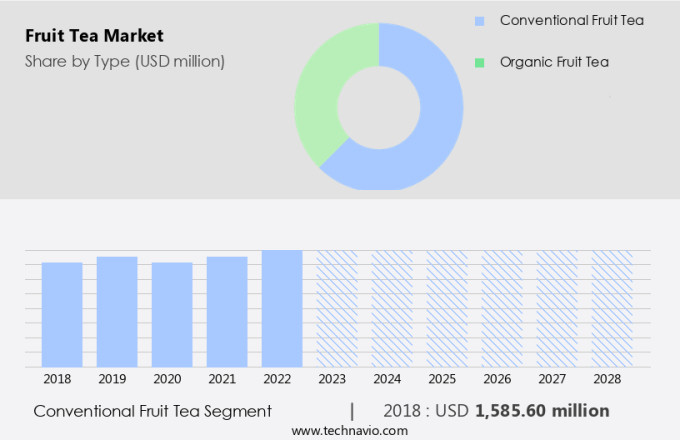
Get a glance at the market share of various segments Request Free Sample
The conventional fruit tea segment accounted for USD 1.59 billion in 2018 and showed a gradual increase during the forecast period.
Regional Insights
North America is estimated to contribute 33% to the growth of the global market during the forecast period. Technavio's analysts have elaborately explained the regional trends and drivers that shape the market during the forecast period.

For more insights on the market share of various regions Request Free Sample
The North American market is experiencing continuous expansion due to the rising trend of consuming specialty teas, such as fruit tea, herbal tea, and instant tea, among health-conscious consumers. The preference for these types of teas is increasing as people become more aware of the health benefits they offer. One significant factor driving the growth of the market is the adoption of flavored tea in tea bags.
In addition, this convenience and variety are resonating well with consumers, leading to increased sales. Fruit tea, with its innovative flavors and health benefits, presents an attractive alternative to sugary soft drinks. As consumers become more health-conscious, they are turning to fruit tea as a refreshing and guilt-free beverage option. Both store-based and non-store-based retailers, including specialty stores and e-commerce portals, are catering to this demand by offering a wide range of fruit tea blends. In conclusion, the market in North America is poised for continued growth, fueled by the increasing popularity of specialty teas and the convenience of tea bags. In addition, companies that can offer unique and high-quality fruit tea blends will be well-positioned to capitalize on this trend and meet the evolving needs of health-conscious consumers.
Our researchers analyzed the data with 2023 as the base year, along with the key drivers, trends, and challenges. A holistic analysis of drivers will help companies refine their marketing strategies to gain a competitive advantage.
Market Driver
Increasing demand for premium fruit tea is the key driver of the market. The market for fruit tea, which includes both iced and hot beverages, is experiencing significant growth due to increasing consumer demand for high-quality, natural tea products. Real fruit pieces and organic ingredients are becoming increasingly popular, leading companies to offer a wide range of flavor possibilities and seasonal variations. Premium fruit tea products, often labeled as organic, command higher prices than traditional tea due to their added value. For instance, a box of plain black tea may cost around USD3, while a box of fruit tea could cost up to USD6. This trend is not limited to developed regions; consumers in developing areas are also seeking out these premium options.
Market Trends
Rising focus toward new fruit tea flavors is the upcoming trend in the market. Fruit teas, a delightful fusion of tea and natural fruits, have become increasingly popular in the beverage industry. This trend is particularly appealing to health-conscious consumers, especially millennials, who are always on the lookout for new and exciting flavors. The market is witnessing a shift in consumer demographics, with an increasing number of casual tea drinkers joining the ranks of core tea consumers. Botanical ingredients such as herbs, fruits, and nuts are the key differentiators for fruit teas, offering various health benefits. These natural additives not only enhance the flavor and texture of the beverage but also contribute to its overall health value.
In addition, the agriculture industry plays a crucial role in supplying the necessary raw materials for the production of fruit teas. Marketing campaigns focusing on the natural and health benefits of fruit teas have been successful in attracting a wider consumer base. As consumers become more health-conscious, the demand for fruit teas is expected to continue growing. The market is poised for steady expansion, offering ample opportunities for businesses to explore and innovate. To capitalize on this trend, businesses can focus on offering unique and authentic fruit tea blends, ensuring the use of high-quality natural ingredients, and implementing effective marketing strategies to reach their target audience. By catering to the evolving preferences of consumers, businesses can establish a strong presence in the market.
Market Challenge
Volatility in prices of raw materials is a key challenge affecting market growth. The market experiences price volatility due to the dependence on raw materials, particularly tea, which significantly impacts the final product cost. Key components in fruit tea production include processed tea leaves, dried fruits and nuts, herbs and spices, botanical extracts, and various flavoring agents. The prices of these raw materials can fluctuate, posing a challenge for companies to maintain consistent pricing for their fruit tea offerings. Natural flavoring agents derived from plant-based products are also affected by these price fluctuations. Product diversification, including the introduction of new berry flavors, sustainable packaging, and expansion into the ready-to-drink category, supermarkets and hypermarkets, online retail segment, food service outlets, and e-commerce channels, can help mitigate these price challenges.
Furthermore, in the market, fruit tea companies are focusing on these strategies to cater to the increasing consumer demand and maintain a competitive edge.
Exclusive Customer Landscape
The market forecasting report includes the adoption lifecycle of the market, covering from the innovator's stage to the laggard's stage. It focuses on adoption rates in different regions based on penetration. Furthermore, the report also includes key purchase criteria and drivers of price sensitivity to help companies evaluate and develop their market growth analysis strategies.

Customer Landscape
Key Companies & Market Insights
Companies are implementing various strategies, such as strategic alliances, partnerships, mergers and acquisitions, geographical expansion, and product/service launches, to enhance their presence in the market.
adagio teas - The company offers fruit tea under the brand name Fruit Medley.
The market research and growth report includes detailed analyses of the competitive landscape of the market and information about key companies, including:
- Ahmad Tea Ltd.
- Alokozay International Ltd.
- Barrys Tea
- Bettys and Taylors Group Ltd.
- Bigelow Tea
- Dilmah Ceylon Tea Co. Plc
- Harney and Sons Fine Teas
- Hong Kong Oriental Tea Co. Ltd.
- londonfruitandherb
- MB Holding GmbH and Co. KG
- R. Twining and Co. Ltd.
- Riston Inc.
- Starbucks Corp.
- Tata Consumer Products Ltd.
- The Hain Celestial Group Inc.
- The Republic of Tea Inc.
- The Stash Tea Co.
- Tiesta Tea Co.
- Unilever PLC
Qualitative and quantitative analysis of companies has been conducted to help clients understand the wider business environment as well as the strengths and weaknesses of key market players. Data is qualitatively analyzed to categorize companies as pure play, category-focused, industry-focused, and diversified; it is quantitatively analyzed to categorize companies as dominant, leading, strong, tentative, and weak.
Research Analyst Overview
The market is a vibrant segment of the beverage industry, characterized by the use of herbs, fruits, and natural resources to create unique and flavorful blends. Fruit teas offer numerous health benefits, appealing to health-conscious consumers seeking antioxidants, vitamins, minerals, and other essential nutrients. The growing health consciousness trend and increasing popularity of functional beverages have fueled the demand for fruit teas. Fruit teas come in various flavors, textures, and forms, including iced and hot options, flavored with tropical fruits, berries, and other natural ingredients. Innovative product development, marketing campaigns, and the use of organic farming practices have further boosted the market's growth.
Moreover, the agriculture industry plays a crucial role in the production of natural resources for fruit teas. The ready-to-drink fruit tea category has gained significant traction due to busy lifestyles and the convenience of portability. Retail outlets, supermarkets and hypermarkets, food service outlets, e-commerce portals, and direct-to-consumer sales channels are the primary distribution channels for fruit teas. The market offers diverse product offerings, including tea bags, blends, and innovative flavors, catering to various consumer preferences. Sustainable packaging and caffeine-free options are also gaining popularity. The market is expected to witness continued growth due to its delicious taste, health benefits, and product diversification possibilities.
|
Market Scope |
|
|
Report Coverage |
Details |
|
Page number |
145 |
|
Base year |
2023 |
|
Historic period |
2018-2022 |
|
Forecast period |
2024-2028 |
|
Growth momentum & CAGR |
Accelerate at a CAGR of 7.08% |
|
Market growth 2024-2028 |
USD 1 billion |
|
Market structure |
Fragmented |
|
YoY growth 2023-2024(%) |
6.48 |
|
Regional analysis |
North America, Europe, APAC, South America, and Middle East and Africa |
|
Performing market contribution |
North America at 33% |
|
Key countries |
US, China, UK, Canada, and France |
|
Competitive landscape |
Leading Companies, Market Positioning of Companies, Competitive Strategies, and Industry Risks |
|
Key companies profiled |
adagio teas, Ahmad Tea Ltd., Alokozay International Ltd., Barrys Tea, Bettys and Taylors Group Ltd., Bigelow Tea, Dilmah Ceylon Tea Co. Plc, Harney and Sons Fine Teas, Hong Kong Oriental Tea Co. Ltd., londonfruitandherb, MB Holding GmbH and Co. KG, R. Twining and Co. Ltd., Riston Inc., Starbucks Corp., Tata Consumer Products Ltd., The Hain Celestial Group Inc., The Republic of Tea Inc., The Stash Tea Co., Tiesta Tea Co., and Unilever PLC |
|
Market dynamics |
Parent market analysis, market growth inducers and obstacles, market forecast, fast-growing and slow-growing segment analysis, COVID-19 impact and recovery analysis and future consumer dynamics, market condition analysis for the forecast period |
|
Customization purview |
If our market report has not included the data that you are looking for, you can reach out to our analysts and get segments customized. |
What are the Key Data Covered in this Market Research and Growth Report?
- CAGR of the market during the forecast period
- Detailed information on factors that will drive the market growth and forecasting between 2024 and 2028
- Precise estimation of the size of the market and its contribution of the market in focus to the parent market
- Accurate predictions about upcoming market growth and trends and changes in consumer behaviour
- Growth of the market across North America, Europe, APAC, South America, and Middle East and Africa
- Thorough analysis of the market's competitive landscape and detailed information about companies
- Comprehensive analysis of factors that will challenge the growth of market companies
We can help! Our analysts can customize this market research report to meet your requirements. Get in touch