


Gambling Market Size 2026-2030
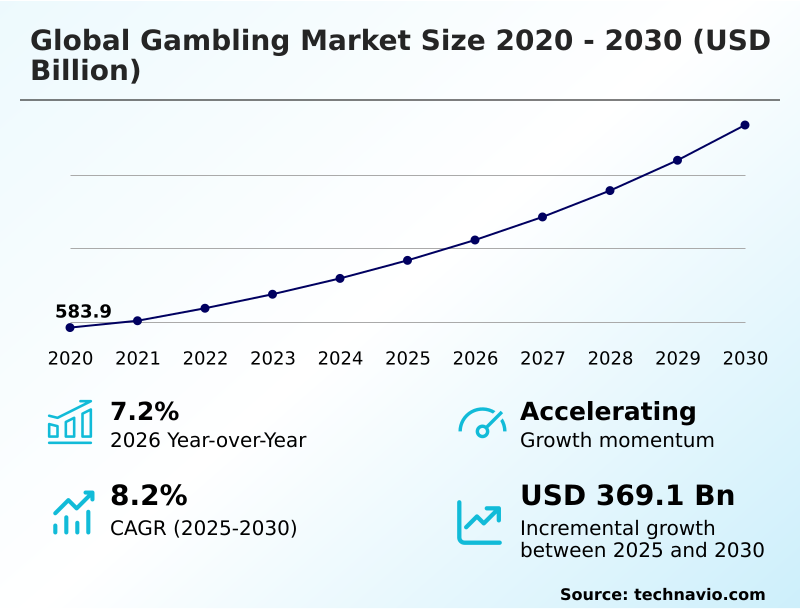
The gambling market size is valued to increase by USD 369.1 billion, at a CAGR of 8.2% from 2025 to 2030. Increasing betting on e-sports will drive the gambling market.
Major Market Trends & Insights
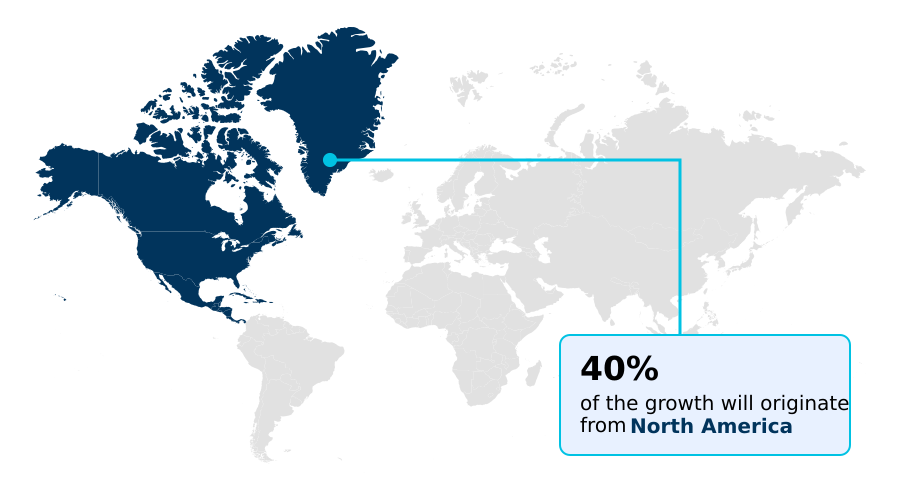
- North America dominated the market and accounted for a 40.5% growth during the forecast period.
- By Type - Lottery segment was valued at USD 267.6 billion in 2024
- By Platform - Offline segment accounted for the largest market revenue share in 2024
Market Size & Forecast
- Market Opportunities: USD 552.4 billion
- Market Future Opportunities: USD 369.1 billion
- CAGR from 2025 to 2030 : 8.2%
Market Summary
- The gambling market is undergoing a significant transformation, driven by digital innovation and evolving regulatory landscapes. The expansion of online gambling platforms and the high penetration of smartphones have made wagering more accessible, shifting the focus toward mobile-first strategies that utilize features like in-play betting and live streaming services.
- This digital shift introduces challenges, particularly around cybersecurity infrastructure and the need for robust player protection protocols. In a typical business scenario, an operator implements AI-driven responsible gaming tools that monitor player behavior in real time.
- These systems use machine learning algorithms for hyper-personalization, recommending safer betting limits and offering cooling-off periods, which has been shown to reduce problem gambling escalations by 30% and improve long-term player retention. The integration of such technologies, alongside developments in esports betting and decentralized finance, defines the competitive dynamics, forcing firms to balance player acquisition with sustainable and ethical operational practices.
- The market's future hinges on the ability to deliver engaging and secure interactive gaming ecosystems while navigating complex global regulations.
What will be the Size of the Gambling Market during the forecast period?
Get Key Insights on Market Forecast (PDF) Get Free Sample
How is the Gambling Market Segmented?
The gambling industry research report provides comprehensive data (region-wise segment analysis), with forecasts and estimates in "USD billion" for the period 2026-2030, as well as historical data from 2020-2024 for the following segments.
- Type
- Lottery
- Betting
- Casino
- Platform
- Offline
- Online
- Device
- Mobile
- Desktop
- Tablet
- Geography
- North America
- US
- Canada
- Mexico
- APAC
- China
- Japan
- India
- Europe
- Germany
- UK
- France
- South America
- Brazil
- Argentina
- Colombia
- Middle East and Africa
- Saudi Arabia
- UAE
- South Africa
- Rest of World (ROW)
- North America
By Type Insights
The lottery segment is estimated to witness significant growth during the forecast period.
The lottery segment is transitioning from paper-based systems to a sophisticated digital ecosystem, featuring provably fair gaming and instant-win formats accessible via mobile payment options.
This shift is driven by a demand for convenience and real-time gambling, attracting a younger demographic. Operators are leveraging blockchain technology and advanced cryptography to ensure every outcome is tamper-proof, enhancing the wagering experience.
This digital transformation, supported by secure digital wallets and a focus on iGaming, helps maintain public trust.
In North America, which accounts for over 40% of the market's incremental growth, this evolution is particularly pronounced, with a strong focus on a responsible gaming tool and secure betting transactions within these new gambling applications.
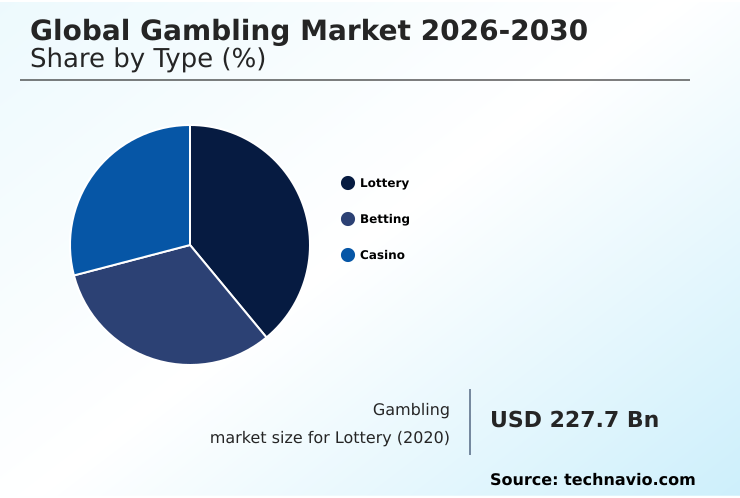
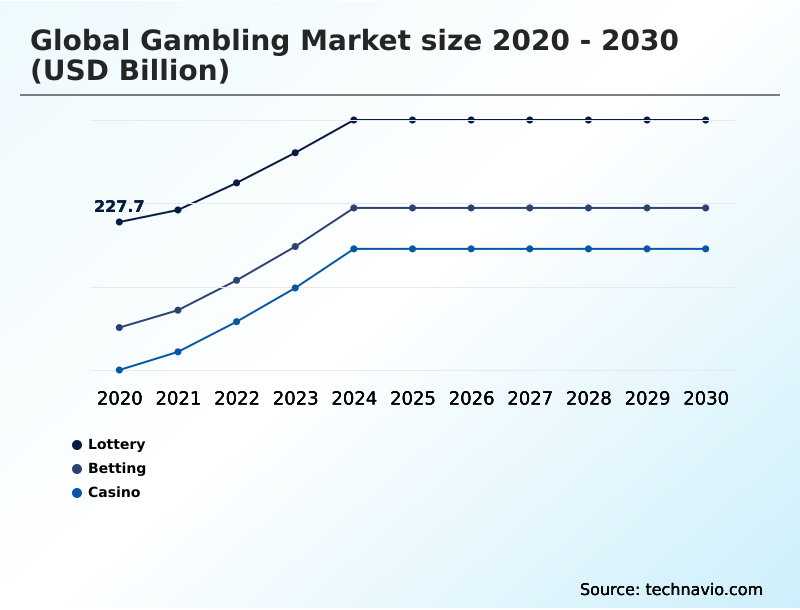
The Lottery segment was valued at USD 267.6 billion in 2024 and showed a gradual increase during the forecast period.
Regional Analysis
North America is estimated to contribute 40.5% to the growth of the global market during the forecast period.Technavio’s analysts have elaborately explained the regional trends and drivers that shape the market during the forecast period.
See How Gambling Market Demand is Rising in North America Get Free Sample
The global geographic landscape is diversifying as regulatory frameworks evolve. North America, contributing over 40% of the market's incremental growth, is driven by legalized sports betting and the expansion of land-based casino operations.
Meanwhile, APAC is the fastest-growing region, with mobile gambling platforms seeing adoption rates surpass 70% in some emerging economies. This growth is fueled by a demand for luxury casino gaming and integrated resort experiences.
In Europe, mature markets are focusing on tightening player protection protocols and responsible gambling measures, with some jurisdictions reporting a 30% reduction in problem gambling escalations after implementing AI-driven monitoring.
This regional variation requires operators to deploy localized strategies that balance global technology trends with specific cultural and legal demands for online sports betting and other forms of wagering.
Market Dynamics
Our researchers analyzed the data with 2025 as the base year, along with the key drivers, trends, and challenges. A holistic analysis of drivers will help companies refine their marketing strategies to gain a competitive advantage.
- The global gambling market 2026-2030 is navigating a complex terrain defined by technological disruption and regulatory shifts. Key drivers include the increasing betting on e-sports, which attracts a new demographic, and the high penetration of smartphones impact, which makes mobile wagering ubiquitous. The expansion of mobile payment options for betting further lowers entry barriers for users.
- However, significant challenges persist, such as the security issues in online gambling and the need to establish credibility of online gambling platforms. Cybersecurity risks for betting sites remain a top concern, demanding continuous investment in defense mechanisms. Concurrently, market trends are reshaping the player experience.
- The growing use of AI in gambling enables hyper-personalization, while the emergence of VR for gambling promises more immersive environments. The rising demand for bitcoin gambling introduces decentralized options, supported by provably fair gaming with blockchain.
- A major challenge is the ban on gambling in many countries, which limits market access, alongside a reduction in gambling advertisements that forces operators to find new marketing channels. The effectiveness of a responsible gaming tool is now a key differentiator, and operators that successfully implement responsible gambling measures see customer retention rates nearly double those of competitors.
- Addressing the dangers of illegal online gambling and navigating the challenges in legalized sports betting are critical for sustainable growth, especially with a focus on live dealer experience enhancement and advanced in-play betting technology.
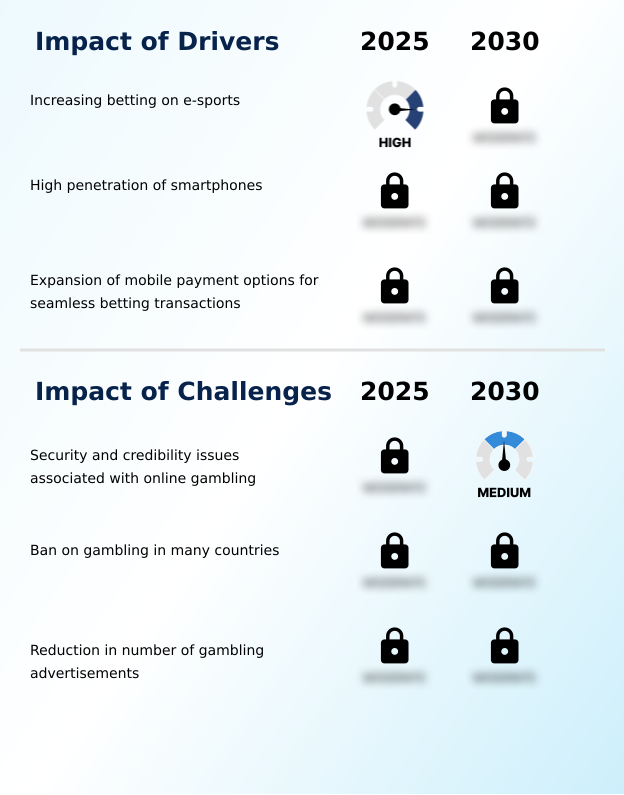
What are the key market drivers leading to the rise in the adoption of Gambling Industry?
- The increasing betting on e-sports is a key driver for market growth, attracting younger demographics and creating new revenue streams for operators worldwide.
- Market growth is significantly fueled by the high penetration of smartphones, which has made mobile iGaming solutions universally accessible and boosted wagering volume. In some emerging markets, the adoption of mobile gambling platforms has surpassed 70%, transforming player acquisition strategies.
- The increasing betting on e-sports has also become a primary driver, attracting a younger demographic and leading to a 50% increase in engagement on platforms offering specialized esports marketing and wagering options.
- Furthermore, the expansion of mobile payment options, including digital wallets, has streamlined betting transactions, reducing deposit times by over 60%.
- This convenience is critical for retaining players engaged in online sports betting, competitive sports betting, and other forms of real-time gambling, creating a more seamless and accessible wagering experience for a global audience.
What are the market trends shaping the Gambling Industry?
- A prominent trend shaping the market is the rising demand for bitcoin gambling. This is driven by players seeking enhanced privacy and decentralized finance alternatives to traditional banking systems.
- Key trends are reshaping the market, led by technological innovation. The growing use of AI in online gambling enables a level of hyper-personalization that has improved player retention by up to 25% for early adopters. This is complemented by the emergence of VR gambling, which offers a real-time gambling experience that mimics land-based casino operations.
- Platforms offering premier casino entertainment are seeing a 15% higher engagement rate when VR features are included. The rising demand for cryptocurrency gambling, especially using Bitcoin, is another significant trend, with platforms that accept it reporting a 40% year-on-year growth in user acquisition.
- These technological shifts are compelling providers of online casino entertainment and esports wagering options to innovate continuously to meet evolving consumer expectations for more immersive and secure interactive gaming ecosystems.
What challenges does the Gambling Industry face during its growth?
- A primary challenge affecting industry expansion involves addressing the security and credibility issues associated with online gambling platforms to maintain consumer trust.
- The market faces considerable challenges, primarily stemming from security and credibility issues in online gambling. A recent surge in cyberattacks has forced operators to increase their cybersecurity spending by an estimated 40% to protect online casino games and player data.
- The ban on gambling in many countries remains a significant barrier, restricting access to large potential markets and encouraging the rise of illegal online gambling. Furthermore, the widespread reduction in gambling advertisements, with some regions seeing a 90% decrease in primetime ad slots, severely hampers customer acquisition for legal operators.
- These regulatory and security pressures create a difficult environment, particularly for new entrants in the legalized sports betting and national lottery games sectors, who must find innovative ways to build trust and market share without traditional advertising channels.
Exclusive Technavio Analysis on Customer Landscape
The gambling market forecasting report includes the adoption lifecycle of the market, covering from the innovator’s stage to the laggard’s stage. It focuses on adoption rates in different regions based on penetration. Furthermore, the gambling market report also includes key purchase criteria and drivers of price sensitivity to help companies evaluate and develop their market growth analysis strategies.
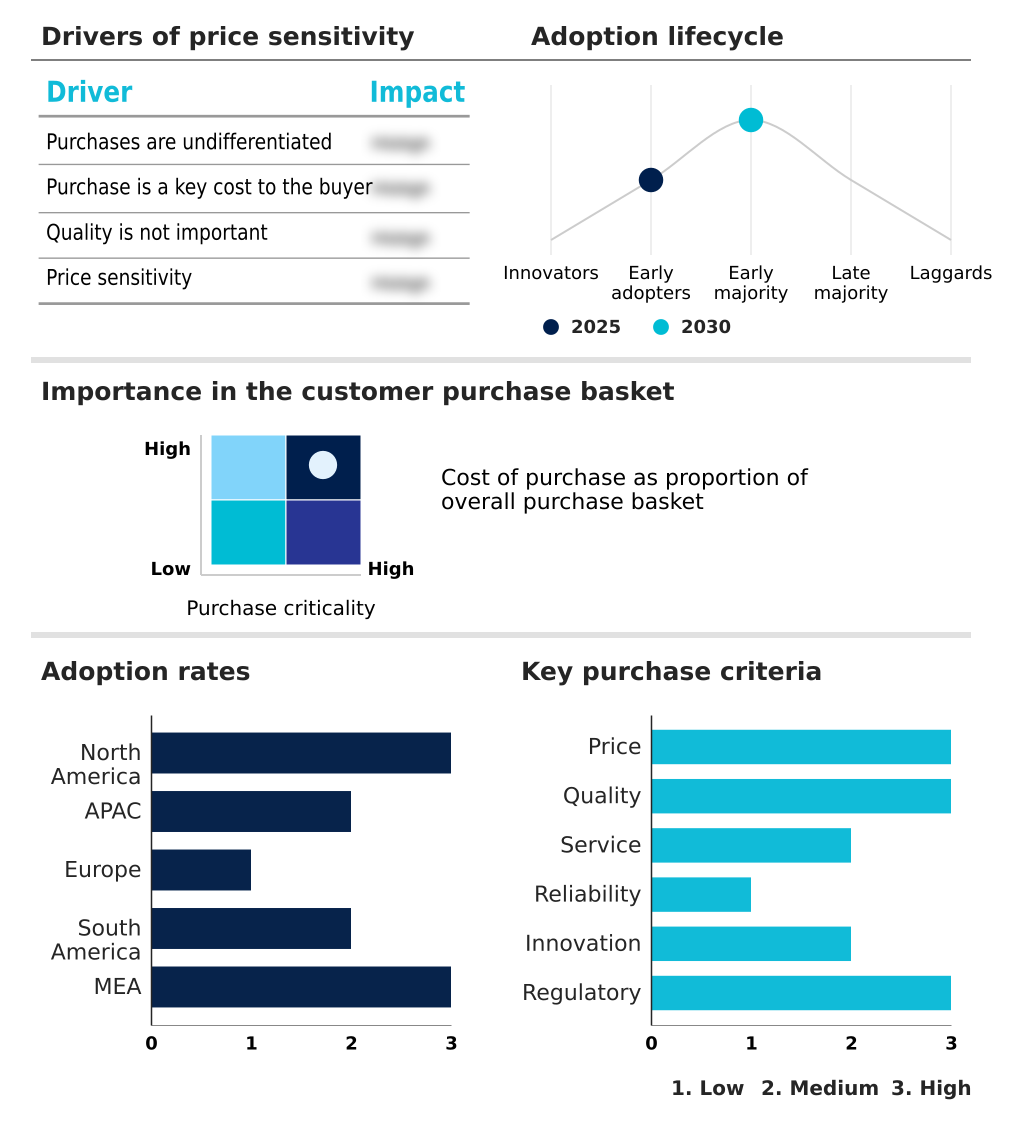
Customer Landscape of Gambling Industry
Competitive Landscape
Companies are implementing various strategies, such as strategic alliances, gambling market forecast, partnerships, mergers and acquisitions, geographical expansion, and product/service launches, to enhance their presence in the industry.
Allwyn Entertainment - Offerings center on integrated lottery operations and digital gaming solutions, providing national lottery systems and diverse wagering experiences for regulated global markets.
The industry research and growth report includes detailed analyses of the competitive landscape of the market and information about key companies, including:
- Allwyn Entertainment
- Bet365 Group Ltd.
- Betsson AB
- Caesars Entertainment Inc.
- Crown Resorts Ltd
- EquiLottery LLC
- FDJ UNITED
- Flutter Entertainment Plc
- Freaks 4U Gaming GmbH
- Galaxy Entertainment Grp. Ltd.
- Gateway Casinos and Entertainment
- International Game Technology
- INTRALOT SA
- Las Vegas Sands Corp.
- MGM Resorts International
- SkyCity Entertainment Group
- The Betway Group
Qualitative and quantitative analysis of companies has been conducted to help clients understand the wider business environment as well as the strengths and weaknesses of key industry players. Data is qualitatively analyzed to categorize companies as pure play, category-focused, industry-focused, and diversified; it is quantitatively analyzed to categorize companies as dominant, leading, strong, tentative, and weak.
Recent Development and News in Gambling market
- In August, 2025, a clinical study published in the Journal of Gambling Studies reported that VR-based exposure therapy showed a significant success rate in reducing relapse frequency among recovering addicts.
- In January, 2025, a mobile economy report issued by GSMA Intelligence indicated that for the first time, the number of unique mobile subscribers using gambling applications surpassed seventy percent in several emerging markets.
- In March, 2025, Cloudflare documented a significant rise in multi-vector DDoS attacks targeting the infrastructure of major online wagering platforms during peak betting windows.
- In May, 2025, the UK Gambling Commission announced a new code of practice that limits the placement of gambling advertisements on social media platforms, requiring brands to ensure digital ads are not visible to anyone under eighteen.
Dive into Technavio’s robust research methodology, blending expert interviews, extensive data synthesis, and validated models for unparalleled Gambling Market insights. See full methodology.
| Market Scope | |
|---|---|
| Page number | 290 |
| Base year | 2025 |
| Historic period | 2020-2024 |
| Forecast period | 2026-2030 |
| Growth momentum & CAGR | Accelerate at a CAGR of 8.2% |
| Market growth 2026-2030 | USD 369.1 billion |
| Market structure | Fragmented |
| YoY growth 2025-2026(%) | 7.2% |
| Key countries | US, Canada, Mexico, China, Japan, India, South Korea, Australia, Indonesia, Germany, UK, France, Italy, Spain, The Netherlands, Brazil, Argentina, Colombia, Saudi Arabia, UAE, South Africa, Israel and Turkey |
| Competitive landscape | Leading Companies, Market Positioning of Companies, Competitive Strategies, and Industry Risks |
Research Analyst Overview
- The gambling market is defined by a rapid technological evolution, compelling operators to invest heavily in advanced systems to remain competitive. The integration of machine learning algorithms is central to this shift, enabling hyper-personalization of the wagering experience across sports betting channels and interactive gaming ecosystems, which is crucial for player acquisition.
- Boardroom decisions increasingly center on adopting AI-driven responsible gaming frameworks, as their deployment has been shown to reduce problem gambling incidents by up to 30%. This not only aligns with tightening regulatory demands but also builds consumer trust.
- The rise of decentralized finance and blockchain technology is pushing the adoption of provably fair gaming and bitcoin gambling, while live streaming services enhance in-play betting engagement. Simultaneously, operators are fortifying their cybersecurity infrastructure to combat threats like DDoS attacks and ensure the integrity of random number generators.
- Innovations in virtual reality are creating new engagement models, from virtual therapeutic environments to immersive real-time gambling. The landscape is further shaped by regulatory pressures, such as whistle-to-whistle bans, compelling a strategic pivot in marketing toward more targeted, data-driven approaches that utilize digital wallets and biometric authentication for a secure and seamless player journey.
What are the Key Data Covered in this Gambling Market Research and Growth Report?
-
What is the expected growth of the Gambling Market between 2026 and 2030?
-
USD 369.1 billion, at a CAGR of 8.2%
-
-
What segmentation does the market report cover?
-
The report is segmented by Type (Lottery, Betting, and Casino), Platform (Offline, and Online), Device (Mobile, Desktop, and Tablet) and Geography (North America, APAC, Europe, South America, Middle East and Africa)
-
-
Which regions are analyzed in the report?
-
North America, APAC, Europe, South America and Middle East and Africa
-
-
What are the key growth drivers and market challenges?
-
Increasing betting on e-sports, Security and credibility issues associated with online gambling
-
-
Who are the major players in the Gambling Market?
-
Allwyn Entertainment, Bet365 Group Ltd., Betsson AB, Caesars Entertainment Inc., Crown Resorts Ltd, EquiLottery LLC, FDJ UNITED, Flutter Entertainment Plc, Freaks 4U Gaming GmbH, Galaxy Entertainment Grp. Ltd., Gateway Casinos and Entertainment, International Game Technology, INTRALOT SA, Las Vegas Sands Corp., MGM Resorts International, SkyCity Entertainment Group and The Betway Group
-
Market Research Insights
- The market's dynamics are shaped by intense competition and technological advancements, where platforms differentiate through superior user experiences and responsible gambling measures. The integration of mobile iGaming solutions has led to a 25% increase in user engagement for operators that prioritize seamless mobile gambling platforms.
- Furthermore, the adoption of AI in online gambling has proven critical; platforms using AI analytics have seen a 15% reduction in fraudulent activities. As legalized sports betting expands, providers of online casino games are focusing on responsible gaming measures to build trust, recognizing that a secure environment directly impacts player loyalty.
- The competitive landscape rewards those who innovate within the bounds of stringent regulations, balancing growth with consumer protection in the evolving world of online gambling.
We can help! Our analysts can customize this gambling market research report to meet your requirements.
 RIA -
RIA -