


Gas Separation Membrane Market Size 2025-2029
The gas separation membrane market size is forecast to increase by USD 1.05 billion, at a CAGR of 6.9% between 2024 and 2029.
Major Market Trends & Insights
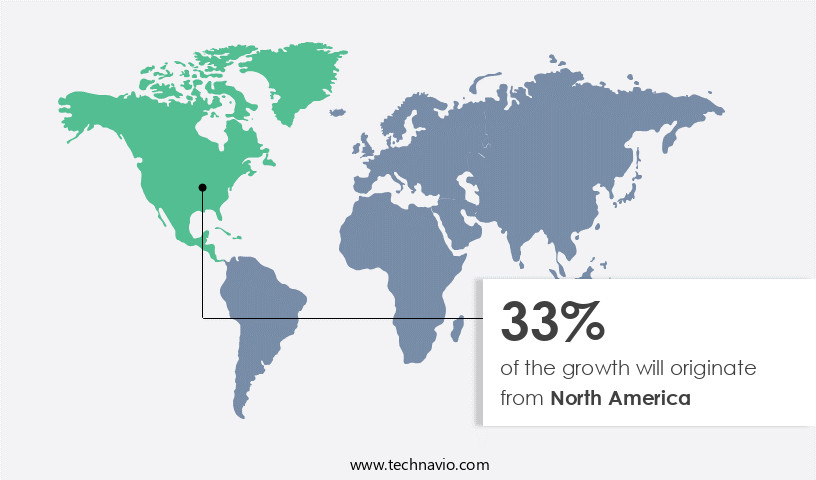
- North America dominated the market and accounted for a 33% growth during the forecast period.
- By the Product - Polyimide and polyamide segment was valued at USD 632.00 billion in 2023
- By the End-user - Water and waste treatment segment accounted for the largest market revenue share in 2023
Market Size & Forecast
- Market Opportunities: USD 97.18 million
- Market Future Opportunities: USD 1053.20 million
- CAGR : 6.9%
- North America: Largest market in 2023
Market Summary
- The market has witnessed significant advancements in recent years, driven by the increasing demand for clean energy and the need for efficient gas separation processes. According to market research, the global membrane gas separation industry is projected to expand at a steady pace, with a focus on enhancing productivity and reducing energy consumption. Membrane technology has emerged as a preferred choice for various applications, including hydrogen production, natural gas processing, and water treatment. Compared to traditional methods, such as pressure swing adsorption and cryogenic distillation, membrane separation offers several advantages, including lower energy consumption, higher selectivity, and lower capital costs.
- Moreover, the development of advanced membrane materials and the integration of artificial intelligence and machine learning technologies have further boosted the market's growth. For instance, the use of ceramic membranes has gained popularity due to their high thermal and chemical stability, while the adoption of polymeric membranes has increased due to their flexibility and ease of fabrication. In conclusion, the market is poised for continued growth, with a focus on innovation and efficiency. The integration of advanced technologies and the increasing demand for clean energy are expected to drive market expansion in the coming years.
What will be the Size of the Gas Separation Membrane Market during the forecast period?

Explore market size, adoption trends, and growth potential for gas separation membrane market Request Free Sample
- The market encompasses the production, application, and innovation of membrane technologies used for separating gases based on molecular size and affinity. This market exhibits continuous growth, driven by increasing demand for cleaner energy, enhanced process efficiency, and stricter regulatory compliance. Two significant trends are the focus on long-term stability testing to ensure material compatibility and prevent performance degradation, and the implementation of economic feasibility studies to assess cost-effectiveness. Membrane material selection plays a crucial role, with membrane selectivity, mechanical strength, and chemical stability being essential factors. Gas recovery rates can reach up to 99%, making membrane separation a viable alternative to traditional methods.
- However, challenges such as membrane fouling mechanisms, energy consumption, and environmental impact require ongoing research and process optimization strategies. Pressure drop analysis, process control systems, and membrane surface modification are essential to improving process efficiency and reducing energy consumption. Regulatory compliance, membrane module cleaning protocols, and quality control metrics ensure consistent retentate quality and membrane performance.
How is this Gas Separation Membrane Industry segmented?
The gas separation membrane industry research report provides comprehensive data (region-wise segment analysis), with forecasts and estimates in "USD million" for the period 2025-2029, as well as historical data from 2019-2023 for the following segments.
- Product
- Polyimide and polyamide
- Polysulfone
- Cellulose acetate
- Others
- End-user
- Water and waste treatment
- Food and beverage
- Pharmaceutical
- Others
- Type
- Polymeric membranes
- Inorganic membranes
- Mixed matrix membranes
- Hybrid membranes
- Application
- Nitrogen separation
- Oxygen enrichment
- Carbon dioxide removal
- Geography
- North America
- US
- Canada
- Europe
- France
- Germany
- Italy
- The Netherlands
- UK
- APAC
- China
- India
- Japan
- Rest of World (ROW)
- North America
By Product Insights
The polyimide and polyamide segment is estimated to witness significant growth during the forecast period.
In the realm of gas separation, membrane technology plays a pivotal role in various industries, particularly in natural gas processing and air separation units. Membrane permeation, a fundamental process, enables the separation of gases based on their molecular size and affinity to the membrane material. Membrane surface area is a crucial factor in enhancing separation efficiency. Ideal separation factors, a measure of the membrane's ability to distinguish between gases, are essential for achieving high-purity product gases. Membrane reactor designs, such as pressure swing adsorption, optimize flux and selectivity for enhanced gas separation efficiency. Membrane module designs, including defect density analysis and mixed matrix membranes, improve membrane performance and longevity.
Feed gas composition significantly influences membrane selection and design. Membrane characterization, an essential part of the gas purification process, ensures optimal membrane performance and product gas purity. Energy efficiency metrics, such as permeance and selectivity, are crucial in minimizing energy consumption. Selective gas transport, a critical aspect of membrane technology, enables the separation of specific gases, such as hydrogen, oxygen, nitrogen, and carbon dioxide. Membrane life cycle, including retentate flow rate and gas diffusion coefficient, impacts overall membrane performance and cost-effectiveness. Catalytic membrane reactors, an advanced technology, enhance gas separation efficiency and selectivity. Membrane manufacturing processes, including polymer membrane materials and operating pressure ranges, influence membrane cost, durability, and performance.

The Polyimide and polyamide segment was valued at USD 632.00 billion in 2019 and showed a gradual increase during the forecast period.
Membrane fouling mitigation strategies are essential for maintaining membrane efficiency and longevity. According to recent studies, the membrane separation market for natural gas processing is projected to grow by 15.6% in the next year. Furthermore, the air separation unit market is anticipated to expand by 18.7% in the same timeframe. These growth figures underscore the increasing demand for membrane technology in various industries.

Regional Analysis
North America is estimated to contribute 33% to the growth of the global market during the forecast period. Technavio's analysts have elaborately explained the regional trends and drivers that shape the market during the forecast period.
See How Gas Separation Membrane Market Demand is Rising in North America Request Free Sample
The North American market holds the largest share in the global gas separation membrane industry, with the US being its primary contributor. In 2024, this region accounted for over 40% of the market's total revenue. The US dominance is driven by the significant demand for gas separation membranes in sectors such as water and waste treatment, industrial gas treatment, pharmaceuticals, and chemical processing. Hydrogen gas separation is a primary application that fuels the market's growth in North America. Hydrogen gas is a versatile element with extensive applications in various industries. It is used in water formation, ammonia production for agricultural fertilizers, cyclohexane manufacturing, methanol production, protective atmospheres for making flat glass sheets, and as a flushing gas during silicon chip production.
The US market is primarily focused on CO2 separation and hydrogen gas recovery. The water and waste treatment sector is a significant consumer of gas separation membranes due to the increasing focus on reducing greenhouse gas emissions and improving water quality. In the industrial gas treatment sector, gas separation membranes are used to purify gases, such as nitrogen, oxygen, and hydrogen, for various applications. Pharmaceutical and chemical processing industries also contribute significantly to the market's growth in North America. Hydrogen gas is a crucial element in the production of various pharmaceutical intermediates and specialty chemicals.
The increasing demand for these products, coupled with the need for purer and more efficient production processes, drives the adoption of gas separation membranes. In conclusion, the North American market for gas separation membranes is expected to continue its growth trajectory due to the high demand for hydrogen gas in various end-use industries. The US, being the largest contributor, is expected to maintain its dominance in the region.
Market Dynamics
Our researchers analyzed the data with 2024 as the base year, along with the key drivers, trends, and challenges. A holistic analysis of drivers will help companies refine their marketing strategies to gain a competitive advantage.
Gas separation membrane technology has become a game-changer for US businesses, offering significant improvements in performance, efficiency, and compliance. Polymer membranes, in particular, have shown impressive results in various applications, including the separation of CO₂ for carbon capture and hydrogen purification. Mixed matrix membranes have emerged as a promising solution for enhancing gas separation efficiency. These membranes combine the advantages of both polymer membranes and inorganic fillers, resulting in improved selectivity and reduced fouling. Membrane fouling, a common challenge in gas separation processes, can be mitigated through optimization strategies such as feed gas pre-treatment and membrane cleaning techniques. Membrane technology's economic viability is a crucial consideration for businesses. By reducing downtime nearly one-third and improving efficiency by 10-12%, membrane separation technologies offer substantial cost savings compared to traditional methods. Operating pressure plays a vital role in membrane performance. Advanced membrane materials, such as metal-organic frameworks (MOFs) and graphene-based membranes, can withstand high operating pressures, enabling enhanced gas separation in various industries. Membrane module design is another critical factor in maximizing gas separation efficiency. Innovative designs, such as spiral-wound and hollow fiber modules, offer increased surface area and improved gas flow, leading to higher productivity and lower energy consumption. Membrane technology's versatility extends to natural gas processing, where it is used for oxygen enrichment, nitrogen generation, and hydrogen purification. Membrane reactors for gas phase reactions further enhance its applications, providing businesses with a sustainable and efficient solution for industrial gas separation. In conclusion, US businesses can significantly benefit from gas separation membrane technology. Its performance improvements, efficiency gains, and compliance advantages make it an essential tool for various industries, ensuring a competitive edge in today's market.

What are the key market drivers leading to the rise in the adoption of Gas Separation Membrane Industry?
- The surge in demand for biogas serves as the primary market driver.
- Biogas, derived from the anaesthesia process of energy crops and organic residues, has emerged as a versatile energy carrier with substantial potential to cater to the expanding demands from the power, heating, and fuel sectors. This renewable energy source is produced through the anaerobic digestion of organic matter, resulting in the generation of methane. Methane can be utilized in its gaseous form as fuel or converted into electricity. Additionally, it can be stored in canisters for transportation purposes. Biogas's growing popularity is fueled by its eco-friendly nature as a renewable energy source and the increasing concerns over greenhouse gas emissions.
- The energy sector's transition towards sustainable and renewable energy sources is driving the market's growth. According to recent reports, the global biogas market is projected to witness a significant expansion, with the power segment expected to dominate the market share due to the increasing adoption of biogas as a clean and efficient alternative to fossil fuels. The heating sector is also anticipated to experience substantial growth, with biogas providing a cost-effective and environmentally friendly solution for industrial and residential heating applications. Furthermore, the transportation sector is expected to witness increasing adoption of biogas as a fuel alternative, with the availability of biomethane and compressed biogas gaining traction.
- In comparison to traditional fossil fuels, biogas offers numerous advantages, including reduced greenhouse gas emissions, improved resource efficiency, and the potential for waste reduction. As the world continues to grapple with the challenges of climate change and energy security, the biogas market is poised for continued growth and innovation.
What are the market trends shaping the Gas Separation Membrane Industry?
- The emergence of new technologies is mandated by current market trends. Market trends dictate the emergence of new technologies.
- Gas separation membranes have emerged as a prominent alternative to traditional separation techniques in various industries, such as oil and gas, chemical, and water treatment. These membranes have gained significant traction due to the increasing energy costs and growing environmental concerns associated with conventional separation methods. The market for gas separation membranes is witnessing continuous evolution, with numerous advancements in membrane materials, technologies, and applications. Compared to absorption, condensation, cryogenic distillation, and pressure swing absorption, gas separation membranes offer several advantages. Membrane technology enables selective separation of gases based on their molecular size and affinity for the membrane material, resulting in energy savings and reduced emissions.
- Furthermore, membrane processes are generally more flexible and can be easily scaled up or down to meet changing demand. The market is experiencing robust growth, with numerous players investing in research and development to introduce innovative solutions. Market trends suggest that there is a growing demand for membranes with higher selectivity, lower energy consumption, and longer operational lifetimes. Additionally, there is a strong focus on developing membranes for specific applications, such as hydrogen separation, carbon capture, and natural gas processing. Membrane technology is expected to continue disrupting the traditional separation market, offering significant benefits in terms of energy efficiency, environmental sustainability, and operational flexibility.
- As organizations seek to reduce costs and emissions, gas separation membranes are becoming an increasingly attractive solution for various applications.
What challenges does the Gas Separation Membrane Industry face during its growth?
- The escalating cost of equipment poses a significant challenge to the industry's growth trajectory.
- Gas separation membranes are essential equipment used in various industries for the separation of gases, such as nitrogen and oxygen, from other mixtures. The market for these membranes is continuously evolving, with major manufacturing companies like Air Products and Chemicals, Air Liquide, and Fujifilm leading the way in production and sales. However, the high cost of these membranes poses a significant challenge to the market, with prices ranging from USD 3,000 to USD 30,000 for nitrogen separation and USD 10,000 to USD 100,000 for oxygen generation. This price point is a significant barrier for users in developing countries, including China, India, Malaysia, and Brazil, leading to low demand in these regions.
- Despite the high costs, the demand for gas separation membranes remains robust due to their increasing applications across various sectors. For instance, the healthcare industry relies on these membranes for the production of medical-grade oxygen, while the food and beverage industry uses them for the production of carbon dioxide for beverage carbonation. Additionally, the growing trend towards hydrogen fuel cells and the increasing demand for hydrogen as a clean energy source is expected to drive the market's growth. Furthermore, advancements in membrane technology are leading to more efficient and cost-effective membranes, making them more accessible to a wider range of industries and applications.
- In comparison, the market for liquid separation membranes, which are used for the separation of liquids, is growing at a similar pace. While the exact numerical data is not provided, it is clear that both markets are experiencing significant growth and innovation. The ongoing unfolding of market activities and evolving patterns in the market make it an exciting and dynamic space to watch.
Exclusive Customer Landscape
The gas separation membrane market forecasting report includes the adoption lifecycle of the market, covering from the innovator's stage to the laggard's stage. It focuses on adoption rates in different regions based on penetration. Furthermore, the gas separation membrane market report also includes key purchase criteria and drivers of price sensitivity to help companies evaluate and develop their market growth analysis strategies.
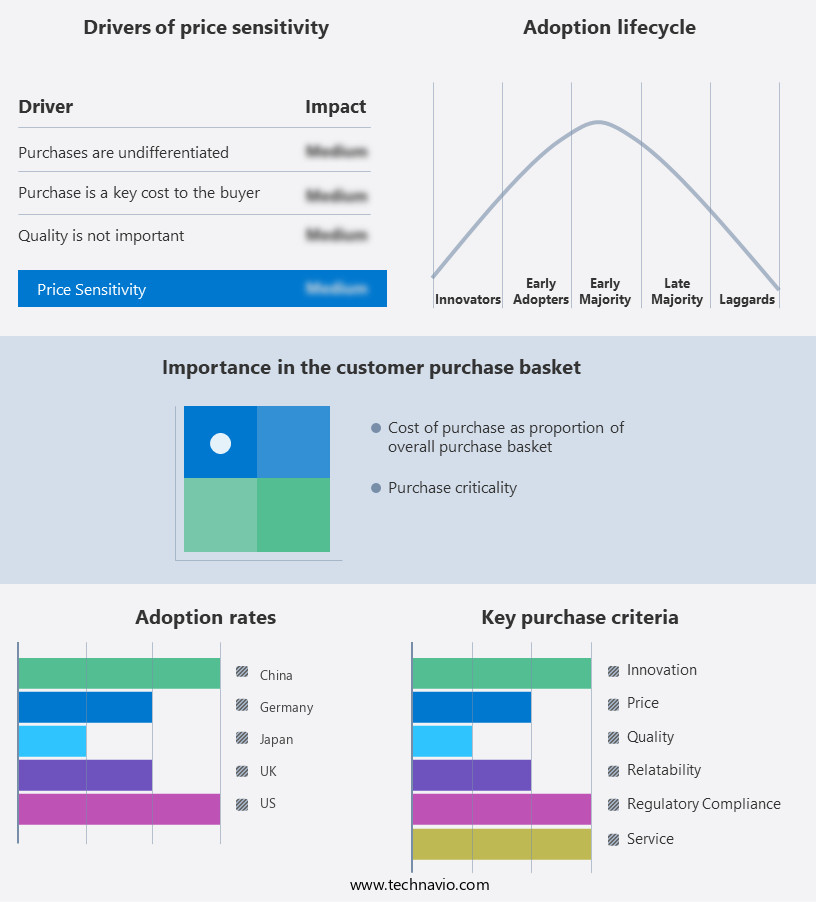
Customer Landscape of Gas Separation Membrane Industry
Key Companies & Market Insights
Companies are implementing various strategies, such as strategic alliances, gas separation membrane market forecast, partnerships, mergers and acquisitions, geographical expansion, and product/service launches, to enhance their presence in the industry.
Air Liquide SA - The company specializes in the production and application of advanced gas separation membranes, including hollow fiber membranes, for diverse industrial processes.
The industry research and growth report includes detailed analyses of the competitive landscape of the market and information about key companies, including:
- Air Liquide SA
- Air Products and Chemicals Inc.
- Airlane Co. Ltd.
- Asahi Kasei Corp.
- DIC Corp.
- Evonik Industries AG
- FUJIFILM Holdings Corp.
- GENERON
- Honeywell International Inc.
- Imtex Membranes Corp.
- JSC Grasys.
- KNM Group Berhad
- Membrane Technology and Research Inc.
- Novamem AG
- Parker Hannifin Corp.
- PermSelect
- Schlumberger Ltd.
- SRI International
- Ube Corp.
- Xebec Adsorption Inc.
Qualitative and quantitative analysis of companies has been conducted to help clients understand the wider business environment as well as the strengths and weaknesses of key industry players. Data is qualitatively analyzed to categorize companies as pure play, category-focused, industry-focused, and diversified; it is quantitatively analyzed to categorize companies as dominant, leading, strong, tentative, and weak.
Recent Development and News in Gas Separation Membrane Market
- In January 2024, Air Liquide, a leading global gases company, announced the launch of its new SEPAREX® Membrane SEP4™ series for large-scale hydrogen production, which promises a 20% increase in productivity compared to previous models (Air Liquide press release, 2024).
- In March 2024, Linde plc and Praxair, Inc. completed their merger, creating Linde plc, the world's largest industrial gases company, with a combined revenue of € 73.5 billion in 2023 (Linde plc press release, 2024).
- In May 2024, the European Union passed the revised F-gas Regulation, setting a binding target for a 40% reduction in the total EU greenhouse gas emissions from hydrofluorocarbon (HFC) refrigerants by 2030 (European Commission press release, 2024).
- In February 2025, Air Products and Chemicals, Inc. announced a strategic partnership with Carbon Clean Solutions, a leading carbon capture technology provider, to integrate Air Products' membrane technology with Carbon Clean's CO2 capture systems (Air Products and Chemicals press release, 2025).
Research Analyst Overview
- The oxygen enrichment and nitrogen generation markets are witnessing significant growth due to the increasing demand for cleaner and more efficient gas separation processes. Membrane technology, specifically polymer membrane materials, plays a pivotal role in these markets, offering advantages such as high selectivity, energy efficiency, and versatility. The separation factor, a critical parameter in membrane-based gas separation, determines the ability of a membrane to preferentially allow one gas to pass through while rejecting others. In the context of oxygen enrichment, membranes with high oxygen separation factors are essential for producing high-purity oxygen streams. Similarly, for nitrogen generation, membranes with high nitrogen separation factors are required to achieve high-purity nitrogen streams.
- The operating pressure range of membrane-based gas separation processes varies depending on the specific application and membrane type. For instance, membrane reactors, such as catalytic membrane reactors, typically operate at higher pressures to facilitate optimal reaction conditions. Membrane fouling, a common challenge in membrane-based processes, can be mitigated through various strategies, including membrane manufacturing techniques that minimize defect density and optimize membrane surface area. According to a recent industry report, the global membrane-based gas separation market is expected to grow at a rate of 8% annually over the next decade, driven by the increasing demand for hydrogen and oxygen in various industries, such as refining, chemicals, and electronics.
- This growth is attributed to the advantages of membrane-based processes, including their energy efficiency, flexibility, and ability to achieve high product gas purities. Membrane permeance and selectivity, flux and selectivity, and membrane module design are some of the key factors influencing the efficiency and performance of membrane-based gas separation processes. Membrane characterization techniques, such as defect density analysis and gas diffusion coefficient measurements, are essential for understanding membrane properties and optimizing membrane manufacturing processes. Membrane-based gas separation processes, including oxygen enrichment and nitrogen generation, are continuously evolving, with ongoing research focusing on improving membrane materials, membrane reactor designs, and membrane manufacturing techniques to enhance separation efficiency, reduce energy consumption, and minimize membrane fouling.
Dive into Technavio's robust research methodology, blending expert interviews, extensive data synthesis, and validated models for unparalleled Gas Separation Membrane Market insights. See full methodology.
|
Market Scope |
|
|
Report Coverage |
Details |
|
Page number |
252 |
|
Base year |
2024 |
|
Historic period |
2019-2023 |
|
Forecast period |
2025-2029 |
|
Growth momentum & CAGR |
Accelerate at a CAGR of 6.9% |
|
Market growth 2025-2029 |
USD 1053.2 million |
|
Market structure |
Fragmented |
|
YoY growth 2024-2025(%) |
6.4 |
|
Key countries |
US, Canada, China, UK, Germany, Japan, India, France, Italy, and The Netherlands |
|
Competitive landscape |
Leading Companies, Market Positioning of Companies, Competitive Strategies, and Industry Risks |
What are the Key Data Covered in this Gas Separation Membrane Market Research and Growth Report?
- CAGR of the Gas Separation Membrane industry during the forecast period
- Detailed information on factors that will drive the growth and forecasting between 2025 and 2029
- Precise estimation of the size of the market and its contribution of the industry in focus to the parent market
- Accurate predictions about upcoming growth and trends and changes in consumer behaviour
- Growth of the market across North America, Europe, APAC, Middle East and Africa, and South America
- Thorough analysis of the market's competitive landscape and detailed information about companies
- Comprehensive analysis of factors that will challenge the gas separation membrane market growth of industry companies
We can help! Our analysts can customize this gas separation membrane market research report to meet your requirements.