

Generative AI In Data Analytics Market Analysis, Size, and Forecast 2026-2030: North America (US, Canada, and Mexico), APAC (China, Japan, and India), Europe (Germany, UK, and France), South America (Brazil, Argentina, and Chile), Middle East and Africa (Saudi Arabia, UAE, and South Africa), and Rest of World (ROW)

Generative AI In Data Analytics Market Analysis, Size, and Forecast 2026-2030:
North America (US, Canada, and Mexico), APAC (China, Japan, and India), Europe (Germany, UK, and France), South America (Brazil, Argentina, and Chile), Middle East and Africa (Saudi Arabia, UAE, and South Africa), and Rest of World (ROW)

Published: May 2026 314 Pages SKU: IRTNTR80737

Market Overview at a Glance

$6.64 B
Market Opportunity
37.9%
CAGR 2025 - 2030
35.3%
North America Growth
$810.3 Mn
Cloud-based segment 2024

Generative Ai In Data Analytics Market Size 2026-2030

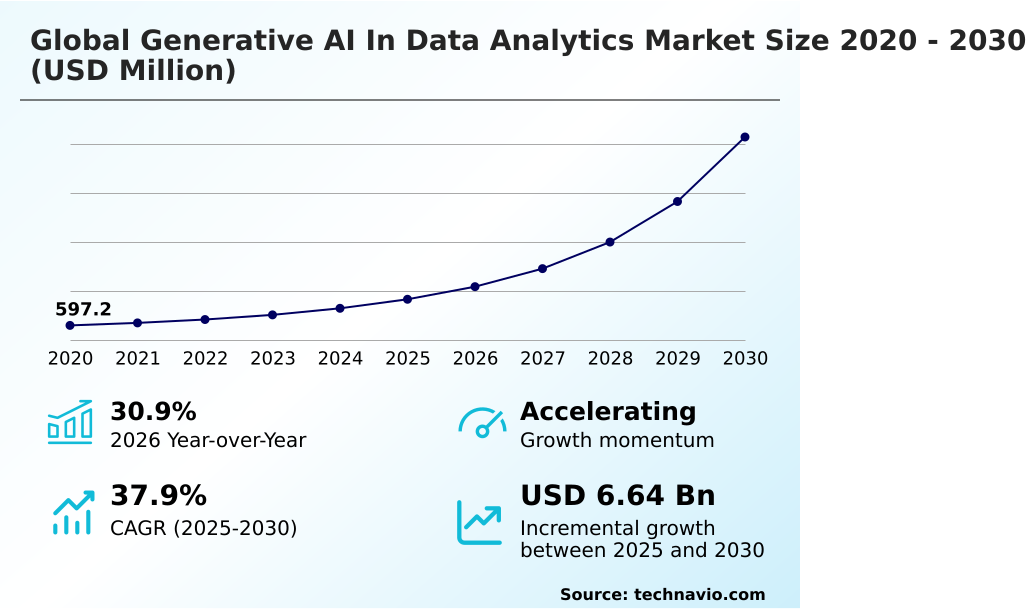
The generative ai in data analytics market size is valued to increase by USD 6.64 billion, at a CAGR of 37.9% from 2025 to 2030. Increasing demand for automated data synthesis and synthetic data generation will drive the generative ai in data analytics market.

Major Market Trends & Insights

  • North America dominated the market and accounted for a 35.3% growth during the forecast period.
  • By Deployment - Cloud-based segment was valued at USD 810.3 million in 2024
  • By Technology - Machine learning segment accounted for the largest market revenue share in 2024

Market Size & Forecast

  • Market Opportunities: USD 7.71 billion
  • Market Future Opportunities: USD 6.64 billion
  • CAGR from 2025 to 2030 : 37.9%

Market Summary

  • The Generative AI In Data Analytics Market is experiencing a rapid transition from experimental frameworks to deeply integrated, autonomous enterprise operations. This evolution is primarily driven by the escalating need for automated data synthesis, allowing organizations to convert vast, unstructured data lakes into actionable strategic insights instantaneously.
  • For example, in supply chain operations, predictive algorithms process global logistics variables to automatically reroute shipments, effectively mitigating disruption risks before they materialize. This capability drastically enhances productivity, enabling enterprises to achieve a 35% reduction in manual data processing time compared to traditional analytics methods.
  • However, the market faces significant headwinds due to the fragmentation of data privacy regulations across different jurisdictions. Because international compliance frameworks dictate strict algorithmic transparency, multinational corporations encounter substantial difficulties in deploying unified analytical models, often resulting in localized silos that limit systemic efficiency.
  • Despite these regulatory frictions, the continuous integration of conversational interfaces guarantees that business intelligence becomes increasingly democratized, establishing a resilient foundation for long-term organizational agility and proactive strategic planning.

What will be the Size of the Generative Ai In Data Analytics Market during the forecast period?
Get Key Insights on Market Forecast (PDF) Get Free Sample

How is the Generative Ai In Data Analytics Market Segmented?

The generative ai in data analytics industry research report provides comprehensive data (region-wise segment analysis), with forecasts and estimates in "USD million" for the period 2026-2030, as well as historical data from 2020-2024 for the following segments.

  • Deployment
    • Cloud-based
    • On-premises
  • Technology
    • Machine learning
    • Natural language processing
    • Deep learning
    • Computer vision
    • Robotic process automation
  • Application
    • Data augmentation
    • Text generation
    • Anomaly detection
    • Simulation and forecasting
  • Geography
    • North America
      • US
      • Canada
      • Mexico
    • APAC
      • China
      • Japan
      • India
      • South Korea
      • Australia
      • Indonesia
    • Europe
      • Germany
      • UK
      • France
      • Italy
      • Spain
      • The Netherlands
    • South America
      • Brazil
      • Argentina
      • Chile
    • Middle East and Africa
      • Saudi Arabia
      • UAE
      • South Africa
      • Israel
      • Turkey

By Deployment Insights

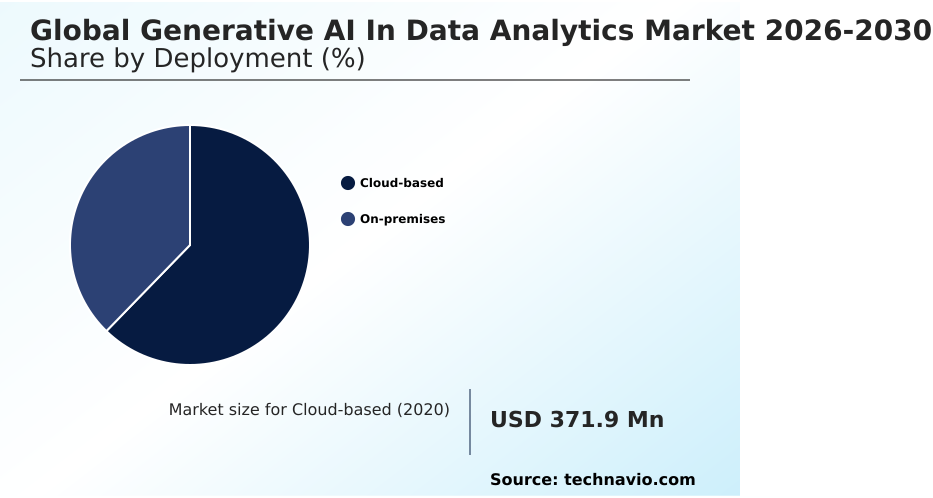
The cloud-based segment is estimated to witness significant growth during the forecast period.

Cloud-based architectures form the operational backbone of the Generative AI In Data Analytics, offering the massive computational elasticity required to process complex datasets.

This deployment model fundamentally alters how enterprises handle large language models and transformer architectures by replacing capital-intensive physical servers with scalable virtual resources.

By utilizing cloud native scalability, organizations rapidly execute synthetic data generation and natural language querying without bandwidth constraints. Conversely, on premises deployment remains essential for highly regulated sectors requiring strict data residency compliance.

The shift toward hybrid cloud infrastructure allows companies to balance external processing power with internal security protocols. Integrating these advanced systems improves unstructured data interpretation, as cloud-hosted analytics models see error detection improved by 15% compared to isolated legacy servers.

This structural evolution significantly enhances model hallucination reduction, ensuring that dynamic data pipelines maintain rigorous consistency while delivering accelerated business intelligence.
Get Free Sample

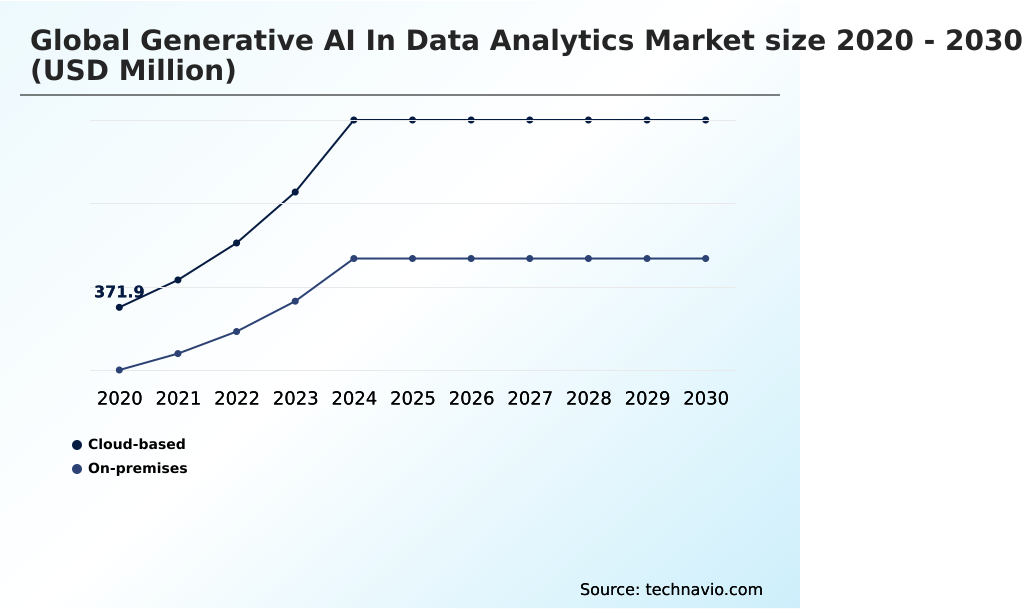
The Cloud-based segment was valued at USD 810.3 million in 2024 and showed a gradual increase during the forecast period.
Get Free Sample

Regional Analysis

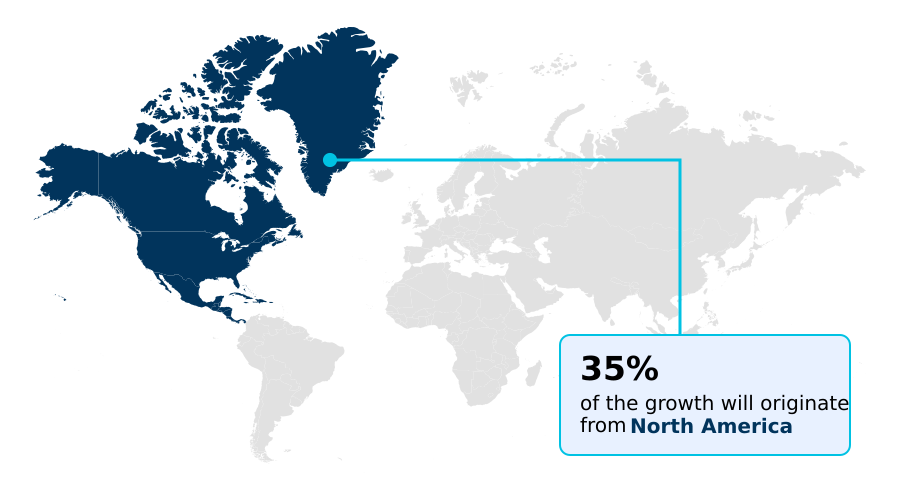
North America is estimated to contribute 35.3% to the growth of the global market during the forecast period.Technavio’s analysts have elaborately explained the regional trends and drivers that shape the market during the forecast period.
See How Generative Ai In Data Analytics Market Demand is Rising in North America Get Free Sample

North America and APAC exhibit distinct adoption trajectories within the Generative AI In Data Analytics due to differing regulatory environments and digital infrastructure maturities. North America heavily prioritizes explainable artificial intelligence and algorithmic transparency to navigate stringent governance mandates.

By integrating machine learning orchestration and prompt engineering optimization, North American firms align closely with strict data governance protocols, resulting in risk assessment overhead reduced by 20%.

Conversely, APAC rapidly scales deep learning pipelines and computer vision synthesis to address the exponential growth of unstructured digital platforms.

This rapid integration of robotic process automation and multivariate analysis automation in APAC manufacturing hubs directly fuels efficiency, driving supply chain visibility improved by 28%.

Consequently, while North America focuses on rigid compliance, APAC leverages automated intelligence to address diverse consumer behaviors, creating a regional divide where APAC operational deployment speed outpaces Western counterparts by 18%.

Market Dynamics

Our researchers analyzed the data with 2025 as the base year, along with the key drivers, trends, and challenges. A holistic analysis of drivers will help companies refine their marketing strategies to gain a competitive advantage.

  • The integration of advanced machine learning into corporate infrastructure is systematically dismantling the traditional barriers associated with complex business intelligence. By leveraging automated executive summary generation, management teams can instantly distill extensive quarterly reports into concise, actionable strategies, bypassing the labor-intensive manual review process.
  • This analytical transformation is particularly critical within highly regulated environments, where the application of synthetic healthcare dataset creation enables pharmaceutical researchers to rigorously test diagnostic algorithms without compromising patient confidentiality. In the banking sector, the deployment of financial transaction anomaly detection ensures that irregular patterns are identified instantaneously, providing a level of security that significantly surpasses legacy rule-based monitoring.
  • Consequently, institutions utilizing these autonomous oversight mechanisms report threat response times improved by nearly 40% compared to standard reactive protocols. Furthermore, logistics and urban planning departments are increasingly utilizing multimodal geospatial image analysis to optimize routing and infrastructure development, translating raw satellite feeds into coherent logistical roadmaps.
  • As enterprise software platforms mature, the integration of conversational sql query formulation democratizes database access, allowing operational leaders to interrogate complex data lakes using plain language rather than specialized code. This evolution ensures that sophisticated analytical capabilities are no longer confined to specialized engineering teams but are seamlessly integrated across the entire organizational hierarchy.
  • As a result, businesses can proactively navigate supply chain volatility and compliance mandates with unprecedented agility, establishing a highly responsive operational framework that maximizes the strategic value of internal data assets.
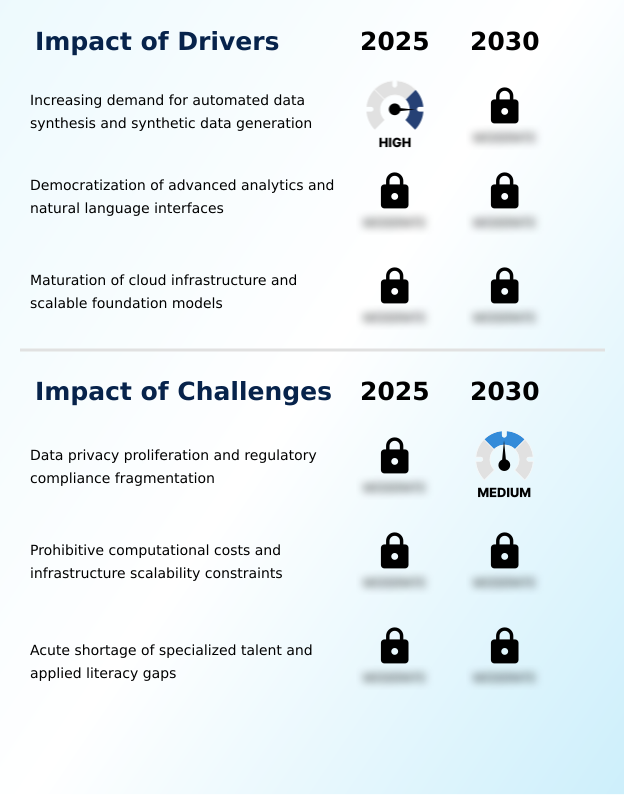
What are the key market drivers leading to the rise in the adoption of Generative Ai In Data Analytics Industry?

  • The escalating demand for automated data synthesis and the generation of synthetic datasets acts as a primary driver propelling market expansion.

  • The escalating demand for automated data interpretation serves as a primary catalyst for the Generative AI In Data Analytics, fundamentally driven by the need to accelerate decision-making cycles.
  • Because traditional analytics require specialized skills, companies rapidly adopt conversational analytics and self service analytics to eliminate internal reporting bottlenecks. This widespread business intelligence democratization ensures that non-technical personnel can extract actionable intelligence instantly.
  • By utilizing data lakehouse integration and federated learning frameworks, enterprises securely conduct proprietary data fine tuning without exposing sensitive information. Consequently, the deployment of privacy preserving synthetic datasets allows rigorous testing under strict regulatory constraints.
  • These advancements generate profound operational benefits, as predictive maintenance forecasting and fraud detection modeling enable organizations to realize operational costs lowered by 12%.
  • Additionally, highly improved neural network inference accelerates query response times, ensuring decision latency is reduced by 25% across complex global workflows.

What are the market trends shaping the Generative Ai In Data Analytics Industry?

  • The emergence of autonomous agentic workflows within enterprise analytics represents a significant upcoming trend in the market. This advancement enables organizations to transition from static reporting to independent, self-refining analytical systems.

  • The emergence of autonomous agentic workflows is fundamentally reshaping enterprise analytics by replacing static dashboards with self-executing diagnostic systems. This transition occurs because multimodal reasoning allows algorithms to simultaneously process text, visual feeds, and structured tables, ensuring comprehensive insight extraction.
  • As a result, businesses deploy automated data synthesis alongside dynamic dashboard generation to navigate complex supply networks, enabling agile responses to market disruptions. By leveraging graphical processing unit optimization and low rank adaptation, organizations can fine-tune these intelligent automation workflows efficiently, drastically reducing infrastructure overhead.
  • Consequently, conversational data exploration becomes seamless, leading to scenario modeling where predictive visualizations demonstrate that forecast accuracy improved by 18%. Furthermore, the integration of these systems accelerates real time insight generation, allowing proactive monitoring that has successfully seen diagnostic downtime reduced by 30%.

What challenges does the Generative Ai In Data Analytics Industry face during its growth?

  • The proliferation of data privacy mandates and the fragmentation of regulatory compliance frameworks pose significant challenges to industry growth.

  • Stringent global data privacy regulations and fragmented compliance requirements present significant structural barriers to the Generative AI In Data Analytics. Because international privacy laws mandate rigorous algorithmic oversight, enterprises struggle to deploy unified foundation models across diverse operational geographies.
  • This legislative friction directly complicates cross border data sovereignty, forcing multinational corporations to localize their semantic search pipelines and vector database integration efforts. As organizations attempt to implement automated sql generation within their enterprise resource planning integration and customer relationship management synthesis, the necessary security localizations cause processing delays.
  • Consequently, the fragmentation of compliance protocols creates friction in supply chain simulation and complex anomaly detection algorithms. These regulatory hurdles significantly impact performance, resulting in compliance management costs increased by 22%. Furthermore, the requirement to isolate regional data silos frequently leads to a situation where global reporting efficiency decreased by 15%, highlighting a critical operational constraint.

Exclusive Technavio Analysis on Customer Landscape

The generative ai in data analytics market forecasting report includes the adoption lifecycle of the market, covering from the innovator’s stage to the laggard’s stage. It focuses on adoption rates in different regions based on penetration. Furthermore, the generative ai in data analytics market report also includes key purchase criteria and drivers of price sensitivity to help companies evaluate and develop their market growth analysis strategies.
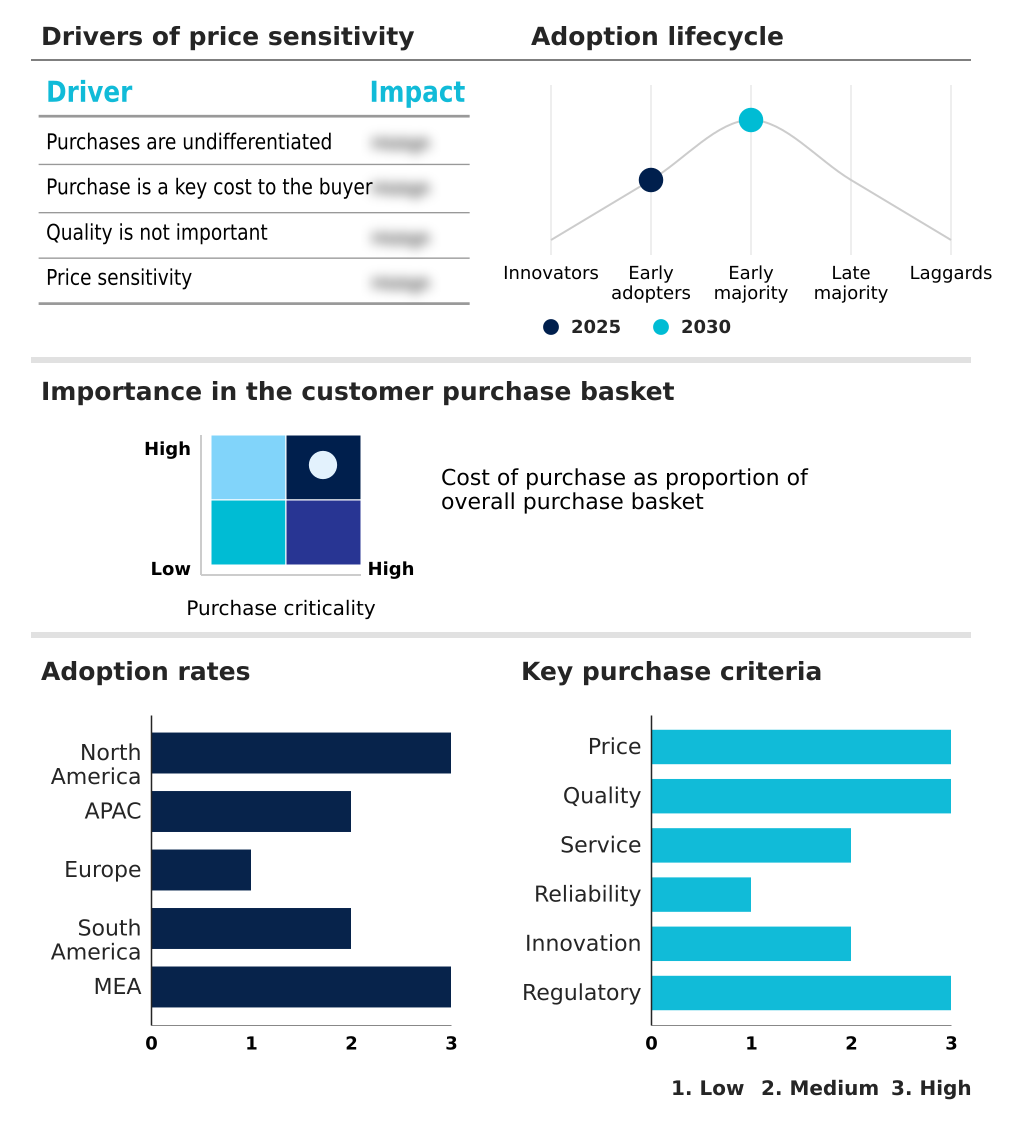
Customer Landscape of Generative Ai In Data Analytics Industry

Competitive Landscape

Companies are implementing various strategies, such as strategic alliances, generative ai in data analytics market forecast, partnerships, mergers and acquisitions, geographical expansion, and product/service launches, to enhance their presence in the industry.

Accenture Plc - The firm provides sophisticated generative business intelligence capabilities, enabling automated data insights, predictive infrastructure analysis, and natural language query generation to optimize enterprise analytics workflows.

The industry research and growth report includes detailed analyses of the competitive landscape of the market and information about key companies, including:

  • Accenture Plc
  • Amazon Web Services Inc.
  • Atlassian Corp.
  • Automatic Data Processing Inc.
  • Box Inc.
  • Databricks Inc.
  • Dell Technologies Inc.
  • Google LLC
  • Hugging Face Inc.
  • IBM Corp.
  • Microsoft Corp.
  • NVIDIA Corp.
  • Oracle Corp.
  • Salesforce Inc.
  • SAP SE
  • ServiceNow Inc.
  • Siemens AG
  • Slack Technologies LLC
  • Snowflake Inc.
  • Workday Inc.

Qualitative and quantitative analysis of companies has been conducted to help clients understand the wider business environment as well as the strengths and weaknesses of key industry players. Data is qualitatively analyzed to categorize companies as pure play, category-focused, industry-focused, and diversified; it is quantitatively analyzed to categorize companies as dominant, leading, strong, tentative, and weak.

Recent Development and News in Generative ai in data analytics market

  • In the Application Software industry, the widespread adoption of cloud-based delivery models has lowered the capital barrier for deploying resource-intensive machine learning workloads, directly accelerating Generative AI In Data Analytics demand by enabling smaller enterprises to access scalable computational power.
  • The implementation of strict data privacy regulations, such as the European Union General Data Protection Regulation, has necessitated advanced anonymization techniques, thereby driving the Generative AI In Data Analytics market to rapidly innovate in high-fidelity synthetic data generation.
  • The integration of enterprise automation tools with legacy enterprise resource planning systems has reduced manual data entry bottlenecks, creating a robust foundation of structured data that enhances the accuracy of Generative AI In Data Analytics forecasting models.
  • The standardization of workflow interoperability protocols across major business intelligence platforms has simplified the cross-platform sharing of unstructured data, allowing Generative AI In Data Analytics solutions to seamlessly execute complex, multimodal reasoning tasks across decentralized corporate networks.

Dive into Technavio’s robust research methodology, blending expert interviews, extensive data synthesis, and validated models for unparalleled Generative Ai In Data Analytics Market insights. See full methodology.

Market Scope
Page number 314
Base year 2025
Historic period 2020-2024
Forecast period 2026-2030
Growth momentum & CAGR Accelerate at a CAGR of 37.9%
Market growth 2026-2030 USD 6638.4 million
Market structure Fragmented
YoY growth 2025-2026(%) 30.9%
Key countries US, Canada, Mexico, China, Japan, India, South Korea, Australia, Indonesia, Germany, UK, France, Italy, Spain, The Netherlands, Brazil, Argentina, Chile, Saudi Arabia, UAE, South Africa, Israel and Turkey
Competitive landscape Leading Companies, Market Positioning of Companies, Competitive Strategies, and Industry Risks

Request Free Sample

Research Analyst Overview

  • The Generative AI In Data Analytics Market is actively transitioning toward sophisticated, self-executing business intelligence frameworks that eliminate conventional manual reporting bottlenecks. As organizations embed large language models and foundation models directly into their operational infrastructure, the capacity for real-time strategic foresight expands significantly.
  • Through automated data synthesis, enterprises can instantly aggregate diverse information streams to inform dynamic pricing strategies and critical compliance decisions. By applying multimodal reasoning to complex operational challenges, businesses successfully convert disparate text, image, and numerical inputs into unified strategic roadmaps.
  • This structural shift toward autonomous agentic workflows enables procurement departments to optimize inventory management independently, systematically bypassing the latency of human intervention. Consequently, early adopters of these integrated analytics architectures report decision-making latency decreased by 28% when compared to reliance on traditional software systems.
  • The simultaneous integration of robotic process automation ensures that repetitive data extraction occurs flawlessly, while rigorous algorithmic transparency maintains the auditability required for high-level corporate governance. This fundamental technological progression ensures that raw data consistently drives proactive, enterprise-wide agility.

What are the Key Data Covered in this Generative Ai In Data Analytics Market Research and Growth Report?

  • What is the expected growth of the Generative Ai In Data Analytics Market between 2026 and 2030?

    • USD 6.64 billion, at a CAGR of 37.9%

  • What segmentation does the market report cover?

    • The report is segmented by Deployment (Cloud-based, and On-premises), Technology (Machine learning, Natural language processing, Deep learning, Computer vision, and Robotic process automation), Application (Data augmentation, Text generation, Anomaly detection, and Simulation and forecasting) and Geography (North America, APAC, Europe, South America, Middle East and Africa)

  • Which regions are analyzed in the report?

    • North America, APAC, Europe, South America and Middle East and Africa

  • What are the key growth drivers and market challenges?

    • Increasing demand for automated data synthesis and synthetic data generation, Data privacy proliferation and regulatory compliance fragmentation

  • Who are the major players in the Generative Ai In Data Analytics Market?

    • Accenture Plc, Amazon Web Services Inc., Atlassian Corp., Automatic Data Processing Inc., Box Inc., Databricks Inc., Dell Technologies Inc., Google LLC, Hugging Face Inc., IBM Corp., Microsoft Corp., NVIDIA Corp., Oracle Corp., Salesforce Inc., SAP SE, ServiceNow Inc., Siemens AG, Slack Technologies LLC, Snowflake Inc. and Workday Inc.

Market Research Insights

  • The Generative AI In Data Analytics Market is undergoing a fundamental structural transformation driven by the rapid adoption of intelligent automation workflows and self service analytics. This shift enables business intelligence democratization, empowering non-technical stakeholders to extract immediate insights without relying on specialized engineering teams.
  • By implementing predictive maintenance forecasting algorithms, industrial enterprises have successfully achieved machine downtime reduced by 24%. Concurrently, the rigorous enforcement of data governance protocols ensures that conversational query platforms maintain high operational security, which has led to unauthorized access incidents lowered by 18%.
  • These technological advancements streamline complex organizational strategies, fostering a highly responsive operational environment where data-driven precision systematically outpaces traditional reporting methods.

We can help! Our analysts can customize this generative ai in data analytics market research report to meet your requirements.

Get in touch

1. Executive Summary

1.1 Market overview

Executive Summary - Chart on Market Overview
Executive Summary - Data Table on Market Overview
Executive Summary - Chart on Global Market Characteristics
Executive Summary - Chart on Market by Geography
Executive Summary - Chart on Market Segmentation by Deployment
Executive Summary - Chart on Market Segmentation by Technology
Executive Summary - Chart on Market Segmentation by Application
Executive Summary - Chart on Incremental Growth
Executive Summary - Data Table on Incremental Growth
Executive Summary - Chart on Company Market Positioning

2. Technavio Analysis

2.1 Analysis of price sensitivity, lifecycle, customer purchase basket, adoption rates, and purchase criteria

2.2 Criticality of inputs and Factors of differentiation

Chart on Overview on criticality of inputs and factors of differentiation

2.3 Factors of disruption

Chart on Overview on factors of disruption

2.4 Impact of drivers and challenges

Chart on Impact of drivers and challenges in 2025 and 2030

3. Market Landscape

3.1 Market ecosystem

Chart on Parent Market
Data Table on - Parent Market

3.2 Market characteristics

Chart on Market characteristics analysis

3.3 Value chain analysis

Chart on Value chain analysis

4. Market Sizing

4.1 Market definition

Data Table on Offerings of companies included in the market definition

4.2 Market segment analysis

Market segments

4.3 Market size 2025

4.4 Market outlook: Forecast for 2025-2030

Chart on Global - Market size and forecast 2025-2030 ($ million)
Data Table on Global - Market size and forecast 2025-2030 ($ million)
Chart on Global Market: Year-over-year growth 2025-2030 (%)
Data Table on Global Market: Year-over-year growth 2025-2030 (%)

5. Historic Market Size

5.1 Global Generative AI In Data Analytics Market 2020 - 2024

Historic Market Size - Data Table on Global Generative AI In Data Analytics Market 2020 - 2024 ($ million)

5.2 Deployment segment analysis 2020 - 2024

Historic Market Size - Deployment Segment 2020 - 2024 ($ million)

5.3 Technology segment analysis 2020 - 2024

Historic Market Size - Technology Segment 2020 - 2024 ($ million)

5.4 Application segment analysis 2020 - 2024

Historic Market Size - Application Segment 2020 - 2024 ($ million)

5.5 Geography segment analysis 2020 - 2024

Historic Market Size - Geography Segment 2020 - 2024 ($ million)

5.6 Country segment analysis 2020 - 2024

Historic Market Size - Country Segment 2020 - 2024 ($ million)

6. Qualitative Analysis

6.1 Impact of geopolitical conflicts on global generative AI in data analytics market

7. Five Forces Analysis

7.1 Five forces summary

Five forces analysis - Comparison between 2025 and 2030

7.2 Bargaining power of buyers

Bargaining power of buyers - Impact of key factors 2025 and 2030

7.3 Bargaining power of suppliers

Bargaining power of suppliers - Impact of key factors in 2025 and 2030

7.4 Threat of new entrants

Threat of new entrants - Impact of key factors in 2025 and 2030

7.5 Threat of substitutes

Threat of substitutes - Impact of key factors in 2025 and 2030

7.6 Threat of rivalry

Threat of rivalry - Impact of key factors in 2025 and 2030

7.7 Market condition

Chart on Market condition - Five forces 2025 and 2030

8. Market Segmentation by Deployment

8.1 Market segments

Chart on Deployment - Market share 2025-2030 (%)
Data Table on Deployment - Market share 2025-2030 (%)

8.2 Comparison by Deployment

Chart on Comparison by Deployment
Data Table on Comparison by Deployment

8.3 Cloud-based - Market size and forecast 2025-2030

Chart on Cloud-based - Market size and forecast 2025-2030 ($ million)
Data Table on Cloud-based - Market size and forecast 2025-2030 ($ million)
Chart on Cloud-based - Year-over-year growth 2025-2030 (%)
Data Table on Cloud-based - Year-over-year growth 2025-2030 (%)

8.4 On-premises - Market size and forecast 2025-2030

Chart on On-premises - Market size and forecast 2025-2030 ($ million)
Data Table on On-premises - Market size and forecast 2025-2030 ($ million)
Chart on On-premises - Year-over-year growth 2025-2030 (%)
Data Table on On-premises - Year-over-year growth 2025-2030 (%)

8.5 Market opportunity by Deployment

Market opportunity by Deployment ($ million)
Data Table on Market opportunity by Deployment ($ million)

9. Market Segmentation by Technology

9.1 Market segments

Chart on Technology - Market share 2025-2030 (%)
Data Table on Technology - Market share 2025-2030 (%)

9.2 Comparison by Technology

Chart on Comparison by Technology
Data Table on Comparison by Technology

9.3 Machine learning - Market size and forecast 2025-2030

Chart on Machine learning - Market size and forecast 2025-2030 ($ million)
Data Table on Machine learning - Market size and forecast 2025-2030 ($ million)
Chart on Machine learning - Year-over-year growth 2025-2030 (%)
Data Table on Machine learning - Year-over-year growth 2025-2030 (%)

9.4 Natural language processing - Market size and forecast 2025-2030

Chart on Natural language processing - Market size and forecast 2025-2030 ($ million)
Data Table on Natural language processing - Market size and forecast 2025-2030 ($ million)
Chart on Natural language processing - Year-over-year growth 2025-2030 (%)
Data Table on Natural language processing - Year-over-year growth 2025-2030 (%)

9.5 Deep learning - Market size and forecast 2025-2030

Chart on Deep learning - Market size and forecast 2025-2030 ($ million)
Data Table on Deep learning - Market size and forecast 2025-2030 ($ million)
Chart on Deep learning - Year-over-year growth 2025-2030 (%)
Data Table on Deep learning - Year-over-year growth 2025-2030 (%)

9.6 Computer vision - Market size and forecast 2025-2030

Chart on Computer vision - Market size and forecast 2025-2030 ($ million)
Data Table on Computer vision - Market size and forecast 2025-2030 ($ million)
Chart on Computer vision - Year-over-year growth 2025-2030 (%)
Data Table on Computer vision - Year-over-year growth 2025-2030 (%)

9.7 Robotic process automation - Market size and forecast 2025-2030

Chart on Robotic process automation - Market size and forecast 2025-2030 ($ million)
Data Table on Robotic process automation - Market size and forecast 2025-2030 ($ million)
Chart on Robotic process automation - Year-over-year growth 2025-2030 (%)
Data Table on Robotic process automation - Year-over-year growth 2025-2030 (%)

9.8 Market opportunity by Technology

Market opportunity by Technology ($ million)
Data Table on Market opportunity by Technology ($ million)

10. Market Segmentation by Application

10.1 Market segments

Chart on Application - Market share 2025-2030 (%)
Data Table on Application - Market share 2025-2030 (%)

10.2 Comparison by Application

Chart on Comparison by Application
Data Table on Comparison by Application

10.3 Data augmentation - Market size and forecast 2025-2030

Chart on Data augmentation - Market size and forecast 2025-2030 ($ million)
Data Table on Data augmentation - Market size and forecast 2025-2030 ($ million)
Chart on Data augmentation - Year-over-year growth 2025-2030 (%)
Data Table on Data augmentation - Year-over-year growth 2025-2030 (%)

10.4 Text generation - Market size and forecast 2025-2030

Chart on Text generation - Market size and forecast 2025-2030 ($ million)
Data Table on Text generation - Market size and forecast 2025-2030 ($ million)
Chart on Text generation - Year-over-year growth 2025-2030 (%)
Data Table on Text generation - Year-over-year growth 2025-2030 (%)

10.5 Anomaly detection - Market size and forecast 2025-2030

Chart on Anomaly detection - Market size and forecast 2025-2030 ($ million)
Data Table on Anomaly detection - Market size and forecast 2025-2030 ($ million)
Chart on Anomaly detection - Year-over-year growth 2025-2030 (%)
Data Table on Anomaly detection - Year-over-year growth 2025-2030 (%)

10.6 Simulation and forecasting - Market size and forecast 2025-2030

Chart on Simulation and forecasting - Market size and forecast 2025-2030 ($ million)
Data Table on Simulation and forecasting - Market size and forecast 2025-2030 ($ million)
Chart on Simulation and forecasting - Year-over-year growth 2025-2030 (%)
Data Table on Simulation and forecasting - Year-over-year growth 2025-2030 (%)

10.7 Market opportunity by Application

Market opportunity by Application ($ million)
Data Table on Market opportunity by Application ($ million)

11. Customer Landscape

11.1 Customer landscape overview

Analysis of price sensitivity, lifecycle, customer purchase basket, adoption rates, and purchase criteria

12. Geographic Landscape

12.1 Geographic segmentation

Chart on Market share by geography 2025-2030 (%)
Data Table on Market share by geography 2025-2030 (%)

12.2 Geographic comparison

Chart on Geographic comparison
Data Table on Geographic comparison

12.3 North America - Market size and forecast 2025-2030

Chart on North America - Market size and forecast 2025-2030 ($ million)
Data Table on North America - Market size and forecast 2025-2030 ($ million)
Chart on North America - Year-over-year growth 2025-2030 (%)
Data Table on North America - Year-over-year growth 2025-2030 (%)
Chart on Regional Comparison - North America
Data Table on Regional Comparison - North America

12.3.1 US - Market size and forecast 2025-2030

Chart on US - Market size and forecast 2025-2030 ($ million)
Data Table on US - Market size and forecast 2025-2030 ($ million)
Chart on US - Year-over-year growth 2025-2030 (%)
Data Table on US - Year-over-year growth 2025-2030 (%)

12.3.2 Canada - Market size and forecast 2025-2030

Chart on Canada - Market size and forecast 2025-2030 ($ million)
Data Table on Canada - Market size and forecast 2025-2030 ($ million)
Chart on Canada - Year-over-year growth 2025-2030 (%)
Data Table on Canada - Year-over-year growth 2025-2030 (%)

12.3.3 Mexico - Market size and forecast 2025-2030

Chart on Mexico - Market size and forecast 2025-2030 ($ million)
Data Table on Mexico - Market size and forecast 2025-2030 ($ million)
Chart on Mexico - Year-over-year growth 2025-2030 (%)
Data Table on Mexico - Year-over-year growth 2025-2030 (%)

12.4 APAC - Market size and forecast 2025-2030

Chart on APAC - Market size and forecast 2025-2030 ($ million)
Data Table on APAC - Market size and forecast 2025-2030 ($ million)
Chart on APAC - Year-over-year growth 2025-2030 (%)
Data Table on APAC - Year-over-year growth 2025-2030 (%)
Chart on Regional Comparison - APAC
Data Table on Regional Comparison - APAC

12.4.1 China - Market size and forecast 2025-2030

Chart on China - Market size and forecast 2025-2030 ($ million)
Data Table on China - Market size and forecast 2025-2030 ($ million)
Chart on China - Year-over-year growth 2025-2030 (%)
Data Table on China - Year-over-year growth 2025-2030 (%)

12.4.2 Japan - Market size and forecast 2025-2030

Chart on Japan - Market size and forecast 2025-2030 ($ million)
Data Table on Japan - Market size and forecast 2025-2030 ($ million)
Chart on Japan - Year-over-year growth 2025-2030 (%)
Data Table on Japan - Year-over-year growth 2025-2030 (%)

12.4.3 India - Market size and forecast 2025-2030

Chart on India - Market size and forecast 2025-2030 ($ million)
Data Table on India - Market size and forecast 2025-2030 ($ million)
Chart on India - Year-over-year growth 2025-2030 (%)
Data Table on India - Year-over-year growth 2025-2030 (%)

12.4.4 South Korea - Market size and forecast 2025-2030

Chart on South Korea - Market size and forecast 2025-2030 ($ million)
Data Table on South Korea - Market size and forecast 2025-2030 ($ million)
Chart on South Korea - Year-over-year growth 2025-2030 (%)
Data Table on South Korea - Year-over-year growth 2025-2030 (%)

12.4.5 Australia - Market size and forecast 2025-2030

Chart on Australia - Market size and forecast 2025-2030 ($ million)
Data Table on Australia - Market size and forecast 2025-2030 ($ million)
Chart on Australia - Year-over-year growth 2025-2030 (%)
Data Table on Australia - Year-over-year growth 2025-2030 (%)

12.4.6 Indonesia - Market size and forecast 2025-2030

Chart on Indonesia - Market size and forecast 2025-2030 ($ million)
Data Table on Indonesia - Market size and forecast 2025-2030 ($ million)
Chart on Indonesia - Year-over-year growth 2025-2030 (%)
Data Table on Indonesia - Year-over-year growth 2025-2030 (%)

12.5 Europe - Market size and forecast 2025-2030

Chart on Europe - Market size and forecast 2025-2030 ($ million)
Data Table on Europe - Market size and forecast 2025-2030 ($ million)
Chart on Europe - Year-over-year growth 2025-2030 (%)
Data Table on Europe - Year-over-year growth 2025-2030 (%)
Chart on Regional Comparison - Europe
Data Table on Regional Comparison - Europe

12.5.1 Germany - Market size and forecast 2025-2030

Chart on Germany - Market size and forecast 2025-2030 ($ million)
Data Table on Germany - Market size and forecast 2025-2030 ($ million)
Chart on Germany - Year-over-year growth 2025-2030 (%)
Data Table on Germany - Year-over-year growth 2025-2030 (%)

12.5.2 UK - Market size and forecast 2025-2030

Chart on UK - Market size and forecast 2025-2030 ($ million)
Data Table on UK - Market size and forecast 2025-2030 ($ million)
Chart on UK - Year-over-year growth 2025-2030 (%)
Data Table on UK - Year-over-year growth 2025-2030 (%)

12.5.3 France - Market size and forecast 2025-2030

Chart on France - Market size and forecast 2025-2030 ($ million)
Data Table on France - Market size and forecast 2025-2030 ($ million)
Chart on France - Year-over-year growth 2025-2030 (%)
Data Table on France - Year-over-year growth 2025-2030 (%)

12.5.4 Italy - Market size and forecast 2025-2030

Chart on Italy - Market size and forecast 2025-2030 ($ million)
Data Table on Italy - Market size and forecast 2025-2030 ($ million)
Chart on Italy - Year-over-year growth 2025-2030 (%)
Data Table on Italy - Year-over-year growth 2025-2030 (%)

12.5.5 Spain - Market size and forecast 2025-2030

Chart on Spain - Market size and forecast 2025-2030 ($ million)
Data Table on Spain - Market size and forecast 2025-2030 ($ million)
Chart on Spain - Year-over-year growth 2025-2030 (%)
Data Table on Spain - Year-over-year growth 2025-2030 (%)

12.5.6 The Netherlands - Market size and forecast 2025-2030

Chart on The Netherlands - Market size and forecast 2025-2030 ($ million)
Data Table on The Netherlands - Market size and forecast 2025-2030 ($ million)
Chart on The Netherlands - Year-over-year growth 2025-2030 (%)
Data Table on The Netherlands - Year-over-year growth 2025-2030 (%)

12.6 South America - Market size and forecast 2025-2030

Chart on South America - Market size and forecast 2025-2030 ($ million)
Data Table on South America - Market size and forecast 2025-2030 ($ million)
Chart on South America - Year-over-year growth 2025-2030 (%)
Data Table on South America - Year-over-year growth 2025-2030 (%)
Chart on Regional Comparison - South America
Data Table on Regional Comparison - South America

12.6.1 Brazil - Market size and forecast 2025-2030

Chart on Brazil - Market size and forecast 2025-2030 ($ million)
Data Table on Brazil - Market size and forecast 2025-2030 ($ million)
Chart on Brazil - Year-over-year growth 2025-2030 (%)
Data Table on Brazil - Year-over-year growth 2025-2030 (%)

12.6.2 Argentina - Market size and forecast 2025-2030

Chart on Argentina - Market size and forecast 2025-2030 ($ million)
Data Table on Argentina - Market size and forecast 2025-2030 ($ million)
Chart on Argentina - Year-over-year growth 2025-2030 (%)
Data Table on Argentina - Year-over-year growth 2025-2030 (%)

12.6.3 Chile - Market size and forecast 2025-2030

Chart on Chile - Market size and forecast 2025-2030 ($ million)
Data Table on Chile - Market size and forecast 2025-2030 ($ million)
Chart on Chile - Year-over-year growth 2025-2030 (%)
Data Table on Chile - Year-over-year growth 2025-2030 (%)

12.7 Middle East and Africa - Market size and forecast 2025-2030

Chart on Middle East and Africa - Market size and forecast 2025-2030 ($ million)
Data Table on Middle East and Africa - Market size and forecast 2025-2030 ($ million)
Chart on Middle East and Africa - Year-over-year growth 2025-2030 (%)
Data Table on Middle East and Africa - Year-over-year growth 2025-2030 (%)
Chart on Regional Comparison - Middle East and Africa
Data Table on Regional Comparison - Middle East and Africa

12.7.1 Saudi Arabia - Market size and forecast 2025-2030

Chart on Saudi Arabia - Market size and forecast 2025-2030 ($ million)
Data Table on Saudi Arabia - Market size and forecast 2025-2030 ($ million)
Chart on Saudi Arabia - Year-over-year growth 2025-2030 (%)
Data Table on Saudi Arabia - Year-over-year growth 2025-2030 (%)

12.7.2 UAE - Market size and forecast 2025-2030

Chart on UAE - Market size and forecast 2025-2030 ($ million)
Data Table on UAE - Market size and forecast 2025-2030 ($ million)
Chart on UAE - Year-over-year growth 2025-2030 (%)
Data Table on UAE - Year-over-year growth 2025-2030 (%)

12.7.3 South Africa - Market size and forecast 2025-2030

Chart on South Africa - Market size and forecast 2025-2030 ($ million)
Data Table on South Africa - Market size and forecast 2025-2030 ($ million)
Chart on South Africa - Year-over-year growth 2025-2030 (%)
Data Table on South Africa - Year-over-year growth 2025-2030 (%)

12.7.4 Israel - Market size and forecast 2025-2030

Chart on Israel - Market size and forecast 2025-2030 ($ million)
Data Table on Israel - Market size and forecast 2025-2030 ($ million)
Chart on Israel - Year-over-year growth 2025-2030 (%)
Data Table on Israel - Year-over-year growth 2025-2030 (%)

12.7.5 Turkey - Market size and forecast 2025-2030

Chart on Turkey - Market size and forecast 2025-2030 ($ million)
Data Table on Turkey - Market size and forecast 2025-2030 ($ million)
Chart on Turkey - Year-over-year growth 2025-2030 (%)
Data Table on Turkey - Year-over-year growth 2025-2030 (%)

12.8 Market opportunity by geography

Market opportunity by geography ($ million)
Data Tables on Market opportunity by geography ($ million)

13. Drivers, Challenges, and Opportunity

13.1 Market drivers

Increasing demand for automated data synthesis and synthetic data generation
Democratization of advanced analytics and natural language interfaces
Maturation of cloud infrastructure and scalable foundation models

13.2 Market challenges

Data privacy proliferation and regulatory compliance fragmentation
Prohibitive computational costs and infrastructure scalability constraints
Acute shortage of specialized talent and applied literacy gaps

13.3 Impact of drivers and challenges

Impact of drivers and challenges in 2025 and 2030

13.4 Market opportunities

Emergence of autonomous agentic workflows in enterprise analytics
Convergence of multimodal generative AI and spatial data analytics
Standardization of privacy-preserving synthetic data and federated learning

14. Competitive Landscape

14.1 Overview

14.2

Overview on criticality of inputs and factors of differentiation

14.3 Landscape disruption

Overview on factors of disruption

14.4 Industry risks

Impact of key risks on business

15. Competitive Analysis

15.1 Companies profiled

Companies covered

15.2 Company ranking index

15.3 Market positioning of companies

Matrix on companies position and classification

15.4 Accenture Plc

Accenture Plc - Overview
Accenture Plc - Business segments
Accenture Plc - Key news
Accenture Plc - Key offerings
Accenture Plc - Segment focus
SWOT

15.5 Amazon Web Services Inc.

Amazon Web Services Inc. - Overview
Amazon Web Services Inc. - Product / Service
Amazon Web Services Inc. - Key offerings
SWOT

15.6 Atlassian Corp.

Atlassian Corp. - Overview
Atlassian Corp. - Product / Service
Atlassian Corp. - Key offerings
SWOT

15.7 Automatic Data Processing Inc.

Automatic Data Processing Inc. - Overview
Automatic Data Processing Inc. - Business segments
Automatic Data Processing Inc. - Key offerings
Automatic Data Processing Inc. - Segment focus
SWOT

15.8 Databricks Inc.

Databricks Inc. - Overview
Databricks Inc. - Product / Service
Databricks Inc. - Key offerings
SWOT

15.9 Dell Technologies Inc.

Dell Technologies Inc. - Overview
Dell Technologies Inc. - Business segments
Dell Technologies Inc. - Key news
Dell Technologies Inc. - Key offerings
Dell Technologies Inc. - Segment focus
SWOT

15.10 Google LLC

Google LLC - Overview
Google LLC - Product / Service
Google LLC - Key offerings
SWOT

15.11 IBM Corp.

IBM Corp. - Overview
IBM Corp. - Business segments
IBM Corp. - Key news
IBM Corp. - Key offerings
IBM Corp. - Segment focus
SWOT

15.12 Microsoft Corp.

Microsoft Corp. - Overview
Microsoft Corp. - Business segments
Microsoft Corp. - Key news
Microsoft Corp. - Key offerings
Microsoft Corp. - Segment focus
SWOT

15.13 NVIDIA Corp.

NVIDIA Corp. - Overview
NVIDIA Corp. - Business segments
NVIDIA Corp. - Key news
NVIDIA Corp. - Key offerings
NVIDIA Corp. - Segment focus
SWOT

15.14 Oracle Corp.

Oracle Corp. - Overview
Oracle Corp. - Business segments
Oracle Corp. - Key news
Oracle Corp. - Key offerings
Oracle Corp. - Segment focus
SWOT

15.15 Salesforce Inc.

Salesforce Inc. - Overview
Salesforce Inc. - Business segments
Salesforce Inc. - Key news
Salesforce Inc. - Key offerings
Salesforce Inc. - Segment focus
SWOT

15.16 SAP SE

SAP SE - Overview
SAP SE - Business segments
SAP SE - Key news
SAP SE - Key offerings
SAP SE - Segment focus
SWOT

15.17 Siemens AG

Siemens AG - Overview
Siemens AG - Business segments
Siemens AG - Key news
Siemens AG - Key offerings
Siemens AG - Segment focus
SWOT

15.18 Snowflake Inc.

Snowflake Inc. - Overview
Snowflake Inc. - Business segments
Snowflake Inc. - Key news
Snowflake Inc. - Key offerings
Snowflake Inc. - Segment focus
SWOT

16. Appendix

16.1 Scope of the report

Market definition
Objectives
Notes and caveats

16.2 Inclusions and exclusions checklist

Inclusions checklist
Exclusions checklist

16.3 Currency conversion rates for US$

16.4 Research methodology

16.5 Data procurement

Information sources

16.6 Data validation

16.7 Validation techniques employed for market sizing

16.8 Data synthesis

16.9 360 degree market analysis

16.10 List of abbreviations

Research Methodology

Technavio presents a detailed picture of the market by way of study, synthesis, and summation of data from multiple sources. The analysts have presented the various facets of the market with a particular focus on identifying the key industry influencers. The data thus presented is comprehensive, reliable, and the result of extensive research, both primary and secondary.

INFORMATION SOURCES

Primary sources

  • Manufacturers and suppliers
  • Channel partners
  • Industry experts
  • Strategic decision makers

Secondary sources

  • Industry journals and periodicals
  • Government data
  • Financial reports of key industry players
  • Historical data
  • Press releases

DATA ANALYSIS

Data Synthesis

  • Collation of data
  • Estimation of key figures
  • Analysis of derived insights

Data Validation

  • Triangulation with data models
  • Reference against proprietary databases
  • Corroboration with industry experts

REPORT WRITING

Qualitative

  • Market drivers
  • Market challenges
  • Market trends
  • Five forces analysis

Quantitative

  • Market size and forecast
  • Market segmentation
  • Geographical insights
  • Competitive landscape

Interested in this report?

Get your sample now to see our research methodology and insights!

Download Now

Frequently Asked Questions

Generative Ai In Data Analytics market growth will increase by USD 6638.4 million during 2026-2030.

The Generative Ai In Data Analytics market is expected to grow at a CAGR of 37.9% during 2026-2030.

Generative Ai In Data Analytics market is segmented by Deployment (Cloud-based, On-premises) Technology (Machine learning, Natural language processing, Deep learning, Computer vision, Robotic process automation) Application (Data augmentation, Text generation, Anomaly detection, Simulation and forecasting)

Accenture Plc, Amazon Web Services Inc., Atlassian Corp., Automatic Data Processing Inc., Box Inc., Databricks Inc., Dell Technologies Inc., Google LLC, Hugging Face Inc., IBM Corp., Microsoft Corp., NVIDIA Corp., Oracle Corp., Salesforce Inc., SAP SE, ServiceNow Inc., Siemens AG, Slack Technologies LLC, Snowflake Inc., Workday Inc. are a few of the key vendors in the Generative Ai In Data Analytics market.

North America will register the highest growth rate of 35.3% among the other regions. Therefore, the Generative Ai In Data Analytics market in North America is expected to garner significant business opportunities for the vendors during the forecast period.

US, Canada, Mexico, China, Japan, India, South Korea, Australia, Indonesia, Germany, UK, France, Italy, Spain, The Netherlands, Brazil, Argentina, Chile, Saudi Arabia, UAE, South Africa, Israel, Turkey

  • Increasing demand for automated data synthesis and synthetic data generation is the driving factor this market.

The Generative Ai In Data Analytics market vendors should focus on grabbing business opportunities from the Deployment segment as it accounted for the largest market share in the base year.
RIA - Research AI Assistant
Ask RIA