


Integrated Building Management Systems Market Size 2026-2030
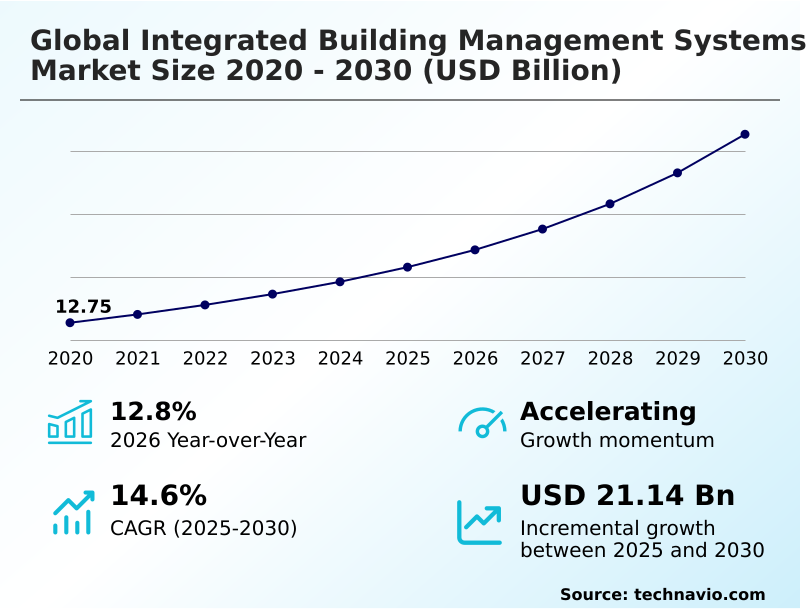
The integrated building management systems market size is valued to increase by USD 21.14 billion, at a CAGR of 14.6% from 2025 to 2030. Institutionalization of net zero mandates and energy decarbonization will drive the integrated building management systems market.
Major Market Trends & Insights
- Europe dominated the market and accounted for a 35.8% growth during the forecast period.
- By Component - Hardware segment was valued at USD 9.57 billion in 2024
- By End-user - Commercial segment accounted for the largest market revenue share in 2024
Market Size & Forecast
- Market Opportunities: USD 29.98 billion
- Market Future Opportunities: USD 21.14 billion
- CAGR from 2025 to 2030 : 14.6%
Market Summary
- The integrated building management systems market is defined by a transition toward comprehensive, autonomous facility orchestration. This evolution is driven by the need for enhanced energy efficiency and compliance with stringent global decarbonization mandates. Open-protocol architecture is becoming standard, unifying systems like HVAC, lighting, and security into a single digital ecosystem.
- The industrialization of artificial intelligence and machine learning allows buildings to shift from reactive scheduling to predictive, demand-driven operations. For instance, a large commercial real estate portfolio can use IoT sensor integration and predictive analytics to autonomously optimize indoor air quality and energy consumption in real time, significantly reducing operational expenditures and the facility's carbon footprint.
- This convergence of IT and OT elevates building management systems to strategic assets, providing facility managers with actionable insights through cloud-based dashboards and sovereign cloud solutions, ensuring buildings remain resilient and efficient.
What will be the Size of the Integrated Building Management Systems Market during the forecast period?
Get Key Insights on Market Forecast (PDF) Get Free Sample
How is the Integrated Building Management Systems Market Segmented?
The integrated building management systems industry research report provides comprehensive data (region-wise segment analysis), with forecasts and estimates in "USD million" for the period 2026-2030, as well as historical data from 2020-2024 for the following segments.
- Component
- Hardware
- Software
- Services
- End-user
- Commercial
- Residential
- Government
- Application
- Energy management
- Lighting control
- HVAC control
- Others
- Communication technology
- BACnet
- LONWorks
- Modbus
- Ethernet or IP
- Others
- Geography
- Europe
- Germany
- UK
- France
- North America
- US
- Canada
- Mexico
- APAC
- China
- Japan
- India
- South America
- Brazil
- Argentina
- Middle East and Africa
- Saudi Arabia
- UAE
- South Africa
- Rest of World (ROW)
- Europe
By Component Insights
The hardware segment is estimated to witness significant growth during the forecast period.
The hardware segment serves as the foundational physical infrastructure, enabling the translation of digital commands into operational outcomes. This category includes a range of devices from sensors and controllers to gateways that form the building's sensory and nervous system.
Investment in this segment is driven by the need for enhanced asset value maintenance, with organizations achieving an average 15% reduction in equipment downtime through the use of predictive maintenance alerts.
The evolution toward decentralized intelligence and IT/OT convergence necessitates robust edge-processing hardware.
Modern remote monitoring tools and centralized control dashboards rely on this hardware to support advanced analytics, energy decarbonization, and broader corporate responsibility and environmental sustainability goals, all within a user-centric design that facilitates automated load-balancing through centralized management platforms and advanced metering infrastructure.
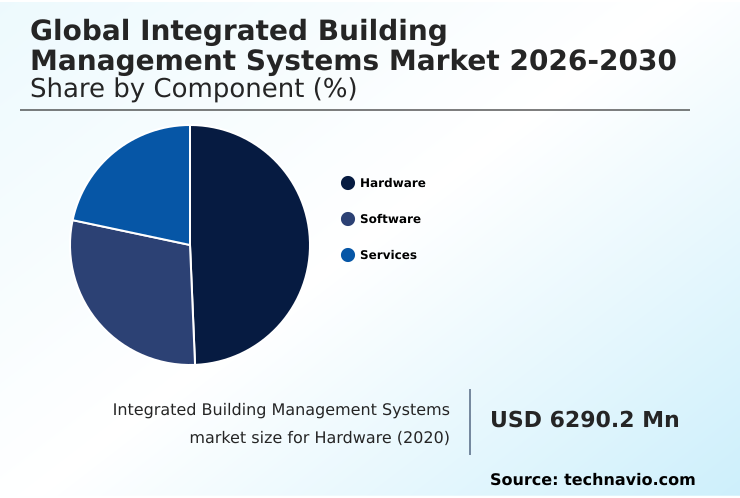
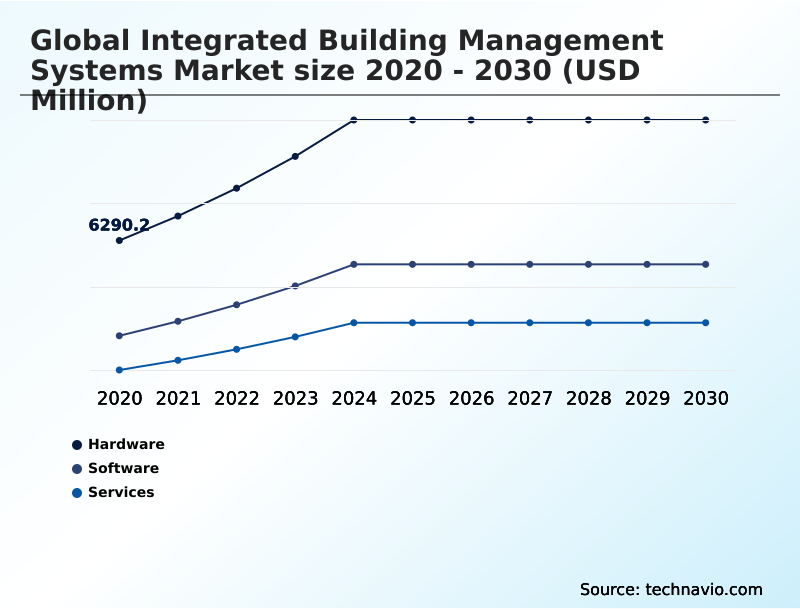
The Hardware segment was valued at USD 9.57 billion in 2024 and showed a gradual increase during the forecast period.
Regional Analysis
Europe is estimated to contribute 35.8% to the growth of the global market during the forecast period.Technavio’s analysts have elaborately explained the regional trends and drivers that shape the market during the forecast period.
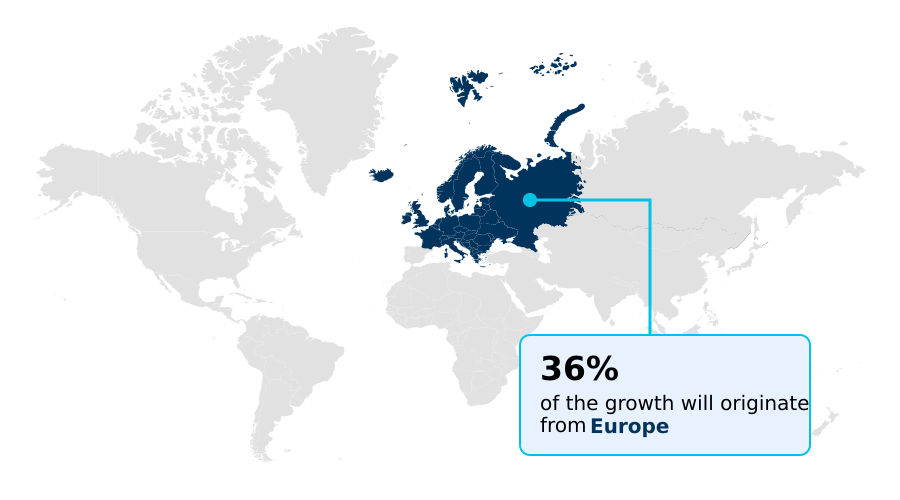
See How Integrated Building Management Systems Market Demand is Rising in Europe Get Free Sample
The geographic landscape is shaped by distinct regional drivers, with a focus on integrating advanced subsystems to meet modern demands.
In North America and Europe, regulatory compliance and data privacy mandates are accelerating the adoption of sophisticated access control systems and water management systems.
In these regions, achieving energy performance standards is critical, often requiring the use of building information modeling during the design phase. In APAC, rapid urbanization fuels demand for smart grid integration.
The implementation of variable refrigerant flow technology, coupled with fire safety integration, allows new high-rises to achieve operational efficiencies.
Across all regions, the integration with enterprise resource planning and industrial control systems is becoming standard, driven by a need for fault detection diagnostics to ensure reliability and continuous operation.
Market Dynamics
Our researchers analyzed the data with 2025 as the base year, along with the key drivers, trends, and challenges. A holistic analysis of drivers will help companies refine their marketing strategies to gain a competitive advantage.
- Achieving strategic advantage in the current market requires a focus on specific, high-value outcomes. This includes integrating AI for predictive building maintenance to preemptively address equipment issues and implementing zero-trust security in building automation to counter rising cyber threats.
- A key focus is achieving interoperability with legacy HVAC systems, a challenge that can be mitigated by using digital twins for energy consumption simulation. Forward-thinking organizations are adopting cloud-native platforms for multi-site facility management, which provide a unified view of operations. Utilizing BACnet integration for unified building controls simplifies management and reduces complexity.
- Success also hinges on managing occupant comfort with sensor data and reducing operational costs with predictive analytics. Ensuring regulatory compliance with energy reporting is streamlined through automated software, while securing connected devices in smart buildings becomes a non-negotiable aspect of risk management.
- Deploying agentic AI for autonomous building operations represents the next frontier, allowing for optimizing HVAC performance with machine learning. Firms are also enhancing workplace safety through integrated systems and managing hybrid work occupancy patterns. The ability to successfully retrofit older buildings with smart technology, guided by human-centric design for autonomous infrastructure, is a significant differentiator.
- Ultimately, leveraging IoT for real-time data aggregation and aligning building performance with ESG goals via unified dashboards, while mitigating cybersecurity risks in smart buildings, is essential for long-term value creation. Companies that master these capabilities are seeing operational efficiencies improve at a rate twice that of their peers.
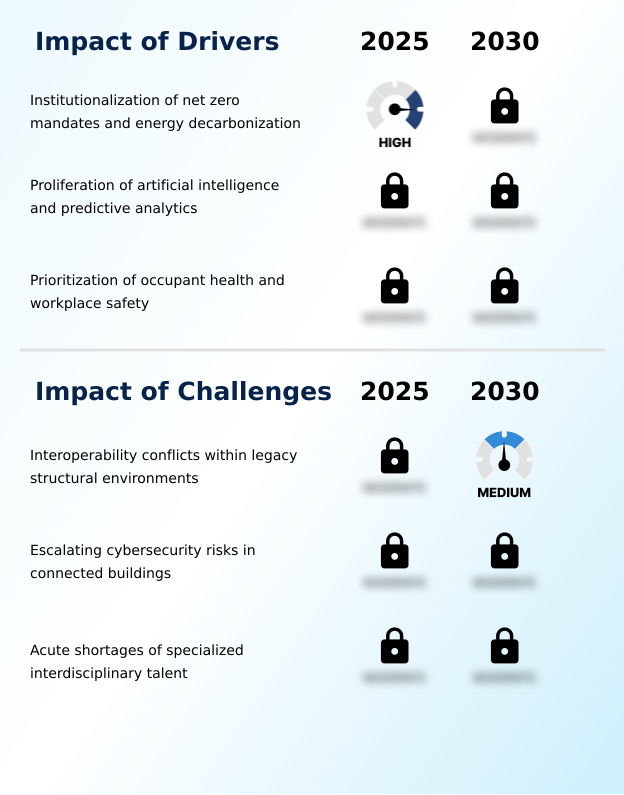
What are the key market drivers leading to the rise in the adoption of Integrated Building Management Systems Industry?
- The institutionalization of net-zero mandates and a collective push for energy decarbonization are key drivers propelling the growth of the integrated building management systems market.
- Market growth is significantly propelled by the strategic integration of advanced communication standards and digital technologies. The widespread adoption of the BACnet protocol and LONWorks communication, alongside the industrial-grade Modbus protocol, ensures system interoperability, even with legacy equipment.
- This is foundational for sophisticated building automation and control systems. Innovations such as Power over Ethernet and digital twin technology are enabling more granular management, with firms reporting up to a 40% reduction in diagnostic times for cyber-physical systems.
- The implementation of a zero-trust framework and robust demand-response strategies, facilitated by real-time data aggregation, is becoming critical for security and energy cost management, driving a clear return on investment.
What are the market trends shaping the Integrated Building Management Systems Industry?
- The proliferation of agentic artificial intelligence architectures is a significant emerging trend. This signals a fundamental shift toward more autonomous and proactive building management systems.
- Key trends are reshaping building operations, moving beyond simple automation to proactive autonomy. The market is seeing a convergence of agentic AI architectures, unified cloud-native platforms, and human-centric autonomous infrastructure, which collectively enhance occupant well-being and facility management.
- These advancements in predictive analytics enable a data-driven management approach that optimizes indoor air quality and occupant comfort, leading to a 25% reduction in occupant complaints. This shift addresses long-standing interoperability conflicts while helping organizations meet net-zero emission mandates.
- The focus is on reducing operational expenditures and creating environments that are both efficient and responsive to human needs, with some platforms demonstrating a 15% improvement in space utilization.
What challenges does the Integrated Building Management Systems Industry face during its growth?
- Interoperability conflicts within legacy structural environments present a key challenge, often hindering the seamless integration and full realization of smart building capabilities.
- Primary challenges revolve around technical complexity and the pace of technological change. Integrating new systems requires a focus on open-protocol architecture and effective IoT sensor integration to ensure seamless data flow and enable advanced machine learning models.
- Organizations are adopting sustainable building practices and green software engineering to align with ESG goals, which adds another layer of complexity to asset lifecycle management. The successful deployment of smart building solutions, including those reliant on edge computing and sovereign cloud solutions, can increase energy efficiency optimization by over 20%.
- However, achieving these gains requires overcoming the hurdle of creating connected building infrastructure that supports automated environmental adjustments without compromising security, a task that has extended project timelines by an average of 15% in complex retrofits.
Exclusive Technavio Analysis on Customer Landscape
The integrated building management systems market forecasting report includes the adoption lifecycle of the market, covering from the innovator’s stage to the laggard’s stage. It focuses on adoption rates in different regions based on penetration. Furthermore, the integrated building management systems market report also includes key purchase criteria and drivers of price sensitivity to help companies evaluate and develop their market growth analysis strategies.
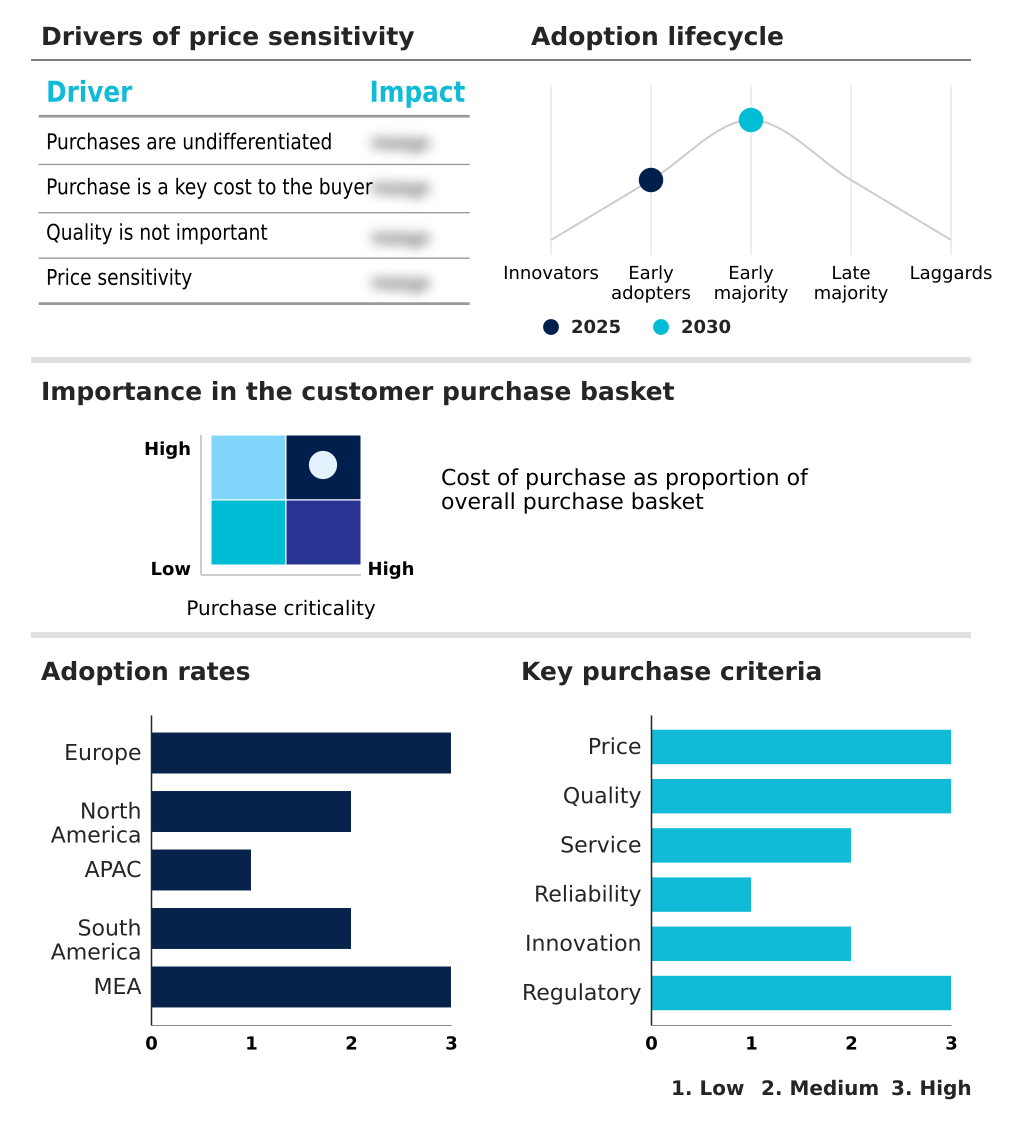
Customer Landscape of Integrated Building Management Systems Industry
Competitive Landscape
Companies are implementing various strategies, such as strategic alliances, integrated building management systems market forecast, partnerships, mergers and acquisitions, geographical expansion, and product/service launches, to enhance their presence in the industry.
ABB Ltd. - Expertise centers on delivering integrated building management platforms, including smart automation solutions and advanced control systems designed to enhance operational efficiency and asset performance.
The industry research and growth report includes detailed analyses of the competitive landscape of the market and information about key companies, including:
- ABB Ltd.
- Acuity Brands Inc.
- Advantech Co. Ltd.
- Azbil Corp.
- Beckhoff Automation GmbH
- Bosch Sicherheitssysteme GmbH
- Carrier Global Corp.
- Cisco Systems Inc.
- Daikin Industries Ltd.
- Emerson Electric Co.
- Hitachi Ltd.
- Honeywell International Inc.
- IBM Corp.
- Johnson Controls International
- Legrand SA
- Mitsubishi Electric Corp.
- Panasonic Holdings Corp.
- Siemens AG
- Trane Technologies plc
- Yokogawa Electric Corp.
Qualitative and quantitative analysis of companies has been conducted to help clients understand the wider business environment as well as the strengths and weaknesses of key industry players. Data is qualitatively analyzed to categorize companies as pure play, category-focused, industry-focused, and diversified; it is quantitatively analyzed to categorize companies as dominant, leading, strong, tentative, and weak.
Recent Development and News in Integrated building management systems market
- In April, 2025, Siemens AG announced a strategic partnership to advance its vision for human-centric autonomous buildings, integrating industrial AI to create adaptive, high-performing spaces.
- In January, 2025, Honeywell International Inc. launched a new strategic initiative focused on its Building Automation segment, aiming to accelerate innovation in smart sensors and edge devices.
- In November, 2024, Schneider Electric SE unveiled its next-generation EcoStruxure platform, which integrates machine learning and predictive analytics to boost operational efficiency.
- In September, 2024, Johnson Controls International PLC released a major update to its OpenBlue platform, introducing new agentic AI capabilities for automating operational decisions and improving system resilience.
Dive into Technavio’s robust research methodology, blending expert interviews, extensive data synthesis, and validated models for unparalleled Integrated Building Management Systems Market insights. See full methodology.
| Market Scope | |
|---|---|
| Page number | 336 |
| Base year | 2025 |
| Historic period | 2020-2024 |
| Forecast period | 2026-2030 |
| Growth momentum & CAGR | Accelerate at a CAGR of 14.6% |
| Market growth 2026-2030 | USD 21143.6 million |
| Market structure | Fragmented |
| YoY growth 2025-2026(%) | 12.8% |
| Key countries | Germany, UK, France, Italy, Spain, The Netherlands, US, Canada, Mexico, China, Japan, India, South Korea, Australia, Indonesia, Brazil, Argentina, Chile, Saudi Arabia, UAE, South Africa, Turkey and Israel |
| Competitive landscape | Leading Companies, Market Positioning of Companies, Competitive Strategies, and Industry Risks |
Research Analyst Overview
- The market is undergoing a fundamental transformation, driven by the convergence of energy decarbonization and advanced digital capabilities. The adoption of open-protocol architecture and semantic tagging is crucial for breaking down data silos. Decision-making is now influenced by the need to manage environmental sustainability and corporate responsibility, pushing firms toward green software engineering and sovereign cloud solutions.
- Core technologies such as machine learning models, predictive analytics, and digital twin technology are being integrated into centralized control dashboards to provide predictive maintenance alerts and optimize systems like variable refrigerant flow. Protocols including the BACnet protocol, LONWorks communication, and Modbus protocol are essential for interoperability, while Power over Ethernet supports advanced lighting control that considers human circadian rhythms.
- The focus on occupant well-being is driving innovations in access control systems, fire safety integration, and water management systems.
- For boardroom consideration, the implementation of a zero-trust framework to secure industrial control systems and enterprise resource planning data is now a critical budgetary item, directly tied to maintaining asset value and operational continuity through demand-response strategies and IoT sensor integration via remote monitoring tools.
What are the Key Data Covered in this Integrated Building Management Systems Market Research and Growth Report?
-
What is the expected growth of the Integrated Building Management Systems Market between 2026 and 2030?
-
USD 21.14 billion, at a CAGR of 14.6%
-
-
What segmentation does the market report cover?
-
The report is segmented by Component (Hardware, Software, and Services), End-user (Commercial, Residential, and Government), Application (Energy management, Lighting control, HVAC control, and Others), Communication Technology (BACnet, LONWorks, Modbus, Ethernet or IP, and Others) and Geography (Europe, North America, APAC, South America, Middle East and Africa)
-
-
Which regions are analyzed in the report?
-
Europe, North America, APAC, South America and Middle East and Africa
-
-
What are the key growth drivers and market challenges?
-
Institutionalization of net zero mandates and energy decarbonization, Interoperability conflicts within legacy structural environments
-
-
Who are the major players in the Integrated Building Management Systems Market?
-
ABB Ltd., Acuity Brands Inc., Advantech Co. Ltd., Azbil Corp., Beckhoff Automation GmbH, Bosch Sicherheitssysteme GmbH, Carrier Global Corp., Cisco Systems Inc., Daikin Industries Ltd., Emerson Electric Co., Hitachi Ltd., Honeywell International Inc., IBM Corp., Johnson Controls International, Legrand SA, Mitsubishi Electric Corp., Panasonic Holdings Corp., Siemens AG, Trane Technologies plc and Yokogawa Electric Corp.
-
Market Research Insights
- The market dynamics are increasingly shaped by a strategic move toward data-driven management and proactive autonomy, which significantly reduces operational expenditures. Adoption of smart building solutions enables a more than 20% improvement in energy efficiency optimization, directly impacting asset lifecycle management. The emphasis on occupant comfort and indoor air quality is paramount, with advanced control systems facilitating automated environmental adjustments.
- For facility management, the integration of diverse systems delivers a unified view, improving response times by over 30% compared to siloed legacy equipment. This shift is not just about technology but about creating sustainable building practices through connected building infrastructure that supports real-time data aggregation and enhances system interoperability.
We can help! Our analysts can customize this integrated building management systems market research report to meet your requirements.
 RIA -
RIA -