



Gym And Health Clubs Market Size 2026-2030
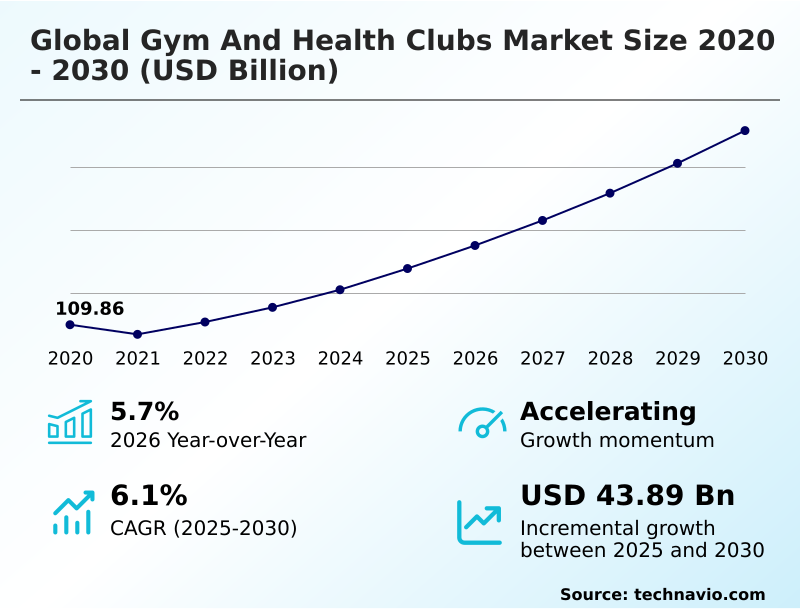
The gym and health clubs market size is valued to increase by USD 43.89 billion, at a CAGR of 6.1% from 2025 to 2030. Increasing health and wellness consciousness for consumers will drive the gym and health clubs market.
Major Market Trends & Insights
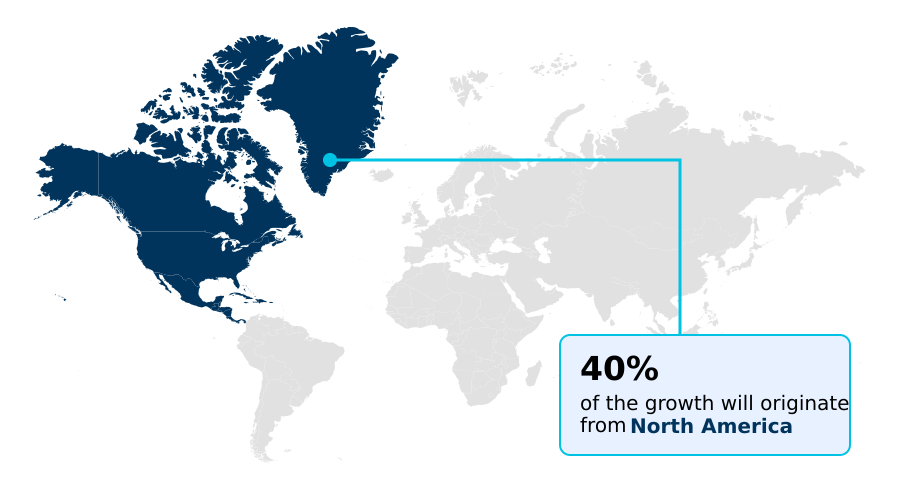
- North America dominated the market and accounted for a 40.5% growth during the forecast period.
- By Service - Membership fees segment was valued at USD 104.98 billion in 2024
- By Type - Private segment accounted for the largest market revenue share in 2024
Market Size & Forecast
- Market Opportunities: USD 61.77 billion
- Market Future Opportunities: USD 43.89 billion
- CAGR from 2025 to 2030 : 6.1%
Market Summary
- The gym and health clubs market is undergoing a significant transformation, moving beyond traditional fitness to become comprehensive holistic wellness hubs. Key drivers include a greater focus on preventative healthcare measures and the widespread adoption of corporate wellness programs.
- This shift is reshaping service models, with full-service health clubs and boutique fitness studios alike incorporating specialized instruction and integrated health offerings such as nutritional counseling and recovery therapies. Technology is a critical enabler, with wearable technology integration, ai-powered coaching, and digital fitness platforms delivering personalized workout plans and improving data-informed member engagement.
- A key business scenario involves leveraging gym management software to optimize operational efficiency. For instance, by analyzing member usage patterns to adjust class schedules and staffing, operators can reduce overhead costs while simultaneously enhancing the customer-centric service experience. This data-driven approach is crucial for navigating challenges like competition from at-home solutions and rising operational expenses.
- The market's future hinges on creating a seamless hybrid fitness model that merges physical and digital experiences, fostering community-driven fitness, and proving a clear return on wellness investment for both individuals and corporate partners.
What will be the Size of the Gym And Health Clubs Market during the forecast period?
Get Key Insights on Market Forecast (PDF) Get Free Sample
How is the Gym And Health Clubs Market Segmented?
The gym and health clubs industry research report provides comprehensive data (region-wise segment analysis), with forecasts and estimates in "USD million" for the period 2026-2030, as well as historical data from 2020-2024 for the following segments.
- Service
- Membership fees
- Personal training and instruction fees
- Total admission fees
- Type
- Private
- Public
- End-user
- Individuals
- Corporates
- Geography
- North America
- US
- Canada
- Mexico
- APAC
- China
- Japan
- India
- Europe
- Germany
- UK
- France
- Middle East and Africa
- South Africa
- UAE
- Saudi Arabia
- South America
- Brazil
- Argentina
- Colombia
- Rest of World (ROW)
- North America
By Service Insights
The membership fees segment is estimated to witness significant growth during the forecast period.
The membership fees segment is evolving from rigid contracts to dynamic membership fee structures that prioritize value-driven retention over simple volume-driven acquisition.
Operators now utilize tiered pricing strategies and flexible payment options like pay-as-you-go membership as a key customer acquisition channel.
This data-driven approach allows for sophisticated member administration and improved operational efficiency, with advanced gym management software managing everything from billing to access control.
The success of the high-value low-price segment has demonstrated that facilities optimizing their pricing models can achieve member loyalty improvements of over 15%.
This strategy is complemented by ancillary income from services such as personal training fees to maximize revenue per member.
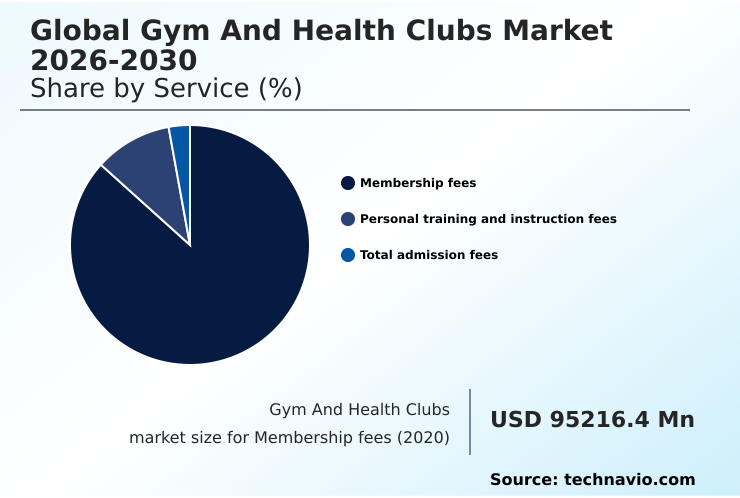
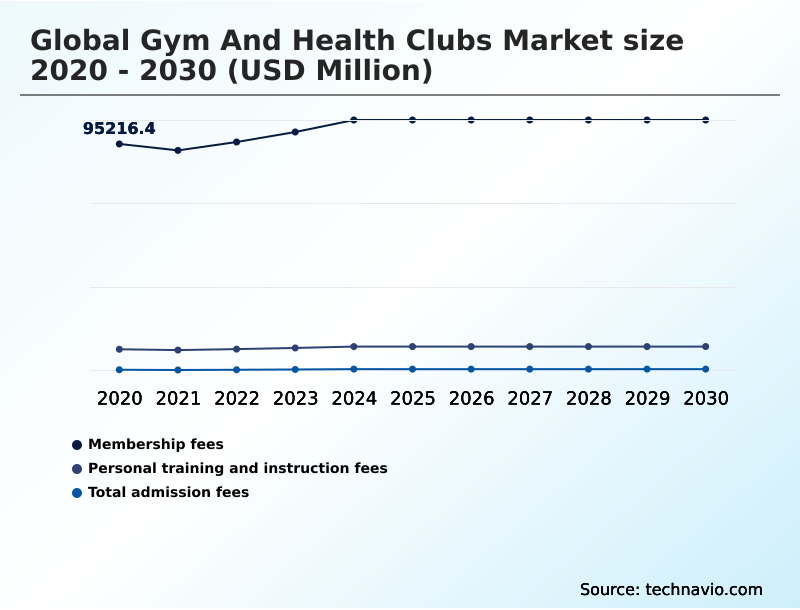
The Membership fees segment was valued at USD 104.98 billion in 2024 and showed a gradual increase during the forecast period.
Regional Analysis
North America is estimated to contribute 40.5% to the growth of the global market during the forecast period.Technavio’s analysts have elaborately explained the regional trends and drivers that shape the market during the forecast period.
See How Gym And Health Clubs Market Demand is Rising in North America Get Free Sample
The geographic landscape is defined by regional maturity and consumer demand for integrated health offerings. North America, which accounts for over 40% of incremental growth, sees high demand for premium fitness facilities offering medical wellness services and personalized workout plans.
European clubs emphasize physical recovery, incorporating cryotherapy, infrared saunas, and assisted stretching into standard packages. In APAC, the fastest-growing region, the focus is on family-oriented fitness and group exercise studios with round-the-clock access.
These specialized services, including nutritional counseling, have become a primary customer acquisition channel, with facilities offering them reporting a 15% higher conversion rate from trials to full memberships compared to basic gym-only models.
Market Dynamics
Our researchers analyzed the data with 2025 as the base year, along with the key drivers, trends, and challenges. A holistic analysis of drivers will help companies refine their marketing strategies to gain a competitive advantage.
- The strategic direction of the fitness industry is shaped by key transformative pressures, including the imperative of integrating medical wellness into fitness models. This move is a direct response to the consumer demand for holistic wellness services and the need for providing glp-1 companion fitness programs.
- A central theme is hyper-personalization through technology and data, which underpins the role of AI in personalized fitness coaching and the widespread adoption of wearable tech in gyms.
- This technology integration in gym member engagement is essential for developing strategies for improving member retention rates, which have been shown to increase by over 20% in clubs that effectively leverage member data. Concurrently, the market is navigating the competition between budget gyms and boutiques and the financial strain of rising operational costs for fitness centers.
- The growth of specialized boutique fitness studios, which capitalize on the importance of community in boutique studios, has fragmented the consumer base. In response, larger clubs are diversifying revenue streams for health clubs and adopting a premiumization strategy for low-cost gyms.
- The industry is also contending with challenges from at-home fitness solutions by promoting hybrid models combining in-person and digital fitness. The impact of corporate wellness on memberships and the impact of flexible memberships on loyalty are reshaping acquisition strategies.
- Ultimately, the successful convergence of fitness and the medical sector depends on using data analytics for identifying at-risk members and delivering quantifiable health outcomes.
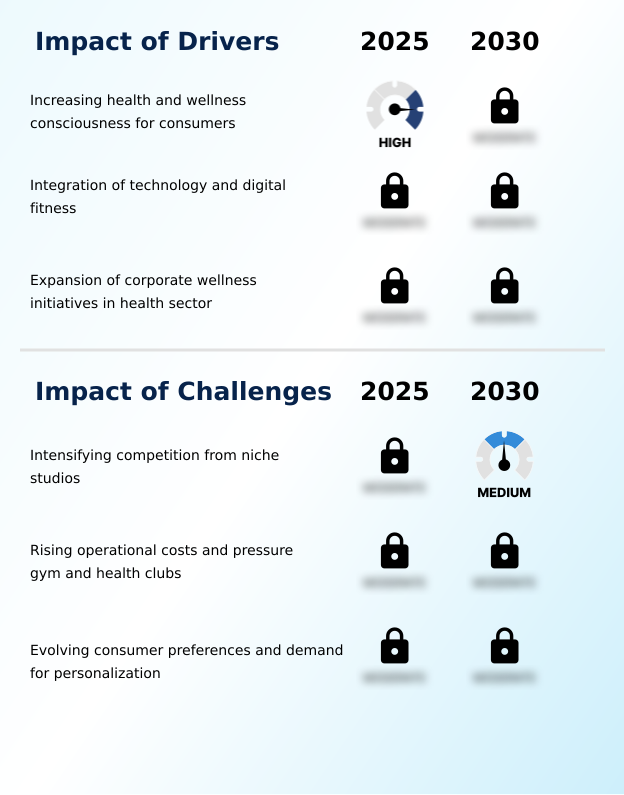
What are the key market drivers leading to the rise in the adoption of Gym And Health Clubs Industry?
- A key market driver is the increasing health and wellness consciousness among consumers, compelling them to seek preventative health measures and adopt more active lifestyles.
- The adoption of preventative healthcare measures and a focus on preventative health management are key drivers. This is amplified by the expansion of corporate wellness programs and dedicated corporate partnership programs, which make facilities more accessible.
- Technology is pivotal, with wearable technology integration providing biometric feedback for data-informed member engagement and ai-powered coaching.
- The rollout of smart fitness equipment and fitness tracking apps provides convenient fitness solutions, with platforms offering 24/7 gym accessibility seeing user adoption grow by 30% annually.
- These tools are crucial in providing accessible fitness solutions that meet modern consumer demands for personalized, data-driven health and fitness experiences, improving member outcomes by as much as 40%.
What are the market trends shaping the Gym And Health Clubs Industry?
- A significant market trend is the ascent of holistic wellness and integrated health offerings. This reflects a consumer shift toward comprehensive well-being that combines physical fitness with mental and emotional health.
- The market is shifting toward holistic wellness hubs that prioritize mental well-being and community-driven fitness. This third space concept is exemplified by the rise of boutique fitness studios, which offer specialized instruction and community-centric workouts that foster loyalty. These facilities provide specialized fitness experiences and experiential fitness far beyond traditional gyms, with some reporting a 20% higher member engagement rate.
- The integration of mindfulness classes and recovery therapies is now standard. Furthermore, the hybrid fitness model, which combines physical access with on-demand fitness content, has become essential, with operators seeing a 25% increase in retention among users who engage with both formats.
What challenges does the Gym And Health Clubs Industry face during its growth?
- A significant challenge affecting industry growth is the intensifying competition from specialized boutique studios and accessible at-home digital fitness alternatives.
- Intense competition from digital fitness platforms offering virtual personal training challenges traditional full-service health clubs. These platforms leverage asset-light business models and often provide a more customer-centric service at a lower cost. Simultaneously, both franchisee-owned stores and corporate-owned stores must contend with specialized studios offering high-intensity interval training or low-impact fitness solutions.
- To compete, operators are enhancing member retention strategies by focusing on social connection and luxury fitness experiences. Diversifying through ancillary revenue streams has become critical, as facilities implementing such strategies report up to a 10% greater resilience against market fragmentation. The challenge lies in balancing operational costs with the need for continuous innovation.
Exclusive Technavio Analysis on Customer Landscape
The gym and health clubs market forecasting report includes the adoption lifecycle of the market, covering from the innovator’s stage to the laggard’s stage. It focuses on adoption rates in different regions based on penetration. Furthermore, the gym and health clubs market report also includes key purchase criteria and drivers of price sensitivity to help companies evaluate and develop their market growth analysis strategies.
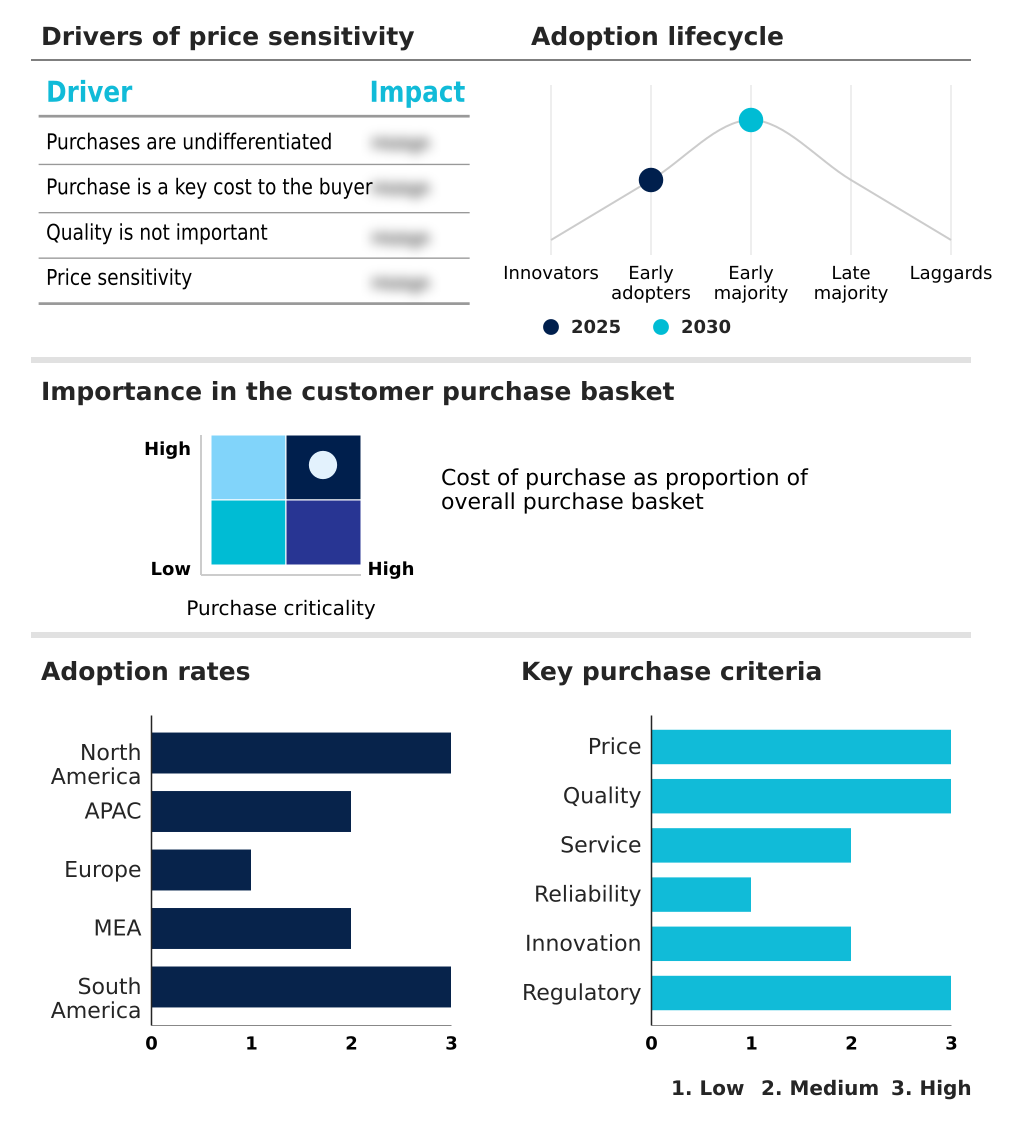
Customer Landscape of Gym And Health Clubs Industry
Competitive Landscape
Companies are implementing various strategies, such as strategic alliances, gym and health clubs market forecast, partnerships, mergers and acquisitions, geographical expansion, and product/service launches, to enhance their presence in the industry.
24 Hour Fitness USA LLC - Offering round-the-clock access and diverse fitness programming, these facilities cater to a broad range of user schedules and wellness goals through a comprehensive, accessible service model.
The industry research and growth report includes detailed analyses of the competitive landscape of the market and information about key companies, including:
- 24 Hour Fitness USA LLC
- Bev Francis Powerhouse Gym
- Chelsea Piers LP
- Crunch LLC
- CureFit Healthcare Pvt. Ltd.
- David Lloyd Leisure Ltd.
- Equinox Holdings Inc.
- Genesis Health Clubs
- Life Time Inc.
- Metroflex Gym
- Planet Fitness Inc.
- RSG Group GmbH
- Self Esteem Brands LLC
- Snap Fitness Inc
- The Bay Clubs Co. LLC
- The Club Co Ltd
- Thor Fitness
- UFC Gym
- Virgin Active
- Xsports Fitness
Qualitative and quantitative analysis of companies has been conducted to help clients understand the wider business environment as well as the strengths and weaknesses of key industry players. Data is qualitatively analyzed to categorize companies as pure play, category-focused, industry-focused, and diversified; it is quantitatively analyzed to categorize companies as dominant, leading, strong, tentative, and weak.
Recent Development and News in Gym and health clubs market
- In September 2025, TDR Capital executed a significant recapitalization of David Lloyd Leisure, transferring ownership to a new investment vehicle to provide liquidity for accelerating its European expansion.
- In March 2025, Vitality, a prominent European fitness chain, announced a strategic partnership with a leading mental wellness app to integrate guided meditations and stress-reduction exercises into member services.
- In March 2025, a leading Egyptian telecommunications company formed a strategic partnership with a global fitness app, enabling the launch of integrated subscription packages for mobile customers.
- In January 2025, Life Time Inc. launched its proprietary AI-powered digital coaching platform, which leverages data from member wearables to deliver hyper-personalized workout and nutrition plans.
Dive into Technavio’s robust research methodology, blending expert interviews, extensive data synthesis, and validated models for unparalleled Gym And Health Clubs Market insights. See full methodology.
| Market Scope | |
|---|---|
| Page number | 286 |
| Base year | 2025 |
| Historic period | 2020-2024 |
| Forecast period | 2026-2030 |
| Growth momentum & CAGR | Accelerate at a CAGR of 6.1% |
| Market growth 2026-2030 | USD 43886.5 million |
| Market structure | Fragmented |
| YoY growth 2025-2026(%) | 5.7% |
| Key countries | US, Canada, Mexico, China, Japan, India, Australia, South Korea, Indonesia, Germany, UK, France, Italy, Spain, The Netherlands, South Africa, UAE, Saudi Arabia, Egypt, Israel, Brazil, Argentina and Colombia |
| Competitive landscape | Leading Companies, Market Positioning of Companies, Competitive Strategies, and Industry Risks |
Research Analyst Overview
- The market's evolution is marked by a pivot to preventative healthcare measures and medical wellness services. Full-service health clubs and boutique fitness studios are now integrating everything from high-intensity interval training to low-impact fitness solutions and mindfulness classes. Boardroom decisions are increasingly focused on technology investment, particularly in gym management software for member administration and ai-powered coaching platforms.
- The rollout of smart fitness equipment and wearable technology integration provides the biometric feedback necessary for a truly data-driven approach. This focus on personalized workout plans is critical for retention. Facilities offering glp-1 companion programs and nutritional counseling are seeing member goal achievement rates improve by up to 30%.
- The rise of digital fitness platforms offering on-demand fitness content has forced a hybrid fitness model. Operators, from franchisee-owned stores to corporate-owned stores, are diversifying revenue with personal training fees and specialized recovery therapies like cryotherapy, infrared saunas, and assisted stretching, while group exercise studios foster community-centric workouts.
What are the Key Data Covered in this Gym And Health Clubs Market Research and Growth Report?
-
What is the expected growth of the Gym And Health Clubs Market between 2026 and 2030?
-
USD 43.89 billion, at a CAGR of 6.1%
-
-
What segmentation does the market report cover?
-
The report is segmented by Service (Membership fees, Personal training and instruction fees, and Total admission fees), Type (Private, and Public), End-user (Individuals, and Corporates) and Geography (North America, APAC, Europe, Middle East and Africa, South America)
-
-
Which regions are analyzed in the report?
-
North America, APAC, Europe, Middle East and Africa and South America
-
-
What are the key growth drivers and market challenges?
-
Increasing health and wellness consciousness for consumers, Intensifying competition from niche studios
-
-
Who are the major players in the Gym And Health Clubs Market?
-
24 Hour Fitness USA LLC, Bev Francis Powerhouse Gym, Chelsea Piers LP, Crunch LLC, CureFit Healthcare Pvt. Ltd., David Lloyd Leisure Ltd., Equinox Holdings Inc., Genesis Health Clubs, Life Time Inc., Metroflex Gym, Planet Fitness Inc., RSG Group GmbH, Self Esteem Brands LLC, Snap Fitness Inc, The Bay Clubs Co. LLC, The Club Co Ltd, Thor Fitness, UFC Gym, Virgin Active and Xsports Fitness
-
Market Research Insights
- Market dynamics are shifting from volume-driven acquisition to value-driven retention, with operators becoming holistic wellness hubs. This customer-centric service model offers integrated health offerings, specialized fitness experiences, and experiential fitness to foster social connection and mental well-being. Premium fitness facilities deliver luxury fitness experiences, while the high-value low-price segment provides accessible fitness solutions.
- Adopting flexible payment options and family-oriented fitness plans improves member retention strategies, increasing loyalty by 15%. Corporate partnership programs act as a key customer acquisition channel. To boost operational efficiency, clubs use ancillary revenue streams and asset-light business models.
- Convenient fitness solutions like 24/7 gym accessibility and a focus on physical recovery drive data-informed member engagement, solidifying the gym as a third space concept for preventative health management and community-driven fitness with round-the-clock access.
We can help! Our analysts can customize this gym and health clubs market research report to meet your requirements.
 RIA -
RIA - 
