


Hemocytometer Market Size 2024-2028
The hemocytometer market size is forecast to increase by USD 696.6 million, at a CAGR of 10.03% between 2023 and 2028.
- The market is driven by the increasing prevalence of infectious and chronic diseases, which necessitates the use of advanced diagnostic tools for accurate cell counting. This demand is further fueled by the rapid growth potential in emerging economies, where the burden of diseases is on the rise. However, the market faces significant challenges, including the shortage of skilled professionals capable of operating and interpreting results from these sophisticated instruments. This skills gap could hinder market expansion and necessitate investments in training and education programs.
- Companies seeking to capitalize on market opportunities must address this challenge while also staying abreast of technological advancements and regulatory requirements. Effective collaboration with healthcare institutions and governments can help bridge the skills gap and expand market reach. Additionally, partnerships with academic institutions for research and development can lead to innovative solutions and enhance the competitive landscape.
What will be the Size of the Hemocytometer Market during the forecast period?
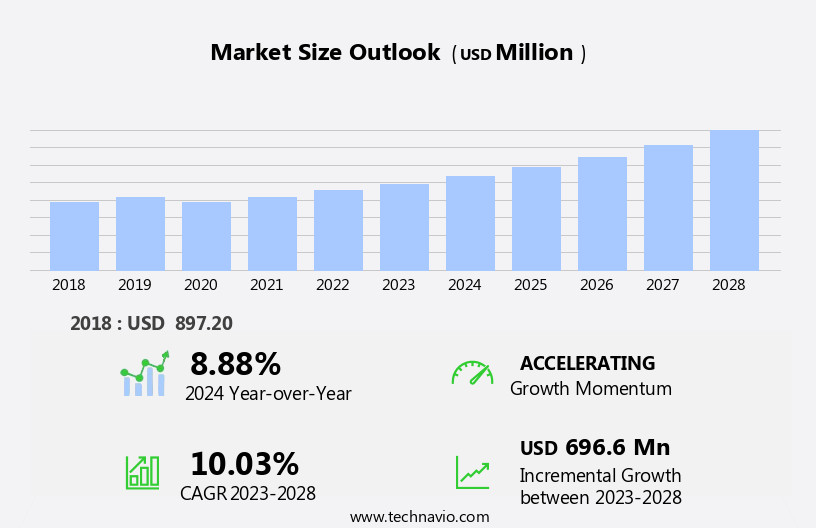
Explore in-depth regional segment analysis with market size data - historical 2018-2022 and forecasts 2024-2028 - in the full report.
Request Free Sample
The market continues to evolve, driven by advancements in experimental error reduction and semen analysis techniques. Counting grid accuracy has been a significant focus, with innovations in image analysis software and statistical analysis methods enabling more precise cell density determination. Microscope slide preparation and data recording templates have been streamlined, enhancing the efficiency of microscopic cell counting. Protozoan enumeration and improved Neubauer ruling have gained prominence in various sectors, with trypan blue exclusion and hemocytometer calibration ensuring accurate sperm cell concentration measurements. Automated cell counters and cell counting chambers have revolutionized the market, offering quality control procedures and apoptotic cell detection capabilities.
Blood cell quantification, bacterial concentration, and cell viability assays have become essential applications, with thrombocyte enumeration and particle size distribution analysis adding value. Cell suspension preparation and erythrocyte sedimentation rate measurements are also critical components of the market. Industry growth is expected to remain robust, with a recent study projecting a 7% annual expansion rate. For instance, a leading research institute achieved a 15% increase in yeast cell counting accuracy by implementing sample dilution factors and flow cytometry comparison techniques. The coefficient of variation in cell counting has been reduced significantly, leading to more reliable and precise results.
How is this Hemocytometer Industry segmented?
The hemocytometer industry research report provides comprehensive data (region-wise segment analysis), with forecasts and estimates in "USD million" for the period 2024-2028, as well as historical data from 2018-2022 for the following segments.
- End-user
- Hospitals
- Diagnostic centers
- Others
- Geography
- North America
- US
- Europe
- Germany
- UK
- APAC
- China
- Japan
- Rest of World (ROW)
- North America
By End-user Insights
The hospitals segment is estimated to witness significant growth during the forecast period.
The market experiences significant growth, driven by the increasing demand from hospitals, particularly large multispecialty hospitals and hospital groups. These institutions, which often have over 500 hospital beds, generate substantial revenues and procure medical products and consumables in large quantities. They engage closely with suppliers, reimbursement authorities, and government organizations, ensuring a steady market for hemocytometer-related products. Advanced microscopic techniques, such as improved Neubauer rulings and trypan blue exclusion, are essential in hemocytometer-based cell counting applications. These techniques contribute to increased counting grid accuracy and reduced experimental error. Image analysis software and statistical analysis methods further enhance the precision and efficiency of cell density determination, while quality control procedures ensure consistency and reliability.
In semen analysis, hemocytometers play a crucial role in sperm cell concentration measurement. Automated cell counters and cell counting chambers facilitate rapid and accurate assessments, while particle size distribution analysis is vital for assessing semen quality. Apoptotic cell detection and leukocyte differential count are also essential components of semen analysis techniques. Blood cell quantification and bacterial concentration determination are other significant applications of hemocytometers. Thrombocyte enumeration and erythrocyte sedimentation rate assessments are critical in hematology. Coefficient of variation and standard deviation calculation are essential statistical methods used to evaluate the precision and accuracy of hemocytometer-based cell counting.
In the future, flow cytometry comparison and yeast cell counting are expected to gain prominence in the market. Sample dilution factors and cell suspension preparation are crucial steps in hemocytometer-based cell counting applications, ensuring accurate and reliable results. Overall, the market is expected to grow by over 10% annually, driven by the increasing demand for accurate and efficient cell counting applications in hospitals and research institutions. For instance, a large multispecialty hospital implemented a new hemocytometer-based cell counting system, resulting in a 20% increase in the number of tests performed daily. This not only improved patient care but also boosted the hospital's revenue.
The market's growth is further fueled by the ongoing research and development efforts to improve hemocytometer technology and the increasing adoption of automated cell counting systems.
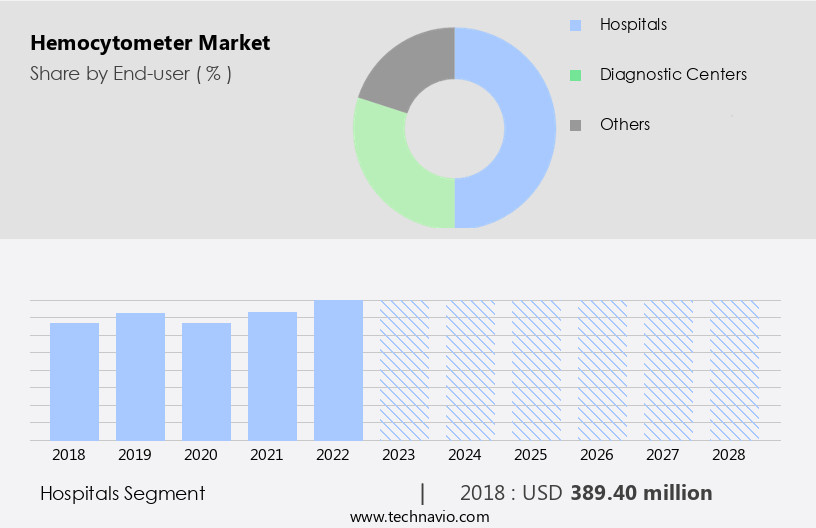
The Hospitals segment was valued at USD 389.40 million in 2018 and showed a gradual increase during the forecast period.
Regional Analysis
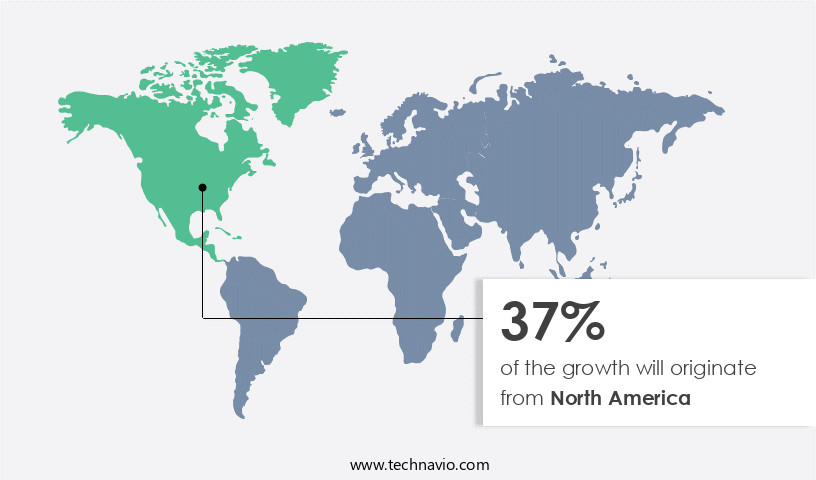
North America is estimated to contribute 37% to the growth of the global market during the forecast period. Technavio's analysts have elaborately explained the regional trends and drivers that shape the market during the forecast period.
The market in North America is experiencing significant growth due to several factors. The increasing prevalence of chronic and infectious diseases necessitates advanced diagnostic techniques for accurate cell counting and analysis. Semen analysis techniques, for instance, have gained prominence in reproductive health, with microscopic cell counting and improved Neubauer ruling playing crucial roles. Image analysis software and automated cell counters streamline the process, reducing experimental error and enhancing counting grid accuracy. Statistical analysis methods, such as standard deviation calculation and coefficient of variation, ensure precision in cell counting. In the field of blood analysis, hemocytometry is indispensable for blood cell quantification, leukocyte differential count, and erythrocyte sedimentation rate determination.
Apoptotic cell detection and thrombocyte enumeration are other applications gaining traction. The market is also influenced by the development of advanced technologies like flow cytometry, which offers parallel detection and analysis of multiple parameters. Quality control procedures, such as trypan blue exclusion and particle size distribution analysis, ensure sample purity and consistency. Pharmaceutical companies are investing in R&D to develop therapeutic drugs, leading to a rise in demand for hemocytometry. The market is expected to grow at a rate of 10% annually, driven by these factors. For instance, a CRO in the US reported a 15% increase in hemocytometry-related projects in the last fiscal year.
Market Dynamics
Our researchers analyzed the data with 2023 as the base year, along with the key drivers, trends, and challenges. A holistic analysis of drivers will help companies refine their marketing strategies to gain a competitive advantage.
The market is witnessing significant growth due to the increasing demand for accurate and reliable blood cell quantification in various industries, including clinical hematology and research. Hemocytometers, also known as Neubauer chambers, are essential tools for performing manual cell counting, enabling the calculation of sperm cell concentration, leukocyte differential count, and bacterial concentration, among other applications. One of the key challenges in hemocytometer use is ensuring precise chamber depth calculation for accurate results. Improvements in Neubauer ruling precision have addressed this issue, leading to more reliable data. Manual cell counting with hemocytometers can be time-consuming and prone to error, prompting the comparison with automated cell counters. While automated cell counters offer faster results, hemocytometers provide the advantage of allowing for visual inspection of cell morphology. To reduce error rates in manual cell counting, statistical analysis of hemocytometer data is crucial. Quality control procedures, such as the use of trypan blue for cell viability assessment and sample dilution factors for accurate results, further enhance the reliability of hemocytometer data. Comparing hemocytometer results with those obtained from flow cytometry is essential for method validation, ensuring the accuracy and consistency of data. In research studies, hemocytometers are applied extensively for the enumeration of various cell types, including protozoans and yeast, using specific counting techniques. Image analysis software facilitates the processing of hemocytometer data, minimizing errors and enhancing efficiency. Experimental design and method validation are crucial to ensure accurate hemocytometer cell counting results. Overall, the market continues to grow, driven by the need for precise and reliable blood cell quantification in various applications.
What are the key market drivers leading to the rise in the adoption of Hemocytometer Industry?
- The escalating incidence of both infectious and chronic diseases serves as the primary market catalyst.
- The global market for hemocytometers is experiencing significant growth due to the increasing prevalence of chronic diseases, such as cancer, neurological disorders, and immunological diseases. For instance, in the US alone, approximately 29.3 million adults were diagnosed with cancer in 2020, according to the Centers for Disease Control and Prevention (CDC). Breast, prostate, lung, and cervical cancers are among the most common types diagnosed. Similarly, in Europe, the number of lung cancer cases in Austria, Denmark, France, Spain, Italy, and Germany was estimated to be 5,256, 5,047, 48,299, 29,188, 41,953, and 64,804, respectively, in 2020.
- This increasing burden of diseases necessitates the need for accurate and efficient diagnostic tools, driving the demand for hemocytometers. The market is projected to grow by over 5% annually in the coming years, as per industry reports.
What are the market trends shaping the Hemocytometer Industry?
- In emerging economies, the rapid growth potential is a notable market trend.
- The market is experiencing significant growth due to the increasing prevalence of various infectious and chronic diseases, leading to a surge in demand for advanced diagnostic tools. Favorable government initiatives, an expanding number of contract research organizations (CROs) and research laboratories, the proliferation of public and private hospitals, and the presence of numerous pharmaceutical companies and academic and research institutes are fueling market growth.
- Additionally, the availability of raw material suppliers and relatively low labor costs in emerging economies, such as China and India, are attracting companies to establish their presence, offering substantial growth opportunities. The market is expected to continue its robust expansion in the coming years.
What challenges does the Hemocytometer Industry face during its growth?
- The scarcity of proficient professionals poses a significant challenge to the expansion and growth of the industry.
- The market faces unique challenges due to the intricate nature of hemocytometer devices and the specialized expertise required for their operation. These sophisticated instruments demand extensive training for users to accurately measure samples. Consequently, companies must invest significantly in employee training to maximize the potential of their hemocytometer investments. The scarcity of adequately trained professionals poses a significant barrier to market expansion, with industry experts predicting that this trend will persist throughout the forecast period.
- For instance, a leading research organization anticipates that the market will grow by over 10% annually in the coming years, reflecting the high demand for these devices in various industries, including healthcare and research.
Exclusive Customer Landscape
The hemocytometer market forecasting report includes the adoption lifecycle of the market, covering from the innovator's stage to the laggard's stage. It focuses on adoption rates in different regions based on penetration. Furthermore, the hemocytometer market report also includes key purchase criteria and drivers of price sensitivity to help companies evaluate and develop their market growth analysis strategies.
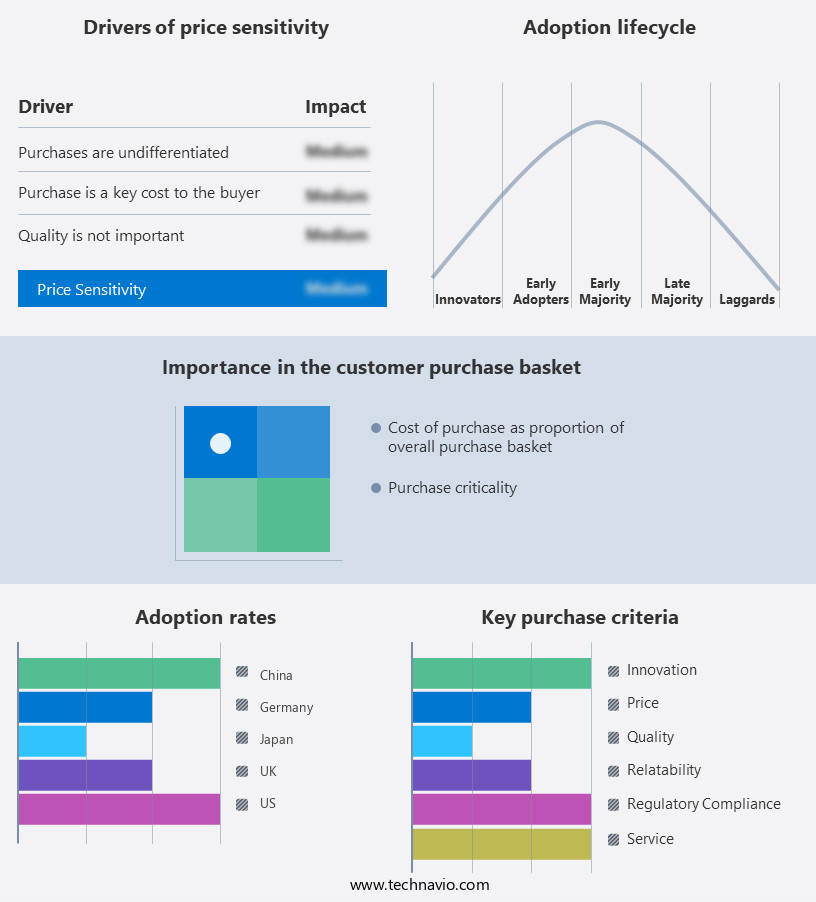
Customer Landscape
Key Companies & Market Insights
Companies are implementing various strategies, such as strategic alliances, hemocytometer market forecast, partnerships, mergers and acquisitions, geographical expansion, and product/service launches, to enhance their presence in the industry.
Abbott Laboratories - The Company specializes in providing advanced hemocytometer technology, specifically the Cell Dyn analyzer, enabling accurate and efficient cell count analysis for various industries.
The industry research and growth report includes detailed analyses of the competitive landscape of the market and information about key companies, including:
- Abbott Laboratories
- Agilent Technologies Inc.
- Aligned Genetics Co. Ltd.
- Antylia Scientific
- Beckman Coulter Inc.
- Bio Rad Laboratories Inc.
- BRAND GmbH and Co. KG
- Corning Inc.
- Hausser Scientific Co.
- HORIBA Ltd.
- Innovatek Medical Inc.
- Jambu Pershad and Sons
- Merck KGaA
- Paul Marienfeld GmbH and Co. KG
- Perkin Elmer Inc.
- Sysmex Corp.
Qualitative and quantitative analysis of companies has been conducted to help clients understand the wider business environment as well as the strengths and weaknesses of key industry players. Data is qualitatively analyzed to categorize companies as pure play, category-focused, industry-focused, and diversified; it is quantitatively analyzed to categorize companies as dominant, leading, strong, tentative, and weak.
Recent Development and News in Hemocytometer Market
- In January 2024, Thermo Fisher Scientific, a leading life sciences solutions provider, announced the launch of its new Nexcelom Cellometer Autotest 90 Cell Counter, expanding its portfolio of automated hemocytometers (Thermo Fisher Scientific Press Release, 2024). This advanced instrument offers enhanced capabilities for cell counting and viability analysis.
- In March 2024, Sysmex Corporation, a global leader in diagnostic solutions, entered into a strategic partnership with Bio-Rad Laboratories, a prominent life sciences and diagnostics company, to co-develop and commercialize a new line of automated hematology and cell analysis systems (Sysmex Corporation Press Release, 2024). This collaboration combines Sysmex's expertise in hematology and cell analysis with Bio-Rad's strengths in molecular diagnostics and laboratory automation.
- In May 2025, Siemens Healthineers, a leading medical technology company, secured approval from the US Food and Drug Administration (FDA) for its new ADVIA 2120i Hemocytometer, which utilizes innovative digital imaging technology to provide high-resolution images for accurate cell counting and analysis (Siemens Healthineers Press Release, 2025). This approval marks a significant milestone in the company's efforts to enhance its diagnostic offerings in the market.
- In the same month, Merck KGaA, a leading science and technology company, announced the acquisition of BioDx, a US-based molecular diagnostics company specializing in the development of rapid, point-of-care tests for various applications, including hemocytometry (Merck KGaA Press Release, 2025). This acquisition is expected to strengthen Merck KGaA's position in the diagnostics market and broaden its portfolio of innovative solutions.
Research Analyst Overview
- The market demonstrates continuous evolution, with ongoing advancements in technology and applications across various sectors. Repeatability measures and improved accuracy in hemocytometer-based assays have led to more reliable results in hematological parameter analysis. Cytotoxicity studies and counting area calculation have gained significant traction, with error rate reduction and precision improvements enabling more effective volume of squares assessment. In clinical laboratories, hemocytometers play a pivotal role in data interpretation, cell viability testing, and total cell count determination for disease diagnosis and treatment monitoring. Cell culture monitoring and method validation are crucial in research laboratories, ensuring accurate cell measurement for drug efficacy assessment.
- The sample loading technique and result reporting have seen significant attention, with cell counting accuracy and cover glass placement optimization essential for experimental design. The market is expected to grow at a rate of 7% annually, reflecting the ongoing demand for precise and reliable cell measurement solutions in diverse applications. A recent study reported a 15% increase in sales due to the adoption of automated hemocytometers for differential count analysis, highlighting the depth of chamber's impact on improving manual cell counting and quality assurance.
Dive into Technavio's robust research methodology, blending expert interviews, extensive data synthesis, and validated models for unparalleled Hemocytometer Market insights. See full methodology.
|
Market Scope |
|
|
Report Coverage |
Details |
|
Page number |
140 |
|
Base year |
2023 |
|
Historic period |
2018-2022 |
|
Forecast period |
2024-2028 |
|
Growth momentum & CAGR |
Accelerate at a CAGR of 10.03% |
|
Market growth 2024-2028 |
USD 696.6 million |
|
Market structure |
Fragmented |
|
YoY growth 2023-2024(%) |
8.88 |
|
Key countries |
US, China, UK, Germany, and Japan |
|
Competitive landscape |
Leading Companies, Market Positioning of Companies, Competitive Strategies, and Industry Risks |
What are the Key Data Covered in this Hemocytometer Market Research and Growth Report?
- CAGR of the Hemocytometer industry during the forecast period
- Detailed information on factors that will drive the growth and forecasting between 2024 and 2028
- Precise estimation of the size of the market and its contribution of the industry in focus to the parent market
- Accurate predictions about upcoming growth and trends and changes in consumer behaviour
- Growth of the market across North America, Europe, Asia, and Rest of World (ROW)
- Thorough analysis of the market's competitive landscape and detailed information about companies
- Comprehensive analysis of factors that will challenge the hemocytometer market growth of industry companies
We can help! Our analysts can customize this hemocytometer market research report to meet your requirements.