



Herbal Tea Market Size 2024-2028
The herbal tea market size is forecast to increase by USD 848.1 million at a CAGR of 4.6% between 2023 and 2028.
What will be the Size of the Herbal Tea Market During the Forecast Period?

How is this Herbal Tea Industry segmented and which is the largest segment?
The herbal tea industry research report provides comprehensive data (region-wise segment analysis), with forecasts and estimates in "USD million" for the period 2024-2028, as well as historical data from 2018-2022 for the following segments.
- Type
- Green
- Black
- Yellow
- Distribution Channel
- Offline
- Online
- Geography
- APAC
- China
- India
- Europe
- Germany
- UK
- North America
- US
- South America
- Middle East and Africa
- APAC
By Type Insights
- The green segment is estimated to witness significant growth during the forecast period.
The herbal tea industry has experienced significant growth due to increasing consumer preference for natural, clean label foods and pesticide-free commodities. Tea farming, adhering to ecological processes and sustainable agricultural practices, is essential to maintain plant biodiversity and soil health. Herbal tea offerings, including licorice, apple, cinnamon, star anise, dandelion, chamomile, ginger, turmeric, and various blends, cater to diverse consumer needs. Key flavors like Tulsi Detox, Peppermint Refresh, Moringa hibiscus, and Simply Chamomile address cognitive health and wellness concerns. Herbal tea is available in tea bags and loose leaves, and retail markets cater to obesity and overweight issues, offering products free from synthetic chemicals.
Brands like Sea Berry Tea and Gut Goodness Tea emphasize food safety and quality, ensuring a natural and authentic taste. Online stores provide easy access to these alcohol-free beverages, appealing to consumers seeking health, weight loss, and wellness benefits. Keywords: the market, tea farming, ecological processes, biodiversity, sustainable agricultural practices, natural ingredient, clean label foods, pesticide-free commodities, food safety, quality, taste, alcohol-free, licorice, apple, cinnamon, star anise, dandelion, chamomile, ginger, turmeric, blends, Tulsi Detox, Peppermint Refresh, Moringa hibiscus, Simply Chamomile, cognitive health, tea bags, loose leaves, obesity, overweight issues, synthetic chemicals, Soothing Sleep, Sea Berry Tea, Gut Goodness Tea, online store, health, weight loss, wellness, dietary supplements, cherry, hibiscus, orange detox, tropical turmeric, chamomile lavender.
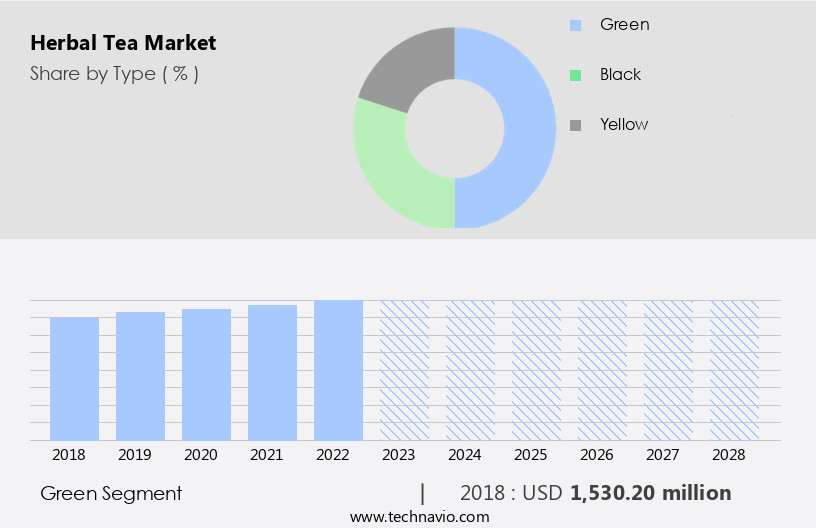
Get a glance at the Herbal Tea Industry report of share of various segments Request Free Sample
The Green segment was valued at USD 1530.20 million in 2018 and showed a gradual increase during the forecast period.
Regional Analysis
- APAC is estimated to contribute 38% to the growth of the global market during the forecast period.
Technavio’s analysts have elaborately explained the regional trends and drivers that shape the market during the forecast period.
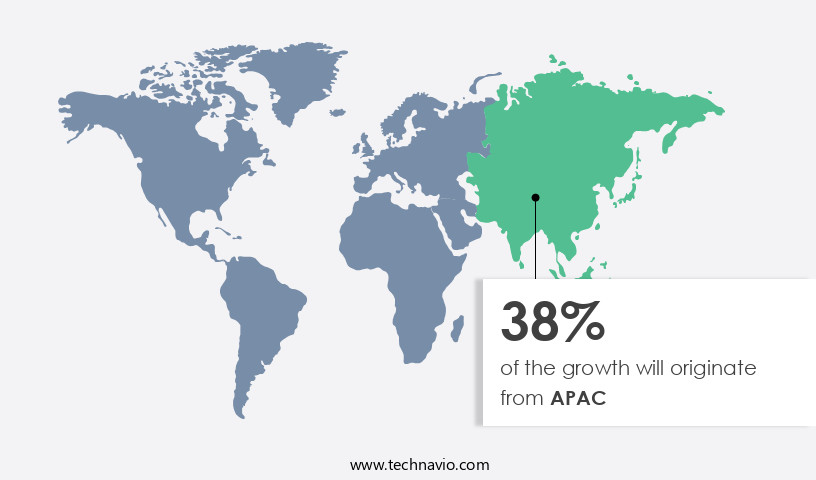
For more insights on the market share of various regions, Request Free Sample
The herbal tea industry experienced steady growth in 2023, with APAC leading the market due to increasing health consciousness and rising disposable income. Consumers in this region prefer natural ingredient-based, pesticide-free commodities, aligning with clean label food trends. companies cater to this demand by expanding their e-commerce presence, particularly through platforms like Amazon, to reach a broader consumer base. The Internet's increasing penetration and the growing trend of online shopping in APAC significantly contribute to market expansion. Key herbal teas, such as licorice, apple, cinnamon, star anise, dandelion, chamomile, ginger, turmeric, and blends, are popular for cognitive health benefits and taste.
Herbal teas are also used for soothing sleep, weight loss, and addressing obesity and overweight issues. companies prioritize sustainable agricultural practices, ecological processes, and plant biodiversity to ensure food safety and tea quality. Key herbal teas include Tulsi Detox, Peppermint Refresh, Moringa hibiscus, Simply Chamomile, Sea Berry Tea, and Gut Goodness Tea. Herbal teas are available in tea bags and loose leaves, catering to diverse consumer preferences.
Market Dynamics
Our researchers analyzed the data with 2023 as the base year, along with the key drivers, trends, and challenges. A holistic analysis of drivers will help companies refine their marketing strategies to gain a competitive advantage.
What are the key market drivers leading to the rise In the adoption of Herbal Tea Industry?
Wide availability of substitutes is the key driver of the market.
What are the market trends shaping the Herbal Tea Industry?
Rising demand for products with health benefits is the upcoming market trend.
What challenges does the Herbal Tea Industry face during its growth?
Rapid growth of e-commerce is a key challenge affecting the industry growth.
Exclusive Customer Landscape
The herbal tea market forecasting report includes the adoption lifecycle of the market, covering from the innovator’s stage to the laggard’s stage. It focuses on adoption rates in different regions based on penetration. Furthermore, the herbal tea market report also includes key purchase criteria and drivers of price sensitivity to help companies evaluate and develop their market growth analysis strategies.

Customer Landscape
Key Companies & Market Insights
Companies are implementing various strategies, such as strategic alliances, herbal tea market forecast, partnerships, mergers and acquisitions, geographical expansion, and product/service launches, to enhance their presence In the industry.
Associated British Foods Plc - Twinings, a renowned purveyor of premium tea blends, caters to the market with its extensive collection of herbal infusions. These teas, free from traditional tea leaves, are derived from various fruits, flowers, roots, and spices. The herbal tea segment continues to gain traction due to increasing health consciousness and the growing preference for natural and organic beverages. Twinings' herbal tea offerings reflect the brand's commitment to delivering authentic, high-quality infusions, making it a preferred choice for tea connoisseurs and health-conscious consumers alike.
The industry research and growth report includes detailed analyses of the competitive landscape of the market and information about key companies, including:
- Associated British Foods Plc
- BARRYS TEA
- Bigelow Tea
- FAVA TEA CO.
- Full Leaf Tea Co. LLC
- Green Earth Products Pvt. Ltd.
- Harney and Sons Fine Teas
- Lake Missoula Tea Co.
- MB Holding GmbH and Co. KG
- Mother Parkers Tea and Coffee Inc.
- Mysooru Tea Co.
- Nestle SA
- ORGANIC INDIA Pvt. Ltd.
- Tata Consumer Products Ltd.
- The Boulder Tea Co.
- The Hain Celestial Group Inc.
- The Mark T. Wendell Tea Co.
- Vahdam Teas Pvt. Ltd.
- Veda Tea Co.
- Yunnancraft
Qualitative and quantitative analysis of companies has been conducted to help clients understand the wider business environment as well as the strengths and weaknesses of key industry players. Data is qualitatively analyzed to categorize companies as pure play, category-focused, industry-focused, and diversified; it is quantitatively analyzed to categorize companies as dominant, leading, strong, tentative, and weak.
Research Analyst Overview
The market encompasses a diverse range of beverages prepared from various plant species, excluding the Camellia sinensis plant used for traditional tea. The industry's growth is underpinned by several factors, including the increasing focus on natural ingredient-based food and beverage offerings, the demand for clean label foods, and the preference for pesticide-free commodities. Ecological processes and biodiversity play a crucial role In the production of herbal teas. Soil health and plant biodiversity are essential for the growth and development of tea plants. Sustainable agricultural practices are gaining popularity among tea farmers to ensure the long-term viability of the industry and the health of the working population involved in its production.
Retail markets for herbal teas continue to expand as consumers seek alternatives to synthetic chemicals and artificial additives. The beverage category's appeal is further bolstered by its association with cognitive health and wellness. Herbal teas are often marketed as alcohol-free, making them a popular choice for those seeking a healthier lifestyle. A variety of herbal teas are available, each with unique flavors and health benefits. Licorice tea, with its sweet and slightly anise-like taste, is a popular choice for those seeking a soothing beverage. Apple tea, with its fruity and slightly tart flavor, is another favorite. Cinnamon tea, with its warm and spicy taste, is often used for its potential cognitive health benefits.
Star anise tea, with its distinct licorice-like flavor, is another popular option. Dandelion tea, made from the leaves and roots of the dandelion plant, is known for its diuretic properties and is often used to support weight loss and detoxification. Chamomile tea, with its calming and soothing properties, is a popular choice for those seeking a good night's sleep. Ginger tea, with its spicy and slightly sweet taste, is often used to aid digestion and reduce inflammation. Turmeric tea, with its earthy and slightly bitter taste, is known for its anti-inflammatory properties. Herbal tea blends continue to gain popularity, with combinations such as Tulsi Detox and Peppermint Refresh offering unique flavor profiles and health benefits.
Moringa Hibiscus tea, with its tart and slightly sweet taste, is another popular blend, often marketed for its antioxidant properties. Online stores and retailers offer a wide range of herbal teas, making it easy for consumers to access these beverages from the comfort of their own homes. Herbal teas are often sold in both tea bags and loose leaves, catering to various consumer preferences. The market is expected to continue its growth trajectory, driven by the increasing demand for natural and organic food and beverage offerings, the focus on clean label foods, and the health benefits associated with herbal teas.
The market's expansion is also expected to be fueled by the development of new and innovative tea blends and the growing popularity of herbal teas as a dietary supplement.
|
Market Scope |
|
|
Report Coverage |
Details |
|
Page number |
153 |
|
Base year |
2023 |
|
Historic period |
2018-2022 |
|
Forecast period |
2024-2028 |
|
Growth momentum & CAGR |
Accelerate at a CAGR of 4.6% |
|
Market growth 2024-2028 |
USD 848.1 million |
|
Market structure |
Fragmented |
|
YoY growth 2023-2024(%) |
4.17 |
|
Key countries |
US, China, India, UK, and Germany |
|
Competitive landscape |
Leading Companies, Market Positioning of Companies, Competitive Strategies, and Industry Risks |
What are the Key Data Covered in this Herbal Tea Market Research and Growth Report?
- CAGR of the Herbal Tea industry during the forecast period
- Detailed information on factors that will drive the growth and forecasting between 2024 and 2028
- Precise estimation of the size of the market and its contribution of the industry in focus to the parent market
- Accurate predictions about upcoming growth and trends and changes in consumer behaviour
- Growth of the market across APAC, Europe, North America, South America, and Middle East and Africa
- Thorough analysis of the market’s competitive landscape and detailed information about companies
- Comprehensive analysis of factors that will challenge the herbal tea market growth of industry companies
We can help! Our analysts can customize this herbal tea market research report to meet your requirements.