

High End Semiconductor Packaging Market Size 2026-2030
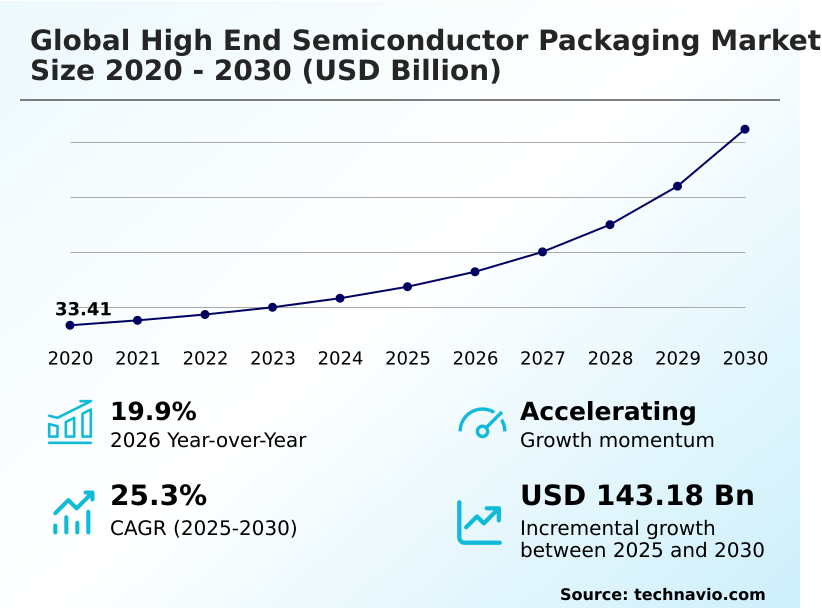
The high end semiconductor packaging market size is valued to increase by USD 143.18 billion, at a CAGR of 25.3% from 2025 to 2030. Exponential growth in AI applications will drive the high end semiconductor packaging market.
Major Market Trends & Insights
- APAC dominated the market and accounted for a 34.7% growth during the forecast period.
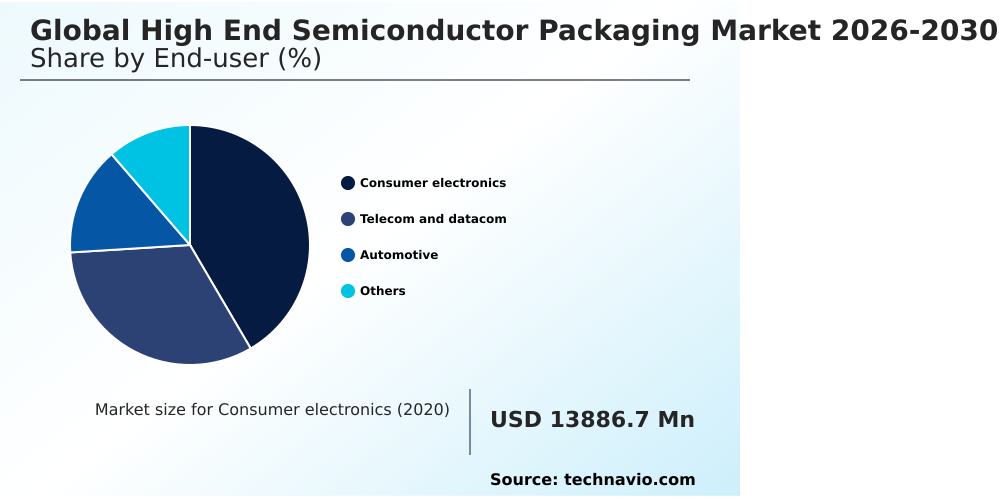
- By End-user - Consumer electronics segment was valued at USD 23.75 billion in 2024
- By Technology - Type 1 segment accounted for the largest market revenue share in 2024
Market Size & Forecast
- Market Opportunities: USD 178.21 billion
- Market Future Opportunities: USD 143.18 billion
- CAGR from 2025 to 2030 : 25.3%
Market Summary
- The High End Semiconductor Packaging landscape accelerates computational performance by utilizing vertical chip stacking and dense horizontal interconnect networks to bypass traditional limitations of monolithic silicon scaling. Data center infrastructure operators face unprecedented demands from massive deep learning workloads, relying heavily on localized tensor processing units and high bandwidth memory modules integration.
- The exponential expansion of artificial intelligence applications dictates an immediate need for sophisticated chiplet integration, allowing heterogeneous processing components to communicate with sub-microsecond latency. Executing these advanced packaging methodologies reduces signal travel distance efficiently, cutting parasitic capacitance-related power consumption by 15% compared to legacy printed circuit board routing.
- However, severe thermal dissipation bottlenecks within densely stacked dies present substantial constraints to system stability. When multiple processing components operate in extreme physical proximity, localized heat accumulation triggers automatic thermal throttling mechanisms that directly undermine the intended computational output.
- By pushing heat through multiple stacked silicon layers and microbumps, hardware engineers must redesign cooling strategies using sophisticated thermal interface materials and liquid cold plates to maintain optimal processor frequencies.
What will be the Size of the High End Semiconductor Packaging Market during the forecast period?
Get Key Insights on Market Forecast (PDF) Get Free Sample
How is the High End Semiconductor Packaging Market Segmented?
The high end semiconductor packaging industry research report provides comprehensive data (region-wise segment analysis), with forecasts and estimates in "USD million" for the period 2026-2030, as well as historical data from 2020-2024 for the following segments.
- End-user
- Consumer electronics
- Telecom and datacom
- Automotive
- Others
- Technology
- Type 1
- Type 2
- Type 3
- Type 4
- Type 5
- Material
- Organic substrates
- Bonding wires
- Lead frames
- Encapsulation resins
- Others
- Geography
- APAC
- China
- Japan
- India
- South Korea
- Taiwan
- Australia
- North America
- US
- Canada
- Mexico
- Europe
- Germany
- UK
- France
- Italy
- Spain
- The Netherlands
- South America
- Brazil
- Argentina
- Chile
- Middle East and Africa
- Saudi Arabia
- UAE
- South Africa
- Israel
- Turkey
- APAC
By End-user Insights
The consumer electronics segment is estimated to witness significant growth during the forecast period.
The consumer electronics segment within the High End Semiconductor Packaging landscape undergoes continuous architectural evolution driven by high-density computational demands.
Device manufacturers frequently replace legacy wiring with advanced flip chip ball grid array formats and redistribution layers to shorten electrical path lengths.
Integrating complex neural processing units requires robust structural foundations, leading engineers to adopt microbump interconnects and hybrid copper bonding for enhanced interconnect signal transmission.
To guarantee reliability in compact form factors, precision in die passivation layers and controlled wafer dicing procedures are critical. Utilizing advanced epoxy molding compounds improves thermal regulation across dense circuitry.
Implementation of rigorous known good die testing before final assembly improves defect detection rates by 15%, substantially reducing downstream manufacturing waste.
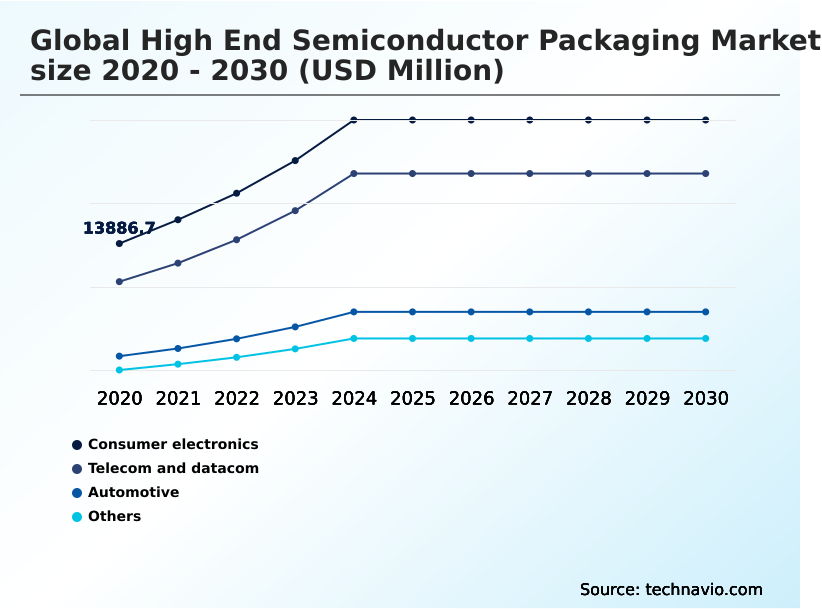
The Consumer electronics segment was valued at USD 23.75 billion in 2024 and showed a gradual increase during the forecast period.
Regional Analysis
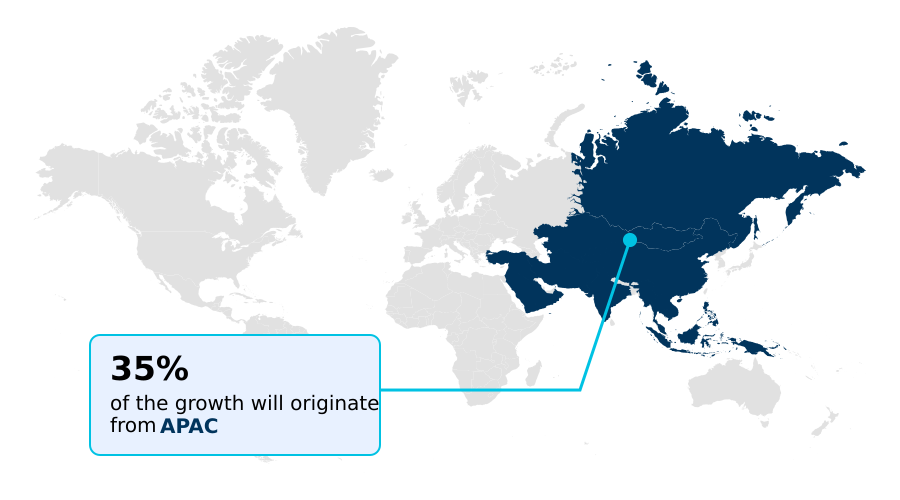
APAC is estimated to contribute 34.7% to the growth of the global market during the forecast period.Technavio’s analysts have elaborately explained the regional trends and drivers that shape the market during the forecast period.
See How High End Semiconductor Packaging Market Demand is Rising in APAC Get Free Sample
The geographic landscape of the High End Semiconductor Packaging arena highlights stark differences in capital investment and manufacturing capability. The APAC region demonstrates extreme dominance, commanding a 34.7% higher incremental capacity compared to the North America segment.
This operational density stems from deeply entrenched backend assembly lines and tightly coordinated localized semiconductor foundry networks across Taiwan and South Korea.
Asian manufacturers accelerate output utilizing sophisticated automated optical inspection and panel level packaging protocols, achieving a 22% improvement in high-volume throughput efficiency compared to manual defect review protocols.
As Western regions rebuild domestic supply chains, fabless designers demand localized wafer probing services and alternative leadframe packaging alternatives. Manufacturers utilizing advanced die to wafer stacking and precision wafer thinning processes build complex system in package assemblies.
Ensuring consistent dielectric signal integrity during complex wafer to wafer bonding operations enables manufacturers to overcome traditional yield barriers quickly.
Market Dynamics
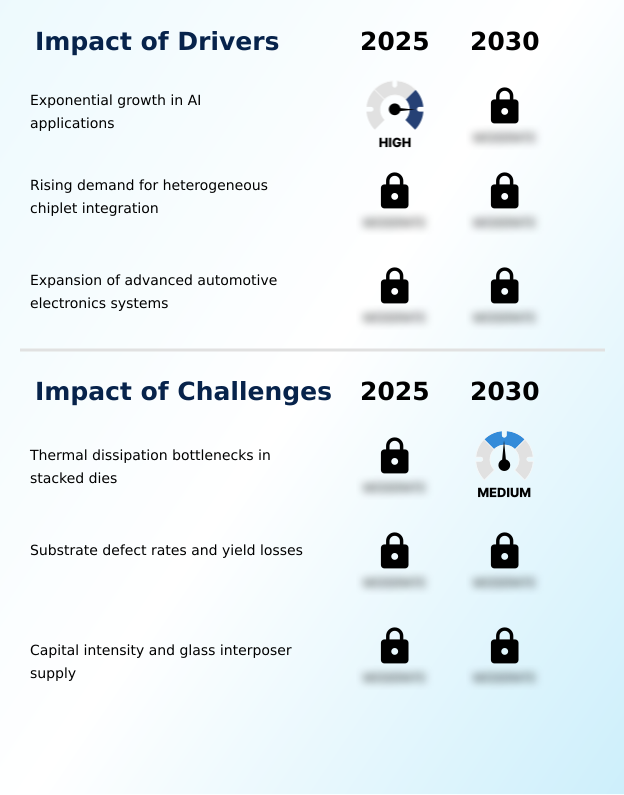
Our researchers analyzed the data with 2025 as the base year, along with the key drivers, trends, and challenges. A holistic analysis of drivers will help companies refine their marketing strategies to gain a competitive advantage.
- Securing technological leadership in the High End Semiconductor Packaging requires constant operational innovation to support modern compute-intensive workloads. As processors encounter physical scaling thresholds, architects increasingly utilize advanced heterogeneous chiplet packaging techniques to distribute functional nodes efficiently. Engineers aggressively refine through silicon via integration methods to bypass traditional communication delays.
- Crucially, managing thermal dissipation in stacked memory prevents thermal throttling that otherwise diminishes processing capabilities. Facilities utilizing next-generation glass substrate packaging manufacturing equipment achieve superior rigidity, driving a 25% improvement in alignment precision relative to older organic core substrate handlers. To satisfy mobile processors seeking minimal footprints, high density fan out implementation remains paramount.
- Simultaneously, data center accelerators demand intensive silicon interposer memory bandwidth optimization to fuel deep learning applications. To maintain signal clarity, hybrid bonding interconnect pitch scaling reduces physical distances between logic units. Plant managers actively seek wafer level packaging yield improvement to counterbalance immense front-end fabrication costs. Implementing microbump signal integrity enhancement techniques ensures data streams remain uncorrupted during high-frequency transmissions.
- Achieving perfect coefficient of thermal expansion matching prevents mechanical delamination during solder reflow. Robust system in package thermal management protocols ensure device longevity under heavy utilization. Further innovation surrounds through glass via metallization processes, enabling microscopic vertical interconnects with exceptional electrical characteristics. Facilities leveraging panel level packaging cost efficiency process larger semiconductor areas simultaneously, reducing per-unit operational spend.
- Advanced facilities deploy direct to chip microfluidics cooling to extract localized heat rapidly. Finally, robust automated optical inspection for substrates minimizes critical defects before final assembly.
What are the key market drivers leading to the rise in the adoption of High End Semiconductor Packaging Industry?
- The exponential expansion of artificial intelligence applications acts as a primary catalyst accelerating the adoption of sophisticated multi-die integration techniques.
- The relentless demand for artificial intelligence processing capability acts as the primary catalyst accelerating High End Semiconductor Packaging adoption. Massive language models require unprecedented memory bandwidth scaling, forcing hardware architects to abandon monolithic designs in favor of heterogeneous chiplet integration.
- By utilizing silicon interposers and through silicon vias, manufacturers tightly couple graphics processing units and tensor processing accelerators with adjacent memory modules. This high bandwidth memory stacking reduces data transfer latency by 35%, drastically lowering energy consumption per operation.
- Furthermore, the deployment of fan out wafer level packaging across high performance computing nodes eliminates traditional substrate bottlenecks.
- These advanced packaging architectures enable cloud service providers to increase server rack compute density by 20%, directly optimizing data center floor space and maximizing overall infrastructure return on investment.
What are the market trends shaping the High End Semiconductor Packaging Industry?
- The transition toward glass substrate packaging solutions represents a prominent operational trend. These advanced materials provide exceptional mechanical rigidity and superior dimensional stability for complex multi-chiplet configurations.
- The High End Semiconductor Packaging landscape is rapidly transitioning toward advanced glass core substrates to support increasingly complex multi chiplet architectures. Traditional organic materials like bismaleimide triazine and ajinomoto build up film struggle with thermal expansion mismatches, prompting manufacturers to adopt glass alternatives that offer superior mechanical rigidity.
- This material shift enables engineers to achieve sub micron feature sizes and ultra fine pitch interconnects, improving signal routing density by 40% compared to legacy organic cores. Utilizing precision laser induced deep etching and through glass via metallization, fabricators create microscopic vertical channels that drastically reduce electrical resistance.
- The extreme flatness of glass enhances lithographic depth of focus, reducing patterning distortion errors by 25%. This seamless semiconductor foundry integration allows chip designers to push power delivery envelopes, directly accelerating the deployment of next-generation data center accelerators.
What challenges does the High End Semiconductor Packaging Industry face during its growth?
- Severe thermal dissipation bottlenecks within stacked die architectures present substantial operational constraints that undermine the performance gains of advanced computing hardware.
- Extreme thermal density within multi-die configurations remains the most severe operational challenge constraining the High End Semiconductor Packaging evolution. As processors utilize dynamic random access memory stacking to achieve parasitic capacitance reduction, the vertical concentration of components creates massive localized heat buildup.
- Conventional cooling mechanisms fail to penetrate these dense structures, resulting in a 15% drop in processor clock frequencies due to automatic thermal throttling. Resolving these thermal dissipation frameworks requires specialized direct to chip microfluidics and liquid cooling cold plates, which significantly inflate manufacturing complexity.
- Unequal coefficient of thermal expansion values among disparate silicon and organic materials induce severe copper interconnect stress during temperature fluctuations. Consequently, manufacturers must deploy advanced thermal interface materials, embedded vapor chambers, and rigorous substrate warpage control protocols to prevent structural delamination.
Exclusive Technavio Analysis on Customer Landscape
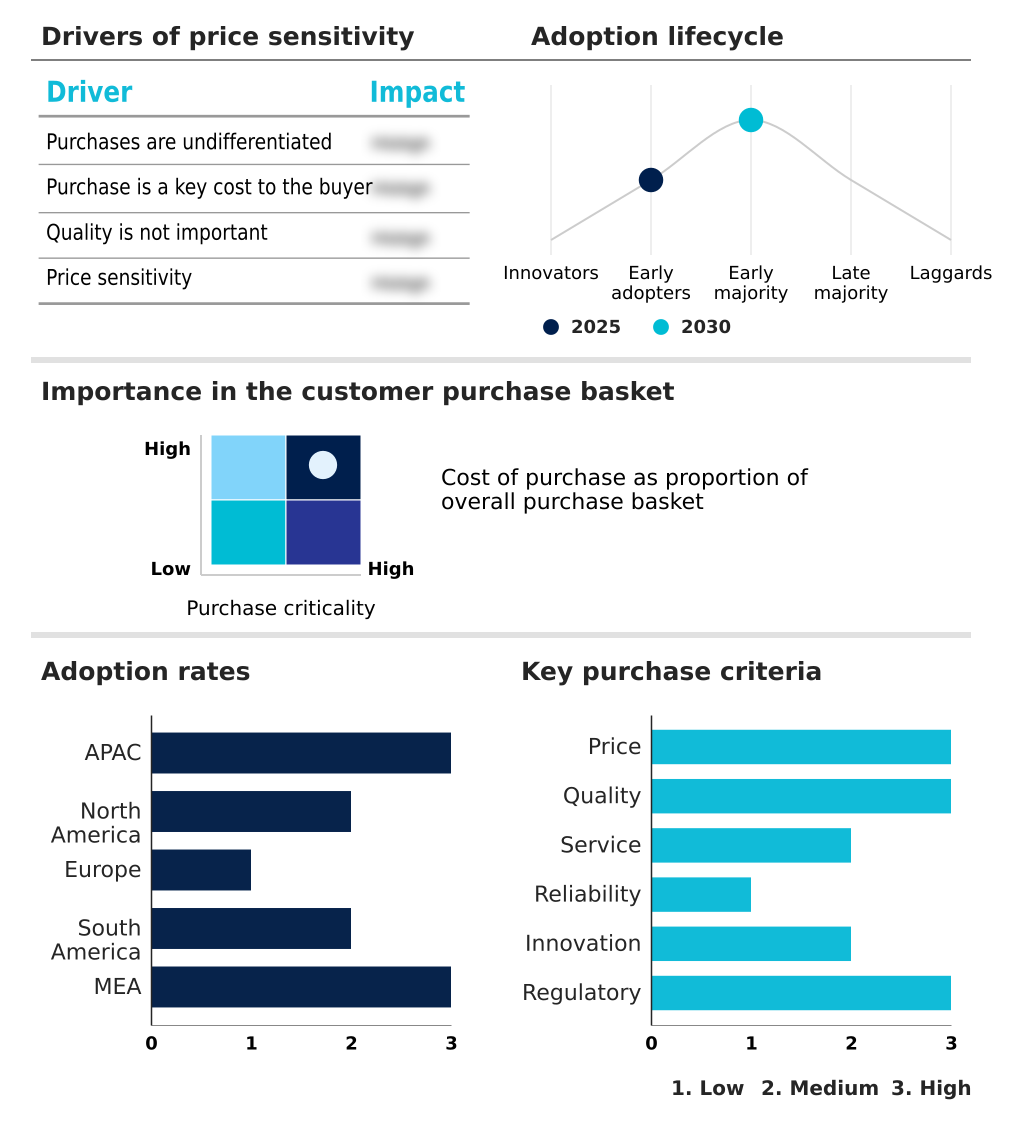
The high end semiconductor packaging market forecasting report includes the adoption lifecycle of the market, covering from the innovator’s stage to the laggard’s stage. It focuses on adoption rates in different regions based on penetration. Furthermore, the high end semiconductor packaging market report also includes key purchase criteria and drivers of price sensitivity to help companies evaluate and develop their market growth analysis strategies.
Customer Landscape of High End Semiconductor Packaging Industry
Competitive Landscape
Companies are implementing various strategies, such as strategic alliances, high end semiconductor packaging market forecast, partnerships, mergers and acquisitions, geographical expansion, and product/service launches, to enhance their presence in the industry.
Amkor Technology Inc. - This provider delivers advanced semiconductor integration capabilities, deploying chip scale configurations, fan-out wafer-level architectures, system-in-package frameworks, and three-dimensional stacking methodologies to support complex computing infrastructure requirements.
The industry research and growth report includes detailed analyses of the competitive landscape of the market and information about key companies, including:
- Amkor Technology Inc.
- ASE Technology Holding Co. Ltd.
- Chipbond Technology Corp.
- ChipMOS TECHNOLOGIES Inc.
- Deca Technologies Inc.
- HANA Micron Co. Ltd.
- Intel Corp.
- Jiangsu Changdian Tech Co.
- King Yuan Electronics Co. Ltd.
- Lingsen Precision Industries Ltd.
- Nepes Corp.
- Powertech Technology Inc.
- Samsung Electronics Co. Ltd.
- SIGNETICS Corp.
- Siliconware Precision Industries
- Taiwan Semiconductor Co. Ltd.
- Tianshui Huatian Technology
- Tongfu Microelectronics Co.
- Unisem M Berhad
- UTAC Holdings Ltd.
Qualitative and quantitative analysis of companies has been conducted to help clients understand the wider business environment as well as the strengths and weaknesses of key industry players. Data is qualitatively analyzed to categorize companies as pure play, category-focused, industry-focused, and diversified; it is quantitatively analyzed to categorize companies as dominant, leading, strong, tentative, and weak.
Recent Development and News in High end semiconductor packaging market
- In the Semiconductor Materials and Equipment industry, the rapid deployment of massive AI infrastructure networks has stretched conventional monolithic silicon processing limits, directly impacting High End Semiconductor Packaging demand by compelling processors to integrate tensor processing accelerators using advanced packaging architectures for essential memory bandwidth scaling.
- Strict industrial energy efficiency directives in the European Union impose rigid power usage effectiveness standards on hyperscale data centers, forcing facility operators to adopt processors utilizing thermal dissipation frameworks and liquid cooling cold plates, thereby accelerating regional demand for High End Semiconductor Packaging.
- The widespread integration of autonomous driving modules and advanced neural processing units in automotive manufacturing necessitates automotive-grade semiconductor reliability, driving High End Semiconductor Packaging demand as automakers require robust die passivation layers and known good die testing to ensure consistent interconnect signal transmission in harsh environments.
- The transition toward sub micron feature sizes driven by 5G telecommunication base station deployments requires enhanced dielectric signal integrity, elevating High End Semiconductor Packaging requirements as equipment fabricators deploy back-end assembly lines capable of reducing parasitic capacitance.
Dive into Technavio’s robust research methodology, blending expert interviews, extensive data synthesis, and validated models for unparalleled High End Semiconductor Packaging Market insights. See full methodology.
| Market Scope | |
|---|---|
| Page number | 315 |
| Base year | 2025 |
| Historic period | 2020-2024 |
| Forecast period | 2026-2030 |
| Growth momentum & CAGR | Accelerate at a CAGR of 25.3% |
| Market growth 2026-2030 | USD 143184.4 million |
| Market structure | Fragmented |
| YoY growth 2025-2026(%) | 19.9% |
| Key countries | China, Japan, India, South Korea, Taiwan, Australia, US, Canada, Mexico, Germany, UK, France, Italy, Spain, The Netherlands, Brazil, Argentina, Chile, Saudi Arabia, UAE, South Africa, Israel and Turkey |
| Competitive landscape | Leading Companies, Market Positioning of Companies, Competitive Strategies, and Industry Risks |
Research Analyst Overview
- The continuous evolution of the High End Semiconductor Packaging framework transforms base-level silicon assembly into a primary driver of computational capability. Boardroom executives increasingly prioritize advanced packaging strategies to align with stringent energy compliance mandates and aggressive product performance roadmaps.
- By transitioning away from legacy bismaleimide triazine materials toward specialized ajinomoto build up film dielectrics, manufacturers achieve superior insulation resistance for complex logic units. The strategic deployment of through silicon vias and silicon interposers enables processors to execute high bandwidth memory stacking, drastically reducing the physical distance data must travel.
- This structural compression yields a 25% reduction in power consumption per bit transferred, directly lowering operational cooling costs for hyperscale data center operators. Furthermore, the integration of fan out wafer level packaging allows mobile device architects to eliminate bulky substrates entirely. Utilizing advanced epoxy molding compounds and precision laser induced deep etching techniques ensures structural integrity under extreme thermal stress.
- These sophisticated integration methodologies empower hardware developers to bypass traditional monolithic scaling limitations efficiently.
What are the Key Data Covered in this High End Semiconductor Packaging Market Research and Growth Report?
-
What is the expected growth of the High End Semiconductor Packaging Market between 2026 and 2030?
-
USD 143.18 billion, at a CAGR of 25.3%
-
-
What segmentation does the market report cover?
-
The report is segmented by End-user (Consumer electronics, Telecom and datacom, Automotive, and Others), Technology (Type 1, Type 2, Type 3, Type 4, and Type 5), Material (Organic substrates, Bonding wires, Lead frames, Encapsulation resins, and Others) and Geography (APAC, North America, Europe, South America, Middle East and Africa)
-
-
Which regions are analyzed in the report?
-
APAC, North America, Europe, South America and Middle East and Africa
-
-
What are the key growth drivers and market challenges?
-
Exponential growth in AI applications, Thermal dissipation bottlenecks in stacked dies
-
-
Who are the major players in the High End Semiconductor Packaging Market?
-
Amkor Technology Inc., ASE Technology Holding Co. Ltd., Chipbond Technology Corp., ChipMOS TECHNOLOGIES Inc., Deca Technologies Inc., HANA Micron Co. Ltd., Intel Corp., Jiangsu Changdian Tech Co., King Yuan Electronics Co. Ltd., Lingsen Precision Industries Ltd., Nepes Corp., Powertech Technology Inc., Samsung Electronics Co. Ltd., SIGNETICS Corp., Siliconware Precision Industries, Taiwan Semiconductor Co. Ltd., Tianshui Huatian Technology, Tongfu Microelectronics Co., Unisem M Berhad and UTAC Holdings Ltd.
-
Market Research Insights
- The High End Semiconductor Packaging sector fundamentally shifts how the microelectronics ecosystem balances performance with energy consumption. Fabricators rely heavily on advanced liquid cooling cold plates and substrate warpage control techniques to maintain operational stability in modern server racks.
- Organizations integrating these high-density interconnect frameworks observe a 30% reduction in electrical latency, radically optimizing memory bandwidth scaling for intensive machine learning tasks. By ensuring strict dielectric signal integrity during manufacturing, equipment providers successfully lower component failure rates by 18%.
- Maintaining precise lithographic depth of focus during the substrate patterning phase enables manufacturers to create defect-free microvias, driving measurable yield improvements and minimizing critical material waste inside cleanroom environments.
We can help! Our analysts can customize this high end semiconductor packaging market research report to meet your requirements.
 RIA -