
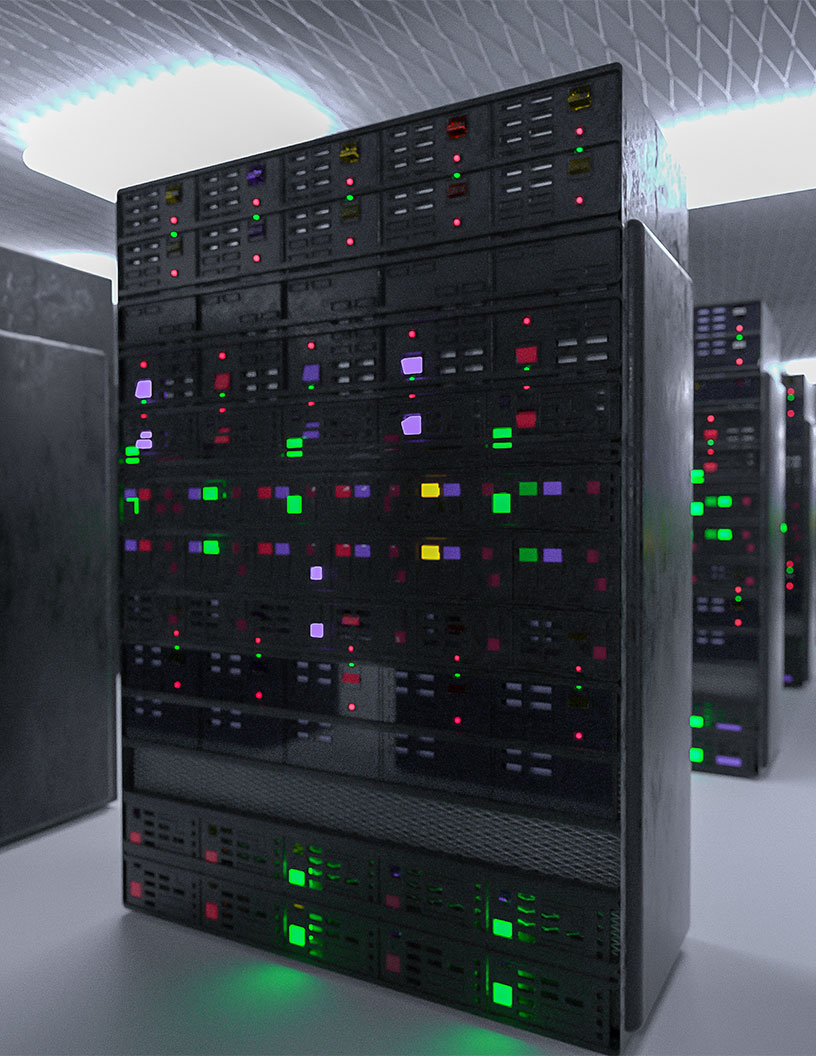


High Frequency Trading Server Market Size 2024-2028
The high frequency trading (HFT) server market size is forecast to increase by USD 104.8 million at a CAGR of 4.36% between 2023 and 2028. The market is experiencing significant growth due to the increasing demand for online trading platforms in the Asia-Pacific region. Digitalization is another major growth factor, as financial institutions and trading firms continue to invest in advanced technologies to enhance their trading capabilities. However, the market is not without challenges.
One limitation is the high cost and complexities associated with HFT servers, which require specialized hardware and software to operate effectively. Additionally, regulatory compliance and security concerns continue to pose challenges for market participants. Despite these challenges, the HFT server market is expected to grow at a strong pace, driven by the need for faster trade execution and increased competition in the financial markets.
_server_market_size_abstract_2024_v1.jpg)
The high-frequency trading (HFT) server market is a critical component of the financial services sector, catering to the demands of ultra-low latency trading in the trading ecosystem. HFT servers are designed specifically for fast-frequency trading, utilizing mathematical algorithms and quantum computing capabilities to analyze high-frequency financial data and execute trades based on market conditions. These servers are optimized for stock trading and other electronic trading instruments, with intent-based networking and co-location strategies employed to minimize network latency. Original design manufacturers (ODMs) play a significant role in supplying HFT servers, ensuring the high turnover rates required for algorithmic financial trading. The HFT market encompasses various financial instruments, including shares, commodities, and indices, with investment horizons ranging from microseconds to milliseconds.
Computer algorithms, artificial intelligence (AI), and deep learning capabilities are increasingly being integrated into HFT servers to enhance their performance and adaptability. The HFT market is characterized by high turnover rates and complex algorithms, making it a dynamic and competitive landscape for trading exchanges and financial institutions.
Market Segmentation
The market research report provides comprehensive data (region-wise segment analysis), with forecasts and estimates in "USD million" for the period 2024-2028, as well as historical data from 2018 - 2022 for the following segments.
- Type
- x-86 based
- ARM based
- Application
- Equity trading
- Forex market
- Commodity market
- Others
- Geography
- North America
- US
- Europe
- Germany
- France
- APAC
- China
- Japan
- South America
- Middle East and Africa
- North America
By Type Insights
The X-86 based segment is estimated to witness significant growth during the forecast period. High-frequency trading (HFT) servers play a pivotal role in the financial sector by facilitating high turnover rates in the electronic trading of various financial instruments. These servers are critical in handling high-frequency financial data and executing algorithmic-based trading strategies in equities, commodities, and foreign exchange markets. Co-location of HFT systems in data centers with hypertec brand servers ensures low-latency connections and uninterrupted service, enabling complex algorithms to process data analytics workloads in real-time. High-power computational analysis is a necessity for HFT systems, requiring specialized hardware such as ARM-based CPUs in the ARM architecture or X86-based servers. Trading apps demand high-bandwidth networks to process transactions efficiently, with turnover rates often measured in microseconds.
Algorithmic trading relies on artificial intelligence and machine learning technologies to analyze market trends and execute trades based on intricate patterns. Trading delays can significantly impact HFT systems' performance, necessitating the use of field-programmable gate arrays and optimized software to minimize transaction delays. HFT servers must provide uninterrupted service, making reliability and redundancy essential features. Trading exchanges rely on these computerized trading tools to execute transactions efficiently, ensuring a level playing field for all market participants.
_server_market_segments_abstract_2024_v2.jpg)
Get a glance at the market share of various segments Request Free Sample
The X-86 based segment accounted for USD 325.10 million in 2018 and showed a gradual increase during the forecast period.
Regional Insights
North America is estimated to contribute 36% to the growth of the global market during the forecast period. Technavio's analysts have elaborately explained the regional trends and drivers that shape the market during the forecast period.
_server_market_regions_abstract_2023_geo_v2.jpg)
For more insights on the market share of various regions Request Free Sample
High-frequency trading (HFT) servers play a pivotal role in the financial sector, particularly in equities, commodities, and foreign exchange markets. These servers facilitate high turnover rates by processing high-frequency financial data using electronic trading instruments. Co-location in data centres with hypertec branded servers ensures proximity to high-bandwidth networks and trading apps, reducing trading delays. High-power computational analysis is performed using specialized hardware, such as ARM-based CPUs and Field-Programmable Gate Arrays, to handle complex algorithms with short investment horizons. HFT systems utilize optimized software and low-latency connections for uninterrupted service. Algorithmic-based trading relies on artificial intelligence and machine learning technologies to analyze data analytics workloads, enabling faster and more accurate transactions.
HFT servers cater to large-cap equities markets and other trading segments, ensuring transactions are executed efficiently and effectively. Computerized trading tools, including HFT systems, enable algorithmic trading, providing a competitive edge in today's fast-paced financial markets.
Our researchers analyzed the data with 2023 as the base year, along with the key drivers, trends, and challenges. A holistic analysis of drivers will help companies refine their marketing strategies to gain a competitive advantage.
High Frequency Trading Server Market Driver
Growth opportunities and demand for online trading platforms in APAC is the key driver of the market. In developed economies of North America and Europe, advanced trade platforms have become indispensable for Equity Trading activities of hedge funds, financial institutions, and brokers. The shift towards online trading enables these entities to expand their businesses efficiently. The high frequency trading servers market witnesses significant growth opportunities in Asia Pacific countries such as China, Japan, Singapore, and India. companies in this market are capitalizing on this trend to gain a competitive edge. Furthermore, numerous global companies and startups are investing in the development of sophisticated solutions for online trading, offering valuable insights into market trends in APAC for companies actively involved in trading activities.
High Frequency Trading Server Market Trends
Influence of digitalization is the upcoming trend in the market. The proliferation of smart-connected devices in the financial services sector is driving the demand for high frequency trading (HFT) servers. With the Internet of Things (IoT) revolution, managing, monitoring, and securing data from these devices has become a significant challenge for organizations. HFT servers provide a solution by enabling efficient management and real-time monitoring of these devices. Moreover, the shift towards a fully digital workflow has resulted in improved business processes and enhanced decision-making capabilities for enterprises. The increasing usage of trading platforms for equity trading further boosts the demand for HFT servers, as they offer an easy-to-use interface and high-speed processing capabilities.
Consequently, the growing number of smart-connected devices is expected to fuel the adoption of HFT servers and software during the forecast period.
High Frequency Trading Server Market Challenge
Limitations associated with servers is a key challenge affecting the market growth. High frequency trading (HFT) relies heavily on the performance and reliability of trading servers. Equity trading firms utilize advanced trade platforms and automated trading methods, which necessitate the use of high-performance servers to execute trades at lightning speed. However, technical failures in these servers can pose significant challenges to the global HFT servers market. Internet connectivity issues, power loss, system quirks, and computer crashes are common technical difficulties that may disrupt the trading process. Continuous monitoring of servers is essential to minimize errors, such as loss or duplication of trading orders. This proactive approach helps identify and resolve issues promptly, ensuring the smooth execution of trades.
Overoptimization of trading plans, on the other hand, may lead to 100% profitability but also increases the risk of technical failures and market volatility. Therefore, striking a balance between optimization and reliability is crucial for HFT firms to maintain their competitive edge.
Exclusive Customer Landscape
The market forecasting report includes the adoption lifecycle of the market, covering from the innovator's stage to the laggard's stage. It focuses on adoption rates in different regions based on penetration. Furthermore, the report also includes key purchase criteria and drivers of price sensitivity to help companies evaluate and develop their market growth analysis strategies.
_server_market_customer_landscape_abstract_2023_geo_v1.jpg)
Customer Landscape
Key Companies & Market Insights
Companies are implementing various strategies, such as strategic alliances, partnerships, mergers and acquisitions, geographical expansion, and product/service launches, to enhance their presence in the market.
2CRSi: The company offering encompasses a range of advanced servers specifically designed for HFT applications.
The market research and growth report includes detailed analyses of the competitive landscape of the market and information about key companies, including:
- Advanced Micro Devices Inc.
- Arista Networks Inc.
- ASA Computers Inc.
- Cisco Systems Inc.
- Dell Technologies Inc.
- Exacta Technologies Ltd.
- Furukawa Electric Co. Ltd.
- Hewlett Packard Enterprise Co.
- HyperShark Technologies Corp.
- Hypertec Group Inc.
- Juniper Networks Inc.
- Lenovo Group Ltd.
- MiTAC Holdings Corp.
- NVIDIA Corp.
- Oracle Corp.
- Pegatron Corp.
- SMART Global Holdings Inc.
- Super Micro Computer Inc.
- XENON Systems Pty Ltd.
Qualitative and quantitative analysis of companies has been conducted to help clients understand the wider business environment as well as the strengths and weaknesses of key market players. Data is qualitatively analyzed to categorize companies as pure play, category-focused, industry-focused, and diversified; it is quantitatively analyzed to categorize companies as dominant, leading, strong, tentative, and weak.
Research Analyst Overview
The high-frequency trading (HFT) server market is witnessing significant growth due to the increasing demand for ultra-low latency in financial services. HFT servers are designed to execute mathematical algorithms in nanoseconds, making them essential for algorithmic-based equity trading, stop-loss strategies, and automated trading in the financial ecosystem. Original design manufacturers (ODMs) are the key players in the HFT server market, providing high-performance computing solutions to investment banks, hedge funds, and other financial institutions. Quantum computing and artificial intelligence (AI) with deep learning capabilities are emerging technologies in the HFT server market, offering potential advantages in processing complex data and making faster trading decisions.
The market is segmented into the x-86 segment, which uses x-86 core processors, and the arm-based processor segment. HFT servers are available in various sizes, including 1u, 2u, and 4u segments, catering to different IT infrastructure requirements. HFT servers are used in stock trading servers, data centers, and stock exchanges, requiring high bandwidth networks to minimize network latency. The market includes foreign exchange and commodity markets, with the forex market segment showing significant growth. Cloud-based migration tools and virtualized data centers are also gaining popularity, enabling HFT firms to scale their operations efficiently. The HFT server market is expected to continue its growth trajectory, driven by the increasing adoption of fast-frequency trading and algorithmic financial trading in various financial markets.
|
Market Scope |
|
|
Report Coverage |
Details |
|
Page number |
163 |
|
Base year |
2023 |
|
Historic period |
2017-2022 |
|
Forecast period |
2024-2028 |
|
Growth momentum & CAGR |
Accelerate at a CAGR of 4.36% |
|
Market growth 2024-2028 |
USD 104.8 million |
|
Market structure |
Fragmented |
|
YoY growth 2023-2024(%) |
4.11 |
|
Regional analysis |
North America, Europe, APAC, South America, and Middle East and Africa |
|
Performing market contribution |
North America at 36% |
|
Key countries |
US, China, Germany, France, and Japan |
|
Competitive landscape |
Leading Companies, Market Positioning of Companies, Competitive Strategies, and Industry Risks |
|
Key companies profiled |
2CRSi, Advanced Micro Devices Inc., Arista Networks Inc., ASA Computers Inc., Cisco Systems Inc., Dell Technologies Inc., Exacta Technologies Ltd., Furukawa Electric Co. Ltd., Hewlett Packard Enterprise Co., HyperShark Technologies Corp., Hypertec Group Inc., Juniper Networks Inc., Lenovo Group Ltd., MiTAC Holdings Corp., NVIDIA Corp., Oracle Corp., Pegatron Corp., SMART Global Holdings Inc., Super Micro Computer Inc., and XENON Systems Pty Ltd. |
|
Market dynamics |
Parent market analysis, market growth inducers and obstacles, market forecast, fast-growing and slow-growing segment analysis, COVID-19 impact and recovery analysis and future consumer dynamics, market condition analysis for the forecast period |
|
Customization purview |
If our market report has not included the data that you are looking for, you can reach out to our analysts and get segments customized. |
What are the Key Data Covered in this Market Research and Growth Report?
- CAGR of the market during the forecast period
- Detailed information on factors that will drive the market growth and forecasting between 2024 and 2028
- Precise estimation of the size of the market and its contribution of the market in focus to the parent market
- Accurate predictions about upcoming market growth and trends and changes in consumer behaviour
- Growth of the market across North America, Europe, APAC, South America, and Middle East and Africa
- Thorough analysis of the market's competitive landscape and detailed information about companies
- Comprehensive analysis of factors that will challenge the growth of market companies
We can help! Our analysts can customize this market research report to meet your requirements. Get in touch