


Europe Household Appliances Market Size 2025-2029
The Europe household appliances market size is forecast to increase by USD 28.4 billion at a CAGR of 4.6% between 2024 and 2029.
- The Europe Household Appliances Market is segmented by distribution channel (Offline, Online), product (Major household, Small household), and geography (Europe: France, Germany, Italy, UK). This segmentation reflects the market's evolving landscape, driven by a growing shift towards Online sales for both Major and Small household appliances, with Germany being a dominant market for household appliances, and the UK experiencing rapid growth in online sales for these products.
- The adoption of multi-functional household appliances, such as microwave ovens and induction cookers, is also on the rise. Additionally, fluctuations in raw material prices impact the manufacturing costs of appliances, including dryers, dishwashers, drying cabinets, and both gas and electricity-driven appliances. In the realm of electronics, home appliances continue to evolve, with advancements in IT and mobile accessories influencing their design and functionality. However, this market is not without challenges. Fluctuations in raw material prices used for manufacturing household appliances pose significant risks, as these costs can impact profitability and competitiveness. Producers must effectively manage their supply chains to mitigate the impact of raw material price volatility.
- Additionally, the market is witnessing increasing competition and shifting consumer preferences towards sustainable and eco-friendly appliances. Companies must adapt to these trends by investing in research and development, expanding their product offerings, and implementing sustainable manufacturing practices to remain competitive and capitalize on market opportunities.
What will be the size of the Europe Household Appliances Market during the forecast period?
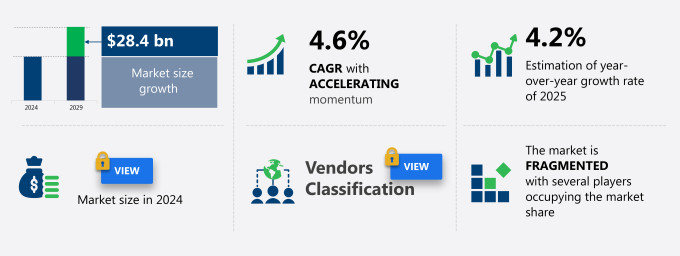
Explore in-depth regional segment analysis with market size data - historical 2019-2023 and forecasts 2025-2029 - in the full report.
Request Free Sample
- The European household appliances market is experiencing significant advancements, with a focus on technology integration and energy efficiency. IoT-enabled appliances, automated cleaning, and smart sensor technology are driving market growth. Energy Star rating and sustainable manufacturing practices are key considerations for consumers, aligning with the circular economy. Online support and intuitive controls enhance user experience, while advanced filtration systems and precision temperature control cater to personalized settings. Subscription services and product bundling offer convenience, and appliance repair services ensure customer satisfaction.
- Noise reduction technology and voice assistants add to the appeal of modern appliances. Appliance recycling programs and consumer financing facilitate the transition to new, energy-efficient models. Appliance control systems enable remote diagnostics and water conservation, further enhancing the value proposition. Reuse and refurbishment initiatives contribute to the market's sustainability efforts.
How is this market segmented?
The market research report provides comprehensive data (region-wise segment analysis), with forecasts and estimates in "USD billion" for the period 2025-2029, as well as historical data from 2019-2023 for the following segments.
- Distribution Channel
- Offline
- Online
- Product
- Major household
- Small household
- Geography
- Europe
- France
- Germany
- Italy
- UK
- Europe
By Distribution Channel Insights
The offline segment is estimated to witness significant growth during the forecast period.
In Europe's household appliances market, consumer preferences lean towards energy efficiency, connectivity, and smart features. Product lifespan and environmental impact are key considerations, driving the adoption of energy-saving technologies and eco-friendly materials. Household size influences appliance choices, with larger families opting for larger capacity appliances. Technological advancements, such as remote monitoring and voice control, are shaping future trends. Appliances like food processors and microwave ovens cater to lifestyle trends, while income levels influence the affordability of high-end appliances. Air conditioners and hair dryers are essential for certain demographics, particularly those in warmer climates or with larger households.
User interface and safety standards are crucial factors in consumer decision-making. Supply chain management and raw material sourcing are essential for maintaining quality control and ensuring product availability. Retail channels include specialty stores and mass merchandisers. Specialty stores, also known as electronic and specialty retailers (EASRs), offer a wide range of brands and products, making them the highest revenue generators. Mass merchandisers, including hypermarkets, supermarkets, convenience stores, and clubhouse stores, cater to various income levels and household sizes. Energy consumption monitoring and consumer awareness are driving the market towards energy efficiency ratings and green certifications. Warranty coverage and smart home integration are also essential features for consumers.
Pricing strategies and appliance control are critical for retailers, while parts availability and product testing ensure customer satisfaction. Vacuum cleaners and washing machines are popular appliances, with emerging technologies like robotics and e-commerce platforms influencing their sales. Coffee makers and steam irons are staples in European households, while electric toothbrushes and water consumption are growing categories. Overall, the market is experiencing steady growth, with potential for further expansion as consumer preferences and technological advancements continue to evolve.
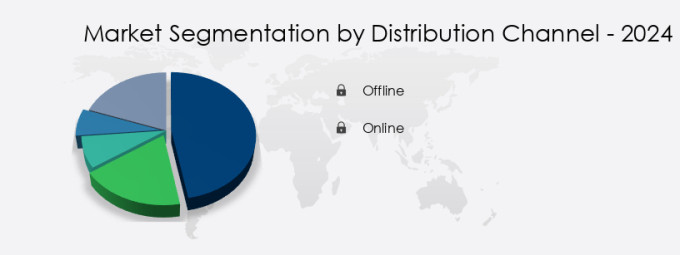
The Offline segment was valued at USD billion in 2019 and showed a gradual increase during the forecast period.
Market Dynamics
The Europe household appliances market is characterized by robust growth, driven by consumer demand for smart home appliances in Europe and increasingly energy-efficient appliances in Europe. A significant trend is the rise of online household appliance sales in Europe, impacting both major household appliances and small household appliances. Compliance with stringent EU appliance regulations is crucial for manufacturers. Key national markets, such as the Germany household appliances market and UK household appliances market, are at the forefront of adopting connected home appliances in Europe. Overall household appliance market trends in Europe indicate a strong focus on innovation, influenced by changing consumer preferences for European appliances and advancements in appliance technology in Europe. Within kitchen appliances in Europe, products like washing machines and refrigerators are seeing demand for features promoting durable appliances and improved appliance repairability in Europe. This aligns with broader trends in home automation in Europe and overall European consumer spending on appliances.
Our researchers analyzed the data with 2024 as the base year, along with the key drivers, trends, and challenges. A holistic analysis of drivers will help companies refine their marketing strategies to gain a competitive advantage.
What are the Europe Household Appliances Market market drivers leading to the rise in adoption of the Industry?
- Product innovation and portfolio extension, which include the development of new products and the expansion of existing product lines, are essential drivers for market growth and the premiumization of offerings. This strategic approach enables companies to cater to evolving consumer demands and preferences, ultimately leading to increased market share and revenue.
- The European household appliances market is characterized by continuous innovation and development to cater to evolving customer needs and increasing competition. companies in this market focus on introducing advanced technologies, enhanced performance, and multi-functional designs to meet consumer demands. Energy efficiency ratings are a significant factor influencing purchasing decisions, as customers seek appliances that consume minimal resources. Increased purchasing power and disposable income have led to an increase in consumer spending on household appliances.
- To stay competitive, market players continually expand their product lines and invest in research and development. These trends are driving the growth of the European household appliances market.
What are the Europe Household Appliances Market market trends shaping the Industry?
- The adoption of multi-functional household appliances is an emerging market trend. These appliances offer increased efficiency and convenience by combining multiple functions into one device.
- Household appliances in Europe are witnessing increased demand due to consumer preferences for innovative and advanced multi-functional products. These appliances cater to more than just their basic features, providing maximum value for the investment. Despite their higher price points, they are perceived to save time and money in the long run. For example, a multicooker can cook, steam, and fry, while an automatic washing machine not only washes but also rinses and dries clothes. Brands are focusing on these trends to meet the demands and lifestyles of consumers. Future trends include technological adoption, longer product lifespan, and user interface improvements.
- Household size and income levels also influence the market. Appliances like food processors, microwave ovens, hair dryers, and air conditioners continue to be popular. Physical stores remain an essential sales channel, but online sales are growing. Overall, the European household appliances market is dynamic and evolving, driven by consumer needs and lifestyle trends.
How does Europe Household Appliances Market market faces challenges face during its growth?
- The volatile pricing of raw materials utilized in the production of household appliances poses a significant challenge to the industry's growth trajectory.
- Household appliances in Europe are in high demand due to consumer awareness towards energy efficiency and safety standards. The market is driven by the integration of energy-saving technologies and connectivity options, enabling remote monitoring and energy consumption monitoring. Steam irons, coffee makers, and other appliances are equipped with smart features, enhancing user experience and convenience. The manufacturing process involves the procurement of various raw materials such as steel, iron, plastic, glass, electronic equipment, petroleum products, and paints. The price volatility of these materials necessitates effective supply chain management and price risk mitigation strategies. The transportation costs of raw materials and finished goods are significant, influenced by fuel prices, taxes, duties, and supplier arrangements.
- Safety standards are stringent in Europe, ensuring the production and distribution of appliances adhere to regulatory requirements. Energy-saving technologies, such as inverter technology and smart grids, are increasingly adopted to reduce environmental impact and lower energy consumption. The market is expected to grow, driven by these trends and the increasing demand for advanced and connected appliances.
Exclusive Europe Household Appliances Market Customer Landscape
The market forecasting report includes the adoption lifecycle of the market, covering from the innovator's stage to the laggard's stage. It focuses on adoption rates in different regions based on penetration. Furthermore, the report also includes key purchase criteria and drivers of price sensitivity to help companies evaluate and develop their market growth analysis strategies.
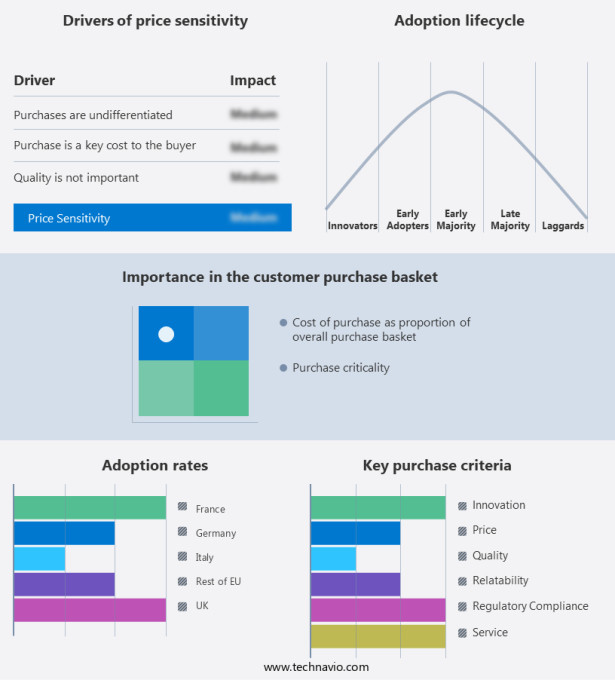
Customer Landscape
Key Companies & Market Insights
Companies are implementing various strategies, such as strategic alliances, market forecast partnerships, mergers and acquisitions, geographical expansion, and product/service launches, to enhance their presence in the market.
The market research and growth report includes detailed analyses of the competitive landscape of the market and information about key companies, including:
- AB Electrolux
- DeLonghi Group
- Dyson Group Co.
- Haier Smart Home Co. Ltd.
- Hamilton Beach Brands Holding Co.
- Hisense International Co. Ltd.
- Hitachi Ltd.
- Koninklijke Philips NV
- LG Corp.
- Midea Group Co. Ltd.
- Miele and Cie. KG
- Newell Brands Inc.
- Panasonic Holdings Corp.
- Robert Bosch GmbH
- Samsung Electronics Co. Ltd.
- SEB Developpement SA
- Smeg S.p.a.
- Spectrum Brands Holdings Inc.
- Techtronic Industries Co. Ltd.
- Whirlpool Corp.
Qualitative and quantitative analysis of companies has been conducted to help clients understand the wider business environment as well as the strengths and weaknesses of key market players. Data is qualitatively analyzed to categorize companies as pure play, category-focused, industry-focused, and diversified; it is quantitatively analyzed to categorize companies as dominant, leading, strong, tentative, and weak.
Recent Development and News in Household Appliances Market In Europe
- In March 2024, leading household appliance manufacturer, Whirlpool Corporation, announced the launch of its new line of energy-efficient washing machines and dryers, incorporating AI technology, in Europe (Whirlpool Corporation Press Release, 2024). This innovation aims to reduce water and energy consumption, aligning with the European Union's Green Deal initiative.
- In June 2024, Bosch and Siemens Home Appliances, two major European players, formed a strategic partnership to co-develop and manufacture cooking appliances, enhancing their product portfolios and expanding their market presence (Bosch and Siemens Home Appliances Press Release, 2024).
- In October 2024, Haier Europe secured a significant investment of â¬200 million from its parent company, Haier Group, to expand its production capacity and strengthen its market position in Europe (Haier Europe Press Release, 2024).
- In January 2025, the European Commission approved new energy labels for household appliances, mandating higher energy efficiency standards, pushing manufacturers to innovate and invest in advanced technologies (European Commission Press Release, 2025).
Research Analyst Overview
The European household appliances market continues to evolve, shaped by various factors including consumer preferences, product lifespan, and future trends. Household size and technological adoption influence the demand for appliances, with food processors and microwave ovens being popular choices. Lifestyle trends and income levels impact the adoption of air conditioners and coffee makers. Distribution networks and energy consumption monitoring play a crucial role in the market, with consumer awareness driving the demand for energy-saving technologies. Safety standards and supply chain management are essential considerations for manufacturers, as they navigate the sourcing of raw materials and component sourcing. Connectivity options, remote monitoring, and smart features are increasingly important, with consumers seeking convenience and efficiency.
Retail channels, including physical stores and e-commerce platforms, offer varying advantages, requiring effective pricing strategies and brand reputation management. Environmental impact and eco-friendly materials are growing concerns, with green certifications and noise levels becoming key differentiators. Quality control, warranty coverage, and smart home integration are also critical factors, as is the availability of parts and product testing. Vacuum cleaners, washing machines, electric toothbrushes, and emerging technologies continue to shape the market, with voice control, water consumption, and assembly lines influencing production and consumer experience. The market's ongoing dynamism presents significant growth potential for manufacturers and retailers alike.
Dive into Technavio's robust research methodology, blending expert interviews, extensive data synthesis, and validated models for unparalleled Household Appliances Market in Europe insights. See full methodology.
|
Market Scope |
|
|
Report Coverage |
Details |
|
Page number |
176 |
|
Base year |
2024 |
|
Historic period |
2019-2023 |
|
Forecast period |
2025-2029 |
|
Growth momentum & CAGR |
Accelerate at a CAGR of 4.6% |
|
Market growth 2025-2029 |
USD 28.4 billion |
|
Market structure |
Fragmented |
|
YoY growth 2024-2025(%) |
4.2 |
|
Competitive landscape |
Leading Companies, Market Positioning of Companies, Competitive Strategies, and Industry Risks |
What are the Key Data Covered in this Market Research Report?
- CAGR of the market during the forecast period
- Detailed information on factors that will drive the market growth and forecasting between 2025 and 2029
- Precise estimation of the size of the market and its contribution of the market in focus to the parent market
- Accurate predictions about upcoming market growth and trends and changes in consumer behaviour
- Growth of the market across Europe
- Thorough analysis of the market's competitive landscape and detailed information about companies
- Comprehensive analysis of factors that will challenge the growth of market companies
We can help! Our analysts can customize this market research report to meet your requirements Get in touch