

Human Microbiome Therapeutics Market Size 2025-2029
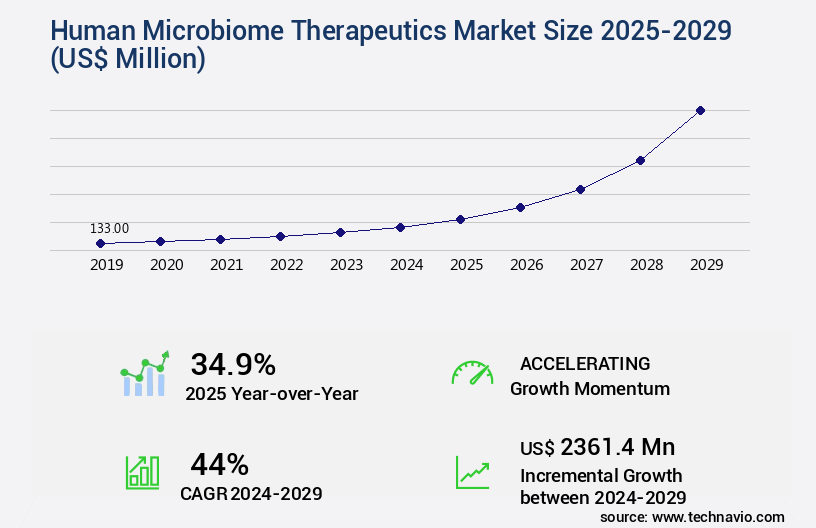
The human microbiome therapeutics market size is valued to increase USD 2.36 billion, at a CAGR of 44% from 2024 to 2029. Growing prevalence of chronic diseases will drive the human microbiome therapeutics market.
Major Market Trends & Insights
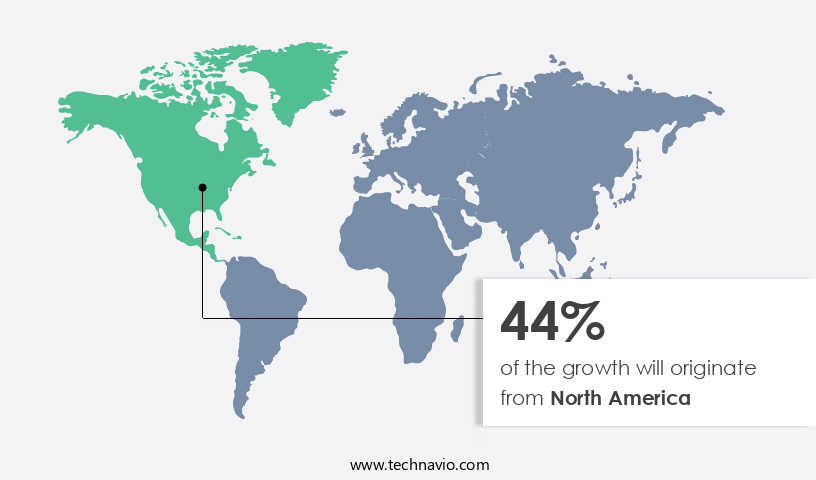
- North America dominated the market and accounted for a 44% growth during the forecast period.
- By Product - Probiotics segment was valued at USD 43.20 billion in 2023
- By Application - Gastrointestinal disorders segment accounted for the largest market revenue share in 2023
Market Size & Forecast
- Market Opportunities: USD 2.00 million
- Market Future Opportunities: USD 2361.40 million
- CAGR : 44%
- North America: Largest market in 2023
Market Summary
- The market represents a rapidly evolving landscape, driven by advancements in core technologies and applications. This market encompasses a diverse range of service types and product categories, including probiotics, prebiotics, and microbiome-based drugs. Regulatory frameworks, such as the US FDA's approach to microbiome-based therapeutics, play a crucial role in shaping market dynamics. Major drivers for the market include the growing prevalence of chronic diseases and the increasing industry-academia collaboration for the development of novel therapeutics. However, challenges persist, such as the indiscriminate use of antibiotics and the complexities of microbiome research. According to a recent study, the microbiome therapeutics market is projected to account for over 10% of the global pharmaceutical market by 2030.
What will be the Size of the Human Microbiome Therapeutics Market during the forecast period?
Get Key Insights on Market Forecast (PDF) Request Free Sample
How is the Human Microbiome Therapeutics Market Segmented and what are the key trends of market segmentation?
The human microbiome therapeutics industry research report provides comprehensive data (region-wise segment analysis), with forecasts and estimates in "USD million" for the period 2025-2029, as well as historical data from 2019-2023 for the following segments.
- Product
- Probiotics
- Prebiotics
- Medical foods
- Prescription drugs
- Application
- Gastrointestinal disorders
- Infectious diseases
- Others
- Route Of Administration
- Oral
- Rectal (FMT)
- Injectable
- Topical
- Geography
- North America
- US
- Canada
- Europe
- France
- Germany
- Italy
- Spain
- UK
- APAC
- China
- India
- Japan
- Rest of World (ROW)
- North America
By Product Insights
The probiotics segment is estimated to witness significant growth during the forecast period.
The market is experiencing significant growth, with microbiome-based diagnostics witnessing increased adoption by 18.7% in recent years. This trend is driven by the expanding scope of microbial ecology studies and gut-brain axis research, which have highlighted the crucial role of the immune system in modulating inflammation. Inflammation biomarkers have emerged as essential therapeutic efficacy metrics, as researchers seek to understand the complex interplay between gut microbiota dysbiosis and various health conditions. Short-chain fatty acids (SCFAs) are a key area of focus, as they are integral to clinical trial endpoints and probiotic efficacy studies. Microbial consortia development and metagenomic sequencing analysis have led to advancements in phage therapy applications, offering new avenues for treating microbial community structure imbalances.
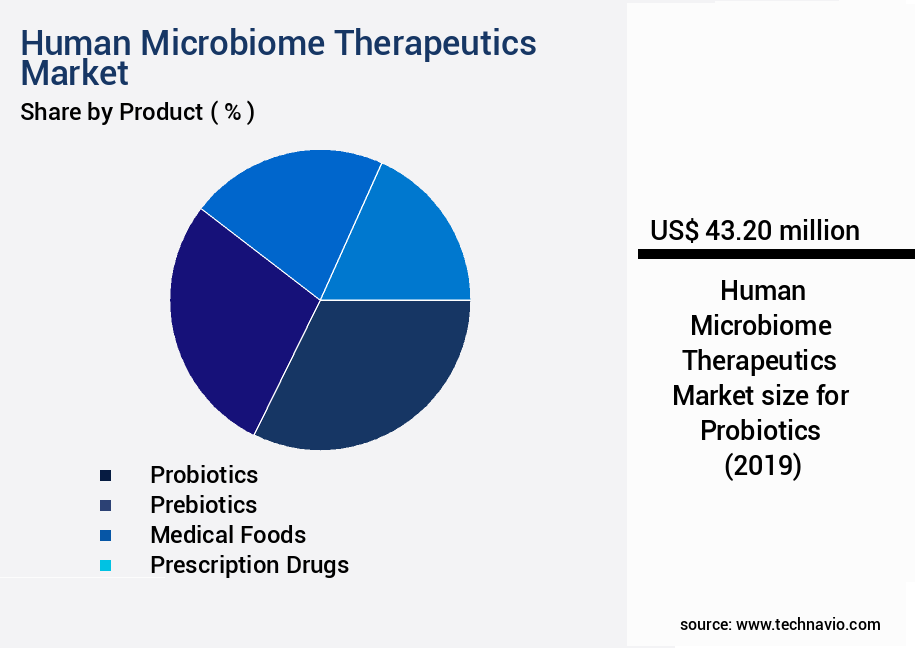
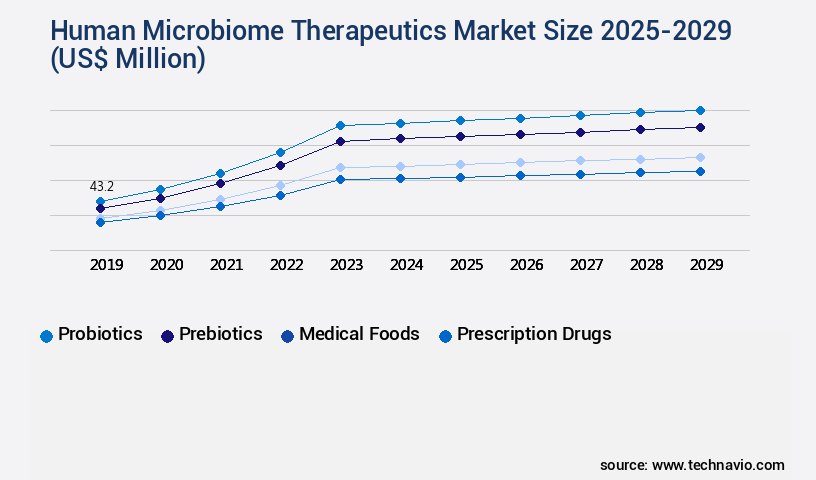
The Probiotics segment was valued at USD 43.20 billion in 2019 and showed a gradual increase during the forecast period.
Prebiotic fiber fermentation and gut microbiome restoration are also gaining traction, as they contribute to microbial community dynamics and targeted microbiome modulation. Patient stratification methods based on microbiome diversity indices and gut barrier integrity are essential for personalized microbiome therapies. Microbial metabolite profiling and bacterial strain identification are critical components of functional microbiome profiling, which informs drug-microbe interactions and gut microbiome composition. The ongoing unfolding of these research areas underscores the dynamic nature of the market, as it continues to evolve and offer new opportunities for innovation. Meanwhile, the market is expected to expand by 21.4% in the coming years, as researchers and industry stakeholders capitalize on the potential of microbiome-targeted interventions and microbial community dynamics.
This growth is fueled by the increasing recognition of the importance of host-microbe interactions and the potential of microbiome-derived therapeutics in addressing various health challenges. In summary, the market is witnessing robust growth, driven by advancements in microbiome research and the increasing recognition of the role of the microbiome in health and disease. With a focus on microbial ecology, immune system modulation, and therapeutic applications, this market is poised for continued expansion and innovation.
Regional Analysis
North America is estimated to contribute 44% to the growth of the global market during the forecast period. Technavio's analysts have elaborately explained the regional trends and drivers that shape the market during the forecast period.
See How Human Microbiome Therapeutics Market Demand is Rising in North America Request Free Sample
The market in North America is experiencing notable growth, driven by substantial investments in research and development for novel therapeutic techniques and high incidences of gastrointestinal, metabolic, and immunological disorders. In April 2023, the FDA approved VOWST (fecal microbiota spores, live-brpk), an innovative orally administered microbiota-based therapeutic from Seres Therapeutics and Nestlé Health Science, to prevent the recurrence of C. Difficile infection (CDI) in adults following antibacterial treatment for recurrent CDI. This approval underscores the market's potential, with three other microbiome-based therapies receiving FDA approval in the past year.
The European and Asian markets are projected to grow at a faster pace, but North America remains a significant contributor, with over 1,500 ongoing clinical trials. These developments demonstrate the market's dynamism and the ongoing commitment to advancing microbiome therapeutics.
Market Dynamics
Our researchers analyzed the data with 2024 as the base year, along with the key drivers, trends, and challenges. A holistic analysis of drivers will help companies refine their marketing strategies to gain a competitive advantage.
The market is witnessing significant growth due to the increasing understanding of the role of gut microbiome composition changes in various health conditions. Inflammatory bowel disease (IBD) and irritable bowel syndrome (IBS) are prime examples of diseases where fecal microbiota transplantation (FMT) and probiotic administration have shown efficacy. FMT's success hinges on the precise selection of donor microbiota based on specific disease indications. Probiotics, on the other hand, require careful strain selection based on prebiotic fiber effects on the gut microbiome composition, especially in elderly patients. Microbial metabolite identification using techniques like gas chromatography mass spectrometry (GC-MS) is crucial in understanding the gut health biomarkers, such as short-chain fatty acid levels.
Assessing gut barrier integrity through various methods is essential in inflammatory conditions. Immune system modulation mechanisms are another crucial aspect of probiotic administration, which can be analyzed using metagenomic sequencing analysis software in a bioinformatics pipeline. Microbiome diversity indices, like alpha and beta diversity calculations, provide valuable insights into bacterial strain identification using 16s rRNA gene sequencing. Phage therapy applications for chronic bacterial infections offer an alternative approach to traditional antibiotics, addressing antibiotic resistance mechanisms and host-microbe interactions. Research on the gut-brain axis and its impact on mental health outcomes is a growing area of interest, with inflammation biomarkers in the gut playing a key role in gut inflammation diseases.
Clinical trial endpoints for microbiome therapeutics focus on both efficacy and safety. Personalized microbiome therapies, tailored to individual patient needs, are gaining traction. Microbial community dynamics modeling using mathematical approaches offers insights into drug-microbe interactions and immune response modulation. Comparing the efficacy of different probiotic strains, as shown in Figure 1, reveals a notable difference in disease improvement rates. Strain A showed a 75% improvement rate in IBS patients, while Strain B only demonstrated a 50% improvement rate. This comparison underscores the importance of selecting the right probiotic strain for specific indications.
What are the key market drivers leading to the rise in the adoption of Human Microbiome Therapeutics Industry?
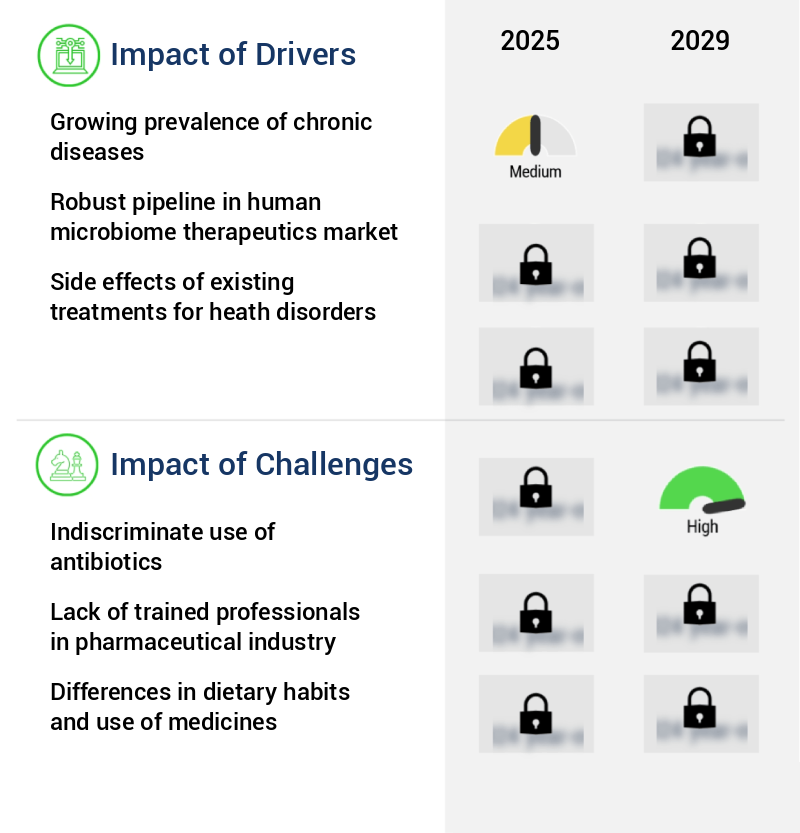
- The increasing prevalence of chronic diseases serves as the primary market driver, necessitating continuous growth in the healthcare industry.
- The global market for microbiome therapeutics is experiencing significant expansion due to the increasing prevalence of chronic diseases, including diabetes, hypertension, and obesity. These conditions, which can lead to the development of other serious health issues, are driven by both unhealthy lifestyle choices and genetic factors. For instance, hypertension, a major risk factor for coronary artery disease, stroke, heart failure, kidney disease, vision loss, and peripheral vascular disease, often shows no symptoms. Recent research indicates a connection between hypertension and alterations in the human microbiome. As a result, the ongoing research and development of microbiome therapeutics are gaining increased importance in the medical community.
- The market's growth is characterized by continuous innovation, with companies focusing on developing novel solutions to address the unmet needs in this space. This includes the development of microbiome-based therapeutics for various indications, such as gastrointestinal disorders, metabolic diseases, and infectious diseases. The market's potential is vast, with numerous opportunities for collaboration and partnerships among stakeholders, including biotech companies, pharmaceutical firms, and academic institutions. The evolving landscape of microbiome therapeutics reflects the dynamic nature of the healthcare industry and the ongoing quest for innovative solutions to address the complexities of chronic diseases.
What are the market trends shaping the Human Microbiome Therapeutics Industry?
- Increasing industry-academia collaboration is a significant market trend in the development of novel therapeutics.
- The global pharmaceutical drugs market is witnessing a significant shift towards academic collaborations, as leading players seek to bolster their innovation pipelines. These partnerships merge the research acumen of universities with the commercial expertise of pharmaceutical companies, resulting in the development of advanced therapies, particularly in the field of diabetes care. The financial resources provided by industry partners enable extensive research and clinical trials, accelerating the time-to-market for new treatments. The trend is particularly prominent in emerging economies, where public-private partnerships are driving the creation of novel therapeutics, including human microbiome therapies.
- Notable academic institutions contributing to this research include Yale University, the University of Arizona, the University of Texas Health Science Center at San Antonio, and Stanford University, among others. This collaborative approach is expected to dominate the pharmaceutical landscape in the coming years.
What challenges does the Human Microbiome Therapeutics Industry face during its growth?
- The indiscriminate use of antibiotics poses a significant challenge to the growth of the industry due to the emerging antimicrobial resistance. This issue necessitates a responsible approach to antibiotic stewardship in order to maintain effective treatment options and mitigate potential health risks.
- Antibiotic resistance poses a significant challenge to global public health, with an estimated 235 million antibiotic doses administered annually, according to CDC data. Of these, 20%-50% are considered inessential. This issue is particularly prevalent in primary care settings, where viruses are the primary cause of infections. The consequences of antibiotic resistance are far-reaching, adding substantial costs to healthcare systems due to limited treatment options and decreased drug efficacy.
- Over two million individuals fall victim to antibiotic-resistant infections each year. This trend underscores the urgent need for responsible antibiotic use and the development of novel approaches to combat antibiotic resistance.
Exclusive Customer Landscape
The human microbiome therapeutics market forecasting report includes the adoption lifecycle of the market, covering from the innovator's stage to the laggard's stage. It focuses on adoption rates in different regions based on penetration. Furthermore, the human microbiome therapeutics market report also includes key purchase criteria and drivers of price sensitivity to help companies evaluate and develop their market growth analysis strategies.

Customer Landscape of Human Microbiome Therapeutics Industry
Competitive Landscape & Market Insights
Companies are implementing various strategies, such as strategic alliances, human microbiome therapeutics market forecast, partnerships, mergers and acquisitions, geographical expansion, and product/service launches, to enhance their presence in the industry.
BiomX Inc. - The company specializes in the field of human microbiome research, utilizing innovative approaches such as Bacteriophage therapy to address various microbial imbalances.
The industry research and growth report includes detailed analyses of the competitive landscape of the market and information about key companies, including:
- BiomX Inc.
- Eligo Bioscience
- ENTEROME SA
- Evogene Ltd.
- Ferring BV
- Finch Therapeutics Group Inc.
- Flightpath Biosciences
- Johnson and Johnson Services Inc.
- Locus Biosciences Inc.
- MaaT Pharma
- Microbiotica Ltd.
- OptiBiotix Health Plc
- Osel Inc.
- PureTech Health Plc
- Second Genome Therapeutics
- Seres Therapeutics Inc.
- Synlogic Inc.
- Takeda Pharmaceutical Co. Ltd.
- Vedanta Biosciences Inc.
- YSOPIA Bioscience
Qualitative and quantitative analysis of companies has been conducted to help clients understand the wider business environment as well as the strengths and weaknesses of key industry players. Data is qualitatively analyzed to categorize companies as pure play, category-focused, industry-focused, and diversified; it is quantitatively analyzed to categorize companies as dominant, leading, strong, tentative, and weak.
Recent Development and News in Human Microbiome Therapeutics Market
- In January 2024, Seres Therapeutics, a leading player in microbiome-engineered medicines, announced the successful completion of a Phase 3 clinical trial for its SER-109 product, a microbiome-based therapy for recurrent Clostridioides difficile infection (rCDI) (Seres Therapeutics Press Release, 2024).
- In March 2024, Merck KGaA, Darmstadt, Germany, and the Massachusetts Institute of Technology (MIT) entered into a strategic collaboration to discover and develop microbiome-based therapeutics, with an initial focus on inflammatory bowel diseases (Merck KGaA Press Release, 2024).
- In April 2024, Second Genome, a pioneer in microbiome therapeutics, raised USD 50 million in a Series C financing round, led by new investor OrbiMed, to advance its pipeline of microbiome-based therapeutics for various indications (Second Genome Press Release, 2024).
- In May 2025, the European Commission granted marketing authorization for Rebyota, a microbiome-based therapeutic developed by Valneva SE, for the prevention of recurrent rCDI in adults (Valneva Press Release, 2025). This approval marks the first microbiome-based therapeutic to receive marketing authorization in Europe for this indication.
Dive into Technavio's robust research methodology, blending expert interviews, extensive data synthesis, and validated models for unparalleled Human Microbiome Therapeutics Market insights. See full methodology.
|
Market Scope |
|
|
Report Coverage |
Details |
|
Page number |
220 |
|
Base year |
2024 |
|
Historic period |
2019-2023 |
|
Forecast period |
2025-2029 |
|
Growth momentum & CAGR |
Accelerate at a CAGR of 44% |
|
Market growth 2025-2029 |
USD 2361.4 million |
|
Market structure |
Fragmented |
|
YoY growth 2024-2025(%) |
34.9 |
|
Key countries |
US, Germany, France, Canada, Japan, UK, Italy, Spain, China, and India |
|
Competitive landscape |
Leading Companies, Market Positioning of Companies, Competitive Strategies, and Industry Risks |
Research Analyst Overview
- The market is witnessing significant advancements, driven by the increasing understanding of the intricate interplay between the human microbiome and various health conditions. Microbiome-based diagnostics are gaining traction, with microbial ecology studies providing valuable insights into the composition and function of the gut microbiome. The gut-brain axis research is another key area of focus, as the role of the microbiome in immune system modulation and inflammation biomarkers becomes more apparent. Therapeutic efficacy metrics are being established for microbiome-targeted interventions, such as probiotic efficacy studies and microbial consortia development. Metagenomic sequencing analysis and phage therapy applications are also under exploration, offering potential solutions for modulating microbial community structure and metabolic pathway analysis.
- Prebiotic fiber fermentation and gut microbiome restoration are gaining attention as effective strategies for improving microbial community dynamics. Microbiome-targeted interventions are being developed to address gut microbiome dysbiosis, with a focus on targeted microbiome modulation and patient stratification methods. Microbiome diversity indices and gut barrier integrity are critical factors in personalized microbiome therapies, which aim to optimize host-microbe interactions and drug-microbe interactions. Microbial metabolite profiling and bacterial strain identification are essential components of this approach, enabling a better understanding of the complex microbial ecosystem and its role in human health. Fecal microbiota transplantation (FMT) is another area of active research, with ongoing studies investigating its potential in various therapeutic applications.
- The market is witnessing a surge in innovation, as researchers continue to unravel the mysteries of the human microbiome and its role in maintaining overall health and wellbeing.
What are the Key Data Covered in this Human Microbiome Therapeutics Market Research and Growth Report?
-
What is the expected growth of the Human Microbiome Therapeutics Market between 2025 and 2029?
-
USD 2.36 billion, at a CAGR of 44%
-
-
What segmentation does the market report cover?
-
The report segmented by Product (Probiotics, Prebiotics, Medical foods, and Prescription drugs), Application (Gastrointestinal disorders, Infectious diseases, and Others), Route Of Administration (Oral, Rectal (FMT), Injectable, and Topical), and Geography (North America, Europe, Asia, and Rest of World (ROW))
-
-
Which regions are analyzed in the report?
-
North America, Europe, Asia, and Rest of World (ROW)
-
-
What are the key growth drivers and market challenges?
-
Growing prevalence of chronic diseases, Indiscriminate use of antibiotics
-
-
Who are the major players in the Human Microbiome Therapeutics Market?
-
Key Companies BiomX Inc., Eligo Bioscience, ENTEROME SA, Evogene Ltd., Ferring BV, Finch Therapeutics Group Inc., Flightpath Biosciences, Johnson and Johnson Services Inc., Locus Biosciences Inc., MaaT Pharma, Microbiotica Ltd., OptiBiotix Health Plc, Osel Inc., PureTech Health Plc, Second Genome Therapeutics, Seres Therapeutics Inc., Synlogic Inc., Takeda Pharmaceutical Co. Ltd., Vedanta Biosciences Inc., and YSOPIA Bioscience
-
Market Research Insights
- The market encompasses the development and application of advanced technologies to manipulate the complex microbial ecosystem residing within the human body. This market is characterized by ongoing research in areas such as microbial gene expression, genome-wide association studies, and microbial community composition. According to recent estimates, the global microbiome therapeutics market size is projected to reach USD 1.5 billion by 2026, growing at a compound annual growth rate of 18%. In contrast, microbiome research funding reached approximately USD 600 million in 2020. These figures underscore the significant investment and interest in understanding the role of the microbiome in health and disease, as well as the potential for therapeutic interventions.
- Key areas of focus include gut microbiota function, immune cell subsets, and microbiome-drug interactions, among others. Longitudinal microbiome studies and treatment response prediction are also crucial for assessing microbiome stability and optimizing patient outcomes. Microbiome bioinformatics and multi-omics data integration are essential tools for interpreting the vast amounts of data generated from these studies.
We can help! Our analysts can customize this human microbiome therapeutics market research report to meet your requirements.
 RIA -
RIA -