


Hydrochloric Acid Market Analysis, Size, and Forecast 2026-2030: APAC (China, India, and Japan), North America (US, Canada, and Mexico), Europe (Germany, UK, and France), Middle East and Africa (Saudi Arabia, UAE, and South Africa), South America (Brazil and Argentina), and Rest of World (ROW)

Hydrochloric Acid Market Analysis, Size, and Forecast 2026-2030:
APAC (China, India, and Japan), North America (US, Canada, and Mexico), Europe (Germany, UK, and France), Middle East and Africa (Saudi Arabia, UAE, and South Africa), South America (Brazil and Argentina), and Rest of World (ROW)

Published: May 2026 318 Pages SKU: IRTNTR71836

Market Overview at a Glance

$1.68 B
Market Opportunity
7.5%
CAGR 2025 - 2030
71.3%
APAC Growth
$1.16 B
Food segment 2024

Hydrochloric Acid Market Size 2026-2030

The hydrochloric acid market size is valued to increase by USD 1.68 billion, at a CAGR of 7.5% from 2025 to 2030. Surging demand within global steel pickling and metal processing industry will drive the hydrochloric acid market.

Major Market Trends & Insights

  • APAC dominated the market and accounted for a 71.3% growth during the forecast period.
  • By End-user - Food segment was valued at USD 1.16 billion in 2024
  • By Grade Type - By-product grade segment accounted for the largest market revenue share in 2024

Market Size & Forecast

  • Market Opportunities: USD 2.68 billion
  • Market Future Opportunities: USD 1.68 billion
  • CAGR from 2025 to 2030 : 7.5%

Market Summary

  • The hydrochloric acid market functions as a foundational pillar of global industry, where its role as a powerful mineral acid is indispensable. The market's trajectory is heavily influenced by demand from heavy manufacturing sectors, where it is used as a primary steel pickling agent and for metal surface treatment.
  • Concurrently, its application in oil well acidizing is crucial for enhancing energy extraction from mature reserves. A key trend shaping the landscape is the rising demand for ultra-high purity semiconductor-grade acid, which necessitates significant investment in advanced purification infrastructure.
  • However, producers face the persistent challenge of managing byproduct supply volatility, as availability is often tied to the production cycles of chlorinated hydrocarbon and polyvinyl chloride, creating regional supply-demand imbalances.
  • For instance, a chemical intermediate producer might implement a closed-loop recycling system using hcl electrolysis technology to convert surplus by-product hydrochloric acid back into high-purity chlorine, reducing waste disposal costs and creating a more resilient, circular supply chain model that mitigates dependency on the merchant chlorine market.

What will be the Size of the Hydrochloric Acid Market during the forecast period?
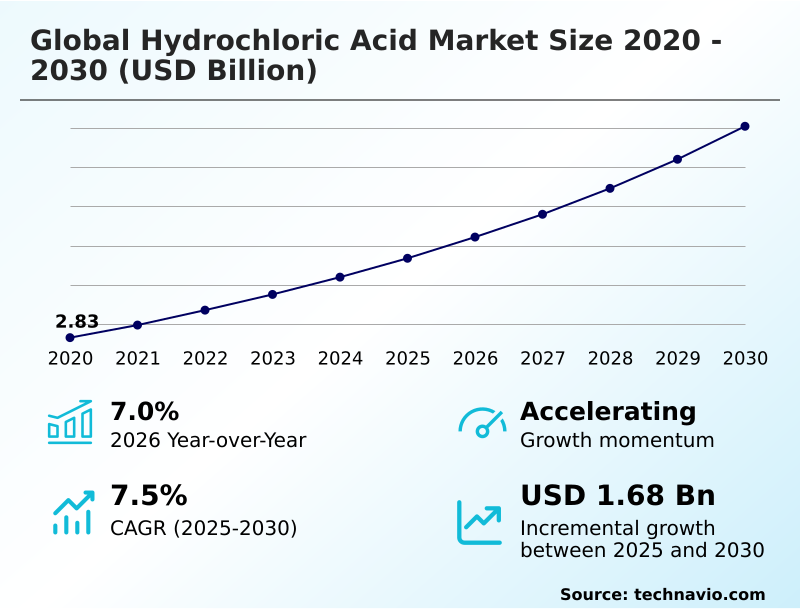
Get Key Insights on Market Forecast (PDF) Get Free Sample

How is the Hydrochloric Acid Market Segmented?

The hydrochloric acid industry research report provides comprehensive data (region-wise segment analysis), with forecasts and estimates in "USD million" for the period 2026-2030, as well as historical data from 2020-2024 for the following segments.

  • End-user
    • Food
    • Steel
    • Oil
    • Chemicals
    • Others
  • Grade type
    • By-product grade
    • Synthetic grade
  • Application
    • Chemicals and pharmaceuticals
    • Food and beverage
    • Steel and metal processing
    • Water and wastewater treatment
    • Others
  • Geography
    • APAC
      • China
      • India
      • Japan
    • North America
      • US
      • Canada
      • Mexico
    • Europe
      • Germany
      • UK
      • France
    • Middle East and Africa
      • Saudi Arabia
      • UAE
      • South Africa
    • South America
      • Brazil
      • Argentina
    • Rest of World (ROW)

By End-user Insights

The food segment is estimated to witness significant growth during the forecast period.

The food segment represents a specialized and regulated application for hydrochloric acid, where high-purity grades are essential. In this sector, the chemical functions as a vital food-grade acid additive and processing aid, primarily for precise food processing ph control.

It is critical in the production of ingredients like high-fructose corn syrup and in protein hydrolysis to create flavor enhancers.

The use of this mineral acid is governed by stringent safety standards, necessitating a robust industrial chemical supply chain to prevent contamination.

By effectively inhibiting microbial growth, the application of reagent-grade hcl can improve finished product shelf life by over 15%, ensuring both safety and stability in the expanding processed food sector, where specialized chemical logistics are paramount to operational success.
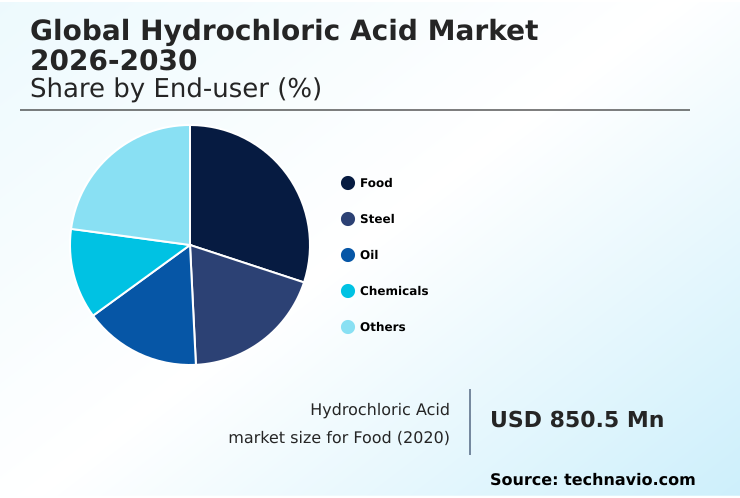
Get Free Sample

The Food segment was valued at USD 1.16 billion in 2024 and showed a gradual increase during the forecast period.
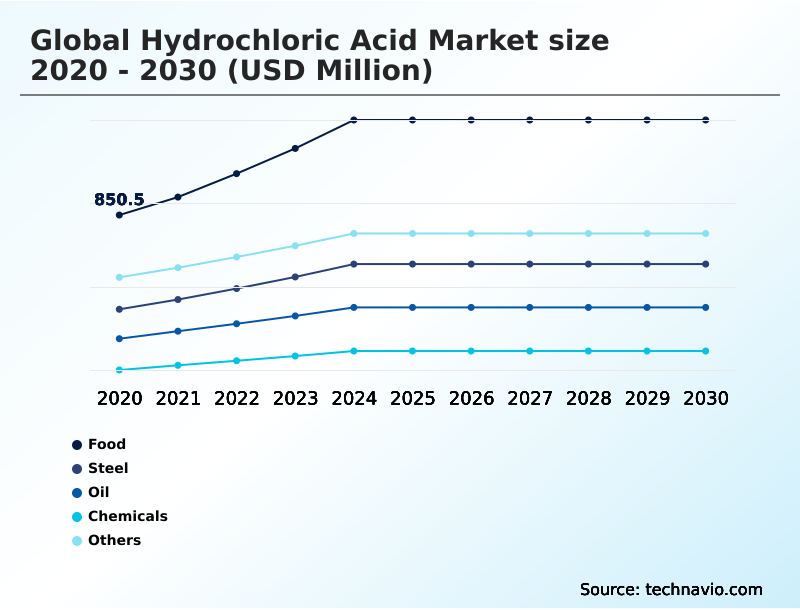
Get Free Sample

Regional Analysis

APAC is estimated to contribute 71.3% to the growth of the global market during the forecast period.Technavio’s analysts have elaborately explained the regional trends and drivers that shape the market during the forecast period.
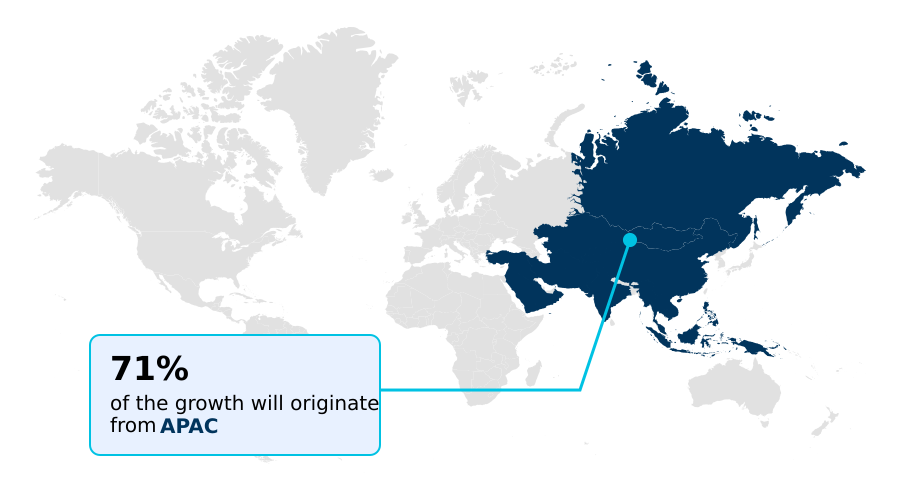
See How Hydrochloric Acid Market Demand is Rising in APAC Get Free Sample

The market's geographic landscape is characterized by a distinct divergence between regions.

APAC, contributing over 71% of the market's incremental growth, is driven by high-volume demand for by-product hydrochloric acid used in steel and chemical manufacturing, particularly in China and India.

In contrast, North America and Europe, with respective market growth rates of 5.8% and 6.6%, are increasingly focused on high-value applications. These mature markets emphasize the production and use of synthetic hydrochloric acid for pharmaceuticals and electronics.

This regional supply-demand imbalance is a key feature, as logistical challenges in corrosive liquid transportation limit inter-regional trade. The need for a stable supply of hydrogen chloride gas and a reliable raw material feedstock underpins operations globally.

Market Dynamics

Our researchers analyzed the data with 2025 as the base year, along with the key drivers, trends, and challenges. A holistic analysis of drivers will help companies refine their marketing strategies to gain a competitive advantage.

  • Strategic decision-making in the hydrochloric acid market requires a nuanced understanding of its multifaceted nature, from analyzing by-product vs synthetic hcl cost structures to managing the complexities of its supply chain. The role of hcl in water treatment and as a chemical catalyst provides stable, non-cyclical demand, balancing the volatility seen in other sectors.
  • In heavy industry, optimizing hcl use in metal processing and understanding the benefits of hcl acid regeneration technology are critical for cost control. For example, steel mills that invest in on-site regeneration can see a significant reduction in virgin acid procurement.
  • Concurrently, the need for high purity hcl for semiconductors is creating a premium market segment, demanding advanced synthetic hcl production methods and purity standards. This is contrasted with the challenge of managing hcl byproduct from pvc manufacturing, which is governed by strict environmental regulations for acid disposal.
  • Across all applications, from hcl in steel pickling process to its use in food manufacturing, reducing hcl transportation and logistics costs remains a primary operational focus.
  • Firms that implement robust safe handling protocols for hydrochloric acid and invest in modern hcl neutralization units often report a 20% greater success rate in meeting compliance standards, underscoring the importance of addressing both economic and regulatory pressures.
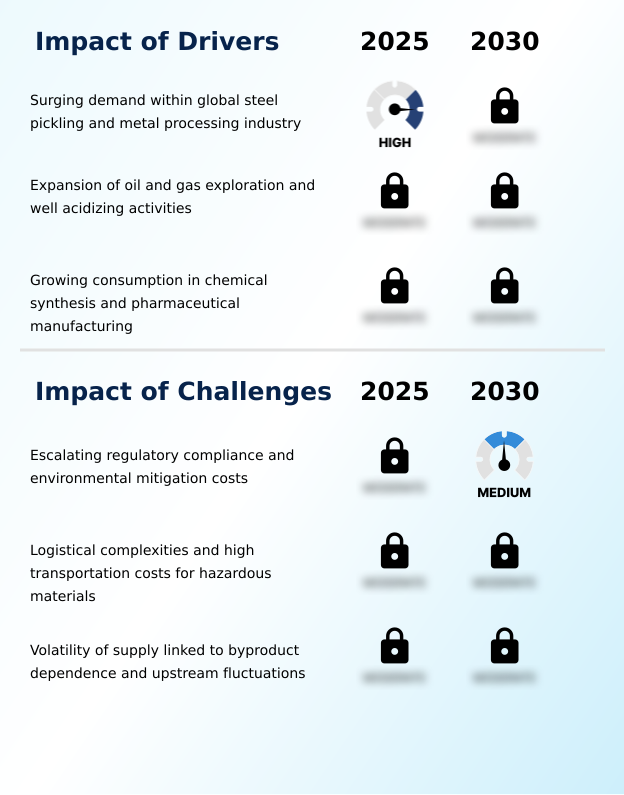
What are the key market drivers leading to the rise in the adoption of Hydrochloric Acid Industry?

  • Surging demand from the global steel pickling and metal processing industry is a key driver for the market's growth.

  • Market growth is fundamentally driven by its indispensable role as a heavy manufacturing reagent. In the steel industry, its function as a scale removal agent in pickling lines can increase processing throughput by over 10% compared to alternatives.
  • In the energy sector, oilfield stimulation fluid formulations rely on this acid to enhance hydrocarbon recovery, with well acidizing techniques boosting initial output from mature wells by as much as 30%.
  • Demand for it as a chemical synthesis catalyst in inorganic chemical synthesis and polyurethane manufacturing remains robust.
  • Furthermore, its use as a water treatment coagulant and for ph regulation chemical processes provides a stable, non-cyclical demand base, underscoring its importance across diverse industrial applications from metal surface treatment to food processing ph control.

What are the market trends shaping the Hydrochloric Acid Industry?

  • The increasing adoption of advanced hydrochloric acid electrolysis for chlorine recovery is a significant upcoming trend. This shift is reshaping supply dynamics by enabling a circular economy for chemical producers.

  • Key market trends are centered on enhancing efficiency and sustainability through technological adoption. The integration of hcl electrolysis technology is gaining traction, with some advanced diaphragm electrolysis systems improving chlorine recovery from spent pickle liquor by over 15%. This creates a more circular supply chain model for this critical chemical intermediate.
  • Simultaneously, the push for digitalization in hazardous material logistics is optimizing corrosive liquid transportation. AI-driven platforms have demonstrated an ability to reduce transit-related safety incidents by up to 20%.
  • This focus on a closed-loop recycling system for by-product hydrochloric acid, often generated during caustic soda production, addresses both environmental compliance costs and operational efficiency, reflecting a strategic shift in asset portfolio rationalization across the industry.

What challenges does the Hydrochloric Acid Industry face during its growth?

  • Escalating regulatory compliance requirements and environmental mitigation costs present a key challenge affecting industry growth.

  • The market grapples with significant structural challenges that impact profitability and operational stability. The primary issue is byproduct supply volatility, as the availability of industrial-grade hcl is directly linked to upstream production fluctuations in the chlor-alkali and vinyl sectors, which can cause price swings of up to 25% in a single quarter.
  • Additionally, escalating environmental mitigation costs, including investment in advanced fume scrubbing systems and acid neutralization units, can increase operational expenditures by 12% or more for producers. These factors, compounded by the high costs of specialized logistics using fiberglass-reinforced plastic containers, create persistent pressure on supply chain resilience and necessitate sophisticated operational cost management strategies.

Exclusive Technavio Analysis on Customer Landscape

The hydrochloric acid market forecasting report includes the adoption lifecycle of the market, covering from the innovator’s stage to the laggard’s stage. It focuses on adoption rates in different regions based on penetration. Furthermore, the hydrochloric acid market report also includes key purchase criteria and drivers of price sensitivity to help companies evaluate and develop their market growth analysis strategies.
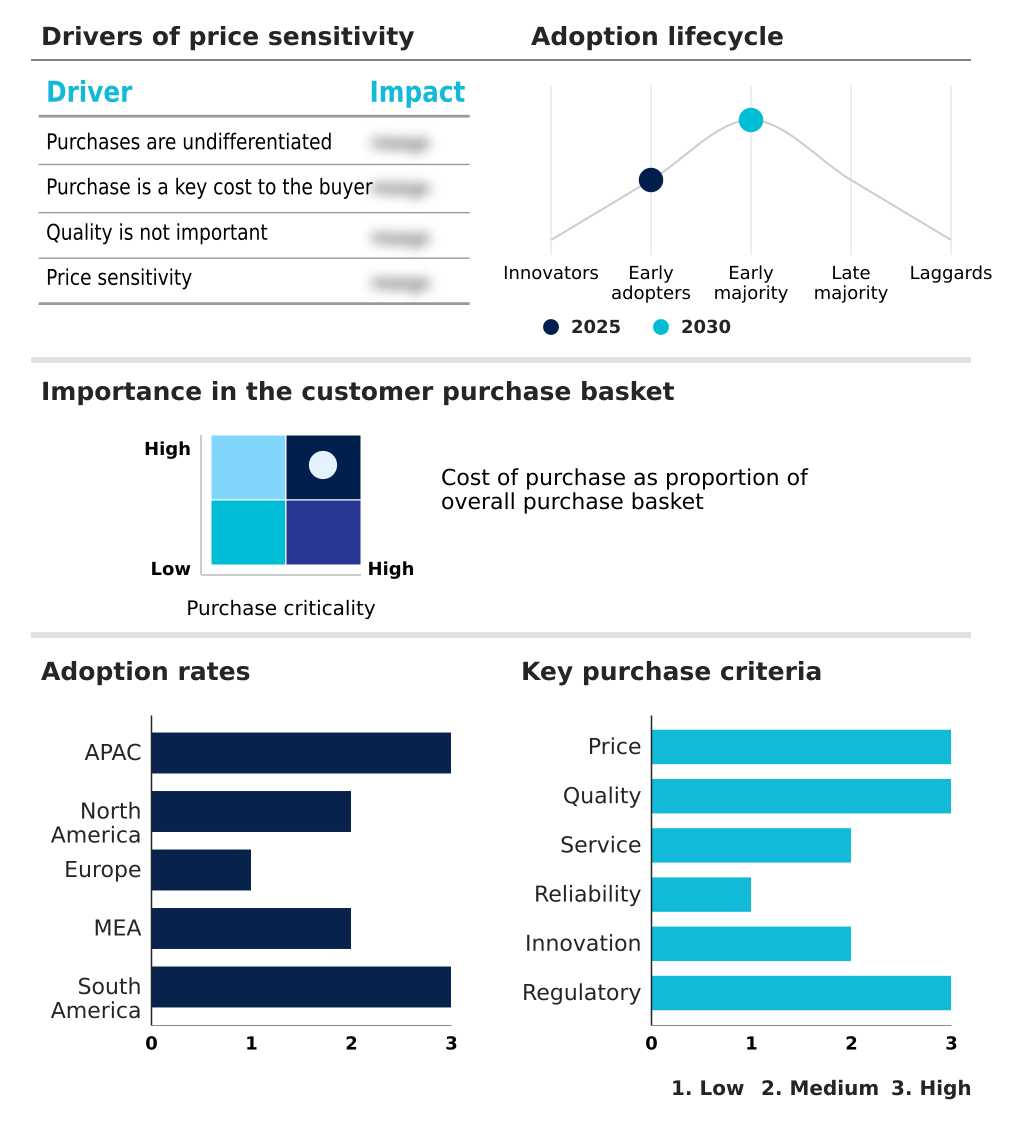
Customer Landscape of Hydrochloric Acid Industry

Competitive Landscape

Companies are implementing various strategies, such as strategic alliances, hydrochloric acid market forecast, partnerships, mergers and acquisitions, geographical expansion, and product/service launches, to enhance their presence in the industry.

AGC Inc. - Offerings are centered on industrial-grade hydrochloric acid, chlor-alkali chemicals, and specialized additives, addressing a wide range of industrial process requirements and applications.

The industry research and growth report includes detailed analyses of the competitive landscape of the market and information about key companies, including:

  • AGC Inc.
  • Akzo Nobel NV
  • BASF SE
  • BRENNTAG SE
  • Covestro AG
  • DCW Ltd.
  • Dow Chemical Co.
  • Ercros SA
  • Formosa Plastics Corp.
  • Grasim Industries Ltd.
  • Hanwha Solutions Corp.
  • Hawkins Inc.
  • Kemira Oyj
  • Occidental Petroleum Corp.
  • Olin Corp.
  • Shin Etsu Chemical Co. Ltd.
  • Solvay SA
  • Tata Chemicals Ltd.
  • Tosoh Corp.
  • Westlake Corp.

Qualitative and quantitative analysis of companies has been conducted to help clients understand the wider business environment as well as the strengths and weaknesses of key industry players. Data is qualitatively analyzed to categorize companies as pure play, category-focused, industry-focused, and diversified; it is quantitatively analyzed to categorize companies as dominant, leading, strong, tentative, and weak.

Recent Development and News in Hydrochloric acid market

  • In May, 2025, Chlorum Solutions USA entered a definitive agreement to acquire the Eddyville Chlor-Alkali facility from Cargill, a move designed to reinforce its proximity-based business model and enhance the regional availability of hydrochloric acid and other essential derivatives across the Midwest.
  • In February, 2025, AGC Vinythai commenced commercial operations at its expanded chlor-alkali plant in Map Ta Phut, Thailand, deploying advanced bipolar ion-exchange membrane technology to significantly boost the output of chlorine derivatives and meet rising manufacturing demand in Southeast Asia.
  • In December, 2024, Westlake Corp. revealed plans to cease operations at its diaphragm chlor-alkali plant in Lake Charles, Louisiana, as part of a significant rationalization strategy to streamline its asset portfolio and tighten byproduct availability in the North American supply network.
  • In August, 2024, Unipar Carbocloro entered preliminary negotiations for the potential acquisition of certain United States-based chemical assets from Braskem, a strategic maneuver aimed at expanding its operational footprint beyond domestic borders and stabilizing regional pricing dynamics.

Dive into Technavio’s robust research methodology, blending expert interviews, extensive data synthesis, and validated models for unparalleled Hydrochloric Acid Market insights. See full methodology.

Market Scope
Page number 318
Base year 2025
Historic period 2020-2024
Forecast period 2026-2030
Growth momentum & CAGR Accelerate at a CAGR of 7.5%
Market growth 2026-2030 USD 1675.8 million
Market structure Fragmented
YoY growth 2025-2026(%) 7.0%
Key countries China, India, Japan, South Korea, Australia, Indonesia, US, Canada, Mexico, Germany, UK, France, Italy, Russia, The Netherlands, Saudi Arabia, UAE, South Africa, Egypt, Nigeria, Brazil, Argentina and Chile
Competitive landscape Leading Companies, Market Positioning of Companies, Competitive Strategies, and Industry Risks

Request Free Sample

Research Analyst Overview

  • The hydrochloric acid market operates on a dual-axis of being a high-volume industrial commodity and a high-value specialty chemical. Its primary role as a steel pickling agent and its use in oil well acidizing and wastewater neutralization drive large-scale consumption of industrial-grade hcl. However, a significant trend compelling boardroom-level strategic decisions is the escalating demand for ultra-high purity semiconductor-grade acid.
  • This creates a critical inflection point regarding capital expenditure, forcing producers to evaluate the ROI of investing in sophisticated purification technologies against the high margins of the electronics sector. Producers of this specialized aqueous hcl solution can achieve profit margins over 50% higher than those supplying standard grades.
  • The supply is predominantly by-product hydrochloric acid from the chlor-alkali process, where it is generated alongside caustic soda production during the synthesis of materials like vinyl chloride monomer and polyurethane manufacturing. Managing the logistics of this mineral acid, a hazardous material requiring specialized rubber-lined steel tanks, remains a core operational challenge tied to its function as a vital chemical intermediate.

What are the Key Data Covered in this Hydrochloric Acid Market Research and Growth Report?

  • What is the expected growth of the Hydrochloric Acid Market between 2026 and 2030?

    • USD 1.68 billion, at a CAGR of 7.5%

  • What segmentation does the market report cover?

    • The report is segmented by End-user (Food, Steel, Oil, Chemicals, and Others), Grade Type (By-product grade, and Synthetic grade), Application (Chemicals and pharmaceuticals, Food and beverage, Steel and metal processing, Water and wastewater treatment, and Others) and Geography (APAC, North America, Europe, Middle East and Africa, South America)

  • Which regions are analyzed in the report?

    • APAC, North America, Europe, Middle East and Africa and South America

  • What are the key growth drivers and market challenges?

    • Surging demand within global steel pickling and metal processing industry, Escalating regulatory compliance and environmental mitigation costs

  • Who are the major players in the Hydrochloric Acid Market?

    • AGC Inc., Akzo Nobel NV, BASF SE, BRENNTAG SE, Covestro AG, DCW Ltd., Dow Chemical Co., Ercros SA, Formosa Plastics Corp., Grasim Industries Ltd., Hanwha Solutions Corp., Hawkins Inc., Kemira Oyj, Occidental Petroleum Corp., Olin Corp., Shin Etsu Chemical Co. Ltd., Solvay SA, Tata Chemicals Ltd., Tosoh Corp. and Westlake Corp.

Market Research Insights

  • Market dynamics are defined by the interplay between byproduct supply from the chlor-alkali process and demand from core industrial sectors. This creates a complex environment where upstream production fluctuations directly impact downstream consumers. The strategic management of captive chemical consumption versus reliance on the merchant market is a key differentiator.
  • Advanced purification infrastructure allows producers to serve high-value segments, with some achieving a 40% margin improvement on electronic-grade products over industrial grades. Furthermore, the adoption of digital monitoring for corrosive liquid transportation has been shown to reduce safety incidents by over 25%, enhancing supply chain resilience.
  • This focus on operational cost management and industrial safety protocols is critical in navigating the market's inherent volatility.

We can help! Our analysts can customize this hydrochloric acid market research report to meet your requirements.

Get in touch

1. Executive Summary

1.1 Market overview

Executive Summary - Chart on Market Overview
Executive Summary - Data Table on Market Overview
Executive Summary - Chart on Global Market Characteristics
Executive Summary - Chart on Market by Geography
Executive Summary - Chart on Market Segmentation by End-user
Executive Summary - Chart on Market Segmentation by Grade Type
Executive Summary - Chart on Market Segmentation by Application
Executive Summary - Chart on Incremental Growth
Executive Summary - Data Table on Incremental Growth
Executive Summary - Chart on Company Market Positioning

2. Technavio Analysis

2.1 Analysis of price sensitivity, lifecycle, customer purchase basket, adoption rates, and purchase criteria

2.2 Criticality of inputs and Factors of differentiation

Chart on Overview on criticality of inputs and factors of differentiation

2.3 Factors of disruption

Chart on Overview on factors of disruption

2.4 Impact of drivers and challenges

Chart on Impact of drivers and challenges in 2025 and 2030

3. Market Landscape

3.1 Market ecosystem

Chart on Parent Market
Data Table on - Parent Market

3.2 Market characteristics

Chart on Market characteristics analysis

3.3 Value chain analysis

Chart on Value chain analysis

4. Market Sizing

4.1 Market definition

Data Table on Offerings of companies included in the market definition

4.2 Market segment analysis

Market segments

4.3 Market size 2025

4.4 Market outlook: Forecast for 2025-2030

Chart on Global - Market size and forecast 2025-2030 ($ million)
Data Table on Global - Market size and forecast 2025-2030 ($ million)
Chart on Global Market: Year-over-year growth 2025-2030 (%)
Data Table on Global Market: Year-over-year growth 2025-2030 (%)

5. Historic Market Size

5.1 Global Hydrochloric Acid Market 2020 - 2024

Historic Market Size - Data Table on Global Hydrochloric Acid Market 2020 - 2024 ($ million)

5.2 End-user segment analysis 2020 - 2024

Historic Market Size - End-user Segment 2020 - 2024 ($ million)

5.3 Grade Type segment analysis 2020 - 2024

Historic Market Size - Grade Type Segment 2020 - 2024 ($ million)

5.4 Application segment analysis 2020 - 2024

Historic Market Size - Application Segment 2020 - 2024 ($ million)

5.5 Geography segment analysis 2020 - 2024

Historic Market Size - Geography Segment 2020 - 2024 ($ million)

5.6 Country segment analysis 2020 - 2024

Historic Market Size - Country Segment 2020 - 2024 ($ million)

6. Qualitative Analysis

6.1 Impact of AI on global hydrochloric acid market

6.2 Impact of geopolitical conflicts on global hydrochloric acid market

7. Five Forces Analysis

7.1 Five forces summary

Five forces analysis - Comparison between 2025 and 2030

7.2 Bargaining power of buyers

Bargaining power of buyers - Impact of key factors 2025 and 2030

7.3 Bargaining power of suppliers

Bargaining power of suppliers - Impact of key factors in 2025 and 2030

7.4 Threat of new entrants

Threat of new entrants - Impact of key factors in 2025 and 2030

7.5 Threat of substitutes

Threat of substitutes - Impact of key factors in 2025 and 2030

7.6 Threat of rivalry

Threat of rivalry - Impact of key factors in 2025 and 2030

7.7 Market condition

Chart on Market condition - Five forces 2025 and 2030

8. Market Segmentation by End-user

8.1 Market segments

Chart on End-user - Market share 2025-2030 (%)
Data Table on End-user - Market share 2025-2030 (%)

8.2 Comparison by End-user

Chart on Comparison by End-user
Data Table on Comparison by End-user

8.3 Food - Market size and forecast 2025-2030

Chart on Food - Market size and forecast 2025-2030 ($ million)
Data Table on Food - Market size and forecast 2025-2030 ($ million)
Chart on Food - Year-over-year growth 2025-2030 (%)
Data Table on Food - Year-over-year growth 2025-2030 (%)

8.4 Steel - Market size and forecast 2025-2030

Chart on Steel - Market size and forecast 2025-2030 ($ million)
Data Table on Steel - Market size and forecast 2025-2030 ($ million)
Chart on Steel - Year-over-year growth 2025-2030 (%)
Data Table on Steel - Year-over-year growth 2025-2030 (%)

8.5 Oil - Market size and forecast 2025-2030

Chart on Oil - Market size and forecast 2025-2030 ($ million)
Data Table on Oil - Market size and forecast 2025-2030 ($ million)
Chart on Oil - Year-over-year growth 2025-2030 (%)
Data Table on Oil - Year-over-year growth 2025-2030 (%)

8.6 Chemicals - Market size and forecast 2025-2030

Chart on Chemicals - Market size and forecast 2025-2030 ($ million)
Data Table on Chemicals - Market size and forecast 2025-2030 ($ million)
Chart on Chemicals - Year-over-year growth 2025-2030 (%)
Data Table on Chemicals - Year-over-year growth 2025-2030 (%)

8.7 Others - Market size and forecast 2025-2030

Chart on Others - Market size and forecast 2025-2030 ($ million)
Data Table on Others - Market size and forecast 2025-2030 ($ million)
Chart on Others - Year-over-year growth 2025-2030 (%)
Data Table on Others - Year-over-year growth 2025-2030 (%)

8.8 Market opportunity by End-user

Market opportunity by End-user ($ million)
Data Table on Market opportunity by End-user ($ million)

9. Market Segmentation by Grade Type

9.1 Market segments

Chart on Grade Type - Market share 2025-2030 (%)
Data Table on Grade Type - Market share 2025-2030 (%)

9.2 Comparison by Grade Type

Chart on Comparison by Grade Type
Data Table on Comparison by Grade Type

9.3 By-product grade - Market size and forecast 2025-2030

Chart on By-product grade - Market size and forecast 2025-2030 ($ million)
Data Table on By-product grade - Market size and forecast 2025-2030 ($ million)
Chart on By-product grade - Year-over-year growth 2025-2030 (%)
Data Table on By-product grade - Year-over-year growth 2025-2030 (%)

9.4 Synthetic grade - Market size and forecast 2025-2030

Chart on Synthetic grade - Market size and forecast 2025-2030 ($ million)
Data Table on Synthetic grade - Market size and forecast 2025-2030 ($ million)
Chart on Synthetic grade - Year-over-year growth 2025-2030 (%)
Data Table on Synthetic grade - Year-over-year growth 2025-2030 (%)

9.5 Market opportunity by Grade Type

Market opportunity by Grade Type ($ million)
Data Table on Market opportunity by Grade Type ($ million)

10. Market Segmentation by Application

10.1 Market segments

Chart on Application - Market share 2025-2030 (%)
Data Table on Application - Market share 2025-2030 (%)

10.2 Comparison by Application

Chart on Comparison by Application
Data Table on Comparison by Application

10.3 Chemicals and pharmaceuticals - Market size and forecast 2025-2030

Chart on Chemicals and pharmaceuticals - Market size and forecast 2025-2030 ($ million)
Data Table on Chemicals and pharmaceuticals - Market size and forecast 2025-2030 ($ million)
Chart on Chemicals and pharmaceuticals - Year-over-year growth 2025-2030 (%)
Data Table on Chemicals and pharmaceuticals - Year-over-year growth 2025-2030 (%)

10.4 Food and beverage - Market size and forecast 2025-2030

Chart on Food and beverage - Market size and forecast 2025-2030 ($ million)
Data Table on Food and beverage - Market size and forecast 2025-2030 ($ million)
Chart on Food and beverage - Year-over-year growth 2025-2030 (%)
Data Table on Food and beverage - Year-over-year growth 2025-2030 (%)

10.5 Steel and metal processing - Market size and forecast 2025-2030

Chart on Steel and metal processing - Market size and forecast 2025-2030 ($ million)
Data Table on Steel and metal processing - Market size and forecast 2025-2030 ($ million)
Chart on Steel and metal processing - Year-over-year growth 2025-2030 (%)
Data Table on Steel and metal processing - Year-over-year growth 2025-2030 (%)

10.6 Water and wastewater treatment - Market size and forecast 2025-2030

Chart on Water and wastewater treatment - Market size and forecast 2025-2030 ($ million)
Data Table on Water and wastewater treatment - Market size and forecast 2025-2030 ($ million)
Chart on Water and wastewater treatment - Year-over-year growth 2025-2030 (%)
Data Table on Water and wastewater treatment - Year-over-year growth 2025-2030 (%)

10.7 Others - Market size and forecast 2025-2030

Chart on Others - Market size and forecast 2025-2030 ($ million)
Data Table on Others - Market size and forecast 2025-2030 ($ million)
Chart on Others - Year-over-year growth 2025-2030 (%)
Data Table on Others - Year-over-year growth 2025-2030 (%)

10.8 Market opportunity by Application

Market opportunity by Application ($ million)
Data Table on Market opportunity by Application ($ million)

11. Customer Landscape

11.1 Customer landscape overview

Analysis of price sensitivity, lifecycle, customer purchase basket, adoption rates, and purchase criteria

12. Geographic Landscape

12.1 Geographic segmentation

Chart on Market share by geography 2025-2030 (%)
Data Table on Market share by geography 2025-2030 (%)

12.2 Geographic comparison

Chart on Geographic comparison
Data Table on Geographic comparison

12.3 APAC - Market size and forecast 2025-2030

Chart on APAC - Market size and forecast 2025-2030 ($ million)
Data Table on APAC - Market size and forecast 2025-2030 ($ million)
Chart on APAC - Year-over-year growth 2025-2030 (%)
Data Table on APAC - Year-over-year growth 2025-2030 (%)
Chart on Regional Comparison - APAC
Data Table on Regional Comparison - APAC

12.3.1 China - Market size and forecast 2025-2030

Chart on China - Market size and forecast 2025-2030 ($ million)
Data Table on China - Market size and forecast 2025-2030 ($ million)
Chart on China - Year-over-year growth 2025-2030 (%)
Data Table on China - Year-over-year growth 2025-2030 (%)

12.3.2 India - Market size and forecast 2025-2030

Chart on India - Market size and forecast 2025-2030 ($ million)
Data Table on India - Market size and forecast 2025-2030 ($ million)
Chart on India - Year-over-year growth 2025-2030 (%)
Data Table on India - Year-over-year growth 2025-2030 (%)

12.3.3 Japan - Market size and forecast 2025-2030

Chart on Japan - Market size and forecast 2025-2030 ($ million)
Data Table on Japan - Market size and forecast 2025-2030 ($ million)
Chart on Japan - Year-over-year growth 2025-2030 (%)
Data Table on Japan - Year-over-year growth 2025-2030 (%)

12.3.4 South Korea - Market size and forecast 2025-2030

Chart on South Korea - Market size and forecast 2025-2030 ($ million)
Data Table on South Korea - Market size and forecast 2025-2030 ($ million)
Chart on South Korea - Year-over-year growth 2025-2030 (%)
Data Table on South Korea - Year-over-year growth 2025-2030 (%)

12.3.5 Australia - Market size and forecast 2025-2030

Chart on Australia - Market size and forecast 2025-2030 ($ million)
Data Table on Australia - Market size and forecast 2025-2030 ($ million)
Chart on Australia - Year-over-year growth 2025-2030 (%)
Data Table on Australia - Year-over-year growth 2025-2030 (%)

12.3.6 Indonesia - Market size and forecast 2025-2030

Chart on Indonesia - Market size and forecast 2025-2030 ($ million)
Data Table on Indonesia - Market size and forecast 2025-2030 ($ million)
Chart on Indonesia - Year-over-year growth 2025-2030 (%)
Data Table on Indonesia - Year-over-year growth 2025-2030 (%)

12.4 North America - Market size and forecast 2025-2030

Chart on North America - Market size and forecast 2025-2030 ($ million)
Data Table on North America - Market size and forecast 2025-2030 ($ million)
Chart on North America - Year-over-year growth 2025-2030 (%)
Data Table on North America - Year-over-year growth 2025-2030 (%)
Chart on Regional Comparison - North America
Data Table on Regional Comparison - North America

12.4.1 US - Market size and forecast 2025-2030

Chart on US - Market size and forecast 2025-2030 ($ million)
Data Table on US - Market size and forecast 2025-2030 ($ million)
Chart on US - Year-over-year growth 2025-2030 (%)
Data Table on US - Year-over-year growth 2025-2030 (%)

12.4.2 Canada - Market size and forecast 2025-2030

Chart on Canada - Market size and forecast 2025-2030 ($ million)
Data Table on Canada - Market size and forecast 2025-2030 ($ million)
Chart on Canada - Year-over-year growth 2025-2030 (%)
Data Table on Canada - Year-over-year growth 2025-2030 (%)

12.4.3 Mexico - Market size and forecast 2025-2030

Chart on Mexico - Market size and forecast 2025-2030 ($ million)
Data Table on Mexico - Market size and forecast 2025-2030 ($ million)
Chart on Mexico - Year-over-year growth 2025-2030 (%)
Data Table on Mexico - Year-over-year growth 2025-2030 (%)

12.5 Europe - Market size and forecast 2025-2030

Chart on Europe - Market size and forecast 2025-2030 ($ million)
Data Table on Europe - Market size and forecast 2025-2030 ($ million)
Chart on Europe - Year-over-year growth 2025-2030 (%)
Data Table on Europe - Year-over-year growth 2025-2030 (%)
Chart on Regional Comparison - Europe
Data Table on Regional Comparison - Europe

12.5.1 Germany - Market size and forecast 2025-2030

Chart on Germany - Market size and forecast 2025-2030 ($ million)
Data Table on Germany - Market size and forecast 2025-2030 ($ million)
Chart on Germany - Year-over-year growth 2025-2030 (%)
Data Table on Germany - Year-over-year growth 2025-2030 (%)

12.5.2 UK - Market size and forecast 2025-2030

Chart on UK - Market size and forecast 2025-2030 ($ million)
Data Table on UK - Market size and forecast 2025-2030 ($ million)
Chart on UK - Year-over-year growth 2025-2030 (%)
Data Table on UK - Year-over-year growth 2025-2030 (%)

12.5.3 France - Market size and forecast 2025-2030

Chart on France - Market size and forecast 2025-2030 ($ million)
Data Table on France - Market size and forecast 2025-2030 ($ million)
Chart on France - Year-over-year growth 2025-2030 (%)
Data Table on France - Year-over-year growth 2025-2030 (%)

12.5.4 Italy - Market size and forecast 2025-2030

Chart on Italy - Market size and forecast 2025-2030 ($ million)
Data Table on Italy - Market size and forecast 2025-2030 ($ million)
Chart on Italy - Year-over-year growth 2025-2030 (%)
Data Table on Italy - Year-over-year growth 2025-2030 (%)

12.5.5 Russia - Market size and forecast 2025-2030

Chart on Russia - Market size and forecast 2025-2030 ($ million)
Data Table on Russia - Market size and forecast 2025-2030 ($ million)
Chart on Russia - Year-over-year growth 2025-2030 (%)
Data Table on Russia - Year-over-year growth 2025-2030 (%)

12.5.6 The Netherlands - Market size and forecast 2025-2030

Chart on The Netherlands - Market size and forecast 2025-2030 ($ million)
Data Table on The Netherlands - Market size and forecast 2025-2030 ($ million)
Chart on The Netherlands - Year-over-year growth 2025-2030 (%)
Data Table on The Netherlands - Year-over-year growth 2025-2030 (%)

12.6 Middle East and Africa - Market size and forecast 2025-2030

Chart on Middle East and Africa - Market size and forecast 2025-2030 ($ million)
Data Table on Middle East and Africa - Market size and forecast 2025-2030 ($ million)
Chart on Middle East and Africa - Year-over-year growth 2025-2030 (%)
Data Table on Middle East and Africa - Year-over-year growth 2025-2030 (%)
Chart on Regional Comparison - Middle East and Africa
Data Table on Regional Comparison - Middle East and Africa

12.6.1 Saudi Arabia - Market size and forecast 2025-2030

Chart on Saudi Arabia - Market size and forecast 2025-2030 ($ million)
Data Table on Saudi Arabia - Market size and forecast 2025-2030 ($ million)
Chart on Saudi Arabia - Year-over-year growth 2025-2030 (%)
Data Table on Saudi Arabia - Year-over-year growth 2025-2030 (%)

12.6.2 UAE - Market size and forecast 2025-2030

Chart on UAE - Market size and forecast 2025-2030 ($ million)
Data Table on UAE - Market size and forecast 2025-2030 ($ million)
Chart on UAE - Year-over-year growth 2025-2030 (%)
Data Table on UAE - Year-over-year growth 2025-2030 (%)

12.6.3 South Africa - Market size and forecast 2025-2030

Chart on South Africa - Market size and forecast 2025-2030 ($ million)
Data Table on South Africa - Market size and forecast 2025-2030 ($ million)
Chart on South Africa - Year-over-year growth 2025-2030 (%)
Data Table on South Africa - Year-over-year growth 2025-2030 (%)

12.6.4 Egypt - Market size and forecast 2025-2030

Chart on Egypt - Market size and forecast 2025-2030 ($ million)
Data Table on Egypt - Market size and forecast 2025-2030 ($ million)
Chart on Egypt - Year-over-year growth 2025-2030 (%)
Data Table on Egypt - Year-over-year growth 2025-2030 (%)

12.6.5 Nigeria - Market size and forecast 2025-2030

Chart on Nigeria - Market size and forecast 2025-2030 ($ million)
Data Table on Nigeria - Market size and forecast 2025-2030 ($ million)
Chart on Nigeria - Year-over-year growth 2025-2030 (%)
Data Table on Nigeria - Year-over-year growth 2025-2030 (%)

12.7 South America - Market size and forecast 2025-2030

Chart on South America - Market size and forecast 2025-2030 ($ million)
Data Table on South America - Market size and forecast 2025-2030 ($ million)
Chart on South America - Year-over-year growth 2025-2030 (%)
Data Table on South America - Year-over-year growth 2025-2030 (%)
Chart on Regional Comparison - South America
Data Table on Regional Comparison - South America

12.7.1 Brazil - Market size and forecast 2025-2030

Chart on Brazil - Market size and forecast 2025-2030 ($ million)
Data Table on Brazil - Market size and forecast 2025-2030 ($ million)
Chart on Brazil - Year-over-year growth 2025-2030 (%)
Data Table on Brazil - Year-over-year growth 2025-2030 (%)

12.7.2 Argentina - Market size and forecast 2025-2030

Chart on Argentina - Market size and forecast 2025-2030 ($ million)
Data Table on Argentina - Market size and forecast 2025-2030 ($ million)
Chart on Argentina - Year-over-year growth 2025-2030 (%)
Data Table on Argentina - Year-over-year growth 2025-2030 (%)

12.7.3 Chile - Market size and forecast 2025-2030

Chart on Chile - Market size and forecast 2025-2030 ($ million)
Data Table on Chile - Market size and forecast 2025-2030 ($ million)
Chart on Chile - Year-over-year growth 2025-2030 (%)
Data Table on Chile - Year-over-year growth 2025-2030 (%)

12.8 Market opportunity by geography

Market opportunity by geography ($ million)
Data Tables on Market opportunity by geography ($ million)

13. Drivers, Challenges, and Opportunity

13.1 Market drivers

Surging demand within global steel pickling and metal processing industry
Expansion of oil and gas exploration and well acidizing activities
Growing consumption in chemical synthesis and pharmaceutical manufacturing

13.2 Market challenges

Escalating regulatory compliance and environmental mitigation costs
Logistical complexities and high transportation costs for hazardous materials
Volatility of supply linked to byproduct dependence and upstream fluctuations

13.3 Impact of drivers and challenges

Impact of drivers and challenges in 2025 and 2030

13.4 Market opportunities

Increasing adoption of advanced hydrochloric acid electrolysis for chlorine recovery
Growing strategic focus on ultra-high purity grades for semiconductor fabrication
Integration of digital monitoring and AI-driven logistics in acid distribution

14. Competitive Landscape

14.1 Overview

14.2

Overview on criticality of inputs and factors of differentiation

14.3 Landscape disruption

Overview on factors of disruption

14.4 Industry risks

Impact of key risks on business

15. Competitive Analysis

15.1 Companies profiled

Companies covered

15.2 Company ranking index

15.3 Market positioning of companies

Matrix on companies position and classification

15.4 Akzo Nobel NV

Akzo Nobel NV - Overview
Akzo Nobel NV - Business segments
Akzo Nobel NV - Key offerings
Akzo Nobel NV - Segment focus
SWOT

15.5 BASF SE

BASF SE - Overview
BASF SE - Business segments
BASF SE - Key news
BASF SE - Key offerings
BASF SE - Segment focus
SWOT

15.6 BRENNTAG SE

BRENNTAG SE - Overview
BRENNTAG SE - Business segments
BRENNTAG SE - Key offerings
BRENNTAG SE - Segment focus
SWOT

15.7 Covestro AG

Covestro AG - Overview
Covestro AG - Business segments
Covestro AG - Key offerings
Covestro AG - Segment focus
SWOT

15.8 DCW Ltd.

DCW Ltd. - Overview
DCW Ltd. - Product / Service
DCW Ltd. - Key offerings
SWOT

15.9 Dow Chemical Co.

Dow Chemical Co. - Overview
Dow Chemical Co. - Business segments
Dow Chemical Co. - Key offerings
Dow Chemical Co. - Segment focus
SWOT

15.10 Ercros SA

Ercros SA - Overview
Ercros SA - Business segments
Ercros SA - Key offerings
Ercros SA - Segment focus
SWOT

15.11 Grasim Industries Ltd.

Grasim Industries Ltd. - Overview
Grasim Industries Ltd. - Business segments
Grasim Industries Ltd. - Key offerings
Grasim Industries Ltd. - Segment focus
SWOT

15.12 Hanwha Solutions Corp.

Hanwha Solutions Corp. - Overview
Hanwha Solutions Corp. - Product / Service
Hanwha Solutions Corp. - Key offerings
SWOT

15.13 Hawkins Inc.

Hawkins Inc. - Overview
Hawkins Inc. - Business segments
Hawkins Inc. - Key offerings
Hawkins Inc. - Segment focus
SWOT

15.14 Kemira Oyj

Kemira Oyj - Overview
Kemira Oyj - Business segments
Kemira Oyj - Key offerings
Kemira Oyj - Segment focus
SWOT

15.15 Occidental Petroleum Corp.

Occidental Petroleum Corp. - Overview
Occidental Petroleum Corp. - Business segments
Occidental Petroleum Corp. - Key offerings
Occidental Petroleum Corp. - Segment focus
SWOT

15.16 Olin Corp.

Olin Corp. - Overview
Olin Corp. - Business segments
Olin Corp. - Key offerings
Olin Corp. - Segment focus
SWOT

15.17 Shin Etsu Chemical Co. Ltd.

Shin Etsu Chemical Co. Ltd. - Overview
Shin Etsu Chemical Co. Ltd. - Business segments
Shin Etsu Chemical Co. Ltd. - Key offerings
Shin Etsu Chemical Co. Ltd. - Segment focus
SWOT

15.18 Solvay SA

Solvay SA - Overview
Solvay SA - Business segments
Solvay SA - Key offerings
Solvay SA - Segment focus
SWOT

16. Appendix

16.1 Scope of the report

Market definition
Objectives
Notes and caveats

16.2 Inclusions and exclusions checklist

Inclusions checklist
Exclusions checklist

16.3 Currency conversion rates for US$

16.4 Research methodology

16.5 Data procurement

Information sources

16.6 Data validation

16.7 Validation techniques employed for market sizing

16.8 Data synthesis

16.9 360 degree market analysis

16.10 List of abbreviations

Research Methodology

Technavio presents a detailed picture of the market by way of study, synthesis, and summation of data from multiple sources. The analysts have presented the various facets of the market with a particular focus on identifying the key industry influencers. The data thus presented is comprehensive, reliable, and the result of extensive research, both primary and secondary.

INFORMATION SOURCES

Primary sources

  • Manufacturers and suppliers
  • Channel partners
  • Industry experts
  • Strategic decision makers

Secondary sources

  • Industry journals and periodicals
  • Government data
  • Financial reports of key industry players
  • Historical data
  • Press releases

DATA ANALYSIS

Data Synthesis

  • Collation of data
  • Estimation of key figures
  • Analysis of derived insights

Data Validation

  • Triangulation with data models
  • Reference against proprietary databases
  • Corroboration with industry experts

REPORT WRITING

Qualitative

  • Market drivers
  • Market challenges
  • Market trends
  • Five forces analysis

Quantitative

  • Market size and forecast
  • Market segmentation
  • Geographical insights
  • Competitive landscape

Interested in this report?

Get your sample now to see our research methodology and insights!

Download Now

Frequently Asked Questions

Hydrochloric Acid market growth will increase by USD 1675.8 million during 2026-2030.

The Hydrochloric Acid market is expected to grow at a CAGR of 7.5% during 2026-2030.

Hydrochloric Acid market is segmented by End-user (Food, Steel, Oil, Chemicals, Others) Grade type (By-product grade, Synthetic grade) Application (Chemicals and pharmaceuticals, Food and beverage, Steel and metal processing, Water and wastewater treatment, Others)

AGC Inc., Akzo Nobel NV, BASF SE, BRENNTAG SE, Covestro AG, DCW Ltd., Dow Chemical Co., Ercros SA, Formosa Plastics Corp., Grasim Industries Ltd., Hanwha Solutions Corp., Hawkins Inc., Kemira Oyj, Occidental Petroleum Corp., Olin Corp., Shin Etsu Chemical Co. Ltd., Solvay SA, Tata Chemicals Ltd., Tosoh Corp., Westlake Corp. are a few of the key vendors in the Hydrochloric Acid market.

APAC will register the highest growth rate of 71.3% among the other regions. Therefore, the Hydrochloric Acid market in APAC is expected to garner significant business opportunities for the vendors during the forecast period.

China, India, Japan, South Korea, Australia, Indonesia, US, Canada, Mexico, Germany, UK, France, Italy, Russia, The Netherlands, Saudi Arabia, UAE, South Africa, Egypt, Nigeria, Brazil, Argentina, Chile

  • Surging demand within global steel pickling and metal processing industry is the driving factor this market.

The Hydrochloric Acid market vendors should focus on grabbing business opportunities from the End-user segment as it accounted for the largest market share in the base year.
RIA - Research AI Assistant
Ask RIA
