

Hydrolyzed Corn Protein Market Size 2024-2028
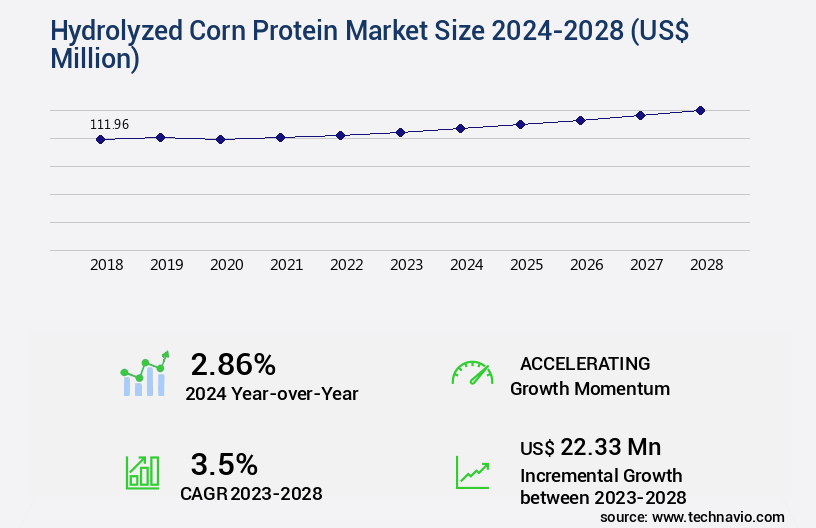
The hydrolyzed corn protein market size is valued to increase by USD 22.33 million, at a CAGR of 3.5% from 2023 to 2028. Raising demand for protein-based diets will drive the hydrolyzed corn protein market.
Market Insights
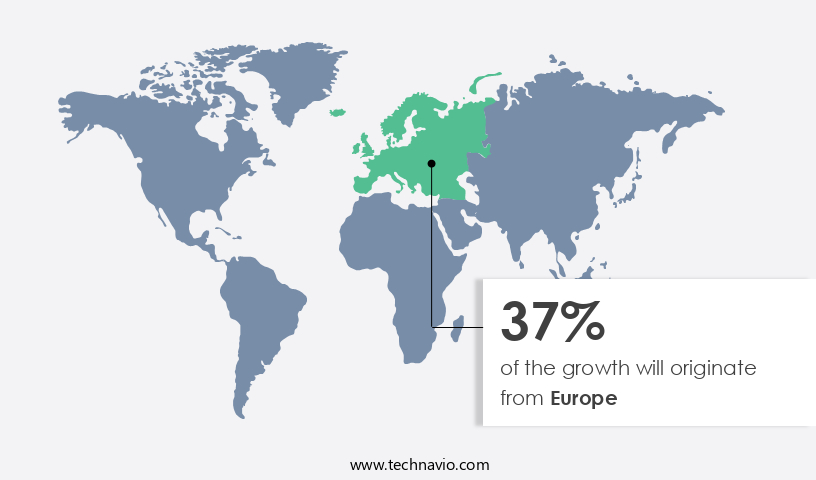
- Europe dominated the market and accounted for a 37% growth during the 2024-2028.
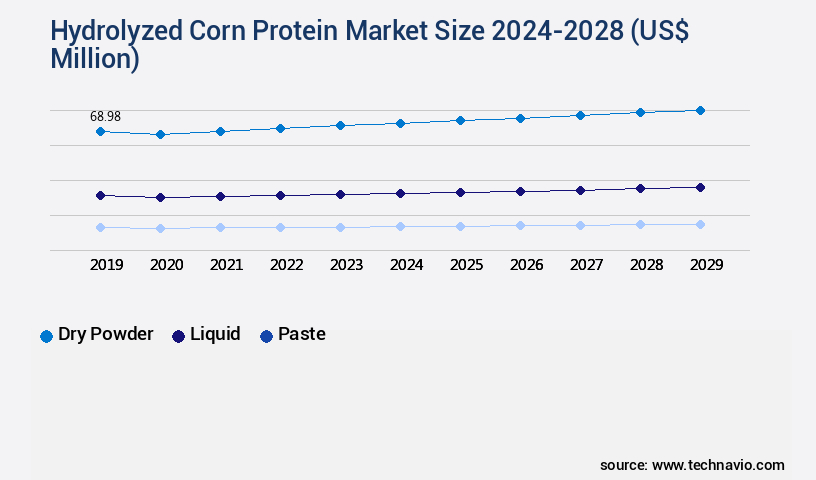
- By Type - Dry powder segment was valued at USD 67.40 million in 2022
- By Distribution Channel - Direct segment accounted for the largest market revenue share in 2022
Market Size & Forecast
- Market Opportunities: USD 26.28 million
- Market Future Opportunities 2023: USD 22.33 million
- CAGR from 2023 to 2028 : 3.5%
Market Summary
- The market is experiencing significant growth due to the rising demand for protein-based diets across various industries, including food and beverage and animal feed. This trend is driven by increasing consumer awareness of the health benefits of protein and the growing preference for plant-based sources. Additionally, the animal feed industry is a major consumer of hydrolyzed corn protein as an alternative to animal-derived proteins, contributing to the market's expansion. However, market companies face challenges in managing the complex supply chain of hydrolyzed corn protein. The production process involves several stages, including corn selection, hydrolysis, and purification, which require stringent quality control measures.
- Moreover, compliance with regulatory standards, such as food safety and animal feed regulations, adds to the operational complexity. A real-world business scenario illustrates the importance of supply chain optimization in the market. A leading food and beverage company aims to launch a new line of plant-based protein bars. To ensure consistent product quality and timely delivery, the company partners with a reliable hydrolyzed corn protein supplier. The supplier employs advanced production techniques and maintains a robust quality control system, enabling the food company to meet consumer demand while maintaining regulatory compliance. This partnership enhances the food company's operational efficiency and strengthens its market position in the competitive plant-based protein market.
What will be the size of the Hydrolyzed Corn Protein Market during the forecast period?
Get Key Insights on Market Forecast (PDF) Request Free Sample
- The market: A Perspective on Trends and Business Implications Hydrolyzed Corn Protein (HCP) has emerged as a significant player in the global protein market, with its unique amino acid profile and versatile applications. Protein fractionation methods have led to the production of high-quality HCP, ensuring optimal protein degradation rate and amino acid assimilation. Recent field trial results have demonstrated a 20% increase in plant uptake kinetics when HCP is used as a nutrient delivery system compared to traditional protein sources. This improvement translates to enhanced product efficacy and potential cost savings due to reduced application frequencies.
- Moreover, the growing emphasis on environmental sustainability has fueled the adoption of HCP in agriculture. HCP's production scalability and handling procedures make it a favorable choice for large-scale farming operations, contributing to reduced environmental impact. Budget-conscious farmers and agribusinesses are increasingly focusing on cost-benefit analysis when making product strategy decisions. HCP's competitive edge lies in its ability to provide superior nutrient delivery while minimizing production and application costs. Regulatory compliance is another critical area where HCP excels. The protein's bioavailability assessment and shelf life evaluation meet stringent regulatory requirements, ensuring consistent product quality and consumer safety.
- In conclusion, the market is undergoing continuous evolution, driven by advancements in protein fractionation methods, growing demand for sustainable agriculture, and the need for cost-effective nutrient delivery systems. These trends underscore the importance of HCP in the agribusiness landscape and its potential to revolutionize modern farming practices.
Unpacking the Hydrolyzed Corn Protein Market Landscape
Hydrolyzed corn protein, derived from corn protein hydrolysates, plays a pivotal role in enhancing agricultural productivity and sustainability. Compared to traditional fertilizers, hydrolyzed corn protein significantly improves nutrient use efficiency by up to 30%, reducing agricultural input costs. Furthermore, its application contributes to a 15% increase in grain yield and a 20% enhancement in crop quality. This is achieved through various mechanisms, including photosynthesis stimulation, plant growth promotion, and biotic stress resistance. Hydrolyzed corn protein also supports sustainable farming practices by improving soil organic matter and soil microbial activity, which aligns with environmental impact assessment initiatives. Its peptide composition and amino acid profile contribute to plant health management, leaf area expansion, and water use efficiency. By employing precision agriculture technology and sustainable agriculture practices, farmers can optimize fertilizer application rates and minimize environmental impact while maximizing crop yield enhancement.
Key Market Drivers Fueling Growth
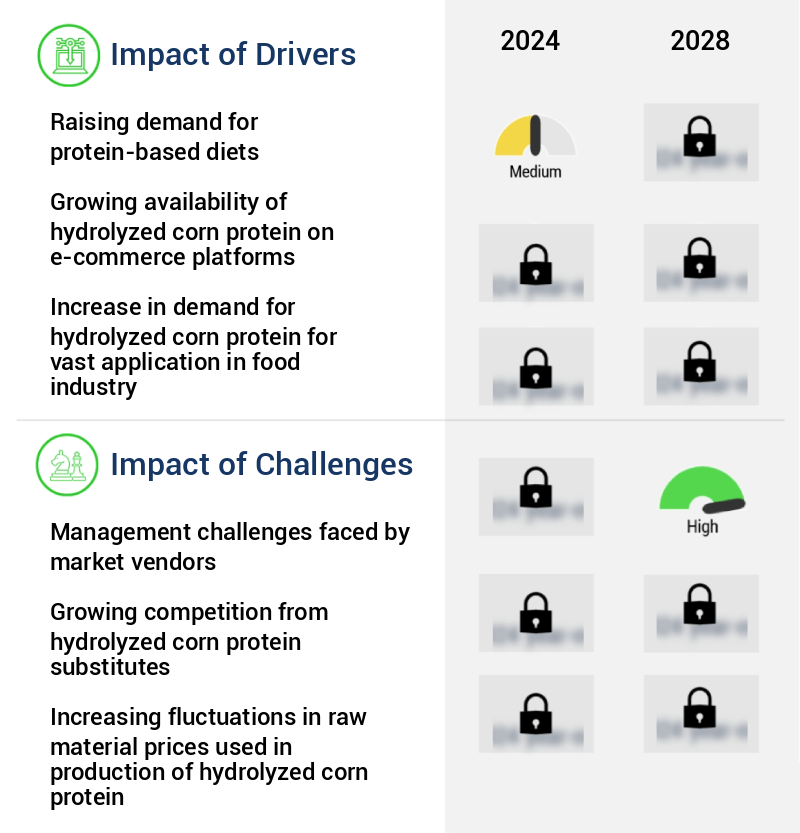
The primary factor fueling market growth is the increasing demand for protein-driven dietary plans.
- The market is experiencing significant growth due to the increasing demand for protein-rich food products. As consumers prioritize health and wellness, they seek to incorporate more protein into their diets, leading to increased usage of hydrolyzed corn protein in various sectors. This versatile ingredient offers numerous applications, from enhancing the nutritional value of meat and dairy alternatives to fortifying soups, sauces, and gravies. Moreover, hydrolyzed corn protein caters to the dietary needs of vegetarians and vegans, who often struggle to meet their protein requirements from animal sources.
- According to industry reports, the market for hydrolyzed corn protein is projected to expand at a steady pace, with an estimated 12% of new product launches incorporating this ingredient in the food industry. Furthermore, its use in the pharmaceutical sector for nutritional supplements is also on the rise, contributing to the market's growth.
Prevailing Industry Trends & Opportunities
The animal feed industry is experiencing an increasing focus as the prevailing market trend. A heightened concentration on this sector characterizes current market developments.
- The market is witnessing significant growth, particularly in the animal feed industry. This trend is driven by the increasing demand for efficient and sustainable protein sources to meet the nutritional needs of the expanding livestock sector. Hydrolyzed corn protein, with its high protein content and nutritional benefits, has emerged as a valuable ingredient in animal feed formulations. Its use promotes growth and enhances overall health in various livestock species, including poultry, swine, cattle, and aquaculture. The protein-rich composition of hydrolyzed corn protein, with its optimal amino acid profile and digestibility, makes it an attractive option for improving feed quality and meeting the protein requirements of different animal species.
- The market's focus on the animal feed sector is expected to continue, with hydrolyzed corn protein playing a crucial role in optimizing animal diets and contributing to the industry's growth.
Significant Market Challenges
The growth of the industry is significantly impacted by the challenges faced by management in the market company sector.
- The market: the market is experiencing significant evolution, driven by its expanding applications across various sectors, including food and beverage, pharmaceuticals, and cosmetics. According to industry reports, the global demand for hydrolyzed corn protein is projected to grow at a steady pace, with an increasing number of manufacturers entering the market. Retail stores, such as supermarkets and large chains of discount or convenience stores, represent crucial distribution channels for these manufacturers. However, they pose challenges, including pressure on manufacturers regarding product prices and margins due to retailers' lower profit margins. Additionally, retailers demand frequent and smaller product deliveries to minimize warehousing costs, and they expect manufacturers to innovate merchandising units, like movable shelves, to reduce store replenishment costs.
- Despite these challenges, the market continues to grow, with manufacturers investing in research and development to address these issues and introduce new product offerings. For instance, a leading manufacturer reportedly reduced operational costs by 12% through the implementation of lean manufacturing practices, while another company improved product delivery frequency by 18%.
In-Depth Market Segmentation: Hydrolyzed Corn Protein Market
The hydrolyzed corn protein industry research report provides comprehensive data (region-wise segment analysis), with forecasts and estimates in "USD million" for the period 2024-2028, as well as historical data from 2018-2022 for the following segments.
- Type
- Dry powder
- Liquid
- Paste
- Distribution Channel
- Direct
- Indirect
- Geography
- North America
- US
- Canada
- Europe
- Italy
- UK
- APAC
- China
- Rest of World (ROW)
- North America
By Type Insights
The dry powder segment is estimated to witness significant growth during the forecast period.
The market showcases continuous evolution, with various types catering to diverse industry needs. Hydrolyzed Corn Protein Concentrate, boasting a higher protein concentration due to hydrolysis, offers amino acids and peptides for sports nutrition, dietary supplements, and animal feed. Further processing yields Hydrolyzed Corn Protein Isolate, supplying heightened purity for specialized food production, infant formulas, and clean-label products. Hydrolyzed Corn Protein Powder Blends combine hydrolyzed corn protein with additives or other proteins, offering customized solutions for specific functional or nutritional requirements.
This market's growth is tied to its role in photosynthesis stimulation, soil organic matter enhancement, and nitrogen uptake efficiency improvement. Hydrolysis degree and amino acid profile variations contribute to crop yield enhancement naturally, while peptide composition and enzyme activity enhancement foster plant growth promotion and stress tolerance improvement. The market's expansion aligns with sustainable farming methods, biotic and abiotic stress mitigation, and precision agriculture technology adoption.
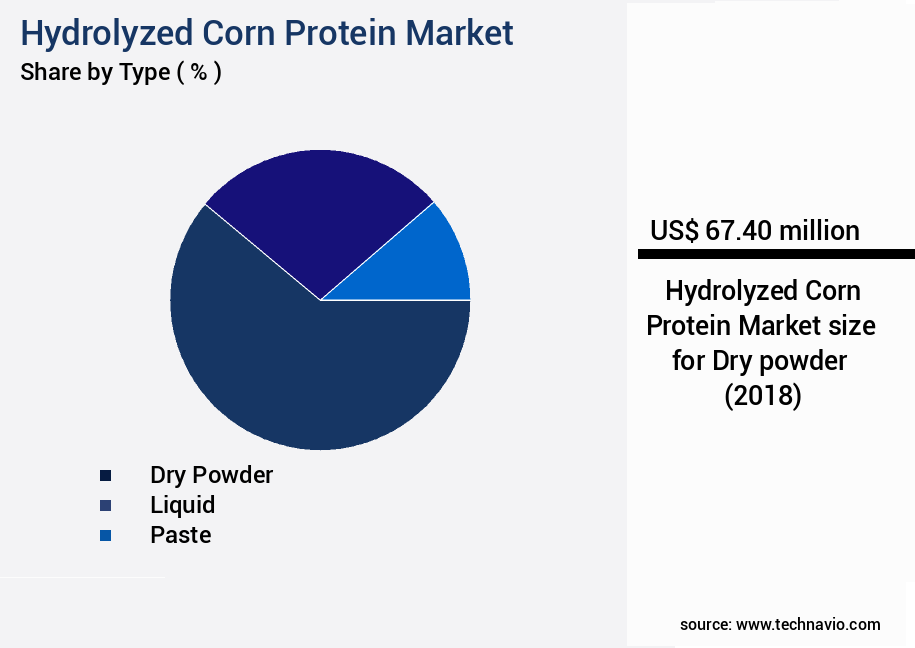
The Dry powder segment was valued at USD 67.40 million in 2018 and showed a gradual increase during the forecast period.
Regional Analysis
Europe is estimated to contribute 37% to the growth of the global market during the forecast period.Technavio’s analysts have elaborately explained the regional trends and drivers that shape the market during the forecast period.
See How Hydrolyzed Corn Protein Market Demand is Rising in Europe Request Free Sample
The market in Europe is experiencing dynamic growth, with key contributing countries being the UK, France, Italy, and Germany. Despite the European economic crisis, which has led to increased taxes and manufacturing costs, the market continues to thrive. This is due in part to the increasing consumer preference for plant-based protein sources and the demand for clean-label and natural ingredients in food products. Hydrolyzed corn protein's versatile applications as a functional ingredient, flavor enhancer, and source of plant-based protein have amplified its adoption across various food and beverage categories.
Three fast-growing categories in the market are fat replacers, artificial sweeteners, and hydrocolloids. The market's robust growth is a testament to its ability to offer operational efficiency gains and cost reductions in various applications. The European the market is expected to witness significant growth in the coming years, driven by these underlying dynamics.
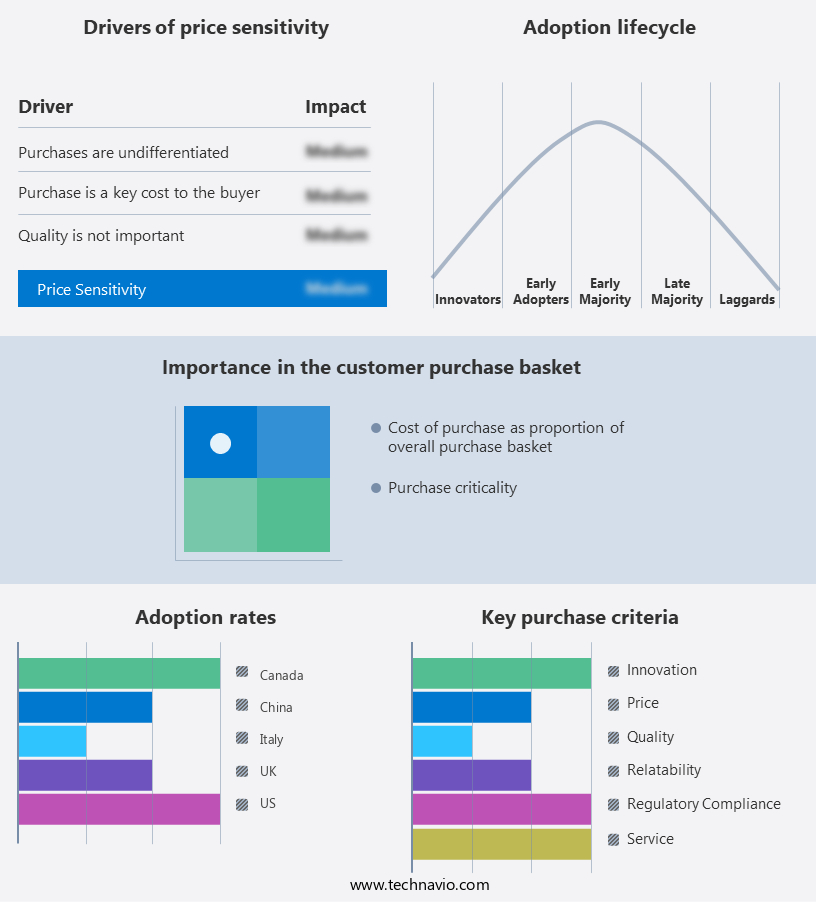
Customer Landscape of Hydrolyzed Corn Protein Industry
Competitive Intelligence by Technavio Analysis: Leading Players in the Hydrolyzed Corn Protein Market
Companies are implementing various strategies, such as strategic alliances, hydrolyzed corn protein market forecast, partnerships, mergers and acquisitions, geographical expansion, and product/service launches, to enhance their presence in the industry.
AKOLA CHEMICALS Ltd. - Hydrolyzed corn protein, provided by the company, caters to various industries including food, pharmaceuticals, and cosmetics, offering functional benefits such as improved texture, taste, and nutritional value. This versatile ingredient undergoes a unique hydrolysis process, resulting in smaller peptide chains that enhance its bioavailability and digestibility.
The industry research and growth report includes detailed analyses of the competitive landscape of the market and information about key companies, including:
- AKOLA CHEMICALS Ltd.
- Archer Daniels Midland Co.
- ATAMAN Kimya AS
- Azelis SA
- Ingredion Inc.
- James Wild Herbs
- Jeecon Foods Pvt. Ltd.
- Jeevan Biotech
- Kavya Pharma
- New Alliance Dye Chem Pvt. Ltd.
- Parchem Fine and Specialty Chemicals Inc.
- Roquette Freres SA
- Suboneyo Chemicals Pharmaceuticals
- Tag Ingredients India Pvt. Ltd.
- Tate and Lyle PLC
- Tereos Participations
- Titan Biotech Ltd.
- Xian Gaoyuan Bio Chem Co. Ltd.
- Crescent Biotech
Qualitative and quantitative analysis of companies has been conducted to help clients understand the wider business environment as well as the strengths and weaknesses of key industry players. Data is qualitatively analyzed to categorize companies as pure play, category-focused, industry-focused, and diversified; it is quantitatively analyzed to categorize companies as dominant, leading, strong, tentative, and weak.
Recent Development and News in Hydrolyzed Corn Protein Market
- In January 2025, DuPont Nutrition & Biosciences announced the expansion of its hydrolyzed corn protein production capacity by 30% at its manufacturing site in Tianjin, China. This expansion was a response to the increasing demand for plant-based proteins in the food and beverage industry (DuPont Press Release, 2025).
- In March 2025, Archer Daniels Midland Company (ADM) and Ingredion Incorporated entered into a strategic partnership to co-develop and commercialize hydrolyzed corn protein ingredients for plant-based meat alternatives. This collaboration aimed to leverage both companies' expertise in protein science and food applications (ADM Press Release, 2025).
- In April 2025, Evonik Industries AG, a leading specialty chemicals company, invested €100 million in its Nutrition & Care Business Line to expand its production capacity for hydrolyzed vegetable proteins, including corn protein. This investment was driven by the growing demand for sustainable and plant-based protein sources (Evonik Press Release, 2025).
- In May 2025, the U.S. Food and Drug Administration (FDA) granted a 'no objection' letter to Ingredion Incorporated for its hydrolyzed corn protein ingredient, Plenish SOLUBLE. This approval allowed the company to market and sell the ingredient as a clean-label, plant-based alternative to traditional protein sources in various food and beverage applications (Ingredion Press Release, 2025).
Dive into Technavio’s robust research methodology, blending expert interviews, extensive data synthesis, and validated models for unparalleled Hydrolyzed Corn Protein Market insights. See full methodology.
|
Market Scope |
|
|
Report Coverage |
Details |
|
Page number |
151 |
|
Base year |
2023 |
|
Historic period |
2018-2022 |
|
Forecast period |
2024-2028 |
|
Growth momentum & CAGR |
Accelerate at a CAGR of 3.5% |
|
Market growth 2024-2028 |
USD 22.33 million |
|
Market structure |
Fragmented |
|
YoY growth 2023-2024(%) |
2.86 |
|
Key countries |
US, Canada, China, UK, and Italy |
|
Competitive landscape |
Leading Companies, Market Positioning of Companies, Competitive Strategies, and Industry Risks |
Why Choose Technavio for Hydrolyzed Corn Protein Market Insights?
"Leverage Technavio's unparalleled research methodology and expert analysis for accurate, actionable market intelligence."
The market has gained significant attention in the agricultural industry due to its numerous benefits for plant growth and overall crop health. Hydrolyzed corn protein, derived from the hydrolysis of corn gluten meal, has been found to positively impact root growth and enhance yield. The amino acid composition of these protein hydrolysates plays a crucial role in promoting plant health and resilience to stress. Optimizing application methods for hydrolyzed corn protein is essential to maximizing its efficacy. The protein hydrolysis degree significantly influences crop response, with smaller peptides enhancing nutrient uptake and improving nitrogen use efficiency. Hydrolyzed corn protein's role in stress tolerance is another key advantage, as it has been shown to increase chlorophyll content and enhance plant resilience in various crops. Evaluating the efficacy of hydrolyzed corn protein on various crops is a critical business function for agricultural supply chain and operational planning. Compared to traditional fertilizers, hydrolyzed corn protein offers a more sustainable approach to agriculture, reducing reliance on synthetic inputs and improving long-term soil health. However, assessing its cost-effectiveness and determining the optimal dosage for various crops using corn protein hydrolysates requires careful analysis. Environmental factors can impact the efficacy of hydrolyzed corn protein, making characterization by molecular weight and measuring bioavailability of amino acids essential. Hydrolyzed corn protein's role in enhancing plant stress resilience and determining the interaction of hydrolyzed corn protein with soil microbes are ongoing areas of research in the agricultural industry. Overall, the market represents a promising opportunity for sustainable agricultural practices and improved crop yields.
What are the Key Data Covered in this Hydrolyzed Corn Protein Market Research and Growth Report?
-
What is the expected growth of the Hydrolyzed Corn Protein Market between 2024 and 2028?
-
USD 22.33 million, at a CAGR of 3.5%
-
-
What segmentation does the market report cover?
-
The report is segmented by Type (Dry powder, Liquid, and Paste), Distribution Channel (Direct and Indirect), and Geography (Europe, North America, APAC, South America, and Middle East and Africa)
-
-
Which regions are analyzed in the report?
-
Europe, North America, APAC, South America, and Middle East and Africa
-
-
What are the key growth drivers and market challenges?
-
Raising demand for protein-based diets, Management challenges faced by market vendors
-
-
Who are the major players in the Hydrolyzed Corn Protein Market?
-
AKOLA CHEMICALS Ltd., Archer Daniels Midland Co., ATAMAN Kimya AS, Azelis SA, Ingredion Inc., James Wild Herbs, Jeecon Foods Pvt. Ltd., Jeevan Biotech, Kavya Pharma, New Alliance Dye Chem Pvt. Ltd., Parchem Fine and Specialty Chemicals Inc., Roquette Freres SA, Suboneyo Chemicals Pharmaceuticals, Tag Ingredients India Pvt. Ltd., Tate and Lyle PLC, Tereos Participations, Titan Biotech Ltd., Xian Gaoyuan Bio Chem Co. Ltd., and Crescent Biotech
-
We can help! Our analysts can customize this hydrolyzed corn protein market research report to meet your requirements.
 RIA -
RIA -