
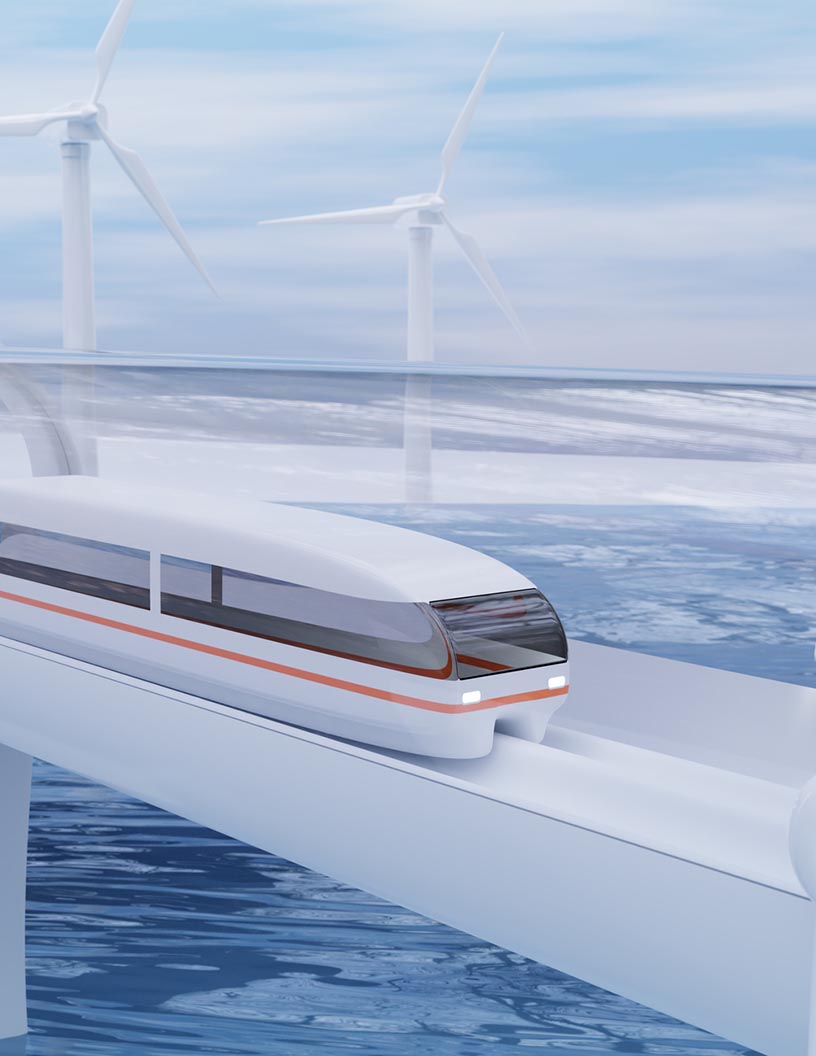


Hyperloop Technology Market Size 2024-2028
The hyperloop technology market size is valued to increase USD 29.12 billion, at a CAGR of 64.67% from 2023 to 2028. Increase in demand for fast mode of transportation will drive the hyperloop technology market.
Major Market Trends & Insights
- North America dominated the market and accounted for a 38% growth during the forecast period.
- By Mode Of Transportation - Tube segment was valued at USD 312.90 billion in 2022
- By Distribution Channel - Passenger segment accounted for the largest market revenue share in 2022
Market Size & Forecast
- Market Opportunities: USD 4.00 million
- Market Future Opportunities: USD 29124.50 million
- CAGR from 2023 to 2028 : 64.67%
Market Summary
- The market represents a burgeoning industry poised for significant growth, driven by the increasing demand for faster transportation solutions. Core technologies, such as vacuum-sealed tubes and magnetic levitation, continue to advance, enabling hyperloop systems to reach impressive speeds. Applications, including passenger and freight transport, are expanding, particularly in emerging economies. However, high infrastructure costs pose a challenge to market growth.
- According to a recent study, the global hyperloop market is projected to account for over 15% of the total advanced transportation market by 2030. This evolving landscape presents both opportunities and challenges for stakeholders, requiring continuous adaptation and innovation.
What will be the Size of the Hyperloop Technology Market during the forecast period?

Get Key Insights on Market Forecast (PDF) Request Free Sample
How is the Hyperloop Technology Market Segmented ?
The hyperloop technology industry research report provides comprehensive data (region-wise segment analysis), with forecasts and estimates in "USD million" for the period 2024-2028, as well as historical data from 2018-2022 for the following segments.
- Mode Of Transportation
- Tube
- Capsule
- Propulsion system
- Route
- Distribution Channel
- Passenger
- Freight
- Geography
- North America
- US
- Canada
- Europe
- The Netherlands
- Middle East and Africa
- UAE
- APAC
- China
- Rest of World (ROW)
- North America
By Mode Of Transportation Insights
The tube segment is estimated to witness significant growth during the forecast period.
The tube remains one of the critical components in hyperloop development, engineered to operate in a reduced-pressure environment that minimizes aerodynamic drag and enables efficient high-speed transit. With an inner diameter of 2.23 meters and a tube cross-sectional area of 3.91 square meters, the structure is typically constructed from steel, providing both durability and safety. To allow bi-directional capsule movement, dual vacuum tube transport lines are welded together, supported by pillars placed every 30 meters. These pillars also accommodate a solar array mounted on top of the tubes, delivering a renewable power source to the system.
Market growth for tube infrastructure is strongly linked to its ability to combine energy efficiency with rapid underground mobility demand while minimizing disruption to existing surface transportation. Integration of a magnetic levitation system within the vacuum tube transport framework further enhances speed, safety, and passenger comfort. The inclusion of a vibration dampening system supports structural stability, while advanced data acquisition system technology ensures real-time monitoring of performance. Security surveillance system integration strengthens operational reliability and user safety.
From a sustainability perspective, environmental impact assessment protocols are becoming mandatory as large-scale deployment advances. With continuous improvements in design and functionality, the tube segment is expected to maintain momentum as a cornerstone of high-speed transit, balancing engineering innovation with environmental and operational demands.

The Tube segment was valued at USD 312.90 billion in 2018 and showed a gradual increase during the forecast period.

Regional Analysis
North America is estimated to contribute 38% to the growth of the global market during the forecast period.Technavio's analysts have elaborately explained the regional trends and drivers that shape the market during the forecast period.

See How Hyperloop Technology Market Demand is Rising in North America Request Free Sample
The market experienced significant growth in 2023, with North America leading the charge. The US, in particular, holds a substantial market share and is poised to remain dominant in North America due to escalating investments in advanced infrastructure and a heightened emphasis on eco-friendly transportation solutions to combat rising pollution levels. Hyperloop Transportation Technologies anticipates constructing operational systems by 2028, which will significantly boost the North American region's market growth during the forecast period.
Market Dynamics
Our researchers analyzed the data with 2023 as the base year, along with the key drivers, trends, and challenges. A holistic analysis of drivers will help companies refine their marketing strategies to gain a competitive advantage.
The global high-speed transit market is evolving rapidly as innovations in system design and safety take center stage. One of the most critical areas is high-speed transit system safety protocols implementation, where emphasis is placed on reducing operational risks while ensuring passenger trust. Advances in linear electric motor propulsion system efficiency improvement are central to achieving faster travel with lower energy consumption, while cryogenic cooling systems thermal management strategies are being applied to maintain optimal performance in both propulsion and braking components.
Passenger well-being remains a top priority, with emergency evacuation systems passenger safety protocols designed to minimize risk in unforeseen situations. System fault tolerance passenger capacity modeling ensures resilience and reliability under varying loads, while network scalability route optimization strategies enable expansion without compromising performance. Station design parameters passenger comfort considerations are also being refined to balance accessibility, aesthetics, and flow management. Integration of data acquisition system remote diagnostics and predictive maintenance operational efficiency tools allows for real-time performance monitoring and early fault detection, minimizing downtime.
To further strengthen safety, security surveillance system passenger safety frameworks are embedded across the infrastructure. Research into reduced-pressure environment passenger health effects provides key insights into long-term viability of such systems. Acceleration deceleration profiles passenger comfort studies are guiding smoother rides, while airlock sealing mechanisms maintenance access points improve operational continuity.
At the engineering level, hyperloop system control architecture design ensures seamless coordination of propulsion, levitation, and monitoring. Magnetic levitation system energy efficiency analysis highlights how reduced friction can maximize sustainability. Vacuum tube transport infrastructure cost optimization strategies are enabling scalable adoption, while passenger pod design aerodynamic drag reduction techniques improve speed and energy efficiency. Finally, tube infrastructure design material science applications are driving durability, weight reduction, and environmental adaptability, solidifying the market's role in the future of advanced public transportation.

What are the key market drivers leading to the rise in the adoption of Hyperloop Technology Industry?
- The surge in consumer preference for swift transportation modes serves as the primary market catalyst.
- The global market for hyperloop technology is experiencing substantial growth, driven by the increasing demand for faster transportation solutions. Hyperloop systems, which propel passenger or cargo pods at over 1000 km/h, offer significant advantages over traditional rail and air travel. Compared to high-speed rail, hyperloop is three times faster, while it is more than ten times quicker than conventional rail. By reducing travel time, hyperloop enables trains to cover greater distances, allowing for increased cargo and passenger capacity and enhancing business efficiency.
- For example, the journey between San Francisco and Los Angeles, which currently takes between six to eight hours depending on traffic, could be completed much more quickly using hyperloop technology. This not only improves business productivity but also significantly improves the livelihood of citizens by reducing the time spent traveling.
What are the market trends shaping the Hyperloop Technology Industry?
- The increasing demand for hyperloop technology in emerging economies represents a significant market trend. This growth in interest signifies a notable shift in global technological priorities.
- In populous emerging economies like China and India, the need for innovative, eco-friendly, and space-efficient transportation solutions is paramount due to limited available land for new infrastructure. Hyperloop technology, which enables rapid transit through vacuum tubes beneath the ground, is gaining traction as a promising alternative. This technology's adoption is fueled by increasing investment, driving demand for both domestic and international hyperloop solutions. For instance, in 2023, IIT Madras-incubated TuTr Hyperloop, an Indian deep tech startup, collaborated with the institute to develop intellectual property in this field.
- Additionally, TuTr Hyperloop entered a partnership with Tata Steel to advance the technology's development and deployment. This trend underscores the dynamic nature of the hyperloop market, with various players collaborating to address transportation challenges in densely populated regions.
What challenges does the Hyperloop Technology Industry face during its growth?
- The escalating infrastructure costs represent a significant obstacle to the expansion and growth of the industry.
- Hyperloop technology, a promising mode of transportation, faces substantial challenges in calculating construction and infrastructure costs. Seals for pod hatches and doors are essential components, necessitating frequent maintenance and replacement, which can be a concern given the challenges cities encounter in maintaining existing infrastructure such as bridges, train tracks, and roads. Land acquisition poses a significant hurdle, with hyperloop technology costing approximately USD25-27 million per mile for the technology alone, excluding land acquisition. For instance, an underwater track from Helsinki to Stockholm would cost approximately USD64 million per mile, including vehicles. In contrast, California high-speed rail costs USD63-65 million per mile, while Europe's rail infrastructure costs USD43 million per mile.
- The financial implications of hyperloop technology are substantial, requiring careful consideration of costs and benefits. As a professional, it is crucial to acknowledge the challenges and ongoing research to optimize costs and improve efficiency. The evolving nature of this technology and its potential applications across various sectors continue to attract significant attention and investment.
Exclusive Technavio Analysis on Customer Landscape
The hyperloop technology market forecasting report includes the adoption lifecycle of the market, covering from the innovator's stage to the laggard's stage. It focuses on adoption rates in different regions based on penetration. Furthermore, the hyperloop technology market report also includes key purchase criteria and drivers of price sensitivity to help companies evaluate and develop their market growth analysis strategies.

Customer Landscape of Hyperloop Technology Industry
Competitive Landscape
Companies are implementing various strategies, such as strategic alliances, hyperloop technology market forecast, partnerships, mergers and acquisitions, geographical expansion, and product/service launches, to enhance their presence in the industry.
AECOM - This research analyst observes that the company specializes in engineering and manufacturing components for hyperloop transportation systems, including cargo terminals, passenger pods, and freight pods. Their expertise lies in the planning, design, and construction of these essential elements for efficient and innovative transportation solutions.
The industry research and growth report includes detailed analyses of the competitive landscape of the market and information about key companies, including:
- AECOM
- Delft Hyperloop
- Dinclix GroundWorks Pvt. Ltd.
- Hardt B.V.
- Hyperloop Transportation Technologies Inc.
- Nevomo Poland Sp. z o.o
- NEXT Prototypes e.V
- The Boring Co.
- TransPod Inc.
- Virgin Red Ltd.
- Zeleros Global SL
Qualitative and quantitative analysis of companies has been conducted to help clients understand the wider business environment as well as the strengths and weaknesses of key industry players. Data is qualitatively analyzed to categorize companies as pure play, category-focused, industry-focused, and diversified; it is quantitatively analyzed to categorize companies as dominant, leading, strong, tentative, and weak.
Recent Development and News in Hyperloop Technology Market
- In January 2024, Hyperloop Technologies, a leading player in the market, announced a strategic partnership with Snell & Wilcox, a global leader in broadcast infrastructure and media solutions (Hyperloop Technologies Press Release). The collaboration aimed to explore the integration of Hyperloop technology with Snell & Wilcox's broadcast infrastructure, potentially revolutionizing the media industry's content distribution.
- In March 2024, Virgin Hyperloop One, another prominent Hyperloop company, secured a USD100 million Series C funding round, led by DP World, a global trade enabler, and the Port of Antwerp, Belgium's largest port (Virgin Hyperloop One Press Release). This investment was intended to accelerate the development and deployment of Hyperloop systems, particularly in the transportation of goods.
- In April 2025, the Indian government approved the Hyperloop project connecting Mumbai and Pune, making it the first Hyperloop project in Asia (Indian Express). The project, expected to reduce travel time between the two cities from over three hours to just 25 minutes, was a significant milestone for the market's expansion into emerging markets.
- In May 2025, SpaceX, the aerospace manufacturer and technology company, unveiled its prototype Hyperloop pod, achieving a top speed of 284 mph during a test run at the company's Texas test track (SpaceX Press Release). This technological breakthrough demonstrated the potential for Hyperloop systems to significantly outperform traditional transportation methods and generated considerable buzz within the industry.
Dive into Technavio's robust research methodology, blending expert interviews, extensive data synthesis, and validated models for unparalleled Hyperloop Technology Market insights. See full methodology.
|
Market Scope |
|
|
Report Coverage |
Details |
|
Page number |
157 |
|
Base year |
2023 |
|
Historic period |
2018-2022 |
|
Forecast period |
2024-2028 |
|
Growth momentum & CAGR |
Accelerate at a CAGR of 64.67% |
|
Market growth 2024-2028 |
USD 29124.5 million |
|
Market structure |
Concentrated |
|
YoY growth 2023-2024(%) |
44.98 |
|
Key countries |
US, China, Canada, UAE, and The Netherlands |
|
Competitive landscape |
Leading Companies, Market Positioning of Companies, Competitive Strategies, and Industry Risks |
Research Analyst Overview
- In the dynamic and innovative realm of hyperloop technology, various components and systems continue to evolve, shaping the market's landscape. Station design parameters are under constant refinement, with energy consumption metrics being a significant focus. Environmental impact assessments are crucial, as linear electric motors and airlock sealing mechanisms are optimized for minimal energy usage and efficient operation. Security surveillance systems and system fault tolerance are essential elements, ensuring passenger safety and maintaining system reliability. Maintenance access points and predictive maintenance strategies enable efficient upkeep, while propulsion system efficiency and remote diagnostics improve overall performance. Passenger safety protocols, passenger pod design, and magnetic levitation systems are key areas of development, with noise reduction techniques and material science applications enhancing the passenger experience.
- Data acquisition systems and power distribution networks facilitate seamless operation, while route optimization strategies and traffic management systems optimize travel times. Emergency evacuation systems, pressure control algorithms, and emergency braking systems are integral components, ensuring safety in all scenarios. Acceleration deceleration profiles and vibration dampening systems provide a comfortable ride, while passenger capacity modeling and reduced-pressure environments enable high-speed transit for a large number of passengers. The hyperloop market's evolution includes advancements in network scalability, system control architecture, and the integration of aerodynamic drag reduction, cryogenic cooling systems, and structural integrity testing. Vacuum tube transport and tube infrastructure design are crucial for efficient and reliable transportation, while the development of advanced technologies continues to drive market growth.
What are the Key Data Covered in this Hyperloop Technology Market Research and Growth Report?
-
What is the expected growth of the Hyperloop Technology Market between 2024 and 2028?
-
USD 29.12 billion, at a CAGR of 64.67%
-
-
What segmentation does the market report cover?
-
The report is segmented by Mode Of Transportation (Tube, Capsule, Propulsion system, and Route), Distribution Channel (Passenger and Freight), and Geography (North America, APAC, Europe, Middle East and Africa, and South America)
-
-
Which regions are analyzed in the report?
-
North America, APAC, Europe, Middle East and Africa, and South America
-
-
What are the key growth drivers and market challenges?
-
Increase in demand for fast mode of transportation, High infrastructure costs
-
-
Who are the major players in the Hyperloop Technology Market?
-
AECOM, Delft Hyperloop, Dinclix GroundWorks Pvt. Ltd., Hardt B.V., Hyperloop Transportation Technologies Inc., Nevomo Poland Sp. z o.o, NEXT Prototypes e.V, The Boring Co., TransPod Inc., Virgin Red Ltd., and Zeleros Global SL
-
Market Research Insights
- The market is characterized by ongoing advancements in system integration, passenger comfort, safety certification, and technological innovations such as magnetic levitation, capacity planning, cost optimization, maintenance scheduling, and vacuum pump technology. The market's infrastructure cost is a significant consideration, with structural analysis and linear motor design playing crucial roles in minimizing expenses. Operational efficiency, environmental impact, thermal management, and tube pressurization are essential factors in ensuring the sustainability and viability of hyperloop systems. Safety redundancy, network topology, route planning, material selection, performance monitoring, control algorithms, construction methodologies, and regulatory compliance are integral components of the market's continuous evolution.
- For instance, the development of advanced noise mitigation techniques has led to a 10% reduction in decibel levels, enhancing passenger comfort. Simultaneously, energy efficiency improvements have resulted in a 20% reduction in power consumption per passenger kilometer, showcasing the market's commitment to cost optimization and sustainability.
We can help! Our analysts can customize this hyperloop technology market research report to meet your requirements.