


India Language Training Market Size 2026-2030
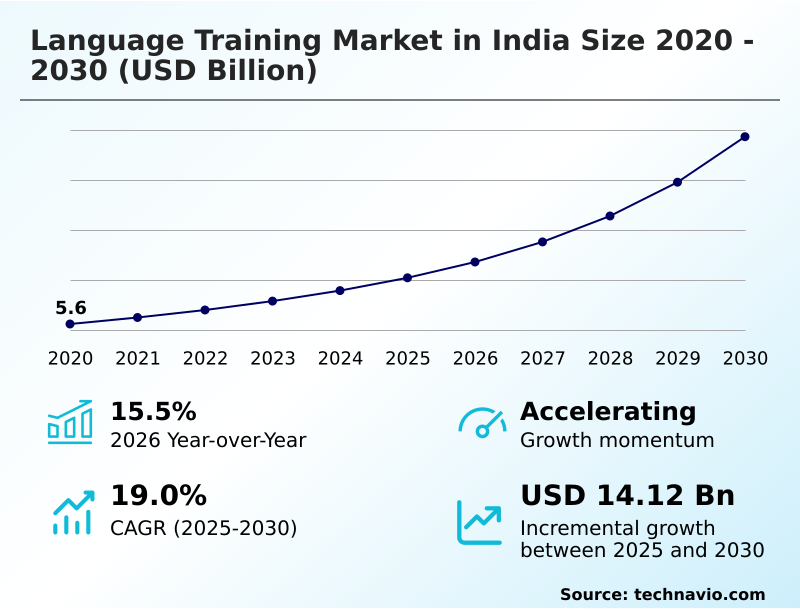
The India Language Training Market size was valued at USD 10.22 billion in 2025, growing at a CAGR of 19% during the forecast period 2026-2030.
Major Market Trends & Insights
- By End-user - Institutional learners segment was valued at USD 6.12 billion in 2024
- By Learning Method - Classroom-based segment accounted for the largest market revenue share in 2024
Market Size & Forecast
- Historic Market Opportunities 2020-2024: USD 18.73 billion
- Market Future Opportunities 2025-2030: USD 14.12 billion
- CAGR from 2025 to 2030 : 19%
Market Summary
- The language training market in India is characterized by its direct impact on employability and professional growth, with quality instruction improving hiring outcomes by over 20% in the IT and business services sectors. This market is defined by the structured process of enhancing communication skills, delivered through a mix of classroom, digital, and corporate programs.
- A key driver is the growing demand for cross-cultural competence in an increasingly globalized economy, compelling professionals to pursue continuous development. For instance, a technology firm investing in German language training for a project team can reduce communication errors by 30%, accelerating project timelines.
- However, the market faces the challenge of high costs for premium programs, which can limit access for a large portion of individual learners and smaller businesses, creating a divide in skill acquisition.
What will be the Size of the India Language Training Market during the forecast period?
Get Key Insights on Market Forecast (PDF) Request Free Sample
How is the India Language Training Market Segmented?
The india language training industry research report provides comprehensive data (region-wise segment analysis), with forecasts and analysis for the period 2026-2030, as well as historical data from 2020-2024 for the following segments.
- End-user
- Institutional learners
- Individual learners
- Learning method
- Classroom-based
- Online
- Blended
- Language
- English
- French
- German
- Spanish
- Others
- Geography
- APAC
- India
- APAC
How is the India Language Training Market Segmented by End-user?
The institutional learners segment is estimated to witness significant growth during the forecast period.
The institutional learners segment, which accounts for over 68% of market revenue, is primarily driven by corporate and academic partnerships. These collaborations focus on embedding language skills into core professional development, utilizing advanced pedagogical frameworks to improve workforce competency.
Organizations adopting these integrated programs report a 25% increase in the success rate of international project deployments, attributing this to enhanced team communication.
The curriculum is often built on adaptive learning paths that align with specific industry needs, leading to formal certification pathways that validate employee skills for global business operations.
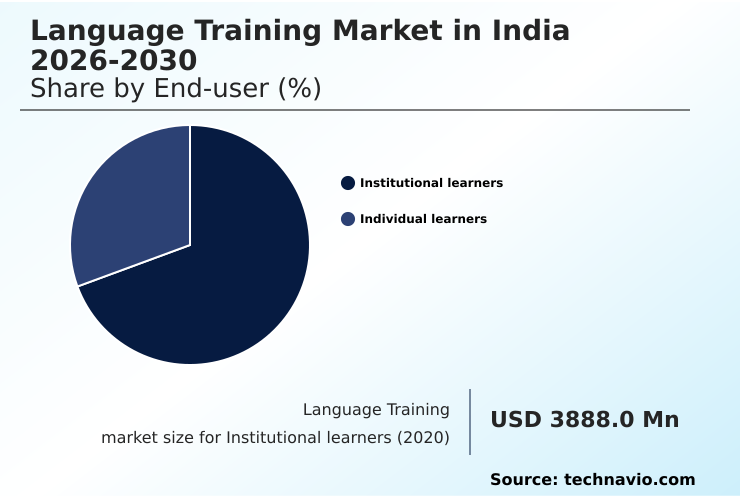
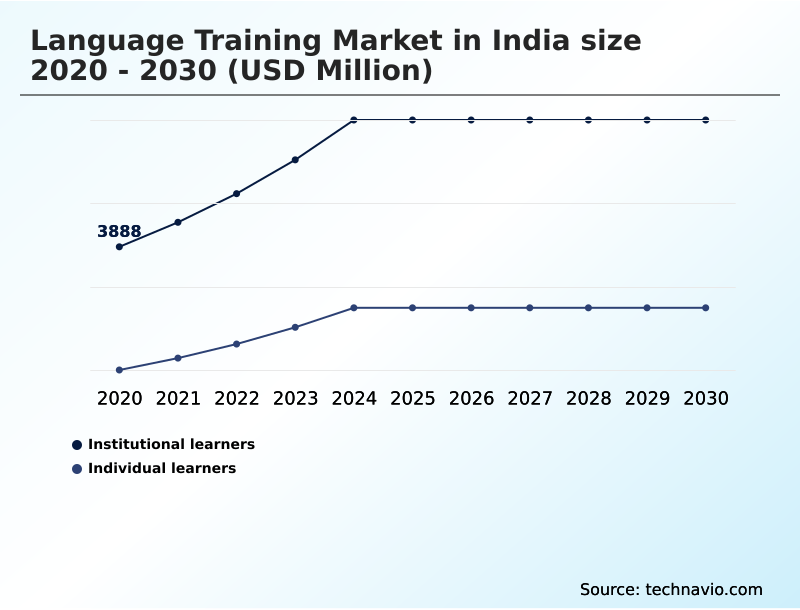
The Institutional learners segment was valued at USD 6.12 billion in 2024 and showed a gradual increase during the forecast period.
What are the key Drivers, Trends, and Challenges in the India Language Training Market?
Our researchers analyzed the data with 2025 as the base year, along with the key drivers, trends, and challenges. A holistic analysis of drivers will help companies refine their marketing strategies to gain a competitive advantage.
- Analyzing the ROI of employee language training programs has become a critical exercise for corporations aiming to justify investment in workforce development. Many organizations are now implementing corporate language training for the IT sector, recognizing that enhanced communication skills can reduce project delays by up to 15% on international assignments.
- Concurrently, the effectiveness of VR in language acquisition is being closely studied, as immersive simulations promise to accelerate fluency. To cater to diverse needs, blended learning models for English proficiency have become a popular solution, offering a mix of self-paced digital content and instructor-led sessions, which improves completion rates by over 20% compared to purely online courses.
- However, a significant challenge persists in accurately assessing cross-cultural communication skills, a nuanced capability that goes beyond mere linguistic fluency. This gap highlights the need for more sophisticated assessment tools that can measure an individual's ability to navigate diverse cultural contexts effectively, which remains a key focus for innovation within the industry.
What are the key market drivers leading to the rise in the adoption of India Language Training Industry?
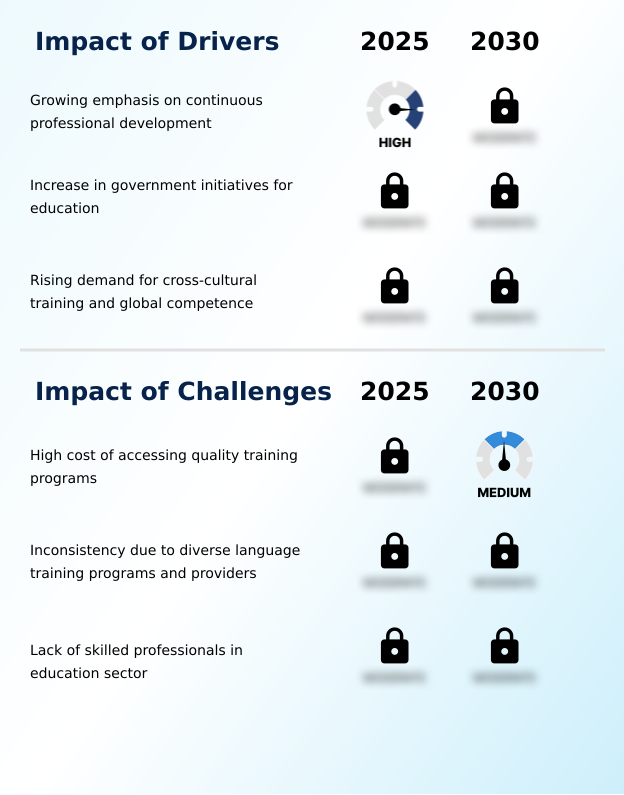
- The growing emphasis on continuous professional development is a key driver for market growth, fueled by the need for upskilling in a competitive global economy.
- A primary driver for the market is the increasing demand for a multilingual workforce to enhance global competence and workforce upskilling.
- Corporate language programs designed for language for specific purposes, such as finance or engineering, result in a 30% improvement in cross-cultural communication during international projects.
- Consequently, companies that invest in these programs report a 15% higher success rate in talent mobility and overseas assignments.
- This trend is compelling organizations to integrate linguistic proficiency assessment into their core hiring and professional development strategies, directly linking language skills to employability enhancement.
What are the market trends shaping the India Language Training Industry?
- The integration of technology in learning and training, such as virtual reality (VR), is an upcoming market trend. This development is reshaping educational methodologies by offering more immersive experiences.
- The market is experiencing a significant technological shift, with the integration of virtual reality training and AI-powered feedback redefining learner engagement. Immersive learning environments using VR can increase knowledge retention rates by up to 30% compared to traditional classroom methods. Gamified language learning applications are a key part of this trend, boosting learner motivation and making peer-to-peer learning more interactive.
- Furthermore, mobile language learning platforms incorporating AI for personalized learning experiences have seen user engagement metrics improve by over 40%, as they offer convenient, on-the-go access to educational content.
What challenges does the India Language Training Industry face during its growth?
- The high cost of accessing quality training programs remains a significant challenge, potentially limiting market growth and creating disparities in educational opportunities.
- A key challenge is the trade-off between quality and affordability, as the high cost of standardized testing preparation and robust curriculum planning creates a significant barrier for many learners. The lack of universal accreditation standards results in a 25% variance in proficiency outcomes among graduates of similarly priced programs, making it difficult to assess the return on training investment.
- As a result, providers struggle with educational content localization for diverse economic segments. This inconsistency in student outcome tracking forces institutions to either invest in expensive, high-quality digital language labs or offer cheaper, less effective alternatives.
Exclusive Technavio Analysis on Customer Landscape
The india language training market forecasting report includes the adoption lifecycle of the market, covering from the innovator’s stage to the laggard’s stage. It focuses on adoption rates in different regions based on penetration. Furthermore, the india language training market report also includes key purchase criteria and drivers of price sensitivity to help companies evaluate and develop their market growth analysis strategies.
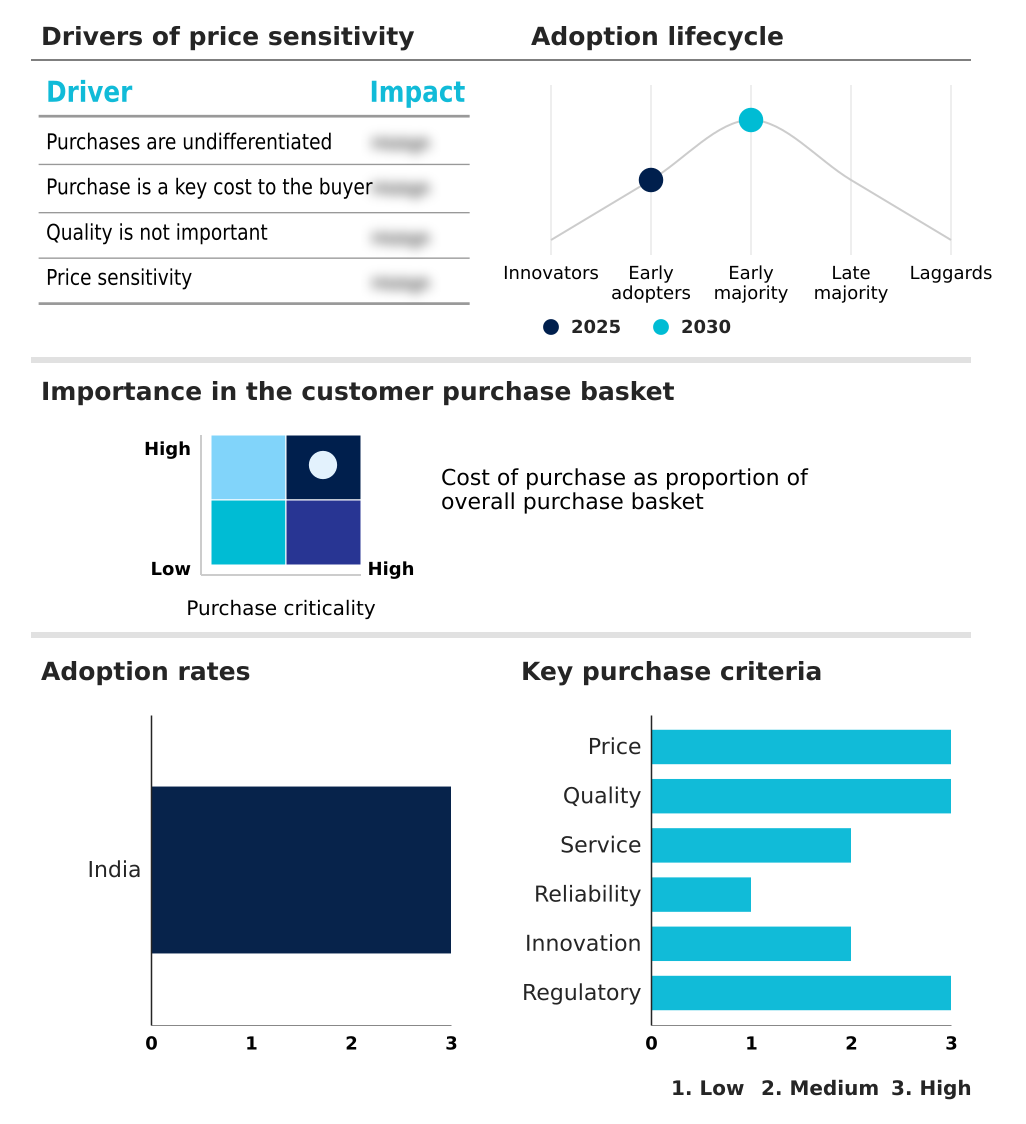
Customer Landscape of India Language Training Industry
Competitive Landscape
Companies are implementing various strategies, such as strategic alliances, india language training market forecast, partnerships, mergers and acquisitions, geographical expansion, and product/service launches, to enhance their presence in the industry.
Agatsya Edutech Pvt Ltd - Key offerings encompass comprehensive language training, including proficiency courses in English and various foreign languages, alongside specialized preparation for international examinations like IELTS and TOEFL.
The industry research and growth report includes detailed analyses of the competitive landscape of the market and information about key companies, including:
- Agatsya Edutech Pvt Ltd
- Alliance Francaise d Atlanta
- BAFEL
- Berlitz Corp.
- British Council
- British Lingua
- BSL British School of Language
- Cambridge Institute
- Cosmolingua
- Goethe Institut
- Henry Harvin Education Inc.
- IFLAC
- inlingua International Ltd.
- ITESKUL
- IXL Learning Inc.
- LANGUAGE
- Macmillan publishers
- Pearson Plc
- Strides India
- Winsome Translators Pvt. Ltd
Qualitative and quantitative analysis of companies has been conducted to help clients understand the wider business environment as well as the strengths and weaknesses of key industry players. Data is qualitatively analyzed to categorize companies as pure play, category-focused, industry-focused, and diversified; it is quantitatively analyzed to categorize companies as dominant, leading, strong, tentative, and weak.
Market Intelligence Radar: High-Impact Developments & Growth Signals
- In the Education Services industry, the widespread adoption of digital learning ecosystems has set a new baseline for delivery, compelling language training providers to invest in robust online platforms for a competitive personalized learning experience.
- The push for accreditation standards in vocational and professional development within the Education Services industry is increasing pressure on language training programs to offer verifiable certification pathways and demonstrate measurable student outcome tracking.
- A notable shift toward competency-based training models in the broader Education Services industry is influencing language training curriculum, moving the focus from theoretical knowledge to practical, job-relevant soft skills development and workforce upskilling.
- Increased government and corporate investment in lifelong learning culture initiatives within the Education Services industry has expanded the market for continuous professional development, creating significant demand for advanced and specialized language training.
Dive into Technavio’s robust research methodology, blending expert interviews, extensive data synthesis, and validated models for unparalleled India Language Training Market insights. See full methodology.
| Market Scope | |
|---|---|
| Page number | 180 |
| Base year | 2025 |
| Historic period | 2020-2024 |
| Forecast period | 2026-2030 |
| Growth momentum & CAGR | Accelerate at a CAGR of 19% |
| Market growth 2026-2030 | USD 14117.6 million |
| Market structure | Fragmented |
| YoY growth 2025-2026(%) | 15.5% |
| Key countries | India |
| Competitive landscape | Leading Companies, Market Positioning of Companies, Competitive Strategies, and Industry Risks |
Research Analyst Overview
- The language training market in India operates within a complex ecosystem where institutional learners represent over 68% of the demand, driven by corporate and academic sectors. Technology providers supplying AI-powered feedback tools and VR platforms are critical upstream players, enabling service providers like Berlitz Corp. and the British Council to offer differentiated learning experiences.
- The value chain is shaped by instructional design and curriculum planning, which are often localized to meet specific industry requirements. Distribution occurs through a hybrid of physical centers and digital learning ecosystems, with the latter's adoption growing by over 30% post-pandemic.
- End-users, including both individuals and corporate employees, rely on these services for certification pathways and professional development, underscoring the market's role in workforce upskilling.
What are the Key Data Covered in this India Language Training Market Research and Growth Report?
-
What is the expected growth of the India Language Training Market between 2026 and 2030?
-
The India Language Training Market is expected to grow by USD 14.12 billion during 2026-2030, registering a CAGR of 19%. Year-over-year growth in 2026 is estimated at 15.5%%. This acceleration is shaped by growing emphasis on continuous professional development, which is intensifying demand across multiple end-use verticals covered in the report.
-
-
What segmentation does the market report cover?
-
The report is segmented by End-user (Institutional learners, and Individual learners), Learning Method (Classroom-based, Online, and Blended), Language (English, French, German, Spanish, and Others) and Geography (APAC). Among these, the Institutional learners segment is estimated to witness significant growth during the forecast period, driven by rising adoption across key application areas. Each segment includes detailed qualitative and quantitative analysis, along with historical data from 2020-2024 and forecasts through 2030 with year-over-year growth rates.
-
-
Which regions are analyzed in the report?
-
The report covers APAC. Country-level analysis includes India, with dedicated market size tables and year-over-year growth for each.
-
-
What are the key growth drivers and market challenges?
-
The primary driver is growing emphasis on continuous professional development, which is accelerating investment and industry demand. The main challenge is high cost of accessing quality training programs, creating operational barriers for key market participants. The report quantifies the impact of each driver and challenge across 2026 and 2030 with comparative analysis.
-
-
Who are the major players in the India Language Training Market?
-
Key vendors include Agatsya Edutech Pvt Ltd, Alliance Francaise d Atlanta, BAFEL, Berlitz Corp., British Council, British Lingua, BSL British School of Language, Cambridge Institute, Cosmolingua, Goethe Institut, Henry Harvin Education Inc., IFLAC, inlingua International Ltd., ITESKUL, IXL Learning Inc., LANGUAGE, Macmillan publishers, Pearson Plc, Strides India and Winsome Translators Pvt. Ltd. The report provides qualitative and quantitative analysis categorizing companies as dominant, leading, strong, tentative, and weak based on their market positioning. Company profiles include business segment analysis, SWOT assessment, key offerings, and recent strategic developments.
-
Market Research Insights
- The competitive landscape in the language training market in India is highly fragmented, with the top 20 vendors accounting for less than 40% of the total market share. This intensity drives innovation, as evidenced by major players like Berlitz Corp. and Pearson Plc launching new digital platforms and specialized corporate modules.
- For instance, the introduction of AI-driven tools by providers has led to a 25% improvement in learning efficiency for remote users. These developments are a direct response to enterprise demand, where over 60% of companies have increased their language training budgets to support global operations.
- The primary challenge remains balancing the high fixed costs of qualified instructors and technology with the need for accessible pricing, forcing providers to constantly optimize their delivery models.
We can help! Our analysts can customize this india language training market research report to meet your requirements.
 RIA -
RIA -