


Industrial Iot Gateway Market Size 2026-2030
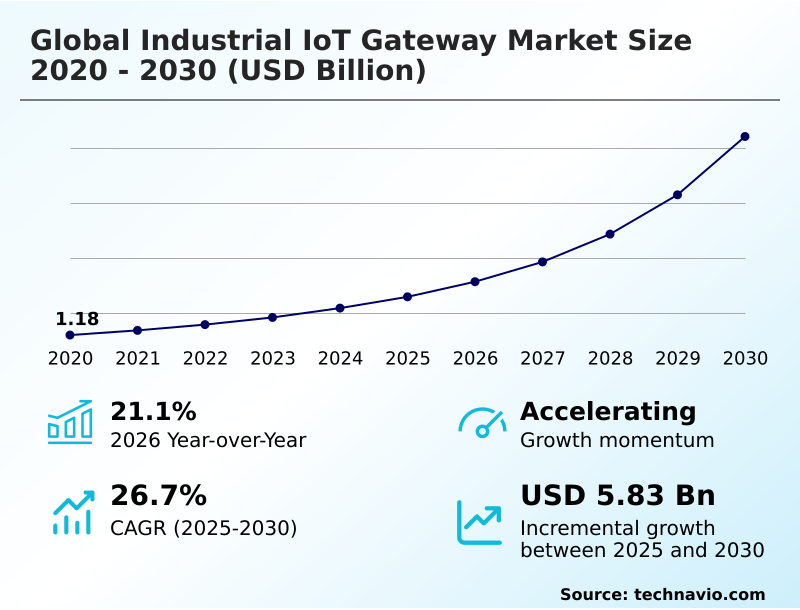
The industrial iot gateway market size is valued to increase by USD 5.83 billion, at a CAGR of 26.7% from 2025 to 2030. Leveraging manufacturing data for predictive maintenance will drive the industrial iot gateway market.
Major Market Trends & Insights
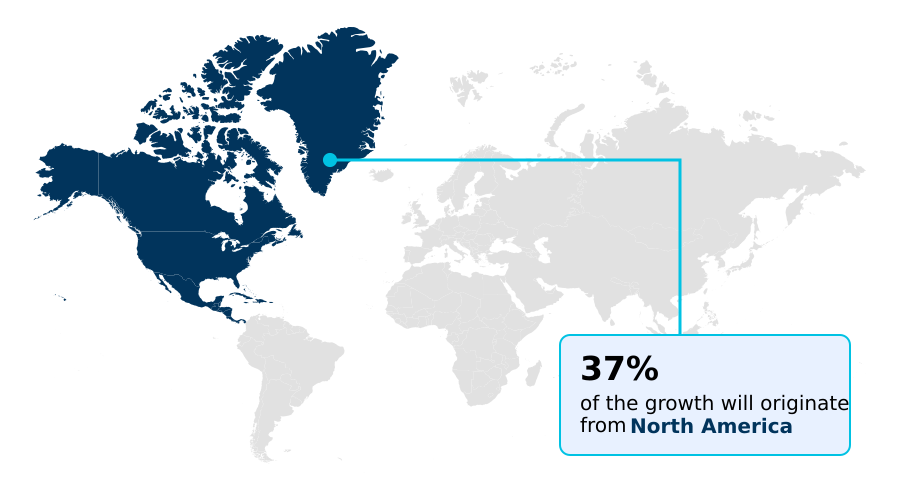
- North America dominated the market and accounted for a 37.4% growth during the forecast period.
- By Connectivity - Bluetooth segment was valued at USD 772 million in 2024
- By End-user - Process industries segment accounted for the largest market revenue share in 2024
Market Size & Forecast
- Market Opportunities: USD 7.22 billion
- Market Future Opportunities: USD 5.83 billion
- CAGR from 2025 to 2030 : 26.7%
Market Summary
- The industrial iot gateway market is at the core of the industry 4.0 revolution, acting as the critical bridge between operational technology (OT) on the factory floor and enterprise IT systems. The primary driver is the push for data-driven decision-making, where gateways enable predictive maintenance analytics by collecting and processing data from legacy and modern machinery.
- A key trend is the shift towards edge computing, where gateways with edge computing capabilities perform local analysis, reducing latency and bandwidth costs. For instance, in a smart manufacturing facility, a gateway can analyze vibration data from a machine in real-time, triggering an alert for potential failure before it disrupts the production line, thereby preventing costly downtime.
- This IT-OT convergence is essential for creating cyber-physical systems that are both intelligent and resilient. However, the market faces challenges related to cybersecurity threats, as these connected devices become potential entry points for attackers. Integrating embedded security modules and ensuring robust protocol conversion from standards like Modbus integration to MQTT communication are paramount for secure and efficient operations.
- Gateways are instrumental in achieving this integration.
What will be the Size of the Industrial Iot Gateway Market during the forecast period?
Get Key Insights on Market Forecast (PDF) Get Free Sample
How is the Industrial Iot Gateway Market Segmented?
The industrial iot gateway industry research report provides comprehensive data (region-wise segment analysis), with forecasts and estimates in "USD million" for the period 2026-2030, as well as historical data from 2020-2024 for the following segments.
- Connectivity
- Bluetooth
- Wi-Fi
- Zigbee
- Others
- End-user
- Process industries
- Discrete industries
- Component
- Hardware
- Software
- Geography
- North America
- US
- Canada
- Mexico
- APAC
- China
- India
- Japan
- Europe
- Germany
- UK
- France
- South America
- Brazil
- Argentina
- Middle East and Africa
- Saudi Arabia
- UAE
- South Africa
- Rest of World (ROW)
- North America
By Connectivity Insights
The bluetooth segment is estimated to witness significant growth during the forecast period.
The bluetooth segment is transforming within the global industrial iot gateway market 2026-2030, moving beyond simple connections to support dense sensor networks. The adoption of mesh networking has been pivotal, enabling low-power communication for battery-operated assets.
This technology, now accounting for nearly 24% of the wireless industrial landscape, is driven by condition-monitoring applications. Gateways with low-latency processing leverage Bluetooth for high-accuracy distance measurement, facilitating real-time locating systems.
Its integration with mobile devices for on-site diagnostics supports localized machine-to-machine communication and remote asset monitoring.
Software-defined edge solutions with multi-protocol support are crucial, while LoRaWAN deployment complements Bluetooth for wide-area coverage, enabling a flexible edge-to-cloud architecture for diverse industrial data acquisition.
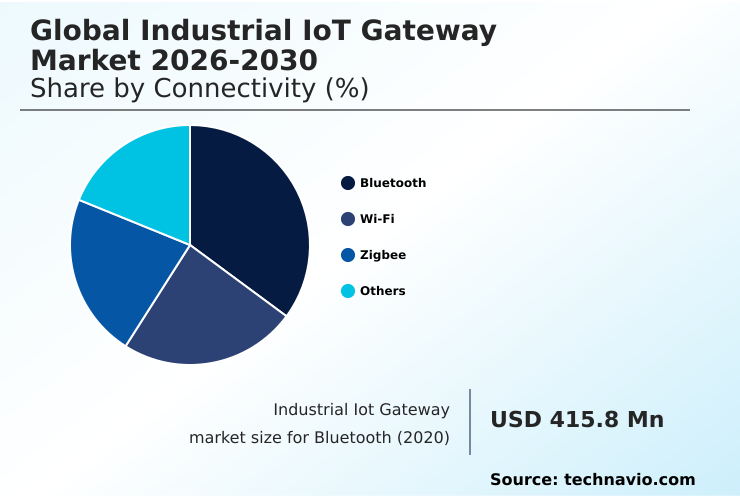
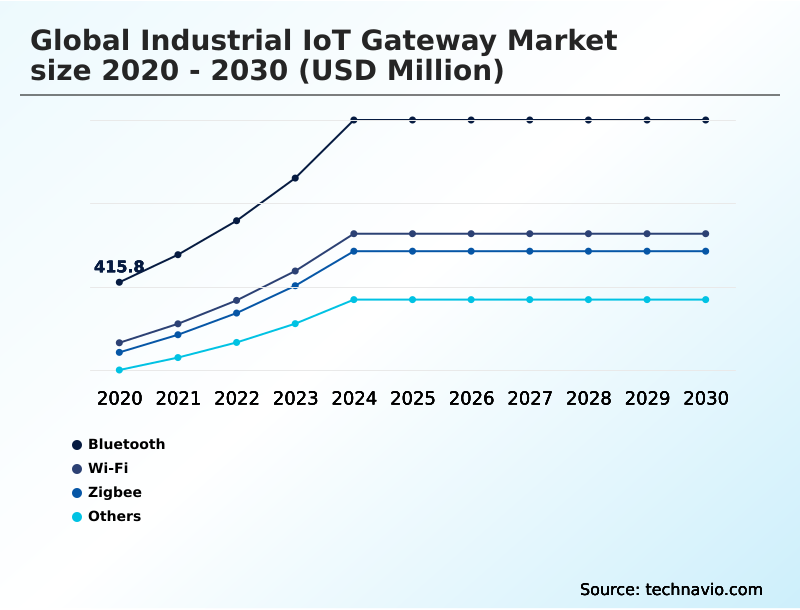
The Bluetooth segment was valued at USD 772 million in 2024 and showed a gradual increase during the forecast period.
Regional Analysis
North America is estimated to contribute 37.4% to the growth of the global market during the forecast period.Technavio’s analysts have elaborately explained the regional trends and drivers that shape the market during the forecast period.
See How Industrial Iot Gateway Market Demand is Rising in North America Get Free Sample
North America is a major contributor to the global industrial iot gateway market 2026-2030, accounting for 37.4% of the incremental growth, driven by advanced manufacturing and a focus on data sovereignty compliance.
The region's emphasis on IT-OT convergence and deploying AI-enabled edge nodes facilitates real-time operational adjustments. In APAC, rapid industrialization is fueling demand for gateways that enable smart grid communication and wireless sensor grids.
European firms prioritize gateways with Profinet connectivity and robust hardware-based zero-trust security to meet stringent regulatory standards, with some achieving a 15% improvement in energy efficiency through optimized monitoring.
South America leverages gateways for low-power wide-area networking in remote mining and agricultural applications. This geographic diversity underscores the gateway's role as a versatile tool for decentralized data processing and enabling industrial edge intelligence globally.
Market Dynamics
Our researchers analyzed the data with 2025 as the base year, along with the key drivers, trends, and challenges. A holistic analysis of drivers will help companies refine their marketing strategies to gain a competitive advantage.
- Understanding the global industrial iot gateway market 2026-2030 requires clarity on specific use cases and technical differentiators. A primary application is the industrial iot gateway for predictive maintenance, which allows manufacturers to monitor asset health in real time, reducing unplanned downtime by more than 30% compared to traditional reactive methods.
- For those new to the field asking what is an industrial iot gateway, it is essentially a smart device that translates data between industrial equipment and IT networks. In the context of the industrial iot gateway for smart manufacturing, these devices orchestrate data flow from sensors and PLCs to analytics platforms, enabling agile production.
- Security is paramount; implementing secure remote access for industrial equipment through gateways protects critical assets from cyber threats. A key technical consideration involves comparing modbus vs opc ua gateways, as the choice of protocol impacts interoperability and data context.
- Modbus remains prevalent in legacy systems, while OPC UA offers a more secure, information-rich framework suitable for modern IT-centric architectures, providing a more robust foundation for digital transformation.
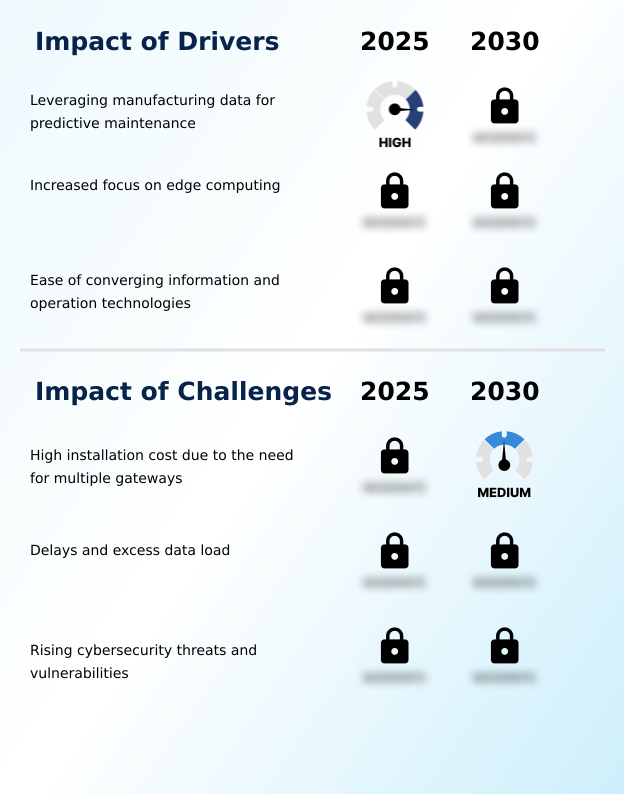
What are the key market drivers leading to the rise in the adoption of Industrial Iot Gateway Industry?
- The increasing ability of industries to leverage manufacturing data for predictive maintenance is a primary driver for market growth.
- The convergence of information technology (IT) and operational technology (OT) is a primary driver for the global industrial iot gateway market 2026-2030. Gateways act as the essential bridge, enabling legacy machinery integration and facilitating unified monitoring.
- This seamless protocol conversion can reduce digital transformation costs significantly. Another key driver is the focus on edge computing, which minimizes latency and bandwidth costs by processing data locally.
- This approach has been shown to improve equipment lifespan and reduce unplanned downtime by processing AI-driven analytics at the edge.
- Deploying gateways with 5G backhaul and digital twin data source capabilities has improved production efficiency by over 20% in certain automotive plants. The ability of gateways with serial-to-cellular gateways and cyber-physical systems to enable real-time asset monitoring is also critical.
What are the market trends shaping the Industrial Iot Gateway Industry?
- The market is witnessing a significant shift toward the provision of comprehensive end-to-end services. This trend reflects a growing demand for integrated solutions that span from device connectivity to data analytics.
- A defining trend in the global industrial iot gateway market 2026-2030 is the move towards customization and end-to-end service delivery. Industrial users now demand tailored solutions with flexible processing power and modular interfaces for ruggedized embedded systems.
- The accelerated adoption of industrial network resilience architectures has intensified this need, with organizations requiring gateways that can run specialized algorithms and handle unique machine learning tasks. This has improved forecast accuracy by over 18% in some logistics operations.
- Furthermore, the growing use of gateways in smart grids, which require unified device management, has become a strong driver, with some utilities reporting up to a 35% improvement in energy distribution efficiency. The integration of OPC UA interoperability, predictive maintenance analytics, and data aggregation functionalities within a single platform is becoming standard.
What challenges does the Industrial Iot Gateway Industry face during its growth?
- The high installation cost associated with deploying multiple gateways across complex industrial environments remains a significant market challenge.
- Rising cybersecurity threats present a significant challenge for the global industrial iot gateway market 2026-2030, as gateways are prime targets for attacks. A compromised device can disrupt industrial continuity, with downtime costs escalating rapidly. The need for constant vigilance, embedded security modules, and strong authentication is paramount for operational technology security.
- Another challenge is the high installation cost, particularly the need for multiple gateways in complex environments, which can slow adoption for small and medium enterprises. Furthermore, delays from excess data load can affect real-time operations, with some systems experiencing latency increases of up to 15% during peak loads.
- Effectively managing MQTT communication and data aggregation through smart factory communication hub and secure industrial networking architectures is crucial to mitigate these issues and ensure the reliability of autonomous operations connectivity.
Exclusive Technavio Analysis on Customer Landscape
The industrial iot gateway market forecasting report includes the adoption lifecycle of the market, covering from the innovator’s stage to the laggard’s stage. It focuses on adoption rates in different regions based on penetration. Furthermore, the industrial iot gateway market report also includes key purchase criteria and drivers of price sensitivity to help companies evaluate and develop their market growth analysis strategies.
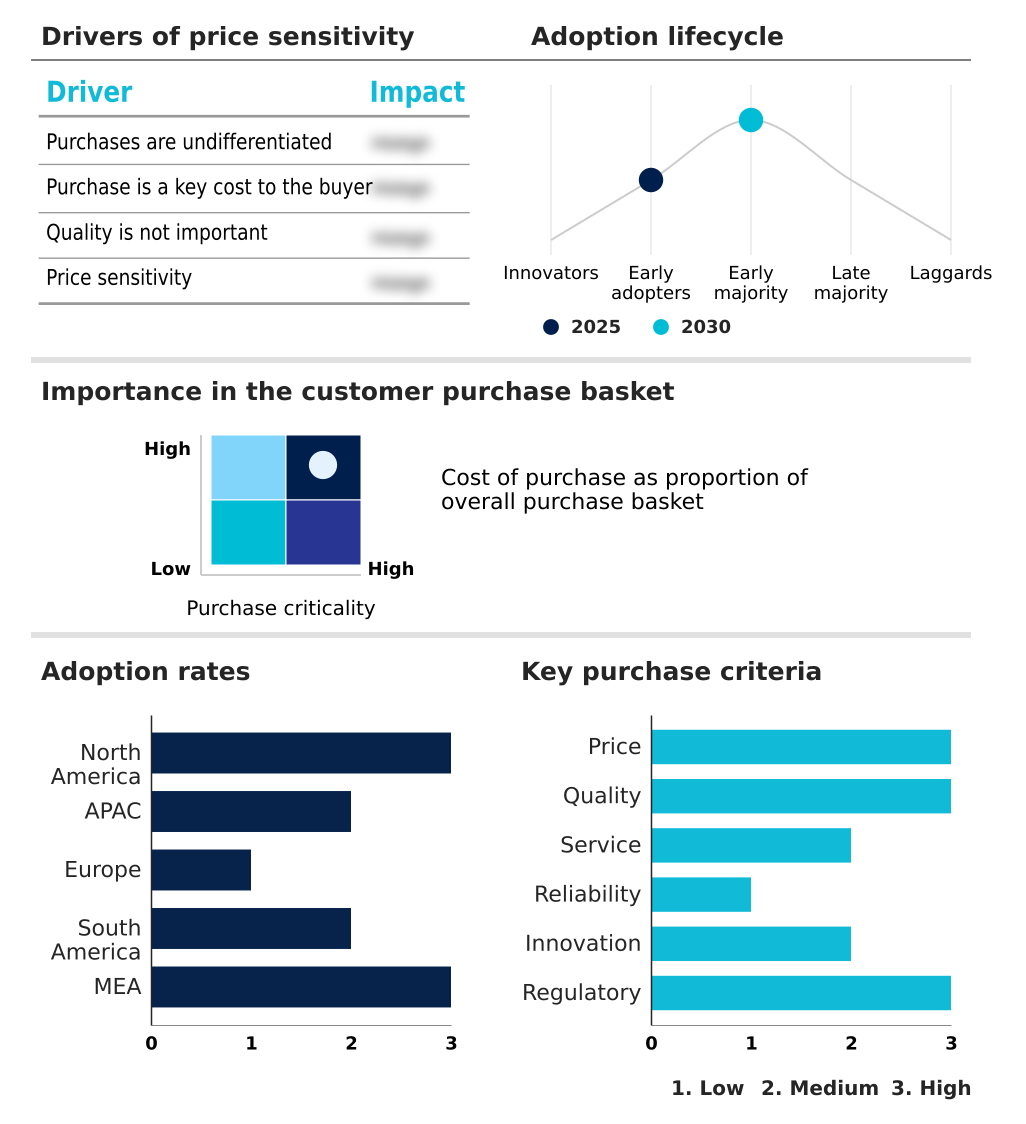
Customer Landscape of Industrial Iot Gateway Industry
Competitive Landscape
Companies are implementing various strategies, such as strategic alliances, industrial iot gateway market forecast, partnerships, mergers and acquisitions, geographical expansion, and product/service launches, to enhance their presence in the industry.
ADLINK Technology Inc. - Delivers integrated industrial gateway solutions that converge automation and IT, enabling real-time edge data processing and secure connectivity for enhanced operational intelligence.
The industry research and growth report includes detailed analyses of the competitive landscape of the market and information about key companies, including:
- ADLINK Technology Inc.
- Advantech Co. Ltd.
- Alten SA
- ASUSTeK Computer Inc.
- Cisco Systems Inc.
- Dell Technologies Inc.
- EUROTECH Spa
- Hewlett Packard Entp Co.
- Huawei Technologies Co. Ltd.
- Intel Corp.
- Intuz Inc.
- iWave Systems Technologies
- NEXCOM International Co. Ltd.
- NXP Semiconductors NV
- PHYTEC Messtechnik GmbH
- Semtech Corp.
- Siemens AG
- Super Micro Computer Inc.
- TE Connectivity plc
- Texas Instruments Inc.
Qualitative and quantitative analysis of companies has been conducted to help clients understand the wider business environment as well as the strengths and weaknesses of key industry players. Data is qualitatively analyzed to categorize companies as pure play, category-focused, industry-focused, and diversified; it is quantitatively analyzed to categorize companies as dominant, leading, strong, tentative, and weak.
Recent Development and News in Industrial iot gateway market
- In February 2025, Honeywell and Cisco Systems announced a strategic collaboration to integrate the Honeywell Forge industrial platform with Cisco IoT gateways, enhancing data processing and advanced analytics for industrial clients.
- In March 2025, Aramco Digital unveiled the Dane AiR DC, an autonomous scanning solution designed for complex industrial environments including manufacturers and distribution centers.
- In August 2025, Vale S.A. expanded its private LTE and 5G networks to support autonomous operations at its Northern System mining operations in Para, Brazil.
- In September 2025, the Dubai Electricity and Water Authority (DEWA) completed the integration of its smart meter network, comprising over 2.1 million electricity and water meters across Dubai.
Dive into Technavio’s robust research methodology, blending expert interviews, extensive data synthesis, and validated models for unparalleled Industrial Iot Gateway Market insights. See full methodology.
| Market Scope | |
|---|---|
| Page number | 301 |
| Base year | 2025 |
| Historic period | 2020-2024 |
| Forecast period | 2026-2030 |
| Growth momentum & CAGR | Accelerate at a CAGR of 26.7% |
| Market growth 2026-2030 | USD 5831.5 million |
| Market structure | Fragmented |
| YoY growth 2025-2026(%) | 21.1% |
| Key countries | US, Canada, Mexico, China, India, Japan, South Korea, Australia, Indonesia, Germany, UK, France, Italy, Spain, The Netherlands, Brazil, Argentina, Chile, Saudi Arabia, UAE, South Africa, Israel and Turkey |
| Competitive landscape | Leading Companies, Market Positioning of Companies, Competitive Strategies, and Industry Risks |
Research Analyst Overview
- The industrial iot gateway market is advancing through the fusion of powerful edge computing capabilities and sophisticated connectivity. These gateways are no longer simple data forwarders but have become AI-enabled edge nodes essential for IT-OT convergence. They provide crucial protocol conversion and industrial protocol translation, supporting MQTT communication, OPC UA interoperability, Modbus integration, and Profinet connectivity.
- The adoption of ruggedized hardware with embedded security modules and hardware-based zero-trust security is critical as they become central to cyber-physical systems. A key boardroom consideration is the investment in software-defined edge solutions that allow for containerized application deployment, offering agility and future-proofing infrastructure.
- These gateways facilitate real-time data transmission for predictive maintenance analytics, with some firms reporting a 20% reduction in maintenance costs. As the backbone for data aggregation, gateways are also enabling data sovereignty compliance and supporting advanced connectivity like 5G backhaul, LoRaWAN deployment, and serial-to-cellular gateways, ensuring multi-protocol support across the enterprise.
What are the Key Data Covered in this Industrial Iot Gateway Market Research and Growth Report?
-
What is the expected growth of the Industrial Iot Gateway Market between 2026 and 2030?
-
USD 5.83 billion, at a CAGR of 26.7%
-
-
What segmentation does the market report cover?
-
The report is segmented by Connectivity (Bluetooth, Wi-Fi, Zigbee, and Others), End-user (Process industries, and Discrete industries), Component (Hardware, and Software) and Geography (North America, APAC, Europe, South America, Middle East and Africa)
-
-
Which regions are analyzed in the report?
-
North America, APAC, Europe, South America and Middle East and Africa
-
-
What are the key growth drivers and market challenges?
-
Leveraging manufacturing data for predictive maintenance, High installation cost due to the need for multiple gateways
-
-
Who are the major players in the Industrial Iot Gateway Market?
-
ADLINK Technology Inc., Advantech Co. Ltd., Alten SA, ASUSTeK Computer Inc., Cisco Systems Inc., Dell Technologies Inc., EUROTECH Spa, Hewlett Packard Entp Co., Huawei Technologies Co. Ltd., Intel Corp., Intuz Inc., iWave Systems Technologies, NEXCOM International Co. Ltd., NXP Semiconductors NV, PHYTEC Messtechnik GmbH, Semtech Corp., Siemens AG, Super Micro Computer Inc., TE Connectivity plc and Texas Instruments Inc.
-
Market Research Insights
- The industrial IoT gateway market is defined by a strategic move toward decentralized intelligence, enhancing operational autonomy. Gateways featuring edge analytics capabilities now enable automated fault detection, improving uptime by over 25% in some discrete manufacturing settings. The integration of private 5G network integration with high-bandwidth gateways is reducing data transmission latency, a critical factor for autonomous operations connectivity.
- Furthermore, a focus on operational technology security has led to a 40% rise in the adoption of gateways with hardened security. The market supports legacy machinery integration into a cohesive smart factory communication hub, ensuring that older assets contribute to modern data ecosystems and deliver a higher return on investment.
We can help! Our analysts can customize this industrial iot gateway market research report to meet your requirements.
 RIA -
RIA -