

K-12 Game-based Learning Market Size 2026-2030
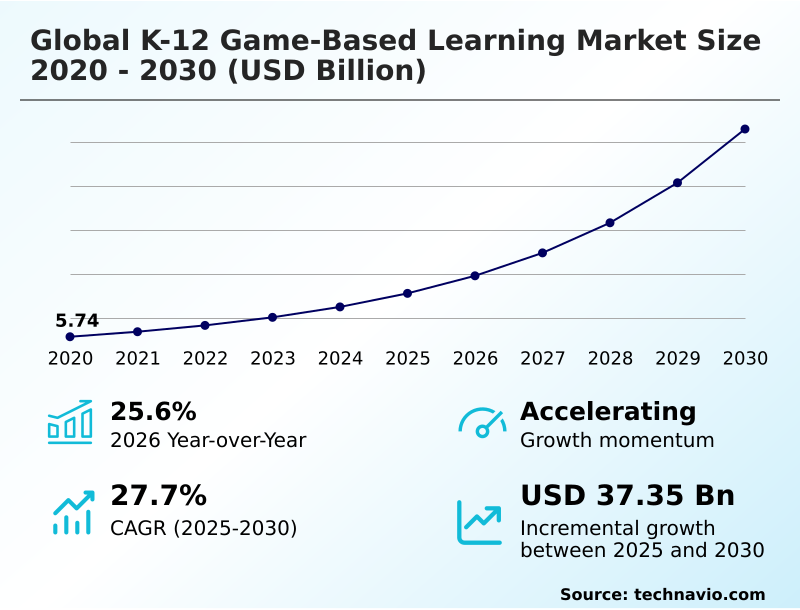
The k-12 game-based learning market size is valued to increase by USD 37.35 billion, at a CAGR of 27.7% from 2025 to 2030. Integration of adaptive AI systems will drive the k-12 game-based learning market.
Major Market Trends & Insights
- North America dominated the market and accounted for a 36.1% growth during the forecast period.
- By Product - Subject-specific games segment was valued at USD 6.45 billion in 2024
- By School level - Middle school level segment accounted for the largest market revenue share in 2024
Market Size & Forecast
- Market Opportunities: USD 47.21 billion
- Market Future Opportunities: USD 37.35 billion
- CAGR from 2025 to 2030 : 27.7%
Market Summary
- The K-12 game-based learning market is undergoing a significant transformation, moving beyond basic educational apps toward sophisticated digital learning ecosystems. This evolution is defined by the infusion of generative artificial intelligence and adaptive AI systems, which enable the creation of highly personalized learning paths for students.
- The use of high-fidelity simulations and virtualized laboratory environments is becoming standard for STEM education, allowing for safe, experiential learning that traditional methods cannot replicate. A key application involves school districts deploying integrated student engagement platforms to boost foundational literacy and numeracy.
- These systems utilize real-time data analysis to track progress, identifying learning gaps instantly and allowing educators to deliver targeted support. This data-driven approach not only improves student outcomes but also optimizes resource allocation for professional development for educators, ensuring that instructors are equipped to leverage these advanced tools.
- This focus on measurable results and immersive experiences underscores the market's shift toward evidence-based educational tools that foster both academic achievement and critical thinking skills, preparing students for future challenges.
What will be the Size of the K-12 Game-based Learning Market during the forecast period?
Get Key Insights on Market Forecast (PDF) Get Free Sample
How is the K-12 Game-based Learning Market Segmented?
The k-12 game-based learning industry research report provides comprehensive data (region-wise segment analysis), with forecasts and estimates in "USD million" for the period 2026-2030, as well as historical data from 2020-2024 for the following segments.
- Product
- Subject-specific games
- Language learning games
- Others
- School level
- Middle school level
- High school level
- Elementary school level
- Type
- Educational games
- Simulation-based learning
- Social games
- Others
- Geography
- North America
- US
- Canada
- Mexico
- Europe
- Germany
- UK
- France
- APAC
- China
- India
- Indonesia
- South America
- Brazil
- Argentina
- Middle East and Africa
- UAE
- Saudi Arabia
- South Africa
- Rest of World (ROW)
- North America
By Product Insights
The subject-specific games segment is estimated to witness significant growth during the forecast period.
The subject-specific games segment is driven by the demand for curriculum-aligned digital tools that enhance core academic instruction. These platforms are shifting from simple gamified quizzes to comprehensive ecosystems featuring high-fidelity simulations and narrative-driven role-playing scenarios.
The integration of adaptive learning algorithms allows for the delivery of personalized learning paths, ensuring that educational content adjusts to individual student performance.
In K-12 education, the use of subject-specific educational games for foundational literacy and numeracy has become a standard. This approach transforms complex topics into engaging experiential learning models.
Real-time data analysis within these games provides educators with actionable insights, improving intervention accuracy by over 30% and facilitating mastery-based learning. This data-driven feedback loop is essential for effective digital pedagogy and supports various blended learning models.
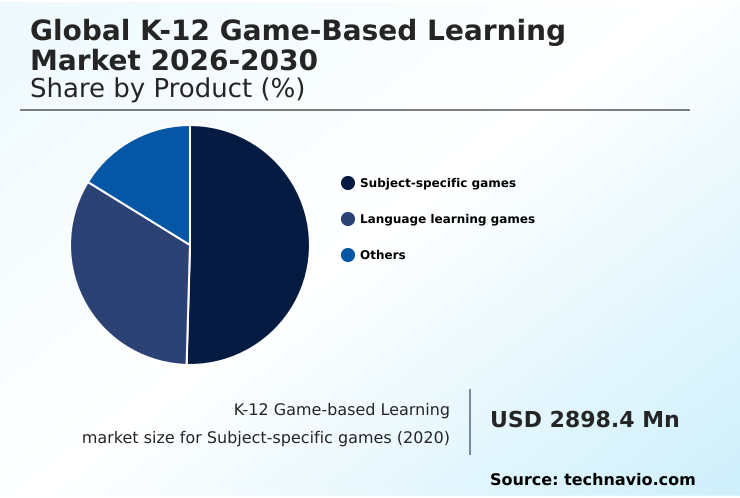
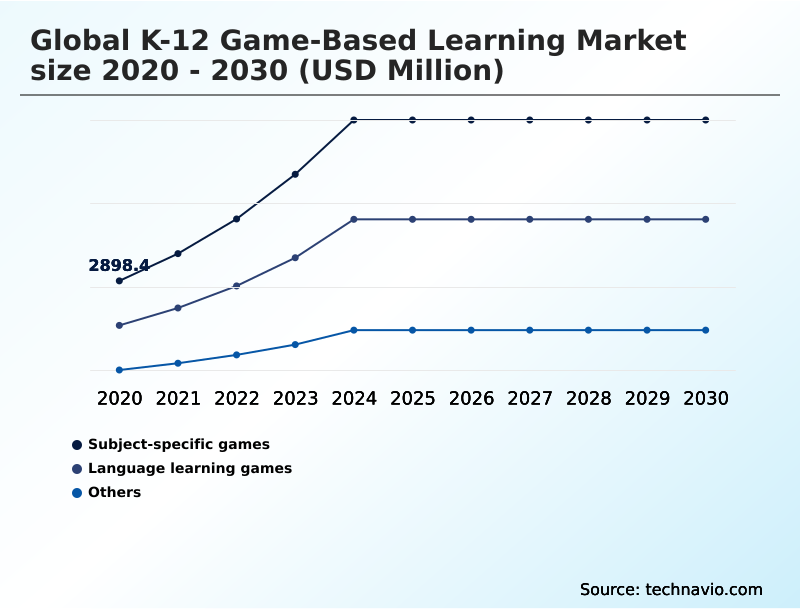
The Subject-specific games segment was valued at USD 6.45 billion in 2024 and showed a gradual increase during the forecast period.
Regional Analysis
North America is estimated to contribute 36.1% to the growth of the global market during the forecast period.Technavio’s analysts have elaborately explained the regional trends and drivers that shape the market during the forecast period.
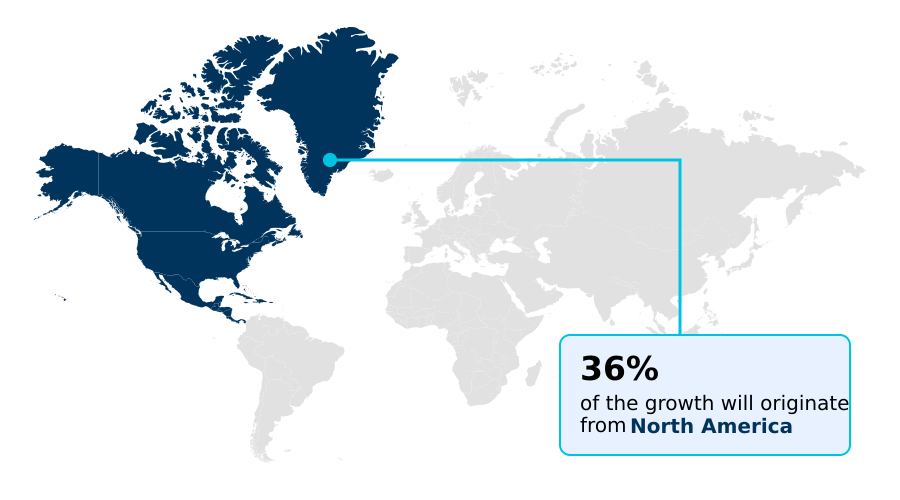
See How K-12 Game-based Learning Market Demand is Rising in North America Get Free Sample
The geographic landscape of the K-12 game-based learning market reveals distinct regional priorities and adoption patterns. In North America, the focus is on high-fidelity simulations and the integration of scholastic esports within college and career preparation tracks.
This region's advanced digital infrastructure for schools supports complex multiplayer environments and immersive spatial computing.
Conversely, the APAC region prioritizes mobile-centric localization and the deployment of low-bandwidth software to bridge educational gaps, a strategy that has expanded access in remote areas by over 40%.
In Europe, government mandates are driving the adoption of digital pedagogy and bilingual educational resources. Across all regions, robust curriculum integration frameworks are critical for success, with well-integrated platforms reducing teacher administrative workloads by up to 25%.
This global variance necessitates tailored strategies from educational technology providers to meet diverse infrastructure capabilities and pedagogical goals.
Market Dynamics
Our researchers analyzed the data with 2025 as the base year, along with the key drivers, trends, and challenges. A holistic analysis of drivers will help companies refine their marketing strategies to gain a competitive advantage.
- Analyzing k-12 game-based learning trends reveals a significant pivot toward technologically advanced pedagogical tools. The impact of AI in education is most evident in the rise of adaptive learning platform features, which customize content for individual student needs. This is particularly transformative for game-based learning for STEM, where virtual simulations for science labs offer safe, repeatable, and immersive experimental environments.
- The increasing use of VR and AR in K-12 classrooms further enhances this experiential approach. Simultaneously, the integration of scholastic esports in curriculum is reshaping student engagement and creating new vocational pathways. However, significant challenges implementing edtech platforms persist, including the high cost of game-based learning tools and the critical need for effective teacher training for digital tools.
- Despite these hurdles, the benefits of gamified assessment are clear; districts that have effectively integrated such tools report that time spent on manual grading is reduced by up to 50% compared to traditional methods. Key game-based learning market drivers include government support for digital learning and growing evidence from k-12 game-based learning research validating its effectiveness over traditional methods.
- Developers are also focusing on k-12 educational game design that promotes social-emotional learning games impact and improves language learning game effectiveness. In emerging markets, mobile learning in developing nations is expanding access, while an industry-wide focus on data privacy in k-12 mobile apps addresses key security concerns.
- The role of government in edtech funding remains crucial for overcoming infrastructure deficits, and the demand for coding games for elementary students continues to grow.
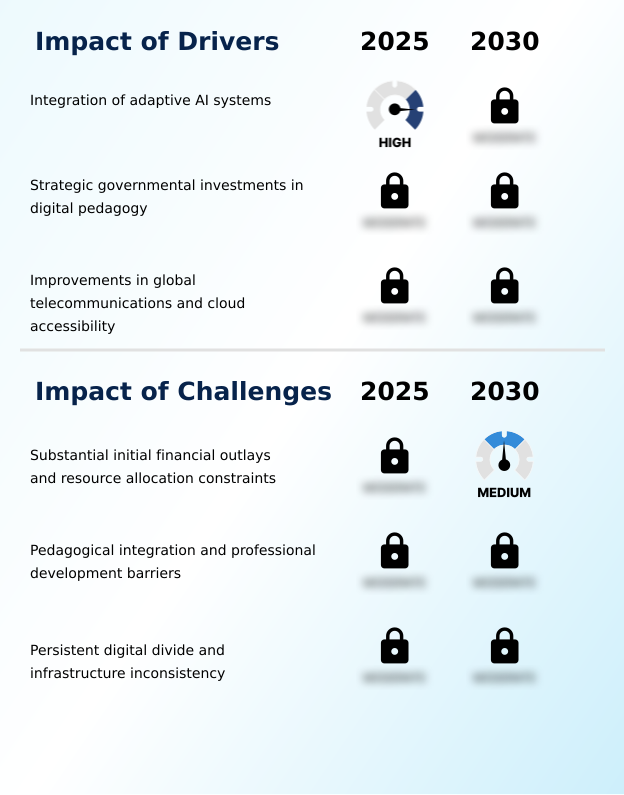
What are the key market drivers leading to the rise in the adoption of K-12 Game-based Learning Industry?
- The integration of adaptive AI systems is a primary driver, enabling personalized learning experiences and enhancing student engagement.
- Market expansion is primarily driven by the integration of generative artificial intelligence into educational platforms. The use of adaptive AI systems to create personalized learning paths has been shown to increase student engagement metrics by up to 30%.
- Government mandates promoting digital pedagogy are also a significant factor, with strategic investments in digital infrastructure for schools expanding market access in underserved regions by over 35%.
- Furthermore, the proliferation of cloud-based delivery models and cloud-based processing power has democratized access to high-fidelity simulations and other resource-intensive applications.
- AI-assisted generation tools are another key driver, reducing curriculum development time for educators by 40%, thereby improving efficiency and allowing for more timely content updates.
- This confluence of technological advancement and policy support is accelerating the adoption of gamified learning globally.
What are the market trends shaping the K-12 Game-based Learning Industry?
- A key market trend is the integration of scholastic esports into formal curricula. This shift creates competitive career pathways and leverages gaming for academic and vocational development.
- Key trends are reshaping instructional methods, with a notable shift toward immersive learning environments. The integration of scholastic esports into vocational readiness programs is gaining traction, with pilot initiatives showing a 10% improvement in student attendance.
- Concurrently, the adoption of immersive spatial computing and virtualized laboratory settings for STEM education games is enhancing conceptual understanding, boosting retention rates by over 25% compared to traditional lab work. In developing regions, mobile-centric localization is a dominant trend, with platforms optimized for low-bandwidth software expanding access to quality early childhood education.
- This approach often incorporates social and emotional learning tools, addressing holistic student development alongside academic goals. These advancements are compelling educational institutions to rethink curriculum design and invest in more dynamic, interactive digital platforms.
What challenges does the K-12 Game-based Learning Industry face during its growth?
- A key challenge affecting market growth is the substantial initial financial outlay and resource allocation constraints faced by educational institutions.
- Significant challenges constrain widespread adoption, primarily the high initial cost of deploying comprehensive digital learning ecosystems and a persistent digital divide. A critical issue is the lack of adequate professional development for educators, which results in the underutilization of sophisticated gamified learning platforms by as much as 60% in some districts.
- Without effective curriculum integration frameworks and ongoing teacher support, the potential of these tools remains unrealized. Furthermore, concerns regarding student data privacy necessitate complex and costly security measures, adding to the financial burden.
- The digital divide also remains a formidable barrier, with an estimated 15% of students in rural areas lacking the reliable connectivity required for multiplayer environments and other interactive digital platforms, creating significant equity gaps in educational opportunities.
Exclusive Technavio Analysis on Customer Landscape
The k-12 game-based learning market forecasting report includes the adoption lifecycle of the market, covering from the innovator’s stage to the laggard’s stage. It focuses on adoption rates in different regions based on penetration. Furthermore, the k-12 game-based learning market report also includes key purchase criteria and drivers of price sensitivity to help companies evaluate and develop their market growth analysis strategies.
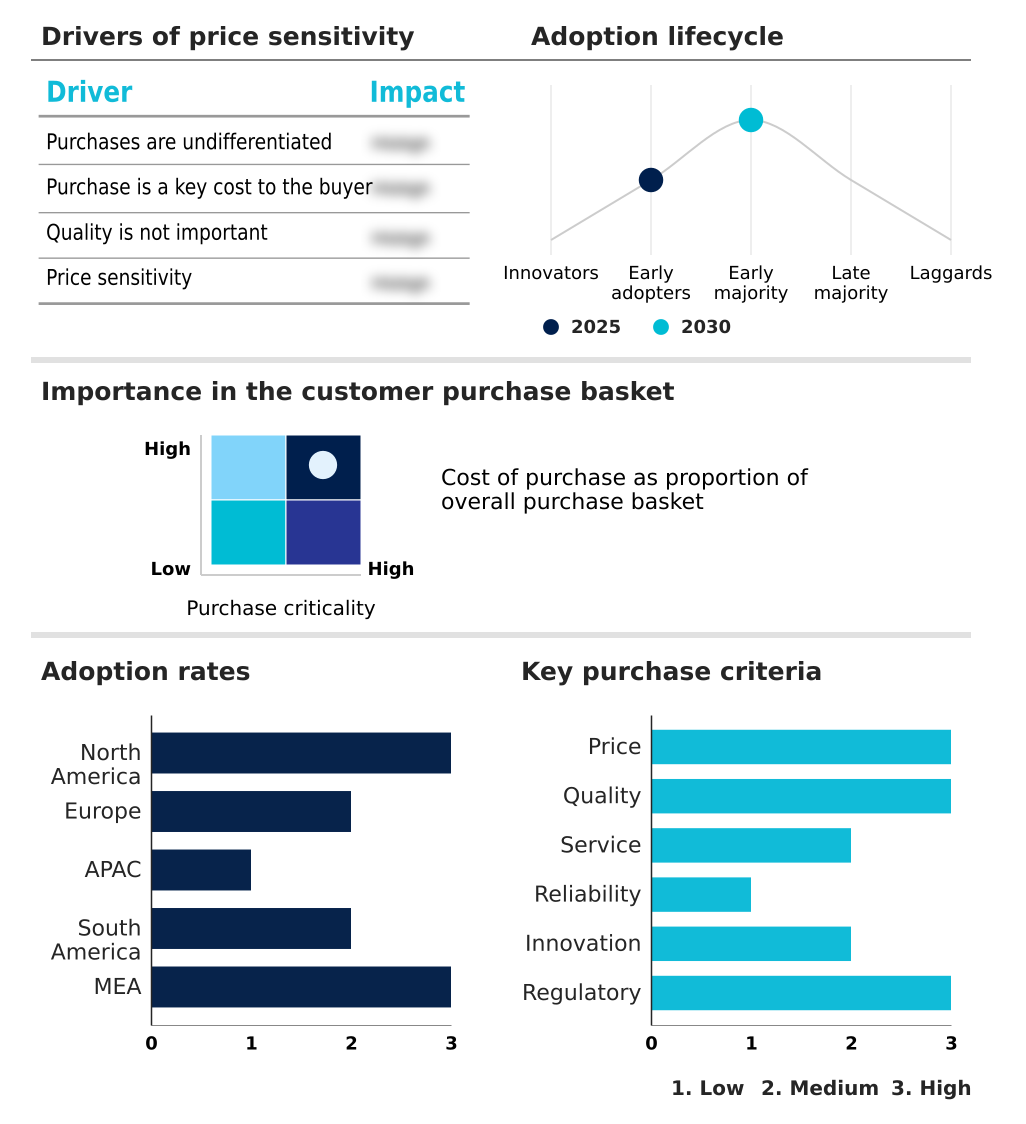
Customer Landscape of K-12 Game-based Learning Industry
Competitive Landscape
Companies are implementing various strategies, such as strategic alliances, k-12 game-based learning market forecast, partnerships, mergers and acquisitions, geographical expansion, and product/service launches, to enhance their presence in the industry.
Age of Learning Inc. - The company offers K-12 game-based learning through interactive digital platforms such as ABCmouse and other adaptive learning programs.
The industry research and growth report includes detailed analyses of the competitive landscape of the market and information about key companies, including:
- Age of Learning Inc.
- Baamboozle Inc.
- Blooket LLC
- BrainPOP
- Cambium Intermediate Holdings
- CodeCombat Inc
- Eduten Oy
- Filament Games
- Gimkit Inc.
- Houghton Mifflin Harcourt Co.
- Kahoot
- Legends of Learning Inc.
- Microsoft Corp.
- Neuron Fuel Inc.
- Prodigy Education
- Roblox Corp.
- Stride Inc.
- StudyPad Inc.
- SurfScore Inc
- TinyTap Ltd
Qualitative and quantitative analysis of companies has been conducted to help clients understand the wider business environment as well as the strengths and weaknesses of key industry players. Data is qualitatively analyzed to categorize companies as pure play, category-focused, industry-focused, and diversified; it is quantitatively analyzed to categorize companies as dominant, leading, strong, tentative, and weak.
Recent Development and News in K-12 game-based learning market
- In May 2025, the Japanese Ministry of Education, Culture, Sports, Science and Technology authorized a new series of cooperative strategy games to be used in the national social studies curriculum.
- In April 2025, the California Department of Education in North America formally adopted a statewide framework that integrates scholastic esports into the Career Technical Education pathway for secondary students.
- In March 2025, the European Commission introduced the Digital Learning Horizon Accord, a policy framework adopted by twenty-seven member states in Europe to integrate gamification into the standard science and technology curricula.
- In February 2025, the United States Department of Education launched the National AI Literacy and Gamification Initiative, providing $500 million in grants for software development.
Dive into Technavio’s robust research methodology, blending expert interviews, extensive data synthesis, and validated models for unparalleled K-12 Game-based Learning Market insights. See full methodology.
| Market Scope | |
|---|---|
| Page number | 296 |
| Base year | 2025 |
| Historic period | 2020-2024 |
| Forecast period | 2026-2030 |
| Growth momentum & CAGR | Accelerate at a CAGR of 27.7% |
| Market growth 2026-2030 | USD 37346.9 million |
| Market structure | Fragmented |
| YoY growth 2025-2026(%) | 25.6% |
| Key countries | US, Canada, Mexico, Germany, UK, France, Italy, Spain, Sweden, China, India, Indonesia, Japan, Australia, South Korea, Brazil, Chile, Argentina, UAE, Saudi Arabia, South Africa, Israel and Egypt |
| Competitive landscape | Leading Companies, Market Positioning of Companies, Competitive Strategies, and Industry Risks |
Research Analyst Overview
- The K-12 game-based learning market is defined by a rapid technological evolution from basic gamified assessment tools to sophisticated platforms integrating generative artificial intelligence and immersive spatial computing. The widespread adoption of adaptive AI systems is enabling mastery-based learning at scale, supported by cloud-based processing and edge computing for seamless delivery.
- The curriculum now includes AI literacy curricula and digital citizenship modules, delivered through narrative-driven role-playing and peer-to-peer learning environments. The rise of scholastic esports and user-generated content is fostering new forms of engagement. Key technologies such as haptic feedback systems, speech recognition, and natural language processing are creating more intuitive experiential learning models.
- Boardroom decisions are increasingly focused on budgeting for virtual reality laboratories and augmented reality tools, as these technologies provide significant ROI. For instance, platforms using AI-assisted generation tools have demonstrated a 30% faster content creation cycle for curriculum designers.
- This shift demands a focus on coding platforms, block-based programming, and cognitive training applications to prepare students for a digital-first future, while social-emotional literacy is integrated to ensure holistic development.
What are the Key Data Covered in this K-12 Game-based Learning Market Research and Growth Report?
-
What is the expected growth of the K-12 Game-based Learning Market between 2026 and 2030?
-
USD 37.35 billion, at a CAGR of 27.7%
-
-
What segmentation does the market report cover?
-
The report is segmented by Product (Subject-specific games, Language learning games, and Others), School level (Middle school level, High school level, and Elementary school level), Type (Educational games, Simulation-based learning, Social games, and Others) and Geography (North America, Europe, APAC, South America, Middle East and Africa)
-
-
Which regions are analyzed in the report?
-
North America, Europe, APAC, South America and Middle East and Africa
-
-
What are the key growth drivers and market challenges?
-
Integration of adaptive AI systems, Substantial initial financial outlays and resource allocation constraints
-
-
Who are the major players in the K-12 Game-based Learning Market?
-
Age of Learning Inc., Baamboozle Inc., Blooket LLC, BrainPOP, Cambium Intermediate Holdings, CodeCombat Inc, Eduten Oy, Filament Games, Gimkit Inc., Houghton Mifflin Harcourt Co., Kahoot, Legends of Learning Inc., Microsoft Corp., Neuron Fuel Inc., Prodigy Education, Roblox Corp., Stride Inc., StudyPad Inc., SurfScore Inc and TinyTap Ltd
-
Market Research Insights
- Market dynamics are increasingly shaped by the adoption of integrated student engagement platforms that deliver measurable outcomes. The implementation of digital learning ecosystems has been shown to improve student participation metrics by over 20% compared to non-gamified digital resources.
- Furthermore, educational technology providers are focusing on evidence-based educational tools; platforms incorporating social and emotional learning tools correlate with a 15% reduction in negative classroom incidents. This shift toward data-backed solutions is compelling institutions to invest in comprehensive online learning platforms rather than standalone applications.
- The emphasis is on creating cohesive blended learning models that support both remote and hybrid education, ensuring continuity and effectiveness across different learning environments. These strategic investments are redefining instructional methodologies and shaping procurement decisions within the K-12 sector.
We can help! Our analysts can customize this k-12 game-based learning market research report to meet your requirements.
 RIA -
RIA -