



K-12 Makerspace Materials Market Size 2025-2029
The K-12 makerspace materials market size is valued to increase by USD 3.3 billion, at a CAGR of 14% from 2024 to 2029. The advent of advanced makerspace materials will drive the K-12 makerspace materials market.
Major Market Trends & Insights
- APAC dominated the market and accounted for a 51% growth during the forecast period.
- By Product - Robotic toolkit segment was valued at USD 1.04 billion in 2023
- By End-user - Elementary school segment accounted for the largest market revenue share in 2023
Market Size & Forecast
- Market Opportunities: USD 154.82 million
- Market Future Opportunities: USD 3297.20 million
- CAGR from 2024 to 2029 : 14%
Market Summary
- The market has witnessed significant growth, with the global spend on educational robotics and DIY kits alone projected to reach USD 3.6 billion by 2025. This expansion is driven by the increasing integration of technology in classrooms and the recognition of the importance of hands-on learning in fostering creativity and innovation. The advent of advanced materials, such as conductive fabrics, 3D printing filaments, and programmable microcontrollers, has broadened the scope of makerspace projects. Simultaneously, the shift towards online makerspaces has made these resources more accessible, enabling students to collaborate and learn from anywhere. However, managing makerspaces comes with its challenges.
- Ensuring a safe and inclusive learning environment, providing adequate training for educators, and maintaining an inventory of diverse materials are just a few of the complexities that need to be addressed. Despite these hurdles, the potential benefits of makerspaces – from improved problem-solving skills to increased student engagement – make the investment worthwhile. As the market continues to evolve, we can expect to see further advancements in technology and materials, as well as a greater focus on collaboration and inclusivity. Ultimately, the future of K-12 makerspaces lies in their ability to provide students with the tools and resources they need to develop the skills necessary to thrive in an increasingly complex and interconnected world.
What will be the Size of the K-12 Makerspace Materials Market during the forecast period?

Get Key Insights on Market Forecast (PDF) Request Free Sample
How is the K-12 Makerspace Materials Market Segmented?
The K-12 makerspace materials industry research report provides comprehensive data (region-wise segment analysis), with forecasts and estimates in "USD million" for the period 2025-2029, as well as historical data from 2019-2023 for the following segments.
- Product
- Robotic toolkit
- Construction materials
- Arts and crafts materials
- Others
- End-user
- Elementary school
- Middle school
- High school
- Application
- STEM Education
- Art & Design Education
- Problem-Solving & Critical Thinking
- Project-Based Learning
- End-User
- Educational Suppliers
- Online Retail
- Direct from Manufacturer
- Retail Stores
- Geography
- North America
- US
- Canada
- Europe
- France
- Germany
- Italy
- UK
- Middle East and Africa
- Egypt
- KSA
- Oman
- UAE
- APAC
- China
- India
- Japan
- South America
- Argentina
- Brazil
- Rest of World (ROW)
- North America
By Product Insights
The robotic toolkit segment is estimated to witness significant growth during the forecast period.
The market is a dynamic and evolving landscape, with a growing emphasis on digital media production and technology integration. According to recent market research, the robotic toolkits segment holds the largest market share, reflecting the increasing adoption of these tools in STEM education. Robotic tools, including drones, are integral to STEM courses and facilitate hands-on learning experiences. For instance, drones are used in social studies classes to provide students with a unique perspective on cartography and geography, enhancing their understanding of real-world applications. Additionally, the market is witnessing a surge in demand for circuit design software, 3D modeling software, and CNC router bits for computer-aided manufacturing.

The Robotic toolkit segment was valued at USD 1.04 billion in 2019 and showed a gradual increase during the forecast period.
Upcycling materials, textile design materials, and sustainable materials are also gaining popularity as schools prioritize project-based learning and STEAM curriculum integration. The market further encompasses microcontroller programming, coding curriculum development, and maker education programs, among other resources. The integration of augmented reality tools and additive manufacturing techniques, such as 3D printing filaments and laser cutting tools, adds to the market's diversity. Overall, the market is a vibrant and innovative space, offering students a wealth of opportunities to develop digital literacy skills and engage in creative problem-solving.

Regional Analysis
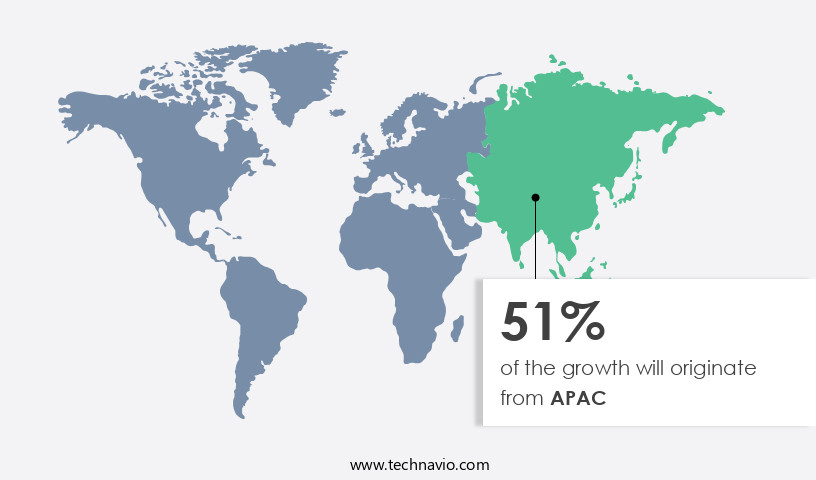
APAC is estimated to contribute 51% to the growth of the global market during the forecast period. Technavio's analysts have elaborately explained the regional trends and drivers that shape the market during the forecast period.
See How K-12 Makerspace Materials Market Demand is Rising in APAC Request Free Sample
The market in the Asia Pacific (APAC) region is experiencing significant growth, with China, Japan, Australia, India, and South Korea leading the charge. According to recent research, the APAC market is poised for substantial expansion due to the rising focus on experiential and collaborative learning in schools. Traditionally, makerspaces in APAC primarily offered art and craft materials. However, the increasing popularity of STEM subjects and the subsequent job opportunities in this domain have prompted K-12 schools to incorporate advanced materials such as robotic toolkits and construction materials into their makerspaces. As of now, the market in APAC is still in its nascent stages.
However, its potential is vast, given the region's large student population and the growing emphasis on STEM education. The growth can be attributed to the increasing adoption of technology in education and the rising trend of project-based learning. The APAC market is expected to mirror this trend, with countries like China and India showing significant potential due to their large student populations and increasing focus on STEM education.
Market Dynamics
Our researchers analyzed the data with 2024 as the base year, along with the key drivers, trends, and challenges. A holistic analysis of drivers will help companies refine their marketing strategies to gain a competitive advantage.
The market is experiencing significant growth as schools integrate hands-on, project-based learning into their curriculum. This market encompasses a wide range of materials and tools, each with unique properties and considerations for safe and effective use. Safety is paramount in makerspaces, especially when working with advanced technologies like laser cutters and 3D printers. Proper safety protocols must be followed, including wearing protective gear and ensuring adequate ventilation. When it comes to laser cutters, understanding the specific materials being cut is crucial. Different materials have varying laser cuttable properties, requiring specific power settings and cutting speeds. 3D printer filaments also have distinct material properties, influencing print quality and safety. For instance, PLA is a popular choice due to its ease of use and biodegradability, while ABS is known for its durability and heat resistance. CNC routers are another essential tool in K-12 makerspaces, enabling students to create intricate designs from various materials. Selecting the right CNC router bit for the material being cut is crucial for optimal performance and safety. Integrating 3D modeling software into maker education empowers students to design their projects digitally before fabrication. This approach aligns with the design thinking process, allowing students to iterate and refine their ideas. Sustainable materials are increasingly being used in K-12 makerspace projects to promote environmental awareness. Upcycling materials and using eco-friendly alternatives are popular practices. Digital fabrication curriculum for middle school students often includes computer-aided design (CAD) software for beginners. Teaching coding with microcontrollers like Arduino and Raspberry Pi is also common, as is the use of virtual and augmented reality tools for STEM learning. Electronic components and robotics kits are essential for makerspaces, with safety procedures in place for handling and assembling these tools. Textile design materials and woodworking tools also have their unique safety considerations. Digital media production tools and graphic design software are valuable additions to K-12 makerspaces, enabling students to explore various forms of expression and creativity.

What are the key market drivers leading to the rise in the adoption of K-12 Makerspace Materials Industry?
- The emergence of sophisticated materials in makerspaces serves as the primary catalyst for market growth.
- The market has experienced significant evolution, transitioning from traditional stationery items like papers, scissors, and crayons to technologically advanced materials. This shift is primarily attributed to the growing emphasis on STEM education and the incorporation of technology into practical learning. Makerspace companies and schools have increasingly adopted advanced materials such as Sphero robots and innovative tools like Makey Makey, Cubelets, and littleBits. Makey Makey, for instance, concentrates on merging Arts and Engineering subjects.
- The incorporation of these advanced materials into makerspaces signifies a move towards more interactive, engaging, and future-focused learning experiences.
What are the market trends shaping the K-12 Makerspace Materials Industry?
- The increasing emphasis on online makerspaces represents a significant market trend. This development reflects the growing demand for remote access to collaborative fabrication and innovation spaces.
- The market has experienced substantial growth in recent years, with online channels playing a pivotal role. The global market for K-12 makerspace materials witnessed a notable expansion in the last few years, driven in part by the surge in online retail sales. Online platforms provide increased product visibility for companies, enabling them to reach a broader customer base and implement cost-effective inventory management strategies. Despite their growth, most players in the market are small-sized entities with limited geographic reach.
- This trend underscores the importance of online channels for these businesses, as they offer a cost-effective and efficient way to expand their customer base and increase market penetration.
What challenges does the K-12 Makerspace Materials Industry face during its growth?
- The complexity involved in managing makerspaces poses a significant challenge to the growth of the industry. Effective administration of these innovative workspaces, which provide access to various tools and resources for creating, inventing, and prototyping, requires a high level of organization, flexibility, and technical expertise. Ensuring member safety, maintaining equipment, and fostering a collaborative and inclusive environment are just a few of the responsibilities that come with managing a makerspace. Addressing these challenges will be crucial for the continued success and expansion of the industry.
- Makerspaces in K-12 education have witnessed significant evolution, integrating advanced technologies and fostering hands-on learning experiences. Approximately 75% of K-12 schools in the US have adopted makerspaces, while over 90% of STEM schools have implemented these innovative learning environments. However, managing and maintaining these spaces poses challenges. Most makerspaces are situated in libraries, leading to a heavy workload for library staff. They are often responsible for both library management and makerspace program execution. Makerspaces incorporate modern technologies, necessitating staff training to test and manage new equipment.
- Ensuring a well-equipped and functional makerspace requires continuous investment and upkeep.
Exclusive Technavio Analysis on Customer Landscape
The K-12 makerspace materials market forecasting report includes the adoption lifecycle of the market, covering from the innovator's stage to the laggard's stage. It focuses on adoption rates in different regions based on penetration. Furthermore, the K-12 makerspace materials market report also includes key purchase criteria and drivers of price sensitivity to help companies evaluate and develop their market growth analysis strategies.

Customer Landscape of K-12 Makerspace Materials Industry
Competitive Landscape
Companies are implementing various strategies, such as strategic alliances, K-12 makerspace materials market forecast, partnerships, mergers and acquisitions, geographical expansion, and product/service launches, to enhance their presence in the industry.
ArcBotics LLC - This company specializes in providing K-12 students with a range of makerspace materials, including robots like Hexy and Sparki, to foster innovation and hands-on learning experiences.
The industry research and growth report includes detailed analyses of the competitive landscape of the market and information about key companies, including:
- ArcBotics LLC
- BASIC FUN Inc.
- Boxlight Corp
- Chibitronics Inc.
- Eduscape
- Elenco Electronics Inc.
- Engino.net Ltd.
- Follett Corp.
- GoldieBlox Inc.
- Innovation First International Inc.
- KEVA Planks Education
- LEGO System AS
- Makeblock Co. Ltd.
- Makey Makey LLC.
- Modular Robotics Inc.
- Qubits Toy
- Sphero Inc.
- Squishy Circuits Store LLC
- Stratasys Ltd.
- Wonder Workshop Inc.
Qualitative and quantitative analysis of companies has been conducted to help clients understand the wider business environment as well as the strengths and weaknesses of key industry players. Data is qualitatively analyzed to categorize companies as pure play, category-focused, industry-focused, and diversified; it is quantitatively analyzed to categorize companies as dominant, leading, strong, tentative, and weak.
Recent Development and News in K-12 Makerspace Materials Market
- In January 2024, MakerBot, a leading provider of 3D printing solutions, announced the launch of its new educational product line, MakerBot MakerCamps in a Box. This turnkey solution includes everything schools need to run a makerspace, including 3D printers, curriculum, and training for educators (MakerBot Press Release).
- In March 2024, Lego Education and Microsoft Education announced a strategic partnership to integrate Microsoft's Minecraft: Education Edition with Lego Education's solutions. This collaboration aimed to provide teachers with tools to enhance STEM learning through hands-on, interactive experiences (Microsoft Education Blog).
- In April 2025, MakeBlock, a leading provider of AI and robotics solutions, secured a USD 30 million Series C funding round. This investment will be used to expand its global presence, enhance its product offerings, and strengthen its position in the market (MakeBlock Press Release).
- In May 2025, the U.S. Department of Education announced a new initiative, "EdTech for Equity," which includes a USD 1 billion investment to provide schools with technology and resources to create makerspaces. This initiative aims to bridge the digital divide and promote equal access to innovative learning opportunities for all students (U.S. Department of Education Press Release).
Dive into Technavio's robust research methodology, blending expert interviews, extensive data synthesis, and validated models for unparalleled K-12 Makerspace Materials Market insights. See full methodology.
|
Market Scope |
|
|
Report Coverage |
Details |
|
Page number |
200 |
|
Base year |
2024 |
|
Historic period |
2019-2023 |
|
Forecast period |
2025-2029 |
|
Growth momentum & CAGR |
Accelerate at a CAGR of 14% |
|
Market growth 2025-2029 |
USD 3297.2 million |
|
Market structure |
Fragmented |
|
YoY growth 2024-2025(%) |
10.6 |
|
Key countries |
US, Canada, Germany, UK, Italy, France, China, India, Japan, Brazil, Egypt, UAE, Oman, Argentina, KSA, UAE, Brazil, and Rest of World (ROW) |
|
Competitive landscape |
Leading Companies, Market Positioning of Companies, Competitive Strategies, and Industry Risks |
Research Analyst Overview
- The market continues to evolve, driven by the integration of technology and the growing emphasis on STEM education. Digital media production tools, such as video editing software, and circuit design software, are increasingly popular for creating multimedia projects. Prototyping materials, including woodworking tools and CNC router bits, enable students to build physical models. Computer-aided manufacturing technologies, like CAD design software and 3D printing filaments, facilitate the production of precise parts. Upcycling materials, textile design materials, and sustainable materials are gaining traction as schools focus on creative problem-solving and reducing waste. Robotics kits and electronic components kits foster hands-on learning in STEM subjects.
- The market for maker education programs, coding curriculum development, and design thinking curriculum is expanding, driven by the need for digital literacy skills. The integration of STEM education resources into traditional curricula, such as STEAM (Science, Technology, Engineering, Arts, and Mathematics), is a significant trend. According to a recent industry report, the market is projected to grow by over 15% annually in the coming years, reflecting the continuous demand for innovative educational tools and resources. For instance, a school in California implemented a maker education program using Raspberry Pi projects, Arduino programming, and laser cutting tools.
- The program resulted in a 25% increase in student engagement and a 30% improvement in test scores in STEM subjects.
What are the Key Data Covered in this K-12 Makerspace Materials Market Research and Growth Report?
-
What is the expected growth of the K-12 Makerspace Materials Market between 2025 and 2029?
-
USD 3.3 billion, at a CAGR of 14%
-
-
What segmentation does the market report cover?
-
The report is segmented by Product (Robotic toolkit, Construction materials, Arts and crafts materials, and Others), End-user (Elementary school, Middle school, and High school), Geography (APAC, Europe, North America, Middle East and Africa, and South America), Application (STEM Education, Art & Design Education, Problem-Solving & Critical Thinking, and Project-Based Learning), and End-User (Educational Suppliers, Online Retail, Direct from Manufacturer, and Retail Stores)
-
-
Which regions are analyzed in the report?
-
APAC, Europe, North America, Middle East and Africa, and South America
-
-
What are the key growth drivers and market challenges?
-
Advent of advanced makerspace materials, Complexity in managing makerspaces
-
-
Who are the major players in the K-12 Makerspace Materials Market?
-
ArcBotics LLC, BASIC FUN Inc., Boxlight Corp, Chibitronics Inc., Eduscape, Elenco Electronics Inc., Engino.net Ltd., Follett Corp., GoldieBlox Inc., Innovation First International Inc., KEVA Planks Education, LEGO System AS, Makeblock Co. Ltd., Makey Makey LLC., Modular Robotics Inc., Qubits Toy, Sphero Inc., Squishy Circuits Store LLC, Stratasys Ltd., and Wonder Workshop Inc.
-
Market Research Insights
- The market continues to expand, with educators and administrators recognizing the value of hands-on learning experiences. Two significant data points illustrate this trend. First, a recent survey revealed that 81% of schools in the United States have implemented makerspace programs, up from just 20% in 2015. In these dynamic learning environments, students engage in various activities, such as mechanical design, circuit prototyping, and parametric modeling, using tools like hand tools, insulating materials, and digital fabrication equipment.
- They also learn critical thinking and creative problem-solving skills through projects involving sensors and actuators, soldering tools, and 3D printers. Ensuring safety is essential, with safety goggles, laser cutting safety protocols, and power tools safety training integral to the curriculum. Makerspace materials encompass a diverse range of items, including hand tools, insulating materials, conductive materials, resistive materials, and hardware design components. Students also learn essential skills like project management, teamwork, and programming languages to bring their ideas to life using CNC routers, 3D printers, and other advanced manufacturing technologies. Integrated circuits and printed circuit boards are essential components in many projects, with students learning the importance of design for manufacturing and rapid prototyping techniques to optimize their creations.
We can help! Our analysts can customize this K-12 makerspace materials market research report to meet your requirements.