


Kidney Stones Therapeutic Market Size 2025-2029
The kidney stones therapeutic market size is forecast to increase by USD 582.9 million, at a CAGR of 5.1% between 2024 and 2029.
- The market is experiencing significant growth, driven by the increasing popularity of flexible digital ureteroscopes. This innovative technology enables minimally invasive procedures, improving patient outcomes and reducing recovery time. Another key trend is the continuous advancements in kidney stones treatment, such as the development of new medications and minimally invasive surgical techniques. However, the market faces challenges including the decreasing number of urologists and a shortage of skilled surgeons, which may hinder market growth. Companies seeking to capitalize on market opportunities should focus on investing in research and development of advanced technologies and collaborating with medical institutions to train and attract skilled professionals.
- Effective partnerships and strategic alliances can help address the shortage of skilled surgeons and ensure the delivery of high-quality, effective kidney stone treatments.
What will be the Size of the Kidney Stones Therapeutic Market during the forecast period?
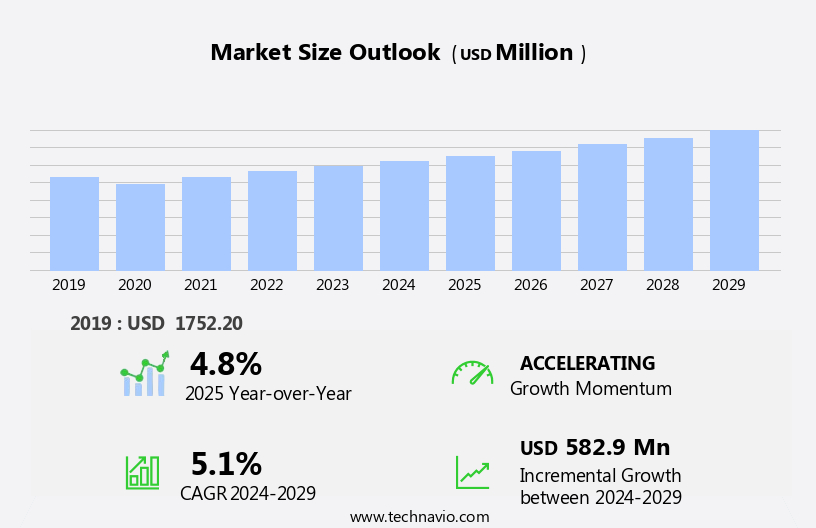
Explore in-depth regional segment analysis with market size data - historical 2019-2023 and forecasts 2025-2029 - in the full report.
Request Free Sample
The market continues to evolve, driven by advancements in medical technology and growing demand for minimally invasive treatments. Medical devices, such as laser systems and urine analysis tools, play a crucial role in diagnosing and treating various types of kidney stones, including cystine and struvite. These technologies enable healthcare professionals to provide more accurate diagnoses and improve patient outcomes. The use of metabolic panel analysis and 24-hour urine collection for metabolic evaluation is becoming increasingly common in the prevention and management of kidney stones. This approach allows for a more comprehensive understanding of a patient's metabolic profile and the identification of risk factors for stone recurrence.
Minimally invasive procedures, such as percutaneous nephrolithotomy (PCNL) and laser lithotripsy, have gained popularity due to their shorter recovery time and reduced risk of complications compared to open surgery. Surgical nurses and diagnostic imaging technicians play essential roles in the successful implementation of these procedures. The ongoing research and development in the field of kidney stones have led to advancements in surgical success rates and improved patient quality of life. However, infection prevention remains a critical concern, and prevention strategies, such as dietary counseling and changes, are increasingly being integrated into treatment plans. Stone composition analysis and patient education are also essential components of the market.
Healthcare professionals utilize this information to tailor treatment plans to individual patients and optimize outcomes. The integration of pain management techniques and advances in medical implants, such as stent placement, further enhance the effectiveness of kidney stone treatments. The market is characterized by continuous innovation and evolving patterns, with ongoing clinical trials and medical research driving new developments. The application of these advancements across various sectors, including uric acid stones, calcium oxalate stones, calcium phosphate stones, and infection prevention, is transforming the way kidney stones are diagnosed and treated.
How is this Kidney Stones Therapeutic Industry segmented?
The kidney stones therapeutic industry research report provides comprehensive data (region-wise segment analysis), with forecasts and estimates in "USD million" for the period 2025-2029, as well as historical data from 2019-2023 for the following segments.
- End-user
- Hospitals
- Specialty clinics
- Ambulatory surgical centers
- Type
- Ureteroscopy
- Lithotripsy
- Percutaneous nephrolithonomy (PCNL)
- Therapy Area
- Calcium oxalate stones
- Uric acid
- Struvite kidney stones
- Cystine stones
- Calcium phosphate stones
- Geography
- North America
- US
- Canada
- Europe
- France
- Germany
- Italy
- UK
- Middle East and Africa
- Egypt
- KSA
- Oman
- UAE
- APAC
- China
- India
- Japan
- South America
- Argentina
- Brazil
- Rest of World (ROW)
- North America
By End-user Insights
The hospitals segment is estimated to witness significant growth during the forecast period.
In the realm of healthcare, hospitals play a pivotal role in addressing kidney stone diseases through various therapeutic interventions. These institutions cater to patients with diverse urological conditions, offering both inpatient and outpatient services. Hospitals, comprising multispecialty and government facilities, procure medical implants and consumables in bulk, fostering close relationships with suppliers, reimbursement authorities, and government organizations. Their advanced medical infrastructure includes diagnostic imaging systems, laboratory facilities for blood tests and metabolic evaluations, and medical devices for stone fragmentation and stent placement. Hospitals collaborate with medical research institutions and clinical trial sites to explore new treatment methods and prevention strategies for calcium oxalate, calcium phosphate, uric acid, cystine, and struvite stones.
Minimally invasive surgical procedures, such as percutaneous nephrolithotomy (PCNL) and laser lithotripsy, are increasingly popular due to their shorter recovery time and improved quality of life. Pain management and infection prevention are essential aspects of kidney stone treatment, with healthcare professionals focusing on patient education and dietary counseling to minimize recurrence risks. Medical devices, including drug delivery systems and urine analysis equipment, are integral to the diagnosis and treatment of kidney stones. Surgical procedures, such as open surgery and CT scans, are sometimes necessary for larger stones or complex cases. Surgical success rates are high, with surgical nurses and medical imaging technicians ensuring efficient and effective patient care.
Shock wave lithotripsy, a non-invasive procedure, is also gaining popularity for its minimal invasiveness and lower risk of complications. The market is characterized by continuous innovation, with ongoing research and development in stone composition analysis, metabolic panel testing, and 24-hour urine collection. The focus on patient-centric care and improved surgical procedures ensures a better quality of life for those affected by kidney stones.
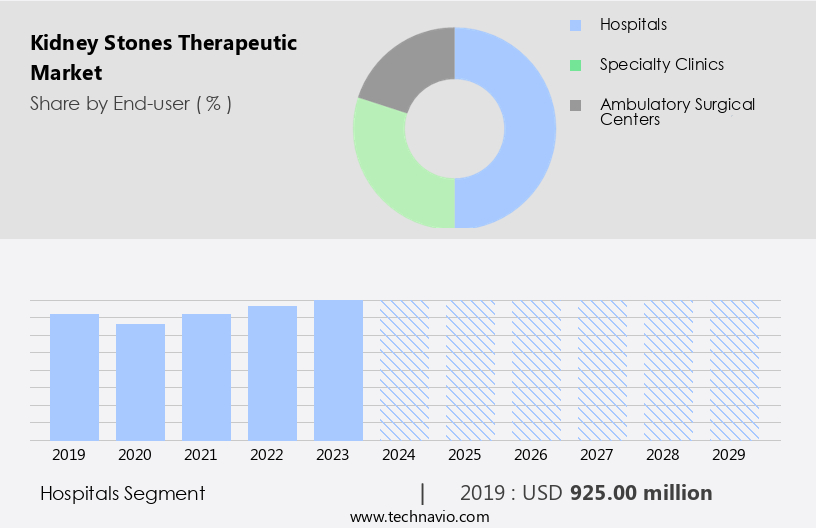
The Hospitals segment was valued at USD 925.00 million in 2019 and showed a gradual increase during the forecast period.
Regional Analysis
North America is estimated to contribute 44% to the growth of the global market during the forecast period.Technavio's analysts have elaborately explained the regional trends and drivers that shape the market during the forecast period.
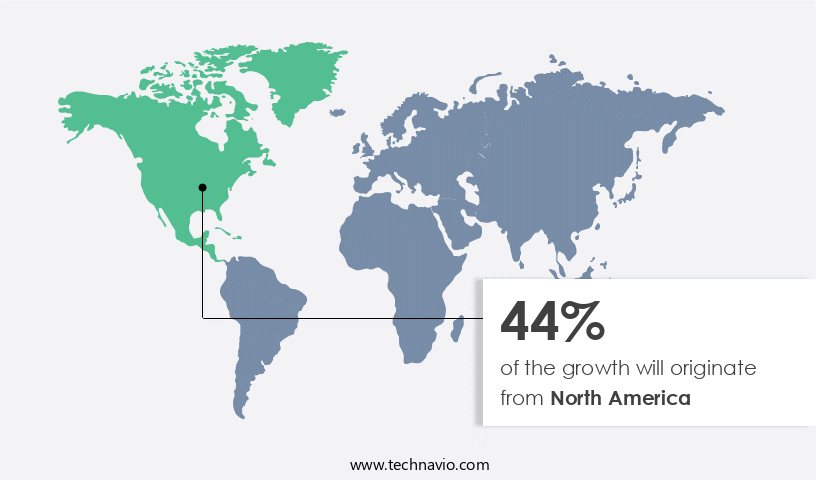
In the market, North America held the largest revenue share in 2024, with the US and Canada contributing significantly to this region's dominance. The market's expansion in North America can be attributed to the high demand for advanced medical technologies, the increasing adoption of minimally invasive procedures like URS, the robust healthcare infrastructure, and the presence of leading market players. Kidney stones are a common health issue in North America, with Canada experiencing a significant increase in prevalence over the last two decades. The market's growth is driven by various factors, including the rising incidence of kidney stones, the need for infection prevention and stone recurrence prevention, and the emphasis on patient education and metabolic evaluation.
Minimally invasive surgical procedures, such as percutaneous nephrolithotomy (PCNL) and laser lithotripsy, have gained popularity due to their shorter recovery time and reduced risk of complications compared to open surgery. Advancements in medical devices, such as drug delivery systems and diagnostic imaging, have improved the accuracy and efficiency of kidney stone diagnosis and treatment. The use of CT scans, urine analysis, and metabolic panel tests has become essential in identifying the stone composition and determining the best treatment approach. Prevention strategies, such as dietary counseling, dietary changes, and shock wave therapy, have gained traction to reduce the risk of kidney stone formation.
Surgical procedures, such as stent placement and stone fragmentation, have shown high surgical success rates, making them preferred options for patients. The involvement of surgical nurses and healthcare professionals in the treatment process ensures optimal patient care and quality of life during and after the procedures. The market is expected to continue growing, driven by ongoing medical research, clinical trials, and the development of new technologies for the treatment of various types of kidney stones, including calcium oxalate, calcium phosphate, uric acid, cystine, and struvite stones.
Market Dynamics
The Global Kidney Stones Therapeutic Market is experiencing dynamic growth, driven by increasing incidence and advancements in kidney stone treatment. Extracorporeal Shockwave Lithotripsy (ESWL) remains a cornerstone, complemented by minimally invasive options like ureteroscopes and laser lithotripsy systems for effective kidney stone removal. The market is also seeing the rise of minimally invasive kidney stone treatments and innovative approaches like robotic-assisted surgery (for urology). Beyond direct intervention, kidney stone prevention is gaining traction through dedicated kidney stone medications and strategies for metabolic stone prevention. Both hospitals (end-user kidney stones) and ambulatory surgical centers (ASCs) are critical for delivering care and performing procedures. Effective kidney stone management relies on accurate diagnostic imaging (kidney stones) and specialized stone retrieval devices. As urology departments worldwide adapt to the latest global kidney stones market trends, the demand for advanced kidney stone therapeutic devices and non-invasive kidney stone treatments continues to rise.
Our researchers analyzed the data with 2024 as the base year, along with the key drivers, trends, and challenges. A holistic analysis of drivers will help companies refine their marketing strategies to gain a competitive advantage.
What are the key market drivers leading to the rise in the adoption of Kidney Stones Therapeutic Industry?
- The increasing preference for flexible digital ureteroscopes, characterized by their superior maneuverability and enhanced imaging capabilities, is the primary growth driver in the market.
- In the realm of urology, significant advancements have been made, particularly in the area of Urinary Retrograde Surgery (URS), specifically with the introduction of digital flexible ureteroscopes. These innovative tools offer several advantages over traditional fiber-optic ureteroscopes. Digital flexible ureteroscopes provide superior maneuverability and visibility, enabling clearer images with enhanced magnification capabilities. This leads to a higher percentage of successful visualization of the entire collecting system in comparison to fiber-optic ureteroscopes. Additionally, the mean operating time for digital flexible ureteroscopes is shorter than that of fiber-optic ureteroscopes, while maintaining similar stone clearance rates. However, fiber-optic fibers, a key component of the older technology, have poor durability and are more susceptible to breakage during ureteral passage and extreme deflection.
- In the context of kidney stones, prevention strategies are crucial. Metabolic evaluation, including 24-hour urine collection, plays a vital role in identifying the underlying causes of calcium oxalate, calcium phosphate, and uric acid stones. Infection prevention and stone recurrence are major concerns. Clinical trials are ongoing to explore effective prevention methods. Outpatient procedures, including stent placement, have become increasingly common for managing kidney stones, improving patient comfort and convenience.
What are the market trends shaping the Kidney Stones Therapeutic Industry?
- The trend in the medical field indicates significant advancements in technologies used for kidney stone treatment. Two notable areas of progress include minimally invasive procedures and the use of advanced imaging techniques for accurate diagnosis and treatment planning.
- Kidney stones treatment market has witnessed significant advancements in the past three decades, with the introduction of minimally invasive procedures such as lithotripsy, URS (Ureteroscopic Stone Removal), and percutaneous techniques. These innovations have largely replaced traditional open surgical treatments due to their superior quality and safety. Holmium laser technology, in particular, has revolutionized URS by enabling precise stone removal from the kidney without damaging surrounding tissues. This technology's efficiency and safety have contributed to the widespread adoption of URS for kidney stones treatment. Moreover, the development of miniaturized surgeries and disposable ureteroscopes continues to enhance the treatment procedures for kidney stones.
- Medical devices such as medical imaging and urine analysis tools play a crucial role in diagnosing kidney stones, while surgical success rates and recovery time are essential factors influencing patient preference for specific treatments. Surgical procedures are performed by skilled medical professionals, including surgical nurses, to ensure optimal patient care and outcomes.
What challenges does the Kidney Stones Therapeutic Industry face during its growth?
- The scarcity of urologists and a shortage of adequately skilled surgeons poses a significant challenge to the growth of the industry.
- The market is witnessing significant attention due to the increasing prevalence of kidney stones and the need for effective treatment options. The market is driven by several factors, including the rising number of patients with kidney stones, advancements in technology, and an increasing focus on improving patient quality of life. Surgical procedures, such as percutaneous nephrolithotomy (PCNL) and shock wave lithotripsy (SWL), are commonly used for kidney stone removal. Stone composition analysis is crucial for determining the most effective treatment method. Patient education plays a vital role in managing the pain associated with kidney stones and reducing the risk of recurrence.
- Healthcare professionals are increasingly adopting minimally invasive procedures, such as PCNL and laser lithotripsy, due to their advantages over open surgery. CT scans are often used for diagnosing kidney stones and planning treatment. Effective training for surgeons performing urology surgeries, especially laparoscopic and robotic-assisted surgeries, is essential due to the decreasing number of urologists globally. Risk factors, such as diet, genetics, and lifestyle choices, contribute to the development of kidney stones. Proper management of these risk factors can help prevent kidney stones and reduce the need for surgical intervention. Pain management is a critical aspect of kidney stone treatment, and advancements in technology are leading to more effective pain relief options.
- In conclusion, the market is experiencing significant growth due to the increasing prevalence of kidney stones and the need for effective treatment options. Minimally invasive procedures, patient education, and pain management are key areas of focus in the market. Effective training for surgeons is crucial due to the decreasing number of urologists globally.
Exclusive Customer Landscape
The kidney stones therapeutic market forecasting report includes the adoption lifecycle of the market, covering from the innovator's stage to the laggard's stage. It focuses on adoption rates in different regions based on penetration. Furthermore, the kidney stones therapeutic market report also includes key purchase criteria and drivers of price sensitivity to help companies evaluate and develop their market growth analysis strategies.

Customer Landscape
Key Companies & Market Insights
Companies are implementing various strategies, such as strategic alliances, kidney stones therapeutic market forecast, partnerships, mergers and acquisitions, geographical expansion, and product/service launches, to enhance their presence in the industry.
Anvik Biotech - The company introduces Pitonac, an innovative therapeutic solution for managing kidney stones. This non-invasive approach utilizes advanced technology to facilitate stone passage and alleviate associated pain. Pitonac's efficacy lies in its ability to target and dissolve stones while minimizing risks and side effects. This game-changing solution is poised to revolutionize the kidney stone treatment landscape.
The industry research and growth report includes detailed analyses of the competitive landscape of the market and information about key companies, including:
- Anvik Biotech
- Aristo Pharma GmbH
- Bausch Health Companies Inc.
- Bayer AG
- Biomedix Siomond Pharma
- Cipla Inc.
- Cmg Biotech Pvt. Ltd.
- Dr Reddys Laboratories Ltd.
- Emcure Pharmaceuticals Ltd.
- GlaxoSmithKline Plc
- Intas Pharmaceuticals Ltd.
- Johnson and Johnson Services Inc.
- Macleods Pharmaceuticals Ltd.
- Medinova Diagnostic Services Ltd.
- Mission Pharmacal Co.
- Nostrum Pharmaceuticals LLC
- Pfizer Inc.
- Walter Bushnell
- Windlas Biotech Pvt. Ltd.
- Worth Medicines Pvt. Ltd.
Qualitative and quantitative analysis of companies has been conducted to help clients understand the wider business environment as well as the strengths and weaknesses of key industry players. Data is qualitatively analyzed to categorize companies as pure play, category-focused, industry-focused, and diversified; it is quantitatively analyzed to categorize companies as dominant, leading, strong, tentative, and weak.
Recent Development and News in Kidney Stones Therapeutic Market
- In January 2024, Merck KGaA, a leading pharmaceutical company, announced the FDA approval of Veruscalm ESWL, an extended shockwave lithotripsy (ESWL) system for the non-invasive treatment of kidney stones. This approval expanded Merck's offerings in the market (Merck KGaA, 2024).
- In March 2024, Boston Scientific Corporation and Cook Medical, Inc. Entered into a definitive agreement for Boston Scientific to acquire Cook Medical's urology business. This strategic acquisition granted Boston Scientific access to Cook Medical's portfolio of urological devices, including those for the treatment of kidney stones (Boston Scientific Corporation, 2024).
- In May 2024, AstraZeneca and Fresenius Medical Care AG & Co. KGaA, a leading renal care company, entered into a strategic collaboration to develop and commercialize AstraZeneca's investigational drug, AZS111, for the treatment of kidney stones. The collaboration aimed to leverage Fresenius Medical Care's expertise in nephrology and dialysis to accelerate the development and commercialization of AZS111 (AstraZeneca, 2024).
- In February 2025, Ardian, a leading private investment house, announced a â¬1.2 billion investment in the construction of a new manufacturing facility for Fresenius Medical Care's Calcimar GmbH, a subsidiary specializing in the production of lithium-based citrate solutions for the treatment of kidney stones. The investment marked one of the largest private equity investments in the European healthcare sector (Ardian, 2025).
Research Analyst Overview
- The market encompasses various techniques for accessing and treating stones located in the urinary tract, including proximal and distal ureter, ureteral, renal, and biliary stones. Access techniques range from percutaneous, abdominal, and transurethral. Nausea and vomiting are common complications during procedures, especially those involving proximal ureter stones. Advancements in technology have led to the use of ultrasound lithotripsy for small stones and laser fiber types like holmium and thulium for larger ones, such as staghorn calculi. Long-term management of stone recurrence and post-operative care are essential aspects of patient outcomes. Pre-operative assessment, including pain severity and stone size measurement, is crucial for surgical planning.
- Percutaneous access and electrohydraulic lithotripsy are effective for large renal stones, while pneumatic lithotripsy and laser techniques are preferred for smaller stones. Mid ureter stones and ureteral junction stones pose unique challenges due to their location. Infection rate and postoperative complications are significant concerns in the market. Stone analysis is essential for accurate diagnosis and treatment planning. Renal colic, a common symptom of kidney stones, can lead to significant discomfort and pain. Surgical techniques, such as ureteroscopy and open surgery, have evolved to improve patient outcomes and reduce complications. Image guidance and surgical planning tools help ensure precise access to stone locations, minimizing invasiveness and enhancing efficacy.
Dive into Technavio's robust research methodology, blending expert interviews, extensive data synthesis, and validated models for unparalleled Kidney Stones Therapeutic Market insights. See full methodology.
|
Market Scope |
|
|
Report Coverage |
Details |
|
Page number |
223 |
|
Base year |
2024 |
|
Historic period |
2019-2023 |
|
Forecast period |
2025-2029 |
|
Growth momentum & CAGR |
Accelerate at a CAGR of 5.1% |
|
Market growth 2025-2029 |
USD 582.9 million |
|
Market structure |
Fragmented |
|
YoY growth 2024-2025(%) |
4.8 |
|
Key countries |
US, Germany, China, Canada, UK, France, Japan, Italy, India, and Spain |
|
Competitive landscape |
Leading Companies, Market Positioning of Companies, Competitive Strategies, and Industry Risks |
What are the Key Data Covered in this Kidney Stones Therapeutic Market Research and Growth Report?
- CAGR of the Kidney Stones Therapeutic industry during the forecast period
- Detailed information on factors that will drive the growth and forecasting between 2025 and 2029
- Precise estimation of the size of the market and its contribution of the industry in focus to the parent market
- Accurate predictions about upcoming growth and trends and changes in consumer behaviour
- Growth of the market across North America, Europe, Asia, and Rest of World (ROW)
- Thorough analysis of the market's competitive landscape and detailed information about companies
- Comprehensive analysis of factors that will challenge the kidney stones therapeutic market growth of industry companies
We can help! Our analysts can customize this kidney stones therapeutic market research report to meet your requirements.
 RIA -
RIA -