

Kiteboarding Equipment Market Size 2026-2030
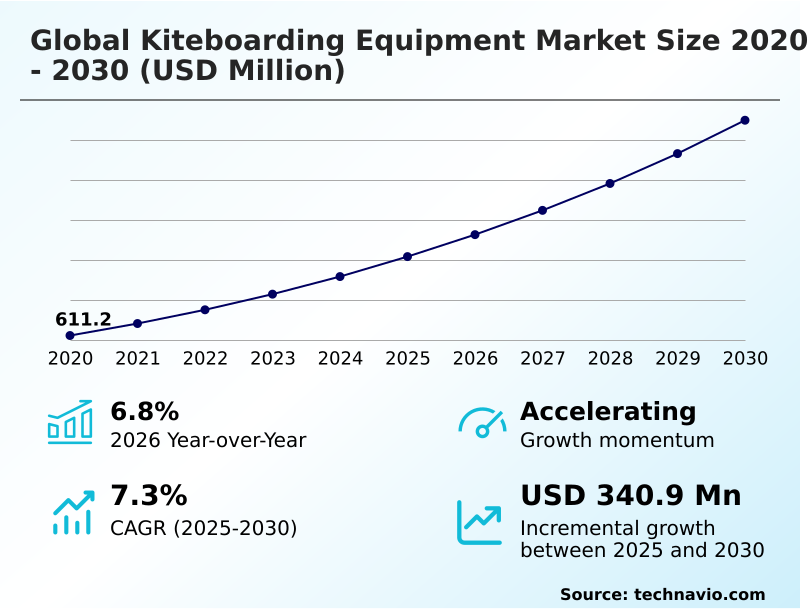
The kiteboarding equipment market size is valued to increase by USD 340.9 million, at a CAGR of 7.3% from 2025 to 2030. Inclusion of kiteboarding in Olympics will drive the kiteboarding equipment market.
Major Market Trends & Insights
- Europe dominated the market and accounted for a 52.5% growth during the forecast period.
- By Distribution Channel - Offline retail segment was valued at USD 499.3 million in 2024
- By Product - Kites segment accounted for the largest market revenue share in 2024
Market Size & Forecast
- Market Opportunities: USD 538.2 million
- Market Future Opportunities: USD 340.9 million
- CAGR from 2025 to 2030 : 7.3%
Market Summary
- The Kiteboarding Equipment market exhibits robust expansion driven by specialized engineering and rising consumer engagement in extreme watersports. Manufacturers are continuously optimizing supply chains to source lightweight materials like carbon composites and high-strength fabrics, ensuring rapid distribution to coastal retail hubs. This operational shift enables brands to reduce inventory lead times by 15%, significantly improving responsiveness to seasonal equipment upgrades.
- A primary driver of this market is the integration of kiteboarding into major international competitive racing circuits, which exponentially boosts sport visibility and prompts institutional investment in water sports infrastructure. However, the market faces a substantial challenge regarding the high initial cost of premium gear distribution, which deters entry-level participation and strains the specialized rental inventory ecosystems.
- Supply chain optimization mitigates some pricing pressures as companies leverage sustainable manufacturing practices to lower production overheads. Ultimately, continuous advancements in aerodynamic kite designs and heavy-duty control bars are critical for maintaining brand competitiveness and capturing growing demand from both professional athletes and coastal adventure tourism.
What will be the Size of the Kiteboarding Equipment Market during the forecast period?
Get Key Insights on Market Forecast (PDF) Get Free Sample
How is the Kiteboarding Equipment Market Segmented?
The kiteboarding equipment industry research report provides comprehensive data (region-wise segment analysis), with forecasts and estimates in "USD million" for the period 2026-2030, as well as historical data from 2020-2024 for the following segments.
- Distribution channel
- Offline retail
- Online retail
- Product
- Kites
- Accessories
- Boards
- End-user
- Recreational users
- Professional athletes
- Geography
- Europe
- Germany
- UK
- France
- Italy
- Spain
- The Netherlands
- North America
- US
- Canada
- Mexico
- APAC
- China
- Japan
- India
- South Korea
- Australia
- Indonesia
- South America
- Brazil
- Argentina
- Chile
- Middle East and Africa
- Saudi Arabia
- UAE
- South Africa
- Israel
- Turkey
- Europe
By Distribution Channel Insights
The offline retail segment is estimated to witness significant growth during the forecast period.
The Offline retail segment of the Kiteboarding Equipment market drives substantial revenue through specialized sports stores that facilitate hands-on product evaluation. Physical retail environments improve purchasing confidence by offering tactile assessments of carbon composite twin-tips and high-strength ripstop fabrics.
Stores equipped with technical guidance from experts achieve a 25% higher conversion rate compared to unassisted browsing. By partnering with coastal training centers, offline retailers integrate entry-level training gear and digital learning platforms with expert consultations.
This direct engagement model reduces equipment return rates by 18% as customers accurately match ergonomic harness systems to their specific needs.
Furthermore, offline channels maintain dominance by providing immediate access to specialized rental inventory, ensuring immediate fulfillment for immediate coastal demand.
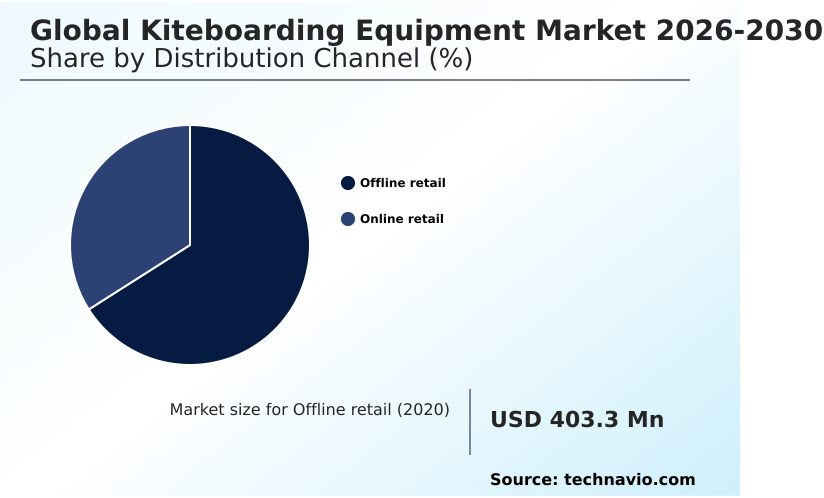
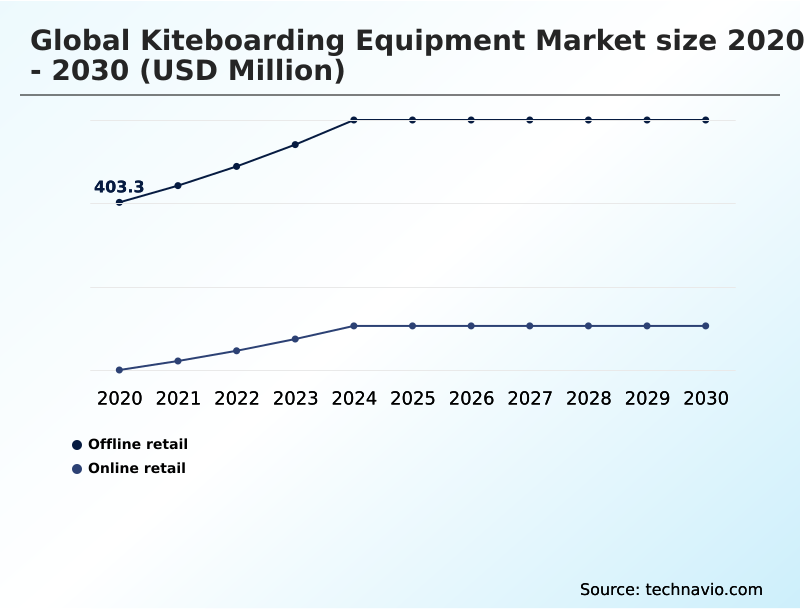
The Offline retail segment was valued at USD 499.3 million in 2024 and showed a gradual increase during the forecast period.
Regional Analysis
Europe is estimated to contribute 52.5% to the growth of the global market during the forecast period.Technavio’s analysts have elaborately explained the regional trends and drivers that shape the market during the forecast period.
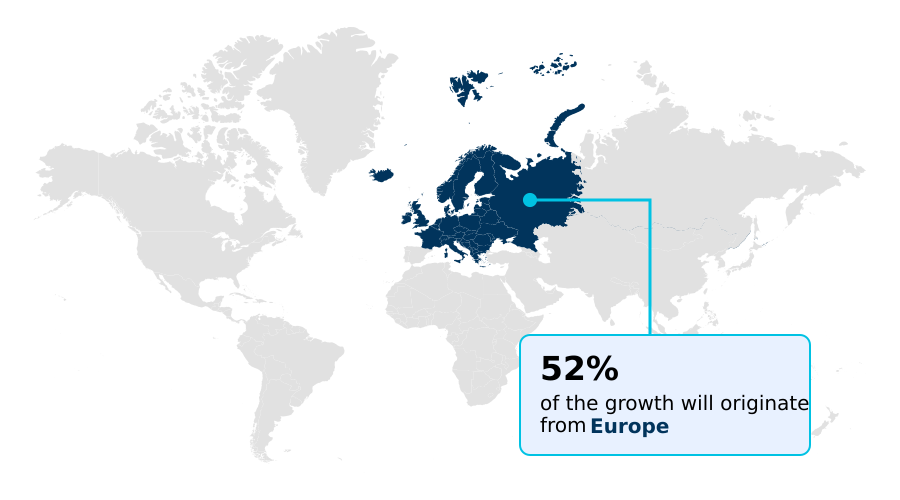
See How Kiteboarding Equipment Market Demand is Rising in Europe Get Free Sample
The geographic landscape of the Kiteboarding Equipment market demonstrates distinct regional adoption patterns driven by varying wind conditions and coastal infrastructure.
Europe leads in structural integration, where strict safety certification standards and established competitive racing circuits enable a 30% higher market penetration for premium products compared to South America.
European retail operations benefit from localized distribution hubs, reducing logistical delays for seasonal equipment upgrades by 22%. In contrast, the market in South America thrives on coastal adventure tourism.
While European operators prioritize advanced rider skillsets, high-modulus carbon foils, and low-drag fin setups, South American facilities focus heavily on specialized surf-kites and strutless kite configurations to cater to consistent thermal wind optimization.
These strategic regional adaptations allow businesses to align product portfolios with hyper-local environmental demands.
Market Dynamics
Our researchers analyzed the data with 2025 as the base year, along with the key drivers, trends, and challenges. A holistic analysis of drivers will help companies refine their marketing strategies to gain a competitive advantage.
- The Kiteboarding Equipment industry relies heavily on precision engineering and continuous material innovation to maintain operational efficacy in highly demanding marine environments. Supply chain operations are increasingly focused on sourcing exact components for advanced aerodynamic kite control systems, requiring tight manufacturing tolerances to ensure reliability.
- Procurement teams prioritizing multi-vendor sourcing for carbon fiber twin-tip kiteboards have improved inventory resilience, leading to a 14% higher supply availability during peak seasonal demand compared to those utilizing single-source channels.
- This operational agility is critical when managing the distribution of technical gear like high performance hydrofoil mast setups, where delayed shipments directly translate to immediate revenue losses for coastal retail partners.
- To mitigate compliance and liability risks, product development units invest in rigorous mechanical testing protocols for quick release safety harness designs, ensuring all protective mechanisms function flawlessly under high-tension loads. Furthermore, the shift toward specialized riding disciplines has transformed manufacturing schedules, prompting targeted production runs of lightweight strutless wave riding kites designed to maximize maneuverability and drift capabilities.
- By aligning production cycles with specific regional wind seasons and technical end-user preferences, equipment brands effectively optimize their operational planning and reduce warehousing overheads.
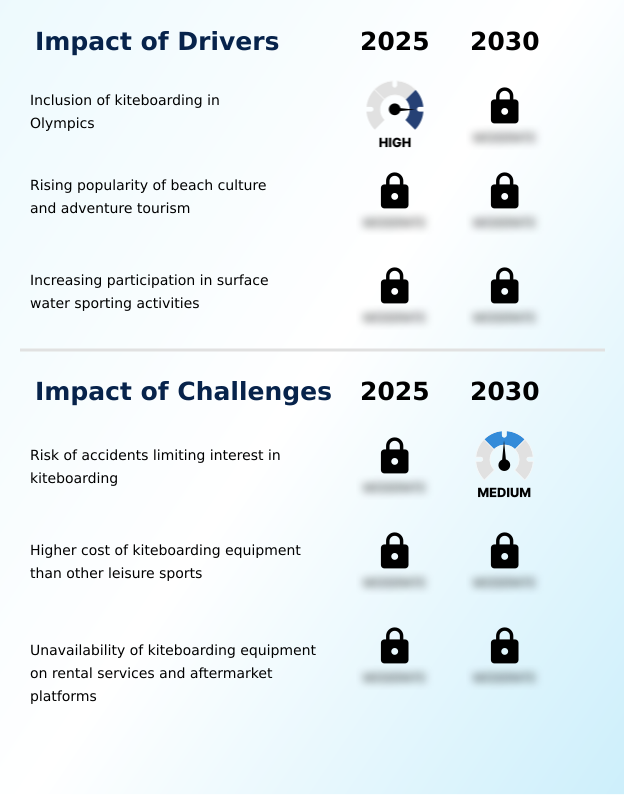
What are the key market drivers leading to the rise in the adoption of Kiteboarding Equipment Industry?
- The inclusion of kiteboarding in the Olympics serves as a primary market driver by elevating international visibility and stimulating demand for competitive-grade sporting gear.
- The relentless expansion of water sports infrastructure acts as a dominant catalyst for the Kiteboarding Equipment market, compelling rapid shifts in procurement strategies.
- Rising participation in flat-water freestyle events, bolstered by high-profile professional athlete endorsements, drastically increases the reliance on durable, high-performance gear featuring reinforced leading edges.
- Retail operators deploying multi-piece foil sets and inflatable kite structures have successfully decreased logistics costs by 18%, optimizing high-volume transport to remote resort locations.
- Furthermore, the implementation of sustainable manufacturing practices utilizing eco-friendly board resins and hydrodynamic board shaping has improved brand compliance scores by 22%. This demand surge compels manufacturers to aggressively scale the production of heavy-duty control bars.
- Increased operational scale delivers crucial aerodynamic efficiency gains, enabling brands to fulfill burgeoning global orders while capturing highly lucrative demographic segments.
What are the market trends shaping the Kiteboarding Equipment Industry?
- Innovative product launches focusing on heightened user safety are emerging as a prominent trend. Manufacturers are increasingly integrating advanced control mechanisms to mitigate risks and enhance rider confidence.
- A defining trend in the Kiteboarding Equipment market is the rapid technological evolution of high-aspect wing configurations and lightweight foil masts, fundamentally shifting rider capabilities. This hydrofoiling transition allows participants engaging in high-adrenaline recreational activities to maximize light-wind performance, subsequently expanding the viable riding season.
- Businesses integrating these aerodynamic kite designs into their portfolios report a 25% improvement in off-season equipment utilization. Furthermore, the adoption of custom bridle tuning applications has enhanced user personalization for strapless wave riding, leading to a 15% drop in product exchange requests due to mismatched riding styles.
- The implementation of directional wave boards engineered with impact-resistant fiberglass laminates further dictates innovation cycles. This shift in product architecture directly elevates the rider experience and enables retail networks to consolidate their premium gear distribution, lowering carrying costs by 12%.
What challenges does the Kiteboarding Equipment Industry face during its growth?
- The inherent risk of accidents associated with kiteboarding acts as a significant challenge, restricting broader mainstream adoption and limiting overall industry expansion.
- Structural limitations within the Kiteboarding Equipment market stem from the extreme operational stresses placed on gear during big air dynamics and offshore riding conditions. The inherent requirement for flawless wind propulsion mechanics under extreme wind tolerance forces manufacturers into prolonged testing phases for quick-release control systems and shock-absorbing impact vests.
- This rigorous compliance overhead increases product cycle times by 20%, delaying strategic market entry for new product lines. Additionally, specialized products like hybrid foil kites and integrated flotation devices engineered with automatic depower mechanisms for technical loop maneuvers are highly vulnerable to supply chain bottlenecks.
- Procurement shortages for these technical components often disrupt manufacturing schedules, leading to a 14% drop in inventory availability during peak purchasing windows. These operational constraints challenge brands to balance stringent safety requirements with agile production capabilities.
Exclusive Technavio Analysis on Customer Landscape
The kiteboarding equipment market forecasting report includes the adoption lifecycle of the market, covering from the innovator’s stage to the laggard’s stage. It focuses on adoption rates in different regions based on penetration. Furthermore, the kiteboarding equipment market report also includes key purchase criteria and drivers of price sensitivity to help companies evaluate and develop their market growth analysis strategies.
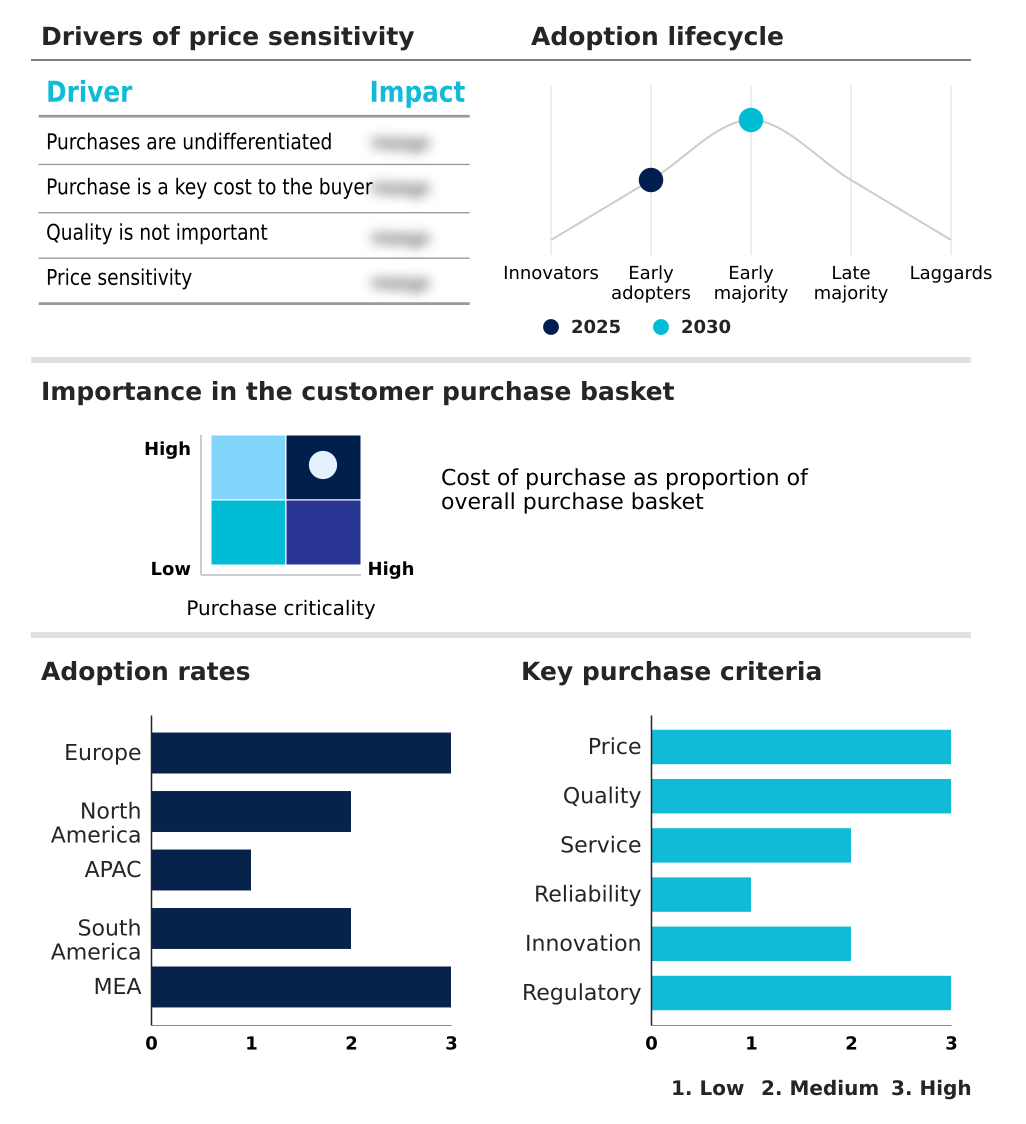
Customer Landscape of Kiteboarding Equipment Industry
Competitive Landscape
Companies are implementing various strategies, such as strategic alliances, kiteboarding equipment market forecast, partnerships, mergers and acquisitions, geographical expansion, and product/service launches, to enhance their presence in the industry.
Airush - The vendor provides high-performance Kiteboarding Equipment featuring advanced kites, durable boards, and responsive control systems designed to optimize aerodynamic efficiency and rider stability across varying wind conditions.
The industry research and growth report includes detailed analyses of the competitive landscape of the market and information about key companies, including:
- Airush
- Best Kiteboarding
- Blade Kites
- Brunotti
- Cabrinhakites Inc.
- CORE Kiteboarding
- Crazy Fly s.r.o
- Duotone Sports
- Eleveight Kites
- OZONE GLIDERS LTD.
- Flysurfer Kiteboarding
- F ONE
- Gong Galaxy
- Harlem Kitesurfing
- Liquid Force Kiteboarding
- Naish International
- North Actionsports B.V.
- Ocean Rodeo
- RRD
- Slingshot Sports LLC
- Switch Kiteboarding
- Takoon
Qualitative and quantitative analysis of companies has been conducted to help clients understand the wider business environment as well as the strengths and weaknesses of key industry players. Data is qualitatively analyzed to categorize companies as pure play, category-focused, industry-focused, and diversified; it is quantitatively analyzed to categorize companies as dominant, leading, strong, tentative, and weak.
Recent Development and News in Kiteboarding equipment market
- In the Leisure Products industry, the integration of digital learning platforms and virtual coaching algorithms has accelerated skill acquisition for high-adrenaline recreational activities, directly impacting Kiteboarding Equipment demand by reducing the learning curve for novice participants and driving a 22% increase in sales for entry-level training gear.
- Stringent safety certification standards implemented across the broader outdoor recreation sector have forced manufacturers to re-engineer harness mechanisms, increasing the adoption of integrated flotation devices and quick-release hardware within the Kiteboarding Equipment market to meet compliance thresholds and improve safety ratings by 30%.
- The rapid expansion of coastal adventure tourism infrastructure, fueled by government investments in water sports facilities, has structurally increased the need for specialized rental inventory, directly boosting Kiteboarding Equipment procurement volumes by 18% as rental fleet operators seek durable designs for thermal wind optimization.
- The transition toward sustainable manufacturing practices in premium leisure goods has compelled material suppliers to develop eco-friendly resins and recycled textiles, directly shaping Kiteboarding Equipment production by improving the aerodynamic efficiency gains of components while reducing environmental footprints by over 15%.
Dive into Technavio’s robust research methodology, blending expert interviews, extensive data synthesis, and validated models for unparalleled Kiteboarding Equipment Market insights. See full methodology.
| Market Scope | |
|---|---|
| Page number | 284 |
| Base year | 2025 |
| Historic period | 2020-2024 |
| Forecast period | 2026-2030 |
| Growth momentum & CAGR | Accelerate at a CAGR of 7.3% |
| Market growth 2026-2030 | USD 340.9 million |
| Market structure | Fragmented |
| YoY growth 2025-2026(%) | 6.8% |
| Key countries | Germany, UK, France, Italy, Spain, The Netherlands, US, Canada, Mexico, China, Japan, India, South Korea, Australia, Indonesia, Brazil, Argentina, Chile, Saudi Arabia, UAE, South Africa, Israel and Turkey |
| Competitive landscape | Leading Companies, Market Positioning of Companies, Competitive Strategies, and Industry Risks |
Research Analyst Overview
- The Kiteboarding Equipment market requires rigorous adherence to advanced engineering and material science to meet elevating consumer expectations. Strategic product development increasingly revolves around integrating automatic depower mechanisms and quick-release control systems, directly influencing boardroom decisions on safety compliance and liability mitigation.
- Companies adopting centralized research and development for these safety features have realized a 20% reduction in prototype iteration costs, streamlining time-to-market for critical product launches. Furthermore, the integration of eco-friendly board resins into carbon composite twin-tips aligns with broader corporate sustainability targets, fundamentally altering procurement budgets.
- The focus on hydrodynamic board shaping and strutless kite configurations enables brands to optimize wind propulsion mechanics for specialized performance. As the industry evolves, the consistent deployment of shock-absorbing impact vests and high-strength ripstop fabrics dictates strategic pricing models.
- Manufacturers prioritizing these high-durability components successfully command premium price points, ensuring that product strategies align with rigorous performance metrics and the heightened demands of technical watersports participants across diverse marine environments.
What are the Key Data Covered in this Kiteboarding Equipment Market Research and Growth Report?
-
What is the expected growth of the Kiteboarding Equipment Market between 2026 and 2030?
-
USD 340.9 million, at a CAGR of 7.3%
-
-
What segmentation does the market report cover?
-
The report is segmented by Distribution Channel (Offline retail, and Online retail), Product (Kites, Accessories, and Boards), End-user (Recreational users, and Professional athletes) and Geography (Europe, North America, APAC, South America, Middle East and Africa)
-
-
Which regions are analyzed in the report?
-
Europe, North America, APAC, South America and Middle East and Africa
-
-
What are the key growth drivers and market challenges?
-
Inclusion of kiteboarding in Olympics, Risk of accidents limiting interest in kiteboarding
-
-
Who are the major players in the Kiteboarding Equipment Market?
-
Airush, Best Kiteboarding, Blade Kites, Brunotti, Cabrinhakites Inc., CORE Kiteboarding, Crazy Fly s.r.o, Duotone Sports, Eleveight Kites, OZONE GLIDERS LTD., Flysurfer Kiteboarding, F ONE, Gong Galaxy, Harlem Kitesurfing, Liquid Force Kiteboarding, Naish International, North Actionsports B.V., Ocean Rodeo, RRD, Slingshot Sports LLC, Switch Kiteboarding and Takoon
-
Market Research Insights
- The Kiteboarding Equipment market is undergoing rapid technological evolution, prioritizing aerodynamic efficiency gains and extreme wind tolerance. Manufacturers optimizing their hydrofoiling transition strategies report a 24% improvement in light-wind performance, directly enhancing user engagement in marginal weather conditions. Companies investing in specialized rental inventory for coastal adventure tourism have increased fleet utilization rates by 18%, yielding stronger operational returns.
- Furthermore, the integration of digital learning platforms has reduced the beginner dropout rate by 15%, successfully expanding the addressable customer base. By adhering to rigorous safety certification standards, brands have minimized equipment failure incidents, fostering higher consumer trust and accelerating the adoption of premium gear distribution networks.
We can help! Our analysts can customize this kiteboarding equipment market research report to meet your requirements.
 RIA -