


Legal Cannabis Market Size 2026-2030
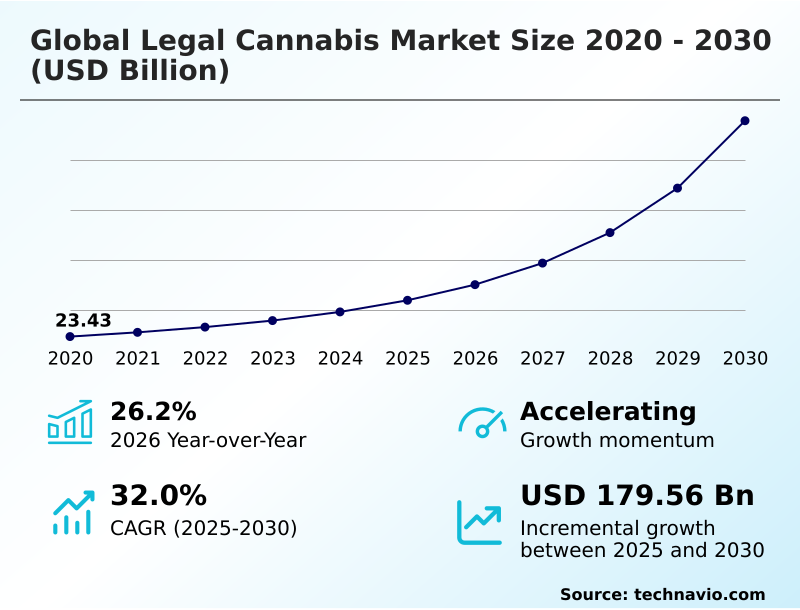
The Legal Cannabis Market size was valued at USD 59.71 billion in 2025, growing at a CAGR of 32% during the forecast period 2026-2030.
Major Market Trends & Insights
- North America dominated the market and accounted for a 91.1% growth during the forecast period.
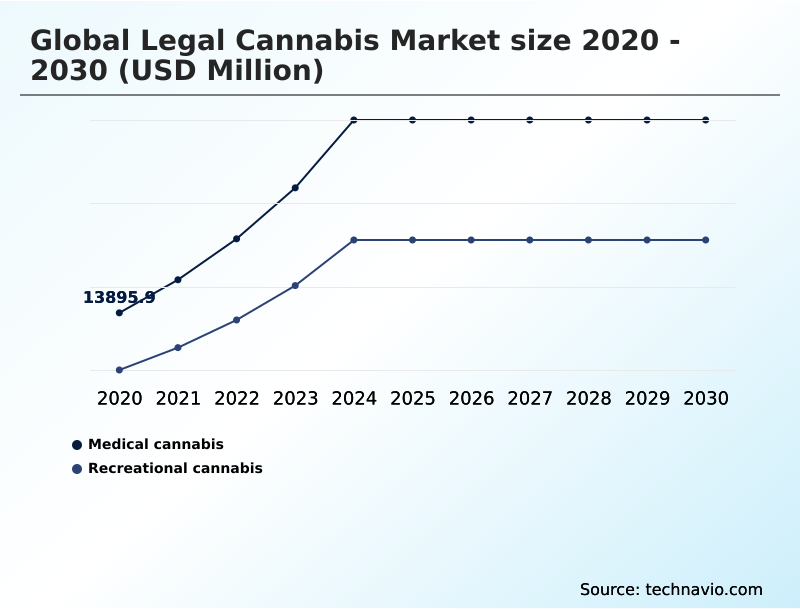
- By Product - Medical cannabis segment was valued at USD 28.63 billion in 2024
- By Derivative Type - CBD segment accounted for the largest market revenue share in 2024
Market Size & Forecast
- Historic Market Opportunities 2020-2024: USD 215.85 billion
- Market Future Opportunities 2025-2030: USD 179.57 billion
- CAGR from 2025 to 2030 : 32%
Market Summary
- The legal cannabis market is defined by a rapid transition toward pharmaceutical-grade production standards, with prescription rates in Germany surging by 3,300% following regulatory reforms. This industrialization is further evidenced by nearly 80% of European producers adopting blockchain for supply chain transparency, a direct response to consumer and regulatory demands.
- A primary driver is the increasing federal regulatory harmonization, which is dismantling investment barriers and enabling large-scale research into cannabinoid-based formulations. For instance, a life sciences firm might leverage this environment to develop standardized botanical drug pathways for neurological conditions.
- However, the sector is severely constrained by the challenge of financial exclusion, as the persistent lack of access to federal banking services inflates the cost of capital and stifles growth, particularly for smaller enterprises. This dynamic creates a complex environment where scientific advancement and market expansion are often impeded by structural financial and regulatory hurdles.
What will be the Size of the Legal Cannabis Market during the forecast period?
Get Key Insights on Market Forecast (PDF) Request Free Sample
How is the Legal Cannabis Market Segmented?
The legal cannabis industry research report provides comprehensive data (region-wise segment analysis), with forecasts and analysis for the period 2026-2030, as well as historical data from 2020-2024 for the following segments.
- Product
- Medical cannabis
- Recreational cannabis
- Derivative type
- CBD
- THC
- Balanced THC and CBD
- Source
- Marijuana
- Hemp
- Geography
- North America
- US
- Canada
- Mexico
- Europe
- Germany
- UK
- France
- APAC
- Australia
- China
- Japan
- South America
- Brazil
- Argentina
- Middle East and Africa
- Israel
- South Africa
- UAE
- Rest of World (ROW)
- North America
How is the Legal Cannabis Market Segmented by Product?
The medical cannabis segment is estimated to witness significant growth during the forecast period.
The medical cannabis segment is driven by a focus on therapeutic efficacy, with prescription rates in some European markets showing a 3,300% increase following regulatory reforms.
This category includes derivatives such as oils, capsules, and standardized flower, all requiring pharmaceutical-grade cannabinoid quality and EU-GMP certification.
To meet these standards, nearly 80% of producers in key regions are adopting blockchain-verified traceability to ensure cannabinoid profile consistency and safety.
The segment's growth is tied to increasing clinical research into botanical drug pathways and the development of precision dosing technology, which tailors cannabinoid ratios to specific patient needs, thereby moving the market toward a mainstream pharmaceutical model.
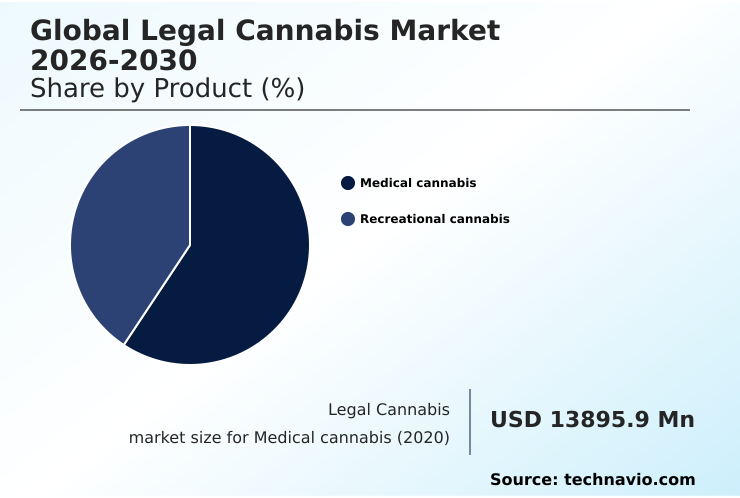
The Medical cannabis segment was valued at USD 28.63 billion in 2024 and showed a gradual increase during the forecast period.
How demand for the Legal Cannabis market is rising in the leading region?
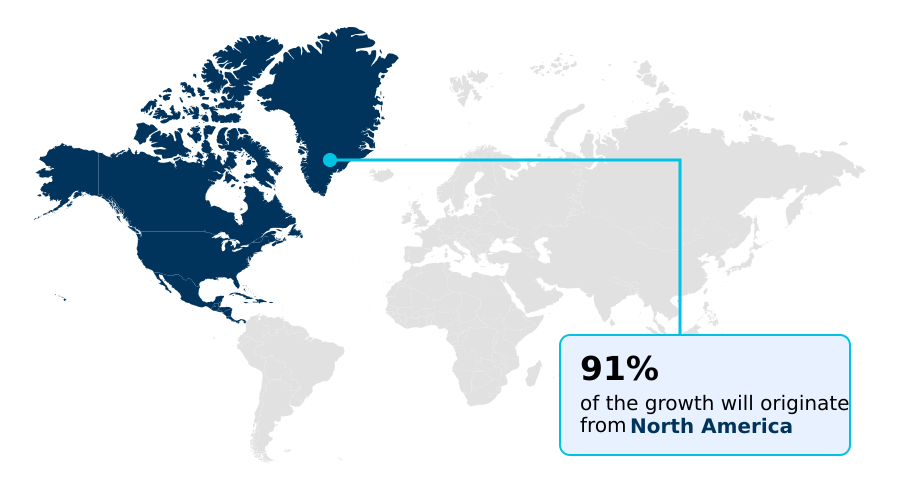
North America is estimated to contribute 91.1% to the growth of the global market during the forecast period.Technavio’s analysts have elaborately explained the regional trends and drivers that shape the market during the forecast period.
See How Legal Cannabis Market demand is rising in North America Request Free Sample
The global legal cannabis market exhibits significant geographic disparities, with North America contributing over 91% of the incremental growth, a stark contrast to Europe's 4.98% share.
This dominance is anchored in the US, where state-level markets like California and Colorado drive innovation, and Canada, which serves as a global export hub.
In North America, the market is characterized by a mature consumer base and the strategic rise of lifestyle-centric brands, while Europe prioritizes a stricter, medical-first model governed by EU-GMP certification standards.
The APAC region, led by Australia's robust medical program, is emerging as a key growth frontier, leveraging telemedicine adoption to expand patient access.
South American countries like Colombia are capitalizing on favorable climates for low-cost cultivation, focusing on exporting raw cannabinoid materials. This regional fragmentation necessitates tailored market-entry strategies focused on regulatory harmonization and supply chain transparency.
What are the key Drivers, Trends, and Challenges in the Legal Cannabis Market?
Our researchers analyzed the data with 2025 as the base year, along with the key drivers, trends, and challenges. A holistic analysis of drivers will help companies refine their marketing strategies to gain a competitive advantage.
- Strategic decision-making in the legal cannabis market is increasingly focused on navigating the high cost of GMP compliant cannabis cultivation to secure a competitive advantage in the pharmaceutical-grade cannabis export requirements. As the industry matures, understanding the trends in cannabis precision dosing devices becomes critical for product differentiation, especially as consumer demand shifts toward predictable and safer consumption methods.
- For example, operators investing in nano-emulsion technology report up to a 25% improvement in product bioavailability compared to traditional edibles. The impact of federal rescheduling on cannabis stocks remains a pivotal factor for capital-intensive projects, influencing everything from facility upgrades to investment in legal cannabis supply chain technology.
- Companies leveraging blockchain-verified traceability can reduce compliance reporting errors by over 40%, a significant operational gain. The THC vs CBD market segmentation analysis guides investment, with firms targeting the medical segment focusing on clinical legitimacy, while recreational players build lifestyle-centric brands. Success hinges on a company's ability to balance regulatory compliance with scalable, cost-effective production to meet diverse international standards.
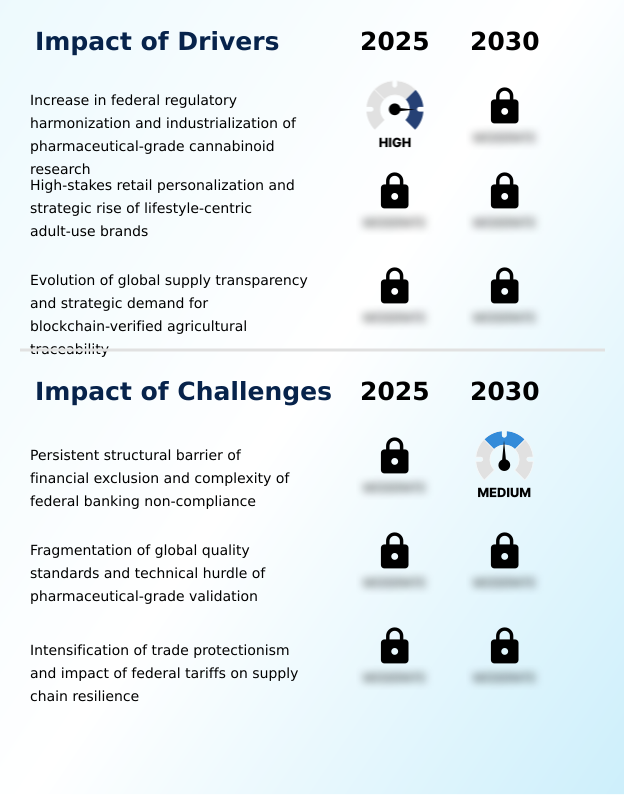
What are the key market drivers leading to the rise in the adoption of Legal Cannabis Industry?
- The key market driver is the increasing federal regulatory harmonization coupled with the industrialization of pharmaceutical-grade cannabinoid research.
- The legal cannabis market is primarily driven by the transition toward federal regulatory harmonization, which reduces investment risk and fosters the industrialization of pharmaceutical-grade cannabinoid research.
- This shift is exemplified by the nearly 80% adoption of blockchain-integrated platforms among licensed European producers to meet stringent quality assurance standards.
- A second major driver is the rise of retail personalization and lifestyle-centric adult-use brands, which are moving the market away from price-per-gram competition toward value-added experiential retail, leading to a 15% increase in customer retention for participating brands.
- The evolution of supply chain transparency, underscored by the demand for blockchain-verified agricultural traceability, also propels the market.
- This focus on proving product integrity and verifying ESG metrics is becoming a non-negotiable prerequisite for consumer trust and market access, strengthening the position of compliant operators.
What are the market trends shaping the Legal Cannabis Industry?
- A primary market trend is the expansion in federal rescheduling of cannabis, which is leading to a significant re-rating of capital markets for the industry.
- A primary trend in the legal cannabis market is the move toward pharmaceutical-grade innovation and precision dosing technology, with sublingual technologies growing at an annual rate of nearly 30% in some European medical markets. This shift reflects a demand for clinical legitimacy, where products like nano-emulsified beverages and metered-dose inhalers offer predictable, consistent experiences.
- The institutionalization of federal rescheduling in the US is also a critical trend, projected to unlock significant cash flow for operators by altering prohibitive tax structures. This regulatory momentum encourages a more permissive stance on medical exports globally.
- Furthermore, the strategic contraction of the unregulated hemp-derived cannabinoid market, with new legislation setting a total THC cap of 0.4 milligrams per container, is driving market synchronization and enhancing consumer safety by funneling all psychoactive products into a single regulatory framework.
What challenges does the Legal Cannabis Industry face during its growth?
- A key challenge affecting industry growth is the persistent structural barrier of financial exclusion, compounded by the complexities of federal banking non-compliance.
- A persistent challenge constraining the legal cannabis market is the lack of standardized international protocols for product quality, which led to a major backlog in one European country, leaving over twenty-five tonnes of medical-grade cannabis in regulatory limbo. This fragmentation of quality standards creates significant operational risk and supply chain delays, increasing costs for multi-national exporters by up to 20%.
- The industry is also hampered by a systemic lack of access to traditional financial services due to federal non-compliance issues, which inflates the cost of capital and forces many operators into cash-intensive business models.
- Furthermore, intensifying trade protectionism and federal tariffs on critical cultivation inputs, such as high-efficiency LED lighting and extraction hardware, increase input cost volatility and undermine the economies of scale needed to compete with the illicit market.
Exclusive Technavio Analysis on Customer Landscape
The legal cannabis market forecasting report includes the adoption lifecycle of the market, covering from the innovator’s stage to the laggard’s stage. It focuses on adoption rates in different regions based on penetration. Furthermore, the legal cannabis market report also includes key purchase criteria and drivers of price sensitivity to help companies evaluate and develop their market growth analysis strategies.
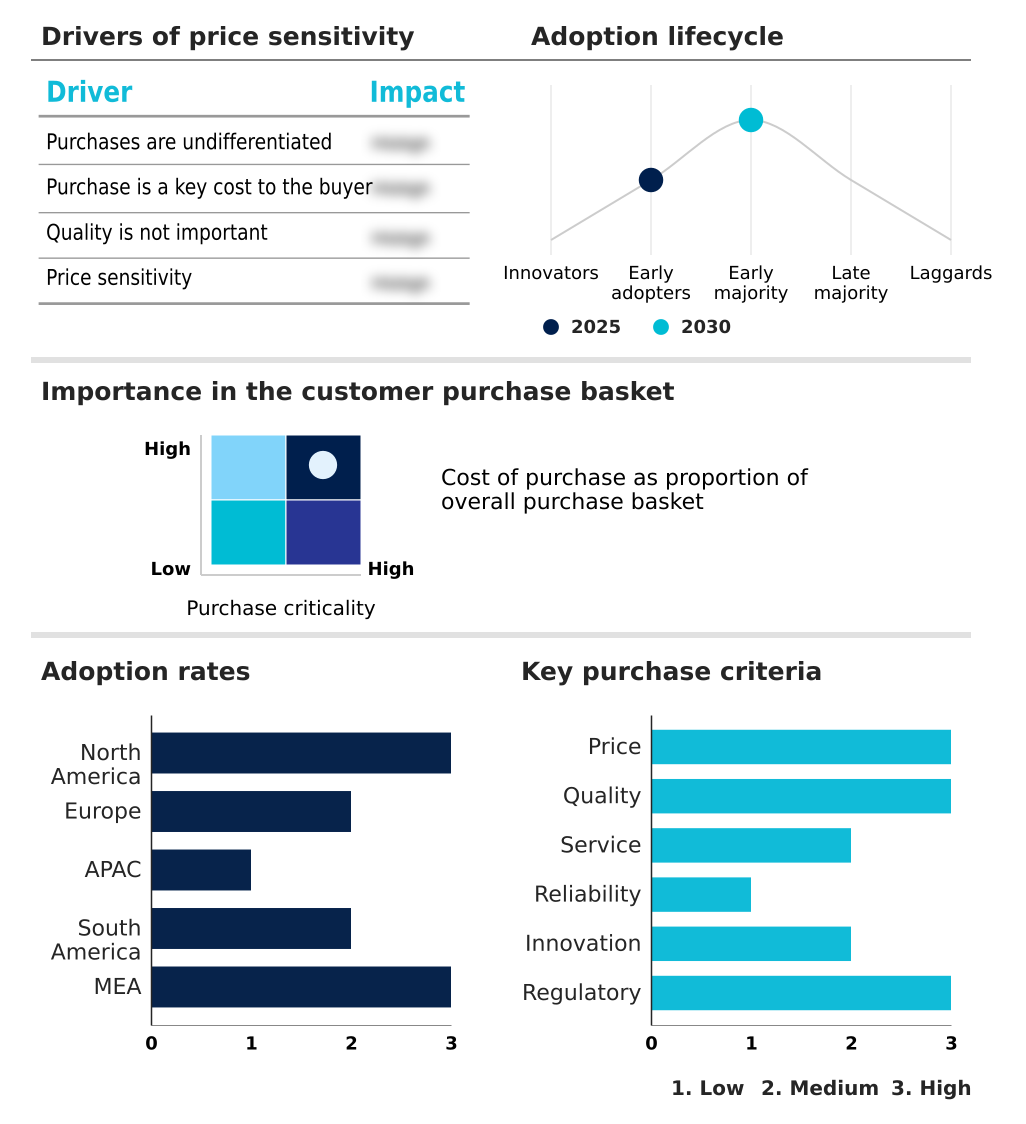
Customer Landscape of Legal Cannabis Industry
Competitive Landscape
Companies are implementing various strategies, such as strategic alliances, legal cannabis market forecast, partnerships, mergers and acquisitions, geographical expansion, and product/service launches, to enhance their presence in the industry.
Ascend Wellness Holdings Inc - Vendors offer a broad spectrum of legal cannabis products, including medical-grade formulations, recreational flower, edibles, and beverages, supported by integrated cultivation, extraction, and retail operations.
The industry research and growth report includes detailed analyses of the competitive landscape of the market and information about key companies, including:
- Ascend Wellness Holdings Inc
- Aurora Cannabis Inc.
- Bhang Nation
- Cannabinoid Creations
- Cannoid LLC
- Canopy Growth Corp.
- CBD American Shaman
- Cronos Group Inc.
- Curaleaf Holdings Inc.
- CV Sciences Inc.
- Elixinol LLC
- Green Thumb Industries Inc.
- Medical Marijuana Inc.
- MediPharm Labs Inc.
- PharmaHemp d.o.o.
- The Cannabist Co Inc.
- Tikun Olam
- Tilray Brands Inc.
- Trulieve Cannabis Corp.
Qualitative and quantitative analysis of companies has been conducted to help clients understand the wider business environment as well as the strengths and weaknesses of key industry players. Data is qualitatively analyzed to categorize companies as pure play, category-focused, industry-focused, and diversified; it is quantitatively analyzed to categorize companies as dominant, leading, strong, tentative, and weak.
Market Intelligence Radar: High-Impact Developments & Growth Signals
- In the Tobacco industry, the growing consumer demand for premium and low-risk alternatives is expanding the addressable market for legal cannabis, which is increasingly positioned as a substitute for combustible products, influencing lifestyle-centric brands and retail strategies.
- The implementation of stricter advertising and promotion limitations on traditional tobacco products creates an opening for legal cannabis companies to capture consumer attention, particularly as regulatory harmonization for cannabis marketing begins to take shape in nascent adult-use markets.
- Rising excise tax structures on conventional tobacco goods, with taxes in some nations accounting for over 75% of the retail price, indirectly improve the price competitiveness of legal cannabis, pushing some consumers to explore regulated alternatives.
- An expansion of the illicit tobacco trade, driven by tax evasion and weak enforcement, presents a parallel challenge for the legal cannabis market, highlighting the critical need for robust seed-to-sale tracking and supply chain transparency to ensure product integrity and differentiate from unregulated sources.
Dive into Technavio’s robust research methodology, blending expert interviews, extensive data synthesis, and validated models for unparalleled Legal Cannabis Market insights. See full methodology.
| Market Scope | |
|---|---|
| Page number | 287 |
| Base year | 2025 |
| Historic period | 2020-2024 |
| Forecast period | 2026-2030 |
| Growth momentum & CAGR | Accelerate at a CAGR of 32% |
| Market growth 2026-2030 | USD 179565.0 million |
| Market structure | Fragmented |
| YoY growth 2025-2026(%) | 26.2% |
| Key countries | US, Canada, Mexico, Germany, UK, France, Italy, Spain, The Netherlands, Australia, China, Japan, South Korea, India, Indonesia, Brazil, Argentina, Chile, Israel, South Africa, UAE, Turkey and Saudi Arabia |
| Competitive landscape | Leading Companies, Market Positioning of Companies, Competitive Strategies, and Industry Risks |
Research Analyst Overview
- The legal cannabis market ecosystem is a complex network where raw material suppliers provide proprietary genetics, and technology firms offer high-efficiency LED lighting and supercritical CO2 extraction systems. In this landscape, nearly 80% of European producers now use blockchain for supply chain transparency.
- Manufacturers, from large multi-state operators to craft cultivators, process these inputs into a diverse range of products, adhering to standards like EU-GMP certification. Regulatory bodies and government agencies define the market's boundaries through licensing and taxation, with taxes in some jurisdictions comprising over 75% of the retail price. Distribution channels include medical dispensaries, recreational retail stores, and e-commerce platforms.
- End-users range from medical patients seeking cannabinoid-based formulations to adult-use consumers. Supporting entities, including testing labs providing analytical validation and research institutions advancing botanical drug pathways, are crucial for ensuring safety, efficacy, and industry innovation.
What are the Key Data Covered in this Legal Cannabis Market Research and Growth Report?
-
What is the expected growth of the Legal Cannabis Market between 2026 and 2030?
-
The Legal Cannabis Market is expected to grow by USD 179.57 billion during 2026-2030, registering a CAGR of 32%. Year-over-year growth in 2026 is estimated at 26.2%%. This acceleration is shaped by increase in federal regulatory harmonization and industrialization of pharmaceutical-grade cannabinoid research, which is intensifying demand across multiple end-use verticals covered in the report.
-
-
What segmentation does the market report cover?
-
The report is segmented by Product (Medical cannabis, and Recreational cannabis), Derivative Type (CBD, THC, and Balanced THC and CBD), Source (Marijuana, and Hemp) and Geography (North America, Europe, APAC, South America, Middle East and Africa). Among these, the Medical cannabis segment is estimated to witness significant growth during the forecast period, driven by rising adoption across key application areas. Each segment includes detailed qualitative and quantitative analysis, along with historical data from 2020-2024 and forecasts through 2030 with year-over-year growth rates.
-
-
Which regions are analyzed in the report?
-
The report covers North America, Europe, APAC, South America and Middle East and Africa. North America is estimated to contribute 91.1% to market growth during the forecast period. Country-level analysis includes US, Canada, Mexico, Germany, UK, France, Italy, Spain, The Netherlands, Australia, China, Japan, South Korea, India, Indonesia, Brazil, Argentina, Chile, Israel, South Africa, UAE, Turkey and Saudi Arabia, with dedicated market size tables and year-over-year growth for each.
-
-
What are the key growth drivers and market challenges?
-
The primary driver is increase in federal regulatory harmonization and industrialization of pharmaceutical-grade cannabinoid research, which is accelerating investment and industry demand. The main challenge is persistent structural barrier of financial exclusion and complexity of federal banking non-compliance, creating operational barriers for key market participants. The report quantifies the impact of each driver and challenge across 2026 and 2030 with comparative analysis.
-
-
Who are the major players in the Legal Cannabis Market?
-
Key vendors include Ascend Wellness Holdings Inc, Aurora Cannabis Inc., Bhang Nation, Cannabinoid Creations, Cannoid LLC, Canopy Growth Corp., CBD American Shaman, Cronos Group Inc., Curaleaf Holdings Inc., CV Sciences Inc., Elixinol LLC, Green Thumb Industries Inc., Medical Marijuana Inc., MediPharm Labs Inc., PharmaHemp d.o.o., The Cannabist Co Inc., Tikun Olam, Tilray Brands Inc. and Trulieve Cannabis Corp.. The report provides qualitative and quantitative analysis categorizing companies as dominant, leading, strong, tentative, and weak based on their market positioning. Company profiles include business segment analysis, SWOT assessment, key offerings, and recent strategic developments.
-
Market Research Insights
- The competitive landscape of the legal cannabis market is characterized by intense consolidation, with the top ten operators accounting for over 35% of market share in mature North American regions. Key participants such as Tilray Brands, Curaleaf Holdings, and Canopy Growth are driving this trend through strategic M&A and capital-raising activities designed to secure global footprints.
- For example, Tilray expanded into the craft beverage sector to diversify its portfolio, while Curaleaf completed a $500 million senior secured notes offering to fund its expansion. These actions are a direct response to evolving consumer preferences for lifestyle-centric brands and the operational need for supply chain transparency.
- Companies are adapting to severe price compression by investing in GMP certification and precision dosing technology to differentiate their products in a crowded marketplace.
We can help! Our analysts can customize this legal cannabis market research report to meet your requirements.
 RIA -
RIA -