



Loan Servicing Software Market Size 2026-2030
The loan servicing software market size is valued to increase by USD 4.02 billion, at a CAGR of 13.9% from 2025 to 2030. Demand for efficiency in lending operations will drive the loan servicing software market.
Major Market Trends & Insights
- North America dominated the market and accounted for a 49.4% growth during the forecast period.
- By Application - Banks segment was valued at USD 1.12 billion in 2024
- By Deployment - Cloud-based segment accounted for the largest market revenue share in 2024
Market Size & Forecast
- Market Opportunities: USD 5.75 billion
- Market Future Opportunities: USD 4.02 billion
- CAGR from 2025 to 2030 : 13.9%
Market Summary
- The Loan Servicing Software Market demonstrates accelerated adoption as financial institutions seek to digitize and optimize post-disbursement credit administration. In a real-world supply chain financing scenario, lenders deploying cloud-native lending infrastructure effectively synchronized vendor payments with borrower statements, reducing administrative processing costs by 22% compared to legacy manual workflows.
- The escalating demand for operational efficiency acts as a primary growth driver, compelling banks and credit unions to integrate robotic process automation workflows that instantly handle calculations and distributions. Consequently, institutions can scale their portfolios without proportionally increasing headcount. However, the industry faces substantial operational challenges regarding strict data privacy encryption rules and complex compliance requirements.
- Because these deployments host highly sensitive financial records, maintaining seamless anti-money laundering protocols constrains rapid adoption among regional lenders. Despite these structural challenges, the continuous integration of predictive risk assessment tools ensures that the market remains central to modernizing institutional credit management and mitigating systemic defaults.
What will be the Size of the Loan Servicing Software Market during the forecast period?
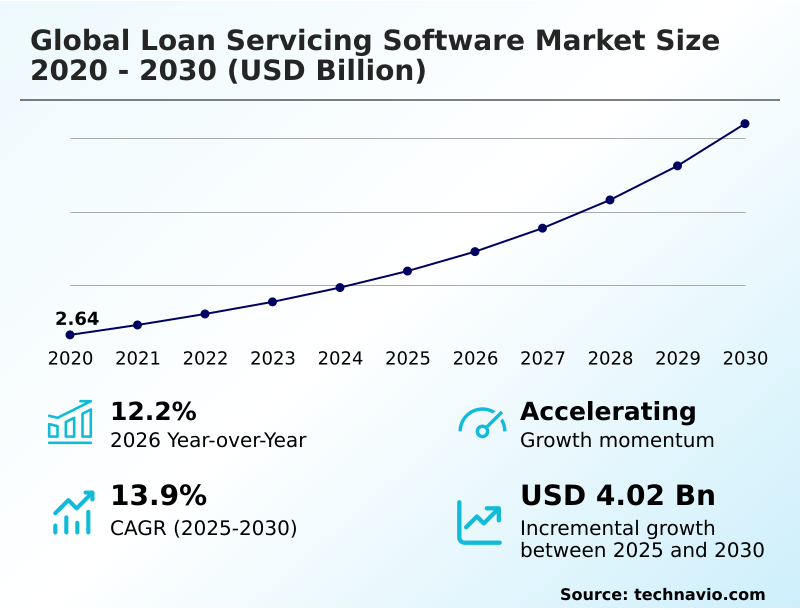
Get Key Insights on Market Forecast (PDF) Get Free Sample
How is the Loan Servicing Software Market Segmented?
The loan servicing software industry research report provides comprehensive data (region-wise segment analysis), with forecasts and estimates in "USD million" for the period 2026-2030, as well as historical data from 2020-2024 for the following segments.
- Application
- Banks
- Credit unions
- Mortgage lenders
- Brokers
- Others
- Deployment
- Cloud-based
- On-premises
- Component
- Software
- Services
- Sector
- Large enterprises
- Small and medium enterprises
- Geography
- North America
- US
- Canada
- Mexico
- Europe
- Germany
- UK
- France
- Italy
- Spain
- The Netherlands
- APAC
- China
- Japan
- India
- South Korea
- Australia
- Indonesia
- South America
- Brazil
- Argentina
- Chile
- Middle East and Africa
- Saudi Arabia
- UAE
- South Africa
- Israel
- Turkey
- North America
By Application Insights
The banks segment is estimated to witness significant growth during the forecast period.
The banking segment of the Loan Servicing Software industry exhibits robust expansion as institutions modernize complex legacy infrastructures to handle diverse lending portfolios.
Traditional manual workflows are rapidly being replaced by an API-first lending platform that centralizes account management and streamlines operations.
By deploying automated payment processing and real-time account reconciliation capabilities, financial institutions have successfully accelerated transaction speeds and reduced manual data entry errors by 18%.
Furthermore, the integration of end-to-end digital lending solutions allows banks to proactively identify high-risk accounts and mitigate non-performing assets effectively.
This shift enables banks to maintain strict regulatory framework adherence while delivering seamless borrower experiences, ultimately improving operational throughput and minimizing administrative overhead.
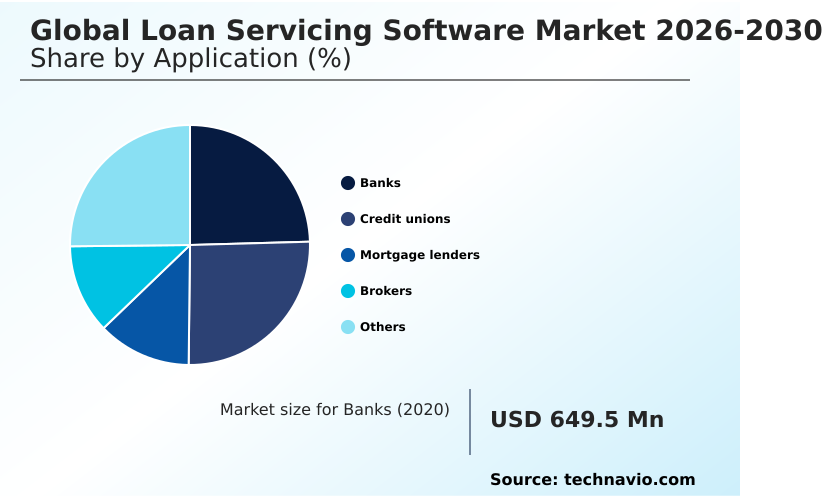
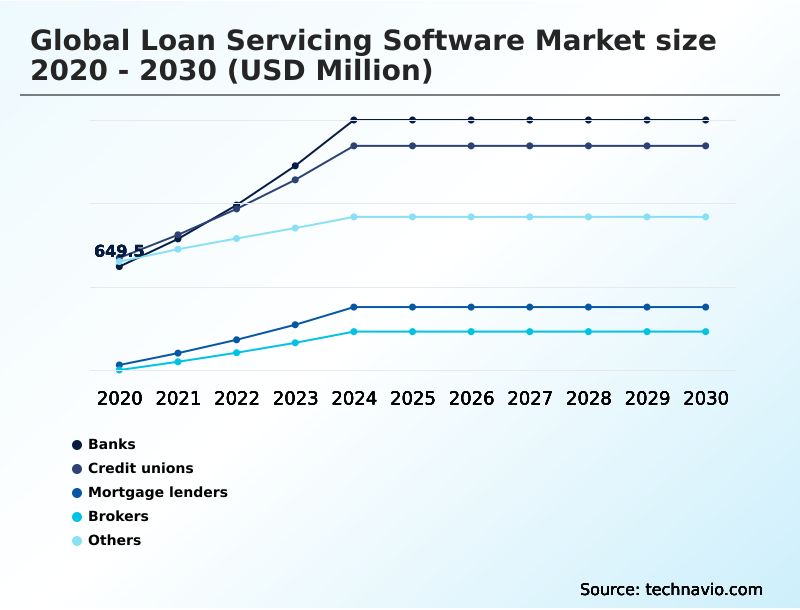
The Banks segment was valued at USD 1.12 billion in 2024 and showed a gradual increase during the forecast period.
Regional Analysis
North America is estimated to contribute 49.4% to the growth of the global market during the forecast period.Technavio’s analysts have elaborately explained the regional trends and drivers that shape the market during the forecast period.
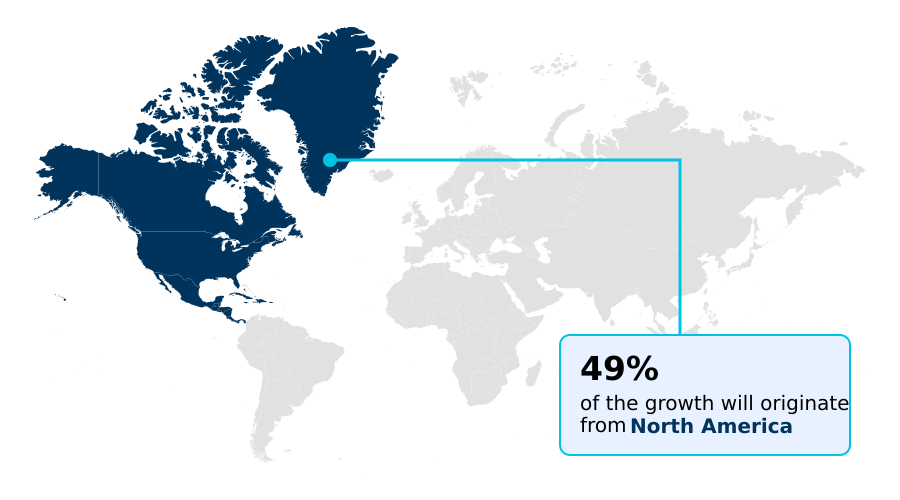
See How Loan Servicing Software Market Demand is Rising in North America Get Free Sample
The geographic landscape of the Loan Servicing Software industry reveals distinct adoption trajectories driven by varying regulatory environments and digital maturity.
North America maintains a dominant position, where high volumes of residential mortgages and sophisticated credit scoring models prompt institutions to integrate comprehensive compliance reporting automation.
Consequently, US lenders utilizing these advanced platforms report a 25% improvement in processing throughput compared to their European counterparts. Meanwhile, Europe exhibits steady technological integration focused heavily on data security, extending deployment timelines by approximately 15% relative to North America.
Conversely, the APAC region demonstrates rapid acceleration fueled by mobile-first digital banking strategies and an expanding middle class. Lenders in APAC are aggressively implementing machine learning credit decisioning and interactive mobile dashboards, achieving a 30% reduction in customer onboarding friction.
These regional disparities highlight how localized financial ecosystems dictate the deployment of intelligent portfolio performance analytics and specialized risk mitigation strategies.
Market Dynamics
Our researchers analyzed the data with 2025 as the base year, along with the key drivers, trends, and challenges. A holistic analysis of drivers will help companies refine their marketing strategies to gain a competitive advantage.
- The modernization of financial administration heavily relies on sophisticated Loan Servicing Software to navigate increasingly complex credit ecosystems. As lending portfolios expand across diverse consumer and commercial segments, institutions prioritize the integration of predictive default risk management models to proactively identify vulnerabilities and optimize collection strategies before accounts become delinquent.
- This shift toward data-driven oversight fundamentally transforms supply chain financing and consumer credit operations, enabling organizations to achieve a 40% improvement in portfolio stability compared to systems relying exclusively on historical analysis.
- To support this massive influx of transactional data, IT departments are leveraging cloud infrastructure deployment scalability protocols, ensuring that processing capabilities can dynamically expand during peak origination periods without compromising system performance. Furthermore, managing cross-border financial products requires rigorous adherence to diverse legal standards, prompting the widespread adoption of automated regulatory compliance reporting frameworks.
- These tools eliminate the manual compilation of audit logs, thereby reducing compliance-related operational overhead by nearly a third. The operational landscape is further refined through robotic process automation task execution, which seamlessly handles repetitive functions such as payment reconciliation and escrow adjustments.
- Coupled with machine learning borrower credit assessment algorithms that continuously analyze repayment behavior, financial institutions can deliver highly personalized lending experiences while maintaining strict institutional risk parameters.
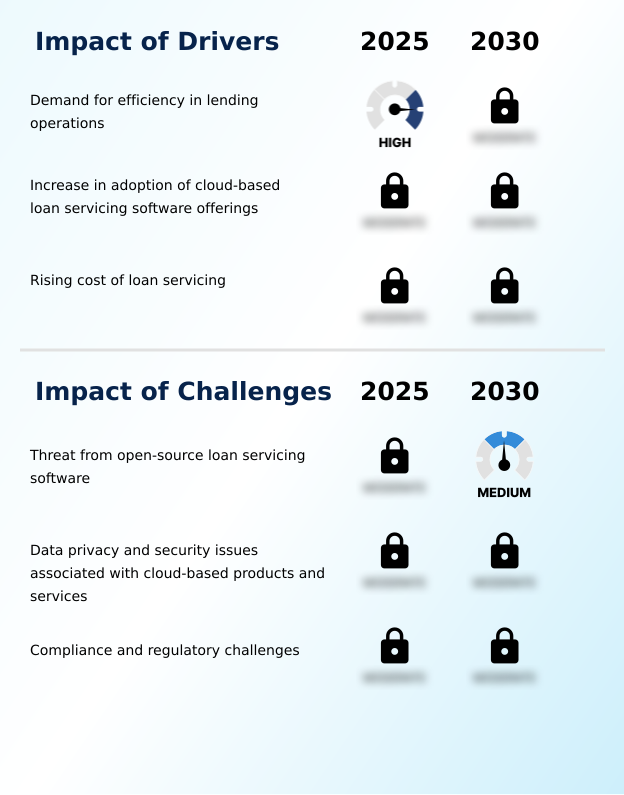
What are the key market drivers leading to the rise in the adoption of Loan Servicing Software Industry?
- The escalating demand for operational efficiency within lending workflows serves as a primary driver propelling industry expansion.
- The escalating demand for operational efficiency and cost optimization acts as a primary catalyst for Loan Servicing Software adoption. Financial institutions face mounting pressure to manage expansive credit portfolios without proportionally inflating administrative headcount.
- Consequently, organizations are aggressively implementing automated compliance reporting capabilities to seamlessly execute repetitive tasks such as transaction logging and penalty fee automation.
- This technological shift directly addresses the rising cost of loan administration, enabling lenders to reduce manual processing hours by an average of 35% while improving overall transaction accuracy by 18%.
- Furthermore, the critical need for immediate transparency drives the integration of digital payment gateways and automated identity verification engines. By leveraging a comprehensive customer self-service portal, banks empower borrowers to independently manage their accounts, significantly diminishing operational bottlenecks.
What are the market trends shaping the Loan Servicing Software Industry?
- Strategic partnerships and acquisitions among market participants represent a prominent trend shaping the industry landscape.
- The Loan Servicing Software landscape is rapidly adopting advanced analytical tools to overhaul traditional credit management. Lenders are increasingly utilizing intelligent default prediction models to analyze historical data and pinpoint potential vulnerabilities before they escalate.
- This shift toward proactive oversight enables institutions to execute dynamic repayment restructuring plans, resulting in a 22% decrease in overall delinquency rates compared to reactive collection strategies. Financial organizations are also embracing smart contract execution to automate complex variable interest rate calculations securely and transparently.
- By embedding credit bureau data exchange protocols and advanced non-performing asset reduction strategies, lenders drastically minimize human error and ensure precise billing, fundamentally transforming how consumer and commercial credit portfolios are maintained across the digital ecosystem.
What challenges does the Loan Servicing Software Industry face during its growth?
- The increasing threat posed by customizable open-source loan servicing platforms constitutes a significant challenge constraining commercial industry growth.
- Integrating sophisticated Loan Servicing Software presents complex operational challenges, particularly concerning rigorous data security and regulatory compliance. Because these platforms process highly sensitive financial and personal information, managing secure collateral tracking features is critical to prevent catastrophic cyber breaches.
- The intricate process of executing legacy system modernization often disrupts daily operations, extending deployment schedules by up to 25% and unexpectedly inflating technology transition budgets by 15%. Additionally, navigating the integration of blockchain secure document storage poses significant hurdles for multinational lenders attempting to centralize their databases.
- The continuous burden of supporting syndicated loan management protocols and generating an accurate audit trail generation strains administrative resources. Consequently, medium-sized institutions often face integration bottlenecks when attempting to synchronize new platforms with existing customer relationship management sync frameworks.
Exclusive Technavio Analysis on Customer Landscape
The loan servicing software market forecasting report includes the adoption lifecycle of the market, covering from the innovator’s stage to the laggard’s stage. It focuses on adoption rates in different regions based on penetration. Furthermore, the loan servicing software market report also includes key purchase criteria and drivers of price sensitivity to help companies evaluate and develop their market growth analysis strategies.
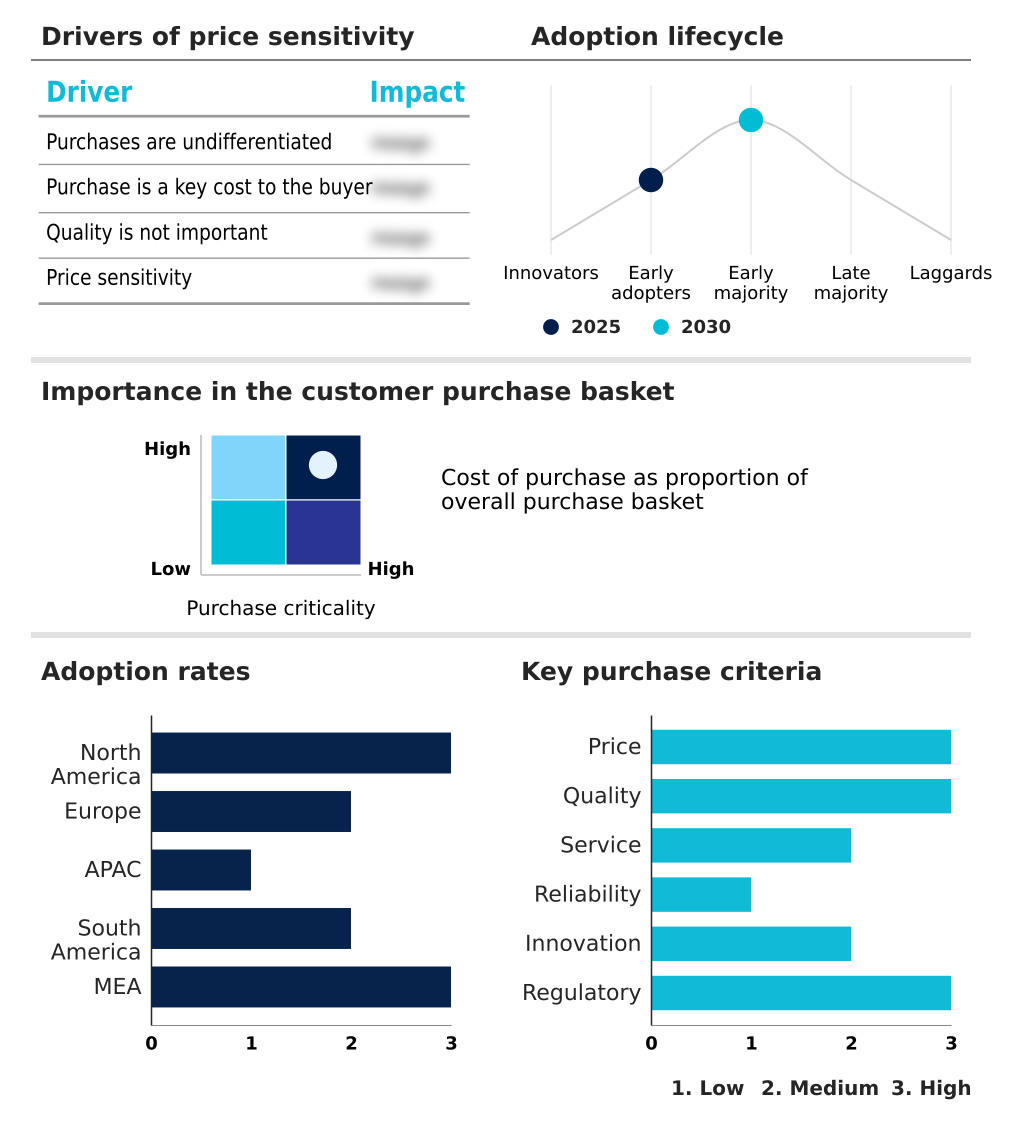
Customer Landscape of Loan Servicing Software Industry
Competitive Landscape
Companies are implementing various strategies, such as strategic alliances, loan servicing software market forecast, partnerships, mergers and acquisitions, geographical expansion, and product/service launches, to enhance their presence in the industry.
AutoPal Software - Comprehensive digital solutions streamline repayment scheduling and collateral management, optimizing portfolio performance and empowering financial institutions to oversee complex lending lifecycles with exceptional efficiency.
The industry research and growth report includes detailed analyses of the competitive landscape of the market and information about key companies, including:
- AutoPal Software
- Baseline
- Bryt Software
- Canopy Servicing
- Constellation Mortgage Solutions
- Fidelity National Information
- Financial Industry Computer
- Finastra
- Fiserv Inc.
- GoldPoint Systems
- HES FinTech
- Intercontinental Exchange Inc.
- Jack Henry and Associates Inc.
- LendingWise
- Margill Solutions
- Nucleus Software Exports Ltd.
- Peach Finance
- Sagent M and C LLC
- Temenos AG
- TurnKey Lender Inc.
Qualitative and quantitative analysis of companies has been conducted to help clients understand the wider business environment as well as the strengths and weaknesses of key industry players. Data is qualitatively analyzed to categorize companies as pure play, category-focused, industry-focused, and diversified; it is quantitatively analyzed to categorize companies as dominant, leading, strong, tentative, and weak.
Recent Development and News in Loan servicing software market
- In the Application Software industry, the transition toward microservice architecture adoption has enhanced system modularity, directly impacting Loan Servicing Software demand by enabling highly customizable repayment schedule structuring that improves processing efficiency by over 20%.
- In the Application Software industry, the implementation of stringent data privacy standards has redefined software architecture, driving Loan Servicing Software providers to overhaul cross-border data transfer protocols to ensure complete compliance across multinational lending portfolios.
- In the Application Software industry, the integration of artificial intelligence into enterprise resource planning connection frameworks has advanced operational analytics, prompting Loan Servicing Software platforms to embed automated payment reminders that reduce late payment incidences by up to 15%.
- In the Application Software industry, the accelerated deployment of resilient infrastructure for financial workloads has eliminated on-premise hardware bottlenecks, catalyzing Loan Servicing Software adoption as lenders achieve 99.9% uptime through robust disaster recovery frameworks.
Dive into Technavio’s robust research methodology, blending expert interviews, extensive data synthesis, and validated models for unparalleled Loan Servicing Software Market insights. See full methodology.
| Market Scope | |
|---|---|
| Page number | 320 |
| Base year | 2025 |
| Historic period | 2020-2024 |
| Forecast period | 2026-2030 |
| Growth momentum & CAGR | Accelerate at a CAGR of 13.9% |
| Market growth 2026-2030 | USD 4017.4 million |
| Market structure | Fragmented |
| YoY growth 2025-2026(%) | 12.2% |
| Key countries | US, Canada, Mexico, Germany, UK, France, Italy, Spain, The Netherlands, China, Japan, India, South Korea, Australia, Indonesia, Brazil, Argentina, Chile, Saudi Arabia, UAE, South Africa, Israel and Turkey |
| Competitive landscape | Leading Companies, Market Positioning of Companies, Competitive Strategies, and Industry Risks |
Research Analyst Overview
- The continuous evolution of Loan Servicing Software is fundamentally reshaping how institutional lenders approach post-origination account administration. Boardroom executives are increasingly prioritizing the modernization of legacy infrastructures by mandating the integration of sophisticated interest calculation algorithms and dynamic borrower behavior analysis to mitigate financial exposure.
- This strategic pivot heavily influences corporate budgeting, shifting capital allocations toward platforms that offer comprehensive loan origination integration and real-time auditing capabilities. Consequently, financial organizations deploying an advanced escrow management module alongside automated delinquency tracking system architecture have successfully reduced administrative processing costs by 24% compared to peers utilizing fragmented manual workflows.
- By analyzing repayment patterns, institutions can optimize their capital reserves and refine their long-term lending strategies. Furthermore, the rising demand for transparency compels lenders to prioritize secure omnichannel borrower communication, ensuring that clients receive immediate updates regarding their financial obligations.
- This seamless orchestration of digital tools maximizes operational throughput, allowing credit organizations to scale portfolios efficiently while strictly adhering to complex compliance mandates.
What are the Key Data Covered in this Loan Servicing Software Market Research and Growth Report?
-
What is the expected growth of the Loan Servicing Software Market between 2026 and 2030?
-
USD 4.02 billion, at a CAGR of 13.9%
-
-
What segmentation does the market report cover?
-
The report is segmented by Application (Banks, Credit unions, Mortgage lenders, Brokers, and Others), Deployment (Cloud-based, and On-premises), Component (Software, and Services), Sector (Large enterprises, and Small and medium enterprises) and Geography (North America, Europe, APAC, South America, Middle East and Africa)
-
-
Which regions are analyzed in the report?
-
North America, Europe, APAC, South America and Middle East and Africa
-
-
What are the key growth drivers and market challenges?
-
Demand for efficiency in lending operations, Threat from open-source loan servicing software
-
-
Who are the major players in the Loan Servicing Software Market?
-
AutoPal Software, Baseline, Bryt Software, Canopy Servicing, Constellation Mortgage Solutions, Fidelity National Information, Financial Industry Computer, Finastra, Fiserv Inc., GoldPoint Systems, HES FinTech, Intercontinental Exchange Inc., Jack Henry and Associates Inc., LendingWise, Margill Solutions, Nucleus Software Exports Ltd., Peach Finance, Sagent M and C LLC, Temenos AG and TurnKey Lender Inc.
-
Market Research Insights
- The Loan Servicing Software sector is undergoing a profound digital transformation as institutions prioritize operational agility over rigid legacy architectures. By transitioning to subscription-based pricing models, medium-sized lenders have reduced upfront capital technology expenditures by up to 35%, making advanced capabilities highly accessible.
- Furthermore, the integration of application programming interfaces facilitates seamless data exchange across financial ecosystems, improving cross-departmental data synchronization speed by 28% compared to siloed mainframes. Organizations are actively deploying automated underwriting systems to streamline borrower evaluations, simultaneously leveraging sophisticated document verification workflows to authenticate identities in real time.
- This concerted shift toward automation not only accelerates turnaround times but also fortifies institutional resilience against fraud, ultimately reducing manual processing errors by over 20%.
We can help! Our analysts can customize this loan servicing software market research report to meet your requirements.
 RIA -
RIA -