Market in North America_T.jpg?format=webp)


The logistics robots market share is expected to increase by USD 6.42 billion from 2020 to 2025, and the market’s growth momentum will accelerate at a CAGR of 31.24%.
This logistics robots market research report provides valuable insights on the post COVID-19 impact on the market, which will help companies evaluate their business approaches. Furthermore, this report extensively covers logistics robots market segmentations by application (indoor and outdoor logistics and factory logistics) and geography (APAC, North America, Europe, South America, and MEA). The logistics robots market report also offers information on several market vendors, including ABB Ltd., B2A Technology SAS, Clearpath Robotics Inc., Kawasaki Heavy Industries Ltd., KION GROUP AG, Midea Group Co. Ltd., OMRON Corp., Teradyne Inc., Toshiba Corp., and Toyota Industries Corp. among others.
What will the Logistics Robots Market Size be During the Forecast Period?
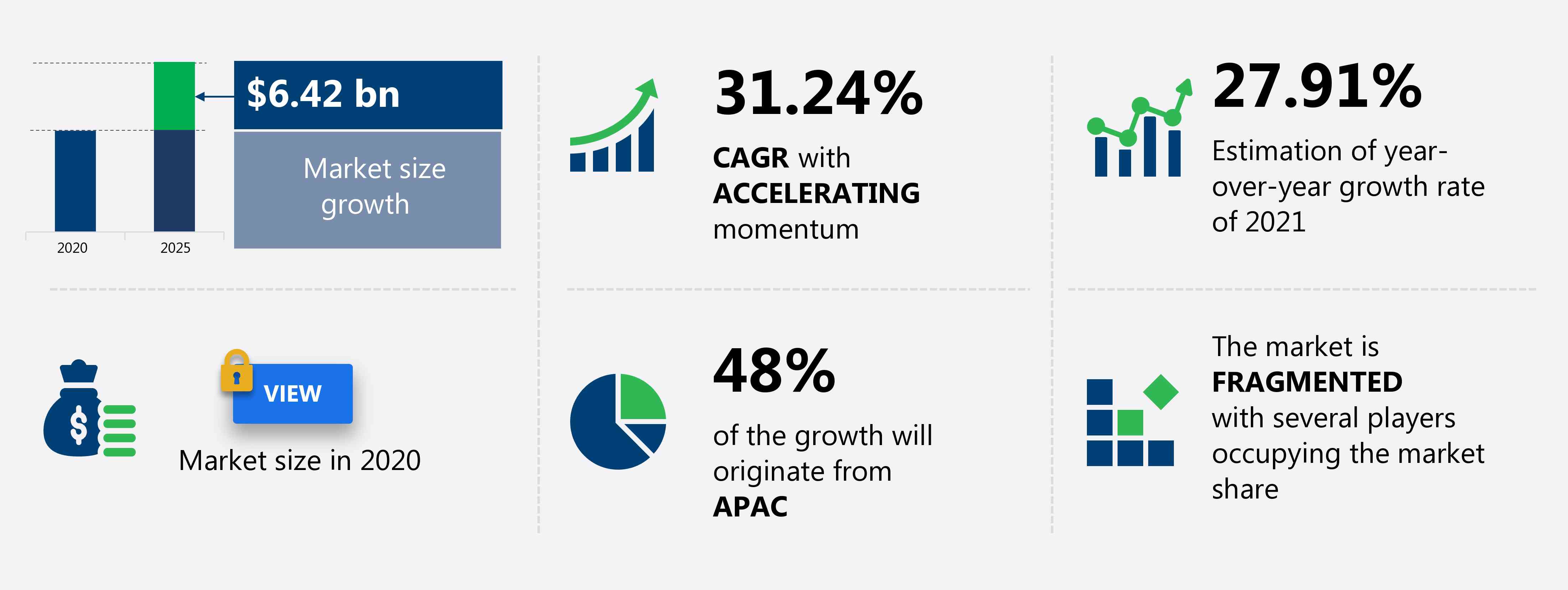
Download the Free Report Sample to Unlock the Logistics Robots Market Size for the Forecast Period and Other Important Statistics
Logistics Robots Market: Key Drivers, Trends, and Challenges
The good ROI offered by logistics robots is notably driving the logistics robots market growth, although factors such as the need for technical expertise may impede market growth. Our research analysts have studied the historical data and deduced the key market drivers and the COVID-19 pandemic impact on the logistics robots industry. The holistic analysis of the drivers will help in deducing end goals and refining marketing strategies to gain a competitive edge.
Key Logistics Robots Market Driver
The good ROI offered by logistics robots is notably driving the logistics robots market growth. The forecast period is expected to see an increase in demand for logistics robots as they offer a good Return on investment (ROI) compared with systems such as forklifts that have traditionally been used in manufacturing and non-manufacturing environments. The major drivers of logistics robots when compared with forklifts and human labor include, drop in the cost of equipment, components such as sensors, and the cost of integration along with the time required for integration, adoption of advanced technologies such as machine learning logic, human-machine collaboration, and environmental analysis technologies, adoption of automation and robotics due to the rise of labor costs and stringent regulations in difficult working conditions.
Key Logistics Robots Market Trend
The growth in the e-commerce sector is the key market trend driving the logistics robots market growth. With the improvement in internet penetration and an increase in the adoption of online shopping, there has been a major boom in the e-commerce sector. The quality of packaging and timely delivery are the differentiating factors for any e-commerce player competing with brick and mortar retailers. The demand for flexibility, more stock-keeping units (SKUs), and swift returns processing are triggering the need for automation by e-commerce players that rely on thirty-party logistics providers significantly. The development of e-commerce has revealed the need for selective mass picking of goods on a near 24/7 basis. For instance, major e-commerce players, such as Amazon and eBay, are strategizing to improve customer experience and are increasingly partnering with logistics providers that have advanced warehouse and delivering operations to maintain their leadership and competitive advantage. For instance, Amazon acquired Kiva Systems, a manufacturer of robots that services warehouses for applications such as packaging and carton handling.
Key Logistics Robots Market Challenge
The major challenge impeding the logistics robots market growth is the need for technical expertise. The lack of such technical knowledge often deters end-users from adopting robots, as they consider the downtime required for maintenance tasks as considerable productivity and financial loss. Though robotic companies are trying to overcome these issues by providing 24/7 remote support and service through cloud monitoring and other enhanced services, it is not a trend among all vendors. To excel in the market, vendors will have to increasingly adopt online and offline training and consultation methods to ensure that end-users with low familiarity with technology get the required support. Lack of skilled operators and proper training has resulted in a certain disinclination to execute wide-scale robotic automation, as substantial time, training, and budget have to be allocated for successful implementation. The reluctance of end-users to learn and switch to new technologies also affects market growth. We expect the scenario to change gradually with more end-users transitioning from traditional manual operations to automated functions to improve their process efficiency.
This logistics robots market analysis report also provides detailed information on other upcoming trends and challenges that will have a far-reaching effect on the market growth. The actionable insights on the trends and challenges will help companies evaluate and develop growth strategies for 2021-2025.
Parent Market Analysis
Technavio categorizes the global logistics robots market as a part of the global industrial machinery market. Our research report has extensively covered external factors influencing the parent market growth potential in the coming years, which will determine the levels of growth of the logistics robots market during the forecast period.
Who are the Major Logistics Robots Market Vendors?
The report analyzes the market’s competitive landscape and offers information on several market vendors, including:
- ABB Ltd.
- B2A Technology SAS
- Clearpath Robotics Inc.
- Kawasaki Heavy Industries Ltd.
- KION GROUP AG
- Midea Group Co. Ltd.
- OMRON Corp.
- Teradyne Inc.
- Toshiba Corp.
- Toyota Industries Corp.
This statistical study of the logistics robots market encompasses successful business strategies deployed by the key vendors. The logistics robots market is fragmented and the vendors are adopting organic and inorganic growth strategies to compete in the market.
Product Insights and News
- ABB Ltd - The company offers robotic solutions for logistics which includes storage and retrieval system, dolly loading and others.
To make the most of the opportunities and recover from post COVID-19 impact, market vendors should focus more on the growth prospects in the fast-growing segments, while maintaining their positions in the slow-growing segments.
The logistics robots market forecast report offers in-depth insights into key vendor profiles. The profiles include information on the production, sustainability, and prospects of the leading companies.
Logistics Robots Market Value Chain Analysis
Our report provides extensive information on the value chain analysis for the logistics robots market, which vendors can leverage to gain a competitive advantage during the forecast period. The end-to-end understanding of the value chain is essential in profit margin optimization and evaluation of business strategies. The data available in our value chain analysis segment can help vendors drive costs and enhance customer services during the forecast period.
The report has further elucidated on other innovative approaches being followed by manufacturers to ensure a sustainable market presence.
Which are the Key Regions for Logistics Robots Market?
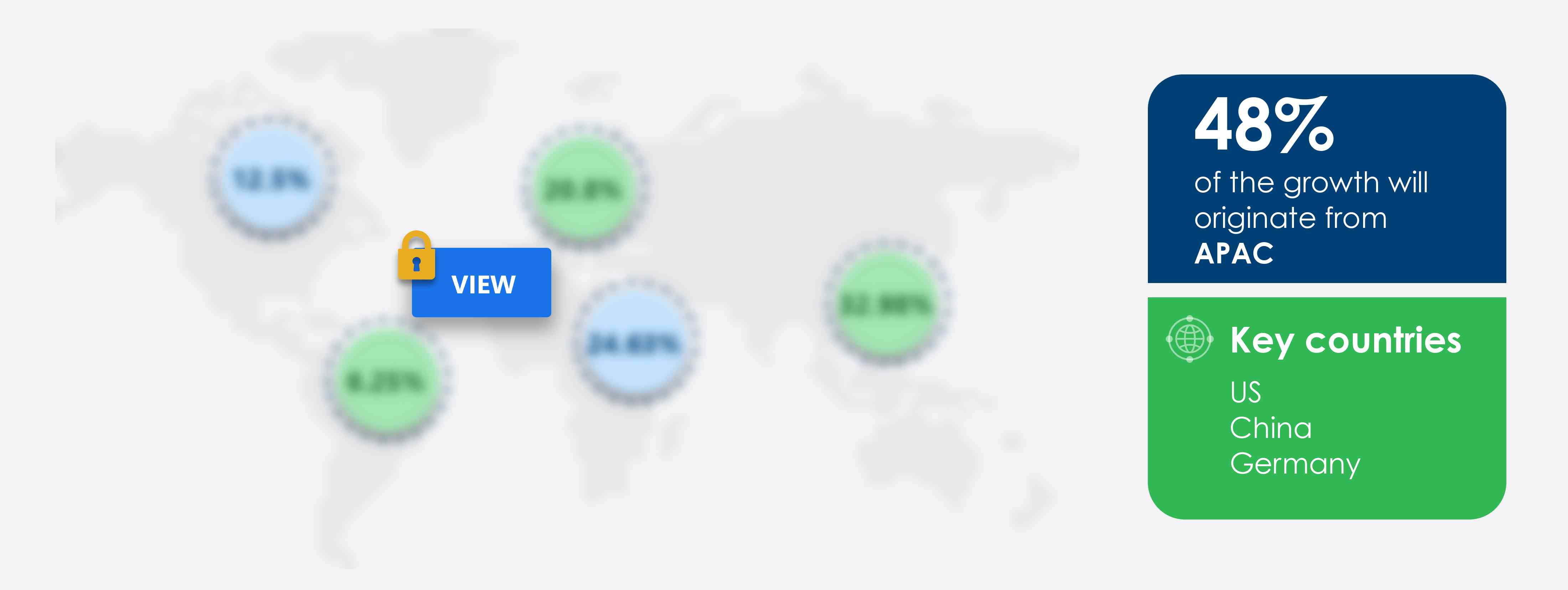
For more insights on the market share of various regions Request for a FREE sample now!
48% of the market’s growth will originate from APAC during the forecast period. China and Japan are the key markets for the logistics robots in APAC.
The presence of component manufacturers offering advanced sensor technologies at low costs will facilitate the logistics robots market growth in APAC over the forecast period. This market research report entails detailed information on the competitive intelligence, marketing gaps, and regional opportunities in store for vendors, which will assist in creating efficient business plans.
COVID Impact and Recovery Analysis
The COVID-19 pandemic in 2020 had adversely impacted several countries in APAC. Governments of several countries in APAC introduced emergency legislation that imposed lockdowns to contain the spread of COVID-19. Owing to the global outbreak of COVID-19, the region has witnessed an increase in the demand for and adoption of logistics robots in hospitals. The robot helped doctors and nurses to reduce their risks of exposure to infected patients, as many hospitals in Thailand faced a shortage of masks and protective suits in 2020. There is an increase in the use of logistics robots in the warehousing industry also as it involves less human contact and intervention. Thus, the demand for logistics robots in the region is expected to grow during the forecast period.
What are the Revenue-generating Application Segments in the Logistics Robots Market?
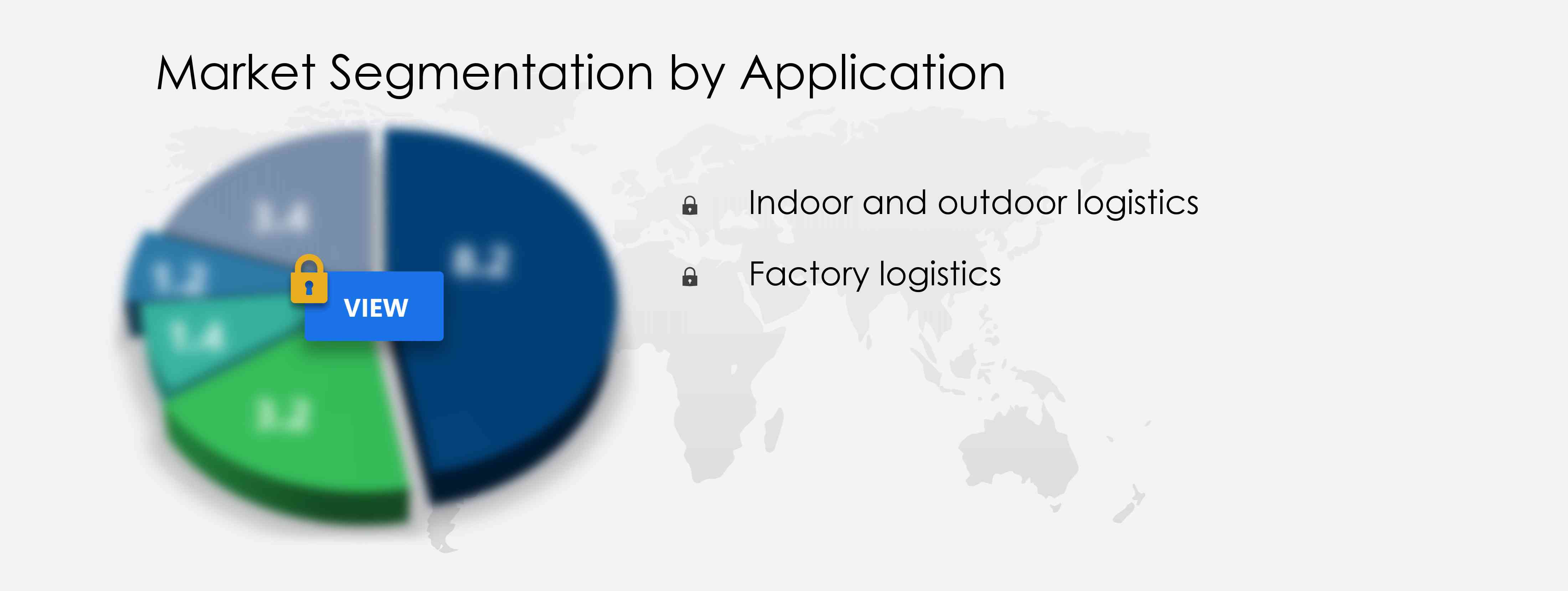
To gain further insights on the market contribution of various segments Request for a FREE sample
The logistics robots market share growth by the indoor and outdoor logistics segment will be significant during the forecast period. The forecast period will see the segment gain traction due to the increase in the adoption of logistics robots by end-users, such as warehouses, airports, harbors, logistics centers for parcel and mail orders, trans-shipment centers, and public buildings. With increased pressure to improve operating efficiency, reliability, and speed, third-party logistics players and warehouse owners are increasingly adopting methods that can reduce congestion on the floor while improving the safety of human workers.
Besides the above-mentioned factors, the post COVID-19 impact has brought forth a slowdown in or fast tracked the demand for the service or product. This report provides an accurate prediction of the contribution of all the segments to the growth of the logistics robots market size and actionable market insights on post COVID-19 impact on each segment.
|
Logistics Robots Market Scope |
|
|
Report Coverage |
Details |
|
Page number |
120 |
|
Base year |
2020 |
|
Forecast period |
2021-2025 |
|
Growth momentum & CAGR |
Accelerate at a CAGR of 31.24% |
|
Market growth 2021-2025 |
$ 6.42 billion |
|
Market structure |
Fragmented |
|
YoY growth (%) |
27.91 |
|
Regional analysis |
APAC, North America, Europe, South America, and MEA |
|
Performing market contribution |
APAC at 48% |
|
Key consumer countries |
US, China, Germany, Japan, and Canada |
|
Competitive landscape |
Leading companies, Competitive strategies, Consumer engagement scope |
|
Key companies profiled |
ABB Ltd., B2A Technology SAS, Clearpath Robotics Inc., Kawasaki Heavy Industries Ltd., KION GROUP AG, Midea Group Co. Ltd., OMRON Corp., Teradyne Inc., Toshiba Corp., and Toyota Industries Corp. |
|
Market dynamics |
Parent market analysis, Market growth inducers and obstacles, Fast-growing and slow-growing segment analysis, COVID 19 impact and recovery analysis and future consumer dynamics, Market condition analysis for forecast period |
|
Customization purview |
If our report has not included the data that you are looking for, you can reach out to our analysts and get segments customized. |
What are the Key Data Covered in this Logistics Robots Market Report?
- CAGR of the market during the forecast period 2021-2025
- Detailed information on factors that will drive logistics robots market growth during the next five years
- Precise estimation of the logistics robots market size and its contribution to the parent market
- Accurate predictions on upcoming trends and changes in consumer behavior
- The growth of the logistics robots industry across APAC, North America, Europe, South America, and MEA
- A thorough analysis of the market’s competitive landscape and detailed information on vendors
- Comprehensive details of factors that will challenge the growth of logistics robots market vendors
We can help! Our analysts can customize this report to meet your requirements. Get in touch
 RIA -
RIA -