


The low light level imaging sensors market size will record an incremental growth of USD 1.1 billion and a CAGR of over 9% during 2020-2024.
This market report entails segmentations by end-user (defense, industrial, and security and surveillance), geography (APAC, North America, Europe, South America, and MEA), and application (Night vision devices, Cameras, Optic lights, and Others). View our sample report to gather market insights on the segmentations.
The low light level imaging sensors market report also analyzes the market’s competitive landscape and offers information on several market vendors, including ams AG, BAE Systems Plc, Hamamatsu Photonics KK, OmniVision Technologies Inc., ON Semiconductor Corp., Photonis Technologies SA, Samsung Electronics Co. Ltd., Sony Corp., STMicroelectronics NV, and Teledyne Technologies Inc.
What will the Low Light Level Imaging Sensors Market Size be in 2020?

View the TOC and LoE with selected illustrations and example pages of low light level imaging sensors market
Overview of Competitive Analysis
The low light level imaging sensors market forecast report provides insights on complete key vendor profiles and their business strategies to reimage themselves. The profiles include information on the production, competitive landscape, sustainability, and prospects of the leading companies.
The market structure is fragmented. With the shift in consumer behavior owing to the COVID-19 pandemic, the vendors are focusing on leveraging upcoming trends and drivers that have been identified and explored in this low light level imaging sensors market analysis report. Factors such as increased government investments in military devices will offer immense growth opportunities to the vendors. The report also covers challenges and strategies to dodge them, which will help vendors in recreating their plan of action to obtain growth opportunities in the future.
To make the most of the opportunities, vendors should also capitalize on growth prospects in the fast-growing segments, while maintaining their positions in the slow-growing segments. Fetch actionable market insights on post-COVID-19 impact on each product and service segments.
Which are the Key Regional Markets for Low Light Level Imaging Sensors?
For more low light level imaging sensors market insights of various regions Request a FREE sample now!
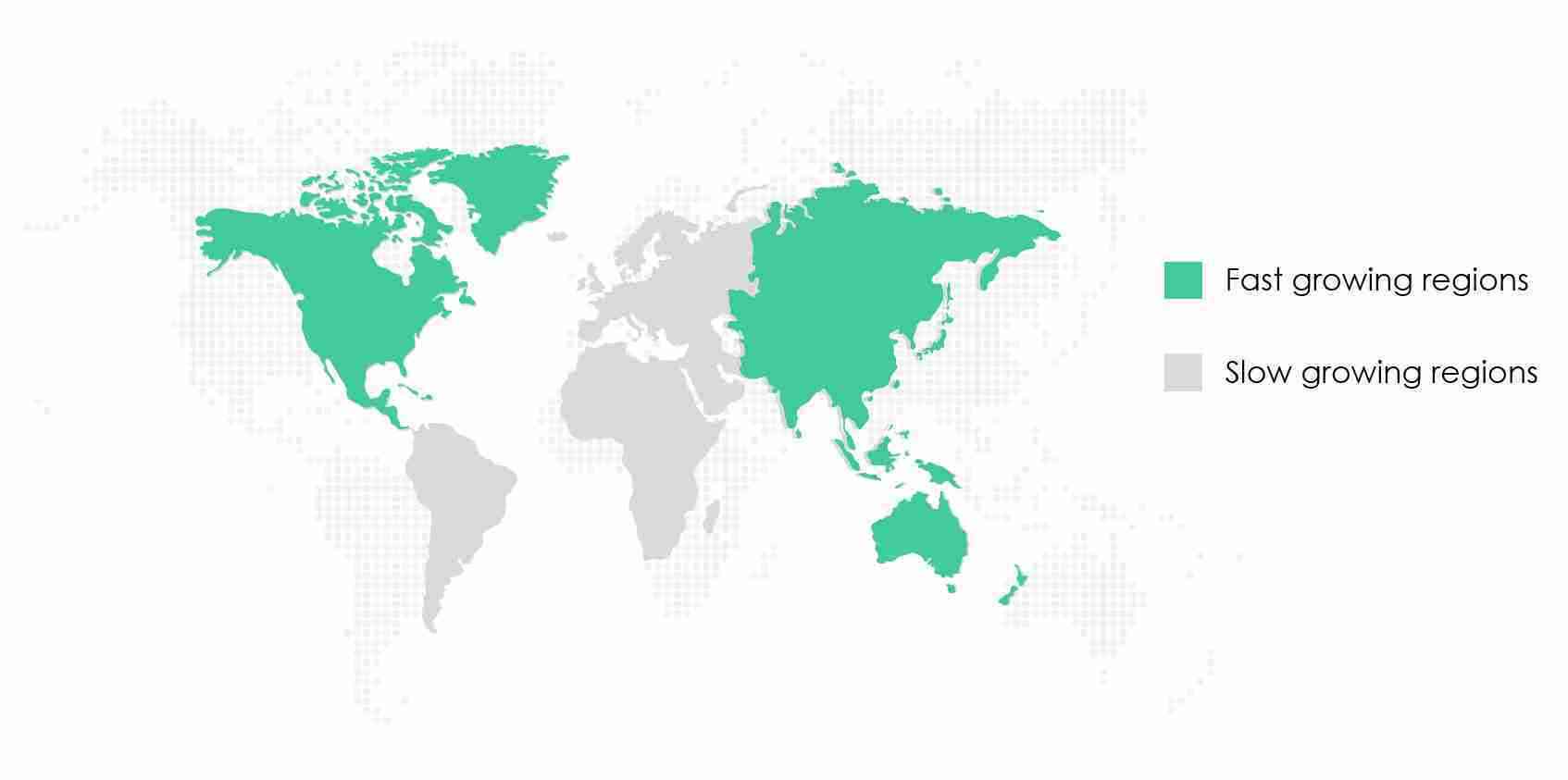
The report offers an up-to-date analysis of the geographical composition of the market. APAC had the largest market share in the low light level imaging sensors market in 2019, and the region will offer several growth opportunities to market vendors during the forecast period. The will significantly influence low light level imaging sensors market growth in this region. To garner further competitive intelligence and regional opportunities in store for vendors, view our sample report.
41% of the market’s growth will originate from APAC during the forecast period. China, South Korea (Republic of Korea), and Japan are the key markets for low light level imaging sensors market in the region. This report provides estimations of the contribution of all regions to the growth of the low light level imaging sensors market size.

What are the Key Factors Covered in this Low Light Level Imaging Sensors Market Report?
- CAGR of the level imaging sensors market during the forecast period
- Detailed information on factors that will drive low light level imaging sensors market growth during the next five years
- Precise estimation of the level imaging sensors market size and its contribution to the parent market
- Accurate predictions on upcoming trends and changes in consumer behavior
- The growth of the low light level imaging sensors industry across APAC, North America, Europe, South America, and MEA
- A thorough analysis of the market’s competitive landscape and detailed information on vendors
- Comprehensive details of factors that will challenge the growth of low light level imaging sensors market vendors
Need a Customized Report? Get in touch
|
Low Light Level Imaging Sensors Market Scope |
|
|
Report Coverage |
Details |
|
Page number |
120 |
|
Base year |
2019 |
|
Forecast period |
2020-2024 |
|
Growth momentum & CAGR |
Accelerate at a CAGR of 9% |
|
Market growth 2020-2024 |
$ 1.1 billion |
|
Market structure |
Fragmented |
|
YoY growth (%) |
7.93 |
|
Regional analysis |
APAC, North America, Europe, South America, and MEA |
|
Performing market contribution |
APAC at 41% |
|
Key consumer countries |
US, China, Germany, South Korea (Republic of Korea), and Japan |
|
Competitive landscape |
Leading companies, competitive strategies, consumer engagement scope |
|
Companies profiled |
ams AG, BAE Systems Plc, Hamamatsu Photonics KK, OmniVision Technologies Inc., ON Semiconductor Corp., Photonis Technologies SA, Samsung Electronics Co. Ltd., Sony Corp., STMicroelectronics NV, and Teledyne Technologies Inc. |
|
Market Dynamics |
Parent market analysis, Market growth inducers and obstacles, Fast-growing and slow-growing segment analysis, COVID 19 impact and future consumer dynamics, market condition analysis for forecast period, |
|
Customization purview |
If our report has not included the data that you are looking for, you can reach out to our analysts and get segments customized. |
 RIA -
RIA - 
