



Low VOC Paint Market Size 2024-2028
The low VOC paint market size is forecast to increase by USD 1.97 billion at a CAGR of 4.5% between 2023 and 2028.
- The market is experiencing significant growth due to increasing regulations limiting the emissions of volatile organic compounds (VOCs) and the rising consumer preference for eco-friendly and healthier living environments. This shift towards low VOC paints is particularly prominent in residential and commercial sectors, as governments worldwide continue to enforce stricter environmental regulations. Bio-based paints, a subset of low VOC paints, are becoming increasingly popular in both residential and commercial construction, as well as in the architectural industry. However, market expansion faces challenges. Regulatory hurdles impact adoption as varying standards across regions necessitate customized product offerings and compliance. Additionally, volatility in raw material prices, primarily derived from petroleum and natural gas, poses a significant challenge to market stability.
- Producers must navigate these challenges by exploring alternative, sustainable raw material sources and optimizing their supply chains to mitigate price fluctuations. Companies that successfully address these challenges and cater to the evolving consumer demand for low VOC paints will capitalize on the market's growth potential.
What will be the Size of the Low VOC Paint Market during the forecast period?

- The market is experiencing significant activity and trends as paint manufacturers prioritize energy modeling and indoor environmental quality in their product offerings. Green building materials, including paint, are increasingly important as industries embrace sustainable building practices and product design. Product labeling helps consumers identify eco-friendly options, while industrial coating applications find new uses for renewable resources. Paint distributors play a crucial role in bringing these innovative solutions to market, ensuring building code compliance and meeting emission standards. Environmental impacts and health concerns drive the demand for green chemistry and circular economy principles in paint production. Paint consultants offer expertise in building performance modeling and historic preservation, balancing restoration and sustainability.
- Paint testing and analysis are essential for ensuring paint performance and certifying sustainable product design. Recycled materials and bio-based alternatives are gaining popularity among paint retailers and applicators, contributing to the circular economy. Renewable resources and sustainable practices are essential for reducing the environmental footprint of the paint industry. Paint contractors are adapting to these trends, incorporating low VOC and sustainable materials into their projects. Sustainability is a key consideration in architectural design, with building renovation and restoration projects increasingly focusing on energy efficiency and indoor environmental quality. Lifecycle assessment tools and certification programs provide valuable insights into the environmental impacts of various paint options.
- By prioritizing these trends, the paint industry is poised for continued growth and innovation.
How is this Low VOC Paint Industry segmented?
The low VOC paint industry research report provides comprehensive data (region-wise segment analysis), with forecasts and estimates in "USD million" for the period 2024-2028, as well as historical data from 2018-2022 for the following segments.
- Type
- Water borne
- Solvent borne
- Powder
- Geography
- North America
- US
- Europe
- Germany
- UK
- APAC
- Australia
- China
- Rest of World (ROW)
- North America
By Type Insights
The water borne segment is estimated to witness significant growth during the forecast period.
Water-borne low VOC paints have gained significant popularity in various industries due to their environmental benefits and superior performance. These paints contain minimal volatile organic compounds (VOCs) and are primarily solubilized by water. The absence of solvents like hydrocarbons and alkyds makes water-borne paints an eco-friendly alternative to traditional solvent-based paints. The use of water-borne low VOC paints is not limited to residential applications but is also prevalent in commercial and industrial sectors. Green building standards, such as LEED certification, have mandated the use of low VOC paints to promote sustainable and healthier indoor environments. Architectural and decorative coatings, including latex and acrylic paints, are commonly formulated as water-borne low VOC paints.
These paints offer several advantages, such as faster drying times, reduced odor, and improved air quality. They also provide excellent stain resistance, moisture vapor transmission properties, and resistance to yellowing. Additionally, water-borne low VOC paints are suitable for various surfaces, including interiors, exteriors, and industrial applications. The formulation of water-borne low VOC paints involves the use of advanced technologies like spray technology and color matching to ensure consistent and uniform application. Paint stripping and surface preparation are crucial steps in the application process to ensure proper adhesion and durability. Furthermore, the development of zero-VOC and eco-friendly paints, such as mineral, bio-based, and plant-based paints, has expanded the market for water-borne low VOC paints.
These paints offer additional environmental benefits, such as reduced carbon footprint and improved sustainability. The market for water-borne low VOC paints is driven by stringent environmental regulations, the growing demand for sustainable building materials, and the need for improved indoor air quality. The ongoing research and development in paint chemistry and application technologies are expected to further propel the growth of this market.
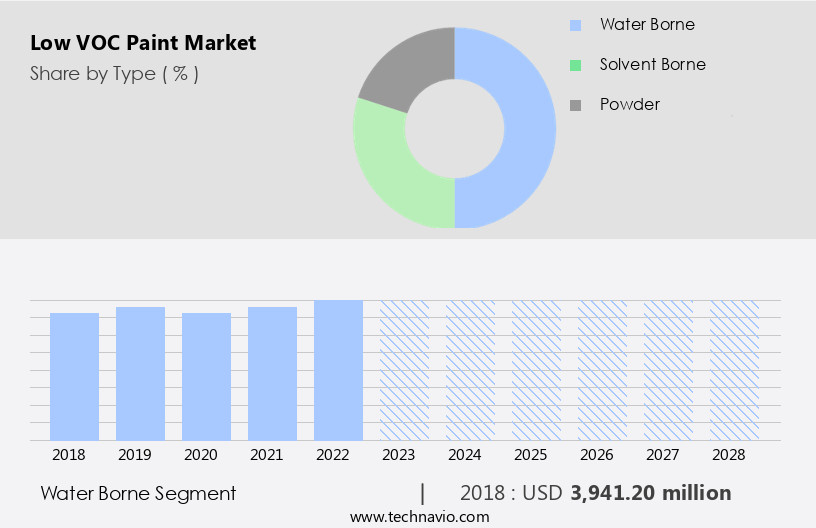
The Water borne segment was valued at USD 3.94 billion in 2018 and showed a gradual increase during the forecast period.
Regional Analysis
APAC is estimated to contribute 45% to the growth of the global market during the forecast period. Technavio's analysts have elaborately explained the regional trends and drivers that shape the market during the forecast period.

The market is witnessing significant growth due to increasing environmental regulations and the adoption of green building practices. This trend is particularly noticeable in the architectural, industrial, and residential sectors. The shift towards water-based, low-odor, and non-toxic paints is gaining popularity, driven by concerns over indoor air quality and health and safety. Mineral, bio-based, sustainable, and eco-friendly paint options are becoming increasingly preferred, as they offer reduced VOC content, improved energy efficiency, and better moisture vapor transmission. In the construction industry, green building standards and sustainability certifications are driving the demand for low VOC paints. These standards prioritize the use of building materials with minimal environmental impact, making low VOC paints a natural choice.
The use of spray technology, such as HVLP (High Volume, Low Pressure) and LVLP (Low Volume, Low Pressure), is also gaining traction for its ability to minimize VOC emissions. The Asia Pacific region is expected to dominate the market due to the growth of industries like construction, automotive, and aerospace and defense. Countries such as China, India, Japan, and Australia are major contributors to the market's growth in the region. Government initiatives, such as tax subsidies and incentives, are encouraging automotive manufacturers to invest and set up their manufacturing bases in these countries, leading to increased demand for low VOC paints.
In the residential sector, consumers are increasingly seeking paint options that offer stain resistance, easy application, and long-lasting durability. Acrylic, latex, and oil-based paints are popular choices due to their versatility and ability to meet these requirements. The market for decorative coatings, including metallic, pearl, and textured finishes, is also growing, driven by consumer preferences for unique and visually appealing finishes. Paint formulation innovations, such as the use of plant-based and natural ingredients, are also gaining traction in the market. These alternatives offer reduced VOC content, improved sustainability, and better color matching capabilities. Zero-VOC and low-odor paints are particularly popular in the residential sector, as they offer improved indoor air quality and health benefits.
The market for protective coatings, including those used for paint refinishing and surface preparation, is also growing. These coatings offer improved stain resistance, durability, and resistance to wear and tear, making them a popular choice for both industrial and residential applications. The use of color theory and natural pigments is also gaining popularity, as consumers seek out more sustainable and eco-friendly options. The market is experiencing significant growth, driven by increasing environmental regulations, the adoption of green building practices, and consumer preferences for healthier and more sustainable options. The market is diverse, with a range of products catering to various sectors and applications, from architectural and industrial to residential and decorative.
The use of innovative technologies, such as spray technology and plant-based ingredients, is also driving growth and offering new opportunities for market participants.
Market Dynamics
Our researchers analyzed the data with 2023 as the base year, along with the key drivers, trends, and challenges. A holistic analysis of drivers will help companies refine their marketing strategies to gain a competitive advantage.
What are the Low VOC Paint market drivers leading to the rise in the adoption of Industry?
- The implementation of stringent regulations on volatile organic compound (VOC) emissions serves as the primary market catalyst.
- Low VOC (Volatile Organic Compounds) paints have gained significant attention in the decorative coatings market due to their health and safety benefits. Traditional solvent-based paints, such as spray paint and aerosol paints, contain high levels of VOCs, which contribute to air pollution and smog. In response to growing environmental concerns, regulations have been implemented to limit the VOC content in various products, including paint and coatings. The Environmental Protection Agency (EPA) has set regulations limiting the amount of VOC content released from paints, sealants, adhesives, coatings, and other petroleum products. The regulations prescribe limits for vapor pressure and carbon atom content in chemical products, such as low VOC paint used in vehicle refinishing and crafts.
- Additionally, the Solvent Emission Directive (SED) sets thresholds for solvents in paints, ensuring high solid materials with a low concentration of solvent do not exceed the threshold. Eco-friendly alternatives, such as zero-VOC, plant-based, and acrylic paints, have emerged as popular options in the market. These paints offer the same decorative benefits as traditional paints but with reduced environmental impact. A life cycle analysis of these paints shows that they contribute fewer emissions during application and disposal. As consumers and businesses prioritize health and safety, the demand for low VOC paints is expected to continue growing.
What are the Low VOC Paint market trends shaping the Industry?
- The market is shifting its focus towards bio-based and eco-friendly products, which are increasingly popular and expected to be the market trend.
- The global market for low VOC paints is witnessing significant growth due to increasing consumer awareness and preference for eco-friendly and sustainable products. Bio-based resins and polymers are increasingly being used in low VOC paints, driven by research and development efforts in developed regions such as North America and Europe. Regulations promoting the use of environmentally friendly products are further boosting market growth. In addition, the demand for bio-based, recyclable, and renewable paints is increasing in countries like the US, China, and India. Furthermore, the food and drug industries are also fostering the consumption of bio-based polymer paints in food packaging and consumer goods due to growing environmental and food safety regulations.
- Low VOC paints offer benefits such as stain resistance, moisture vapor transmission, and reduced paint maintenance requirements. Both roller and brush application methods are used for applying these paints, and they dry at similar rates to traditional oil-based paints. LEED certification is another factor driving the demand for low VOC paints in commercial and residential buildings.
How does Low VOC Paint market faces challenges face during its growth?
- The volatility in raw material prices poses a significant challenge to the industry's growth trajectory, requiring businesses to adapt and mitigate price fluctuations through strategic sourcing, supply chain optimization, and risk management strategies.
- The market faces price volatility due to the high dependence on raw materials, particularly crude oil and natural forest products. These materials are widely used in the formulation of paint coatings, including resins, polymers, solvents, pigments, and additives. The unpredictability of crude oil prices poses a significant challenge to market growth. In recent years, declines in crude oil prices have led to cost-cutting measures in the oil and gas industry, such as workforce reductions and rig idling. Environmental regulations, such as those promoting green building and the use of sustainable, non-toxic paints, continue to drive market demand.
- Mineral paints and bio-based paints are gaining popularity due to their eco-friendly properties. However, the market also faces challenges in areas such as color matching and paint curing time. Architectural and latex paints are common choices for their durability and ease of application. Despite these challenges, the market for low VOC paints is expected to continue growing due to increasing consumer awareness and demand for healthier indoor environments. Air quality concerns are a major factor in the shift towards non-toxic paint options.
Exclusive Customer Landscape
The low voc paint market forecasting report includes the adoption lifecycle of the market, covering from the innovator's stage to the laggard's stage. It focuses on adoption rates in different regions based on penetration. Furthermore, the low voc paint market report also includes key purchase criteria and drivers of price sensitivity to help companies evaluate and develop their market growth analysis strategies.
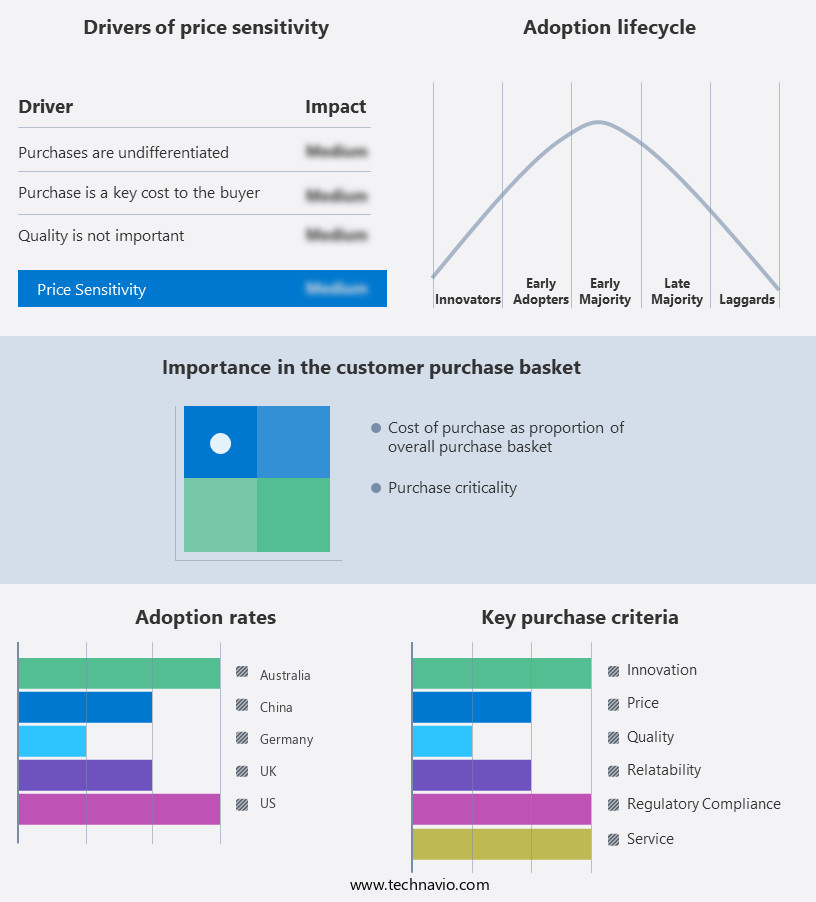
Customer Landscape
Key Companies & Market Insights
Companies are implementing various strategies, such as strategic alliances, low voc paint market forecast, partnerships, mergers and acquisitions, geographical expansion, and product/service launches, to enhance their presence in the industry.
3M Co. - This company specializes in the production and supply of advanced low-volatility paint solutions.
The industry research and growth report includes detailed analyses of the competitive landscape of the market and information about key companies, including:
- 3M Co.
- Aexcel Corp.
- Akzo Nobel NV
- American Formulating and Manufacturing
- Arkema Group.
- Asian Paints Ltd.
- Axalta Coating Systems Ltd.
- BASF SE
- Berger Paints India Ltd
- Berkshire Hathaway Inc.
- Cloverdale Paint Inc.
- Fine Paints of Europe
- Indestructible Paint Ltd.
- Jotun AS
- Kansai Paint Co. Ltd.
- NEI Corp.
- Nippon Paint India Pvt. Ltd.
- PPG Industries Inc.
- Teijin Ltd.
- The Sherwin Williams Co.
Qualitative and quantitative analysis of companies has been conducted to help clients understand the wider business environment as well as the strengths and weaknesses of key industry players. Data is qualitatively analyzed to categorize companies as pure play, category-focused, industry-focused, and diversified; it is quantitatively analyzed to categorize companies as dominant, leading, strong, tentative, and weak.
Recent Development and News in Low VOC Paint Market
- In February 2024, Sherwin-Williams, a leading paint and coatings company, announced the launch of its new line of low volatile organic compound (VOC) paints, called "EcoSpec Low-VOC," which offers superior coverage and reduced odor (Sherwin-Williams Press Release, 2024). This expansion reflects the growing consumer preference for eco-friendly and healthier painting solutions.
- In October 2024, PPG Industries, another major player in the paint industry, formed a strategic partnership with DuPont to develop and commercialize advanced low-VOC coatings using DuPont's innovative resin technology (PPG Industries Press Release, 2024). This collaboration aims to strengthen both companies' market positions and cater to the increasing demand for low-VOC products.
- In March 2025, Axalta Coating Systems, a global coatings manufacturer, completed the acquisition of the European decorative coatings business of AkzoNobel for â¬3.8 billion (Bloomberg, 2025). The acquisition significantly expanded Axalta's presence in Europe and provided access to a broader range of low-VOC paint technologies.
- In July 2025, the European Union's REACH (Registration, Evaluation, Authorization and Restriction of Chemicals) regulation introduced stricter VOC limits for paints, effective from 2027 (European Chemicals Agency, 2025). This regulatory change is expected to drive the adoption of low-VOC paints in Europe, creating new opportunities for market participants.
Research Analyst Overview
The market continues to evolve, driven by shifting market dynamics and increasing demand for eco-friendly and sustainable solutions. Paint coatings play a significant role in green building, as they contribute to energy efficiency and improved indoor air quality. Mineral and bio-based paints are gaining popularity due to their sustainability and low environmental impact. Sustainability certifications and green building standards are influencing the formulation of paint products, leading to the development of water-based paints, zero-VOC paints, and plant-based paints. The focus on health and safety has led to the production of non-toxic paints and a heightened emphasis on proper surface preparation and application techniques.
Paint stripping and removal methods are also undergoing advancements, with a shift towards more environmentally friendly options. Color matching technology continues to advance, enabling precise and accurate color selection. Paint curing time and drying processes are being optimized for improved efficiency and reduced environmental impact. The market for protective coatings, architectural paint, and industrial paint also continues to grow, with a focus on moisture vapor transmission and stain resistance. Roller application and brush application techniques are being refined to ensure even coverage and long-lasting results. The ongoing evolution of paint chemistry and the integration of advanced technologies, such as spray technology and aerosol paint, are shaping the future of the market.
The market's continuous dynamism reflects the industry's commitment to innovation and sustainability.
Dive into Technavio's strong research methodology, blending expert interviews, extensive data synthesis, and validated models for unparalleled Low VOC Paint Market insights. See full methodology.
|
Market Scope |
|
|
Report Coverage |
Details |
|
Page number |
146 |
|
Base year |
2023 |
|
Historic period |
2018-2022 |
|
Forecast period |
2024-2028 |
|
Growth momentum & CAGR |
Accelerate at a CAGR of 4.5% |
|
Market growth 2024-2028 |
USD 1970 million |
|
Market structure |
Fragmented |
|
YoY growth 2023-2024(%) |
4.23 |
|
Key countries |
US, China, Australia, Germany, and UK |
|
Competitive landscape |
Leading Companies, Market Positioning of Companies, Competitive Strategies, and Industry Risks |
What are the Key Data Covered in this Low VOC Paint Market Research and Growth Report?
- CAGR of the Low VOC Paint industry during the forecast period
- Detailed information on factors that will drive the growth and forecasting between 2024 and 2028
- Precise estimation of the size of the market and its contribution of the industry in focus to the parent market
- Accurate predictions about upcoming growth and trends and changes in consumer behaviour
- Growth of the market across APAC, North America, Europe, South America, and Middle East and Africa
- Thorough analysis of the market's competitive landscape and detailed information about companies
- Comprehensive analysis of factors that will challenge the low voc paint market growth of industry companies
We can help! Our analysts can customize this low voc paint market research report to meet your requirements.