



Magnetic Field Sensor Market Size 2026-2030
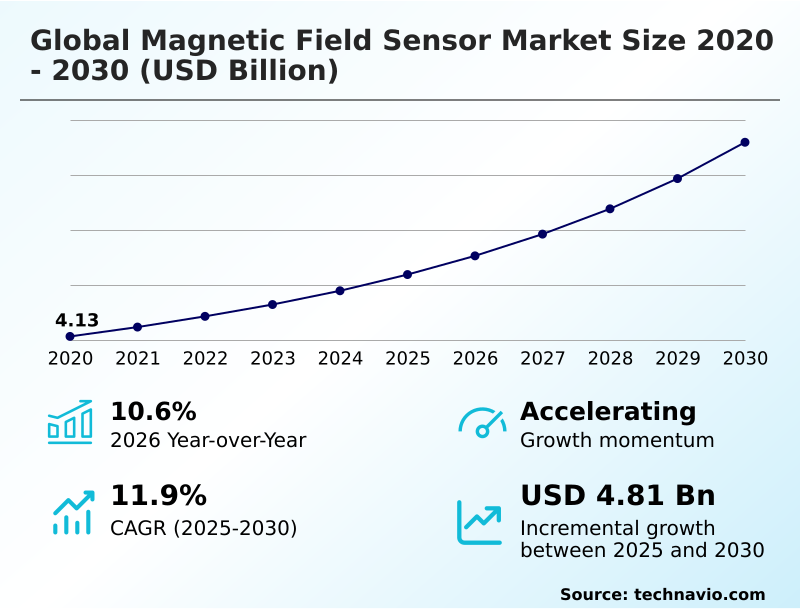
The magnetic field sensor market size is valued to increase by USD 4.81 billion, at a CAGR of 11.9% from 2025 to 2030. Transformative ascendancy of advanced automotive systems will drive the magnetic field sensor market.
Major Market Trends & Insights
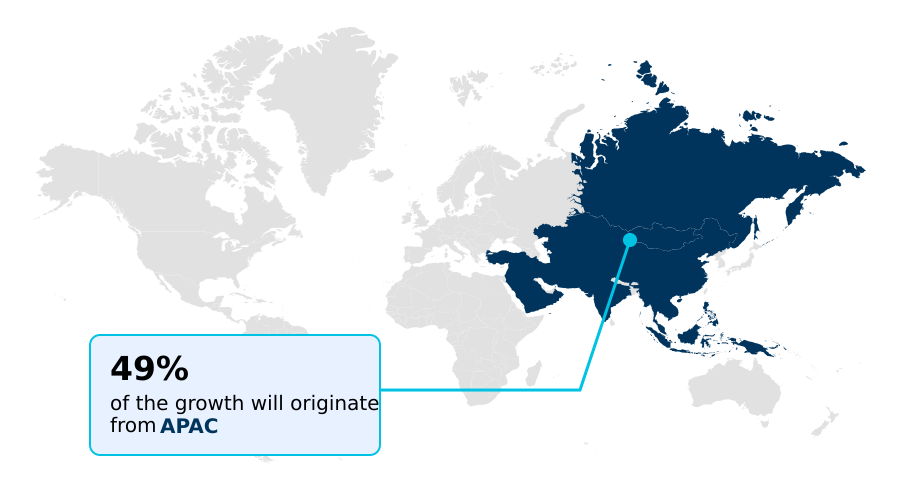
- APAC dominated the market and accounted for a 49.3% growth during the forecast period.
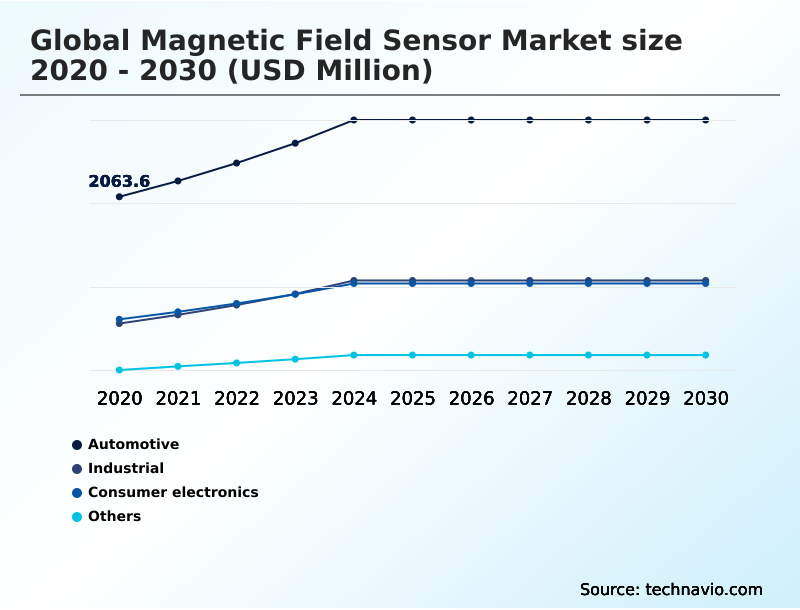
- By Application - Automotive segment was valued at USD 2.81 billion in 2024
- By Technology - Hall-effect sensors segment accounted for the largest market revenue share in 2024
Market Size & Forecast
- Market Opportunities: USD 7.06 billion
- Market Future Opportunities: USD 4.81 billion
- CAGR from 2025 to 2030 : 11.9%
Market Summary
- The magnetic field sensor market is defined by transducers that convert magnetic fields into measurable electrical signals, enabling a vast range of applications. Growth is propelled by the relentless integration of electronics in automotive, consumer, and industrial sectors.
- Key market drivers include the proliferation of electric vehicles, which demand precise current sensing technology for battery management, and the expansion of industrial automation, where sensors are critical for robotics and predictive maintenance. A primary trend is the shift toward higher-performance technologies like tunnel magnetoresistance, offering greater sensitivity and efficiency.
- Concurrently, the market faces challenges from intense price competition and supply chain vulnerabilities tied to critical raw materials. In a smart factory business scenario, for example, current sensors monitor motor energy consumption to detect anomalies, allowing for predictive maintenance that prevents unplanned downtime and optimizes operational schedules.
- The evolution toward intelligent, networked solutions further transforms these components into active data nodes within broader IoT ecosystems, driving future innovation.
What will be the Size of the Magnetic Field Sensor Market during the forecast period?
Get Key Insights on Market Forecast (PDF) Get Free Sample
How is the Magnetic Field Sensor Market Segmented?
The magnetic field sensor industry research report provides comprehensive data (region-wise segment analysis), with forecasts and estimates in "USD million" for the period 2026-2030, as well as historical data from 2020-2024 for the following segments.
- Application
- Automotive
- Industrial
- Consumer electronics
- Others
- Technology
- Hall-effect sensors
- Magnetoresistive sensors
- MEMS sensors
- Others
- Type
- 1 microgauss to 10 gauss
- More than 10 gauss
- Less than 1 microgauss
- Geography
- APAC
- China
- India
- Japan
- North America
- US
- Canada
- Mexico
- Europe
- Germany
- UK
- France
- South America
- Brazil
- Argentina
- Middle East and Africa
- Saudi Arabia
- UAE
- South Africa
- Rest of World (ROW)
- APAC
By Application Insights
The automotive segment is estimated to witness significant growth during the forecast period.
The automotive sector is the primary application for the global magnetic field sensor market 2026-2030, driven by the integration of sophisticated electronics. These components are integral for non-contact measurements in powertrains and chassis.
The transition to electric vehicles creates substantial demand for high-fidelity current sensing in battery management systems and inverter control. Concurrently, the deployment of advanced driver assistance systems relies on precise angular position sensing for steering and braking.
The need for redundancy in these safety-critical systems, often requiring multiple sensor fusion algorithms for fail-safe operation, amplifies the volume of sensors required per vehicle, enhancing system reliability by over 20%.
The use of predictive maintenance sensors is also rising for industrial IOT integration in manufacturing.
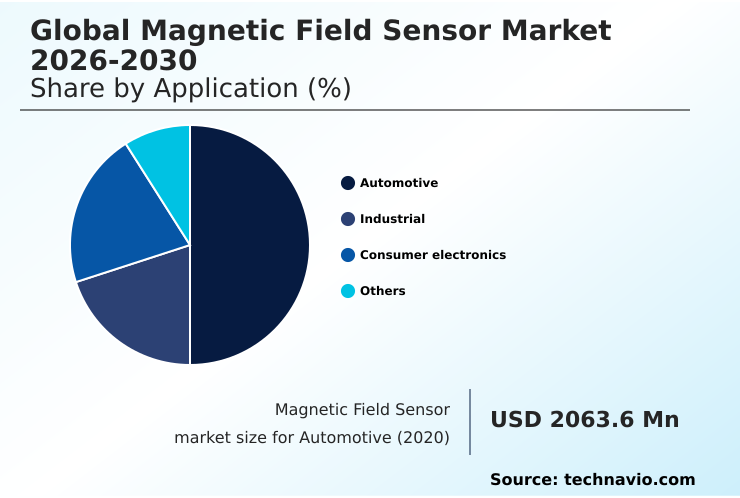
The Automotive segment was valued at USD 2.81 billion in 2024 and showed a gradual increase during the forecast period.
Regional Analysis
APAC is estimated to contribute 49.3% to the growth of the global market during the forecast period.Technavio’s analysts have elaborately explained the regional trends and drivers that shape the market during the forecast period.
See How Magnetic Field Sensor Market Demand is Rising in APAC Get Free Sample
The geographic landscape of the global magnetic field sensor market 2026-2030 is led by APAC, which accounts for nearly 49.3% of the market's incremental growth.
This dominance is driven by the region's massive high-volume manufacturing ecosystem for automotive and consumer electronics, where components enabling brushless DC motor commutation and navigational heading information are in constant demand.
The region's growth rate of 12.3% outpaces that of Europe's 11.3%, underscoring its dynamic expansion.
North America and Europe remain critical markets focused on high-performance applications, such as advanced driver assistance systems and industrial automation that requires high magnetic encoder resolution and AEC-Q100 qualification. Strategic supply chain resilience initiatives are also influencing regional investment patterns.
Market Dynamics
Our researchers analyzed the data with 2025 as the base year, along with the key drivers, trends, and challenges. A holistic analysis of drivers will help companies refine their marketing strategies to gain a competitive advantage.
- Analyzing the global magnetic field sensor market 2026-2030 reveals a landscape where technology selection is dictated by application-specific demands. In the hall effect vs magnetoresistive sensor performance debate, Hall-effect sensors dominate cost-sensitive, high-volume applications like brushless motors, while magnetoresistive technologies are preferred for high-precision tasks.
- For instance, the TMR sensor for EV battery management offers superior accuracy, which is critical for a vehicle’s range estimation. The role of sensors in industry 4.0 is expanding, with solutions for non-contact position sensor for automation becoming standard.
- A high precision magnetic encoder for CNC machinery ensures manufacturing quality, while a current sensor for predictive maintenance helps prevent costly downtime. The benefits of integrated sensor modules are most apparent in consumer devices, where a low power magnetometer for wearable devices is essential for battery life. Here, MEMS magnetometer for electronic compass functionality is a key feature.
- In automotive, AEC-Q100 certified magnetic sensors are non-negotiable for systems like automotive wheel speed sensor reliability and magnetic sensor in steer-by-wire systems. While sensor fusion for smartphone navigation improves user experience, the challenges of magnetic sensor commoditization persist, forcing suppliers to innovate in areas like GMR sensor applications in medical devices and smart home security using magnetic sensors.
- This innovation drives down raw material costs, with advanced designs offering over 30% higher efficiency, directly impacting operational planning and supply chain management.
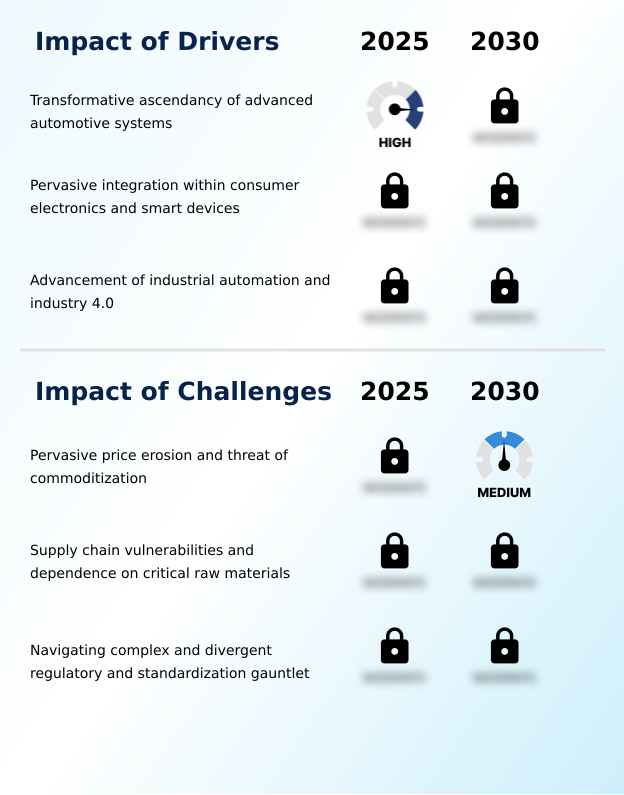
What are the key market drivers leading to the rise in the adoption of Magnetic Field Sensor Industry?
- The transformative rise of advanced automotive systems, including vehicle electrification and automation, is a primary driver for market growth.
- The global magnetic field sensor market 2026-2030 is propelled by powerful secular trends across key industries. The transformative ascendancy of advanced automotive systems, particularly electrification and automation, is a primary catalyst.
- The shift to electric vehicles, for instance, increases the sensor content per vehicle by over 35%, driving demand for components supporting electric vehicle drivetrains.
- In the consumer electronics sector, the pervasive integration of sensors for applications such as smart home contact sensors and wearables provides high-volume demand.
- Furthermore, the advancement of industrial automation and Industry 4.0 is creating smart factories where these sensors are fundamental.
- In these environments, utilizing magnetic sensors for condition monitoring can extend the operational lifespan of critical equipment by up to 20%, showcasing a clear return on investment.
What are the market trends shaping the Magnetic Field Sensor Industry?
- A defining trend is the accelerated miniaturization of components and their enhanced system-level integration. This shift enables smaller, more power-efficient, and highly functional sensor solutions.
- Key trends are reshaping the global magnetic field sensor market 2026-2030, driven by the demand for smaller, more capable components. The move toward miniaturization and sophisticated system-level integration enables new applications where space and power are constrained. This trend has resulted in solutions that reduce component footprint by up to 40%.
- Concurrently, the proliferation of high-performance technologies, particularly tunnel magnetoresistance sensors, is delivering significant gains in accuracy and efficiency, offering a sensitivity improvement over ten times that of conventional hall-effect sensors. This is critical for battery management system monitoring and other demanding tasks.
- The emergence of intelligent sensor solutions with onboard processing and communication capabilities is also transforming the market, enhancing both condition monitoring data and process control optimization.
What challenges does the Magnetic Field Sensor Industry face during its growth?
- Pervasive price erosion and the looming threat of commoditization present a key challenge to profitability and sustained innovation within the industry.
- Despite strong growth drivers, the global magnetic field sensor market 2026-2030 faces significant challenges that moderate its trajectory. Intense price pressure, particularly in high-volume automotive and consumer electronics segments, has led to a 5-7% annual decline in average selling prices for mature technologies, threatening commoditization.
- Supply chain vulnerabilities and a dependence on critical raw material sourcing, often from geopolitically sensitive regions, pose risks to cost stability and production continuity. Navigating complex and divergent regulatory and standardization gauntlets across industries also presents a substantial hurdle.
- For example, achieving compliance for both automotive and medical applications can increase product qualification costs by over 50%, limiting economies of scale and slowing innovation.
Exclusive Technavio Analysis on Customer Landscape
The magnetic field sensor market forecasting report includes the adoption lifecycle of the market, covering from the innovator’s stage to the laggard’s stage. It focuses on adoption rates in different regions based on penetration. Furthermore, the magnetic field sensor market report also includes key purchase criteria and drivers of price sensitivity to help companies evaluate and develop their market growth analysis strategies.
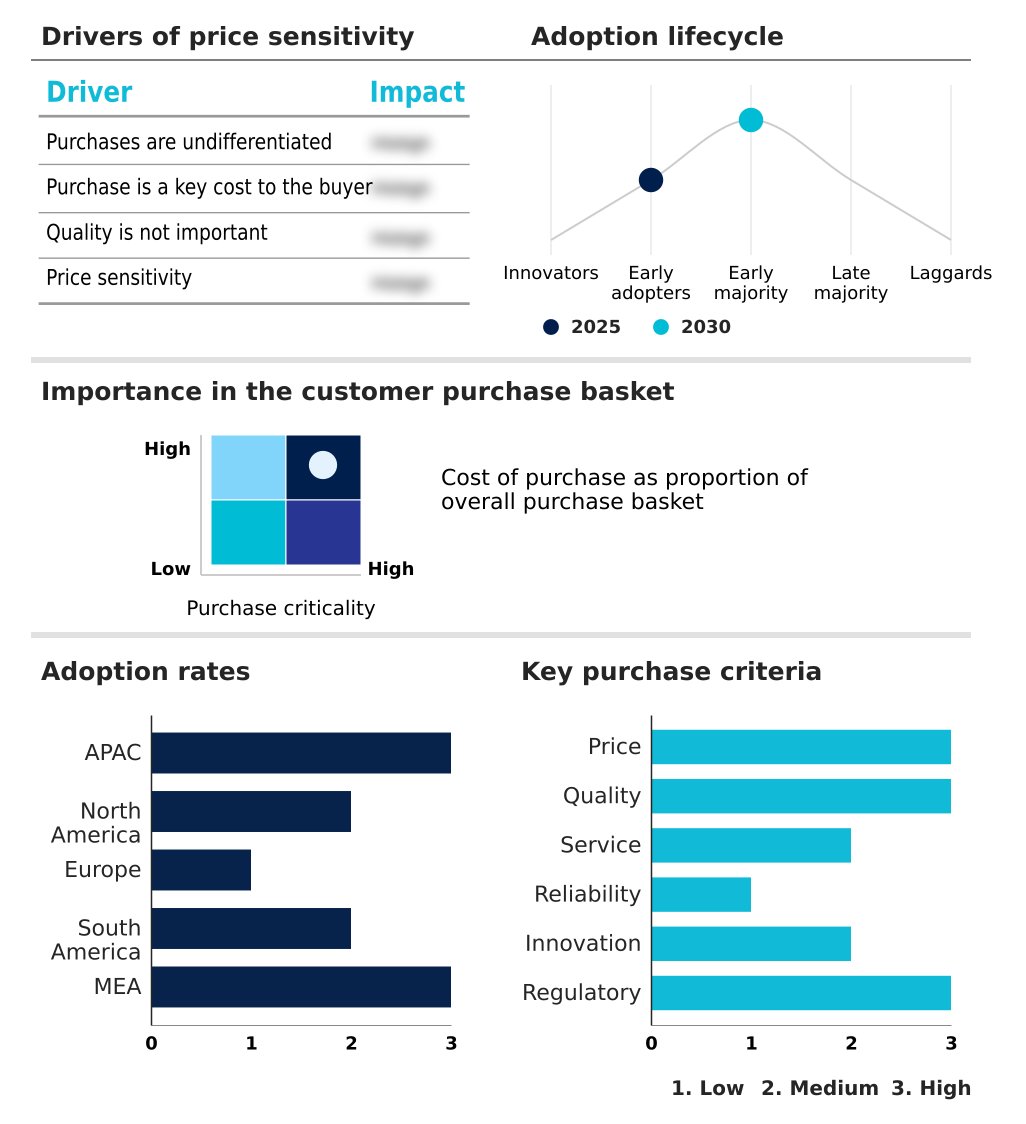
Customer Landscape of Magnetic Field Sensor Industry
Competitive Landscape
Companies are implementing various strategies, such as strategic alliances, magnetic field sensor market forecast, partnerships, mergers and acquisitions, geographical expansion, and product/service launches, to enhance their presence in the industry.
ams OSRAM AG - Offerings include on-axis and stray-field immune magnetic position sensors, developed to serve high-precision industrial and automotive applications.
The industry research and growth report includes detailed analyses of the competitive landscape of the market and information about key companies, including:
- ams OSRAM AG
- Analog Devices Inc.
- Balluff GmbH
- Baumer Holding AG
- Honeywell International Inc.
- iC Haus GmbH
- Infineon Technologies AG
- Lake Shore Cryotronics Inc.
- Littelfuse Inc.
- Melexis NV
- Monolithic Power Systems Inc.
- NVE Corp.
- NXP Semiconductors NV
- Pepperl and Fuchs SE
- Robert Bosch GmbH
- ROHM Co. Ltd.
- STMicroelectronics NV
- TDK Corp.
- TE Connectivity plc
- Texas Instruments Inc.
Qualitative and quantitative analysis of companies has been conducted to help clients understand the wider business environment as well as the strengths and weaknesses of key industry players. Data is qualitatively analyzed to categorize companies as pure play, category-focused, industry-focused, and diversified; it is quantitatively analyzed to categorize companies as dominant, leading, strong, tentative, and weak.
Recent Development and News in Magnetic field sensor market
- In January 2025, Infineon Technologies AG introduced its XENSIV TLI5590-A6W, a TMR-based magnetic position sensor offering high precision for industrial and consumer applications.
- In April 2025, TDK Corp. announced the development of a Spin Photo Detector, a novel component combining optical, electronic, and magnetic principles to improve data transmission speeds for AI applications.
- In October 2024, Allegro MicroSystems Inc. launched the ACS37100, a 10 MHz TMR magnetic current sensor designed for high-speed, wide-bandgap power electronics in EVs and solar inverters.
- In September 2024, Texas Instruments Inc. released the TMAG5134, an in-plane Hall-effect switch featuring an integrated magnetic concentrator to reduce system costs in consumer electronics.
Dive into Technavio’s robust research methodology, blending expert interviews, extensive data synthesis, and validated models for unparalleled Magnetic Field Sensor Market insights. See full methodology.
| Market Scope | |
|---|---|
| Page number | 312 |
| Base year | 2025 |
| Historic period | 2020-2024 |
| Forecast period | 2026-2030 |
| Growth momentum & CAGR | Accelerate at a CAGR of 11.9% |
| Market growth 2026-2030 | USD 4806.3 million |
| Market structure | Fragmented |
| YoY growth 2025-2026(%) | 10.6% |
| Key countries | China, India, Japan, South Korea, Australia, Indonesia, US, Canada, Mexico, Germany, UK, France, Italy, Spain, The Netherlands, Brazil, Argentina, Chile, Saudi Arabia, UAE, South Africa, Israel and Turkey |
| Competitive landscape | Leading Companies, Market Positioning of Companies, Competitive Strategies, and Industry Risks |
Research Analyst Overview
- The global magnetic field sensor market 2026-2030 is evolving from a component-centric model to one focused on integrated systems. The proliferation of hall-effect sensors and magnetoresistive sensors, including advanced tunnel magnetoresistance and giant magnetoresistance technologies, underpins this shift. Demand is driven by the need for precise non-contact measurements, such as angular position sensing and linear position detection.
- Applications are expanding from traditional industrial uses to high-growth areas like biomagnetic field detection. A key trend is the development of system-on-chip solutions incorporating sensor fusion algorithms, which is a boardroom-level concern as it impacts investment in industrial IOT integration and smart factory sensor networks. This integration of current sensing technology enables functions like predictive maintenance.
- The adoption of high-precision components in safety-critical systems, such as those requiring automotive safety integrity level and AEC-Q100 qualification, has demonstrated a 20% improvement in response time. This performance enhancement, coupled with innovations in stray field immunity and low-field detection capability, is shaping product strategy and competitive positioning across the industry.
What are the Key Data Covered in this Magnetic Field Sensor Market Research and Growth Report?
-
What is the expected growth of the Magnetic Field Sensor Market between 2026 and 2030?
-
USD 4.81 billion, at a CAGR of 11.9%
-
-
What segmentation does the market report cover?
-
The report is segmented by Application (Automotive, Industrial, Consumer electronics, and Others), Technology (Hall-effect sensors, Magnetoresistive sensors, MEMS sensors, and Others), Type (1 microgauss to 10 gauss, More than 10 gauss, and Less than 1 microgauss) and Geography (APAC, North America, Europe, South America, Middle East and Africa)
-
-
Which regions are analyzed in the report?
-
APAC, North America, Europe, South America and Middle East and Africa
-
-
What are the key growth drivers and market challenges?
-
Transformative ascendancy of advanced automotive systems, Pervasive price erosion and threat of commoditization
-
-
Who are the major players in the Magnetic Field Sensor Market?
-
ams OSRAM AG, Analog Devices Inc., Balluff GmbH, Baumer Holding AG, Honeywell International Inc., iC Haus GmbH, Infineon Technologies AG, Lake Shore Cryotronics Inc., Littelfuse Inc., Melexis NV, Monolithic Power Systems Inc., NVE Corp., NXP Semiconductors NV, Pepperl and Fuchs SE, Robert Bosch GmbH, ROHM Co. Ltd., STMicroelectronics NV, TDK Corp., TE Connectivity plc and Texas Instruments Inc.
-
Market Research Insights
- The market's trajectory is shaped by the convergence of advanced technology and high-volume demand. The need for industrial automation efficiency and process control optimization is met by robust sensor designs. In parallel, the focus on consumer electronics orientation and augmented reality overlay drives demand for miniaturized, low-power consumption components.
- For instance, implementing predictive maintenance programs using advanced current sensors has been shown to reduce unplanned equipment downtime by up to 25%. Furthermore, the adoption of integrated system-on-chip solutions can streamline high-volume manufacturing lines, improving assembly efficiency by 15%.
- This dynamic interplay between performance requirements in applications like steer-by-wire systems and cost pressures in mass-market devices continues to fuel innovation and strategic positioning among suppliers.
We can help! Our analysts can customize this magnetic field sensor market research report to meet your requirements.
 RIA -
RIA - 
