

Germany Major Home Appliance Market Size 2024-2028
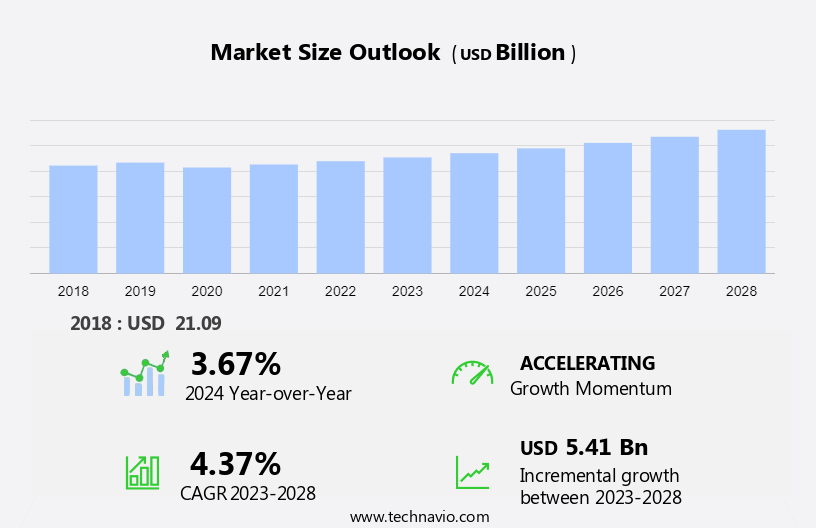
The Germany major home appliance market size is forecast to increase by USD 5.41 billion at a CAGR of 4.37% between 2023 and 2028.
- The market is witnessing significant growth due to several key factors. One of the primary drivers is the increasing emphasis on health and hygiene, leading to a rise in demand for appliances that cater to these needs. Additionally, the trend toward smart and connected home appliances is gaining momentum, as consumers seek convenience and energy efficiency. However, market participants face challenges such as fluctuating raw material prices and operating costs, which can impact profitability. The primary raw materials used in appliance production are plastic, steel, and rubber, and their prices are highly sensitive to international market fluctuations. Overall, the market is expected to experience steady growth In the coming years, driven by these trends and factors.
What will be the size of the Germany Major Home Appliance Market during the forecast period?
- The market is a significant sector within the European household goods industry, encompassing a wide range of large and small appliances. This market exhibits strong growth, with double-digit expansion rates driven by consumer preferences for energy-efficient, eco-friendly, and smart home appliances. Key product categories include dishwashers, refrigerators, washing machines, ovens, and various kitchen appliances such as vacuum cleaners, water heaters, purifiers, irons, microwave ovens, and stoves and ovens.
- Trends include the increasing popularity of built-in dishwashers and smart dishwashers, as well as the growing demand for smaller, more compact appliances suitable for smaller households. Smart home integration and reduced carbon footprint are also major factors driving market growth, with consumers increasingly seeking appliances that can be seamlessly integrated into smart home systems.
How is this market segmented and which is the largest segment?
The market research report provides comprehensive data (region-wise segment analysis), with forecasts and estimates in "USD billion" for the period 2024-2028, as well as historical data from 2018-2022 for the following segments.
- Distribution Channel
- Offline
- Online
- Product
- Refrigerators and freezers
- Washing and drying appliances
- Heating and cooling appliances
- Cooking appliances
- End-user
- Residential
- Commercial
- Geography
- Germany
By Distribution Channel Insights
- The offline segment is estimated to witness significant growth during the forecast period.
The offline distribution channel plays a significant role In the market. This traditional method involves selling appliances through physical retailers, wholesalers, and resellers. Consumers in Germany often prefer this approach, as it allows them to personally evaluate appliances before purchasing. Major home appliances encompass household refrigerators, dishwashers, air conditioners, washing machines, vacuum cleaners, and various kitchen devices. These appliances include built-in and freestanding dishwashers, smart dishwashers, refrigerators, freezers, cookers & ovens, small kitchen appliances, and more. Energy efficiency, faster cooling, and efficient cleaning are essential features driving demand.
Additionally, consumers seek smart home integration, eco-friendly appliances, and reduced carbon footprint. The offline distribution channel caters to these demands by offering a wide range of appliances, ensuring a personal shopping experience.
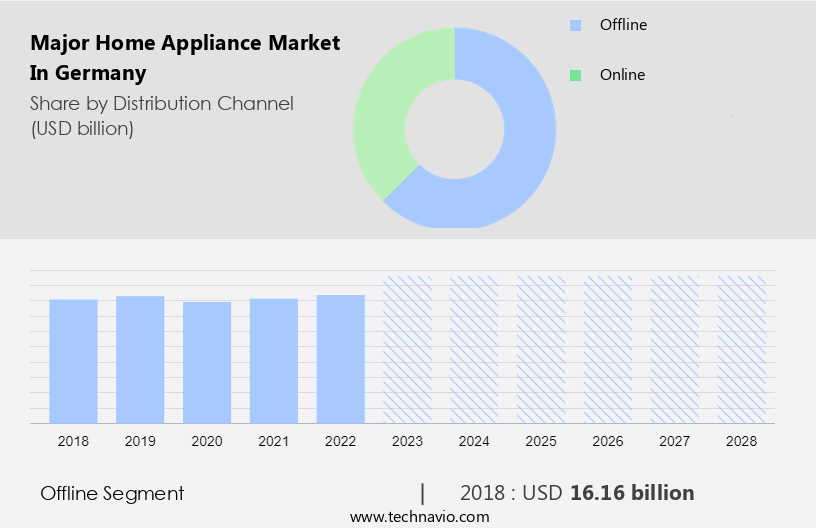
Get a glance at the market share of various segments Request Free Sample
The Offline segment was valued at USD 16.16 billion in 2018 and showed a gradual increase during the forecast period.
Market Dynamics
Our researchers analyzed the data with 2023 as the base year, along with the key drivers, trends, and challenges. A holistic analysis of drivers will help companies refine their marketing strategies to gain a competitive advantage.
What are the key market drivers leading to the rise in adoption of Germany Major Home Appliance Market?
Increasing focus on health and hygiene spurring use of major home appliances is the key driver of the market.
- In Germany, the major home appliance market encompasses a wide range of household goods and consumer appliances, including green large appliances and smart home appliances. Double-digit growth rates are observed in sectors such as dishwashers, both built-in and freestanding, as well as smart dishwashers. Household refrigerators and refrigerators, with their faster cooling capabilities, continue to be popular choices. Air conditioners, with their efficient cleaning features, are also gaining traction. Washing machines, vacuum cleaners, and induction hobs are among the big household appliances that are in high demand. Small appliances, such as hair clippers, irons, toasters, grills & roasters, hair dryers, and household appliances like ovens, are essential for smaller households.
- Eco-friendly appliances, which offer a reduced carbon footprint, are increasingly preferred. Smart home integration and smart home systems are key trends, with kitchen appliances, white goods, water heaters, and purifiers leading the way. Small household appliances, including dishwashing products, lighting fixtures, home entertainment systems, and smart home gadgets, are also popular. The market for major home appliances in Germany is dynamic, with a focus on innovation and advanced technology to meet the evolving needs of consumers.
What are the market trends shaping the Germany Major Home Appliance Market?
Smart and connected home appliances gaining traction is the upcoming trend In the market.
- The market is experiencing significant growth due to increasing consumer demand for smart and eco-friendly appliances. Household goods, including consumer appliances such as dishwashers, refrigerators, air conditioners, washing machines, vacuum cleaners, and small appliances, are in high demand. Smart home appliances, including induction hobs, smart dishwashers, and built-in refrigerators, are gaining popularity due to their efficient cleaning, faster cooling, and smart home integration. Germany's growing economy and changing lifestyle trends are contributing factors to the market's growth. Nuclear families and smaller households are on the rise, leading to an increase in demand for compact and energy-efficient appliances.
- The popularity of modular kitchens and changing eating habits are also driving the demand for large home appliances like built-in refrigerators and freestanding dishwashers. Eco-friendly appliances, such as green large appliances and water heaters, are becoming increasingly popular as consumers seek to reduce their carbon footprint. companies, including Haier Electronics Group, LG Electronics, and Electrolux AB, are meeting this demand by offering smart and connected home appliances, such as smart dishwashers and refrigerators, which are designed to make daily tasks easier and more efficient. Overall, the market is expected to continue experiencing double-digit growth rates during the forecast period.
What challenges does Germany Major Home Appliance Market face during the growth?
Fluctuations in raw material prices and operating costs is a key challenge affecting the market growth.
- The market is characterized by continuous innovation and competition, driven by consumer demand for energy-efficient and smart household goods. Home appliances, including large and small kitchen appliances, household refrigerators, air conditioners, washing machines, vacuum cleaners, and built-in and freestanding dishwashers, are in high demand. Smart home appliances, such as Smart Dishwashers and induction hobs, are gaining popularity due to their efficient cleaning and faster cooling capabilities. Eco-friendly appliances with reduced carbon footprints are increasingly preferred, as are appliances with smart home integration and smart home systems. The market for big household appliances, such as refrigerators, freezers, dishwashing machines, cookers & ovens, and small kitchen appliances, is growing at double-digit rates.
- Household appliances, including irons, hair clippers, toasters, grills & roasters, hair dryers, and water heaters, also contribute significantly to the market. Manufacturers face challenges such as fluctuating raw material prices, which directly impact product prices and profit margins. The cost of transportation, influenced by petroleum prices, also affects the final product price. Despite these challenges, companies invest in R&D to upgrade their products with the latest technologies to remain competitive.
Exclusive Germany Major Home Appliance Market Customer Landscape
The market forecasting report includes the adoption lifecycle of the market, covering from the innovator's stage to the laggard's stage. It focuses on adoption rates in different regions based on penetration. Furthermore, the report also includes key purchase criteria and drivers of price sensitivity to help companies evaluate and develop their market growth analysis strategies.
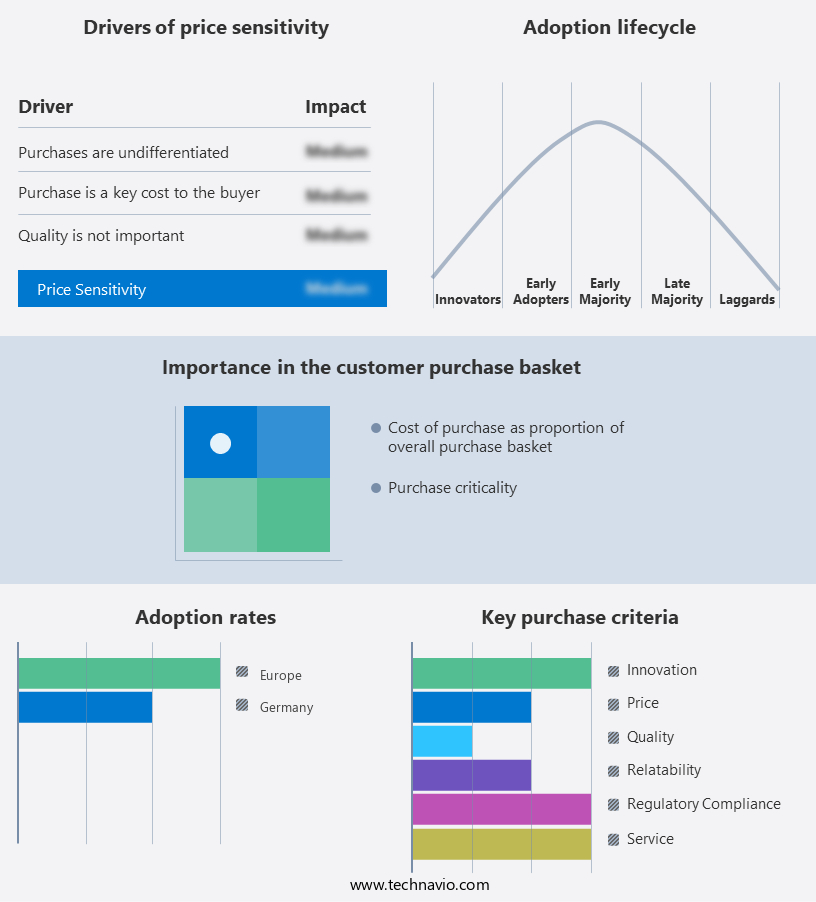
Customer Landscape
Key Companies & Market Insights
Companies are implementing various strategies, such as strategic alliances, market forecast partnerships, mergers and acquisitions, geographical expansion, and product/service launches, to enhance their presence In the market.
The market research and growth report includes detailed analyses of the competitive landscape of the market and information about key companies, including:
- AB Electrolux
- Arcelik A.S.
- Dyson Group Co.
- Haier Smart Home Co. Ltd.
- Hisense International Co. Ltd.
- Hitachi Ltd.
- iRobot Corp.
- Koninklijke Philips N.V.
- LG Electronics Inc.
- Liebherr International Deutschland GmbH
- Midea Group Co. Ltd.
- Miele and Cie. KG
- Mitsubishi Electric Corp.
- Panasonic Holdings Corp.
- Robert Bosch GmbH
- Samsung Electronics Co. Ltd.
- SEB Developpement SA
- Siemens AG
- Smeg S.p.a.
- Whirlpool Corp.
Qualitative and quantitative analysis of companies has been conducted to help clients understand the wider business environment as well as the strengths and weaknesses of key market players. Data is qualitatively analyzed to categorize companies as pure play, category-focused, industry-focused, and diversified; it is quantitatively analyzed to categorize companies as dominant, leading, strong, tentative, and weak.
Research Analyst Overview
The market is characterized by a strong demand driven by several factors. Consumers' preference for convenience, efficiency, and advanced technology continues to fuel the growth of this market. Home appliances, also referred to as household goods or consumer appliances, encompass a wide range of products, including large appliances and small appliances. Large home appliances, such as refrigerators, dishwashers, and air conditioners, are popular choices among German consumers. Refrigerators, a vital kitchen device for food storage, are in high demand due to their faster cooling capabilities and larger capacities. Dishwashers, available in built-in and freestanding versions, offer efficient cleaning solutions for households.
Moreover, smart dishwashers, integrating advanced technology, are gaining traction due to their convenience and energy savings. Another significant category within large appliances is air conditioners. With increasing temperatures and the desire for comfortable living conditions, air conditioners are becoming increasingly popular in German households. Energy efficiency and quiet operation are key considerations for consumers in this segment. Small appliances, including vacuum cleaners, induction hobs, and kitchen gadgets, cater to the needs of smaller households and those with specific cooking requirements. Induction hobs, for instance, offer faster heating and energy savings compared to traditional stovetops. Small appliances are also increasingly being integrated into smart home systems for added convenience and functionality.
Furthermore, eco-friendly appliances, with a reduced carbon footprint, are gaining popularity In the German market. These appliances cater to consumers' growing concerns about the environment and their desire for sustainable living. Smart home integration is another key trend, with consumers seeking appliances that can be controlled remotely and integrated into their smart home systems. The German home appliance market is expected to experience double-digit growth rates due to these trends and the increasing demand for advanced technology and convenience. The market is diverse, with a range of products catering to various household sizes and preferences. Whether it's a household refrigerator, a dishwasher, or a smart home gadget, there's a home appliance to suit every need.
|
Market Scope |
|
|
Report Coverage |
Details |
|
Page number |
146 |
|
Base year |
2023 |
|
Historic period |
2018-2022 |
|
Forecast period |
2024-2028 |
|
Growth momentum & CAGR |
Accelerate at a CAGR of 4.37% |
|
Market Growth 2024-2028 |
USD 5.41 billion |
|
Market structure |
Fragmented |
|
YoY growth 2023-2024(%) |
3.67 |
|
Competitive landscape |
Leading Companies, Market Positioning of Companies, Competitive Strategies, and Industry Risks |
What are the Key Data Covered in this Market Report?
- CAGR of the market during the forecast period
- Detailed information on factors that will drive the market growth and forecasting between 2024 and 2028
- Precise estimation of the size of the market and its contribution of the market in focus to the parent market
- Accurate predictions about upcoming market growth and trends and changes in consumer behaviour
- Growth of the market across Germany
- Thorough analysis of the market's competitive landscape and detailed information about companies
- Comprehensive analysis of factors that will challenge the growth of market companies
We can help! Our analysts can customize this market research report to meet your requirements Get in touch
 RIA -
RIA -