



Media Asset Management (Mam) Solutions Market Size 2026-2030
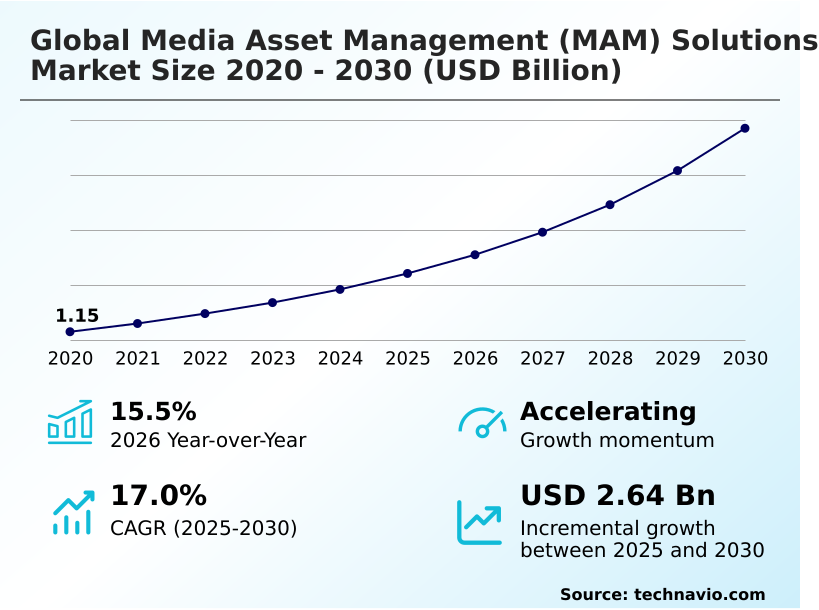
The media asset management (mam) solutions market size is valued to increase by USD 2.64 billion, at a CAGR of 17% from 2025 to 2030. Exponential surge in digital video consumption across global platforms will drive the media asset management (mam) solutions market.
Major Market Trends & Insights
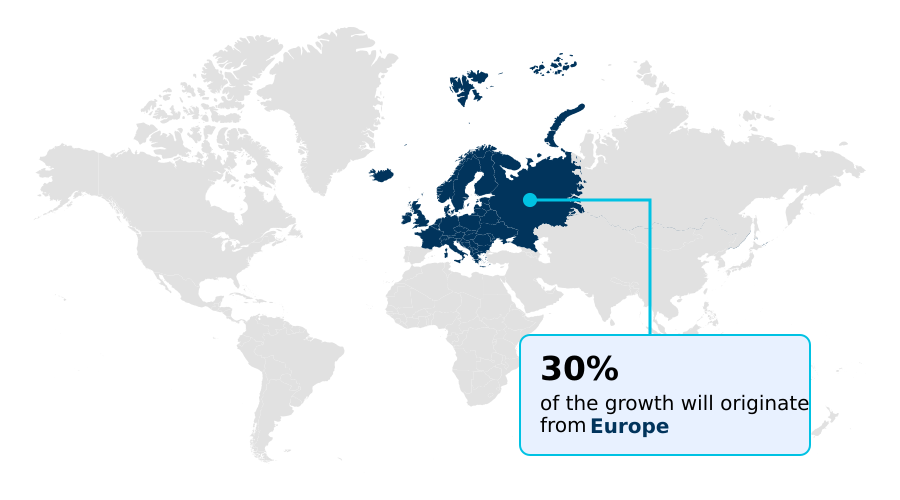
- Europe dominated the market and accounted for a 29.9% growth during the forecast period.
- By Deployment - On-premises segment was valued at USD 1.19 billion in 2024
- By Type - Small and medium size enterprise segment accounted for the largest market revenue share in 2024
Market Size & Forecast
- Market Opportunities: USD 3.70 billion
- Market Future Opportunities: USD 2.64 billion
- CAGR from 2025 to 2030 : 17%
Market Summary
- The Media Asset Management (MAM) Solutions Market is rapidly transitioning from passive archive storage into highly intelligent, automated workflow orchestration hubs. Media organizations and corporate marketing teams face immense pressure to deliver personalized, multiformat rich media across diverse digital endpoints.
- This operational necessity drives the deployment of advanced software platforms featuring browser based access, allowing distributed production teams to collaborate simultaneously via edge computing deployments. In modern distribution environments, smart content discovery can reduce manual video cataloging time by up to 60%, significantly lowering overhead costs and accelerating time-to-market.
- The primary catalyst for this adoption is the exponential growth of digital streaming platforms, which forces broadcasters to systematically index and repurpose legacy content to capture shifting audience demographics. Conversely, the transition to decentralized computing introduces a severe structural challenge, as unauthorized data exposure within third-party servers necessitates heavy investments in multi factor authentication and end to end encryption.
- Consequently, balancing frictionless remote access with rigorous intellectual property protection remains a critical priority for enterprise technology administrators.
What will be the Size of the Media Asset Management (Mam) Solutions Market during the forecast period?
Get Key Insights on Market Forecast (PDF) Get Free Sample
How is the Media Asset Management (Mam) Solutions Market Segmented?
The media asset management (mam) solutions industry research report provides comprehensive data (region-wise segment analysis), with forecasts and estimates in "USD million" for the period 2026-2030, as well as historical data from 2020-2024 for the following segments.
- Deployment
- On-premises
- Cloud
- Type
- Small and medium size enterprise
- Large enterprise
- End-user
- Media and entertainment
- Advertising and marketing
- Education and e-learning
- Others
- Geography
- North America
- US
- Canada
- Mexico
- Europe
- UK
- Germany
- France
- Italy
- Spain
- The Netherlands
- APAC
- China
- Japan
- India
- South Korea
- Australia
- Indonesia
- South America
- Brazil
- Argentina
- Chile
- Middle East and Africa
- Saudi Arabia
- UAE
- South Africa
- Israel
- Turkey
- North America
By Deployment Insights
The on-premises segment is estimated to witness significant growth during the forecast period.
The Media Asset Management (MAM) Solutions Market demonstrates distinct adoption behaviors based on infrastructure control requirements and data sovereignty mandates. On-premises frameworks provide organizations with localized compute servers that completely insulate high-value intellectual property from external network vulnerabilities.
This architecture eliminates volume-dependent data egress fees associated with processing ultra high definition formats, resulting in operating cost efficiencies that improve by up to 25% for high-throughput broadcasting facilities.
Maintaining a centralized media repository within a private data center guarantees ultra-low latency connections necessary for frame accurate editing and live channel origination.
By implementing strict role based access and internal zero trust security protocols, media enterprises enforce absolute compliance while utilizing digital piracy protection to mitigate the risks of unauthorized content distribution across omnichannel distribution frameworks.
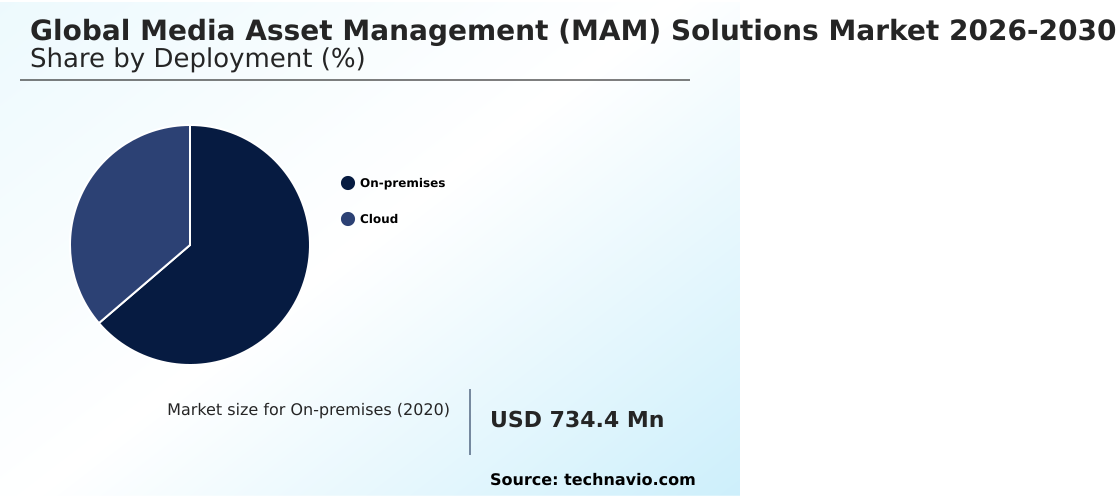
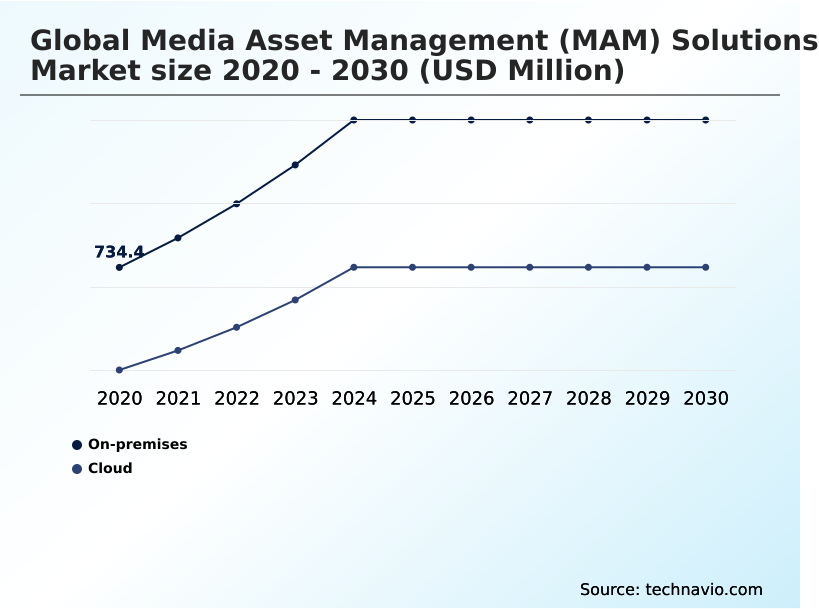
The On-premises segment was valued at USD 1.19 billion in 2024 and showed a gradual increase during the forecast period.
Regional Analysis
Europe is estimated to contribute 29.9% to the growth of the global market during the forecast period.Technavio’s analysts have elaborately explained the regional trends and drivers that shape the market during the forecast period.
See How Media Asset Management (Mam) Solutions Market Demand is Rising in Europe Get Free Sample
The Media Asset Management (MAM) Solutions Market exhibits distinct regional trajectories driven by varying infrastructure maturity and content consumption patterns.
North America dominates adoption due to a highly concentrated ecosystem of major Hollywood studios migrating toward cloud native orchestration, resulting in a 40% faster deployment rate of remote post-production tools compared to Europe.
European broadcasters, conversely, prioritize stringent digital rights management and automated compliance screening to adhere to localized data sovereignty laws.
Meanwhile, the APAC region demonstrates an aggressive shift toward mobile-first digital broadcasting, where telecommunications infrastructure upgrades support a 25% increase in high capacity storage nodes utilization for regional streaming hubs.
These divergent infrastructural realities compel software developers to customize their go-to-market strategies, offering ultra-secure architectures in Europe while pushing elastic scalability parameters across rapidly expanding Asian media ecosystems.
Market Dynamics
Our researchers analyzed the data with 2025 as the base year, along with the key drivers, trends, and challenges. A holistic analysis of drivers will help companies refine their marketing strategies to gain a competitive advantage.
- The continuous evolution of the Media Asset Management (MAM) Solutions Market requires enterprises to completely rethink their operational supply chains to support heavy digital workflows. Central to this transformation is the deployment of automated video metadata generation engines, which utilize machine learning indexing to instantly tag, categorize, and log massive volumes of daily production footage.
- This immediate categorization capability enables editors to locate exact visual sequences significantly faster than manual archiving methods, increasing overall studio output capacity by nearly 50% compared to legacy setups without requiring additional headcount.
- Organizations are simultaneously adopting cloud native media asset orchestration to coordinate complex tasks across disparate geographic locations, allowing colorists and audio engineers to work collaboratively on identical master files with zero latency in real time rendering.
- As broadcasting networks upgrade their live news infrastructures, the integration of ai assisted broadcast newsroom workflows fundamentally changes how breaking stories are assembled and distributed, minimizing the lag between ingest and transmission.
- To balance the high costs of active digital storage, technology directors are implementing sophisticated hybrid content storage archive management protocols, which intelligently route frequently accessed files to premium fast-tier servers while moving legacy material to cost-effective cold storage.
- Finally, the establishment of comprehensive omnichannel video content distribution systems ensures that final commercial assets are correctly formatted and seamlessly pushed to diverse social media platforms, video on demand networks, and traditional linear television feeds concurrently.
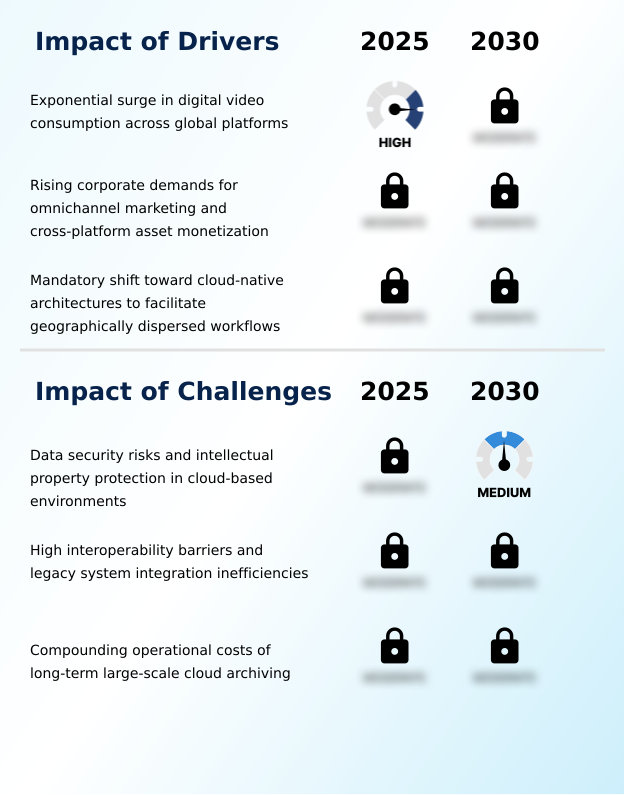
What are the key market drivers leading to the rise in the adoption of Media Asset Management (Mam) Solutions Industry?
- An exponential surge in digital video consumption across streaming platforms serves as a primary catalyst accelerating the adoption of sophisticated content orchestration frameworks.
- The necessity to streamline remote collaboration across geographically dispersed production teams acts as a dominant driver propelling the Media Asset Management (MAM) Solutions Market. As organizations embrace decentralized workforce environments, traditional localized storage becomes entirely impractical for heavy media workloads.
- Businesses implement proxy based workflows and file transcoding engines to enable editors to manipulate lightweight files via standard internet connections. This architectural adjustment causes network bandwidth consumption to drop by up to 60%, drastically lowering telecommunications expenses.
- The effect is a highly elastic production environment where multinational studios can decrease time-to-market for premium content by 25%.
- Centralizing these operations within a secure digital perimeter ensures that all stakeholders have instant, synchronized access to mission-critical creative assets necessary for seamless broadcast playout automation.
What are the market trends shaping the Media Asset Management (Mam) Solutions Industry?
- The deep integration of multimodal artificial intelligence and machine learning models for automated metadata enrichment represents a definitive industry trend. This technological advancement significantly accelerates content discovery and optimizes archive monetization across modern distribution channels.
- The pervasive adoption of automated metadata enrichment and multimodal artificial intelligence marks a fundamental trend redefining the Media Asset Management (MAM) Solutions Market. Media enterprises are moving away from manual cataloging to automated ingestion pipelines that analyze visual and auditory data instantaneously.
- Because manual logging creates severe production bottlenecks, the shift toward intelligent audio ducking automation and facial recognition software reduces archival processing times by over 45%. This automation directly impacts business operations by allowing creative teams to repurpose existing interactive graphic assets with 30% greater efficiency, maximizing the lifecycle value of historical media.
- Furthermore, integrating neural machine translation directly into central asset hubs accelerates global distribution, ensuring that international content variants are generated seamlessly to meet immediate consumer demand across diverse regional endpoints.
What challenges does the Media Asset Management (Mam) Solutions Industry face during its growth?
- Escalating data security risks and complex intellectual property protection requirements within decentralized cloud environments present substantial structural challenges to sustained industry expansion.
- The structural complexities associated with legacy system integration create persistent operational friction within the Media Asset Management (MAM) Solutions Market. Many established broadcasting networks rely on disparate, older-generation storage area networks that lack native interoperability with modern hybrid storage architectures.
- Because bridging these fragmented systems requires highly customized software hooks, engineering teams experience integration latencies that can increase deployment timelines by up to 40%. This lack of metadata schema standardization causes significant data packet loss during major archive migrations, inadvertently inflating IT troubleshooting costs by 20%.
- Consequently, technology administrators face an ongoing challenge balancing the immediate need for advanced media asset accessibility, secured by forensic watermarking tools, against the escalating financial burden of maintaining custom middleware and resolving structural network incompatibilities.
Exclusive Technavio Analysis on Customer Landscape
The media asset management (mam) solutions market forecasting report includes the adoption lifecycle of the market, covering from the innovator’s stage to the laggard’s stage. It focuses on adoption rates in different regions based on penetration. Furthermore, the media asset management (mam) solutions market report also includes key purchase criteria and drivers of price sensitivity to help companies evaluate and develop their market growth analysis strategies.
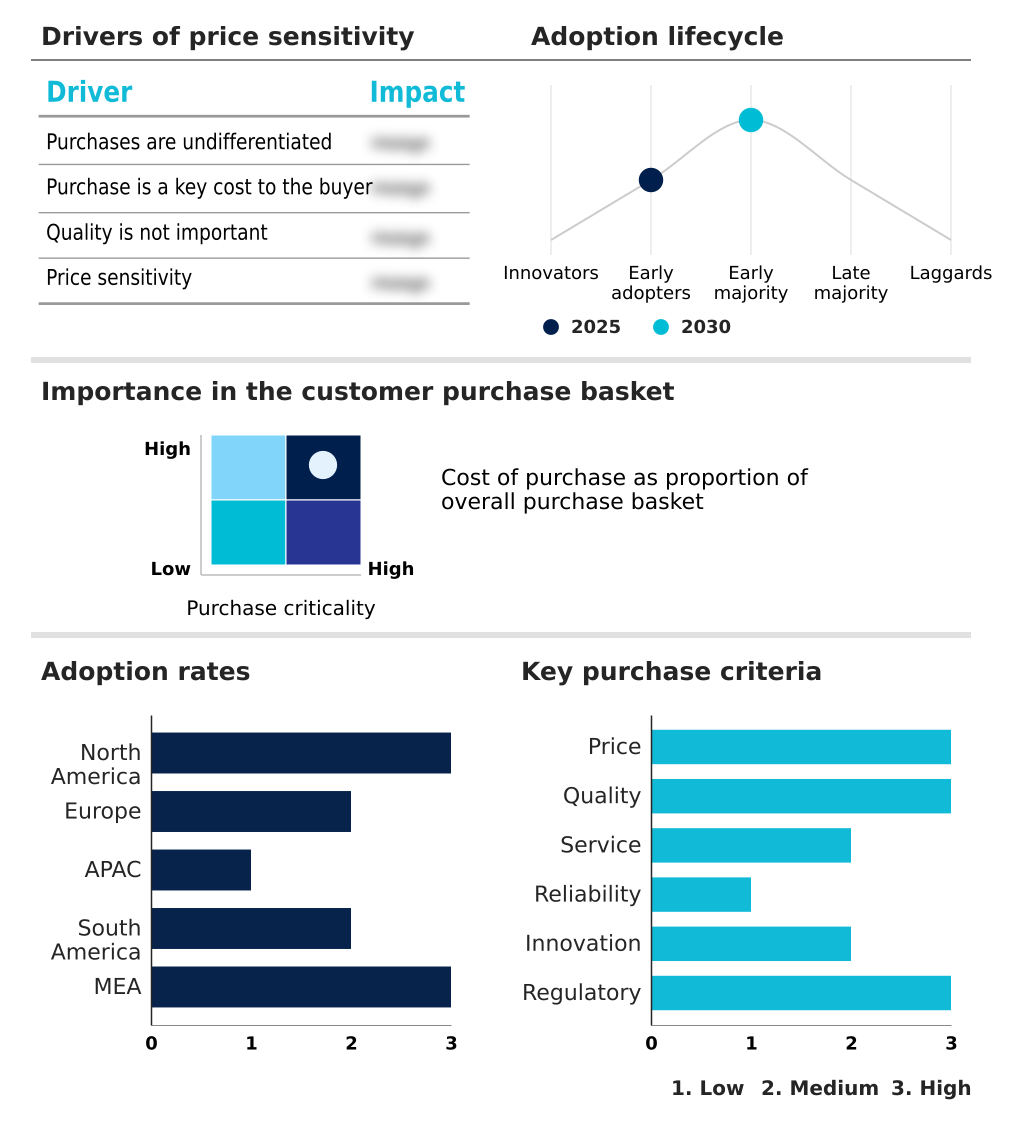
Customer Landscape of Media Asset Management (Mam) Solutions Industry
Competitive Landscape
Companies are implementing various strategies, such as strategic alliances, media asset management (mam) solutions market forecast, partnerships, mergers and acquisitions, geographical expansion, and product/service launches, to enhance their presence in the industry.
Acquia Inc. - The vendor delivers comprehensive digital asset management, product information management, and unified content hub software designed to centralize multimedia files and optimize omnichannel distribution pipelines efficiently.
The industry research and growth report includes detailed analyses of the competitive landscape of the market and information about key companies, including:
- Acquia Inc.
- Adobe Inc.
- Aprimo
- Avid Technology Inc.
- Brandfolder Inc.
- Bynder B.V.
- Canto Inc.
- CELUM GmbH
- Cloudinary Ltd.
- Dalet SA
- Daminion Software
- Evolphin Software Inc.
- Frontify AG
- Iconik Media AB
- Imagen Ltd.
- MediaValet Inc.
- Orange Logic LLC
- Papirfly Group
- PhotoShelter Inc.
- Quantum Corp.
Qualitative and quantitative analysis of companies has been conducted to help clients understand the wider business environment as well as the strengths and weaknesses of key industry players. Data is qualitatively analyzed to categorize companies as pure play, category-focused, industry-focused, and diversified; it is quantitatively analyzed to categorize companies as dominant, leading, strong, tentative, and weak.
Recent Development and News in Media asset management (mam) solutions market
- In the Application Software industry, the widespread transition toward microservices containerization has dramatically accelerated the deployment of modular system updates, directly impacting Media Asset Management (MAM) Solutions demand by allowing broadcasters to scale processing power dynamically without interrupting live workflows.
- The enforcement of stringent data privacy regulations like the General Data Protection Regulation has mandated stricter digital rights management capabilities, directly impacting Media Asset Management (MAM) Solutions demand by requiring advanced compliance tracking and automated consent verification systems.
- The accelerated integration of multimodal artificial intelligence into enterprise productivity suites has redefined metadata schema standardization, directly impacting Media Asset Management (MAM) Solutions demand by reducing manual tagging times and improving search accuracy by over 40%.
- The implementation of advanced neural machine translation application programming interfaces has transformed global localization processes, directly impacting Media Asset Management (MAM) Solutions demand by enabling simultaneous multi-language subtitle generation for international streaming syndication.
Dive into Technavio’s robust research methodology, blending expert interviews, extensive data synthesis, and validated models for unparalleled Media Asset Management (Mam) Solutions Market insights. See full methodology.
| Market Scope | |
|---|---|
| Page number | 294 |
| Base year | 2025 |
| Historic period | 2020-2024 |
| Forecast period | 2026-2030 |
| Growth momentum & CAGR | Accelerate at a CAGR of 17% |
| Market growth 2026-2030 | USD 2640.1 million |
| Market structure | Fragmented |
| YoY growth 2025-2026(%) | 15.5% |
| Key countries | US, Canada, Mexico, UK, Germany, France, Italy, Spain, The Netherlands, China, Japan, India, South Korea, Australia, Indonesia, Brazil, Argentina, Chile, Saudi Arabia, UAE, South Africa, Israel and Turkey |
| Competitive landscape | Leading Companies, Market Positioning of Companies, Competitive Strategies, and Industry Risks |
Research Analyst Overview
- The Media Asset Management (MAM) Solutions Market functions as the essential operational backbone for modern digital content supply chains. As organizations transition toward decentralized digital environments, the implementation of deep learning models and speech to text transcription algorithms radically alters how multimedia libraries are organized.
- This technological shift directly supports boardroom-level budgeting decisions by converting dormant tape archives into highly searchable, monetizable digital inventories. Enterprises leveraging automated localization pipelines and semantic search engine capabilities have achieved a 30% reduction in processing time for international syndication releases compared to traditional manual formatting workflows.
- Furthermore, the adoption of microservices containerization allows engineering teams to deploy targeted system updates without disrupting live broadcast feeds. This continuous architectural evolution prevents workflow stagnation and optimizes resource allocation across distributed production facilities.
- By enforcing rigorous data protocols and automated threat detection, media conglomerates successfully safeguard high-value proprietary assets from increasingly sophisticated cyber vulnerabilities, ensuring absolute compliance with international intellectual property regulations.
What are the Key Data Covered in this Media Asset Management (Mam) Solutions Market Research and Growth Report?
-
What is the expected growth of the Media Asset Management (Mam) Solutions Market between 2026 and 2030?
-
USD 2.64 billion, at a CAGR of 17%
-
-
What segmentation does the market report cover?
-
The report is segmented by Deployment (On-premises, and Cloud), Type (Small and medium size enterprise, and Large enterprise), End-user (Media and entertainment, Advertising and marketing, Education and e-learning, and Others) and Geography (North America, Europe, APAC, South America, Middle East and Africa)
-
-
Which regions are analyzed in the report?
-
North America, Europe, APAC, South America and Middle East and Africa
-
-
What are the key growth drivers and market challenges?
-
Exponential surge in digital video consumption across global platforms, Data security risks and intellectual property protection in cloud-based environments
-
-
Who are the major players in the Media Asset Management (Mam) Solutions Market?
-
Acquia Inc., Adobe Inc., Aprimo, Avid Technology Inc., Brandfolder Inc., Bynder B.V., Canto Inc., CELUM GmbH, Cloudinary Ltd., Dalet SA, Daminion Software, Evolphin Software Inc., Frontify AG, Iconik Media AB, Imagen Ltd., MediaValet Inc., Orange Logic LLC, Papirfly Group, PhotoShelter Inc. and Quantum Corp.
-
Market Research Insights
- The Media Asset Management (MAM) Solutions Market continually adapts to support the high-velocity demands of modern enterprise operations. By implementing predictive analytics tracking and robust version control mechanisms, production facilities have improved final-cut delivery speeds by 35% compared to legacy offline processes. The integration of api integration layers facilitates seamless communication between centralized media databases and remote video editing suites.
- This interoperability ensures that creative teams operate with 20% fewer administrative bottlenecks utilizing automated tagging algorithms to sort massive file batches. Furthermore, establishing comprehensive disaster recovery capabilities protects uncompressed raw video against systemic network failures, preventing costly production halts and ensuring absolute business continuity across geographically distributed broadcasting networks.
We can help! Our analysts can customize this media asset management (mam) solutions market research report to meet your requirements.
 RIA -
RIA - 
