

Mezcal Market Size 2026-2030
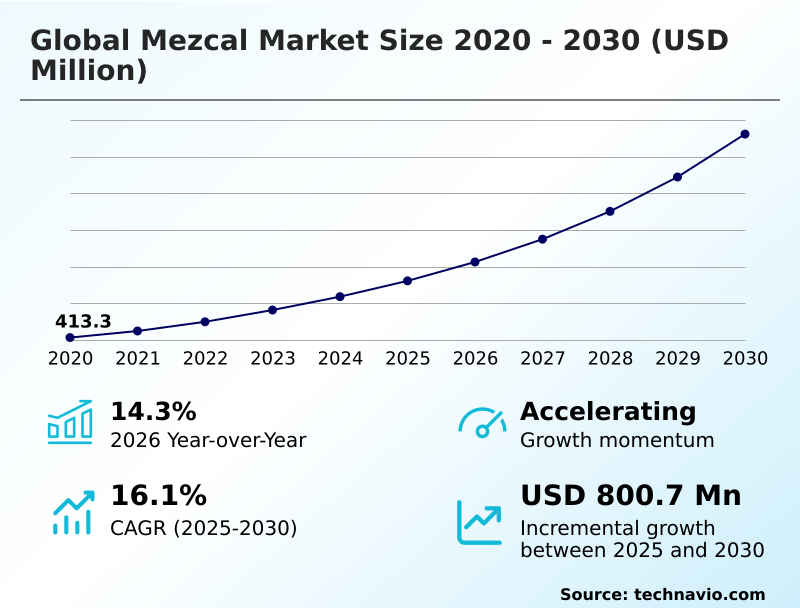
The mezcal market size is valued to increase by USD 800.7 million, at a CAGR of 16.1% from 2025 to 2030. Proliferation of premiumization and heightened consumer demand for craft spirits will drive the mezcal market.
Major Market Trends & Insights
- North America dominated the market and accounted for a 63.1% growth during the forecast period.
- By Product - Mezcal joven segment was valued at USD 476.4 million in 2024
- By Distribution Channel - Offline stores segment accounted for the largest market revenue share in 2024
Market Size & Forecast
- Market Opportunities: USD 1.11 billion
- Market Future Opportunities: USD 800.7 million
- CAGR from 2025 to 2030 : 16.1%
Market Summary
- The mezcal market is undergoing a significant transformation, evolving from a niche spirit to a prominent category on the international stage. This growth is driven by a global consumer shift towards premium and artisanal products, where authenticity, heritage, and unique flavor profiles are highly valued.
- Mezcal, with its diverse agave varietals and traditional production techniques like earthen pit roasting and wild yeast fermentation, is perfectly positioned to meet this demand. The spirit's complex character, influenced by its mezcal terroir concept, has also found favor within the global cocktail culture. A key business scenario involves distillers implementing advanced supply chain management to ensure agave sustainability.
- This includes investing in agave reforestation programs and establishing fair trade practices to secure responsible raw material sourcing, which can mitigate the risk of supply chain vulnerability and price shocks by up to 40%. These efforts, combined with strong brand storytelling that highlights ancestral knowledge preservation and master mezcalero expertise, are crucial for navigating the tension between commercialization vs.
- authenticity and achieving long-term success in a competitive landscape increasingly shaped by consumer education initiatives and the demand for ethical production standards.
What will be the Size of the Mezcal Market during the forecast period?
Get Key Insights on Market Forecast (PDF) Get Free Sample
How is the Mezcal Market Segmented?
The mezcal industry research report provides comprehensive data (region-wise segment analysis), with forecasts and estimates in "USD million" for the period 2026-2030, as well as historical data from 2020-2024 for the following segments.
- Product
- Mezcal joven
- Mezcal reposado
- Mezcal anejo
- Distribution channel
- Offline stores
- Online stores
- Application
- Cocktail party
- Wedding celebrations
- Backyard BBQs
- Others
- Geography
- North America
- US
- Canada
- Mexico
- Europe
- Germany
- France
- Spain
- APAC
- China
- Japan
- India
- South America
- Brazil
- Argentina
- Middle East and Africa
- South Africa
- UAE
- Saudi Arabia
- Rest of World (ROW)
- North America
By Product Insights
The mezcal joven segment is estimated to witness significant growth during the forecast period.
The market is segmented by product types that reflect different artisanal production methods. The unaged segment captures pure artisanal flavor profiles from diverse agave varietals, making it ideal for the cocktail party application.
Aged expressions, such as those undergoing mezcal anejo maturation, appeal to connoisseurs seeking complexity. The focus on ancestral knowledge preservation is a key part of cultural heritage marketing, highlighting techniques like wild yeast fermentation and clay pot still distillation.
Demand for single-village expressions and rare agave varietals is growing, with specialized online platforms reporting a 40% increase in searches for such products. The use of traditional copper pot still distillation remains a hallmark of quality for many producers.
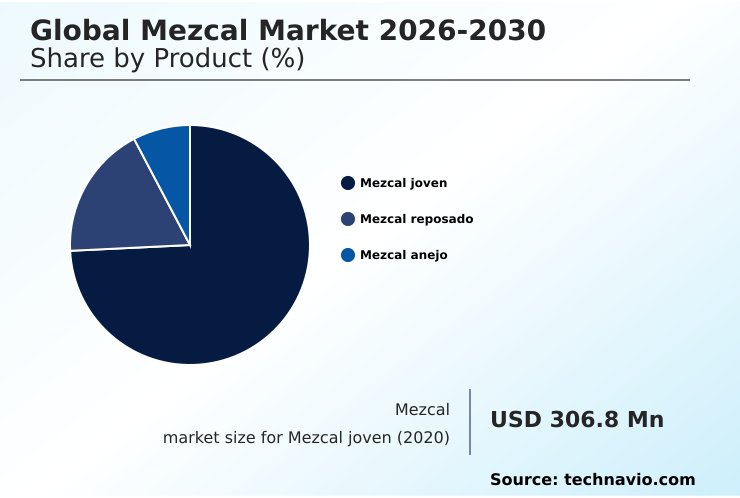
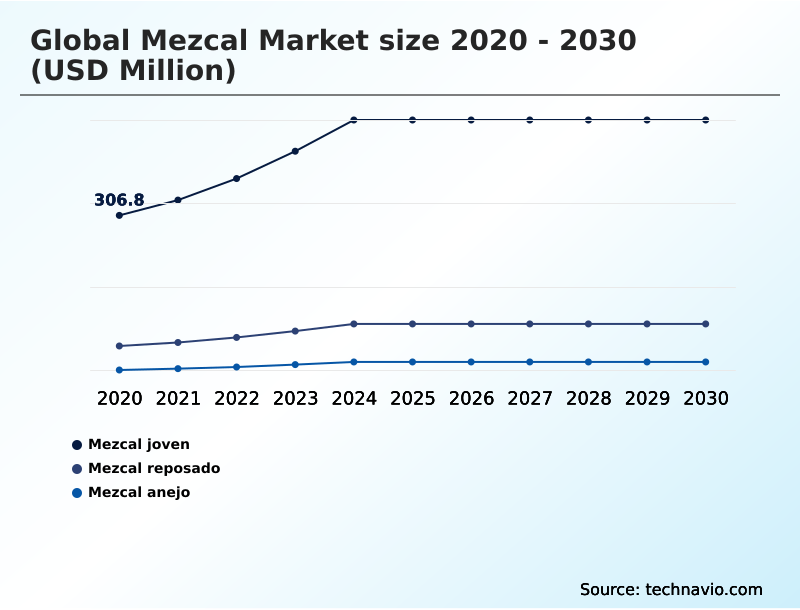
The Mezcal joven segment was valued at USD 476.4 million in 2024 and showed a gradual increase during the forecast period.
Regional Analysis
North America is estimated to contribute 63.1% to the growth of the global market during the forecast period.Technavio’s analysts have elaborately explained the regional trends and drivers that shape the market during the forecast period.
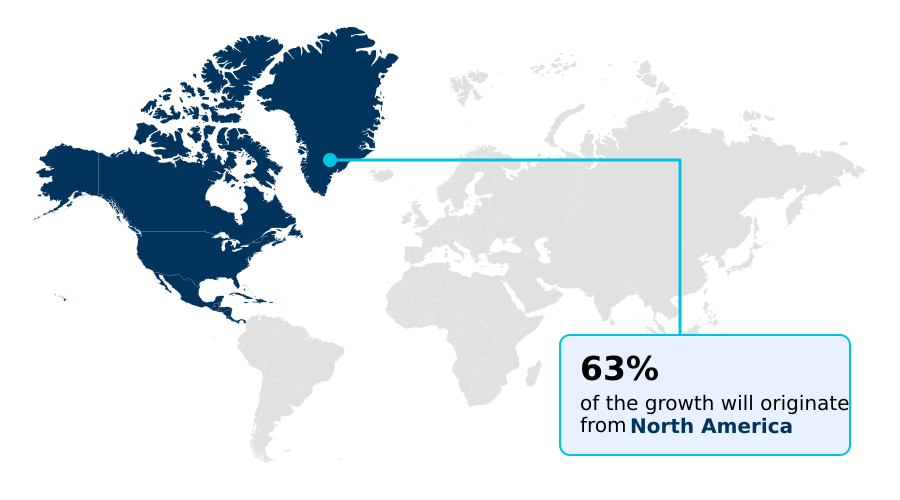
See How Mezcal Market Demand is Rising in North America Get Free Sample
North America commands the market, but Europe and APAC are expanding rapidly, driven by the tourism and hospitality sector.
In these new regions, on-trade channel engagement is crucial for introducing consumers to the mezcal terroir concept and the unique flavors from earthen pit roasting. Emphasis on the denomination of origin protection builds trust in the luxury spirits segment.
As the market matures, applications are diversifying into wedding celebration trends and corporate event beverage service, with mezcal reposado aging profiles appealing to a wider audience.
Brands that demonstrate responsible raw material sourcing and fair trade practices are building greater consumer brand loyalty, with some reporting a 15% increase in repeat purchases.
Market Dynamics
Our researchers analyzed the data with 2025 as the base year, along with the key drivers, trends, and challenges. A holistic analysis of drivers will help companies refine their marketing strategies to gain a competitive advantage.
- The trajectory of the mezcal market is intricately shaped by several converging factors. The impact of celebrity endorsements on mezcal branding has been profound, rapidly elevating consumer awareness and creating lifestyle associations that accelerate market entry.
- Simultaneously, the industry grapples with sustainability challenges in wild agave harvesting, a critical issue that threatens long-term supply and drives the conversation around ethical sourcing and fair trade in mezcal. A key driver of growth is the role of mixologists in driving mezcal trends, with cocktail culture influencing sales significantly.
- Their creativity showcases the different flavor profiles when comparing joven and reposado, fostering consumer education. However, growth is tempered by regulatory hurdles for small artisanal mezcal producers, who often struggle with the cost and complexity of protecting the mezcal denomination of origin internationally. Navigating the three-tier system for mezcal distribution remains a challenge.
- The premiumization strategies in the craft spirits market are pushing producers to balance tradition with commercialization in production. For instance, producers maintaining ancestral methods report up to a 40% lower variability in flavor profiles compared to industrialized counterparts, a key metric for operational planning and ensuring consumer perception of authenticity in mezcal production.
- As online distribution channels for artisanal spirits expand and investment trends in the artisanal mezcal sector grow, marketing mezcal to a global connoisseur audience becomes paramount.
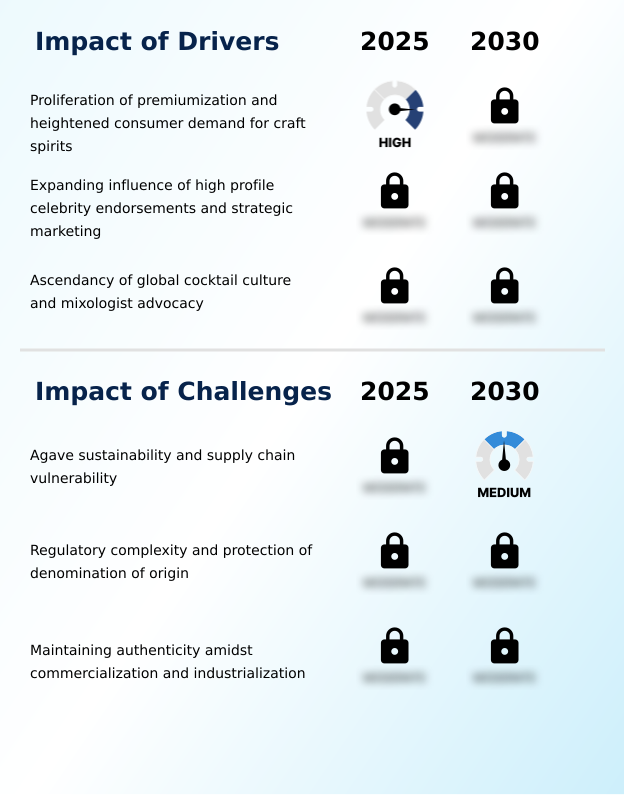
What are the key market drivers leading to the rise in the adoption of Mezcal Industry?
- The proliferation of premiumization and heightened consumer demand for craft spirits is a key driver propelling market growth.
- Market growth is significantly fueled by the powerful cocktail culture influence and dedicated mixologist advocacy, which place mezcal on high-end cocktail menus. This on-trade channel engagement is vital, with bartender education programs lifting sales by over 25% in new markets.
- The rise of celebrity-backed brands has also been a major driver, expanding global distribution networks and accelerating market entry strategy. These drivers reinforce demand for authenticity, highlighting traditional production techniques and master mezcalero expertise.
- The versatile mezcal joven profile is particularly favored in the on-trade sales channel, leading many companies to prioritize it for spirits portfolio diversification.
What are the market trends shaping the Mezcal Industry?
- A key market trend is the proliferation of premiumization, marked by a growing consumer focus on artisanal production. This is coupled with an increased emphasis on varietal specificity, highlighting different types of agave.
- A primary trend is the ongoing premiumization strategy, driven by heightened premium spirits consumption and a more sophisticated consumer palate. This is characterized by a focus on varietal specificity labeling and a demand for new flavor experiences, fostering a culture of spirits connoisseurship.
- The emphasis on ethical production standards is now a commercial imperative, building a grassroots following for brands with an authentic brand narrative. Mainstream market adoption is accelerating due to the globalization of craft spirits, with consumer education initiatives and compelling brand storytelling proving crucial for market penetration. Brands that align with these trends see a 20% higher rate of adoption.
What challenges does the Mezcal Industry face during its growth?
- Agave sustainability and its associated supply chain vulnerabilities present a key challenge to the industry's growth.
- The industry faces critical challenges, primarily agave sustainability and supply chain vulnerability stemming from pressures on wild agave harvesting. This makes sustainable farming certification and environmental stewardship key concerns. The complex regulatory framework compliance adds operational costs, especially for producers focused on small batch distillation. A central tension is the commercialization vs.
- authenticity debate, where the industrialization impact threatens the spirit’s integrity. Securing fair trade certification is becoming vital for brand image. While D2C e-commerce offers a direct route to market, challenges in the off-trade retail sector with premium product positioning can limit broader consumer access and understanding.
Exclusive Technavio Analysis on Customer Landscape
The mezcal market forecasting report includes the adoption lifecycle of the market, covering from the innovator’s stage to the laggard’s stage. It focuses on adoption rates in different regions based on penetration. Furthermore, the mezcal market report also includes key purchase criteria and drivers of price sensitivity to help companies evaluate and develop their market growth analysis strategies.
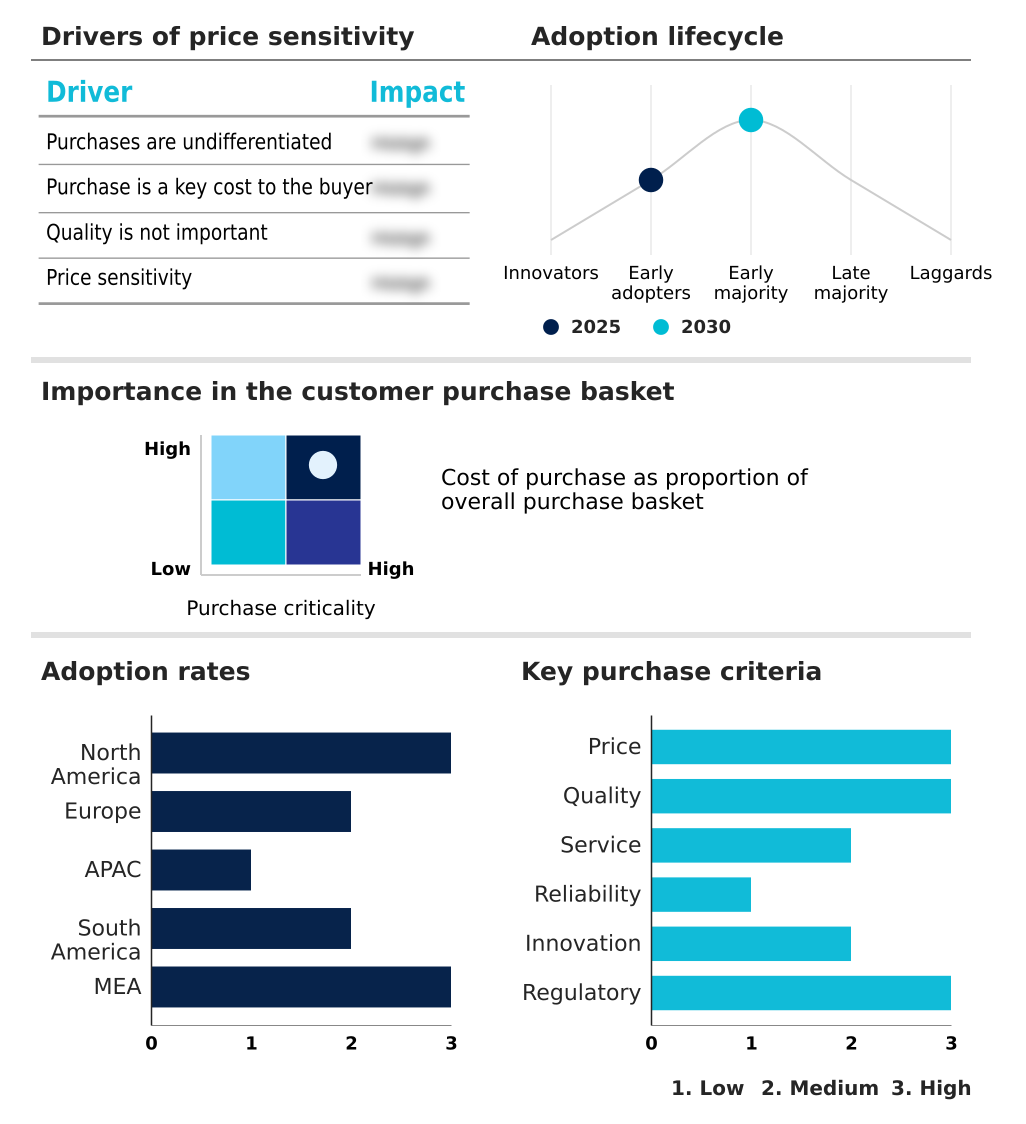
Customer Landscape of Mezcal Industry
Competitive Landscape
Companies are implementing various strategies, such as strategic alliances, mezcal market forecast, partnerships, mergers and acquisitions, geographical expansion, and product/service launches, to enhance their presence in the industry.
Bacardi and Co. Ltd. - Delivers smoky agave flavor and heritage craftsmanship through a portfolio of premium artisanal mezcal brands.
The industry research and growth report includes detailed analyses of the competitive landscape of the market and information about key companies, including:
- Bacardi and Co. Ltd.
- BANHEZ SPIRITS COMPANY LLC
- Blackwells Wines and Spirits
- Bozal Mezcal
- Brown Forman Corp.
- Campari Group
- Casa Cortes
- Diageo PLC
- Dos Hombres Inc.
- Madre Mezcal
- Mezcal de Amor SAPI de CV
- Mezcal Vago
- Pensador Mezcal
- Pernod Ricard SA
- Quiquiriqui Mezcal
- The Lost Explorer Mezcal
- Wahaka Mezcal
Qualitative and quantitative analysis of companies has been conducted to help clients understand the wider business environment as well as the strengths and weaknesses of key industry players. Data is qualitatively analyzed to categorize companies as pure play, category-focused, industry-focused, and diversified; it is quantitatively analyzed to categorize companies as dominant, leading, strong, tentative, and weak.
Recent Development and News in Mezcal market
- In September 2025, a leading European spirits conglomerate announced the acquisition of a strategic stake in a cooperative of artisanal mezcal producers in Oaxaca, a move aimed at enhancing global distribution while preserving traditional production techniques.
- In March 2025, International Beverage Holdings announced its acquisition of a major cooperative of producers in Durango, revealing plans to build a new high-volume distillery to meet export demand.
- In May 2025, Diageo PLC announced a significant expansion of its premium mezcal portfolio into key APAC markets, including Japan and Australia, supported by a major investment in bartender education and on-premise activations.
- In July 2025, LVMH Moet Hennessy Louis Vuitton confirmed its acquisition of a majority stake in Fuego Ancestral, an artisanal mezcal brand co-founded by an internationally recognized actor, signaling mezcal's entry into the ultra-premium spirits segment.
Dive into Technavio’s robust research methodology, blending expert interviews, extensive data synthesis, and validated models for unparalleled Mezcal Market insights. See full methodology.
| Market Scope | |
|---|---|
| Page number | 289 |
| Base year | 2025 |
| Historic period | 2020-2024 |
| Forecast period | 2026-2030 |
| Growth momentum & CAGR | Accelerate at a CAGR of 16.1% |
| Market growth 2026-2030 | USD 800.7 million |
| Market structure | Fragmented |
| YoY growth 2025-2026(%) | 14.3% |
| Key countries | US, Canada, Mexico, Germany, France, Spain, UK, Italy, The Netherlands, China, Japan, India, South Korea, Australia, Indonesia, Brazil, Argentina, Chile, South Africa, UAE, Saudi Arabia, Egypt and Israel |
| Competitive landscape | Leading Companies, Market Positioning of Companies, Competitive Strategies, and Industry Risks |
Research Analyst Overview
- The mezcal market's expansion is fundamentally rooted in its artisanal production methods and the growing consumer appetite for authenticity. The emphasis on varietal specificity labeling and the unique mezcal terroir concept are central to its premiumization strategy, allowing brands to command a price premium of up to 30% over generic spirits. A critical boardroom-level consideration is navigating the commercialization vs.
- authenticity paradigm; decisions on whether to scale via industrialization or preserve ancestral knowledge preservation through small batch distillation directly impact brand equity and long-term viability. The industry faces significant supply chain vulnerability tied to agave sustainability, making responsible raw material sourcing and investments in agave reforestation programs essential for risk mitigation.
- Adherence to the regulatory framework compliance for the denomination of origin protection is non-negotiable, while master mezcalero expertise and traditional production techniques like earthen pit roasting remain key differentiators. Success hinges on robust consumer education initiatives that articulate the value derived from this intricate production ecosystem, from wild yeast fermentation to the specific mezcal joven, reposado, or anejo maturation processes.
What are the Key Data Covered in this Mezcal Market Research and Growth Report?
-
What is the expected growth of the Mezcal Market between 2026 and 2030?
-
USD 800.7 million, at a CAGR of 16.1%
-
-
What segmentation does the market report cover?
-
The report is segmented by Product (Mezcal joven, Mezcal reposado, and Mezcal anejo), Distribution Channel (Offline stores, and Online stores), Application (Cocktail party, Wedding celebrations, Backyard BBQs, and Others) and Geography (North America, Europe, APAC, South America, Middle East and Africa)
-
-
Which regions are analyzed in the report?
-
North America, Europe, APAC, South America and Middle East and Africa
-
-
What are the key growth drivers and market challenges?
-
Proliferation of premiumization and heightened consumer demand for craft spirits, Agave sustainability and supply chain vulnerability
-
-
Who are the major players in the Mezcal Market?
-
Bacardi and Co. Ltd., BANHEZ SPIRITS COMPANY LLC, Blackwells Wines and Spirits, Bozal Mezcal, Brown Forman Corp., Campari Group, Casa Cortes, Diageo PLC, Dos Hombres Inc., Madre Mezcal, Mezcal de Amor SAPI de CV, Mezcal Vago, Pensador Mezcal, Pernod Ricard SA, Quiquiriqui Mezcal, The Lost Explorer Mezcal and Wahaka Mezcal
-
Market Research Insights
- Market dynamics are shaped by a confluence of consumer demand for artisanal flavor profiles and the strategic influence of mixologist advocacy. The expansion into the luxury spirits segment is evident as consumer palate sophistication grows, with a clear preference for new flavor experiences and an authentic brand narrative.
- Brands that successfully leverage bartender education programs see a 25% greater adoption rate in the on-trade sales channel. Concurrently, the rise of D2C e-commerce and specialized online platforms has enabled smaller producers to build a grassroots following, with some achieving a 30% higher margin compared to traditional retail.
- This digital shift, combined with premium product positioning, is critical for building consumer brand loyalty in a market where cultural heritage marketing and transparency are key differentiators.
We can help! Our analysts can customize this mezcal market research report to meet your requirements.
 RIA -
RIA -