


Microbrewery Equipment Market Size 2024-2028
The microbrewery equipment market size is forecast to increase by USD 10.54 billion at a CAGR of 11.23% between 2023 and 2028. In the dynamic beverage industry, the market has experienced significant growth due to various factors. One key driver is the evolving consumer palate, with a growing preference towards craft beers over mass-produced lagers. Another trend is the increasing popularity of canned craft beer, offering convenience and portability without compromising quality. However, the market faces challenges from substitutes such as wine and spirits, as well as health concerns related to beer consumption, including potential illnesses, fibre deficiencies, and the presence of vitamins and polyphenols. To mitigate these challenges, microbreweries are investing in advanced monitoring tools and systems to ensure the quantity and quality of their products meet consumer demands in the digital age. These tools help maintain the desired levels of fibre, vitamins, and polyphenols while minimizing the risk of contamination and ensuring consistent flavor profiles.
What will be the Size of the Market During the Forecast Period?

The market is a significant sector in the beer industry, catering to the needs of small-scale breweries and home brewers. This market plays a crucial role in providing state-of-the-art tools essential for producing high-quality beer. Beer consumption in the United States has been steadily increasing, with craft breweries gaining significant market share. The demand for unique, flavorful beers continues to rise, leading to a growing need for advanced microbrewery equipment. Microbreweries focus on producing small batches of beer, allowing them to experiment with various grains, such as barley, and additives like vitamins, fibre, and polyphenols, to create distinct beer styles.
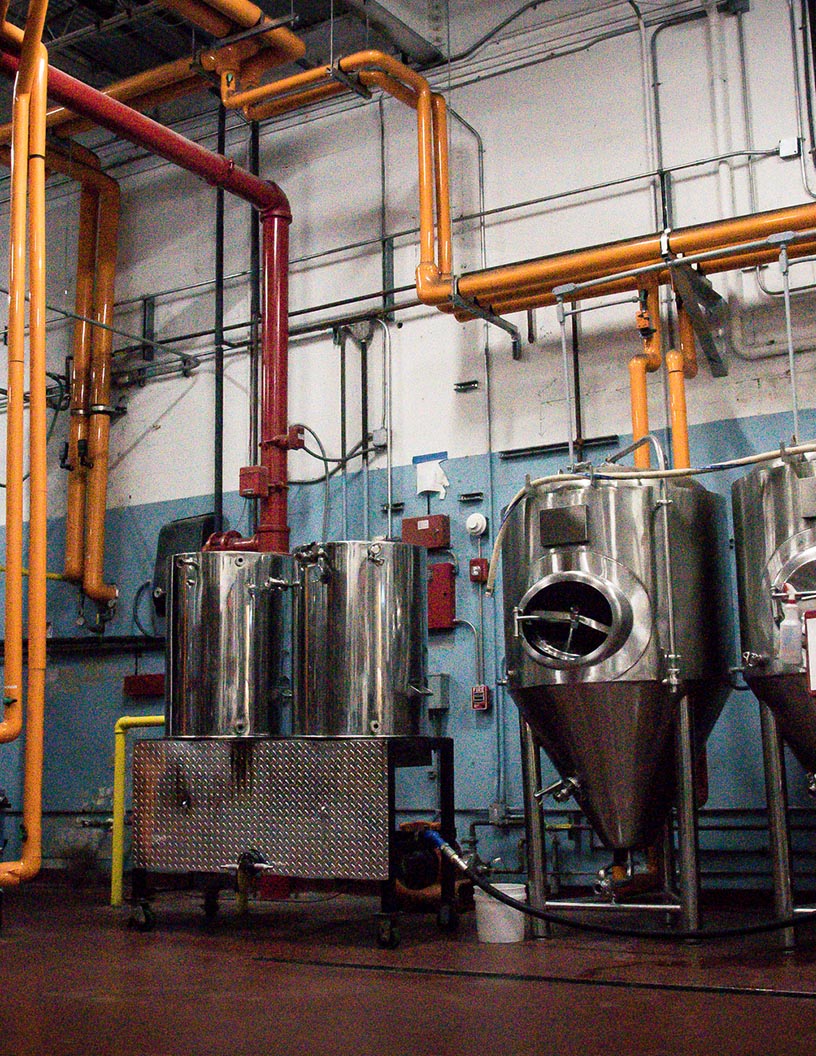
Moreover, these breweries require specialized equipment for fermentation, filtration, and brew house processes. Fermentation equipment is a vital component of the microbrewery setup. It facilitates the conversion of sugars into alcohol and carbon dioxide by yeast, resulting in the production of beer. Advanced fermentation systems ensure optimal temperature and pressure conditions, enabling brewers to produce consistent and high-quality batches. Filtration systems are another essential piece of microbrewery equipment. They help remove impurities, such as yeast and other particles, from the beer, enhancing its clarity and overall quality. Advanced filtration systems, like membrane filtration and centrifugation, offer improved filtration efficiency and minimal loss of essential beer components.
However, brew house equipment includes essential tools like mash tuns, lauter tuns, and boiling kettles. These pieces of equipment facilitate the brewing process by converting raw materials into wort, which is then fermented into beer. The market also offers monitoring tools and systems to help brewers maintain optimal brewing conditions and ensure consistent beer quality. These tools enable real-time monitoring of temperature, pressure, and other critical parameters, allowing brewers to make adjustments as needed. While the market offers numerous benefits, it is essential to consider the potential detrimental effects of virus transmission during the brewing process. Implementing proper sanitation practices and investing in advanced equipment, such as pasteurization systems, can help mitigate these risks and ensure a safe and high-quality product.
In conclusion, the market plays a pivotal role in the production of high-quality beer by providing advanced tools and systems to small-scale breweries and home brewers. As the demand for unique and flavorful beers continues to rise, the market for microbrewery equipment is expected to grow, offering numerous opportunities for innovation and growth.
Market Segmentation
The market research report provides comprehensive data (region-wise segment analysis), with forecasts and estimates in "USD billion" for the period 2024-2028, as well as historical data from 2018-2022 for the following segments.
- Product Type
- Fermentation systems
- Mashing systems
- Cooling systems
- Filtering systems
- Others
- Type
- Automatic
- Manual
- Semi-automatic
- Geography
- North America
- US
- Europe
- Germany
- UK
- APAC
- China
- Japan
- South America
- Middle East and Africa
- North America
By Product Type Insights
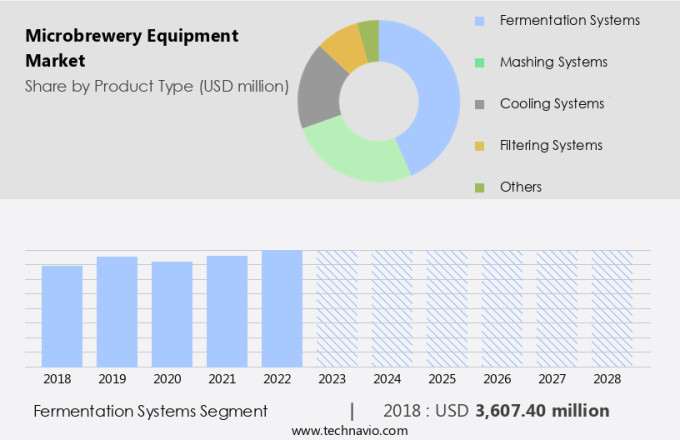
The fermentation systems segment is estimated to witness significant growth during the forecast period. The market in the United States is witnessing significant growth due to increasing consumer demand for craft beer and the expansion of end-user verticals in the food and drinks industry. The fermentation systems segment is expected to witness the highest revenue growth during the forecast period. This is because fermentation is a critical process in craft beer production, which involves the use of water, malt, hops, and yeast. After the beer is boiled, it is cooled down to a normal temperature before yeast is added to initiate fermentation. Given the lengthy fermentation process, microbreweries require multiple fermentation systems to store large volumes of unprocessed beer.
Get a glance at the market share of various segments Request Free Sample
The Fermentation systems segment accounted for USD 3.61 billion in 2018 and showed a gradual increase during the forecast period. Moreover, companies in the market are providing customized solutions in the form of fabricated tanks and on-site fabricated tanks for fermentation systems. Furthermore, the trend towards outdoor expansion and brewery expansions is driving the demand for advanced cellar equipment. Healthcare regulations and energy efficiency are crucial factors influencing the market. Breweries are investing in energy-efficient systems to reduce operational costs and comply with regulations. For instance, some microbreweries are adopting wastewater treatment systems to minimize environmental impact. Overall, the market in the US is poised for steady growth, driven by consumer preferences, end-user verticals, and technological advancements.
Regional Insights
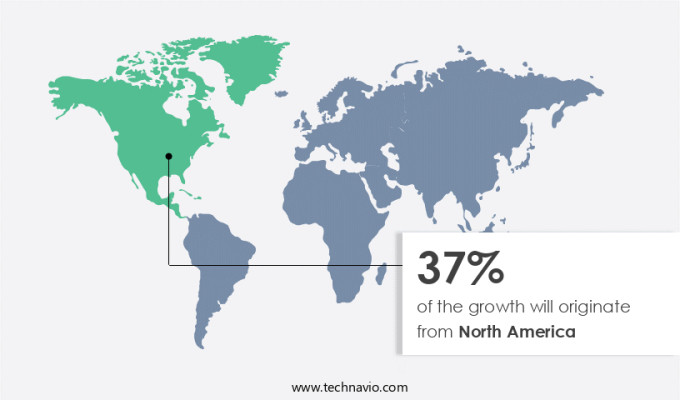
North America is estimated to contribute 37% to the growth of the global market during the forecast period. Technavio's analysts have elaborately explained the regional trends and drivers that shape the market during the forecast period.
For more insights on the market share of various regions Request Free Sample
The market in North America is experiencing significant growth due to the increasing popularity of craft beer. Fermentation equipment and filtration systems are essential components of microbreweries, ensuring the production of high-quality beer. The demand for these systems is driven by the rising consumer interest in craft beer, with the US and Canada leading the market. Consumers are drawn to the unique flavors and varieties offered by craft breweries, making their purchasing decisions influenced by factors such as limited editions, seasonal offerings, price, origin, and promotions. Bartenders also play a crucial role in influencing customer choices. Brew house equipment, including mash tuns, lauters, and kettles, are integral to the brewing process.
Moreover, control and monitoring tools, such as temperature and pressure sensors, are necessary to maintain optimal brewing conditions. Craft beer's growing popularity can be attributed to its rich history as one of the oldest alcoholic beverages, with origins dating back to ancient civilizations. Today, home brewing has also gained traction, allowing enthusiasts to experiment with various water sources, nutrients, and brewing techniques. Investing in microbrewery equipment is a profitable business opportunity for entrepreneurs looking to capitalize on the trend. The market's growth is expected to continue as consumers' preferences shift towards unique and locally produced beer.
Our researchers analyzed the data with 2023 as the base year, along with the key drivers, trends, and challenges. A holistic analysis of drivers will help companies refine their marketing strategies to gain a competitive advantage.
Market Driver
The shift in consumers' tastes and preferences is the key driver of the market. The market has experienced significant growth due to the rising demand for craft beer in the United States. Consumers are increasingly seeking out new and unique beer flavors, leading to an expansion of offerings in the industry. Some of the innovative ingredients used in craft beer production include antioxidant-rich fruits like Vidalia onions and exotic options such as guava. These ingredients not only add distinct flavors but also offer potential health benefits, including heart health, lower cholesterol, and prevention of kidney stones. As a result, barrels used in craft beer brewing have become essential equipment for microbreweries, as they allow for the proper aging and development of these complex flavors.
Additionally, microbreweries are exploring various energy sources to reduce their carbon footprint and increase sustainability. This external expansion, coupled with the constant pursuit of new tastes and flavors, ensures a vibrant and dynamic market for microbrewery equipment.
Market Trends
The growing popularity of canned craft beer is the upcoming trend in the market. The preference for canned craft beer is on the rise in the United States. In the past, craft beer was primarily served from casks or kegs instead of bottles or cans. However, there has been a noticeable uptick in the demand for canned craft beer. Presently, brewers are opting for cans due to their larger openings that preserve the beer's taste by obstructing the entry of light and oxygen.
Furthermore, these cans keep the beer cold for an extended period and enhance its visual appeal. Consumers are increasingly accustomed to canned craft beer, and contactless delivery methods have further fueled this trend. Social distancing measures have led to a growth in online sales and curbside pick-up options, making canned beer a convenient choice for consumers. In summary, the shift towards canned craft beer is a response to changing consumer preferences and the practicalities of contactless delivery.
Market Challenge
The presence of substitutes of craft beer is a key challenge affecting the market growth. In the current market landscape, the beer industry is experiencing significant competition from other alcoholic beverages, including wines and spirits. According to our research, approximately one quarter of non-beer consumers, particularly women, express a preference for wines and flavored spirits. The popularity of these beverages can be attributed to their various health benefits. For instance, wine is known to prevent certain illnesses, aid in weight management, and contain essential vitamins, fiber, and polyphenols. These health advantages have attracted an increasing number of health-conscious consumers to switch from beer and other alcoholic beverages. To ensure the production of high-quality beer and maintain optimal brewing conditions, microbreweries are integrating advanced monitoring tools and systems.
However, these technologies enable real-time tracking of the brewing process, ensuring the correct quantity and quality of grains, vitamins, fiber, and polyphenols are present in the final product. By adhering to these standards, microbreweries can differentiate themselves in the competitive market and cater to the evolving consumer preferences. In the digital age, it is crucial for microbreweries to stay updated with the latest trends and consumer demands. Implementing digital solutions, such as automation and data analytics, can help microbreweries streamline their operations, enhance product quality, and improve overall efficiency. By staying informed and responsive to the market, microbreweries can maintain their competitive edge and continue to thrive in the ever-evolving beer industry.
Exclusive Customer Landscape
The market forecasting report includes the adoption lifecycle of the market, covering from the innovator's stage to the laggard's stage. It focuses on adoption rates in different regions based on penetration. Furthermore, the report also includes key purchase criteria and drivers of price sensitivity to help companies evaluate and develop their market growth analysis strategies.

Customer Landscape
Key Companies & Market Insights
Companies are implementing various strategies, such as strategic alliances, partnerships, mergers and acquisitions, geographical expansion, and product/service launches, to enhance their presence in the market.
Criveller Group - The company offers microbrewery equipment in both industrial and pub settings.
The market research and growth report includes detailed analyses of the competitive landscape of the market and information about key companies, including:
- ALFA LAVAL
- ATS Automation Tooling Systems Inc.
- BrauKon GmbH
- Della Toffola Spa
- GEA Group AG
- Hypro Engineers Pvt. Ltd.
- KASPAR SCHULZ GmbH
- Krones AG
- LEHUI
- Malt Handling LLC
- MEURA SA
- Norland International
- Paul Mueller Co. Inc.
- Portland Kettle Works
- Pro Refrigeration Inc.
- Rite Engineering and Manufacturing Corp.
- Shanghai Equipment Co. Ltd.
- Specific Mechanical Systems Ltd.
- SpectraA Technology Solutions Pvt. Ltd.
Qualitative and quantitative analysis of companies has been conducted to help clients understand the wider business environment as well as the strengths and weaknesses of key market players. Data is qualitatively analyzed to categorize companies as pure play, category-focused, industry-focused, and diversified; it is quantitatively analyzed to categorize companies as dominant, leading, strong, tentative, and weak.
Research Analyst Overview
The market is witnessing significant growth due to the increasing demand for high-quality beers from craft breweries. Beer drinkers are increasingly seeking unique flavors and tastes, leading to a rise in the number of small-scale breweries. The brewing process involves various stages such as fermentation, filtration, and packaging, which require specialized equipment. Microbreweries require state-of-art equipment to produce high-quality beers, including fermentation equipment, compressors, and brew house equipment. Compressed air is essential for the brewing process, and cleaning and sanitation tools are necessary to maintain hygiene and prevent virus transmission. Automation and control & monitoring tools are becoming increasingly popular in microbreweries to optimize energy consumption and improve capacity.
Moreover, the growing popularity of craft beer and home brewing has led to an increase in demand for microbrewery equipment. End-user verticals such as healthcare, food & drinks, and chemicals are investing in microbrewery equipment due to the health benefits associated with beer. Beer is rich in nutrients, antioxidants, vitamins, and fiber, which contribute to heart health, lower cholesterol, and the prevention of kidney stones.
In summary, microbreweries are expanding their operations by investing in cellar equipment, outdoor expansion, and barrels to meet the growing consumer demand. Energy sources and beer regulations are essential considerations for microbreweries to ensure sustainable and compliant operations. The digital age has led to external expansion through online sales and contactless delivery, making it essential for microbreweries to invest in advanced equipment and tools to meet the demands of the new normal.
|
Market Scope |
|
|
Report Coverage |
Details |
|
Page number |
173 |
|
Base year |
2023 |
|
Historic period |
2018-2022 |
|
Forecast period |
2024-2028 |
|
Growth momentum & CAGR |
Accelerate at a CAGR of 11.23% |
|
Market growth 2024-2028 |
USD 10.54 billion |
|
Market structure |
Fragmented |
|
YoY growth 2023-2024(%) |
9.81 |
|
Regional analysis |
North America, Europe, APAC, South America, and Middle East and Africa |
|
Performing market contribution |
North America at 37% |
|
Key countries |
US, UK, China, Germany, and Japan |
|
Competitive landscape |
Leading Companies, Market Positioning of Companies, Competitive Strategies, and Industry Risks |
|
Key companies profiled |
ALFA LAVAL, ATS Automation Tooling Systems Inc., BrauKon GmbH, Criveller Group, Della Toffola Spa, GEA Group AG, Hypro Engineers Pvt. Ltd., KASPAR SCHULZ GmbH, Krones AG, LEHUI, Malt Handling LLC, MEURA SA, Norland International, Paul Mueller Co. Inc., Portland Kettle Works, Pro Refrigeration Inc., Rite Engineering and Manufacturing Corp., Shanghai Equipment Co. Ltd., Specific Mechanical Systems Ltd., and SpectraA Technology Solutions Pvt. Ltd. |
|
Market dynamics |
Parent market analysis, market growth inducers and obstacles, market forecast, fast-growing and slow-growing segment analysis, COVID-19 impact and recovery analysis and future consumer dynamics, market condition analysis for the forecast period |
|
Customization purview |
If our market report has not included the data that you are looking for, you can reach out to our analysts and get segments customized. |
What are the Key Data Covered in this Market Research and Growth Report?
- CAGR of the market during the forecast period
- Detailed information on factors that will drive the market growth and forecasting between 2024 and 2028
- Precise estimation of the size of the market and its contribution of the market in focus to the parent market
- Accurate predictions about upcoming market growth and trends and changes in consumer behaviour
- Growth of the market across North America, Europe, APAC, South America, and Middle East and Africa
- Thorough analysis of the market's competitive landscape and detailed information about companies
- Comprehensive analysis of factors that will challenge the growth of market companies
We can help! Our analysts can customize this market research report to meet your requirements. Get in touch